Green tea extract is often promoted as a way to burn more calories, improve fat metabolism, and support weight loss without making major changes to your daily routine. Its main ingredients, including catechin polyphenols and epigallocatechin gallate (EGCG), have attracted interest because of their possible effects on energy expenditure.
But does green tea extract increase resting metabolic rate, the number of calories your body uses while resting? Research suggests that green tea catechins, particularly when combined with caffeine, may influence energy expenditure under certain conditions. However, the evidence does not establish a consistent, meaningful increase in resting metabolic rate for everyone.
The difference matters. A supplement may temporarily change how the body uses energy without producing a lasting increase in resting calorie burn or significant weight loss. Concentrated extracts also have safety concerns that are less relevant to ordinary brewed green tea.
This guide examines the clinical evidence, explains how green tea extract may affect metabolism, compares supplements with brewed tea, and provides practical steps for supporting your fitness goals without relying on a metabolism booster.
Quick Answer
Does green tea extract increase resting metabolic rate? Possibly in some circumstances, but the evidence is inconsistent. Green tea catechins and caffeine may modestly increase energy expenditure or change fat oxidation, yet clinical research has not established a reliable, lasting increase in resting metabolic rate. Green tea extract should not replace balanced nutrition, regular exercise, or professional medical advice.
1. What Is Resting Metabolic Rate?
Resting metabolic rate, or RMR, is the energy your body uses while you are awake and resting. Your body needs this energy to support basic functions, including breathing, circulation, maintaining body temperature, and normal cellular activity.
These processes continue even when you are sitting at a desk, reading, or relaxing on the sofa. RMR is therefore an important part of your daily calorie expenditure, but it is only one part of the overall picture.
Your total daily energy expenditure includes several components:
- Resting metabolic rate: Energy used to maintain essential body functions at rest.
- Physical activity: Energy used during planned exercise, walking, housework, and other movement.
- Thermic effect of food: Energy used to digest, absorb, and process food.
- Other everyday movement: Small movements and activity that occur throughout the day.
These categories help explain why a supplement that produces a small, temporary change in energy expenditure does not necessarily lead to substantial weight loss.
For example, a person might experience a short-term change in energy use after consuming a caffeinated beverage, but that does not prove their resting metabolic rate has permanently increased. Measurements taken after a supplement, during fasting, and under controlled resting conditions can produce different results.
Learn more about thermogenesis and metabolism to understand the distinction between heat production and your overall metabolic rate.
Resting metabolic rate versus basal metabolic rate
Basal metabolic rate, or BMR, is measured under stricter conditions than RMR. Both describe energy needs at rest, and the terms are sometimes used interchangeably in consumer health content. However, they are not identical measurements.
When researchers test a supplement, the method matters. A change in calorie use after drinking a product does not necessarily establish a change in fasting RMR. Likewise, a short laboratory measurement cannot automatically predict what happens to total daily calorie expenditure over several months.
This is one reason the answer to whether green tea extract increases resting metabolic rate remains uncertain.
Why RMR matters for weight management
Your resting energy expenditure contributes to your body’s daily calorie needs. However, weight management also depends on food intake, physical activity, changes in body composition, sleep, medications, and individual physiology.
A supplement that changes one part of energy metabolism may have only a small effect on body weight. It may also have no noticeable effect on the scale if its influence is inconsistent or if other factors offset the difference.
For practical guidance, focus on the bigger picture of what affects metabolism and body weight, rather than treating one ingredient as the main driver of calorie burning.
2. Does Green Tea Extract Increase Resting Metabolic Rate According to Research?
The most direct answer comes from clinical trials and systematic reviews that examine resting metabolic rate, energy expenditure, and the body’s use of fat for fuel.
The evidence is mixed. Some studies suggest that green tea catechins may influence metabolism, while others show changes in energy expenditure without a measurable improvement in fasting RMR.
A 2021 systematic review published in Nutrients examined 15 studies involving 499 participants. It found that the available evidence was not sufficient to reach a definitive conclusion about the effects of acute or longer-term green tea catechin supplementation on RMR and overall energy expenditure. Some included studies reported improvements, but the results varied across studies and conditions (Rondanelli et al., 2021).
This distinction is important when interpreting supplement advertisements. Evidence that an ingredient affects energy metabolism is not the same as proof that it produces a dependable increase in resting calorie burn.
What individual studies found
| Research | Main finding | What it means |
| 1999 human study | Green tea extract increased measured 24-hour energy expenditure by 4% compared with placebo in a study of 10 healthy men. Source | An interesting early finding, but it measured 24-hour expenditure, not proof of a lasting RMR increase. |
| 2020 randomized crossover trial | A catechin-enriched beverage increased energy expenditure after ingestion, but researchers found no significant difference in fasting RMR. Source | Increased post-consumption expenditure does not necessarily mean higher resting metabolism. |
| 2021 systematic review | Fifteen studies involving 499 participants produced insufficiently consistent evidence for a definitive conclusion about RMR and energy expenditure. Source | The overall evidence remains uncertain. |
| 2021 Cochrane review | Green tea preparations produced small, statistically non-significant weight loss in overweight or obese adults in the studies reviewed. Source | A possible metabolic effect does not guarantee clinically meaningful weight loss. |
These findings do not show that green tea extract never affects metabolism. Instead, they indicate that the effect depends on the study, product formulation, measurement method, and participants.
Why the 1999 study does not settle the question
The early trial published in the American Journal of Clinical Nutrition examined 10 healthy men under controlled conditions. Participants received green tea extract, caffeine alone, and a placebo on separate occasions.
The green tea extract condition produced a 4% increase in measured 24-hour energy expenditure relative to placebo. Researchers also observed a lower respiratory quotient, a measure related to the mix of fuels the body uses for energy (Dulloo et al., 1999).
It also cannot show that taking the extract for months will cause a sustained elevation in resting metabolic rate. Larger and longer studies are needed to answer those questions reliably.
What the 2020 trial tells us
A randomized crossover trial published in the European Journal of Nutrition examined a catechin-enriched beverage containing 611 mg of catechins and 88 mg of caffeine. The placebo beverage contained 81 mg of caffeine.
After two weeks of consuming the test beverages, the researchers observed higher energy expenditure after ingestion of the catechin-enriched beverage. However, they found no significant difference in fasting RMR between the treatments (Katada et al., 2020).
This is a useful example of why the measurement matters. Green tea catechins may influence the body’s response to a beverage without reliably increasing resting energy needs before consumption.
The study also tested a specific beverage in a controlled setting. It should not be interpreted as proof that all green tea capsules, powders, drinks, or concentrated extracts have the same effects.
3. How Might Green Tea Extract Affect Metabolism?
Green tea extract contains several compounds, but two receive particular attention in metabolic research: catechin polyphenols and caffeine.
Their possible effects on energy expenditure are related, yet they are not interchangeable. Products also vary in their ingredient concentrations, so the results of one study cannot be applied automatically to another formulation.
EGCG and green tea catechins
EGCG is short for epigallocatechin gallate. It is one of the best-studied catechins found in green tea.
Catechins are plant compounds that researchers have investigated for their potential effects on energy metabolism, fat oxidation, and other physiological processes. Green tea extracts may concentrate these substances beyond the amounts present in a typical serving of brewed tea.
Researchers have proposed that catechins may affect thermogenesis and pathways involved in the body’s response to caffeine. However, these mechanisms do not prove that taking EGCG alone increases resting metabolic rate in everyday life.
The 2021 systematic review of green tea catechins found that some studies reported changes in metabolic measurements, while the overall evidence remained insufficient for a definitive conclusion about RMR (Rondanelli et al., 2021).
For this reason, it is more accurate to say that catechins may influence aspects of energy metabolism than to describe EGCG as a proven resting-metabolism booster.
Caffeine and energy expenditure
Caffeine is a stimulant found naturally in green tea, coffee, and several other beverages. It can affect alertness and the activity of the central nervous system.
In the context of green tea extract, caffeine may contribute to changes in energy expenditure. Some experiments have tested caffeine together with catechins because researchers are interested in whether the combination has a different effect from caffeine alone.
The challenge is that extracts differ. A product with a high caffeine concentration may produce a different experience from a low-caffeine extract, and a caffeine-sensitive person may notice unwanted effects before experiencing any meaningful benefit.
If you already drink coffee, energy drinks, or other caffeinated beverages, consider your total caffeine intake rather than evaluating the supplement in isolation.
Thermogenesis and the sympathetic nervous system
Thermogenesis is the process by which the body produces heat. Some metabolic studies investigate whether green tea compounds influence thermogenesis through the sympathetic nervous system, which helps regulate several automatic bodily functions.
In the 1999 study, researchers observed increased urinary norepinephrine excretion alongside higher 24-hour energy expenditure after green tea extract consumption (Dulloo et al., 1999).
That finding supports continued scientific interest in the mechanism, but it does not establish that every user will experience a meaningful metabolic response.
A proposed biological pathway, a change in a laboratory measurement, and a real-world change in body weight are three separate outcomes. A supplement can affect one without reliably affecting the others.
Fat oxidation is not the same as fat loss
Fat oxidation describes the use of fat as a fuel source. It is often featured in weight-management marketing because it sounds like a direct measure of body-fat reduction.
However, burning a greater proportion of fat for energy at one moment does not automatically mean losing more stored body fat over time. The body can adjust its fuel use throughout the day, depending on food intake, activity, and energy needs.
Long-term body-fat reduction depends on the relationship between energy intake and energy expenditure over time, alongside individual health and behavioral factors. A temporary shift in fuel use is therefore not enough to establish a lasting weight-management benefit.
When interpreting a green tea extract study, look for evidence of sustained changes in body composition or body weight rather than assuming that increased fat oxidation guarantees fat loss.
4. How Much Can Green Tea Extract Increase Resting Metabolic Rate?
There is no reliable, universal figure for how much green tea extract increases resting metabolic rate.
The 2021 systematic review found some positive results among the included studies. Two studies reported increases in RMR, with one showing a rise of 43.82 kcal per day and another reporting 260.8 kcal per day, with the latter finding occurring mainly in the context of resistance training. However, the review concluded that the overall evidence was not definitive (Rondanelli et al., 2021).
These study-specific figures should not be used as predictions of how many extra calories an individual will burn. They came from different research conditions and do not establish a consistent supplement effect.
The apparent gap between study results also highlights why it is risky to generalize from one trial. Participants may differ in body composition, caffeine exposure, exercise habits, and other characteristics. Studies may also vary in their dose, duration, and measurement methods.
Is a small increase enough to cause weight loss?
A small change in energy expenditure may sound useful, but its practical importance depends on whether the effect is reliable, lasts over time, and is large enough to change overall energy balance.
A statistically significant laboratory finding does not necessarily mean a noticeable difference in daily life. Likewise, a change in RMR is not a direct measurement of how much body fat a person will lose.
A later systematic review and dose-response meta-analysis of 59 randomized controlled trials involving 3,802 participants reported improvements in some body-composition measures, including body weight, body mass index, and body-fat percentage, although the certainty of evidence varied by outcome (Asbaghi et al., 2024).
These reviews examined different outcomes and study sets, so their results should not be treated as identical or directly interchangeable. Taken together, they suggest that any benefit is likely to be modest and is not guaranteed.
The practical conclusion is simple: do not count on green tea extract to create a predictable calorie deficit. Your nutrition, activity habits, sleep, and ability to maintain a suitable routine remain more important considerations.
5. Green Tea Extract vs. Drinking Green Tea
Green tea extract and brewed green tea come from the same plant, Camellia sinensis, but they are different forms of consumption.
Brewed tea supplies water-soluble plant compounds and naturally occurring caffeine. Extracts concentrate selected components, and their exact composition depends on the manufacturing process and product formulation.
The National Center for Complementary and Integrative Health reports that drinking green tea as a beverage has not raised the same safety concerns seen with concentrated extracts, although brewed tea does contain caffeine.
| Feature | Brewed green tea | Green tea extract |
| Form | Tea prepared with hot water | Capsule, tablet, powder, or concentrated liquid |
| Catechin concentration | Depends on the leaves and preparation | Depends on the extract and serving |
| Caffeine | Naturally present, with amounts varying by preparation | May contain caffeine, depending on the formulation |
| Metabolic evidence | Does not establish a guaranteed rise in resting metabolic rate | Research findings on RMR remain inconsistent |
| Main safety consideration | Caffeine sensitivity and total caffeine intake | Caffeine-related effects and potential liver injury associated with some extracts |
| Practical role | A beverage that can fit into a balanced diet | An optional supplement requiring more careful evaluation |
Neither form should be viewed as a guaranteed fat-burning solution. The choice should depend on your preferences, sensitivity to caffeine, medical history, and the purpose for which you intend to use it.
Is green tea extract better than brewed green tea?
There is no convincing basis for assuming that a more concentrated product necessarily produces a better real-world result.
An extract may provide a greater amount of a selected compound per serving, but higher concentration does not guarantee a larger increase in RMR or more weight loss. It may also increase the potential for adverse effects.
A cup of brewed green tea can be a reasonable beverage choice for people who enjoy it and tolerate caffeine. Taking a concentrated capsule solely to raise resting metabolic rate is harder to justify because the expected benefit is uncertain and the safety considerations are greater.
For a broader overview, see whether green tea extract boosts metabolism or suppresses appetite.
6. Can Green Tea Extract Help With Weight Loss Without Exercise?
Green tea extract may influence certain metabolic measurements, but it has not been established as a reliable way to lose weight without changes in eating and activity habits.
The NIH Office of Dietary Supplements notes that green tea might help with a small amount of weight loss, while also warning that green tea extract may cause side effects, including liver damage in some people.
This is an important distinction for beginners. You do not need an intense workout routine to make useful changes to your health, but relying on an extract while leaving all other habits unchanged is unlikely to deliver dependable results.
Focus on a sustainable calorie balance
Your goal should be a realistic eating pattern that supports your needs rather than a temporary, restrictive diet. Paying attention to portion sizes, regular meals, protein-rich foods, vegetables, fruit, and fiber can help you build a pattern that you can maintain.
Protein is particularly relevant when planning meals around training and weight management because it supplies the amino acids needed for normal body functions and muscle maintenance. Learn more about protein intake and metabolism when deciding how to structure your meals.
You do not need to eliminate every favorite food or follow an extreme eating plan. The better approach is to build routines that you can sustain while adjusting your intake to your goals and individual circumstances.
Use exercise to support your overall plan
Exercise contributes to daily energy expenditure and supports fitness, strength, and general health. It also gives you a practical way to build consistency without depending on an uncertain supplement effect.
The CDC adult physical activity guidelines recommend at least 150 minutes of moderate-intensity aerobic activity per week, or an equivalent amount of vigorous activity, along with muscle-strengthening activity on at least two days per week for adults.
You can work toward these recommendations gradually. Beginners can start with short walks and manageable full-body resistance sessions before increasing the duration or difficulty as their fitness improves.
7. A Practical Weekly Plan for Supporting Metabolic Health
If you are considering green tea extract because you want to improve your metabolism, a basic exercise plan is a more useful starting point than trying to manipulate resting calorie burn with a supplement.
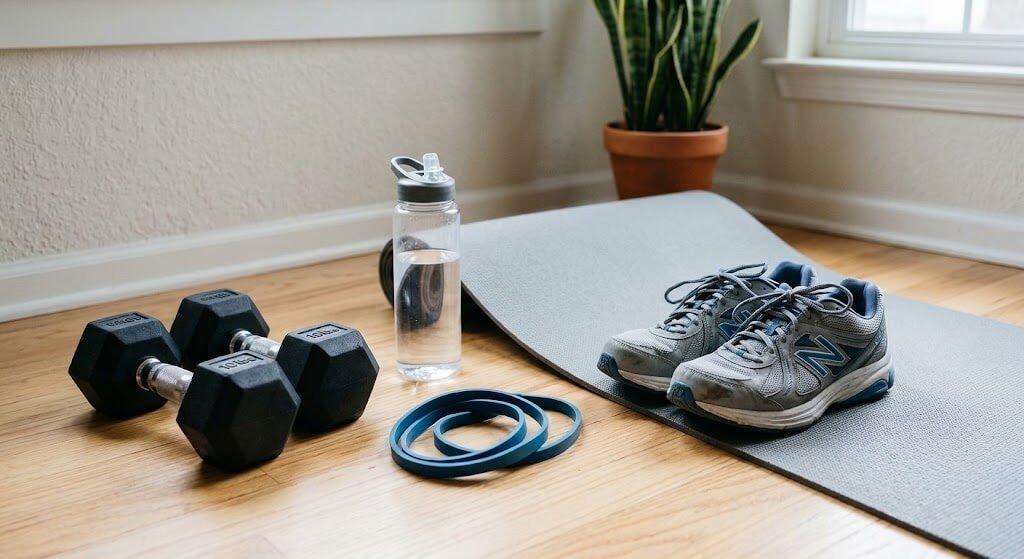
The plan below combines moderate aerobic activity with two strength sessions. Adjust the exercises, loads, and volume to your current ability. These are general examples rather than a medical prescription.
Sample weekly schedule
| Day | Activity | Suggested duration or volume |
| Monday | Full-body strength session | 25–40 minutes |
| Tuesday | Brisk walking or stationary cycling | 20–30 minutes |
| Wednesday | Easy walk or mobility work | 15–25 minutes |
| Thursday | Full-body strength session | 25–40 minutes |
| Friday | Brisk walking, cycling, or swimming | 20–30 minutes |
| Saturday | Recreational activity you enjoy | 20–40 minutes |
| Sunday | Rest or gentle movement | As comfortable |
The sample schedule gives you a starting structure. Increase activity gradually and work toward the recommended weekly amount rather than attempting to complete everything at once.
Full-body strength session
Begin with five minutes of easy movement, such as walking or pedaling a stationary bike. Use controlled repetitions and choose a resistance that allows good technique throughout the set.
| Exercise | Sets | Repetitions | Rest |
| Body-weight squat or chair squat | 2–3 | 8–12 | 60–90 seconds |
| Dumbbell hip hinge | 2–3 | 8–12 | 60–90 seconds |
| Incline push-up | 2–3 | 6–12 | 60–90 seconds |
| Seated resistance-band row | 2–3 | 8–12 | 60–90 seconds |
| Standing calf raise | 2 | 10–15 | 45–60 seconds |
Use a range of motion that feels comfortable. For resistance exercises, finish each set with approximately two or three technically sound repetitions still possible rather than forcing every set to failure.
When using dumbbells, begin with a load you can control without holding your breath or changing your posture. A lighter pair, such as 5 lb (2.3 kg) dumbbells, may be suitable for some beginners, but individual needs vary. Increase resistance only when you can perform the planned repetitions safely.
Exercise regressions and progressions
| Movement | Easier version | Harder version |
| Squat | Sit-to-stand from a stable chair | Goblet squat with a dumbbell |
| Hip hinge | Practice the movement without weight | Dumbbell Romanian deadlift with controlled progression |
| Push-up | Wall push-up | Lower incline or floor push-up |
| Row | Light resistance-band row | Stronger band or cable row |
| Calf raise | Hold a stable surface for support | Single-leg calf raise |
For the entire workout, the regression is to complete two sets with lighter resistance and longer rest periods. The progression is to add repetitions, increase resistance slightly, or perform an extra set while maintaining sound technique.
Coach’s Tip: Write down the resistance, repetitions, and sets you complete. Progress is easier to assess when you track your training instead of trying to make every session harder. A steady increase in training capacity is more useful than chasing a dramatic workout or supplement effect.
Common Mistake: Avoid adding lots of high-intensity exercise and a strong stimulant supplement at the same time just to burn more calories. Start with manageable training, pay attention to how you feel, and increase your workload gradually.
Why strength training belongs in the plan
Strength training works the muscles that produce movement, including the quadriceps, glutes, hamstrings, chest, back, shoulders, and arms. It can help improve muscular fitness and support a balanced exercise routine.
Muscle tissue contributes to resting energy needs, but it is a mistake to assume that adding a small amount of muscle will dramatically raise daily calorie expenditure. The value of resistance training extends beyond RMR: it helps build strength and gives you a structured way to improve physical capacity.
For additional lifestyle strategies, see how to increase metabolism naturally. A consistent routine involving food, movement, recovery, and sleep is a sounder foundation than relying on the uncertain metabolic effects of green tea extract.
8. Green Tea Extract Side Effects and Safety
The potential effect of green tea extract on metabolism is only one part of the decision. Safety matters just as much, particularly because concentrated supplements can provide substantially different amounts of catechins and caffeine from ordinary brewed tea.
The National Center for Complementary and Integrative Health reports that green tea extract supplements can cause nausea, constipation, abdominal discomfort, and increased blood pressure. Although uncommon, liver injury has also been reported in people who use green tea products, particularly extracts in tablet or capsule form.
Liver safety deserves special attention
Green tea extract contains EGCG, a compound that has been examined in safety assessments because of reported liver-related effects.
The European Food Safety Authority concluded that EGCG doses of 800 mg per day or more from supplements were associated with increases in liver enzymes in clinical studies. It also stated that the available data were insufficient to establish a generally safe supplemental dose (EFSA, 2018).
This does not mean that every person taking an extract will develop liver problems. It does mean that consumers should not assume a product is safe simply because its ingredients originate from tea or because a label describes it as natural.
The absence of a clearly established safe dose is especially important when interpreting marketing claims that encourage people to take larger amounts for stronger metabolic effects.
Avoid assuming that more is better
A supplement providing more EGCG is not necessarily more effective for increasing resting metabolic rate. The available research does not establish a dependable dose-response relationship that allows consumers to predict how much extra energy they will burn.
High-concentration products can increase safety concerns without providing a proven additional benefit. Avoid combining multiple green tea products or other stimulant-containing supplements without professional guidance.
Taking supplements on an empty stomach
Some green tea extract products may cause liver-related problems, and safety assessments have identified concerns with concentrated extracts taken in certain circumstances. The NIH Office of Dietary Supplements discusses liver injury associated with some green tea extracts and the importance of considering formulation and exposure (NIH ODS).
Do not assume that taking a supplement with food eliminates all risks. Follow appropriate professional guidance, and check the specific product label rather than relying on general advice about green tea beverages.
Interactions with medicines
Green tea products can interact with some medicines. The NCCIH notes that high doses of green tea have been shown to reduce blood levels and effectiveness of nadolol, a beta-blocker used for high blood pressure and heart problems (NCCIH).
Before taking a concentrated extract, discuss it with a doctor or pharmacist if you use prescription medicines, have a history of liver problems, or have a condition that could be affected by stimulants or changes in blood pressure.
Seek medical advice promptly if you develop concerning symptoms after taking a supplement. Do not keep taking a product simply because its claimed benefits require a longer trial.
Important: People who are pregnant or breastfeeding, those with medical conditions, and anyone taking regular medication should check with a qualified healthcare professional before using concentrated green tea extract for weight management.
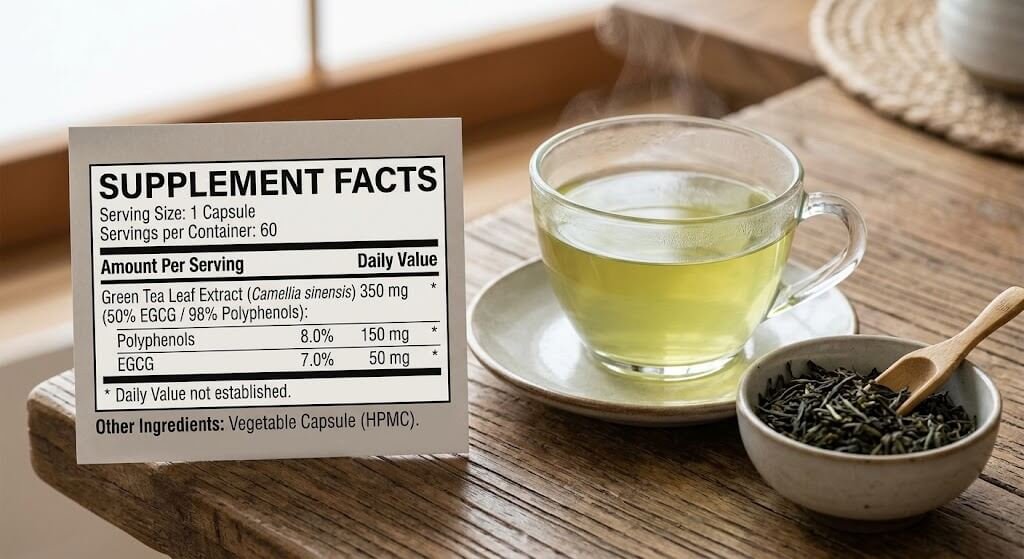
9. How to Evaluate a Green Tea Extract Supplement
If you are considering an extract despite the uncertain evidence, evaluate the product carefully rather than choosing it based on bold weight-loss promises.
A useful starting point is to review the actual ingredient information. The amount of green tea extract per serving does not automatically tell you the amount of EGCG or caffeine it contains.
Check the ingredient label
Look for the following details:
- EGCG content: Check whether the amount is stated clearly rather than relying solely on the total extract weight.
- Caffeine content: Identify the stated amount and consider other caffeine sources in your diet.
- Serving instructions: Understand the quantity recommended on the label and avoid exceeding it.
- Other active ingredients: Be cautious about combinations containing multiple stimulants or poorly explained ingredients.
- Quality information: Look for transparent manufacturing and quality-control details without assuming that a certification proves weight-loss effectiveness.
No label can guarantee that a product will increase your resting metabolic rate. Clear ingredient information helps you assess what you would be taking, but it does not establish that the supplement will deliver its advertised result.
For a wider checklist, read what to look for in a metabolism support supplement.
Be cautious with marketing claims
Claims that a product dramatically increases metabolism, burns fat while you sleep, or guarantees rapid weight loss deserve skepticism. Clinical evidence does not support treating green tea extract as a reliable shortcut to a large increase in resting calorie expenditure.
A supplement’s popularity, positive customer testimonials, or attractive ingredient list cannot replace controlled research. Look for studies in humans that measure the outcome you care about, especially RMR and meaningful changes in body composition.
Coach’s Tip: Before buying a supplement, write down the specific outcome you expect. If your goal is to improve fitness or manage body weight, compare the likely benefit and potential risks with the practical changes you can make to food choices, activity, sleep, and training.
For more guidance, see how to evaluate weight-management supplement ingredients.
10. What to Expect If You Choose to Use Green Tea Extract
It is reasonable to want a clear timeline before trying a supplement. Unfortunately, current research does not establish a dependable timeline for an increase in resting metabolic rate from green tea extract.
Some acute studies have measured changes in energy expenditure after consumption, while longer interventions have produced mixed results. These findings do not allow a reliable prediction of when an individual will experience a meaningful change in RMR, or whether such a change will occur at all.
Do not use the scale as the only measure
Body weight can fluctuate over time. A single weigh-in cannot show whether a supplement changed resting energy expenditure, fat oxidation, or body composition.
If you are working toward a fitness goal, consider practical indicators such as consistency with training, exercise tolerance, strength progression, and habits that you can maintain. If weight management is your goal, monitor longer-term patterns rather than interpreting every daily change as a direct effect of a supplement.
Avoid changing too many things at once
Starting a supplement, changing your diet, adding a new exercise program, and altering your caffeine intake at the same time makes it difficult to identify what caused any change you notice.
A more useful approach is to build one consistent habit at a time. Begin with a sustainable activity routine and balanced meals. Then review any supplement decision with an appropriate healthcare professional, particularly if you take medications or have health concerns.
Also remember that an absence of noticeable side effects does not prove that a concentrated extract is risk-free. Safety should not be judged only by how you feel during the first few days.
Focus on consistency, not a metabolic shortcut
Long-term weight management requires a combination of behaviors that work in your circumstances. No supplement can guarantee that you will burn more calories at rest, lose body fat, or maintain a particular body weight.
The most useful outcome is a routine that fits your life, protects your health, and can be followed over time. Green tea can be part of that routine as a beverage, but concentrated extracts deserve a more careful risk-benefit assessment.
11. What Else Affects Resting Metabolic Rate?
Green tea extract is only one factor researchers study when investigating energy expenditure. Your daily energy needs also depend on your body size, body composition, age, activity patterns, and individual health circumstances.
This is why two people can follow a similar diet and exercise routine but have different energy needs. A supplement that produces a measurable response in one group may not produce the same response in another.
Muscle mass and resistance training
Your muscles require energy to maintain their normal functions. Resistance training can improve muscular strength and help maintain muscle during a weight-management program.
However, the relationship between muscle and resting metabolism should not be exaggerated. Increasing strength does not guarantee a large increase in RMR, and training should not be treated as a way to dramatically elevate your calorie needs overnight.
Choose a manageable routine that includes the major muscle groups. Use squats or chair squats, hip hinges, rows, push-ups, and other movements suited to your fitness level.
Sleep and recovery
Sleep is another part of a sustainable fitness routine. Poor recovery can make it harder to maintain consistent exercise, meal preparation, and everyday activity.
Instead of trying to compensate for insufficient sleep with additional caffeine or green tea extract, establish a regular bedtime and a practical evening routine. See how sleep affects metabolism and weight management for more background.
Daily movement
Exercise sessions are important, but the rest of your day matters too. Walking, using the stairs, gardening, cycling for transport, and taking movement breaks can help you remain active outside formal workouts.
Choose activities that fit your schedule. A short walk that you repeat regularly is more practical than an ambitious routine that you cannot maintain.
Nutrition and individual health
Avoid extreme dieting in an attempt to force faster weight loss. Instead, build meals around a variety of foods that suit your nutritional needs and preferences.
If you have concerns about unexplained weight changes, persistent fatigue, or a suspected medical issue affecting your metabolism, consult a healthcare professional rather than assuming you need a supplement.
For a wider perspective, read how to support metabolism naturally for weight management.
12. Frequently Asked Questions
Does green tea extract increase resting metabolic rate permanently?
There is currently insufficient evidence to establish that green tea extract permanently increases resting metabolic rate. Some studies report changes in energy expenditure, but others find no significant difference in fasting RMR. A temporary response after consuming a supplement should not be interpreted as a lasting change in metabolism.
How much does green tea extract increase metabolism?
There is no dependable figure that applies to everyone. Some individual studies have reported increases in energy expenditure, but systematic reviews have found inconsistent results. The effect depends on the specific product, study conditions, and participant characteristics, so an advertised calorie-burning figure should not be treated as a personal prediction.
Does green tea extract burn belly fat?
Green tea extract has not been established as a reliable way to target belly fat specifically. Some research reports modest changes in body-composition measures, but results vary. A balanced eating pattern, regular physical activity, and sustainable weight-management habits are more appropriate foundations than relying on a concentrated extract for localized fat loss.
Is green tea extract better than drinking green tea?
Not necessarily. Extracts can concentrate catechins such as EGCG, but a higher concentration does not guarantee a better increase in resting metabolism or greater weight loss. Ordinary brewed green tea avoids some of the safety concerns associated with concentrated extracts, although its caffeine content still matters for sensitive individuals.
Can you take green tea extract every day?
Daily use is not automatically safe for everyone. Concentrated green tea extracts have been associated with gastrointestinal side effects, increased blood pressure, and uncommon cases of liver injury. Before regular use, review the product’s ingredients and discuss the risks with a healthcare professional, particularly if you take medications or have existing health concerns.
Does green tea extract work without exercise?
Green tea extract may affect certain metabolic measurements without exercise, but it has not been established as a dependable standalone weight-loss method. Research findings are inconsistent, and any effect may be small. Building sustainable eating and movement habits remains a more practical approach than expecting a supplement to produce a meaningful calorie deficit by itself.
Conclusion: Does Green Tea Extract Increase Resting Metabolic Rate?
So, does green tea extract increase resting metabolic rate? Research suggests that green tea catechins, particularly when combined with caffeine, may influence energy expenditure in some circumstances. However, the findings are inconsistent, and there is not enough evidence to promise a meaningful or lasting increase in resting metabolic rate.
A change in energy expenditure also does not automatically translate into substantial weight loss. Study conditions vary, individual responses differ, and concentrated extracts carry safety concerns, including the potential for liver injury.
For most people, the practical priority should be a sustainable combination of balanced nutrition, regular movement, progressive resistance training, and adequate recovery. Brewed green tea can fit into that routine if you enjoy it and tolerate caffeine. A concentrated extract deserves a more careful assessment of its potential benefits and risks.
Do not choose a supplement simply because it promises faster calorie burning. Look for credible human research, realistic claims, transparent ingredient information, and appropriate professional advice.