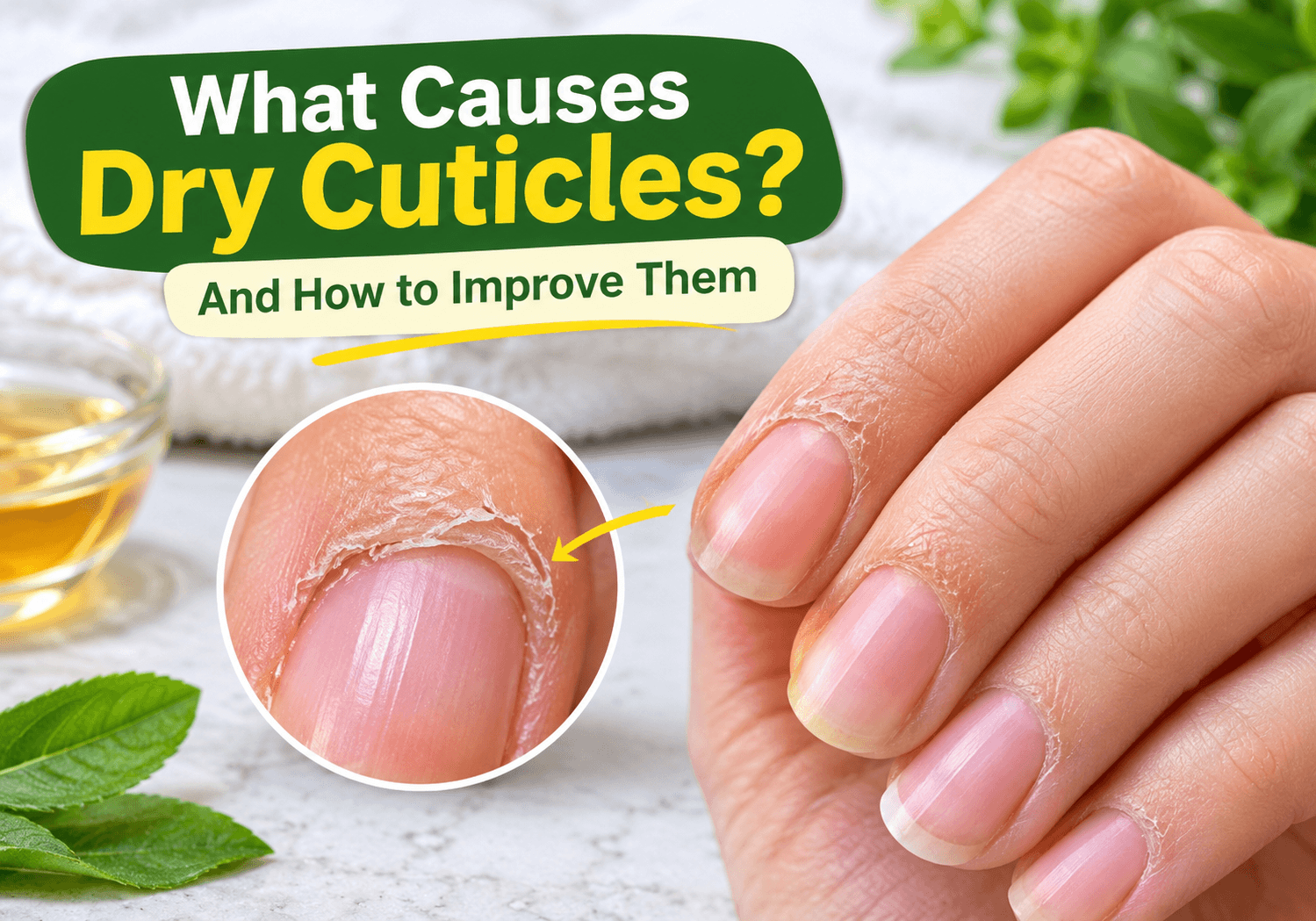
Dry, peeling cuticles can make otherwise healthy nails look rough and uncomfortable. You might notice small pieces of skin lifting around your fingernails, painful hangnails, or cracks that catch on clothing. These problems often become worse after washing dishes, cleaning, cold weather, or frequent manicures.
Understanding what causes dry cuticles and how to improve them is the first step toward healthier-looking nails. Although dryness is often related to everyday habits, persistent cuticle problems can sometimes signal an underlying skin condition that needs attention.
This guide explains common causes of dry cuticles, practical ways to restore moisture, mistakes to avoid, and signs that professional treatment may be necessary.
Quick Answer
Dry cuticles usually develop because the delicate skin around your nails loses moisture or becomes irritated by water, soap, detergents, cold weather, or nail treatments. To improve them, apply fragrance-free hand cream or petroleum jelly regularly, protect your hands during cleaning, avoid cutting or picking cuticles, and reduce irritating nail products. Persistent redness, swelling, or pain requires medical evaluation.
What Are Cuticles, and Why Do They Matter?
Before exploring what causes dry cuticles and how to improve them, it helps to understand what the cuticle actually does.
The cuticle is a thin layer of dead skin that forms a protective seal between the nail plate and the surrounding skin. This seal helps prevent irritants, moisture, and microorganisms from entering the space underneath the nail fold.
The skin surrounding the nail is called the nail fold. The proximal nail fold sits at the base of the nail, where the nail begins growing.
Although people often use the terms cuticle and nail fold interchangeably, they are different structures. The cuticle is the thin protective tissue attached to the nail plate, while the nail fold is the living skin surrounding the nail’s base.
When the cuticle becomes damaged or the nail fold becomes inflamed, the protective barrier may weaken. This can contribute to peeling skin, painful hangnails, and increased susceptibility to irritation or infection.
Healthy cuticles do not need to look perfectly smooth. Small variations in texture are normal, especially after exposure to water or dry air.
The goal is not to eliminate every visible imperfection. It is to maintain comfortable, intact skin that protects the nail.
What Causes Dry Cuticles and How to Improve Them?
Dry cuticles can develop for several reasons, and more than one factor may contribute at the same time.
1. Frequent Handwashing and Water Exposure
Nohti – zrcalo našega zdravja – Onaplus
One of the most common causes of dry cuticles is repeated exposure to water, soap, and cleansing products.
Water temporarily softens the outer layer of the skin. Repeated wetting and drying, particularly when combined with detergents, can disturb the skin’s protective barrier and increase moisture loss.
This is especially relevant for people who:
- Wash their hands many times throughout the day.
- Wash dishes without protective gloves.
- Clean bathrooms or kitchens regularly.
- Work in food preparation or healthcare.
- Frequently use soap, detergent, or disinfecting products.
The American Academy of Dermatology explains that frequent handwashing and exposure to environmental conditions can contribute to dry, irritated hands.
Its hand-care recommendations emphasize moisturizing after washing and protecting the skin from irritating conditions.
How to improve it:
- Use a gentle cleanser when possible.
- Avoid unnecessarily hot water.
- Pat your hands dry instead of rubbing aggressively.
- Apply moisturizer immediately after washing.
- Wear protective gloves during dishwashing and cleaning.
You do not need to stop washing your hands. Instead, improve your skin-care routine around necessary washing.
2. Harsh Soaps, Detergents, and Cleaning Chemicals
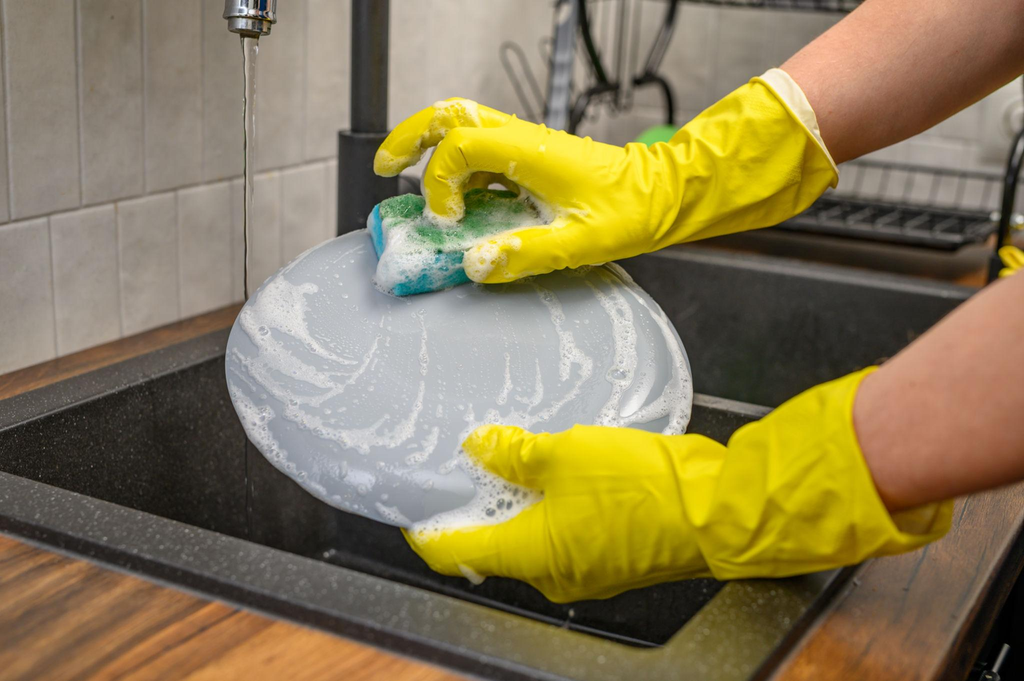
hand washing dishes at home with sink close-up, foaming dishwashing liquid flows from the plate
Cleaning products are another major reason the skin around nails becomes rough and cracked.
Some soaps and detergents contain ingredients that remove oils from the skin. Repeated exposure may irritate the nail folds, especially when the skin is already dry or sensitive.
Other products, including fragranced cleansers and certain nail-care chemicals, can trigger irritation or allergic contact dermatitis.
The American Academy of Dermatology’s dry-skin guidance recommends choosing gentle, fragrance-free products and avoiding ingredients that aggravate sensitive skin.
How to improve it:
- Choose fragrance-free hand cleansers.
- Use gloves when handling detergents.
- Avoid direct contact with strong cleaning chemicals.
- Rinse product residue thoroughly.
- Moisturize after cleaning.
If a specific soap or product repeatedly causes burning, itching, or redness, stop using it and consider whether it may be irritating your skin.
3. Cold Weather and Low Humidity
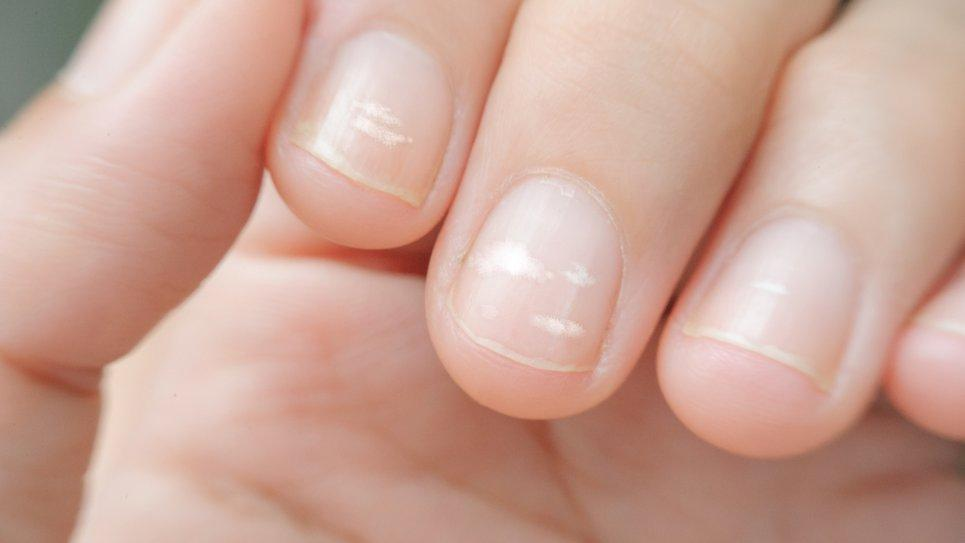
Dry cuticles often become more noticeable during winter or in environments with low humidity.
Cold outdoor air and indoor heating can contribute to moisture loss from the skin. When the surrounding skin becomes dry, the nail folds may begin to peel, crack, or develop painful hangnails.
People who spend time outdoors, work in air-conditioned environments, or live in regions with seasonal dryness may notice recurring cuticle problems.
How to improve it:
- Wear gloves when exposed to cold air.
- Keep a hand cream available throughout the day.
- Apply a thicker moisturizer before bedtime.
- Consider a clean humidifier if indoor air is consistently dry.
A simple moisturizing routine can be more useful than repeatedly trimming away peeling skin.
4. Cutting, Pushing Back, or Picking Cuticles
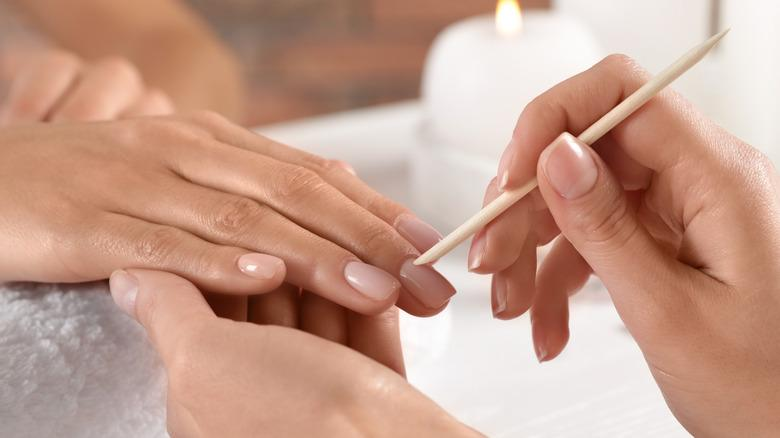
Why You Might Want To Ask Your Nail Tech To Skip Cuticle Cutting During Your Next Manicure
Manicure habits can directly contribute to damaged cuticles.
Cutting or aggressively pushing back the cuticle may disrupt the protective seal around the nail. Picking at peeling skin can also create small openings that allow bacteria to enter.
According to the American Academy of Dermatology’s nail-care recommendations, cuticle protection is important because the surrounding skin helps protect the nail from infection.
The British Association of Dermatologists also recommends avoiding cuticle trimming and pushing during the management of chronic nail-fold inflammation.
How to improve it:
- Stop cutting the cuticle.
- Avoid aggressively pushing it backward.
- Do not pull off loose skin.
- Carefully trim a hangnail only when necessary, using clean nail clippers.
- Keep the surrounding skin moisturized.
A hangnail is a small tear in the skin, not a piece of nail. Pulling it can enlarge the tear and make the area more painful.
5. Nail Polish, Gel Manicures, and Artificial Nails
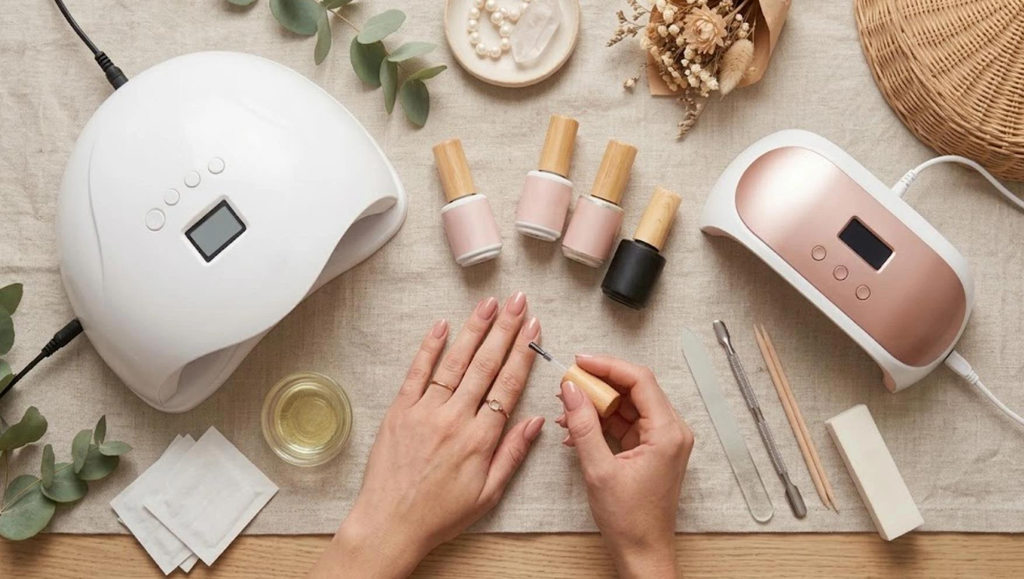
How to Choose the Right Lamp for Curing Gel Nail Polish | News Minimalist
Some nail treatments can contribute to irritation, dryness, or allergic reactions.
Potential triggers include:
- Nail polish removers containing acetone.
- Artificial nail adhesives.
- Gel manicure products.
- Acrylate-containing nail products.
- Aggressive filing or scraping.
- Repeated professional manicures that damage the nail folds.
The problem is not simply that every nail polish product dries the skin. Rather, particular ingredients and application practices may irritate or damage the surrounding tissue.
Some people also develop allergic contact dermatitis from nail cosmetics. This can produce itching, redness, swelling, or peeling around the nails.
The British Association of Dermatologists’ chronic paronychia guidance recommends avoiding irritating nail treatments and products when nail-fold inflammation is present.
How to improve it:
- Take a break from irritating nail treatments.
- Avoid removing cuticles during manicures.
- Do not peel off gel polish.
- Stop using products that trigger itching or burning.
- Seek dermatology advice if symptoms recur after particular nail products.
A temporary break from manicures may allow irritated skin to recover.
6. Nail Biting and Skin Picking
Nail biting and cuticle picking can repeatedly damage the skin surrounding the nail.
These habits create small tears and expose sensitive tissue. They may also interfere with the cuticle’s protective role.
Repeated picking can produce:
- Bleeding around the nail.
- Persistent peeling.
- Painful hangnails.
- Redness and swelling.
- Increased infection risk.
How to improve it:
Keep your nails trimmed, moisturize the surrounding skin, and avoid using your fingers to remove loose skin.
If nail biting or skin picking is difficult to control, consider strategies such as habit-reversal techniques, keeping your hands occupied, or seeking professional support.

Could Dry Cuticles Be a Sign of a Skin Condition?
Not every case of dry cuticles is simple dryness.
Sometimes the skin around the nails becomes irritated because of an underlying condition. Identifying that condition is important because moisturizer alone may not resolve the problem.
Hand Eczema
Hand eczema can cause dry, itchy, inflamed, and cracked skin.
It may affect the fingers, palms, and skin around the nails. Some people experience deep cracks, burning, blisters, or bleeding.
The American Academy of Dermatology’s hand eczema guide explains that hand eczema may resemble ordinary dryness but often requires more than moisturizer alone.
Potential triggers include frequent washing, detergents, chemicals, allergens, and environmental irritation.
If the skin around your nails remains inflamed despite careful moisturizing, hand eczema may be worth discussing with a dermatologist.
Contact Dermatitis
Contact dermatitis occurs when the skin reacts to an irritating substance or an allergen.
Irritant contact dermatitis can develop after repeated exposure to water, soap, detergents, or chemicals.
Allergic contact dermatitis occurs when the immune system reacts to a particular substance. Nail cosmetics, fragrances, adhesives, and other ingredients can sometimes trigger this reaction.
Symptoms may include:
- Redness or discoloration.
- Itching.
- Peeling skin.
- Swelling.
- Burning.
- Small blisters.
If symptoms repeatedly appear after using a particular nail product, discontinue it and seek medical advice.
Chronic Paronychia
What Your Fingernails Say About Your Health: Ridges, Spots, Lines, Bumps, and More
Chronic paronychia is persistent inflammation of the nail folds.
It commonly develops when the skin surrounding the nails is repeatedly exposed to water, irritants, or allergens. The protective cuticle may become damaged, allowing further irritation.
The MSD Manual’s professional guidance on chronic paronychia describes this condition as an inflammatory disorder associated with prolonged moisture or irritant exposure.
Possible symptoms include:
- Persistent swelling around the nail.
- Redness or discoloration.
- Tenderness.
- Loss of the normal cuticle.
- Nail surface changes.
- Recurring inflammation.
Chronic paronychia is not always primarily a fungal infection. Treatment often focuses on reducing irritation and controlling inflammation rather than automatically using antifungal medication.
If the nail fold remains swollen or the cuticle repeatedly disappears, professional assessment is important.
How to Improve Dry Cuticles: A Practical Daily Routine
The most effective approach combines moisture replacement with protection from further irritation.
You do not need an expensive manicure kit or a complicated collection of nail products. A gentle cleanser, a suitable moisturizer, and consistent habits are usually a good starting point.
Step 1: Choose a Suitable Moisturizer
Layer Lotion with Petroleum Jelly for Winter Protection – Stillmans Beauty
The type of moisturizer you choose matters.
The American Academy of Dermatology recommends creams and ointments for very dry skin because they generally provide more effective moisture protection than lightweight lotions.
Look for ingredients such as:
| Ingredient | What it does |
| Petrolatum | Helps reduce water loss by forming a protective layer |
| Mineral oil | Helps soften skin and reduce moisture loss |
| Glycerin | Attracts and retains water in the outer skin |
| Ceramides | Help support the skin’s protective barrier |
| Dimethicone | Provides a protective, skin-conditioning layer |
| Shea butter | Helps soften and condition dry skin |
For severely dry cuticles, a fragrance-free ointment or thick cream may be more useful than a thin lotion.
You can read the AAD moisturizer selection guide for additional information about choosing products for dry skin.
Step 2: Moisturize After Every Handwashing
A practical routine is to apply moisturizer whenever your hands feel dry and immediately after washing.
Try the following:
- Wash your hands with lukewarm water.
- Use a gentle cleanser.
- Pat your hands dry.
- Leave the skin slightly damp.
- Apply moisturizer to your fingers and nail folds.
- Gently massage the product around each nail.
Pay particular attention to the skin at the base and sides of your nails.
This routine helps reduce moisture loss while supporting the skin’s protective barrier.
The AAD handwashing guidance specifically recommends applying hand cream or ointment to damp skin and working it into the fingertips and nails.
Step 3: Use Petroleum Jelly Before Bed
Dermatologists Swear By This Drugstore Nail Strengthener for Stronger, Healthier Nails | SELF
Overnight moisturizing is a simple option for persistent cuticle dryness.
Before bedtime:
- Wash your hands gently.
- Apply a thick fragrance-free cream.
- Add a small amount of petroleum jelly around particularly dry nail folds.
- Consider wearing clean cotton gloves if comfortable.
The ointment helps reduce moisture loss while you sleep.
Avoid applying products that sting or cause irritation. If your skin reacts to an ingredient, discontinue it.
Step 4: Protect Your Hands During Household Work
Use protective gloves for tasks that involve detergents, cleaning chemicals, or prolonged water exposure.
For dishwashing, waterproof gloves can help keep your hands away from irritating detergents. For prolonged glove use, consider comfortable gloves that fit well and keep your hands from becoming excessively sweaty.
Remove gloves if moisture builds up inside them. Persistent dampness can also irritate the skin.
If your hands are sensitive, avoid direct contact with strong cleaning products.
Step 5: Stop Removing the Cuticle
Кутикула захищає ніготь від бактерій і забруднень
One of the most important cuticle-care habits is to leave the protective skin intact.
Avoid cutting or aggressively pushing back cuticles, particularly if they are already dry, cracked, or inflamed.
If you have a loose hangnail, use clean nail clippers to carefully trim the loose edge without cutting into living skin.
Do not bite, pull, or tear the skin.
Step 6: Give Irritated Nail Folds a Break
If nail products seem to make your cuticles worse, temporarily stop using them.
Avoid:
- Gel manicures.
- Artificial nails.
- Strong nail polish removers.
- Cuticle-removing products.
- Aggressive nail filing.
Allow the skin to recover while following a gentle moisturizing routine.
If the problem continues after avoiding these triggers, a dermatologist may help identify an allergy or underlying skin condition.
Does Cuticle Oil Help Dry Cuticles?
Cuticle oil may help soften dry skin around the nails and improve its appearance.
Many cuticle oils contain plant oils or other emollient ingredients that help condition the skin. Some products also contain fragrance or essential oils, which may irritate sensitive skin.
Cuticle oil can be a useful addition to a nail-care routine, but it is not essential.
For severely dry or cracked cuticles, a thicker cream or ointment may provide more effective protection against moisture loss.
Cuticle Oil vs. Hand Cream vs. Petroleum Jelly
| Product | Best use |
| Cuticle oil | Softening and conditioning the nail folds |
| Hand cream | Daily hydration and skin-barrier support |
| Petroleum jelly | Protecting very dry skin and reducing moisture loss |
| Thick ointment | Intensive care for severely dry areas |
You can use cuticle oil during the day and a thicker moisturizer at night.
However, the most important factor is consistent application rather than buying multiple products.
Can Diet or Dehydration Cause Dry Cuticles?
Nutrition and hydration are often mentioned as causes of dry cuticles, but the relationship is more complicated than many beauty articles suggest.
The skin needs adequate nutrition to maintain normal structure and function. Severe nutritional deficiencies can affect skin and nail health, but ordinary cuticle dryness is more commonly related to environmental exposure, irritation, and skin-barrier problems.
Drinking enough water supports normal hydration, but simply drinking extra water is unlikely to resolve cuticle dryness caused by detergents, cold air, or repeated handwashing.
Similarly, taking supplements without identifying a deficiency is not a reliable treatment for dry cuticles.
If you have persistent skin or nail changes along with other symptoms, discuss your concerns with a healthcare professional rather than assuming a vitamin deficiency.
Common Mistakes That Make Dry Cuticles Worse
Close up of fingers with dry, cracked skin on cuticles, skin is torn and flaking off
Even when you are trying to improve your cuticles, certain habits can slow recovery.
Common Mistake: Pulling Off Peeling Skin
Pulling loose skin often creates a larger tear.
Fix: Carefully trim a hangnail with clean clippers instead of pulling it.
Common Mistake: Applying Moisturizer Only Once a Day
Dry skin may need repeated moisturizing, especially after handwashing.
Fix: Keep a small hand cream nearby and apply it whenever your hands feel dry.
Common Mistake: Using Hot Water
Very hot water can aggravate already irritated skin.
Fix: Use lukewarm water and pat your hands dry.
Common Mistake: Cutting the Cuticle for a Cleaner Manicure
Removing the cuticle can weaken the protective barrier.
Fix: Leave the cuticle intact and focus on moisturizing the surrounding skin.
Common Mistake: Ignoring Persistent Redness
Repeated redness, swelling, or tenderness may indicate inflammation rather than simple dryness.
Fix: Seek medical advice when symptoms persist or worsen.
How Long Does It Take to Improve Dry Cuticles?
Как предотвратить отслойки на ногтях? 6 секретов
The recovery time depends on how severely the skin is damaged and whether the underlying cause has been removed.
Mild dryness may improve after several days of consistent moisturizing and reduced irritation.
More persistent peeling, cracked skin, or inflammation may take longer to settle. Chronic nail-fold conditions can require medical treatment and several weeks of careful protection.
A useful approach is to focus on gradual improvement rather than expecting an overnight transformation.
Signs that your routine is helping may include:
- Less peeling.
- Reduced discomfort.
- Fewer hangnails.
- Softer surrounding skin.
- Less frequent cracking.
If symptoms do not improve despite consistent care, consider whether an underlying skin condition or product allergy may be contributing.
When Should You See a Dermatologist?
Most mild cuticle dryness can be managed with basic skin care.
However, medical evaluation is important if you experience:
- Persistent redness or swelling.
- Significant pain around a nail.
- Pus or drainage.
- Deep cracks that repeatedly bleed.
- Recurring nail-fold inflammation.
- Changes in nail shape or color.
- Symptoms that do not improve with gentle care.
- Skin reactions after using nail cosmetics.
An infection may develop when bacteria enter damaged skin around the nail.
The Cleveland Clinic’s paronychia guide explains that nail infections can occur when organisms enter through breaks in the skin surrounding the nail.
Seek prompt medical attention if you develop rapidly worsening pain, spreading redness, significant swelling, or fever.
Do not attempt to drain an infected nail fold yourself.
A dermatologist can determine whether the problem is ordinary dryness, eczema, contact dermatitis, chronic paronychia, or another nail condition.
Treatment may involve prescription anti-inflammatory medication, allergy testing, or other care depending on the diagnosis.
Frequently Asked Questions
1. What causes dry cuticles and how to improve them naturally?
Dry cuticles commonly result from frequent handwashing, detergents, cold weather, nail treatments, and picking or cutting the surrounding skin. To improve them naturally, use gentle cleansers, apply a fragrance-free moisturizer regularly, protect your hands during cleaning, and avoid damaging the cuticle. Petroleum jelly can help protect particularly dry areas.
2. Why are my cuticles dry and peeling even when I use cuticle oil?
Cuticle oil may soften the skin but cannot always prevent moisture loss or treat underlying irritation. Frequent handwashing, detergents, allergic reactions, or eczema may continue damaging the skin. Try a thicker fragrance-free cream or ointment and reduce irritating exposures. Persistent peeling or inflammation should be assessed by a dermatologist.
3. What is the best moisturizer for dry cuticles?
A fragrance-free cream or ointment containing petrolatum, glycerin, mineral oil, or ceramides is a practical choice. Creams and ointments generally provide better protection for very dry skin than lightweight lotions. Petroleum jelly can also help reduce moisture loss around cracked cuticles. Choose products that do not sting or irritate your skin.
4. Can frequent handwashing cause cracked cuticles?
Yes. Repeated exposure to water, soaps, and detergents can irritate the skin and weaken its protective barrier. This may contribute to dryness, peeling, and cracking around the nails. Continue washing your hands as needed, but use gentle cleansers, pat them dry, and apply moisturizer after washing to help protect the skin.
5. Does cutting cuticles make them grow back thicker?
Cutting cuticles does not reliably make them grow back thicker, but repeated cutting can damage the surrounding skin and contribute to roughness, peeling, and inflammation. Removing the protective cuticle may also increase the risk of nail-fold problems. Leaving cuticles intact and moisturizing regularly is generally a safer approach.
6. When are dry cuticles a sign of infection?
Dryness alone does not necessarily indicate an infection. However, increasing pain, swelling, warmth, redness, or pus around a nail may suggest paronychia or another infection. A damaged cuticle can provide an entry point for microorganisms. Seek medical attention if these symptoms develop, particularly if they worsen rapidly or occur with fever.
Conclusion
Understanding what causes dry cuticles and how to improve them makes nail care much easier.
Most cuticle problems are linked to repeated moisture exposure, harsh cleansing products, cold weather, nail treatments, or habits that damage the surrounding skin. The best starting point is to protect the cuticle, reduce irritation, and apply a suitable moisturizer consistently.
A simple routine of gentle handwashing, fragrance-free cream, petroleum jelly at night, and protective gloves during cleaning can help improve everyday dryness.
Remember that persistent swelling, pain, redness, or recurring peeling may indicate an underlying condition rather than ordinary dryness.
Healthy cuticles do not require expensive products or aggressive manicures. Consistent care and protection are usually more valuable than complicated nail treatments.