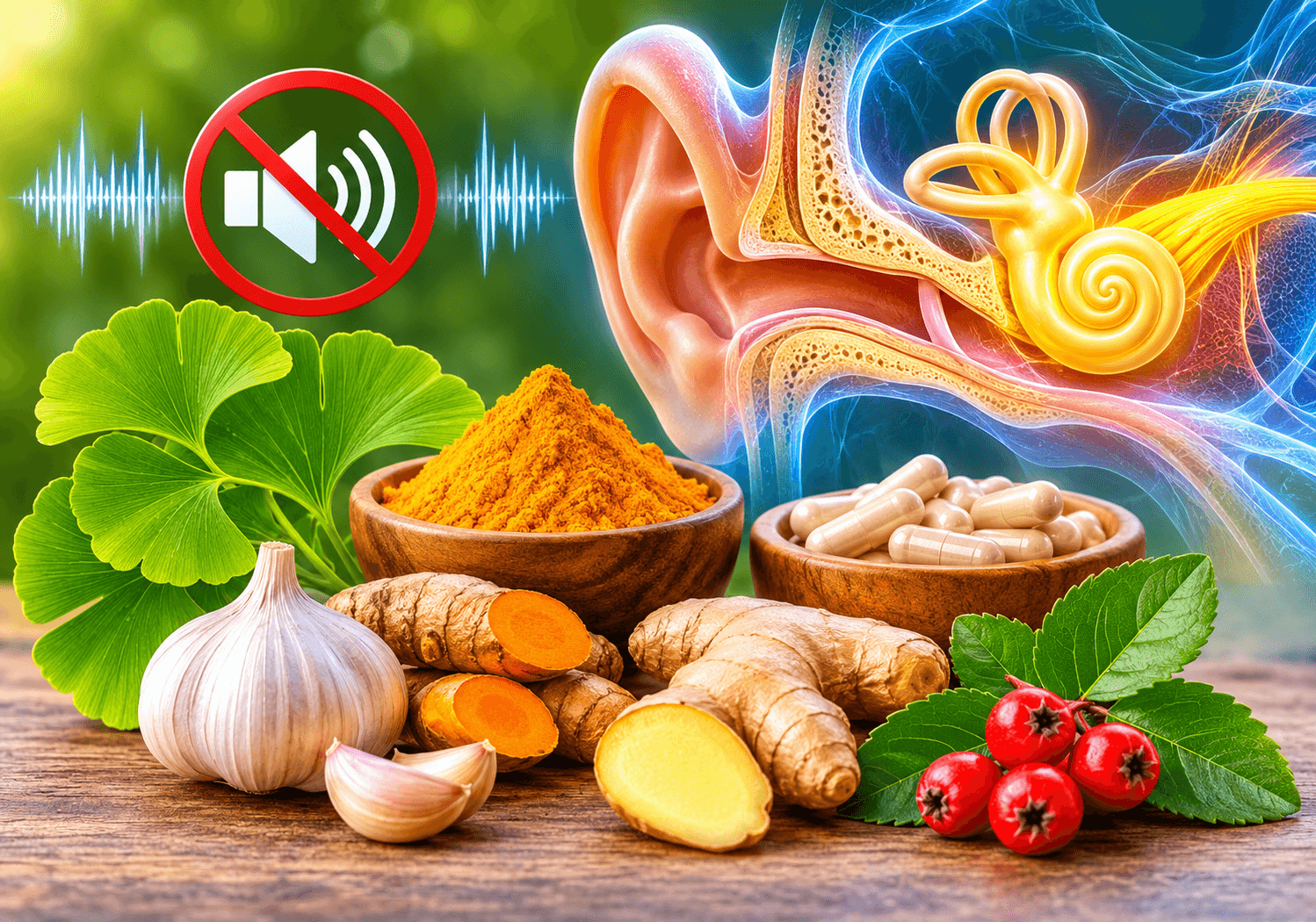
Dealing with a persistent ringing, buzzing, or hissing in your ears can be incredibly frustrating. If you are searching for the best herbs for inner ear health and tinnitus, you are not alone. Millions of people seek natural, evidence-based ways to support their auditory system and find relief. As a certified health and conditioning coach, I guide clients through practical, science-backed strategies to protect their hearing and manage tinnitus symptoms. This guide breaks down the most researched natural options, how they work, and how to use them safely.
Quick Answer
The best herbs for inner ear health and tinnitus include Ginkgo biloba, magnesium, zinc, and turmeric. These natural options may support cochlear blood flow, reduce oxidative stress, and protect delicate auditory nerves. Always consult a healthcare provider before starting any new supplement regimen to ensure proper dosing and avoid medication interactions.
Understanding Inner Ear Health and Tinnitus
To effectively manage tinnitus, we must first understand the anatomy involved. The inner ear contains the cochlea, a snail-shaped organ lined with thousands of microscopic hair cells. These cells convert sound waves into electrical signals that travel via the auditory nerve to the brain.
When these hair cells are damaged by loud noise, aging, or poor circulation, they can send random, false signals to the brain. The brain interprets this phantom activity as sound, resulting in tinnitus. Research from the Mayo Clinic highlights that oxidative stress and restricted microcirculation are primary drivers of this cellular damage.
Supporting inner ear health requires a two-pronged approach: improving blood flow to deliver oxygen and nutrients, and neutralizing free radicals that cause oxidative stress. The natural compounds listed below target these exact mechanisms.

Top 8 Herbs and Natural Supplements for Tinnitus Relief
1. Ginkgo Biloba
Ginkgo biloba is arguably the most famous herb for auditory health. It contains flavonoids and terpenoids, which are powerful antioxidants. More importantly, ginkgo is a known vasodilator, meaning it helps widen blood vessels. This action improves microcirculation directly to the cochlea and the brain’s auditory processing centers.
A systematic review published in PubMed noted that ginkgo biloba extract showed promise in improving tinnitus symptoms, particularly in patients with underlying vascular issues.
- Recommended Dosage: 120–240 mg per day of a standardized extract (containing 24% flavone glycosides and 6% terpene lactones), divided into two or three doses.
- Safety Note: Ginkgo can thin the blood. Avoid it if you take anticoagulant medications like warfarin or aspirin without medical supervision.
2. Magnesium
Magnesium is a critical mineral for nerve function and muscle relaxation. In the inner ear, magnesium acts as a protective shield for hair cells. It blocks the NMDA receptors in the auditory nerve, preventing glutamate excitotoxicity—a process where overstimulation damages nerve cells.
Research documented by the National Institutes of Health (NIH) demonstrates that magnesium supplementation can significantly reduce the incidence and severity of noise-induced hearing loss and associated tinnitus.
- Recommended Dosage: 300–400 mg per day of magnesium glycinate or magnesium citrate for optimal absorption.
- Safety Note: High doses of magnesium oxide may cause digestive upset. Stick to well-absorbed forms like glycinate.
3. Zinc
The inner ear contains one of the highest concentrations of zinc in the human body. Zinc plays a vital role in cellular metabolism, immune function, and antioxidant defense within the cochlea. A deficiency in this mineral is frequently linked to the onset or worsening of tinnitus.
A clinical study highlighted in PubMed found that zinc supplementation led to a significant improvement in tinnitus severity for patients who had low baseline serum zinc levels.
- Recommended Dosage: 15–30 mg per day of zinc picolinate or zinc gluconate.
- Safety Note: Long-term zinc supplementation above 40 mg per day can interfere with copper absorption. If you take zinc long-term, ensure your supplement includes 1–2 mg of copper.
4. Turmeric (Curcumin)
Curcumin, the active compound in turmeric, is a potent anti-inflammatory and antioxidant agent. Chronic, low-grade neuroinflammation in the auditory pathway can exacerbate tinnitus. Curcumin helps downregulate inflammatory cytokines and scavenges free radicals that damage delicate ear structures.
According to research in Medicine & Science in Sports & Exercise, curcumin’s ability to reduce oxidative stress makes it a valuable neuroprotective compound.
- Recommended Dosage: 500–1,000 mg per day of curcumin extract.
- Safety Note: Curcumin is poorly absorbed on its own. Always choose a formula that includes piperine (black pepper extract) or liposomal delivery to increase bioavailability by up to 2,000%.

5. Garlic
Garlic is more than just a kitchen staple; it is a powerful cardiovascular herb. Its active compound, allicin, promotes healthy blood vessel function and reduces arterial stiffness. Since the blood vessels supplying the inner ear are incredibly tiny, maintaining optimal systemic circulation is crucial for delivering oxygen to the cochlea.
Studies referenced by the NIH confirm that aged garlic extract improves microcirculation and reduces oxidative damage, indirectly supporting auditory health.
- Recommended Dosage: 600–1,200 mg per day of aged garlic extract, or 1–2 raw cloves daily.
- Safety Note: Garlic has mild blood-thinning properties. Consult your doctor if you are scheduled for surgery or take blood thinners.
6. Ginger
Ginger shares some circulatory benefits with garlic but also possesses strong anti-nausea and vestibular-soothing properties. For individuals whose tinnitus is accompanied by dizziness or Ménière’s disease symptoms, ginger can help stabilize the vestibular system. It achieves this by improving blood flow and reducing inflammation in the inner ear fluids.
Research published in peer-reviewed phytotherapy journals indicates that gingerol, the active component in ginger, effectively inhibits inflammatory pathways.
- Recommended Dosage: 1–2 grams (1,000–2,000 mg) of ginger root extract per day, or 1–2 cups of fresh ginger tea.
- Safety Note: Generally very safe, but extremely high doses may cause mild heartburn in sensitive individuals.
7. Hawthorn Berry
Hawthorn berry is a traditional herbal remedy primarily used for cardiovascular support. It contains oligomeric proanthocyanidins (OPCs), which strengthen capillary walls and improve blood flow. Because the stria vascularis in the cochlea relies on a dense network of capillaries to produce endolymph (inner ear fluid), hawthorn’s vascular support is highly relevant.
Clinical trials noted in PubMed show hawthorn extract improves overall circulation and reduces symptoms related to poor blood flow.
- Recommended Dosage: 300–450 mg per day of standardized hawthorn extract.
- Safety Note: Hawthorn can interact with blood pressure medications and digoxin. Medical supervision is required if you have a heart condition.
8. Vitamin B12
While technically a vitamin, B12 is essential enough to warrant inclusion in any natural ear health protocol. Vitamin B12 is critical for maintaining the myelin sheath, the protective coating around the auditory nerve. Demyelination can lead to erratic nerve signaling, which the brain perceives as tinnitus.
A well-known study published in the American Journal of Otolaryngology demonstrated that patients with tinnitus and a documented vitamin B12 deficiency experienced significant symptom improvement after receiving B12 injections or supplementation.
- Recommended Dosage: 1,000 mcg (1 mg) per day of methylcobalamin, the active and most bioavailable form of B12.
- Safety Note: Vitamin B12 is water-soluble and has a very high safety profile, with excess amounts simply excreted in urine.
Coach’s Tip:
Think of your supplement routine like a training program. Do not start all eight of these on day one. Introduce one new supplement at a time, waiting 7 to 10 days before adding another. This allows you to track exactly which compound is providing relief and ensures you do not experience any adverse reactions.

How to Build a Daily Routine for Ear Health
Consistency is the key to seeing results with natural remedies. Neural healing and cellular repair take time. Below is a practical, easy-to-follow daily schedule to integrate these supplements effectively.
| Time of Day | Supplement / Action | Purpose |
| Morning (with breakfast) | Vitamin B12 (1,000 mcg) + Ginkgo Biloba (120 mg) | Boosts nerve energy and kickstarts healthy microcirculation for the day. |
| Afternoon (with lunch) | Magnesium Glycinate (200 mg) + Zinc (15 mg) | Supports cellular repair and provides antioxidant protection during peak daily stress. |
| Evening (with dinner) | Turmeric/Curcumin (500 mg) + Garlic or Ginger | Leverages anti-inflammatory properties overnight to reduce neural irritation and support rest. |
Note: Always take fat-soluble compounds like curcumin with a meal containing healthy fats (e.g., avocado, olive oil, or nuts) to maximize absorption.
Common Mistakes and Safety Tips
When using natural remedies for tinnitus, people often fall into predictable traps. Avoiding these will save you time, money, and frustration.
Common Mistake:
Expecting overnight results. Unlike a painkiller that masks symptoms in 30 minutes, herbal supplements work by gradually repairing cellular damage and improving circulation. It typically takes 8 to 12 weeks of consistent use to notice a meaningful reduction in tinnitus volume or annoyance. Do not quit after two weeks.
Safety Guidelines
- Check for Interactions: Herbal supplements are pharmacologically active. If you take prescription medications, especially blood thinners, blood pressure drugs, or antidepressants, consult your physician or pharmacist first.
- Quality Matters: The supplement industry is not strictly regulated. Choose brands that undergo third-party testing (e.g., USP, NSF, or ConsumerLab) to ensure purity and accurate labeling.
- Protect Your Ears: Supplements cannot undo damage from ongoing noise exposure. Always wear high-fidelity earplugs (reducing sound by 15–20 decibels) at concerts, while using power tools, or in loud work environments.

When to See a Doctor
While natural supplements are excellent for supportive care, tinnitus can sometimes be a symptom of a more serious underlying condition. Seek immediate evaluation from an audiologist or ENT (Ear, Nose, and Throat) specialist if you experience:
- Tinnitus in only one ear (unilateral tinnitus).
- Sudden or rapidly worsening hearing loss.
- Tinnitus that pulses in time with your heartbeat (pulsatile tinnitus).
- Accompanying dizziness, vertigo, or facial weakness.
These symptoms require professional medical imaging and diagnostic testing to rule out conditions like acoustic neuroma, Meniere’s disease, or vascular abnormalities.
Frequently Asked Questions
What are the best herbs for inner ear health and tinnitus?
The most evidence-backed options include Ginkgo biloba for circulation, magnesium for nerve protection, zinc for cellular health, and turmeric for reducing inflammation. Always choose high-quality, third-party tested supplements.
Does ginkgo biloba really help with ringing in the ears?
Research suggests ginkgo biloba can improve microcirculation to the cochlea. It is most effective for individuals whose tinnitus is linked to vascular issues or poor blood flow, though results vary by individual.
Can magnesium supplements reduce tinnitus symptoms?
Yes. Magnesium protects inner ear hair cells from glutamate excitotoxicity and noise-induced damage. Studies show it is particularly effective as a preventive measure and for those with noise-related tinnitus.
How long does it take for herbal tinnitus remedies to work?
Natural supplements work gradually by supporting cellular repair. Most clinical studies and coaching experiences indicate it takes 8 to 12 weeks of consistent, daily use to observe noticeable improvements in tinnitus severity.
Can zinc deficiency cause ringing in the ears?
Yes. The inner ear has a high concentration of zinc. A deficiency can impair cellular metabolism and antioxidant defense in the cochlea, leading to or worsening tinnitus symptoms. Supplementation helps if a deficiency is present.
Is it safe to combine herbal tinnitus treatments with prescription medications?
Not always. Herbs like ginkgo and garlic have blood-thinning properties and can interact with anticoagulants. Always consult your doctor or pharmacist before combining supplements with prescription drugs.
Conclusion
Finding the best herbs for inner ear health and tinnitus is about supporting your body’s natural healing mechanisms. By focusing on compounds that improve cochlear blood flow, reduce oxidative stress, and protect the auditory nerve—such as Ginkgo biloba, magnesium, zinc, and turmeric—you can take proactive steps toward managing your symptoms. Remember that consistency, patience, and professional medical guidance are your best tools. Pair these natural strategies with proper hearing protection for a comprehensive approach to auditory wellness.