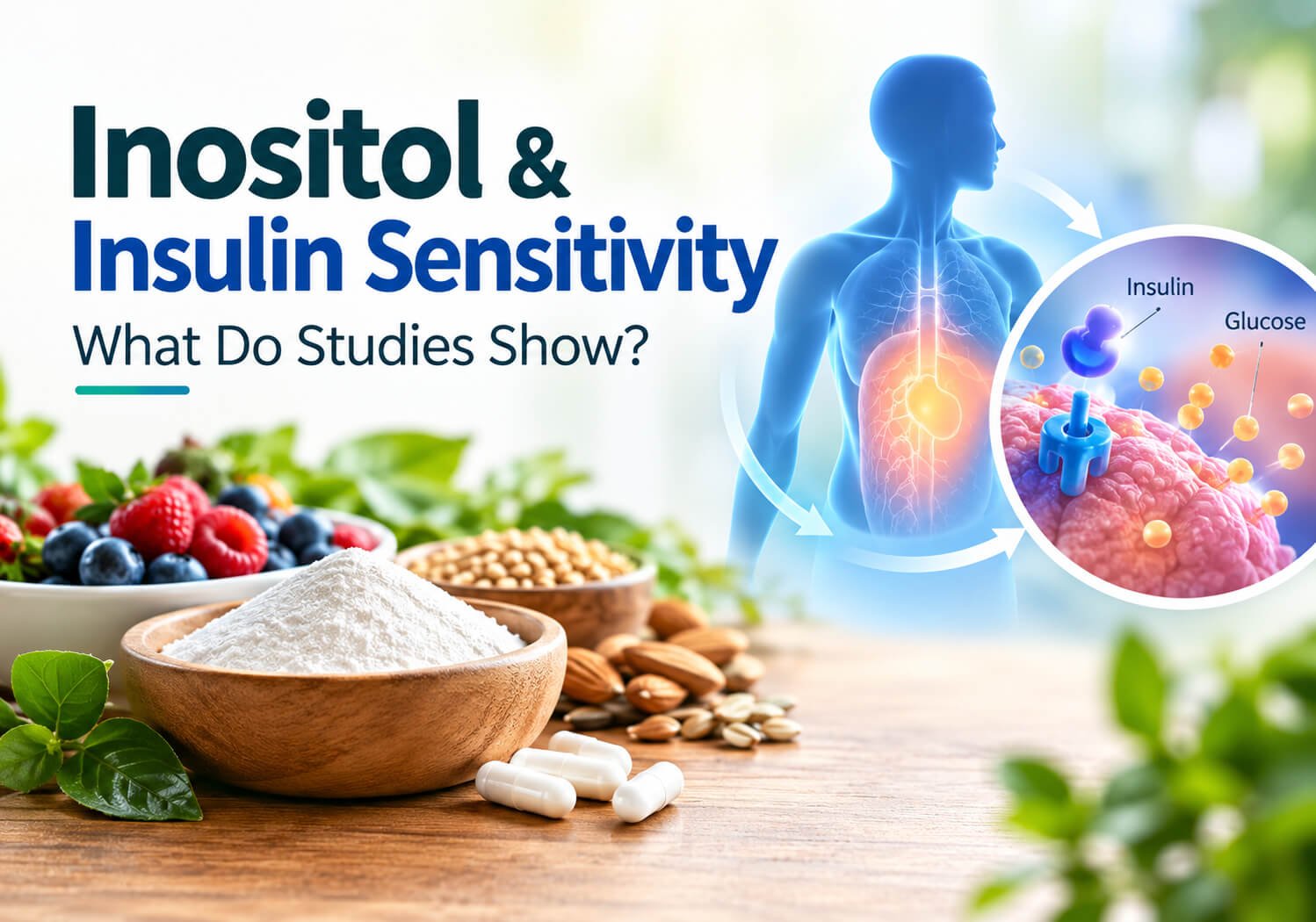
1. Introduction: Inositol and Insulin Sensitivity — An Evidence-Based Overview
Inositol and insulin sensitivity have attracted increasing attention in nutritional and reproductive health research, particularly among people with polycystic ovary syndrome (PCOS). Inositol is a naturally occurring compound involved in cellular communication, including processes associated with insulin signaling and glucose metabolism. Because insulin helps the body regulate blood glucose, researchers have investigated whether supplemental inositol can improve the way cells respond to this hormone. The findings are promising in certain populations, but the strength of the evidence varies, and the available research does not establish inositol as a proven treatment for every form of insulin resistance.
Does inositol improve insulin sensitivity? Some clinical studies suggest that inositol supplements, especially myo-inositol and certain formulations containing D-chiro-inositol, may improve measures such as fasting insulin and the homeostatic model assessment of insulin resistance (HOMA-IR) in women with PCOS. However, improvements in these laboratory measurements do not automatically demonstrate meaningful long-term health benefits. Study sizes, supplement formulations, treatment durations, and research quality also differ considerably.
An important distinction is that PCOS-related metabolic research cannot automatically be applied to people with prediabetes, type 2 diabetes, or insulin resistance caused by other conditions. Likewise, evidence that inositol participates in insulin signaling does not prove that taking a supplement produces a clinically important effect.
This article examines what scientific studies show about inositol and insulin sensitivity, how myo-inositol differs from D-chiro-inositol, why PCOS is a major research focus, and what is known about blood sugar, dosage, side effects, and interactions. It also compares inositol with metformin and lifestyle interventions while explaining the limitations of current evidence.
The central takeaway is straightforward: inositol may have a role in supporting certain metabolic outcomes, particularly in some people with PCOS, but its effectiveness, ideal formulation, and long-term benefits remain uncertain. Understanding the evidence is more useful than relying on broad supplement marketing claims.
2. What Is Inositol, and How Does It Work in the Body?
Inositol is a naturally occurring, carbohydrate-like compound found in the human body and in foods such as fruits, beans, grains, nuts, and seeds. Although it is sometimes grouped with B vitamins in older nutritional discussions, inositol is not officially classified as an essential vitamin. The body can produce it, and it participates in several biological processes, including cell membrane function, cellular communication, and signaling pathways involved in metabolism. Researchers are particularly interested in inositol because certain inositol-derived molecules may help transmit signals from insulin receptors to processes inside cells. These functions provide a scientific reason to investigate inositol supplements for insulin resistance, although biological activity alone does not establish clinical effectiveness.
Myo-inositol vs. D-chiro-inositol
Myo-inositol and D-chiro-inositol are two forms of inositol frequently studied in metabolic and reproductive health. Myo-inositol is the predominant form in the body and participates in several cellular signaling processes. D-chiro-inositol is produced through an enzyme-mediated conversion of myo-inositol and has also been investigated for its potential role in insulin-related signaling and metabolic regulation. Both forms are available in dietary supplements, either separately or in combination.
These forms are related but should not be assumed to have identical biological effects. Research involving one formulation cannot automatically establish the benefits of another, particularly when doses and ingredient ratios differ. Some products combine myo-inositol with D-chiro-inositol, while others contain myo-inositol alone. The fact that a supplement includes both forms does not prove that it is more effective than a single-ingredient product.
How inositol may influence insulin signaling
Insulin is a hormone that helps regulate the movement and use of glucose, especially after meals. When insulin binds to its receptor on a cell, it triggers a series of intracellular signals that influence glucose uptake, storage, and metabolism. Inositol-derived compounds are involved in some of these signaling processes, which has led scientists to examine whether supplemental inositol can improve insulin responsiveness.
However, several important distinctions matter. The body already produces and uses inositol, and taking additional amounts does not necessarily improve every step of insulin signaling. Responses may differ depending on the person’s metabolic health, underlying condition, supplement formulation, and other factors.
Inositol should therefore be understood as a compound with a plausible biological role and a developing clinical evidence base, rather than a guaranteed insulin-sensitivity booster. The strongest area of research concerns women with PCOS, where metabolic and reproductive outcomes have been investigated in multiple clinical trials. Even there, researchers have not established a universally preferred inositol form or dose. The 2024 systematic review informing the international PCOS guidelines concluded that the evidence supporting inositol use for PCOS remains limited and inconclusive.
PubMed
+1
3. Understanding Insulin Sensitivity and Insulin Resistance
Insulin sensitivity describes how effectively the body’s cells respond to insulin. After a meal containing carbohydrates, the digestive system breaks down much of the carbohydrate into glucose, which enters the bloodstream. In response, the pancreas releases insulin. This hormone helps muscle and other tissues take up glucose, supports glucose storage, and signals the liver to regulate its glucose production. When the body responds appropriately to insulin, blood glucose can remain within a healthy range. Good insulin sensitivity allows the body to accomplish these tasks without requiring excessive amounts of insulin.
Insulin resistance occurs when cells respond less effectively to insulin’s signals. To compensate, the pancreas may produce more insulin, sometimes maintaining relatively normal blood glucose levels for a period. Over time, however, this compensation may become insufficient in some people, contributing to elevated blood glucose, prediabetes, or type 2 diabetes. Insulin resistance is also associated with several other metabolic conditions, although it is not the only factor responsible for them.
What causes insulin resistance?
Insulin resistance has multiple possible contributors. Genetics, hormonal conditions, physical inactivity, excess visceral fat, sleep disturbances, certain medications, and other health factors may influence insulin action. It can also occur in people who do not have obesity. In women with PCOS, insulin resistance is an important consideration, but not every person with PCOS has the same degree of metabolic dysfunction.
Possible warning signs include increased waist circumference, darkened skin in body folds, and abnormal glucose test results. However, insulin resistance often produces no obvious symptoms. Fatigue, cravings, or difficulty losing weight are nonspecific and cannot independently establish the condition.
How is insulin resistance measured?
Healthcare professionals use several tests to evaluate glucose regulation and metabolic risk. Fasting blood glucose measures blood sugar after a period without food. Hemoglobin A1c, or HbA1c, estimates average blood glucose over approximately the previous two to three months. Fasting insulin measures circulating insulin, but its interpretation depends on the laboratory method and clinical context.
HOMA-IR is calculated using fasting glucose and fasting insulin. It provides an indirect estimate of insulin resistance and is often used in research. However, there is no single universal HOMA-IR cutoff that accurately diagnoses insulin resistance in every population. Results can vary with the population studied, laboratory methods, and other clinical factors.
These distinctions are especially important when evaluating inositol research. A lower fasting insulin concentration or HOMA-IR score may suggest improved insulin-related metabolism, but it does not necessarily demonstrate lower HbA1c, prevention of type 2 diabetes, or fewer cardiovascular complications. Researchers and clinicians must consider the specific outcome measured rather than treating all indicators as interchangeable.
For people concerned about insulin resistance, laboratory testing and an individualized medical assessment provide more useful information than supplement marketing claims. Inositol research should be interpreted against these established principles of glucose regulation.
4. How Does Inositol Affect Insulin Sensitivity?
The proposed relationship between inositol and insulin sensitivity begins with the way cells communicate with insulin. When insulin attaches to a receptor, it activates intracellular signaling pathways that help coordinate glucose uptake, glucose storage, and other metabolic activities. Inositol-derived molecules participate in cellular signaling, and scientists have investigated whether supplementing with myo-inositol or D-chiro-inositol can influence the body’s response to insulin. This biological rationale helps explain why inositol has been studied in women with PCOS and other populations with metabolic concerns.
Inositol and insulin signaling pathways
Insulin signaling involves multiple interacting proteins and chemical messengers. Some inositol-containing compounds participate in processes that transmit or regulate cellular responses to hormones. Research has proposed that differences in inositol-related signaling may contribute to aspects of insulin resistance, particularly in PCOS. However, these mechanisms are complex, and they should not be simplified into the claim that everyone with insulin resistance lacks inositol or will benefit from taking more of it.
The effect of an oral supplement also depends on absorption, metabolism, tissue distribution, and the person’s underlying physiology. Findings from laboratory experiments or mechanistic research cannot, by themselves, establish that a supplement produces meaningful improvements in people.
Potential effects on fasting insulin and HOMA-IR
Fasting insulin and HOMA-IR are two commonly reported outcomes in inositol studies. If insulin sensitivity improves, the body may need less insulin to maintain similar glucose levels. A reduction in fasting insulin or HOMA-IR may therefore be consistent with an improvement in insulin-related metabolism.
Nevertheless, these measures have limitations. Fasting insulin can fluctuate, and HOMA-IR is an indirect estimate rather than a direct measurement of how effectively insulin works in every tissue. The clinical importance of a numerical change also depends on the starting values, the study population, the size of the effect, and whether the improvement persists.
Does inositol directly lower blood sugar?
Not necessarily. Evidence that inositol may improve fasting insulin or HOMA-IR does not mean that it consistently lowers fasting glucose or HbA1c. These outcomes measure different aspects of metabolic health. A supplement could influence one marker without producing a statistically significant change in another, particularly in a small study or in participants whose glucose levels are already within the normal range.
The distinction is crucial for people considering inositol for prediabetes or type 2 diabetes. Current PCOS findings cannot establish that inositol prevents diabetes, replaces glucose-lowering medication, or protects against long-term complications.
The most accurate conclusion is that inositol has a plausible role in insulin-related cellular signaling and may improve certain metabolic markers in some populations. Whether these changes translate into durable health benefits remains an important research question. Larger, well-designed trials with consistent formulations, clearly defined populations, and clinically meaningful outcomes are needed to determine who is most likely to benefit.
5. What Do Clinical Studies Show About Inositol and Insulin Sensitivity?
Clinical studies provide the most useful evidence for determining whether inositol improves insulin sensitivity in real people. Research has examined myo-inositol, D-chiro-inositol, and combinations of these compounds, particularly in women diagnosed with PCOS. Investigators have measured fasting insulin, fasting glucose, HOMA-IR, hormone concentrations, menstrual regularity, and other outcomes. Some findings favor inositol over placebo or folic acid alone, but the results are not consistent across every outcome, and the quality of the evidence remains a major consideration.
Findings from randomized controlled trials
Randomized controlled trials are designed to compare an intervention with a control group while reducing the influence of confounding factors. Inositol trials have reported improvements in some metabolic markers among women with PCOS, including reductions in fasting insulin or HOMA-IR. However, the studies differ in participant characteristics, supplement doses, formulations, comparison treatments, and duration. Many trials have relatively small samples, which makes it harder to determine whether an apparent benefit is reliable and applicable to a broader population.
The 2024 systematic review and meta-analysis by Fitz and colleagues examined the evidence on inositol for PCOS to inform international clinical guidelines. It evaluated multiple inositol formulations and outcomes, including metabolic and reproductive measures. The authors concluded that the evidence supporting inositol use for PCOS was limited and inconclusive, emphasizing the uncertainty that remains when results from individual trials are considered together.
What systematic reviews and meta-analyses report
A more recent 2026 umbrella review of meta-analyses examined evidence from randomized-trial meta-analyses in women with PCOS. It reported improvements in several outcomes compared with placebo or folic-acid controls, including HOMA-IR and fasting insulin. For HOMA-IR, the authors reported a pooled mean difference of approximately −1.14 in one comparison, with a 95% confidence interval from −1.35 to −0.94. For fasting insulin, the reported mean difference was approximately −23.40 pmol/L, with a 95% confidence interval from −32.80 to −14.01. These estimates should be interpreted in the context of the specific included studies and comparisons rather than as guaranteed results for an individual.
The umbrella review also identified important weaknesses. Among 13 included meta-analyses, only 23.1% were rated high quality using AMSTAR-2, while 53.8% were rated low quality and 23.1% very low quality. Across 85 evidence assessments, none was rated high certainty using GRADE. This means that encouraging pooled results coexist with substantial uncertainty about their reliability and clinical significance.
Comparing the main metabolic outcomes
| Evidence area | What the research suggests | Important limitation |
| Fasting insulin | Some studies report reductions | Results vary, and certainty is limited |
| HOMA-IR | Some pooled analyses report improvement | Considerable differences exist between studies |
| Fasting glucose | Findings are less consistent | Statistical improvements are not universal |
| HbA1c | Evidence is insufficient for firm conclusions | PCOS trials do not establish diabetes control |
| Long-term diabetes risk | Not established | Long-term prevention outcomes are lacking |
Why the results are not conclusive
Differences in formulations, treatment periods, participant characteristics, and study quality make direct comparisons difficult. A statistically significant improvement in a pooled analysis also does not automatically establish that the change is large enough to improve long-term health.
Overall, clinical studies suggest that inositol may improve selected insulin-resistance markers in women with PCOS, but the evidence does not establish universal effectiveness. Research involving larger populations, stronger trial designs, and longer follow-up is needed before firm recommendations can be made for specific formulations or broader metabolic conditions.
6. Inositol and Insulin Resistance in PCOS
Polycystic ovary syndrome is a common hormonal and metabolic condition that can involve irregular ovulation, elevated androgen levels, and characteristic ovarian findings. Its presentation varies considerably between individuals. Insulin resistance is an important consideration in PCOS because reduced insulin responsiveness can contribute to compensatory increases in circulating insulin. In some people, elevated insulin may interact with ovarian hormone production and other metabolic processes. However, PCOS is a complex condition, and not everyone with the diagnosis has the same metabolic profile or degree of insulin resistance.
Can myo-inositol help with PCOS-related insulin resistance?
Myo-inositol has been investigated in PCOS because of its role in cellular signaling and the possibility that supplementation could improve insulin-related metabolic markers. Some trials have reported changes in fasting insulin, HOMA-IR, or hormone measurements. Other studies have examined menstrual regularity and ovulatory outcomes. These findings have helped make myo-inositol a popular supplement among people seeking complementary approaches to PCOS management.
Nevertheless, metabolic and reproductive outcomes should be evaluated separately. A reduction in HOMA-IR does not prove that a supplement will restore regular ovulation, improve fertility, reduce unwanted hair growth, or produce substantial weight loss. Each outcome requires appropriate clinical evidence. Even when a study reports improvements in several measurements, its sample size and study design determine how confidently the findings can be applied to other people.
What do international PCOS guidelines recommend?
The 2023 International Evidence-Based Guideline for the Assessment and Management of PCOS states that inositol may be considered according to individual preferences and values, taking into account its potential for improving some metabolic measures and the limited evidence for important clinical benefits. The guideline does not recommend a specific type, dose, or combination because the evidence is insufficient to establish which approach is best. It also emphasizes that supplement quality and consistency may vary.
This guidance is more cautious than some commercial claims suggesting that inositol reliably balances hormones or reverses PCOS. People with PCOS should discuss their priorities with a qualified healthcare professional, particularly if they are trying to conceive, experiencing significant menstrual irregularity, or managing abnormal glucose levels.
What does this mean for metabolic health?
For someone with PCOS, inositol may be a reasonable complementary option to discuss with a clinician, but it should not replace appropriate assessment and evidence-based care. Depending on the individual’s needs, management may include nutrition counseling, physical activity, screening for glucose abnormalities, medication, or reproductive-health treatment.
The research is most relevant to women with PCOS because that is where the clinical evidence is concentrated. It is not sufficient to assume the same benefits in men, people without PCOS, or everyone with insulin resistance. The responsible conclusion is that inositol is a promising but incompletely established option for selected PCOS-related metabolic outcomes, not a universal solution to hormonal or metabolic problems.
7. Myo-Inositol vs. D-Chiro-Inositol: Which Has More Evidence?
Myo-inositol and D-chiro-inositol are the two forms most commonly discussed in supplements marketed for PCOS and insulin sensitivity. Both are involved in biological processes related to cellular signaling, but the clinical evidence does not support treating them as interchangeable or assuming that one is universally superior. The most appropriate interpretation depends on the particular formulation, the dose studied, the population involved, and the outcomes measured. Although myo-inositol has received substantial attention in PCOS research, the available evidence does not establish a single best formulation for every individual.
Myo-inositol and metabolic outcomes
Myo-inositol is frequently investigated in women with PCOS because of its proposed role in insulin-related signaling and its potential effects on metabolic and reproductive measures. Clinical studies have reported improvements in some outcomes, including fasting insulin and HOMA-IR. Certain studies have also examined menstrual regularity and hormonal measurements. However, findings are not uniform, and a positive result in one small trial does not guarantee that the same effect will occur in a larger or different population.
The 2024 systematic review informing the international PCOS guidelines found that the overall evidence remained limited and inconclusive. Therefore, myo-inositol should not be described as a proven treatment for all forms of insulin resistance or as a supplement that reliably corrects hormonal imbalances.
D-chiro-inositol and insulin resistance
D-chiro-inositol has also been studied for its potential contribution to insulin signaling and metabolic regulation. Some clinical trials have investigated it alone, while others have evaluated it alongside myo-inositol. However, the amount and quality of evidence vary by formulation and outcome. It would be inaccurate to conclude that D-chiro-inositol alone produces the same benefits as myo-inositol or that it consistently performs better.
A 2026 umbrella review reported differences among inositol formulations, while also highlighting the low or very low certainty of much of the underlying evidence. The authors urged caution when interpreting the results of D-chiro-inositol monotherapy and noted that combination therapy did not consistently outperform single-formulation approaches.
Are combination supplements better?
Products containing both myo-inositol and D-chiro-inositol are widely marketed, sometimes using a specific ratio as a selling point. However, the popularity of a ratio does not prove that it is clinically superior. Researchers need adequately powered comparative trials to establish whether a particular combination offers meaningful advantages over either form alone.
| Feature | Myo-inositol | D-chiro-inositol | Combination formulas |
| Main research interest | Metabolic and reproductive outcomes in PCOS | Insulin-related metabolism and PCOS | Potential combined effects |
| Evidence base | Multiple clinical studies | Evidence varies by formulation | Results are not consistently superior |
| Main limitation | Overall certainty remains limited | Less certainty for some uses | Ideal ratio is not established |
| Practical takeaway | A possible complementary option | Requires careful evaluation | Do not assume the combination is best |
The international PCOS guideline does not recommend a preferred inositol type, dose, or combination because of insufficient high-quality evidence. For consumers, the best approach is to evaluate the clinical evidence, ingredient transparency, safety, and personal health needs rather than choosing a supplement solely because it advertises a particular ratio.
8. Does Inositol Help With Blood Sugar, Prediabetes, or Type 2 Diabetes?
Inositol is sometimes promoted as a natural supplement for blood sugar management because of its relationship with insulin signaling. However, the evidence needs to be separated into distinct categories: research involving people with PCOS, studies involving people with abnormal glucose regulation, and trials measuring clinically important diabetes outcomes. These groups are not interchangeable. Improvements in insulin-resistance markers in women with PCOS do not automatically establish that inositol can treat prediabetes, manage established type 2 diabetes, or prevent diabetes from developing.
Inositol and blood glucose levels
Blood glucose is regulated through several interacting processes involving insulin secretion, insulin sensitivity, liver glucose production, and glucose uptake by tissues. Inositol may influence certain insulin-related signaling pathways, but clinical studies have not established that supplementation reliably lowers blood glucose in all populations.
Researchers often measure fasting glucose alongside fasting insulin and HOMA-IR. These measurements can help characterize metabolic responses, but a change in one does not necessarily mean that the others will improve. HbA1c provides a longer-term perspective on average blood glucose and is particularly relevant when assessing diabetes management. Strong evidence that inositol consistently improves HbA1c is not established by the available PCOS-focused research.
What about prediabetes and type 2 diabetes?
Prediabetes refers to blood glucose levels above the normal range but below the diagnostic threshold for diabetes. Type 2 diabetes involves persistent abnormalities in glucose regulation and requires appropriate medical management. Although insulin resistance can contribute to both conditions, their treatment involves more than improving one laboratory marker.
The main body of inositol research discussed in this article concerns PCOS. Evidence from that population cannot be used to claim that inositol prevents progression from prediabetes to diabetes or reduces the risk of diabetes-related complications. Such claims require suitable human trials measuring these specific outcomes over an appropriate period.
For people with prediabetes, established approaches may include individualized nutrition, physical activity, weight management when appropriate, and regular monitoring. People with type 2 diabetes may also require medication according to their clinical needs.
Can inositol replace diabetes medication?
No. Inositol should not be used as a substitute for prescribed diabetes medication, glucose monitoring, or professional medical advice. Anyone taking insulin or other glucose-lowering medicines should discuss supplement use with a healthcare professional, who can evaluate potential interactions and determine whether additional monitoring is needed.
The distinction between a possible metabolic effect and a proven diabetes treatment is essential. A supplement may influence a biochemical pathway without demonstrating that it improves outcomes that matter to patients.
The evidence does not currently justify presenting inositol as a proven diabetes-prevention supplement or a treatment for type 2 diabetes. People interested in inositol for metabolic health should first identify their actual health concern and discuss the relevance of the available research with a qualified clinician.
9. Inositol Dosage, Timing, and How Long It May Take to Work
There is no universally established inositol dose for improving insulin sensitivity. Clinical studies have used different quantities of myo-inositol, D-chiro-inositol, and combined formulations, often in women with PCOS. The appropriate interpretation of these doses depends on the trial design, participant characteristics, supplement formulation, and measured outcome. A dose used in a research study should not automatically be treated as the right dose for every person, especially when the intended use involves a different condition.
What dose of inositol has been studied?
Many PCOS studies have investigated myo-inositol at approximately 2–4 grams per day, sometimes in divided doses and sometimes alongside folic acid. Other trials have examined different amounts or combinations, including products containing D-chiro-inositol. These examples describe doses used in research; they are not a universal prescription or proof that a particular dose is effective for insulin resistance.
The international PCOS guideline specifically states that evidence is insufficient to recommend a particular inositol type, dose, or combination for adults and adolescents with PCOS. Consumers should therefore be cautious about products claiming that one exact dose or ratio is scientifically proven to be the best.
When should inositol be taken?
Study protocols and product instructions differ. Some products recommend dividing the daily amount into two servings, while others provide different directions. There is insufficient evidence to establish that everyone should take inositol in the morning, at night, or specifically with meals to improve insulin sensitivity. Follow the directions on a reputable product and seek professional advice if you take medication or have a relevant medical condition.
How long does inositol take to work?
Researchers have assessed outcomes over different periods, including studies lasting several weeks to a few months. This variation makes it difficult to identify a reliable timeline for improvement. Some trials have observed changes in selected markers during treatment, but those findings do not establish that every user will notice an effect within a particular number of days or weeks.
It is also important to distinguish a measurable laboratory change from a noticeable improvement in symptoms. Someone may not experience obvious changes even if a marker shifts, and feeling better does not prove that insulin resistance has improved.
If inositol is being considered for PCOS, a clinician can help identify appropriate monitoring based on the individual’s goals and health status. If the concern is elevated glucose, fasting blood glucose and HbA1c may be more clinically relevant than relying on subjective changes alone.
Ultimately, dosage and timing should be guided by the intended use, the available evidence, product quality, and individual circumstances. There is no scientifically established schedule that guarantees better insulin sensitivity for everyone, and increasing the dose beyond studied amounts should not be assumed to produce greater benefits.
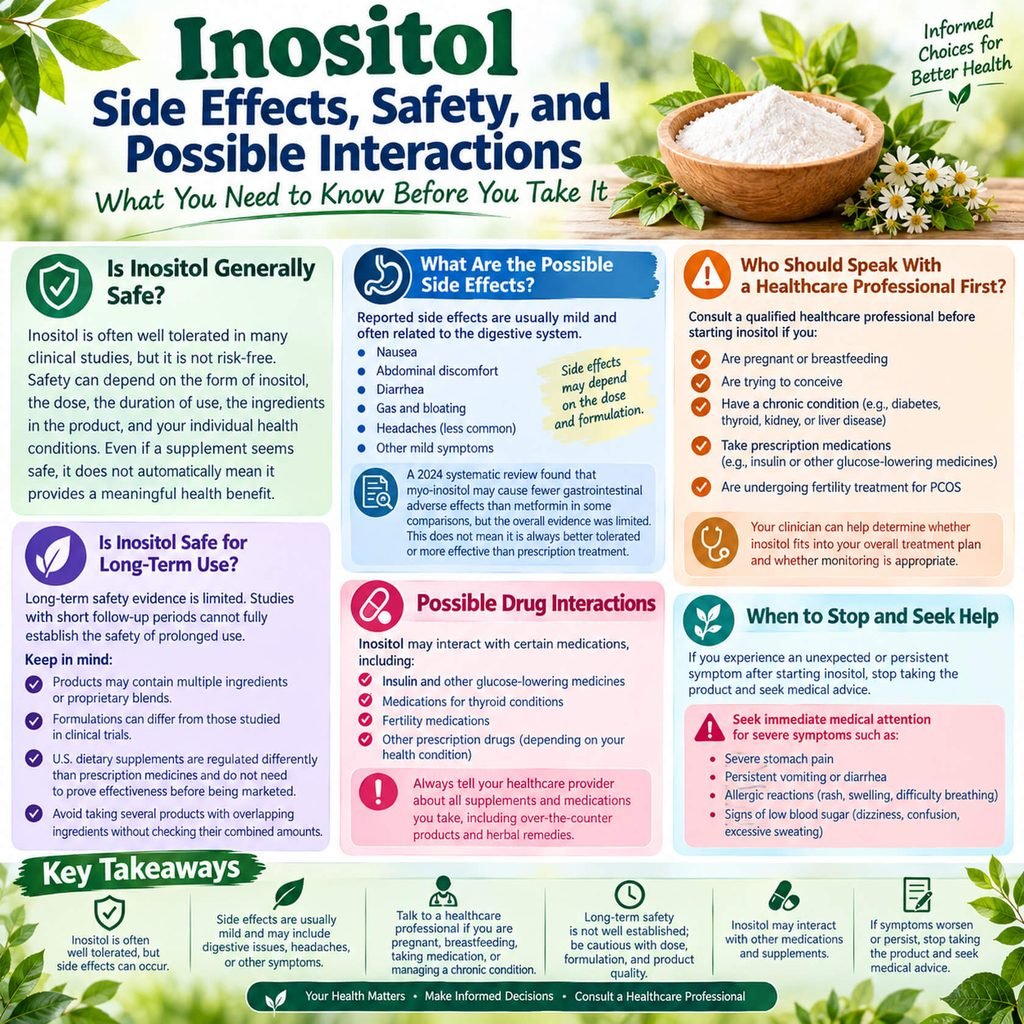
10. Inositol Side Effects, Safety, and Possible Interactions
Inositol is generally described as well tolerated in many clinical studies, but this does not mean that every formulation is risk-free or that long-term safety has been established for every population. The available safety information depends on the form of inositol, the amount taken, the duration of use, the ingredients included in the product, and the characteristics of the person taking it. Safety should therefore be considered separately from effectiveness: even if a supplement appears to have a relatively low risk of harm, that alone does not prove that it provides a meaningful health benefit.
What are the possible side effects of inositol?
Reported adverse effects in studies and clinical discussions include digestive symptoms such as nausea, abdominal discomfort, diarrhea, and gas. Some people may experience headaches or other mild symptoms, although the frequency and relevance of these effects can differ across studies. Side effects may also depend on dose and formulation.
The 2024 systematic review informing the PCOS guidelines found that myo-inositol may cause fewer gastrointestinal adverse effects than metformin in some comparisons. However, the overall evidence was limited, and the authors emphasized uncertainty about the benefits and risks of inositol for PCOS. This finding should not be interpreted as proof that inositol is always better tolerated or more effective than prescription treatment.
Who should speak with a healthcare professional first?
People who are pregnant, breastfeeding, trying to conceive, managing a chronic condition, or taking prescription medication should consult a qualified healthcare professional before starting an inositol supplement. This is particularly important for individuals taking insulin or other glucose-lowering medicines, because their clinician may need to consider the overall treatment plan and whether monitoring is appropriate.
People with PCOS who are undergoing fertility treatment should also discuss supplement use with their reproductive specialist. Although inositol is marketed for reproductive health, the international guideline considers the evidence for fertility outcomes uncertain and does not recommend it as an established fertility treatment.
Is inositol safe for long-term use?
Long-term safety evidence is not sufficiently comprehensive to assume that every product and dose is suitable for indefinite use. Studies with limited follow-up cannot fully establish the safety of prolonged supplementation. Additional uncertainty arises when products contain multiple ingredients, use proprietary blends, or differ from the formulations studied in clinical trials.
Consumers should review the full ingredient list, serving size, manufacturer information, and quality-testing disclosures. A supplement’s presence on the market does not mean that its effectiveness has been established for a particular condition. In the United States, dietary supplements are regulated differently from prescription medicines, and manufacturers generally do not need to demonstrate effectiveness for a specific disease before marketing a product.
It is also sensible to avoid taking several products with overlapping ingredients without checking their combined amounts. More supplementation is not necessarily better.
If an unexpected or persistent symptom develops after starting inositol, stop taking the product and seek appropriate medical advice. Severe symptoms warrant prompt medical assessment.
The practical conclusion is that inositol may be well tolerated by many people, but individual circumstances, supplement quality, medication use, and the limits of long-term evidence all matter. A clinician can help determine whether the potential benefits justify its use in a particular situation.
11. Inositol vs. Metformin and Lifestyle Changes
People researching inositol for insulin resistance often compare it with metformin, a prescription medication used in the management of type 2 diabetes and, in selected circumstances, PCOS. Although both have been investigated for metabolic outcomes, they are not equivalent treatments. Their mechanisms, evidence bases, regulation, dosing, and established clinical uses differ. Choosing between them requires consideration of the underlying condition and the outcomes that need to be addressed, rather than assuming that a supplement is a natural substitute for medication.
Inositol vs. metformin for insulin resistance
Metformin has an established role in treating type 2 diabetes and is also considered in some people with PCOS, particularly for metabolic indications. It influences glucose regulation through several mechanisms, including reducing hepatic glucose production and improving aspects of insulin sensitivity. Its benefits and limitations have been investigated in a much broader clinical context than many dietary supplements.
Inositol has shown potential for improving selected metabolic markers in PCOS studies, but the quality of evidence is limited. The 2024 systematic review informing the international PCOS guidelines found uncertainty about inositol’s overall benefits and reported that results varied across outcomes and comparisons. The 2023 international guideline favors considering metformin over inositol for certain outcomes, including hirsutism and central adiposity, while recognizing that metformin is more likely to cause gastrointestinal side effects.
This does not mean that every person with PCOS needs metformin or that inositol is never appropriate. Rather, the choice should reflect the person’s metabolic profile, symptoms, reproductive goals, medical history, and preferences.
Can lifestyle changes support insulin sensitivity?
Yes. Regular physical activity, balanced nutrition, adequate sleep, and individualized weight management where appropriate are important components of metabolic health. Aerobic exercise and resistance training can improve insulin action, while meals emphasizing vegetables, legumes, whole grains, adequate protein, and fiber can support overall nutritional quality. The most suitable eating pattern depends on personal needs, preferences, and medical circumstances.
People with PCOS should not be made to feel that body weight alone determines their metabolic health. Lifestyle strategies can be valuable across different body sizes, and a healthcare professional or registered dietitian can help create a sustainable plan.
Can inositol be used alongside other treatments?
In some circumstances, a clinician may consider inositol as a complementary option, but it should not replace medication without professional guidance. Discuss all supplements with the healthcare professional managing your care, especially if you take metformin, insulin, or other glucose-lowering drugs.
A supplement may offer convenience, but convenience does not establish equivalence to a medicine. The key question is whether the intervention has credible evidence for the specific health outcome being targeted.
For people seeking to improve insulin sensitivity, lifestyle measures and appropriate medical care have a stronger role in an overall treatment plan than relying on a supplement alone. Inositol may be considered after reviewing the evidence and individual circumstances, but its benefits remain uncertain and it should not be promoted as a proven replacement for metformin.
12. Final Verdict: What Do Studies Really Show About Inositol?
Research on inositol and insulin sensitivity suggests that myo-inositol, D-chiro-inositol, and certain combinations may improve selected metabolic markers in some women with PCOS. Several studies and pooled analyses have reported reductions in fasting insulin or HOMA-IR compared with placebo or folic-acid controls. These findings provide a reasonable scientific basis for further investigation, but they do not establish that inositol consistently improves every measure of glucose regulation or produces lasting benefits for everyone.
The most important qualification is the quality of the evidence. The 2024 systematic review informing international PCOS guidelines concluded that evidence supporting inositol use remains limited and inconclusive. A 2026 umbrella review reported encouraging pooled results but also identified substantial weaknesses in many underlying meta-analyses and no high-certainty evidence across the assessed outcomes.
These findings also need to be interpreted within their proper context. Research in women with PCOS cannot automatically be generalized to people with prediabetes, type 2 diabetes, or insulin resistance from other causes. Nor do changes in fasting insulin or HOMA-IR prove that a supplement prevents diabetes, improves long-term cardiovascular outcomes, or replaces prescribed medication.
For readers considering inositol, the practical priorities are to understand the intended use, evaluate the quality of the supplement, review potential side effects, and discuss relevant health concerns with a qualified healthcare professional. Current evidence does not establish one universally preferred form, dose, or ratio.
So, what do studies show about inositol and insulin sensitivity? The results are promising, especially for certain metabolic markers in PCOS, but remain uncertain. More rigorous and longer-term clinical trials are needed to establish which formulations work best, for whom, and whether the observed changes translate into meaningful health benefits.
Gluco6 – Support Your Healthy Blood Sugar Journey!
13. Frequently Asked Questions About Inositol and Insulin Sensitivity
Does inositol improve insulin sensitivity?
Inositol may improve certain measures of insulin sensitivity in women with PCOS, according to some clinical studies and meta-analyses. However, the certainty of the evidence varies, and results cannot automatically be applied to everyone with insulin resistance.
Can myo-inositol help with insulin resistance?
Myo-inositol has been studied for its potential effects on fasting insulin and HOMA-IR, particularly in women with PCOS. Some findings are encouraging, but more rigorous research is needed to establish its effectiveness and identify who is most likely to benefit.
What do studies show about inositol for PCOS?
Studies suggest that inositol may improve selected metabolic and hormonal measurements in some women with PCOS. Nevertheless, the international PCOS guideline considers the evidence limited and does not establish a preferred formulation or dose.
What is the difference between myo-inositol and D-chiro-inositol?
Both are forms of inositol involved in biological signaling. Myo-inositol is frequently studied in PCOS research, while D-chiro-inositol has also been investigated for metabolic outcomes. Current evidence does not establish one universally superior form.
Can inositol lower fasting insulin levels?
Some clinical studies and pooled analyses have reported reductions in fasting insulin following inositol supplementation. However, responses vary, and a lower fasting insulin measurement does not automatically demonstrate better long-term glucose control.
Does inositol help lower blood sugar?
The evidence is not strong enough to conclude that inositol reliably lowers blood glucose in everyone. Improvements in insulin-related markers in PCOS studies do not establish that inositol treats diabetes or prevents its development.
How long does inositol take to work?
Clinical trials have evaluated inositol over periods ranging from several weeks to a few months. There is no universally established timeline for improvement, and the response depends on the population, formulation, and outcome being measured.
What are the possible side effects of inositol?
Possible side effects include digestive discomfort, nausea, gas, and diarrhea. Safety information varies by formulation and dose. Consult a healthcare professional if you have a medical condition, take medication, or are pregnant or breastfeeding.
Can inositol be taken with metformin?
A healthcare professional can help determine whether combining inositol with metformin is appropriate for an individual’s circumstances. Do not stop, replace, or change a prescribed medication because of supplement claims.
Is there enough evidence to recommend a specific inositol dose?
No. The international PCOS guideline does not recommend a specific inositol type, dose, or combination because high-quality evidence is insufficient. Research doses should not be treated as universal treatment recommendations.