1. Introduction: How L-Citrulline Supports Nitric Oxide Production
L-citrulline is a naturally occurring amino acid that has gained significant attention in the wellness and fitness communities primarily due to its relationship with nitric oxide (NO). Nitric oxide is a vital signaling molecule produced naturally by the body that plays a fundamental role in cardiovascular health, blood vessel function, and healthy circulation.
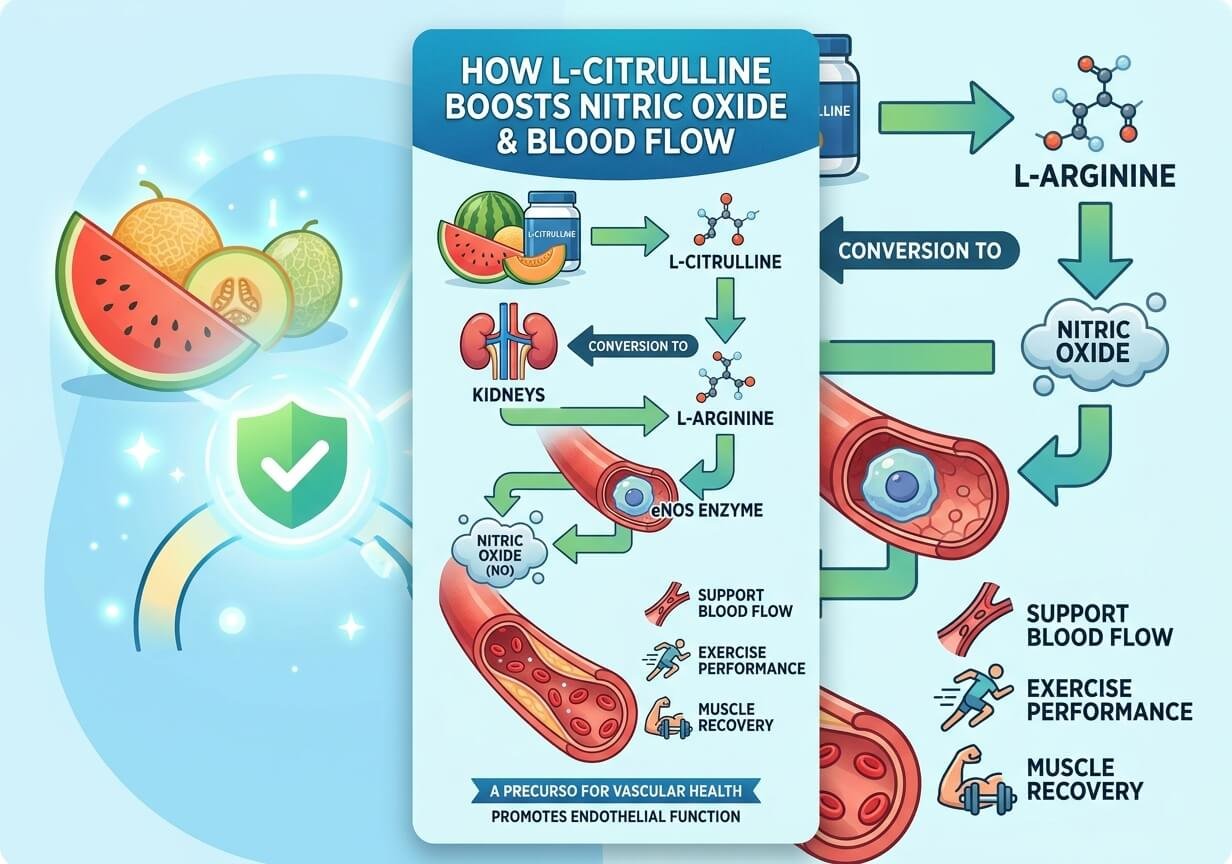
To answer the core question immediately: How does L-citrulline help the body produce nitric oxide? L-citrulline acts as an efficient precursor. When consumed, the body absorbs L-citrulline and subsequently converts it into L-arginine—another amino acid. L-arginine is then utilized directly by enzymes within blood vessel linings to synthesize nitric oxide, which signals blood vessels to relax and widen.
While the underlying biochemical pathway is well established, the clinical benefits of taking L-citrulline supplements can vary depending on individual health status, dosage, and the specific outcome being studied. This article explores the biology of L-citrulline, its comparison to L-arginine, potential health and exercise benefits, safety considerations, and natural dietary sources.
2. What Is L-Citrulline?
2.1 Understanding L-Citrulline and Its Role in the Body
L-citrulline is an organic compound classified as an amino acid. Unlike amino acids that are used directly to build structural proteins in the body, L-citrulline operates primarily as a metabolic intermediate. It plays a central role in the urea cycle, helping the body rid itself of harmful ammonia, while also serving as a key upstream player in vascular signaling pathways.
2.2 Is L-Citrulline an Essential or Nonessential Amino Acid?
Amino acids are categorized as essential or nonessential. Essential amino acids cannot be synthesized by the human body and must be obtained through diet. Nonessential amino acids can be manufactured internally. L-citrulline is considered a nonessential amino acid because the body can produce it naturally—primarily through the intestinal metabolism of glutamine and proline. However, consuming L-citrulline through diet or supplementation can significantly elevate circulating blood levels beyond what the body produces on its own.
2.3 Where Does L-Citrulline Come From Naturally?
While the body synthesizes L-citrulline internally, it is also found in specific foods. The most well-known and abundant natural source of L-citrulline is watermelon (Citrullus lanatus), with particularly high concentrations found in the white and light-green outer rind, though the sweet red flesh also contains meaningful amounts.
2.4 How Does the Body Absorb and Use L-Citrulline?
When ingested orally, L-citrulline is rapidly absorbed in the small intestine and enters the portal circulation. Unlike L-arginine, which undergoes extensive breakdown (first-pass metabolism) in the liver and gut wall, L-citrulline bypasses significant hepatic degradation. Consequently, oral L-citrulline is remarkably efficient at raising systemic blood concentrations of L-arginine, making it an effective nutritional strategy for supporting downstream metabolic pathways.
3. What Is Nitric Oxide, and Why Does the Body Need It?
3.1 What Is Nitric Oxide in the Human Body?
Nitric oxide (NO) is a gas molecule produced by nearly every cell type in the human body, with a particularly critical role in the cardiovascular system. It acts as an autocrine and paracrine messenger, facilitating communication between cells to regulate vital physiological functions.
3.2 How Nitric Oxide Helps Relax Blood Vessels
One of the primary physiological functions of nitric oxide is vasodilation—the widening of blood vessels. When released by the cells lining the interior of blood vessels, nitric oxide diffuses into the surrounding vascular smooth muscle cells. This triggers a biochemical cascade that causes the smooth muscle to relax, decreasing vascular resistance and allowing blood to flow more freely.
3.3 Nitric Oxide and Healthy Blood Circulation
By encouraging vascular relaxation, nitric oxide supports healthy blood circulation throughout the body. Efficient circulation ensures that oxygen, nutrients, and hormones are delivered effectively to active tissues, organs, and muscles, while metabolic waste products are cleared away.
3.4 The Role of Nitric Oxide in Endothelial Function
The endothelium is the thin layer of cells lining the interior surface of blood vessels and lymphatic vessels. Healthy endothelial function relies heavily on adequate nitric oxide production. The endothelium uses NO not only to regulate blood vessel tone but also to prevent abnormal platelet clumping and maintain a smooth, non-inflammatory vascular surface.
3.5 Why Maintaining Healthy Nitric Oxide Levels Matters
As individuals age, or in the presence of certain metabolic and cardiovascular risk factors, the body’s capacity to produce nitric oxide can decline—a condition often referred to as endothelial dysfunction. Maintaining healthy nitric oxide pathways through balanced nutrition, regular physical activity, and targeted lifestyle habits is crucial for supporting long-term vascular health and cardiovascular resilience.
4. How Does L-Citrulline Help the Body Produce Nitric Oxide?
The mechanism by which L-citrulline supports nitric oxide synthesis is a sequential, well-documented biochemical pathway.
4.1 Step One: The Body Absorbs L-Citrulline
Following oral ingestion—whether via L-citrulline-rich foods or supplements—L-citrulline is absorbed across the intestinal epithelium into the bloodstream. It travels freely through the circulation without being heavily metabolized by the liver, resulting in high systemic bioavailability.
4.2 Step Two: The Kidneys Convert L-Citrulline Into L-Arginine
As L-citrulline circulates through the body, a substantial portion is taken up by the kidneys. Within renal tissue, specialized enzymes known as argininosuccinate synthetase (ASS) and argininosuccinate lyase (ASL) enzymatically convert L-citrulline into the amino acid L-arginine. This conversion significantly increases plasma L-arginine availability throughout the body.
4.3 Step Three: L-Arginine Supports Nitric Oxide Synthesis
Once L-arginine levels are elevated, it becomes available to endothelial cells. An enzyme called endothelial nitric oxide synthase (eNOS) uses L-arginine as a direct substrate. In the presence of necessary cofactors, eNOS oxidizes L-arginine, producing L-citrulline (completing a cyclical pathway known as the citrulline-arginine cycle) and gaseous nitric oxide.
4.4 Step Four: Nitric Oxide Signals Blood Vessels to Relax
Newly synthesized nitric oxide diffuses into the smooth muscle layers surrounding blood vessels. It activates intracellular signaling molecules (such as soluble guanylyl cyclase), reducing intracellular calcium levels and prompting vascular smooth muscle relaxation, resulting in vasodilation.
4.5 How This Process May Support Healthy Circulation
By fueling the upstream supply of L-arginine, L-citrulline supplementation helps sustain the raw materials necessary for continuous nitric oxide synthesis. This biochemical pathway is robust and established, although the extent to which supplementing with L-citrulline clinically improves circulation or blood pressure varies among individuals and depends on study parameters.
5. L-Citrulline vs. L-Arginine: Which Is Better for Nitric Oxide Production?
5.1 What Is the Difference Between L-Citrulline and L-Arginine?
Both are amino acids directly linked in the nitric oxide synthesis pathway, but their pharmacokinetic profiles differ markedly. L-arginine is the immediate precursor used by eNOS to make nitric oxide, whereas L-citrulline is an upstream precursor that must first be converted into L-arginine by the kidneys.
5.2 How L-Citrulline Supports L-Arginine Availability
Because oral L-arginine is subject to high first-pass metabolism in the digestive tract and liver (where enzymes called arginases break it down), taking L-arginine supplements often results in modest increases in plasma arginine levels. In contrast, L-citrulline bypasses hepatic degradation, making oral L-citrulline supplementation a surprisingly more effective method for elevating systemic L-arginine concentrations in the blood.
5.3 How L-Arginine Is Used to Make Nitric Oxide
L-arginine is the required building block for eNOS. Without adequate intracellular L-arginine, nitric oxide production can become impaired (a phenomenon sometimes called “arginine depletion”).
5.4 Does L-Citrulline Increase Arginine Levels More Effectively?
Yes. Clinical studies comparing oral L-citrulline and oral L-arginine have consistently demonstrated that L-citrulline supplementation produces higher, more sustained elevations in plasma L-arginine levels over time.
5.5 Should You Choose L-Citrulline, L-Arginine, or a Combination?
Given its superior bioavailability and efficacy in raising systemic arginine levels, L-citrulline is frequently favored by researchers and formulators over L-arginine for supporting nitric oxide production and exercise performance. Some supplements combine both, but clinical evidence highlights L-citrulline as an exceptionally efficient choice.
6. Potential Benefits of L-Citrulline for Nitric Oxide and Blood Flow
6.1 L-Citrulline and Healthy Blood Circulation
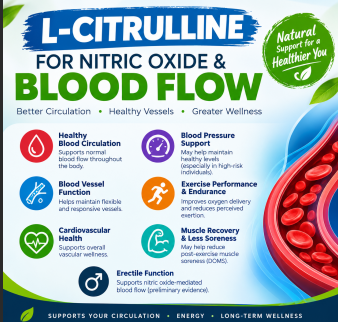
Because L-citrulline enhances nitric oxide synthesis and subsequent vasodilation, it is widely studied for its ability to support normal, healthy blood circulation throughout the peripheral vascular system.
6.2 L-Citrulline and Blood Vessel Function
Maintaining flexible, responsive blood vessels is a hallmark of cardiovascular health. Research suggests that L-citrulline may help support endothelial function, particularly in populations where vascular reactivity is compromised.
6.3 L-Citrulline and Blood Pressure: What Does Research Show?
While nitric oxide relaxes blood vessels and can influence blood pressure, clinical trials investigating L-citrulline supplementation for blood pressure regulation report mixed results. While some studies observe modest reductions in blood pressure among hypertensive or pre-hypertensive individuals, it should not be viewed as a standalone treatment for hypertension.
6.4 L-Citrulline for Exercise Performance and Muscle Endurance
L-citrulline is a popular ingredient in pre-workout formulations. By supporting nitric oxide production, improved blood flow can enhance oxygen and nutrient delivery to working skeletal muscles during high-intensity exercise. Many athletes report improved muscular endurance, reduced perceived exertion, and enhanced “muscle pumps.”
6.5 L-Citrulline and Exercise-Related Muscle Soreness
Some scientific literature indicates that L-citrulline supplementation—particularly in the form of citrulline malate—may assist in post-exercise recovery by helping to clear metabolic byproducts and reduce delayed-onset muscle soreness (DOMS).
6.6 L-Citrulline and Erectile Function: Understanding the Evidence
Erectile function relies heavily on adequate nitric oxide-mediated smooth muscle relaxation in penile tissues. Because L-citrulline boosts arginine and nitric oxide availability, clinical research has investigated its potential to support mild-to-moderate erectile dysfunction with favorable preliminary outcomes, though more large-scale trials are needed.
6.7 Can L-Citrulline Support Cardiovascular Health?
L-citrulline contributes to overall vascular wellness by supporting endothelial health and normal blood flow dynamics. However, it should be regarded as a supportive nutritional adjunct rather than a cure or treatment for cardiovascular disease.
7. What Does Scientific Research Say About L-Citrulline and Nitric Oxide?
7.1 Research on L-Citrulline and Nitric Oxide Synthesis
Human pharmacokinetic studies confirm that oral administration of L-citrulline dose-dependently increases plasma citrulline and arginine levels, subsequently elevating stable nitric oxide metabolites (such as nitrate and nitrite) in the bloodstream.
7.2 Clinical Studies on Blood Flow and Vascular Function
Controlled trials utilizing flow-mediated dilation (FMD)—a standard non-invasive ultrasound measurement of endothelial function—have frequently shown that L-citrulline supplementation can improve arterial stiffness and vascular reactivity in human subjects.
7.3 Research on Blood Pressure and Cardiovascular Health
Systematic reviews and meta-analyses of randomized controlled trials (RCTs) suggest that while L-citrulline can reduce systolic and diastolic blood pressure in certain populations, the magnitude of the effect often depends on baseline blood pressure, dosage, and trial duration.
7.4 Studies on Exercise Performance and Muscle Recovery
Sports nutrition studies examining acute and chronic L-citrulline dosing (typically ranging from 3 to 8 grams daily) have reported improvements in time-to-exhaustion, total repetitions completed during resistance training, and subjective reductions in muscle soreness 24 to 48 hours post-exercise.
7.5 Limitations of Current Human Studies
Many published studies feature relatively small sample sizes, short intervention durations (ranging from single-dose to several weeks), and diverse participant cohorts (ranging from elite athletes to older adults with cardiovascular risk factors), making broad generalizations challenging.
7.6 What Researchers Still Need to Investigate
Future research aims to determine optimal long-term dosing protocols, the synergistic effects of combining L-citrulline with other dietary antioxidants or nitrates, and its long-term impact on cardiovascular morbidity and mortality.
8. Natural Food Sources of L-Citrulline
8.1 Is Watermelon a Good Source of L-Citrulline?
Yes. Watermelon (Citrullus lanatus) is nature’s richest known dietary source of L-citrulline. The name citrulline itself is derived from citrullus, the taxonomic genus for watermelon.
8.2 Does Watermelon Rind Contain L-Citrulline?
Indeed, the concentration of L-citrulline is significantly higher in the firm, white and light-green rind of the watermelon than in the pink or red interior flesh. While less palatable raw, watermelon rind can be pickled, blended into smoothies, or juiced.
8.3 Other Foods That May Provide L-Citrulline
Aside from watermelon, smaller amounts of L-citrulline can be found in related cucurbitaceous plants and foods, including:
- Cantaloupe and honeydew melon
- Cucumbers
- Pumpkins and squash
- Bitter gourd
8.4 L-Citrulline-Rich Foods vs. Supplements
While consuming fresh watermelon provides hydration, vitamins (such as lycopene and vitamin C), and moderate amounts of citrulline, achieving the therapeutic dosages studied in clinical trials (typically 3,000 to 6,000 mg) purely through whole fruit would require consuming impractically large quantities of watermelon. Consequently, supplements offer a concentrated and standardized alternative.
8.5 Can Diet Help Support the Body’s Nitric Oxide Production?
Dietary strategies extend beyond L-citrulline. Nitrate-rich foods—such as beetroot, spinach, arugula, and other leafy greens—support nitric oxide production via an entirely separate, complementary pathway (the nitrate-nitrite-nitric oxide pathway), which does not rely on eNOS or L-arginine. Combining L-citrulline-rich foods or supplements with nitrate-rich vegetables represents a comprehensive nutritional approach to vascular health.
9. L-Citrulline Supplements: Dosage, Timing, and Forms
9.1 What Is L-Citrulline Supplementation?
L-citrulline supplements are available as standalone dietary ingredients, often marketed for pre-workout energy, vascular health, and athletic performance.
9.2 L-Citrulline Powder vs. Capsules
- Powder: Highly customizable for dosing, mixes easily into water or pre-workout beverages, and is typically more economical for higher doses (3–6 grams).
- Capsules/Tablets: Convenient for travel and precise dosing, though multiple pills may be required to reach typical research-backed dosages.
9.3 L-Citrulline vs. Citrulline Malate
- L-Citrulline (Free Form): Pure amino acid, ideal for precise dosing of active citrulline.
- Citrulline Malate: L-citrulline bound to malate (malic acid), typically supplied in a 2:1 ratio. Malate is an intermediate in the Krebs cycle involved in cellular energy production. Many sports nutrition studies utilize citrulline malate to evaluate dual benefits on endurance and muscle recovery.
9.4 What Dosages Have Been Studied in Research?
Commonly studied dosages in scientific literature include:
- For Exercise Performance: 3,000 mg to 6,000 mg of pure L-citrulline (or 6,000 mg to 8,000 mg of citrulline malate) taken approximately 30 to 60 minutes before exercise.
- For Vascular Health / Blood Flow: 3,000 mg daily, often divided into smaller doses or taken as a single daily dose.
9.5 How Long Does L-Citrulline Take to Work?
Plasma citrulline and arginine concentrations peak approximately 60 to 90 minutes after oral ingestion. For acute exercise performance or vasodilation support, taking the supplement roughly 30–60 minutes pre-activity is standard.
9.6 Is Daily L-Citrulline Supplementation Necessary?
While acute pre-workout use is popular, chronic daily supplementation has been utilized in clinical trials evaluating resting blood pressure and endothelial function, indicating that both acute and consistent daily protocols have distinct applications.
9.7 How to Evaluate an L-Citrulline Supplement Label
When selecting a supplement, look for third-party testing certifications (such as NSF Certified for Sport or USP) to ensure purity and label accuracy. Verify whether the product contains pure L-citrulline or citrulline malate to calculate your precise active amino acid intake. Note: The Cleveland Clinic recommends consulting a qualified healthcare professional before incorporating new amino acid supplements into your regimen.
10. L-Citrulline Side Effects, Safety, and Precautions
10.1 What Are the Potential Side Effects of L-Citrulline?
L-citrulline is generally recognized as safe and well-tolerated by healthy adults, even at high doses (up to 9–10 grams daily in clinical trials). Mild side effects, when reported, are typically gastrointestinal in nature—such as mild stomach discomfort, nausea, or loose stools—especially when consumed on an empty stomach or in very large bolus doses.
10.2 Can L-Citrulline Affect Blood Pressure?
Because L-citrulline promotes vasodilation, it can influence blood pressure. While this is generally safe for healthy individuals, those with naturally low blood pressure (hypotension) should exercise caution.
10.3 Does L-Citrulline Interact With Medications?
L-citrulline can interact with certain prescription medications, particularly:
- Blood Pressure Medications: Combining L-citrulline with antihypertensive drugs may lead to additive blood pressure-lowering effects.
- Erectile Dysfunction Medications (PDE5 inhibitors like sildenafil): Both compounds promote vasodilation; combining them requires medical supervision to avoid excessive drops in blood pressure.
- Nitrates: Medications used for chest pain (angina) should not be combined with nitric oxide boosters without explicit physician guidance.
10.4 Who Should Consult a Healthcare Professional Before Use?
Individuals with pre-existing cardiovascular conditions, kidney disease (since the kidneys play a key role in metabolizing citrulline to arginine), pregnant or nursing women, and anyone taking prescription medications should consult a physician before starting L-citrulline supplementation.
10.5 How to Choose a Reputable Supplement
Prioritize brands that adhere to Current Good Manufacturing Practices (cGMP) and offer transparent ingredient sourcing, clear labeling of active concentrations, and independent third-party laboratory verification.
11. Natural Ways to Support Healthy Nitric Oxide Production
11.1 Eat a Balanced Diet With Nitrate-Rich Vegetables
Incorporate plenty of leafy greens (spinach, kale, arugula), celery, beetroot, and garlic into your meals. These foods provide dietary nitrates that convert into nitric oxide via the enterosalivary pathway.
11.2 Exercise Regularly to Support Vascular Health
Aerobic exercise and resistance training place mechanical shear stress on blood vessel walls, which stimulates endothelial cells to upregulate eNOS expression and produce more nitric oxide naturally over time.
11.3 Avoid Smoking and Tobacco Exposure
Cigarette smoke and tobacco products generate high levels of oxidative stress and free radicals that rapidly degrade nitric oxide and impair endothelial function, severely damaging cardiovascular health.
11.4 Maintain Healthy Sleep and Lifestyle Habits
Chronic stress, poor sleep hygiene, and sedentary habits can negatively affect vascular health and reduce endogenous nitric oxide availability. Prioritizing restorative sleep and stress management supports overall cardiovascular wellness.
11.5 Why Supplements Should Not Replace Medical Care
While dietary supplements and lifestyle modifications support wellness, they are not a substitute for professional medical diagnosis, cardiovascular monitoring, or prescribed medical therapies. Always work with a healthcare provider to manage chronic health conditions.
Discover Boostaro — Explore the Formula, Read the Reviews, Make an Informed Choice
12. Frequently Asked Questions About L-Citrulline and Nitric Oxide
12.1 How Does L-Citrulline Help the Body Produce Nitric Oxide?
L-citrulline serves as an upstream precursor that the kidneys convert into L-arginine. L-arginine is then used by endothelial nitric oxide synthase (eNOS) enzymes within blood vessels to synthesize nitric oxide.
12.2 How Long Does L-Citrulline Take to Increase Nitric Oxide?
Blood levels of citrulline and its downstream metabolite arginine peak approximately 60 to 90 minutes after oral ingestion, meaning the biological pathway is activated relatively quickly.
12.3 Does L-Citrulline Actually Improve Blood Flow?
Yes, by stimulating nitric oxide synthesis and subsequent vasodilation, L-citrulline has been shown in clinical studies to support healthy peripheral blood flow and vascular reactivity.
12.4 Is L-Citrulline Better Than L-Arginine for Nitric Oxide?
Clinical research indicates that oral L-citrulline is more bioavailable and elevates plasma L-arginine levels more effectively than oral L-arginine itself, due to bypassing extensive first-pass liver metabolism.
12.5 What Is the Best Natural Source of L-Citrulline?
Watermelon—particularly the nutrient-dense white and light-green outer rind—is by far the richest natural food source of L-citrulline.
12.6 Can L-Citrulline Help With Exercise Performance?
Many athletes use L-citrulline to enhance muscular endurance, reduce fatigue, improve oxygen utilization, and support post-exercise recovery.
12.7 Can L-Citrulline Support Erectile Function?
Because nitric oxide is essential for smooth muscle relaxation in erectile tissue, L-citrulline’s ability to boost NO production has made it a subject of study for supporting male sexual health.
12.8 What Is the Recommended L-Citrulline Dosage?
Studied dosages typically range from 3,000 mg to 6,000 mg of pure L-citrulline per day, or 6,000 mg to 8,000 mg of citrulline malate, depending on individual goals.
12.9 Can You Take L-Citrulline Every Day?
Yes, daily supplementation is common for long-term vascular or athletic support, though individual suitability depends on personal health status and medication use.
12.10 What Are the Side Effects of L-Citrulline?
L-citrulline is generally well-tolerated. Rare side effects include mild gastrointestinal discomfort, nausea, or loose stools, particularly at high doses.
12.11 Is L-Citrulline the Same as Nitric Oxide?
No. L-citrulline is an amino acid, whereas nitric oxide is a gaseous signaling molecule. L-citrulline is simply a raw material the body uses to manufacture nitric oxide.
12.12 Can You Increase Nitric Oxide Without Supplements?
Yes. You can support natural nitric oxide production by eating nitrate-rich vegetables (like beetroot and leafy greens), exercising regularly, avoiding tobacco smoke, and maintaining healthy lifestyle habits.
13. Conclusion: Does L-Citrulline Help the Body Produce Nitric Oxide?
L-citrulline plays a clear, biologically established role in supporting nitric oxide production indirectly by increasing the body’s pool of L-arginine. Through this pathway, it aids in vascular relaxation and normal blood circulation. While clinical studies highlight promising benefits for exercise performance, endurance, and vascular function, results can vary based on individual physiology, dosage, and study design.
Incorporating L-citrulline-rich whole foods, practicing healthy lifestyle habits, and utilizing high-quality supplements can all contribute to overall cardiovascular and athletic wellness. As always, it is recommended to consult a qualified healthcare professional before starting any new dietary supplement, especially if you have pre-existing medical conditions or are taking prescription medications.