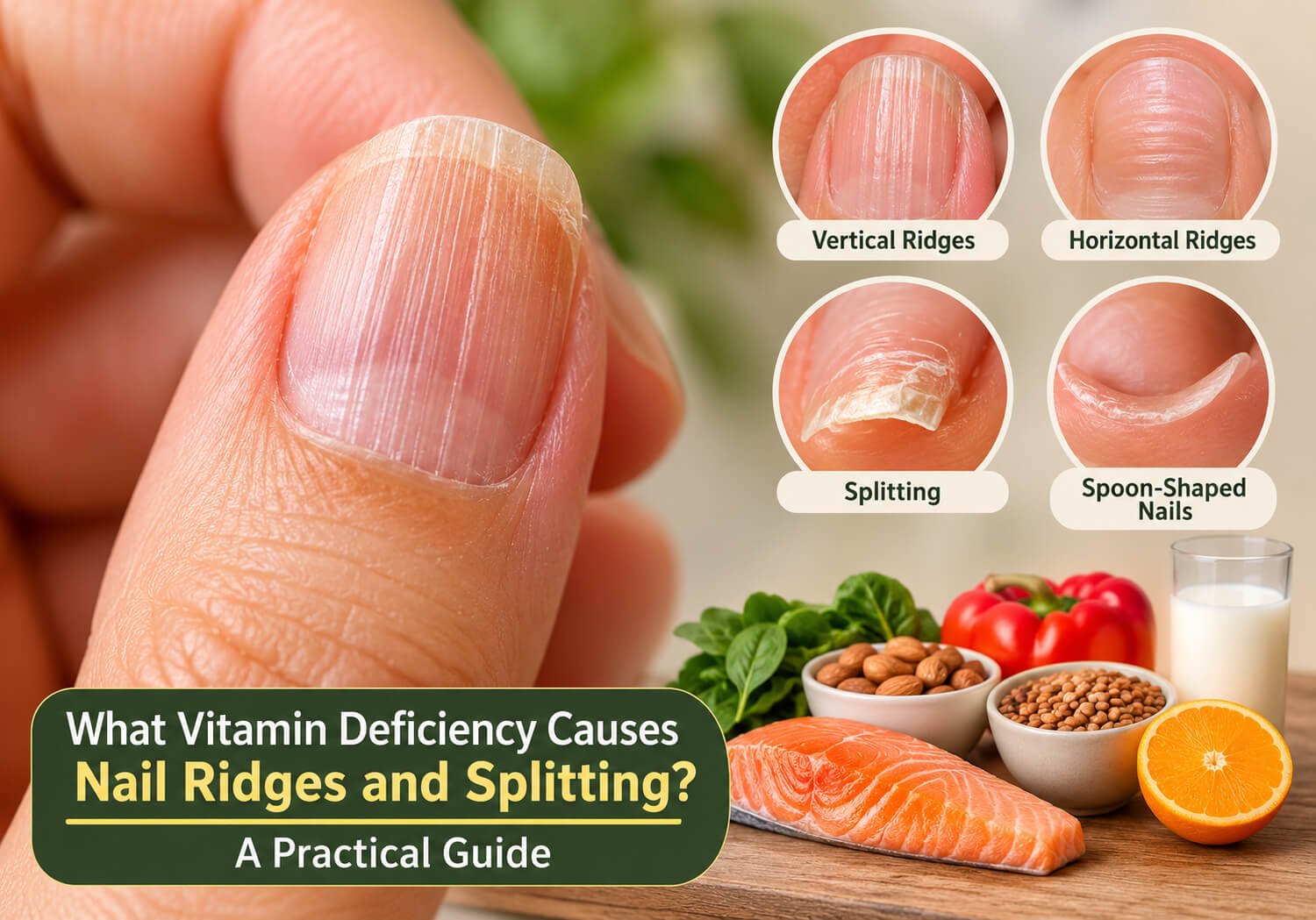
You notice a thin vertical line running down your thumbnail. Then your nail tip cracks and peels. You’ve been eating “fine,” but something feels off. Before you blame aging or the weather, it’s worth asking a direct question: is a missing nutrient the real reason your nails look and feel this way?
Nails are made almost entirely of keratin, a tough protein built from amino acids like methionine and cysteine. Your body needs a steady supply of vitamins and minerals to produce that keratin and keep the nail matrix (the growth zone under your cuticle) functioning properly. When one or more of those nutrients run low, the nail plate can thin, develop ridges, split at the free edge, or even change shape.
This isn’t just a cosmetic issue. Nail changes can be an early, visible signal that your body is running on low fuel. As a coach who works with clients on nutrition and performance, I’ve seen plenty of people dismiss brittle, ridged nails as “just how my nails are.” In many cases, a simple blood panel and a few dietary adjustments make a noticeable difference within two to three nail-growth cycles (roughly three to six months for fingernails).
This article breaks down exactly which vitamin and mineral deficiencies are most commonly linked to nail ridges and splitting, how to recognize the pattern, and what practical steps you can take to address it.
Quick Answer: The vitamin deficiency most commonly linked to nail ridges and splitting is biotin (vitamin B7) deficiency, which can cause brittle, ridged, and easily splitting nails. However, iron deficiency, vitamin B12 deficiency, zinc deficiency, and vitamin C deficiency can also produce vertical or horizontal ridges, peeling, and spoon-shaped nails. A combination of low protein intake and multiple micronutrient gaps makes the problem worse. Getting a blood test is the most reliable way to identify the specific deficiency.
What Nail Ridges and Splitting Actually Look Like
Not all nail problems are the same. The pattern, direction, and shape of the ridge or split can point you toward different underlying causes. Here’s how to read what your nails are telling you.
Vertical Ridges (Onychorrhexis)
These are the thin, raised lines that run from your cuticle to the free edge, like the grain in a piece of wood. Mild vertical ridging is normal and increases with age. But when the ridges become deep, numerous, or appear suddenly, they can signal a nutritional gap—most often biotin, B12, or iron.
Horizontal Ridges (Beau’s Lines)
These grooves run across the nail from side to side. They form when the nail matrix temporarily stops or slows production—often after illness, severe stress, or a significant nutrient crash. Iron and B12 deficiencies that affect red blood cell production can contribute to these lines.
Nail Splitting (Onychoschizia)
This is when the free edge of the nail peels or cracks in layers, like a thin sheet of paper separating. Onychoschizia is strongly associated with biotin deficiency, low protein intake, and repeated exposure to water or chemicals that strip the nail of natural oils.
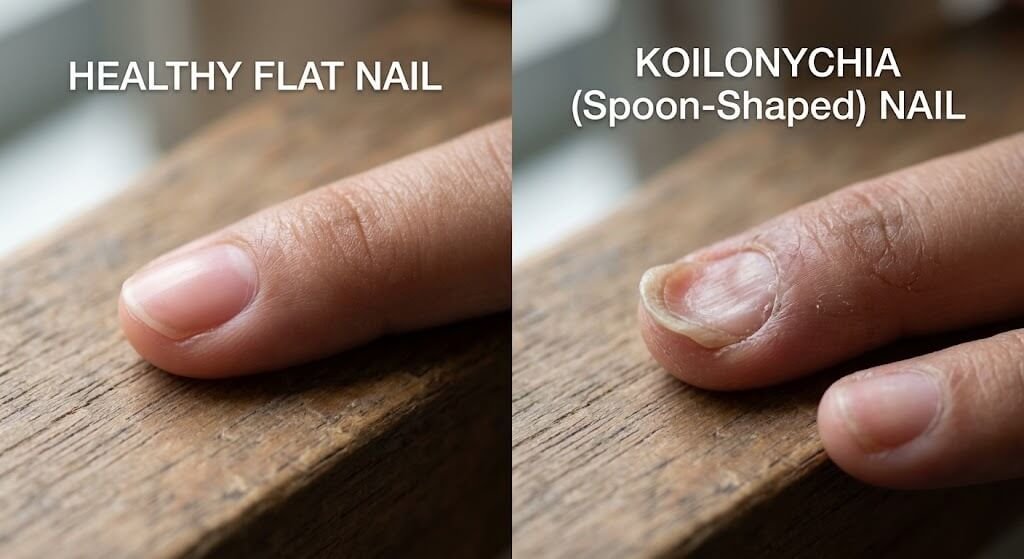
Spoon-Shaped Nails (Koilonychia)
The nail plate concaves inward, forming a shallow “spoon” shape. This is a classic sign of iron deficiency anemia. If you’ve noticed your nails curving inward along with fatigue, pale skin, or shortness of breath on a hill, iron is the first thing to check.
The Vitamins and Minerals Most Linked to Nail Problems
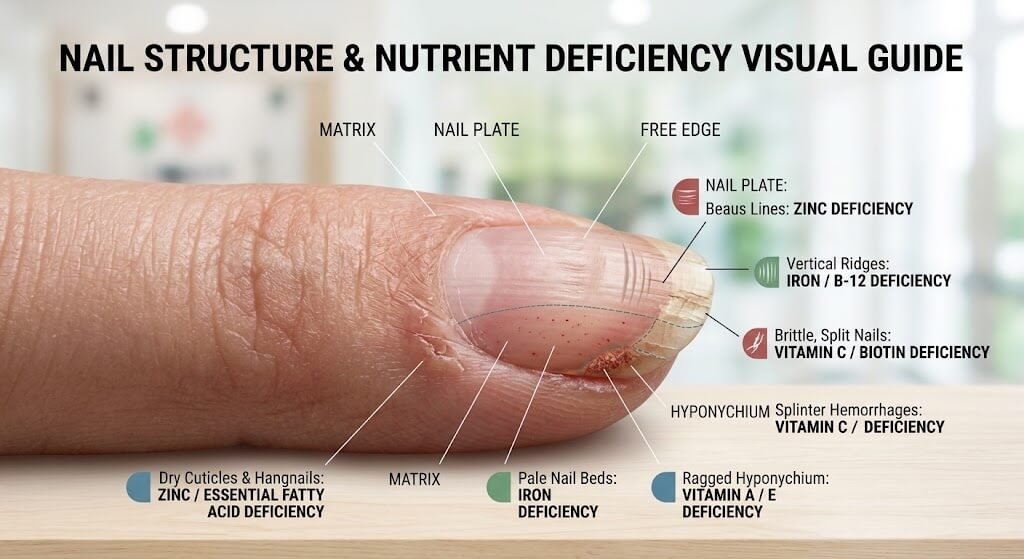
Here’s the breakdown of the specific nutrients whose deficiency is most commonly tied to ridges, splitting, and structural weakness in the nail plate.
Biotin (Vitamin B7)
Biotin is a coenzyme your body uses in fatty-acid synthesis and amino-acid metabolism—both critical for keratin production. When biotin levels drop, the keratin structure in your nail becomes less cross-linked, making the plate thinner and more prone to ridging and splitting.
Research published in The British Journal of Dermatology found that biotin supplementation improved nail thickness and reduced splitting in people with brittle nails [VERIFY – Orentreich et al., 1980s study on biotin and onychoschizia]. While true biotin deficiency is rare in people eating a varied diet, it can develop with long-term raw-egg-white consumption, certain medications, or malabsorption issues.
What to watch for: Multiple vertical ridges, peeling at the free edge, nails that snap with light pressure.
Vitamin B12
B12 is essential for red blood cell formation and DNA synthesis. A B12 deficiency reduces oxygen delivery to peripheral tissues, including the nail bed and matrix. Without adequate oxygen and building blocks, the nail plate grows unevenly, producing ridges and a brittle, dry texture.
The NIH Office of Dietary Supplements notes that B12 deficiency can develop silently over years, especially in people who follow a strict plant-based diet, take certain acid-reducing medications, or have reduced stomach acid with age.
What to watch for: Horizontal ridges, a dull or “waxy” nail surface, splitting combined with fatigue, tingling in the hands or feet, and pale or yellowish skin.
The World Health Organization estimates that iron deficiency affects roughly 30% of the global population, with women of reproductive age, vegetarians, and people with low dietary iron at higher risk.
What to watch for: Spoon-shaped nails, vertical ridges, nails that peel in layers, combined with persistent fatigue, cold hands and feet, and shortness of breath during moderate activity.

Zinc
Zinc is a cofactor for over 300 enzymes involved in protein synthesis and cell division. The nail matrix is a zone of rapid cell turnover, so it’s especially sensitive to zinc levels. A zinc deficiency can slow nail growth, produce white spots (leukonychia), and make the plate brittle and ridged.
The NIH zinc fact sheet highlights that zinc deficiency is more common in people with gastrointestinal disorders, those on long-term diuretics, and individuals with very low meat and legume intake.
What to watch for: Slow nail growth, small white spots, vertical ridging, and splitting that doesn’t respond to moisturizing alone.
Vitamin C
Vitamin C is required for collagen synthesis in the dermis beneath the nail bed. While the nail plate itself is keratin, the supporting tissue and blood-vessel network depend on healthy collagen. Low vitamin C can impair circulation to the nail bed, leading to a dry, ridged, and easily splitting plate.
Severe vitamin C deficiency (scurvy) is rare in developed countries, but subclinical low levels are more common, especially in people with limited fruit and vegetable intake.
What to watch for: Brittle nails combined with slow wound healing, easy bruising, and dry, cracked skin around the cuticles.
Protein and Amino Acids
Nails are roughly 83% protein by weight. If your overall protein intake is too low—or you’re missing specific sulfur-containing amino acids like methionine and cysteine—keratin production slows and the nail plate becomes structurally weak.
This is a common issue in very low-calorie diets, new plant-based transitions without adequate legume, tofu, or seitan intake, and periods of high training volume without matching protein.
How to Tell If a Deficiency Is the Cause
You can’t diagnose a vitamin deficiency by looking at your nails alone. Ridges can also come from aging, repetitive trauma (typing, manual labor), thyroid dysfunction, or psoriasis. That said, here’s a practical framework to help you decide whether a nutritional gap is likely:
- Pattern matters. If you see multiple nail changes at once (ridges + splitting + color change), a systemic nutrient issue is more probable than a single-trauma cause.
- Timeline matters. Did the changes appear after a diet change, a period of illness, a new medication, or a shift to a plant-based diet?
- Other symptoms matter. Fatigue, hair thinning, cold intolerance, easy bruising, or tingling alongside nail changes point toward a deficiency.
- Dietary history matters. Very low intake of animal products, legumes, fortified grains, or colorful produce increases the likelihood of B12, iron, zinc, or vitamin C gaps.
The gold standard is a blood panel. Ask your doctor for a complete blood count (CBC), serum ferritin, serum B12, folate, zinc, and a basic metabolic panel. Biotin levels are harder to test reliably, but if other causes are ruled out and your diet is clearly low in biotin-rich foods, your provider may consider a trial supplement.
Coach’s Tip: If you’re already taking a multivitamin and still seeing ridges and splits, the issue may be absorption, not just intake. Conditions like celiac disease, atrophic gastritis, or long-term PPI use can block B12 and iron absorption even when you’re eating enough. Mention any GI symptoms to your doctor before assuming a simple dietary fix will work.
What to Do: A Practical Plan to Fix Nail Health
Once you’ve identified the likely nutrient gap, here’s a step-by-step approach. Think of it like a training program: you need the right stimulus, adequate recovery, and consistent progression.
Step 1: Get Tested (Week 1)
Schedule a visit with your primary-care provider or a registered dietitian. Request the blood panel listed above. Don’t start high-dose supplements before testing—excess iron, for example, can be harmful.
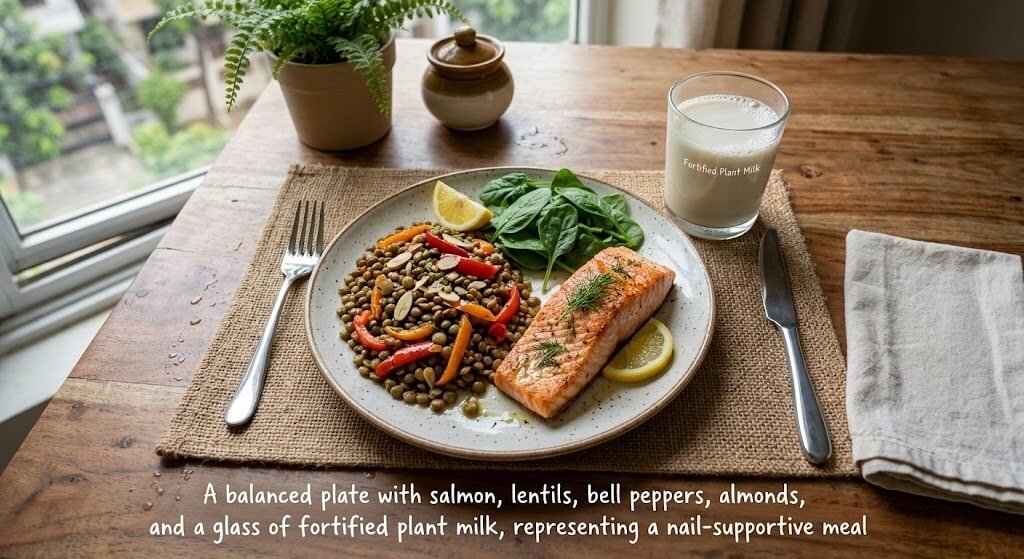
Step 2: Adjust Your Plate (Weeks 1–4)
Work with a dietitian to close the gap through food first:
| Nutrient | Food Sources (per serving) |
| Biotin (30 µg/day) | 1 oz (28 g) almonds, 1 large egg yolk, ½ cup (125 g) roasted sunflower seeds |
| B12 (2.4 µg/day) | 3 oz (85 g) salmon, 1 cup (245 ml) fortified plant milk, 60 g (2 oz) nutritional yeast |
| Iron (8–18 mg/day) | 4 oz (113 g) lean beef, 1 cup (190 g) cooked lentils, ½ cup (85 g) pumpkin seeds |
| Zinc (8–11 mg/day) | 3 oz (85 g) oysters, 4 oz (113 g) chickpeas, 1 oz (28 g) pumpkin seeds |
| Vitamin C (75–90 mg/day) | 1 medium orange, 1 cup (155 g) strawberries, 1 cup (155 g) sliced bell pepper |
| Protein (0.54–0.62 g/lb body weight) | 5 oz (142 g) chicken breast, 1 cup (245 g) Greek yogurt, ½ cup (110 g) tofu |
Pair iron-rich plant foods with a vitamin C source (e.g., lentil soup with a squeeze of lemon) to boost non-heme iron absorption. Avoid drinking tea or coffee within an hour of iron-rich meals, as tannins inhibit absorption.
Step 3: Supplement Strategically (Weeks 2–12)
If your bloodwork confirms a deficiency, your provider will recommend a specific dose. General guidance (always confirm with your doctor):
- Biotin: 2.5–7.5 mg (2,500–7,500 µg) daily for brittle nails.
- Iron: 18–65 mg elemental iron daily, taken with vitamin C, away from calcium.
- B12: 500–1,000 µg sublingual or oral daily if levels are below 400 pg/mL.
- Zinc: 15–30 mg daily, taken away from iron and calcium supplements.
- Vitamin C: 500–1,000 mg daily if dietary intake is clearly low.
Common Mistake: Taking a megadose of a “nail, skin, and hair” gummy that contains 10,000 µg of biotin plus 45 mg of iron, 50 mg of zinc, and 1,000 mg of vitamin C all in one pill. This can create imbalances—excess zinc depletes copper, excess iron can be toxic, and the biotin dose may interfere with thyroid lab tests. Get the specific nutrient you’re actually low in, at the dose your provider recommends.
Step 4: Support the Nail Bed Externally (Ongoing)
- Apply a thin layer of 100% pure jojoba oil or a lanolin-based cuticle cream nightly. This keeps the hyponychium (the skin under the free edge) flexible and reduces mechanical splitting.
- Wear gloves for dishes, cleaning, and any chemical exposure.
- Keep nails trimmed short and filed in one direction (not back-and-forth) to prevent micro-cracks.
- Avoid using nails as tools (opening cans, peeling labels).
Step 5: Recheck in 8–12 Weeks
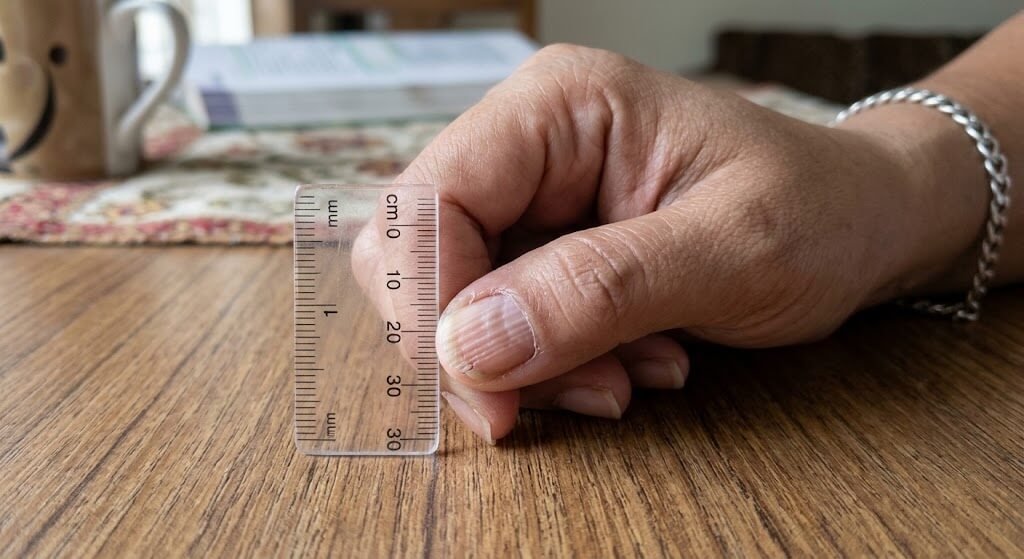
Fingernails grow about 3 mm per month (roughly 1/8 inch). You won’t see a change in the existing nail plate, but new growth from the matrix will reflect improved nutrition. Re-test blood levels at 8–12 weeks to confirm the deficiency is resolving.
Safety Notes and When to See a Doctor
Nail changes are usually not an emergency, but certain patterns warrant prompt medical attention:
- Sudden, deep horizontal ridges across all nails can follow a severe illness, high fever, or chemotherapy. Your oncologist or primary-care doctor should be in the loop.
- Rapidly spreading discoloration (black, green, or dark brown streaks) may indicate a fungal infection or, rarely, melanoma. See a dermatologist.
- Spoon-shaped nails with severe fatigue, dizziness, or chest pain suggest significant iron deficiency anemia. Get a CBC and ferritin test within a week.
- Nail changes accompanied by hair loss, skin rashes, joint pain, or unexplained weight change may point to an autoimmune condition (psoriasis, thyroid disease, lupus) rather than a simple vitamin gap.
If you’re pregnant, postpartum, managing a chronic condition, or taking medications that affect absorption (PPIs, metformin, certain antibiotics), talk to your doctor before starting any supplement. This article is for general information and is not a substitute for advice from a doctor or physical therapist.
Related Tips for Stronger Nails
Fixing the underlying deficiency is the foundation, but a few supporting habits help the nail plate recover faster:
- Stay hydrated. Keratin needs water to remain flexible. Aim for at least 8 cups (about 64 oz / 1.9 L) of water daily, more if you train or live in a hot climate.
- Protect your hands. Frequent hand-washing, sanitizing, or exposure to cold air dries the nail plate and accelerates splitting. A simple moisturizer with urea or glycerin after each wash helps.
- Don’t over-file or over-buff. Aggressive buffing thins the plate and makes ridges more visible. If you buff, do it once a week, lightly, in one direction.
- Watch your training load. Intense, prolonged cardio or cross-training can shift blood flow away from peripheral tissues. If you’re in a heavy training block, make sure your calorie and protein intake match the demand. A complete guide to supporting metabolism and recovery can help you balance nutrition around training.
- Sleep matters. Growth hormone peaks during deep sleep, and tissue repair (including the nail matrix) is most active overnight. The hormonal connection between sleep and metabolism extends to peripheral tissue recovery.
- Check your other micronutrients. If you’re fixing one deficiency, it’s smart to make sure you’re not low in others. A guide to which nutrients support normal energy metabolism can help you build a well-rounded plate.
FAQ
What vitamin deficiency causes vertical nail ridges?
The most commonly linked deficiencies are biotin (B7), vitamin B12, and iron. Mild vertical ridging is also a normal part of aging. If the ridges are deep, sudden, or accompanied by splitting, a blood panel can confirm whether a specific nutrient is low.
Do horizontal nail ridges mean a vitamin deficiency?
Not always. Horizontal ridges (Beau’s lines) often form after a significant physiological stress—fever, surgery, severe caloric restriction, or a crash in B12 or iron levels. If they appear on all nails at the same time, a systemic cause like a nutrient deficiency or illness is more likely than a local injury.
Can biotin deficiency cause nail splitting?
Yes. Biotin supports the cross-linking of keratin proteins in the nail plate. When biotin is low, the keratin structure weakens, making the free edge more likely to peel and split (onychoschizia). A 2.5–7.5 mg daily biotin supplement, under medical guidance, has been shown to improve nail thickness and reduce splitting over several months.
What does iron deficiency do to your nails?
Iron deficiency reduces oxygen delivery to the nail matrix. The nail plate becomes thinner, develops vertical ridges, and in more severe cases, curves inward into a spoon shape (koilonychia). Pairing nail changes with fatigue, cold extremities, and pale skin makes iron deficiency a strong suspect.
How long does it take to see nail improvement after fixing a deficiency?
Fingernails grow roughly 3 mm per month. You’ll start seeing new, healthier growth at the free edge within 4–6 weeks, but a full nail replacement takes about 4–6 months. Be patient—consistent nutrition and protection matter more than a quick fix.
Are nail ridges a sign of a B vitamin deficiency specifically?
Biotin (B7) and B12 are the two B vitamins most tied to nail structure. However, ridges can also result from zinc, iron, vitamin C, or protein shortfalls. A single B vitamin “deficiency gummy” won’t fix the problem if the real gap is iron or zinc. Get tested before guessing.
Conclusion
If you’ve been wondering what vitamin deficiency causes nail ridges and splitting, the short answer is: it’s usually not just one. Biotin, B12, iron, zinc, vitamin C, and adequate protein all play roles in building a strong, smooth nail plate. The good news is that most of these gaps are correctable with targeted dietary changes and, when confirmed by bloodwork, a short course of supplementation.
Start with a conversation with your doctor or a registered dietitian. Get the right labs. Adjust your plate. Protect your nails from mechanical and chemical stress. Give the matrix three to six months to do its job.
Your nails are a small, visible window into your overall nutritional status. Treat the signal they’re sending, and the ridges and splits will fade as new, healthier keratin grows in from the base.