
To understand weight management, you must understand your hormones. Sleep deprivation triggers a cascade of chemical changes that directly oppose your fat loss goals. Here are the four primary hormones impacted by your nightly rest.
Ghrelin and Leptin: The Hunger Hormones
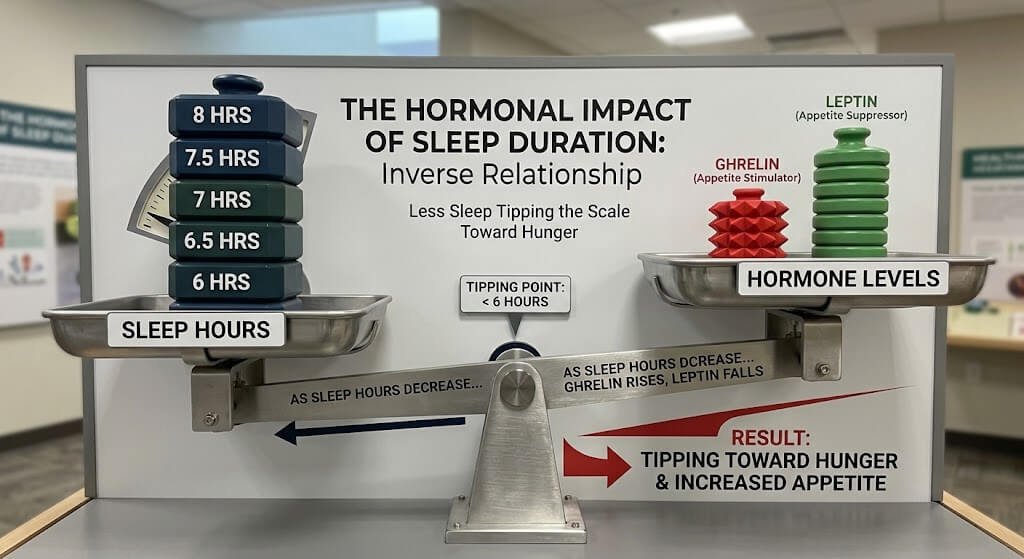
Ghrelin and leptin work together to control your appetite. Ghrelin is produced in the stomach and signals your brain that it is time to eat. Leptin is produced by fat cells and signals that you are full.
When you sleep less than seven hours, ghrelin levels spike. At the same time, leptin levels drop. A landmark study published in the Annals of Internal Medicine found that sleep-restricted adults experienced a 15% increase in ghrelin and a 15% decrease in leptin compared to well-rested adults (Taheri et al., 2004). This hormonal shift makes you feel hungrier and less satisfied after meals. You are biologically primed to overeat, especially high-calorie, carbohydrate-dense foods.
Cortisol: The Stress and Fat-Storage Hormone
Cortisol is your body’s primary stress hormone. It follows a natural circadian rhythm, peaking in the early morning to help you wake up and gradually declining throughout the day.
Poor sleep keeps cortisol levels elevated at night. Chronically high cortisol promotes the breakdown of muscle tissue and encourages the storage of visceral fat, particularly around the abdomen. This type of adipose tissue is highly metabolically active and linked to insulin resistance. Managing stress and prioritizing rest is essential to keep cortisol in check.
Insulin Sensitivity and Glucose Regulation
Insulin is the hormone responsible for shuttling glucose (sugar) from your bloodstream into your cells for energy. When you are sleep-deprived, your cells become resistant to insulin.
Research from the Journal of Clinical Endocrinology & Metabolism shows that just four days of restricted sleep can reduce insulin sensitivity by more than 30% (Buxton et al., 2012). This means your body has to produce more insulin to manage the same amount of food. High insulin levels block fat burning and promote fat storage. Quality sleep supports healthy glucose metabolism, which is a cornerstone of long-term metabolic health.
Human Growth Hormone (HGH) and Muscle Repair
Human Growth Hormone is vital for muscle repair, bone density, and fat metabolism. The majority of HGH is released during deep, slow-wave sleep.
If your sleep is fragmented or too short, you miss out on this critical release window. Without adequate HGH, your body struggles to repair muscle tissue damaged during workouts. Less muscle mass leads to a lower basal metabolic rate (BMR), meaning you burn fewer calories at rest. Deep, uninterrupted rest is critical for improving insulin sensitivity, helping your body process carbohydrates efficiently while you recover.
Sleep Stages and Their Metabolic Impact
Not all sleep is created equal. Your brain cycles through different stages of sleep every 90 to 110 minutes. Each stage plays a unique role in metabolic regulation and weight management.
| Sleep Stage | Duration per Cycle | Primary Metabolic Function |
| NREM Stage 1 (Light) | 1–5 minutes | Transition to sleep; heart rate and breathing begin to slow. Minimal metabolic impact. |
| NREM Stage 2 (Light) | 10–25 minutes | Body temperature drops. Brain waves slow down. Prepares the body for deep restorative sleep. |
| NREM Stage 3 (Deep) | 20–40 minutes | Crucial for metabolism. Tissue repair occurs. Human Growth Hormone (HGH) is released. Blood flow is directed to muscles. |
| REM Sleep | 10–60 minutes | Brain activity increases. Memory consolidation occurs. Helps regulate emotional eating and cravings the next day. |
To optimize weight management, you need sufficient time in both Deep Sleep (NREM Stage 3) and REM sleep. Waking up frequently, drinking alcohol before bed, or sleeping in a room that is too warm can prevent you from entering these deeper stages.
Restorative sleep promotes healthy blood vessel function, allowing your cardiovascular system to recover from daily stress and support efficient nutrient delivery during these critical stages.

How Does Sleep Deprivation Lead to Weight Gain?
The question of how does sleep affect metabolism and weight management is best answered by looking at daily energy balance. Weight gain occurs when you consume more calories than you expend. Sleep deprivation sabotages both sides of this equation.
Increased Caloric Intake
When you are tired, your brain seeks quick energy. Studies show that sleep-deprived individuals consume an average of 300 to 500 extra calories per day. These calories usually come from sugary snacks, refined carbohydrates, and fast food. The prefrontal cortex, the area of the brain responsible for impulse control, becomes less active when you are tired. This makes it much harder to resist the vending machine or late-night drive-thru.
Reduced Energy Expenditure
Fatigue makes you move less. This is known as Non-Exercise Activity Thermogenesis (NEAT). NEAT includes all the calories you burn through fidgeting, walking to your car, or standing. When you are exhausted, you subconsciously reduce these movements. You might choose the elevator over the stairs or skip your evening walk. Over a week, this reduction in NEAT can amount to thousands of unburned calories.
The “Weekend Catch-Up” Myth
Common Mistake: Many people try to “bank” sleep by sleeping 10 hours on Saturday and Sunday after a week of 5-hour nights. Research shows this does not reverse the metabolic damage. Circadian misalignment confuses your internal clock, leading to sustained insulin resistance and hormonal imbalance. Consistency is far more important than total weekly hours.
How to Apply It: A Coach’s Evening Routine for Metabolic Health
Knowing the science is only half the battle. As a coach, I tell my clients to treat their sleep like their most important workout. You would not skip leg day, so do not skip your 8 hours of recovery.
Here is a practical, step-by-step evening routine designed to optimize your sleep architecture and support weight management.
Coach’s Tip: Start this routine at the same time every night, even on weekends. Your circadian rhythm thrives on predictability.
6:00 PM: Finish Your Last Large Meal
Give your body at least three hours to digest before bed. Eating a heavy meal late at night forces your digestive system to work overtime, raising your core body temperature and preventing deep sleep. If you need a snack, choose a small portion of protein and complex carbs, like a half-cup of cottage cheese or a small apple with almond butter.
8:00 PM: Dim the Lights and Limit Screens
Blue light from phones, tablets, and televisions suppresses melatonin production. Melatonin is the hormone that signals to your body that it is time to sleep.
- Turn on warm, dim lamps in your living areas.
- Keep all screens at least 36 inches (91 cm) away from your face if you must use them.
- Better yet, switch to reading a physical book or listening to a podcast.
9:00 PM: Optimize Your Sleep Environment
Your bedroom should be a cave: cool, dark, and quiet.
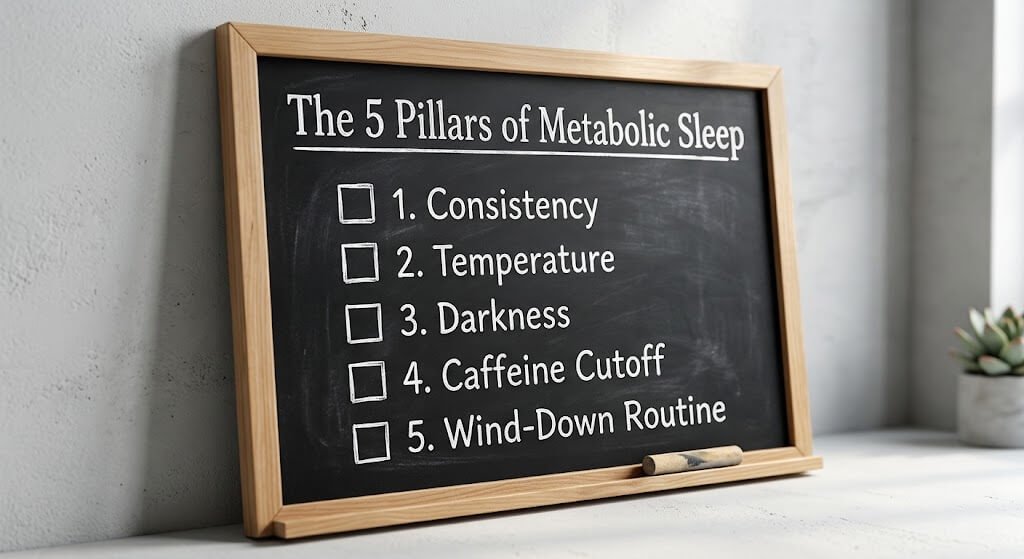
- Temperature: Set your thermostat to 65°F (18°C). A drop in core body temperature is a biological trigger for sleep onset.
- Comfort: Consider using a 15 lb (6.8 kg) weighted blanket. The gentle pressure can reduce cortisol and increase serotonin, helping you fall asleep faster.
- Darkness: Use blackout curtains or a high-quality sleep mask to block out streetlights.
9:30 PM: Wind Down and Stretch
Spend 10 to 15 minutes doing light mobility work or stretching. This relieves physical tension from the day. Focusing on your breath during this time also shifts your nervous system from a “fight or flight” state to a “rest and digest” state. Adequate rest aids musculoskeletal recovery, preserving the complex anatomy and function of the many joints in the human body, as detailed in guides on how many joints are in the human body, types, functions, anatomy.
10:00 PM: Lights Out
Get into bed with the goal of being asleep for 7 to 9 hours. If you cannot fall asleep within 20 minutes, get out of bed. Read in dim light until you feel sleepy, then try again. Lying in bed awake creates a psychological association between your bed and stress.

Related Tips for Optimizing Nighttime Recovery
Beyond the basic routine, several lifestyle factors can amplify your metabolic recovery during sleep.
Hydration Timing: Drink the majority of your daily water before 7:00 PM. Sipping a small amount of water in the evening is fine, but drinking large volumes will cause nighttime bathroom trips, fragmenting your deep sleep cycles.
Caffeine Cutoff: Caffeine has a half-life of about 5 to 6 hours. If you drink a large coffee at 4:00 PM, a quarter of that caffeine is still active in your brain at 10:00 PM. Set a strict caffeine cutoff time of 2:00 PM to protect your sleep architecture.
Vascular and Metabolic Synergy: Metabolic health is closely tied to circulation. For men specifically, addressing what causes poor blood circulation in men is vital for overall wellness and restful recovery. Optimizing your nighttime routine can also support nitric oxide benefits for men’s health, blood flow, and more.
Furthermore, sustained metabolic health is foundational to maintaining blood vessel health and erectile function. If you are exploring supplements to aid this process, you might compare L-arginine vs L-citrulline for blood flow which is better for your nighttime recovery, as understanding how L-citrulline helps produce nitric oxide can complement a solid nighttime routine.
Safety Notes and When to See a Doctor
While improving sleep hygiene is safe for most people, chronic sleep issues may indicate an underlying medical condition.
Consult a doctor or a sleep specialist if you experience:
- Loud, chronic snoring or gasping for air during sleep (signs of sleep apnea).
- Persistent insomnia that does not improve with lifestyle changes after four weeks.
- Unexplained, rapid weight gain despite a strict diet and exercise program.
- Excessive daytime sleepiness that interferes with your ability to drive or work safely.
Sleep disorders like obstructive sleep apnea severely disrupt metabolic health and require professional medical intervention, such as a CPAP machine, to resolve.
Always consult with a healthcare provider before starting any new supplement regimen or making drastic changes to your diet or exercise routine, especially if you have pre-existing conditions like diabetes, hypertension, or thyroid disorders.
Frequently Asked Questions (FAQ)
1. Does lack of sleep slow down metabolism?
Yes. Sleep deprivation can lower your resting metabolic rate (RMR). It also increases muscle breakdown and reduces the body’s ability to process glucose efficiently, making it harder to burn fat and easier to store it.
2. How many hours of sleep do you need to lose weight?
Most adults need 7 to 9 hours of quality sleep per night. Studies consistently show that individuals who sleep within this range have an easier time managing their weight and maintaining fat loss compared to those sleeping less than 6 hours.
3. Can sleeping more help you lose belly fat?
Indirectly, yes. Adequate sleep lowers cortisol levels. Since high cortisol is directly linked to the storage of visceral (belly) fat, normalizing your sleep schedule helps create a hormonal environment that favors fat loss.
4. What happens to your metabolism when you don’t sleep?
Your body enters a state of metabolic stress. Ghrelin (hunger) rises, leptin (fullness) falls, and insulin sensitivity drops. This combination drives intense cravings for high-calorie foods and promotes fat storage.
5. Does napping affect weight loss?
Short naps (20–30 minutes) can reduce stress and improve afternoon performance without disrupting nighttime sleep. However, long or late-afternoon naps can interfere with your circadian rhythm, making it harder to fall asleep at night.
6. What is the best sleep schedule for weight management?
The best schedule is a consistent one. Go to bed and wake up at the same time every day, including weekends. This regularity stabilizes your circadian rhythm, optimizing hormone release and metabolic function.
Conclusion: Mastering How Sleep Affects Metabolism and Weight Management
Understanding how does sleep affect metabolism and weight management changes the way you approach fitness. Sleep is not a passive state of doing nothing. It is a highly active, hormonally driven process that dictates your hunger, your energy expenditure, and your body’s ability to burn fat.
You cannot out-train or out-diet a chronic sleep deficit. By committing to 7 to 9 hours of quality rest, optimizing your bedroom environment, and sticking to a consistent schedule, you give your body the tools it needs to succeed. Treat your sleep with the same discipline you apply to your workouts and your nutrition. The results on the scale and in your overall health will follow.