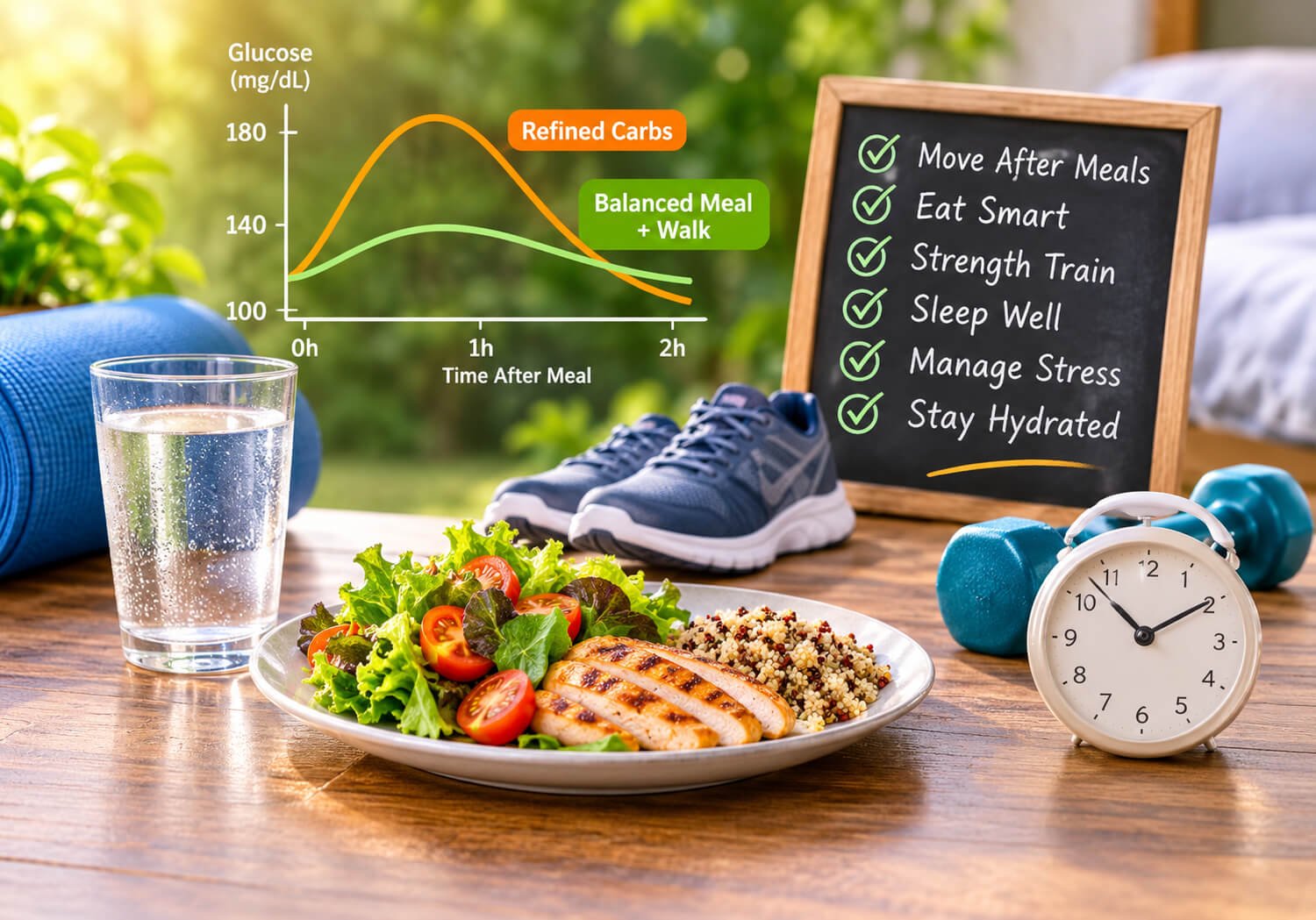
Steady energy, fewer cravings, and better focus usually trace back to one thing: glucose control. If you have been searching for how to maintain stable blood sugar naturally, the honest answer is that it comes down to a handful of daily habits, not one magic food or supplement. Movement timing, plate composition, sleep, and stress do most of the work. As a coach, I have watched clients turn “crashy” afternoons into even, predictable energy by changing these levers in a specific order. This guide walks you through the same sequence, with the research behind each step and a 7-day plan you can start this week.
Quick Answer: To maintain stable blood sugar naturally, walk for 10 to 15 minutes after meals, eat vegetables and protein before carbohydrates, train your muscles 2 or more days per week, sleep 7 or more hours, manage stress, and stay hydrated. Consistency across these habits matters more than any single trick.
What Stable Blood Sugar Actually Means
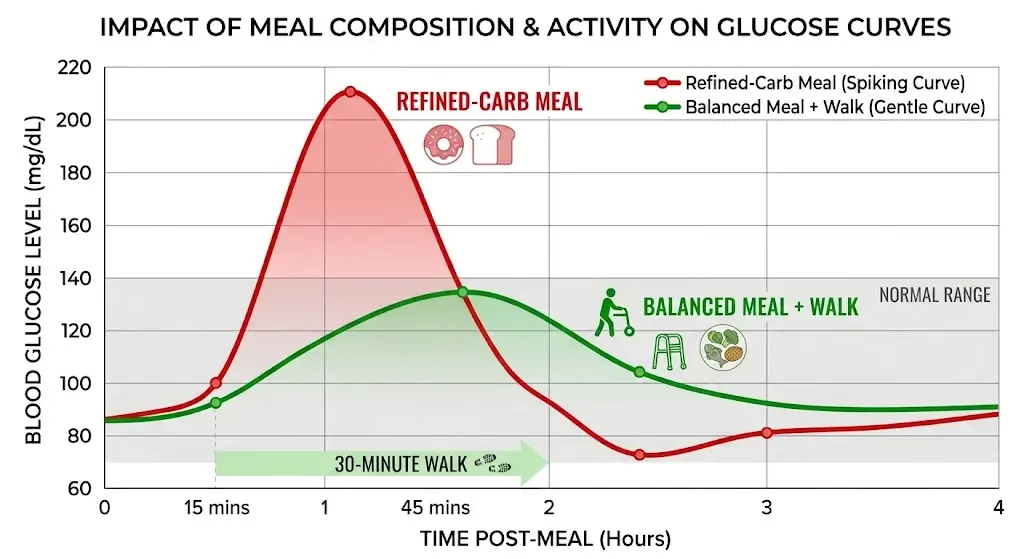
Blood sugar naturally rises after you eat and falls as your muscles and organs use glucose. That rise and fall is normal. In people without diabetes, glucose typically peaks about 1 hour after a meal and returns to baseline within 2 to 3 hours, and most meals peak below 140 mg/dL [1].
Research using continuous glucose monitors found something worth knowing before you panic over any single reading: in healthy people with fixed meal times, the median post-meal glucose peak was about 143 mg/dL, and peaks up to 160 or even 180 mg/dL occurred regularly [2]. A single high reading is not a diagnosis.
The concerning pattern is different: glucose that stays elevated 1 to 2 hours after eating, or fasting numbers that creep up over time. Doctors flag those ranges as prediabetes: a fasting glucose of 100 to 125 mg/dL, an A1C of 5.7 to 6.4 percent, or a 2-hour glucose of 140 to 199 mg/dL on a glucose tolerance test [3]. Diabetes is diagnosed at a fasting glucose of 126 mg/dL or higher, an A1C of 6.5 percent or higher, or a 2-hour value of 200 mg/dL or higher [4].
For people managing diabetes, the CDC lists typical targets of 80 to 130 mg/dL before meals and under 180 mg/dL two hours after the start of a meal, though your own targets may differ [5].
Why Blood Sugar Swings: The Real Drivers
Most glucose swings trace back to six controllable inputs. None of them requires medication to start working, though medication may still be needed, and nothing here replaces it.
Table
| Driver | What it does | How fast it works |
| Meal composition and order | Refined carbs and carb-first meals drive bigger spikes | Same day |
| Movement after meals | Muscles pull in glucose while you move | Minutes to hours |
| Regular training | Rebuilds insulin sensitivity for days at a time | 48 to 72 hours per session |
| Sleep | Short or late sleep worsens next-day glucose control | Next morning |
| Stress | Stress hormones raise glucose, especially with insulin resistance | Minutes to hours |
| Hydration | Dehydration concentrates glucose in the blood | Hours |
About 1 in 3 American adults has prediabetes, and more than 8 in 10 of them do not know it, according to the CDC [6]. That is exactly why the habits below matter even if you feel fine.
How to Maintain Stable Blood Sugar Naturally: The Six Pillars
Pillar 1: Move After Every Meal (Your Fastest Lever)
Walking after eating is the most reliable tool for flattening post-meal spikes, and timing matters more than most people realize. A meta-analysis of eight randomized crossover trials found that exercise done as soon as possible after a meal cut glucose excursions significantly, while the same exercise done before eating did not [7]. The benefit shrinks the longer you wait between plate and footsteps.
You do not need long walks. In people with type 2 diabetes, 15 minutes of moderate walking 30 minutes after each meal reduced 24-hour glucose variability, and 10 to 15 minutes of light movement has matched the effect of 30-minute sessions in several studies [8].
How to build the habit:
- Set a 10-minute timer to start 15 minutes after you finish eating.
- Walk at a pace where you can talk but not sing (roughly 3 to 3.5 mph, about 5 km/h).
- After your biggest meal, extend to 15 or 20 minutes.
- No space to walk? Wash dishes, climb stairs, or do a slow set of squats and wall push-ups. Any muscle contraction pulls glucose out of the blood.
Coach’s Tip: Anchor the walk to something you already do, like the dishes or a phone call. In my experience, “walk after lunch” sticks when it is tied to an existing routine, and it fails when it depends on motivation.

Pillar 2: Train Your Muscles for Insulin Sensitivity
Walking handles the spikes. Strength training fixes the underlying sensitivity. A meta-analysis of randomized trials in adults with type 2 diabetes found regular exercise produced a significant improvement in insulin sensitivity, with benefits still measurable more than 48 to 72 hours after the last session [9].
Mechanistically, contracting muscles pull glucose into the cell through GLUT4 transporters in a way that does not even require insulin, and the muscle stays sensitized to insulin for roughly 48 hours after a bout [10]. That is why guidelines recommend spreading activity over at least 3 days per week with no more than 2 consecutive days without movement.
Here is the plan I give clients who want glucose control as a primary goal. The Diabetes Prevention Program, the landmark U.S. trial, built its program around at least 150 minutes of moderate activity per week such as brisk walking, and getting that activity reduced diabetes incidence by 44 percent even in participants who did not hit the weight-loss goal [11].
Table
| Day | Session | Details |
| Mon | Full-body strength | 6 exercises below, 2 to 3 sets of 8 to 12 reps, 60 to 90 seconds rest |
| Tue | 30-min brisk walk | Can be split into post-meal walks |
| Wed | Full-body strength | Same structure as Monday, slightly harder |
| Thu | 30-min walk or bike | Easy pace |
| Fri | Full-body strength | Same structure, add reps or weight |
| Sat | Longer walk | 45 to 60 min, outdoors if possible |
| Sun | Rest or gentle stretching | Recovery counts too |
The six-exercise template (2 to 3 sets of 8 to 12 reps, leaving 1 to 2 reps “in the tank”):
- Goblet squat (or chair sit-to-stand): heels planted, chest tall, drive through mid-foot. You should feel your thighs and glutes working, not your knees.
- Dumbbell row (one arm, hand on bench): pull your elbow toward your hip, squeeze the shoulder blade.
- Push-up (incline if needed, hands on a counter): body straight, lower for 2 seconds, press up for 1.
- Dumbbell Romanian deadlift: soft knees, push hips back until you feel a hamstring stretch, then stand tall.
- Overhead press: ribs down, press without arching your lower back.
- ** Farmer carry**: walk 40 to 60 feet (12 to 18 m) with a challenging dumbbell in each hand, shoulders level.
Weight guidance: start with a load you could lift about 12 times before form breaks down, typically 10 to 20 lb (4.5 to 9 kg) per dumbbell for most beginners on rows and presses, and bodyweight or 15 to 25 lb (7 to 11 kg) for goblet squats. Add weight when all sets feel smooth.
Easier version (regression): chair sit-to-stands, incline push-ups on a counter, rows with a light backpack, and carries with one dumbbell. Two sets instead of three.
Harder version (progression): add a third set, slow the lowering phase to 3 seconds, or move to 5 sets of 5 heavier reps twice weekly once you have 3 months of consistent training.
Common Mistake: Doing cardio only. Clients who walk daily but never lift often see fasted numbers stay stubborn. Muscle is your biggest glucose sink, and two or three strength sessions per week is what changes the plumbing.
Safety check before exercise: if you use insulin or other diabetes medication, check your glucose before training. Mayo Clinic guidance notes a level below 90 mg/dL (5.0 mmol/L) is too low to start, and a snack of 15 to 30 grams of carbs, or 10 grams of glucose if you are at 90 to 124 mg/dL, helps prevent a low [12].

Pillar 3: Build the Right Plate, in the Right Order
What you eat sets the size of the spike. How you eat it changes the shape of it.
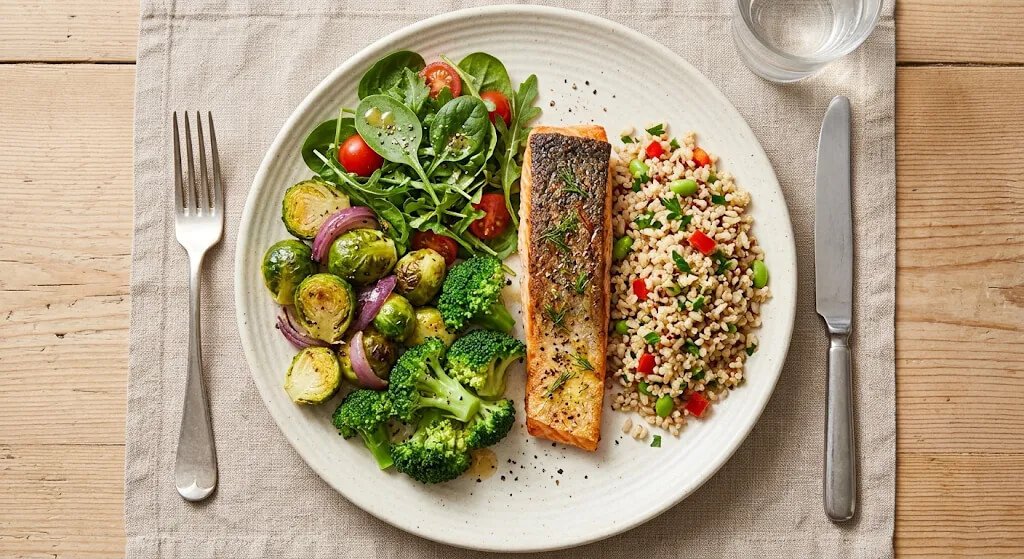
Order matters. A systematic review of meal-sequence studies found that eating vegetables, fruits, or protein-rich foods before carbohydrate-rich foods reduced post-meal glucose responses compared with mixed or carb-first meals [13]. A controlled trial in people with and without type 2 diabetes found eating vegetables before carbohydrates significantly reduced glucose excursions and glucose variability [14]. The evidence base is still young, but the cost of trying it is zero: eat the salad and the chicken before the rice.
Choose intact carbs over refined ones. Across 80 randomized controlled trials, whole-grain foods significantly reduced post-meal glycemia and insulinemia compared with refined-grain foods [15]. Dose matters too: cohort data suggest every 50 g per day of whole grain intake is linked to roughly a 25 percent lower risk of type 2 diabetes [16]. Processing matters as much as the label: in adults with type 2 diabetes, two weeks of less-processed whole grains (steel-cut oats, whole rye bread with visible kernels) produced lower post-meal responses and less day-long glucose variability than finely milled versions of the same grains [17].
Add viscous fiber. Soluble, gel-forming fiber slows glucose absorption. A meta-analysis in Diabetes Care found viscous fiber supplements at a median of about 13 g per day reduced HbA1c by 0.58 percent and fasting glucose meaningfully in people with type 2 diabetes, on top of usual care [18]. Food sources count too: oats, beans, barley, apples, and psyllium. For most of my clients, “half your plate vegetables, add a protein anchor, carbs last” does more than any single ingredient.
A note on vinegar. Meta-analyses of clinical trials report that vinegar with meals reduces post-meal glucose and insulin responses [19], and an umbrella review of meta-analyses associated vinegar intake with lower fasting glucose, lower post-meal glucose, and a modestly lower HbA1c [20]. Two cautions from the research: liquid vinegar worked better than commercial vinegar tablets in a head-to-head trial [21], and undiluted or daily vinegar drinks carry real risks, including measurable tooth wear over 8 weeks in a randomized trial [22] and a published case of corrosive esophageal injury from a daily vinegar beverage [23]. If you try it: 1 tablespoon diluted in a full glass of water before meals, never straight, and rinse your mouth after. Skip it entirely if you have gastroparesis or significant reflux, and clear it with your doctor if you take diabetes medication.
Coach’s Tip: Plate order is the easiest habit you will ever build. At dinner tonight, eat the vegetables and protein first, carbs last, and take your 10-minute walk when the plate is cleared. Those two moves stack.
Pillar 4: Protect Your Sleep Like It Is Part of Your Training
Sleep is not downtime for your metabolism; it is maintenance time. A systematic review in Obesity Reviews found that both short sleep (under 6 hours) and long sleep (9 hours or more) were linked with worse glucose metabolism in adults with overweight or obesity, and most studies of sleep restriction showed reduced insulin sensitivity or impaired glucose regulation [24].
The timing and consistency of sleep matter as much as the length. Under standardized meals, poorer sleep efficiency and later bedtimes were associated with sharper next-morning glucose responses, and deviating from your usual sleep pattern itself predicted worse post-meal control [25]. In a cohort of over 1,100 adults tracked with glucose monitors, persistently short sleep and late bedtimes were each associated with greater glucose variability [26].
The encouraging part: fixing sleep is an intervention, not just advice. A meta-analysis of 12 studies found cognitive behavioral therapy for insomnia and sleep hygiene programs reduced HbA1c by 0.27 percent overall, and by 0.43 percent in people with type 2 diabetes [27].
Your sleep prescription:
- Set a consistent bedtime and wake time, within about 30 minutes, seven days a week.
- Aim for a 7-plus-hour sleep window; if you must cut something, cut the late-night screen, not the hours.
- Finish large meals 2 to 3 hours before bed; late, heavy, carb-heavy meals stack on top of an already vulnerable window.
Pillar 5: Manage Stress Before It Manages Your Glucose
Stress is not just a mood problem; stress hormones mobilize glucose. In a controlled trial with continuous glucose monitors, a standardized social stress test produced a significant short-lived rise in glucose in healthy young adults compared with a control session [28].
The effect is strongest exactly where it matters most for prevention. In a real-world study of 116 adults wearing glucose monitors, daily life stress raised blood glucose significantly in people with insulin resistance, but not in insulin-sensitive controls [29]. The authors pointedly concluded that stress management belongs in diabetes prevention.
What actually works, in order of practicality:
- Movement as release: a brisk 10-minute walk lowers circulating stress hormones and pulls glucose into muscle at the same time. It is the only stress tool that does double duty.
- Box breathing: inhale 4 seconds, hold 4, exhale 4, hold 4, repeated for 2 minutes before meals or hard meetings.
- A real shutdown ritual: 10 minutes of non-screen time in the evening; chronic low-grade stress and short sleep feed each other.
Common Mistake: Treating stress relief as optional “self-care” rather than part of the glucose plan. Clients who track their glucose often see the stress spike on the graph before they believe it emotionally. The data makes it real.
Pillar 6: Stay Hydrated (Modest Tool, Real Role)
Water will not directly lower your glucose, and any source claiming otherwise is overselling. Cleveland Clinic puts it plainly: drinking water does not lower blood sugar, but staying hydrated helps prevent dehydration from making high blood sugar worse [30].
Why it matters mechanically: when you are dehydrated, the glucose in your bloodstream becomes more concentrated, which reads as a higher number and makes the kidneys work harder [31]. There is also early evidence that fixing chronically low intake helps: in adults who habitually drank little water, adding 1.5 liters (about 50 oz) per day for 6 weeks reduced fasting plasma glucose slightly but significantly [32].
Practical target: keep a water bottle at your desk and sip through the day; your urine should be pale straw colored. During longer or hotter workouts, drink steadily rather than chugging afterward.
Your 7-Day Plan for Stable Blood Sugar Naturally
Here is how the six pillars fit into one repeatable week. This template assumes no diabetes diagnosis; adjust with your care team if you have one.
Table
| Daily habit | Target | Why it works |
| Post-meal walks | 10 to 15 min, within 30 min of each meal | Flattens the post-meal spike at its peak |
| Plate order | Vegetables and protein first, carbs last | Slows glucose absorption |
| Strength training | Mon, Wed, Fri, 30 to 40 min | Raises insulin sensitivity for 48-plus hours |
| Daily movement floor | 7,000 to 10,000 steps or 30 min of walking | Keeps baseline glucose disposal high |
| Sleep window | Same bedtime and wake time, 7-plus hours | Protects next-day glucose control |
| Stress tool | One 2-minute breathing break or walk on hard days | Limits stress-driven glucose rises |
| Hydration | Water as your default drink, pale urine | Prevents concentration effects |
Progression, week by week:
- Week 1: post-meal walks plus plate order only. Master these two; they carry most of the immediate effect.
- Week 2: add two strength sessions.
- Week 3: add the third session and lock in a consistent bedtime.
- Week 4: add the stress tool daily and a longer weekend walk. Reassess how your energy feels at 3 p.m., which is where most people notice the difference first.
How to Track Your Progress
You cannot manage what you never measure, and there are three practical tiers.
- Bloodwork (the anchor): ask your doctor for a fasting glucose and A1C test. Prediabetes ranges are a fasting glucose of 100 to 125 mg/dL or an A1C of 5.7 to 6.4 percent, and about 10 percent of people with prediabetes progress to diabetes each year, which makes tracking worthwhile [33].
- Fasting home checks: a low-cost glucometer used first thing in the morning, two or three days a week, shows your trend line without pinprick marathons.
- Optional: a continuous glucose monitor (CGM). A sensor worn on the back of the upper arm records glucose every few minutes. In trials of healthy adults wearing a CGM for 14 days, participants found the data educational and reported high satisfaction with the device [28]. Healthy wearers typically spend the vast majority of the day between 70 and 140 mg/dL, and post-meal peaks in healthy people commonly approach 140 to 160 mg/dL [2]. Read your CGM for patterns (which meals, which sleep nights), not for single numbers, and do not let a graph turn into anxiety; the clinical evidence for CGM screening in people without diabetes is still limited.
Myths That Make Blood Sugar Harder to Manage
“Any spike over 140 mg/dL means I’m damaged.” Not supported. Healthy, non-diabetic people in monitoring studies regularly posted post-meal peaks of 140 to 180 mg/dL [2]. The pattern over weeks matters far more than one post-birthday-cake reading.
“Supplements can replace the basics.” The strongest evidence in this entire article belongs to walking, strength training, fiber, and sleep, not pills. If you are curious about evidence-based supplement options for insulin sensitivity, read our coach’s evidence-based guide to supplements and insulin sensitivity [34], but treat them as layer three, never layer one.
“Fruit is bad for blood sugar.” Whole fruit comes packaged with fiber and water; the dose and the matrix matter. Fruit juice and dried fruit behave very differently from a whole apple. Judge foods by their full package, not their carbohydrate count alone.
“If I’m not overweight, my glucose is fine.” Blood glucose does not check your BMI first. Sedentary people at any size can carry insulin resistance, which is why the movement habits above apply to everyone.
Who Should Be Careful
Talk to your doctor or a certified diabetes educator before changing exercise or eating patterns if you take insulin or sulfonylureas (hypoglycemia risk), have gastroparesis, are pregnant or postpartum, manage kidney disease or heart disease, or are over 65 with multiple health conditions. The habits here are broadly safe and beneficial, but medication timing and glucose targets are individual decisions that belong with your care team. This article is for general information and is not a substitute for advice from a doctor or physical therapist.
- FAQ
Does walking after eating really lower blood sugar?
Yes, and timing is the key detail. A meta-analysis of randomized crossover trials found exercise done as soon as possible after a meal significantly reduced post-meal glucose excursions, while the same exercise before eating did not [7]. Ten to fifteen minutes is enough to see an effect.
What is a normal blood sugar level after eating?
In people without diabetes, glucose peaks about 1 hour after a meal and returns to baseline within 2 to 3 hours, with most meals peaking below 140 mg/dL [1]. A 2-hour value of 140 to 199 mg/dL on a glucose tolerance test falls in the prediabetes range [3].
Can stress raise blood sugar even if I eat well?
It can. A controlled trial found a standardized social stress test produced a significant rise in glucose in healthy young adults [28], and daily stress raised glucose in insulin-resistant adults specifically [29]. Stress management is part of glucose control, not separate from it.
How does sleep affect blood sugar?
Strongly. Both short and long sleep were linked with worse glucose metabolism in a systematic review of 18 studies [24], and improving sleep through CBT-I or sleep hygiene reduced HbA1c by 0.27 percent across trials [27]. Keep a consistent bedtime; late sleep onset is linked to greater glucose variability.
Does drinking water help blood sugar?
Water does not directly lower glucose, but staying hydrated prevents dehydration from making high readings worse, since fluid loss concentrates the glucose in your blood [30]. In habitually low-drinking adults, adding 1.5 liters per day for 6 weeks modestly reduced fasting glucose [32].
Can lifestyle changes really prevent type 2 diabetes?
The evidence here is unusually strong. In the Diabetes Prevention Program, an intensive lifestyle program lowered the chance of developing type 2 diabetes by 58 percent over about 3 years, and by 71 percent in participants aged 60 and older [35]. The CDC-recognized lifestyle change program continues to show these results [6].
Conclusion
Learning how to maintain stable blood sugar naturally is not about finding one perfect food or buying one gadget. It is about stacking six boring, repeatable habits: a 10-minute walk after meals, vegetables and protein before carbs, two or more strength sessions a week, a consistent 7-hour-plus sleep window, a daily stress tool, and steady hydration. Each habit is small. Stacked together, they are the same lifestyle pattern that cut diabetes risk by more than half in the largest prevention trial ever run [35]. Start with tomorrow’s lunch: eat the vegetables first, then walk for 10 minutes when the plate is clear. That single day is how the whole system begins.