
Hyaluronic acid (HA) is one of the most abundant molecules in your connective tissue, and your body makes it naturally. But production drops noticeably after age 30, which is why your skin feels drier and your knees creak a little more on the stairs. An oral hyaluronic acid supplement can help replenish what your body is losing, supporting both skin hydration and joint comfort.
Finding the best oral hyaluronic acid supplement for skin and joints is not just about grabbing the cheapest bottle on the shelf. Molecular weight, form (sodium hyaluronate vs. cross-linked), third-party testing, and dose all matter. As a coach who works with athletes and active adults every day, I see the difference between a well-chosen supplement and one that sits unused on a nightstand. This guide walks you through eight options, what the research actually says, and how to pick the one that fits your goals and budget.
Quick Answer
For most people, a non-cross-linked sodium hyaluronate supplement at 120–200 mg daily is the sweet spot for skin and joint support. Top pick: Doctor’s Best Hyaluronic Acid with Vitamin C (budget-friendly, well-studied form). Upgrade pick: Thorne Hyaluronic Acid (third-party tested, high purity). If joint comfort is your main goal, look for a product that pairs HA with glucosamine or collagen.

Comparison Table at a Glance
| Product | Form / Dose | Key Feature | Best For | Price Range |
| Doctor’s Best HA + Vit C | Sodium hyaluronate, 120 mg + 200 mg Vit C | Affordable, adds vitamin C for collagen synthesis | Budget-conscious buyers, skin focus | 15–25 / 60 caps |
| NOW Foods HA | Sodium hyaluronate, 100 mg | Simple, no fillers, widely available | First-time HA users | 12–20 / 60 caps |
| Thorne Hyaluronic Acid | Sodium hyaluronate, 100 mg | NSF Certified for Sport, no artificial additives | Athletes, purity-focused buyers | 25–35 / 60 caps |
| Life Extension Super HA | Sodium hyaluronate + vitamin C, 100 mg | Pairs HA with 500 mg Vit C | Skin and joint combo support | 20–30 / 60 caps |
| Jarrow Formulas HA Plus | Sodium hyaluronate, 100 mg + Vit C | Includes vitamin C, easy-to-swallow cap | Women over 40, skin elasticity | 18–28 / 60 caps |
| Pure Encapsulations HA | Sodium hyaluronate, 100 mg | Hypoallergenic, no common allergens | Sensitive stomachs, clean-label buyers | 25–35 / 60 caps |
| Sports Research HA | Sodium hyaluronate, 100 mg | Third-party tested, affordable | Joint comfort on a budget | 14–22 / 60 caps |
| Nature’s Plus HA | Sodium hyaluronate, 100 mg | Gentle formula, widely stocked | Seniors, easy daily routine | 12–18 / 60 caps |
8 Products Reviewed in Detail
1. Doctor’s Best Hyaluronic Acid with Vitamin C
Who it’s for: Anyone who wants a no-frills, budget-friendly HA supplement that also supports collagen production through added vitamin C.
Key features:
- 120 mg sodium hyaluronate per capsule (slightly above the common 100 mg dose)
- 200 mg vitamin C per serving, which research links to collagen synthesis in the dermis
- Non-cross-linked, non-animal source (NASHA)
- 60 capsules per bottle, roughly one month at one capsule daily
Pros:
- One of the most affordable options on this list
- The vitamin C pairing is practical: you get two skin-supporting nutrients in one capsule
- NASHA source avoids animal-derived concerns
- Widely available at major retailers
Cons:
- No third-party sport certification (NSF, Informed Sport)
- Capsule size is a bit large; some users find it hard to swallow
- No glucosamine or other joint-specific co-factors
Bottom line: If you want to try oral HA without spending a lot, this is the pick I recommend to clients who are new to the supplement.
2. NOW Foods Hyaluronic Acid
Who it’s for: First-time users who want a simple, single-ingredient formula with no added vitamins or extras.
Key features:
- 100 mg sodium hyaluronate per capsule
- No added vitamin C or other actives
- Non-animal source
- 60 capsules per bottle
Pros:
- Extremely straightforward label
- Very affordable
- NOW Foods has a long track record in the supplement industry
- Easy to find in grocery stores and online
Cons:
- No vitamin C, so you’d need a separate source for collagen support
- Basic packaging; no batch-specific testing info printed on the label
- 100 mg is on the lower end of the studied range
Bottom line: A solid “starter” HA supplement. Pair it with a vitamin C source (food or a separate supplement) for a more complete skin-support stack.
3. Thorne Hyaluronic Acid
Who it’s for: Athletes, competitive sports participants, or anyone who wants a supplement with the highest level of third-party verification.
Key features:
- 100 mg sodium hyaluronate per capsule
- NSF Certified for Sport (tested for banned substances)
- No artificial colors, flavors, or common allergens
- Manufactured in a GMP-certified facility
Pros:
- NSF Sport certification means the product is tested for contaminants and banned substances
- Clean ingredient list with no fillers
- Trusted brand in the sports-medicine community
- Consistent batch-to-batch quality
Cons:
- Higher price point than most options here
- No vitamin C or joint co-factors included
- 100 mg dose; some users prefer 120–200 mg
Bottom line: If you compete in a sport that requires drug testing, or you simply want the cleanest label you can find, Thorne is the upgrade pick.
4. Life Extension Super HA
Who it’s for: People who want HA and vitamin C in one bottle without hunting for a separate C supplement.
Key features:
- 100 mg sodium hyaluronate + 500 mg vitamin C per capsule
- Non-animal source
- 60 capsules per bottle
Pros:
- 500 mg vitamin C is a meaningful dose for collagen cross-linking
- One capsule covers two skin-supporting nutrients
- Life Extension has a strong reputation for research-backed formulations
- Reasonable price for what you get
Cons:
- Capsule is large due to the vitamin C content
- No sport certification
- 500 mg vitamin C may cause mild stomach upset in sensitive individuals
Bottom line: A practical “two-in-one” for skin-focused users. If joint comfort is your priority, you may want to add a separate glucosamine or collagen peptide supplement.
5. Jarrow Formulas HA Plus
Who it’s for: Women over 40 who notice skin losing its “bounce” and want a gentle, well-rounded formula.
Key features:
- 100 mg sodium hyaluronate + vitamin C per capsule
- Easy-to-swallow capsule size
- Non-animal source
- 60 capsules per bottle
Pros:
- Gentle on the stomach
- Jarrow Formulas is well-known for clean, well-tested products
- The HA + vitamin C combo supports both hydration and collagen
- Reasonable price
Cons:
- No sport certification
- 100 mg dose is standard but not high
- Limited joint-specific co-factors
Bottom line: A dependable mid-range option. I often suggest this to clients in their 40s and 50s who are adding HA to an existing collagen or omega-3 routine.
6. Pure Encapsulations Hyaluronic Acid
Who it’s for: People with sensitive stomachs, multiple food sensitivities, or a preference for hypoallergenic products.
Key features:
- 100 mg sodium hyaluronate per capsule
- Free of gluten, dairy, soy, artificial colors, and common allergens
- Non-animal source
- 60 capsules per bottle
Pros:
- One of the cleanest labels in the HA supplement category
- Hypoallergenic formulation reduces the chance of GI upset
- Pure Encapsulations is popular with functional-medicine practitioners
- No unnecessary fillers or binders
Cons:
- Premium price
- No vitamin C or joint co-factors
- Less widely available in brick-and-mortar stores
Bottom line: If you react to a lot of supplement ingredients or follow a strict dietary protocol, this is the safest, cleanest choice.

7. Sports Research Hyaluronic Acid
Who it’s for: Budget-conscious buyers who want third-party testing without the premium price tag.
Key features:
- 100 mg sodium hyaluronate per capsule
- Third-party tested for purity and potency
- Non-animal source
- 60 capsules per bottle
Pros:
- Third-party testing at a lower price than Thorne or Pure Encapsulations
- Sports Research is a well-known brand in the supplement space
- Simple, clean formula
- Good value for the testing included
Cons:
- No sport-specific certification (NSF, Informed Sport)
- No vitamin C or joint additives
- 100 mg dose
Bottom line: A smart middle-ground if you want testing without the premium brand markup.
8. Nature’s Plus Hyaluronic Acid
Key features:
- 100 mg sodium hyaluronate per capsule
- Gentle formulation
- Non-animal source
- 60 capsules per bottle
Pros:
- Very affordable
- Nature’s Plus products are widely stocked in pharmacies
- Simple daily routine (one capsule)
- Gentle on digestion
Cons:
- No third-party testing information on the label
- No vitamin C or joint co-factors
- Basic formula with no added value
Bottom line: A no-drama, low-cost option. If you’re adding HA to a routine that already includes a multivitamin with vitamin C, this works well.

Before you click “add to cart,” run through this checklist. It takes about two minutes and saves you from buying the wrong bottle.
- Form of HA. Look for sodium hyaluronate (the salt form of HA). This is the form used in most oral studies and is well-absorbed. Avoid products that list “cross-linked hyaluronic acid” or “Hylan G-F 20” — those are designed for intra-articular injections, not oral use.
- Molecular weight (MW). The research on oral HA suggests that low-to-mid molecular weight (roughly 100–1,000 kDa) is better absorbed in the gut. Very high MW HA (>1,000 kDa) may not be digested efficiently. Most quality supplements do not print the exact kDa on the label, so check the product page or contact the manufacturer. If a product does not specify, assume it is in the standard oral range.
- Dose. Most oral studies use 100–200 mg per day. One capsule of 100 mg taken once or twice daily falls within the studied range. You do not need to “megadose” HA.
- Third-party testing. Look for NSF, Informed Sport, USP, or a similar independent test mark. This confirms the product contains what the label says and is free from heavy metals and contaminants.
- Added ingredients. Vitamin C (100–500 mg) is a sensible pairing because it supports collagen synthesis. Glucosamine or collagen peptides are optional joint-support additions. Avoid products that pile in 10+ “proprietary blends” — you won’t know what you’re actually getting.
- Source. NASHA (non-animal stabilized hyaluronic acid) is the preferred source. It is produced through bacterial fermentation, is consistent, and avoids animal-derived concerns.
- Budget and supply. At 100–200 mg daily, a 60-capsule bottle lasts about one month. Calculate the monthly cost before committing to a subscription.
- Allergens and sensitivities. If you have a sensitive stomach or food allergies, check the “other ingredients” list for fillers like magnesium stearate, titanium dioxide, or artificial dyes.
How We Picked
This list was built using the following criteria, weighted for practical value:
- Research backing: Does the form and dose of HA in the product align with published oral-supplementation studies?
- Ingredient transparency: Is the molecular weight, source (NASHA vs. animal), and dose clearly stated?
- Third-party verification: Is there an independent test mark (NSF, Informed Sport, USP)?
- Price per serving: We compared the cost per 100 mg of HA across products.
- Brand reputation and manufacturing standards: GMP certification, years in market, and consumer feedback.
- Form and ease of use: Capsule size, number of capsules per day, and whether the formula is gentle on the stomach.
We did not include products that use cross-linked HA, proprietary blends without disclosed amounts, or formulas with excessive fillers.
Coach’s Tip
Take your HA capsule with a full glass of water (8 oz / 240 mL) and a small meal or snack. HA works by helping tissues retain water, and taking it with food reduces the chance of mild stomach discomfort. Consistency matters more than timing: pick a time of day you will actually remember (I suggest with your morning coffee or your post-workout snack) and stick with it for at least 8 weeks before judging results.
- Timing. There is no strong evidence that morning vs. evening matters for HA. Take it whenever you will be consistent.
- Pairing. If your HA product does not include vitamin C, add 100–200 mg of vitamin C from food (a kiwi, half a bell pepper, or a small orange) at the same time. Vitamin C is a co-factor for collagen cross-linking in the dermis, and combining the two nutrients is a practical, low-cost addition.
- Duration. Oral HA studies typically run 8–12 weeks. Give it at least two months before deciding whether you notice a difference in skin texture or joint comfort.
- Hydration. HA binds water. If you are not drinking enough water (aim for about 8–10 cups / 2–2.5 L per day for most adults), the supplement has less “raw material” to work with.
- Stacking. HA can be part of a broader connective-tissue routine. Some clients pair it with a hydrolyzed collagen peptide (10–15 g daily) and omega-3 fatty acids for a more comprehensive approach to skin and joint health. You can read more about how omega-3 fatty acids support skin hydration and reduce inflammation in a separate guide.
Common Mistake
Buying a “hyaluronic acid” product that is actually a topical cream or serum and expecting it to work the same way as an oral supplement. Topical HA sits on the surface of the skin and adds temporary moisture. Oral sodium hyaluronate is absorbed in the gut and distributed through the bloodstream to connective tissues. They are different delivery systems for different goals. If your goal is systemic skin hydration and joint support, you need the oral form.
What the Research Actually Says
Hyaluronic acid is a long-chain polysaccharide found in the extracellular matrix of your skin, joints, and eyes. In the dermis, it helps hold water and maintain skin turgor. In the joint capsule, it is a key component of synovial fluid, which lubricates cartilage and cushions movement.
Several small-to-moderate clinical trials have looked at oral sodium hyaluronate:
- A randomized, double-blind study published in Skin Research and Technology found that participants who took 120 mg of oral HA daily for 12 weeks showed measurable improvements in skin hydration and elasticity compared to a placebo group
- Research in Osteoarthritis and Cartilage and related journals has examined HA’s role in synovial fluid composition and joint comfort, particularly in early-stage osteoarthritis. Oral HA is not a replacement for medical treatment, but it may support the natural lubrication process .
- A review in the Journal of Cosmetic Dermatology noted that oral HA supplementation at 100–200 mg/day is generally well tolerated, with few reported side effects beyond mild GI discomfort in a small number of participants .
Important caveats:
- Most studies are small (n = 30–100) and short (8–12 weeks). Larger, longer trials are needed.
- The exact molecular weight that is optimally absorbed orally is still being studied.
- HA supplements are not a substitute for medical treatment of osteoarthritis, rheumatoid arthritis, or other joint conditions. If you have persistent joint pain, swelling, or limited range of motion, see a doctor or physical therapist before starting any supplement.
For a broader look at how collagen supplements support skin over time, and how HA fits into that picture, it helps to understand that HA and collagen work in the same tissue matrix but do different jobs: collagen provides structure, while HA provides hydration and cushioning.
Who Should Be Cautious
- Pregnant or breastfeeding women: There is not enough safety data on oral HA supplements during pregnancy or lactation. Check with your OB-GYN or midwife first.
- People on blood thinners or with bleeding disorders: HA has a mild anti-inflammatory effect. If you take anticoagulants (warfarin, apixaban, etc.), talk to your doctor before adding HA.
- Autoimmune conditions (rheumatoid arthritis, lupus): HA is a component of connective tissue, and its role in autoimmune inflammation is not fully understood. Get clearance from your rheumatologist.
- Pre- or post-surgical patients: Stop HA supplements at least two weeks before any scheduled surgery and discuss resumption with your surgeon.
- Allergies: If you have a known allergy to the specific source (bacterial fermentation by-products in NASHA), avoid the product.
This article is for general information and is not a substitute for advice from a doctor or physical therapist.
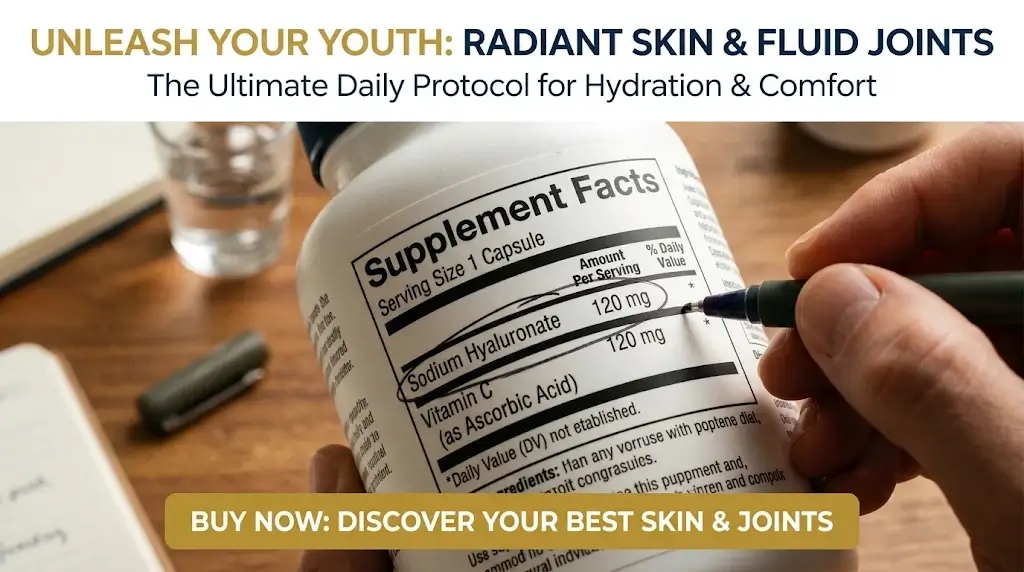
How to Evaluate Any HA Supplement Label
If you are shopping at a store and comparing shelves, here is a quick label-reading checklist:
- Active ingredient: Should say “Sodium Hyaluronate” (not “cross-linked HA” or “Hylan”).
- Amount per serving: 100–200 mg is the studied range.
- Source: Look for “NASHA” or “non-animal source.”
- Other ingredients: Fewer is better. Avoid long lists of dyes, artificial flavors, or proprietary blends.
- Supplement facts panel: Should list the exact mg of HA, not a “blend” percentage.
- Third-party mark: NSF, Informed Sport, USP, or a similar logo.
- Expiration date and lot number: Should be printed on the bottle.
- Manufacturer info: Name, address, and a way to contact customer service.
If you want a deeper framework for reading supplement labels, our guide on how to evaluate ingredients in supplements walks through the same principles applied to a broader range of products.
FAQ
Does oral hyaluronic acid actually work for skin?
Small clinical trials suggest that 100–200 mg of oral sodium hyaluronate taken daily for 8–12 weeks may improve skin hydration and elasticity. The effect is modest and varies by individual. It is not a replacement for sunscreen, moisturizer, or a healthy diet, but it may be a useful addition to your routine. Results are not guaranteed, and larger studies are needed.
How much hyaluronic acid should I take daily?
Most oral studies use 100–200 mg per day. One capsule of 100 mg taken once or twice daily is within the studied range. There is no strong evidence that taking more than 200 mg provides additional benefit. Follow the label instructions and do not exceed the recommended dose.
Can hyaluronic acid supplements help with joint pain?
HA is a natural component of synovial fluid, and oral supplementation may support joint lubrication. However, it is not a treatment for osteoarthritis or inflammatory joint disease. If you have persistent joint pain, swelling, or reduced mobility, see a doctor or physical therapist. An HA supplement may be a reasonable adjunct, not a replacement, for medical care.
What molecular weight hyaluronic acid is best for oral use?
Research suggests that low-to-mid molecular weight HA (approximately 100–1,000 kDa) is better absorbed in the gastrointestinal tract. Very high MW HA may pass through the gut without being fully digested. Most commercial oral supplements use sodium hyaluronate in this range, but not all labels specify the exact kDa. If a product does not state the MW, contact the manufacturer.
How long does oral hyaluronic acid take to work?
Most studies measure outcomes at 8 to 12 weeks of daily use. You are unlikely to notice a difference in the first two weeks. Give it a full two-month cycle before deciding whether the product is working for you. Consistency (taking it every day) matters more than the specific time of day.
Is hyaluronic acid supplement safe for long-term use?
In the studies conducted so far (up to 12 weeks), oral sodium hyaluronate at 100–200 mg/day was well tolerated with few side effects. Long-term safety data beyond one year is limited. If you plan to take HA daily for more than a few months, it is reasonable to check in with your doctor, especially if you have a pre-existing medical condition or take other medications.
Final Thoughts: Picking the Right Bottle for Your Goals
The best oral hyaluronic acid supplement for skin and joints is not one single product — it is the one that matches your specific goal, budget, and routine. If skin hydration is your main concern, a formula that pairs sodium hyaluronate with vitamin C (like Doctor’s Best or Life Extension Super HA) gives you a practical two-in-one. If joint comfort is the priority, look for a product you can pair with a collagen peptide or omega-3 supplement, and make sure you are staying active with low-impact movement like swimming, cycling, or walking.
Whatever you choose, buy from a reputable retailer, check for third-party testing, and give the supplement a fair 8-to-12-week trial before judging it. Pair it with good hydration, a balanced diet rich in vitamin C, and regular movement. And if you have a joint condition, a skin disorder, or you are on medication, run the plan past your doctor first.
You do not need the most expensive bottle on the shelf. You need a well-made, transparent product that you will actually take every day. Start with one capsule, stay consistent, and let the results speak over the next two months.