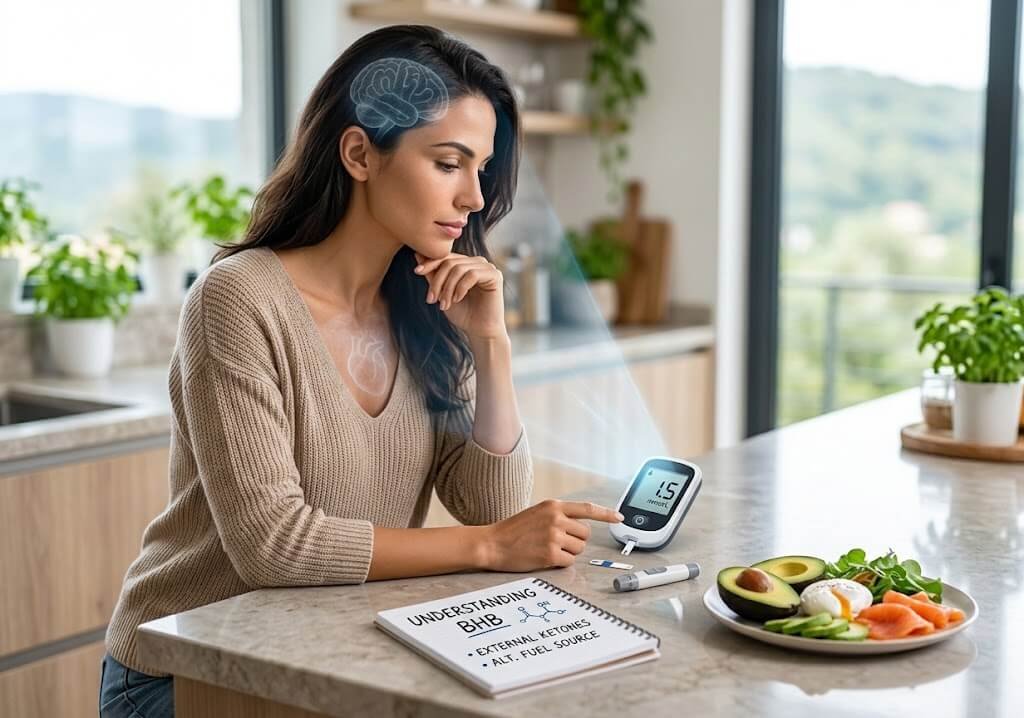
You see “BHB” on the label of a keto powder or capsule and wonder what you are paying for. So, what is beta-hydroxybutyrate in keto supplements? It is the same ketone molecule your liver makes when you eat very few carbs or go without food for a long time. Supplements deliver it in a bottle.
That sounds like a shortcut to ketosis. The reality is more nuanced. In this guide, you will learn what BHB is, how it differs from the ketones your body makes, what the research shows, and how to use any supplement more carefully.
Quick Answer
Beta-hydroxybutyrate (BHB) is a ketone body. The body normally makes it from fat when carbs are scarce. Keto supplements supply BHB, usually as mineral salts or an ester, to raise blood ketones for a few hours. They do not replace the diet, and evidence for performance or weight benefits is limited.
What Is Beta-Hydroxybutyrate? The Ketone Your Body Already Makes
Your liver turns fatty acids into three ketone bodies: acetoacetate, acetone, and beta-hydroxybutyrate. BHB is the main one circulating in your blood. A review of nutritional ketosis describes BHB as both an energy source and a signaling molecule.
Think of it as backup fuel. When carbohydrate is low, your brain, heart, and muscles can burn BHB instead of glucose. A 2024 review in Current Drug Targets notes that BHB serves as an alternative energy source for these tissues.
How much BHB is “normal”?
After a regular meal, blood BHB sits below about 0.1 mmol/L, according to a Journal of Nutrition and Metabolism study. Researchers generally call blood BHB above 0.5 mM “ketosis,” as described in a review of endogenous and exogenous ketosis . A nutritional ketosis review uses a working range of about 0.5-3 mM for nutritional ketosis.
Those numbers matter because they give you a yardstick. If a product promises “deep ketosis” in minutes, compare it against these ranges before you believe it.
How the body normally reaches ketosis
The classic route is a ketogenic diet. A review of ketone bodies describes the most common version as under 50 grams of carbohydrate per day, with free fat intake and moderate protein. Fasting and long, hard exercise can also raise ketones.
Nutritional ketosis is not the same as ketoacidosis. A scoping review in Frontiers in Nutrition explains that ketoacidosis is a dangerous metabolic breakdown, seen for example in uncontrolled type 1 diabetes or alcoholism. Keep that distinction in mind throughout this article.
Where Does Beta-Hydroxybutyrate in Keto Supplements Come From?
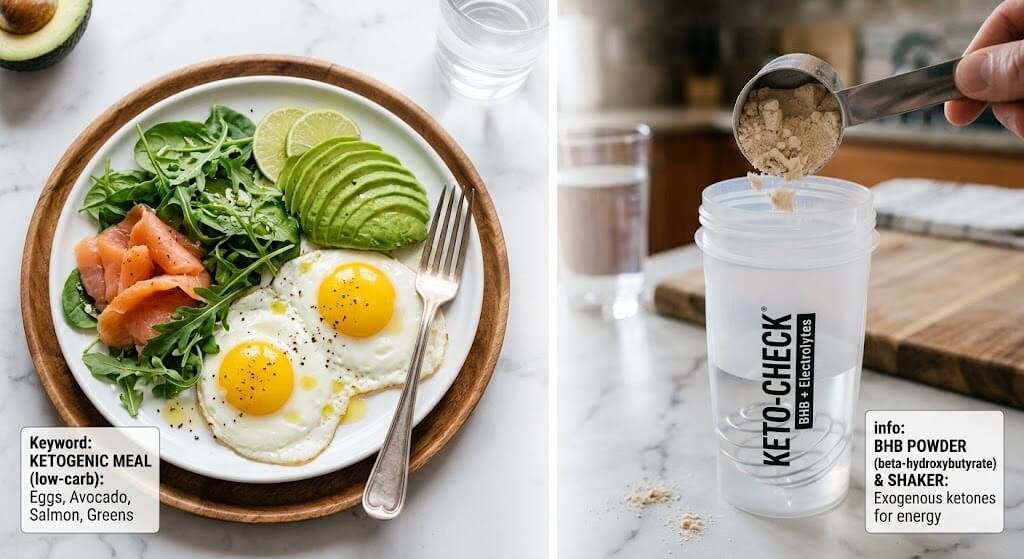
Supplement makers use lab-made BHB, not BHB pulled from your fat. It comes in a few main forms, and the form changes how the product feels and works. Here is a plain breakdown.
Ketone salts (BHB salts)
Ketone salts bind BHB to a mineral, usually sodium, potassium, calcium, or magnesium. They are the most common type in powders and capsules because they are cheaper and easier to flavor. They are also the main type you will meet on a shelf.
The catch is the mineral load. A tolerability study points out that the higher salt load of ketone salts may make them harder to tolerate than ketone monoesters. A serving can add meaningful sodium or potassium to your day.
Ketone esters
A ketone ester links BHB to another compound, so no mineral is needed. In human trials, the esters are often a liquid with a strong taste. In the tolerability study, researchers note that the monoester can be unpleasant in flavor.
Esters tend to raise blood BHB higher. In three randomized studies by Stubbs and colleagues, the ester drink delivered over 50% higher blood D-BHB than the salt drink. Esters are less common in everyday keto products and are often the costlier option .
Precursors such as MCT oil
Some “keto” products do not contain BHB at all. They contain ingredients like MCT oil that the body can convert into ketones. The review of endogenous and exogenous ketosis groups MCTs, ketone salts, and ketone esters together as exogenous ketone sources.
Always read the label. “Supports ketosis” on the front tells you little, while the ingredient panel tells you whether you are buying BHB or a precursor.
D-BHB vs. L-BHB: a label detail worth knowing
BHB comes in two mirror-image forms. The body uses D-BHB as its natural ketone. Many salts are a mix of D and L forms, called racemic. A study of a sodium and calcium DL-BHB salt found slow absorption and only a moderate rise in blood D-BHB.
So a product that lists “BHB” without saying “D” or “R” may give you less of the form your body prefers. If a brand does not say which form it uses, that is a fair question to ask the maker.
Coach’s Tip: Check the label for three things: the BHB form (salt or ester), the isomer (D/R or DL), and the milligrams of sodium, potassium, calcium, and magnesium per serving. Those numbers tell you more than any marketing claim.
Ketosis From Food vs. Ketosis From a Supplement
Here is the part most labels skip. Raising your blood ketones with a supplement is not the same as being in ketosis from a diet. The review of endogenous and exogenous ketosis explains that blood ketones come from different places: your own fat stores in one case, a consumed compound in the other.
The drop in blood glucose and insulin seen during diet-driven ketosis does not always happen with exogenous ketosis, according to that same review. In other words, the supplement can raise the ketone number without recreating the whole metabolic state.
A narrative review in PeerJ adds another wrinkle. It notes that exogenous ketones promote high blood ketones but may inhibit the body’s own ketone production. That is one reason coaches hesitate to treat a BHB drink as a stand-in for fat adaptation.
Why the difference matters to you
If your goal is to follow a keto diet, the supplement does not do the diet for you. Your carb intake, total calories, and protein still drive your results. If you eat a high-carb meal, you are not going to stay in ketosis just because you took BHB.
Think of the supplement as a short-term bump in blood ketones. Think of the diet as the lifestyle that changes your fuel use over weeks. They are two different tools.
What the Research Says About Beta-Hydroxybutyrate in Keto Supplements
Research on BHB supplements is growing but still young. Most trials are small, short, and done in healthy adults. Here is what the better studies show, and where the gaps are.
Blood ketones and blood sugar
The clearest finding is that BHB supplements raise blood BHB. A systematic review and meta-analysis covering 43 trials and 586 participants found that exogenous ketones increased blood BHB by an average of 1.73 mM after ingestion. The same analysis found blood glucose fell by an average of 0.54 mM.
The effect was larger with ketone monoesters than with salts. The authors also noted that evidence on prolonged supplementation is limited. That matters, because most people use these products for weeks, not hours.
Stubbs and colleagues found a similar pattern in healthy volunteers. Their randomized studies showed ketone drinks lowering blood glucose, free fatty acids, and triglycerides, while blood electrolytes stayed in a normal range. The authors called the drinks a practical way to reach ketosis in those short experiments.
Blood sugar is a topic many readers care about. If you want to explore other supplements people study in this area, see our guides on inositol and insulin sensitivity and chromium picolinate and glucose metabolism. Anyone managing diabetes should talk to a doctor before adding any of these.
Exercise performance
Many athletes try BHB to go faster or last longer. The evidence is not convincing. A meta-analysis of 13 randomized trials in the International Journal of Sports Physiology and Performance found no clear effect of acute ketone supplementation on exercise performance. That covered sprints up to events lasting about 50 minutes.
A perspective in Frontiers in Nutrition reached a similar conclusion. It states that there is currently insufficient evidence to support the overall effectiveness of ketone supplements in sports. It also flags stomach symptoms and the need for long-term safety research.
For a gym-goer, the takeaway is simple. Your training plan, sleep, and food matter far more than a ketone drink. If you want to experiment, treat it as a trial and track how you feel and perform.
Common Mistake: Taking BHB right before a hard session on a new product without testing it first. Some people get stomach upset, and you do not want to find out mid-workout. Try a small amount on a rest day or an easy session.
Keto flu and the adjustment period
Many people reach for BHB to smooth the first weeks of a keto diet. That period is sometimes called “keto flu.” The Frontiers in Nutrition scoping review lists symptoms that may include headache, lightheadedness, fatigue, brain fog, muscle cramps, constipation, and diarrhea.
Does BHB fix it? The evidence is thin. The PeerJ narrative review found limited research on supplements that shorten keto-induction or reduce its symptoms. That is not proof that BHB does not help. It means we do not have strong data either way.

Brain, heart, and other claims
You may see claims about focus, aging, or heart health. The Current Drug Targets review says BHB supplementation holds potential for conditions such as neurodegenerative disorders and cardiovascular disease. Note the word “potential.” Much of that work is lab-based or early-stage, not proof that a store-bought powder helps you.
Be cautious with any product that promises health outcomes. Research suggests BHB is biologically interesting. That does not mean a supplement will improve your brain or heart health.
Comparing the Main Forms of Beta-Hydroxybutyrate in Keto Supplements
This table summarizes what the sources above say. Treat it as a starting point, not a buying recommendation.
| Feature | Ketone salts | Ketone monoester | MCT-based “keto” products |
| What it is | BHB bound to minerals (sodium, potassium, calcium, magnesium) | BHB linked to another compound, no mineral needed | A fat the body converts toward ketones |
| Raises blood BHB | Yes, usually less than esters | Yes, usually more than salts | Indirectly |
| Main drawback | Mineral load; often a D/L mix | Strong taste; usually costlier | Not BHB itself |
| Stomach effects | Mild, depends on dose | Mild, depends on dose | Varies |
| Best researched for | Short-term blood ketone rise | Short-term blood ketone rise | Mixed |
How to Apply This: A Practical Way to Evaluate a BHB Supplement
Before you buy, run the product through a short checklist. A good coach checks the fundamentals first, then fine-tunes. The same applies here.
Step 1: Define your goal
Decide why you want it. Are you easing into a keto diet? Curious about energy? Wanting a pre-workout? Write one sentence. If your goal is fat loss or performance, remember the evidence above is limited.
Step 2: Read the label like a coach
- Look for the form: salt, ester, or MCT.
- Look for D-BHB or R-BHB versus DL.
- Add up the sodium and potassium per serving.
- Skip products with vague “proprietary blends.”
- Note total servings and dose, not just front-of-box claims.
Step 3: Start low and go slow
There is no official dose for the general public. Research doses vary. In one set of human trials, drinks delivered about 12 or 24 grams of BHB. That does not mean those amounts suit you.
If you and your doctor agree to a trial, begin with the smallest serving on the label. Do not stack servings. Gradual testing is the progression. The “regression” is simply cutting back to a half serving or stopping if you feel off.
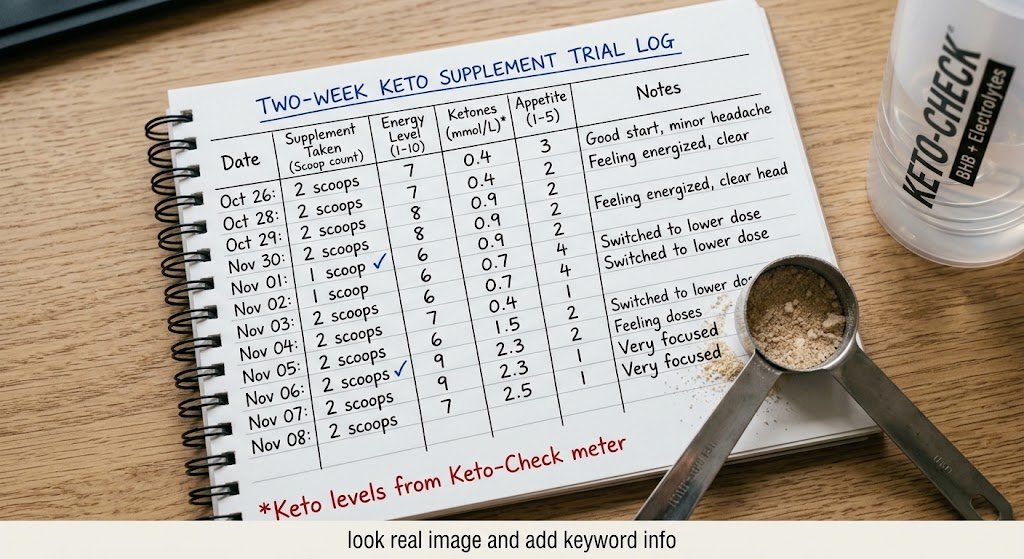
Step 4: Sample two-week trial plan
- Days 1-3: Take half the labeled serving with food, on a rest day. Note stomach comfort, energy, and sleep.
- Days 4-7: If you felt fine, move to one full serving. Keep water intake steady, about 8 cups (roughly 2 liters) a day unless your doctor says otherwise.
- Days 8-14: Keep a short daily log: hunger, workout quality, and digestion. Optionally, test blood ketones with a meter.
- Day 15: Review your notes. If nothing improved, you have your answer.
Step 5: Do not let it replace the basics
Whole foods, protein, sleep, and training come first. A BHB scoop will not fix a poor diet or a weak program. If you are lifting, aim to keep up your normal progressive overload and recovery habits.
Safety Notes: Who Should Be Careful With BHB Supplements
BHB supplements are not harmless just because they are “natural” molecules. The same study on a sodium and calcium BHB salt reported that one of six participants dropped out because of stomach symptoms. It concluded that excessive regular use without medical supervision is not free of side effects.
Common side effects
A study in the International Journal of Sport Nutrition and Exercise Metabolism found that stomach symptoms after ketone drinks were mild and short-lived. They varied by the type and amount of ketone and by exercise. Expect nausea, cramping, or loose stools to be possible, especially at higher doses.
Who should talk to a doctor first
Check with a doctor or registered dietitian before using BHB if any of these apply:
- You have diabetes, especially type 1, or take medicine to lower blood sugar.
- You have kidney disease, heart disease, or high blood pressure.
- You are on a low-sodium or low-potassium plan.
- You take diuretics, blood pressure medicine, or other prescriptions.
- You are pregnant, breastfeeding, or planning pregnancy.
- You have a history of eating disorders.
Mineral salts can add sodium and potassium. For people with kidney or heart problems, that matters. The ketoacidosis risk described in the scoping review is also a reason people with diabetes should not experiment on their own.
Red flags to stop
Stop and seek medical help if you have severe vomiting, confusion, fast breathing, a fruity breath smell, chest pain, or an irregular heartbeat. These can signal something serious, not a normal adjustment.
Related Tips for Anyone Exploring Keto Supplements
A few habits will protect your results and your wallet. None of these require a supplement.
Test instead of guessing
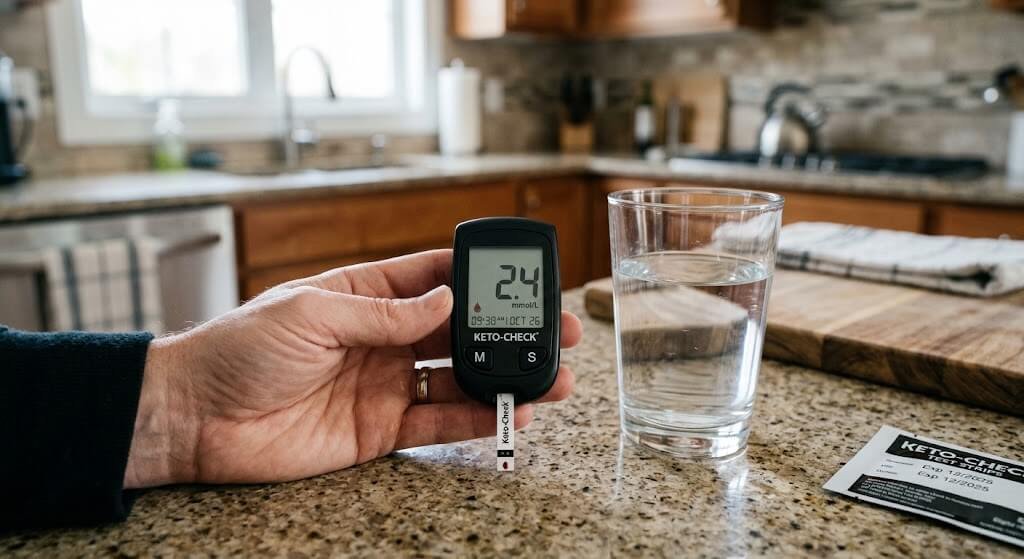
A blood ketone meter gives a direct reading of BHB. A review on ketone testing calls blood BHB the gold standard for monitoring ketosis, while urine strips become less reliable as you adapt. Remember that a BHB drink will raise a blood reading without proving you are fat-adapted.
Hydrate and mind electrolytes
Keto diets can change fluid balance. If you feel foggy or crampy, look at water, sodium, potassium, and magnesium from food first. Leafy greens, avocado, nuts, and fish are all low-carb options.
Keep training sensible
If you are new to keto, expect your workouts to feel harder for a bit. The scoping review lists decreased exercise capacity among keto-induction symptoms. Drop the weight by 10-20% for the first week or two and keep your reps clean. For example, if you normally squat 135 lb (61 kg), try 115-120 lb (52-54 kg) at first.
Be skeptical of marketing
Be wary of any product that promises to “melt fat” or deliver results with no diet change. The data do not support that. Choose brands that list full ingredients, third-party testing, and clear serving sizes .
Common Myths About Beta-Hydroxybutyrate in Keto Supplements
Marketing around BHB often runs ahead of the science. Here are four claims you may see, and what the research actually supports.
Myth 1: “BHB burns body fat for you”
A BHB supplement adds ketones to your blood. It does not pull fat out of storage. The PeerJ narrative review notes that exogenous ketones may actually inhibit the body’s own ketone production. If fat loss is your goal, your total calorie intake and activity still lead the way.
Myth 2: “More is always better”
Higher doses raise blood BHB more, but they also bring more side effects. The tolerability study describes a dose dependency in ketone responses, and the stomach-symptom study found symptoms vary with the amount taken. Doubling a scoop is a fast way to get cramps, not results.
Myth 3: “It makes keto easy, so you can eat what you want”
Blood BHB can rise even if your meal was high in carbs. That reading does not mean your body has switched fuels. The review of endogenous and exogenous ketosis separates the two states for exactly this reason.
Myth 4: “Ketones are harmless at any level”
Nutritional ketosis is a normal, regulated state. Ketoacidosis is not. A review of ketone bodies describes nutritional ketosis as staying under about 3.0 mM with blood pH in the normal range. People with diabetes need medical guidance, because their risks differ.
How to Read a BHB Study Headline
News stories and product pages love to quote a single study. Use these quick checks before you trust a claim.
- Check the group size. The large blood glucose meta-analysis pooled 586 people across 43 trials, so the average trial was small.
- Check the length. Many trials test one dose over a few hours. That does not show what happens after months of daily use.
- Check who was studied. Most volunteers are healthy adults, often young men. Results may not match older adults or people with medical conditions.
- Check the outcome. A higher blood BHB number is not the same as better health, a better workout, or lost body fat.
Key Numbers at a Glance
This table collects the figures used above so you can scan them in one place.
| Measure | Value reported | Source in this article |
| Blood BHB after a normal meal | Below about 0.1 mmol/L | Journal of Nutrition and Metabolism study |
| Threshold researchers call ketosis | Above 0.5 mM | Review of endogenous and exogenous ketosis |
| Working range for nutritional ketosis | About 0.5-3 mM | Nutritional ketosis review |
| Average rise in blood BHB after ketones | 1.73 mM | Blood glucose meta-analysis |
| Average fall in blood glucose | 0.54 mM | Blood glucose meta-analysis |
| Trials in the performance meta-analysis | 13 randomized trials | International Journal of Sports Physiology and Performance |

Frequently Asked Questions
Do BHB supplements put you in ketosis?
They raise blood BHB for a few hours, which can reach the 0.5 mM threshold researchers use for ketosis. But this is exogenous ketosis, not the same state as diet-driven ketosis. Blood glucose and insulin effects may differ, and the effect fades as the dose clears.
Are BHB salts safe?
Short-term studies in healthy adults report mostly mild stomach symptoms. Long-term safety data are limited. The mineral load can matter for people with kidney, heart, or blood pressure issues. Talk to a doctor before using them, especially if you take medicine or have diabetes.
What is the difference between ketone salts and ketone esters?
Salts bind BHB to minerals like sodium or potassium. Esters link BHB to another compound without minerals. Research shows esters raise blood BHB more, while salts add a mineral load. Esters often taste harsher and may cost more, so compare labels and your tolerance.
Can BHB supplements help with keto flu?
Evidence is thin. A narrative review found limited research on supplements for reducing keto-induction symptoms. Hydration, enough electrolytes, and a gradual carb reduction are commonly discussed, though research is still limited. If symptoms are severe or last long, see a healthcare professional.
Do ketone supplements improve workouts?
Most evidence says no clear benefit. A meta-analysis of 13 trials found no consistent effect on performance for efforts up to about 50 minutes. Some people feel stomach upset instead. Focus on training quality, sleep, and fueling, and treat any supplement as an optional experiment.
Do exogenous ketones work without a keto diet?
They can raise blood BHB without carb restriction, which is the whole point of the product. But the broader benefits of a keto diet, such as lower insulin, are not guaranteed from a supplement alone. Researchers still need longer studies on regular, prolonged use.
Conclusion: What Beta-Hydroxybutyrate in Keto Supplements Can and Cannot Do
Beta-hydroxybutyrate in keto supplements is the same ketone your body makes on a low-carb diet or during a fast. Taken as a salt or ester, it can raise blood ketones quickly and may lower blood sugar for a short time. That part is well supported.
What is not well supported is the bigger promise. Meta-analyses show no clear performance boost, and research on long-term use, weight changes, and keto flu relief is limited. Mild stomach upset and mineral load are real trade-offs.
If you decide to try one, read the label, start low, and track your results for two weeks. Keep your food, training, and sleep strong. Talk to your doctor first if you have a health condition or take medicine.