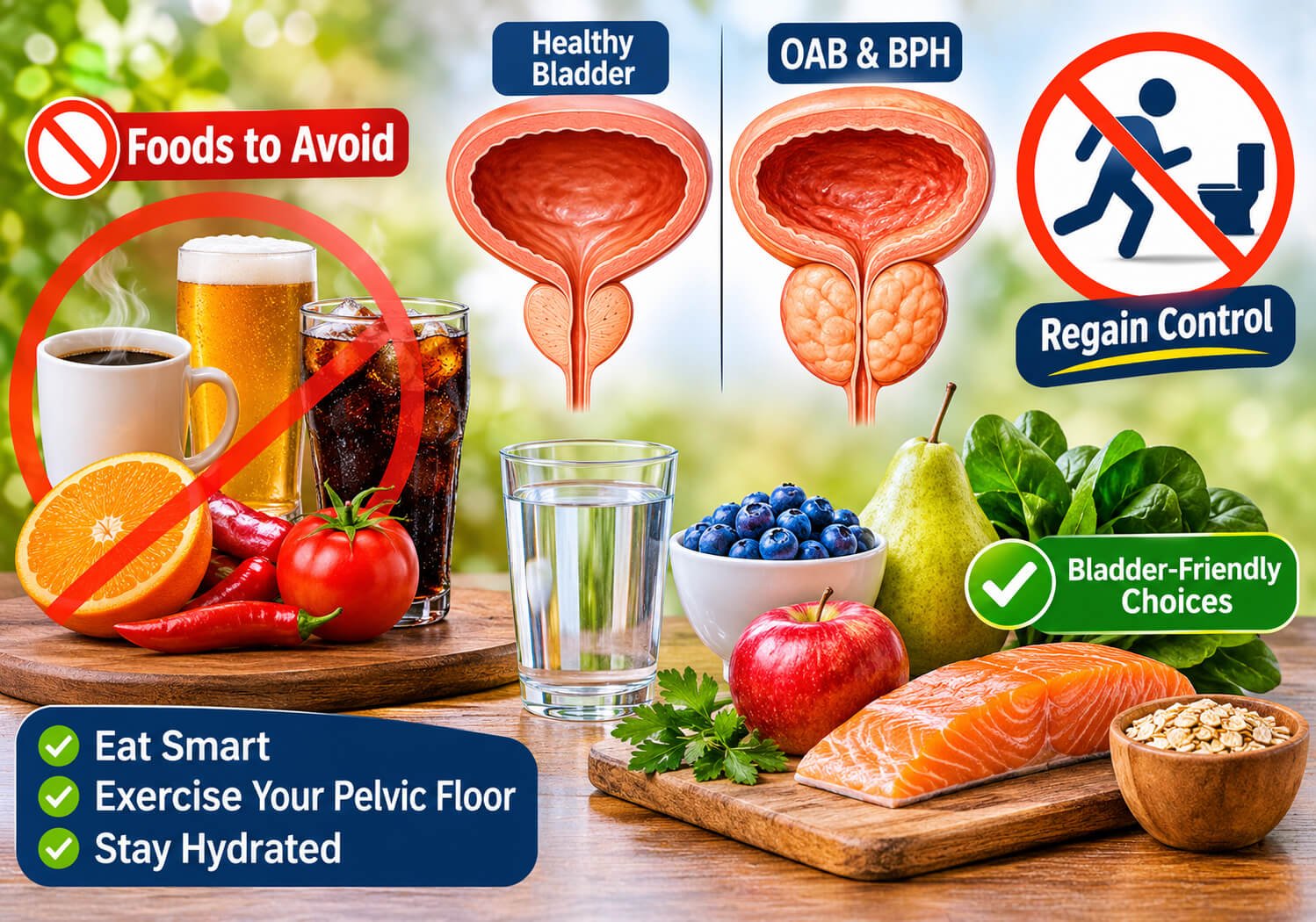
Dealing with constant trips to the bathroom can completely derail your day—and ruin your night’s sleep. If you are waking up three or four times every night or constantly mapping out public restrooms wherever you go, you are not alone. Millions of men and women deal with bladder control issues, and for men over 50, an enlarging prostate often doubles the frustration.
While targeted exercises like pelvic floor training play a major role in restoring control, your daily nutrition is just as critical. The items on your plate and in your cup directly dictate how calm or irritated your urinary system remains throughout the day. In this comprehensive guide, we will break down the top foods to avoid with overactive bladder and enlarged prostate, explain the physiological mechanisms behind bladder spasms, and provide a structured plan to help you regain control of your life.
Understanding OAB, BPH, and Lower Urinary Tract Symptoms
To fix urinary urgency and frequency, you first need to understand how the bladder and prostate interact.
Overactive Bladder (OAB) is a neuromuscular condition characterized by sudden, involuntary contractions of the detrusor muscle—the smooth muscle layer surrounding the bladder wall. These premature contractions create an overwhelming urge to urinate, even when your bladder contains only a small amount of fluid.
Benign Prostatic Hyperplasia (BPH), commonly known as an enlarged prostate, is a non-cancerous growth of the prostate gland. Because the prostate surrounds the upper portion of the male urethra (the tube that carries urine out of the body), an enlarging prostate physically pinches the urethra shut. This obstruction forces the bladder muscle to push harder to expel urine, leading to bladder wall thickening, irritability, and incomplete emptying.
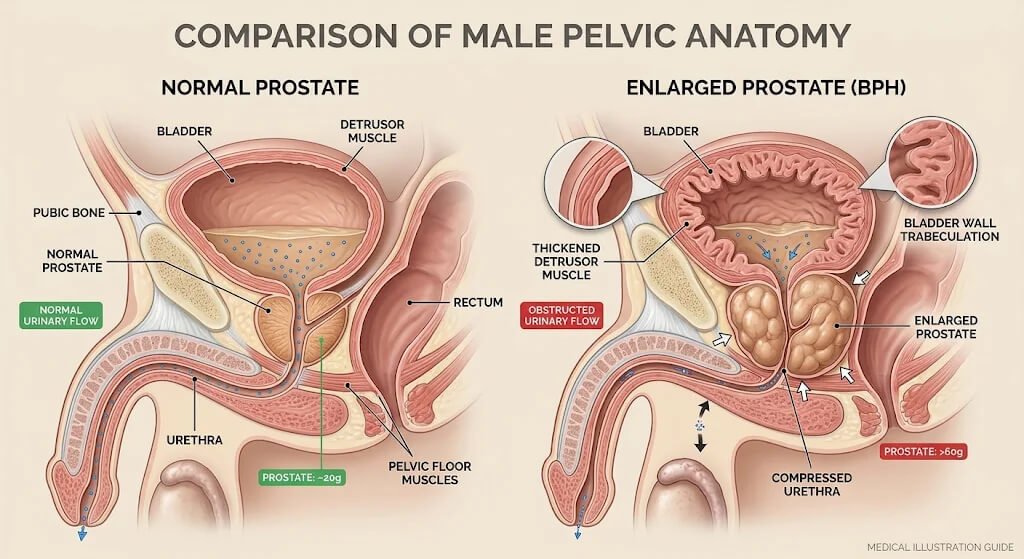
When OAB and BPH coexist, they create a compounding effect known clinically as LUTS?. An enlarged prostate physically blocks outflow, while an overactive detrusor muscle triggers constant false alarms. Dietary irritants act like gasoline on this fire: they directly chemically inflame the bladder lining, exacerbate prostate congestion, and trigger severe smooth muscle spasms.
Primary Foods to Avoid with Overactive Bladder and Enlarged Prostate
Eliminating pelvic irritants is the fastest non-pharmacological way to reduce urinary urgency. Below are the primary food and beverage categories that directly inflame the bladder lining and aggravate prostate enlargement.
1. Caffeinated Beverages (Coffee, Tea, Energy Drinks)
Caffeine is a double-threat to your urinary system. First, it is a potent chemical stimulant that directly sensitizes the detrusor muscle, causing it to contract prematurely. Second, caffeine acts as a natural diuretic, accelerating fluid production by your kidneys and filling the bladder rapidly.
- Why it hurts: Caffeine lowers the sensory threshold at which your bladder signals “fullness,” creating intense urgency at low urine volumes.
- Action step: Gradually phase out high-caffeine coffee and energy drinks. Switch to naturally caffeine-free herbal teas such as chamomile or peppermint.
2. Alcohol (Beer, Wine, Spirits)
Alcohol exerts a sedative effect on your central nervous system, but it acts as a harsh irritant on the urinary tract. It impairs the neuromuscular signals between your brain and bladder floor, making it harder to signal when to hold or release urine.
- Why it hurts: Alcohol inhibits ADH?, leading to massive spikes in urine output. Additionally, beer and wine contain high levels of histamine and inflammatory compounds that promote prostate tissue swelling.
- Action step: Avoid alcohol within 4–5 hours of sleep to reduce disruptive night trips to the bathroom.
3. Acidic Fruits and Tomatoes
While citrus fruits (oranges, lemons, limes, grapefruits) and tomatoes are rich in vitamins, their high citric and malic acid contents lower urine pH. Highly acidic urine directly burns and irritates sensitive or inflamed bladder tissue.
- Why it hurts: Concentrated acid acts like salt on an open wound inside an irritated bladder wall, triggering involuntary detrusor contractions.
- Action step: Replace acidic fruits with low-acid options like pears, apples, blueberries, and bananas.
4. Artificial Sweeteners and Synthetic Additives
Aspartame, sucralose, saccharin, and acesulfame potassium (commonly found in diet sodas and zero-sugar fitness drinks) are recognized chemical bladder irritants.
- Why it hurts: Clinical studies published in urological research journals demonstrate that artificial sweeteners significantly increase bladder muscle responsiveness and frequency of uninhibited contractions.
- Action step: Eliminate zero-calorie diet drinks. Hydrate with plain water or non-acidic fruit-infused waters.
5. Spicy Foods and Hot Peppers
Capsaicin, the active heat compound in chili peppers, jalapeños, and hot sauces, stimulates C-fiber pain receptors lining the digestive tract and bladder floor.
- Why it hurts: Capsaicin triggers systemic mucosal irritation, which causes the smooth muscle lining of the pelvic organs to spasm, increasing urinary frequency.
- Action step: Season meals with mild, stomach-friendly herbs like basil, oregano, parsley, and rosemary instead of hot peppers or cayenne.
6. High-Sodium, Processed Foods
Heavy sodium consumption (found in fast food, canned soups, cured meats, and packaged snacks) causes systemic fluid retention.
- Why it hurts: When you lie down flat at night, fluid retained in your legs returns to your bloodstream, processing through the kidneys and causing massive nighttime urine production (nocturia?).
- Action step: Keep daily sodium intake under 2,000 mg and avoid processed, salty foods late in the evening.
7. Processed Red Meats and Saturated Fats
Diets high in commercial red meat, fried items, and industrial trans-fats promote systemic chronic inflammation.
- Why it hurts: High levels of saturated fat increase circulating inflammatory biomarkers (like IL-6 and TNF-alpha), accelerating prostate tissue growth (hyperplasia) and worsening mechanical urethral constriction.
- Action step: Shift toward a Mediterranean-style diet centered on lean poultry, wild-caught fish, legumes, and healthy monounsaturated fats like cold-pressed olive oil.

Detailed Dietary Elimination Matrix
Use this quick-reference guide to replace troublesome dietary irritants with soothing, nutrient-dense alternatives:
| Food Category | Foods to Avoid | Bladder-Friendly Alternatives | Impact on OAB / BPH |
| Beverages | Espresso, energy drinks, black tea, dark beer, red wine, diet soda | Water, chamomile tea, peppermint tea, golden milk, diluted pear juice | Reduces detrusor spasms, eliminates chemical irritation |
| Fruits | Oranges, lemons, grapefruits, pineapples, tomatoes, strawberries | Apples, pears, blueberries, watermelons, bananas, papaya | Prevents acidic urine spikes, reduces bladder burning |
| Proteins | Fatty commercial red meat, processed sausage, bacon, deep-fried meats | Wild salmon, chicken breast, turkey, tofu, lentils, eggs | Decreases systemic inflammation, supports healthy prostate tissue |
| Condiments & Spices | Hot sauce, chili flakes, cayenne pepper, raw onions, soy sauce, mustard | Garlic (cooked), basil, oregano, parsley, thyme, olive oil | Avoids C-fiber receptor stimulation in the pelvic floor |
| Sweeteners | Aspartame, sucralose, saccharin, high-fructose corn syrup | Small amounts of raw honey, pure maple syrup, stevia (leaf extract) | Eliminates neuro-chemical detrusor hyper-excitability |
Structural & Pelvic Floor Exercises for Bladder & Prostate Health
As a certified strength coach, I always remind clients that diet is only half the equation. You must also build a resilient, supportive structural environment around your pelvic organs.
Weakness, hypertonicity, or poor coordination in the levator ani? directly contributes to urinary leakage and urgency. Strengthening and learning to relax these deep core muscles gives you physical control over your detrusor reflexes.
1. Pelvic Floor Muscle Training (Kegels)
Targeted pelvic contractions strengthen the pubococcygeus muscle, giving you the muscular force needed to close the urethral sphincter when urgency strikes.

- How to do it: Lie flat on your back with knees bent and feet flat on the floor. Exhale completely, then gently lift and squeeze the muscles you would use to stop the flow of urine or prevent passing gas. Hold the contraction firmly without gripping your glutes or holding your breath. Release completely for an equal duration.
- Cues: “Think about drawing your pelvic floor up toward your ribcage, not just squeezing your buttocks.”
- Sets & Reps: 3 sets of 10–12 repetitions daily. Hold each squeeze for 5 seconds, followed by 5 seconds of total muscle relaxation.
Coach’s Tip: Never perform Kegel contractions while actively urinating in the bathroom to “test” your strength. Doing this habitually interrupts the normal bladder reflex, confusing the detrusor muscle and worsening urinary retention.
2. Deep Diaphragmatic Breathing & Pelvic Drop
For individuals whose bladder urgency stems from an overactive, overly tight pelvic floor (hypertonic pelvic floor), traditional Kegels can actually worsen symptoms. Diaphragmatic breathing helps drop and relax the pelvic region.
- How to do it: Lie on your back with a pillow under your knees. Place one hand on your chest and the other on your lower belly. Inhale slowly through your nose for 4 seconds, allowing your lower abdomen and pelvic region to expand naturally. Exhale slowly through your mouth for 6 seconds.
- Cues: “Breathe down into your hips; feel your pelvic floor expand outward on every inhale.”
- Sets & Reps: 2 sets of 5 minutes daily, preferably before bedtime to calm the nervous system.
3. Glute Bridges & Deep Core Stability
Strengthening the surrounding hip extensors and deep abdominal wall creates dynamic pelvic support, relieving excess intra-abdominal pressure on the bladder.
- How to do it: Lie on your back with knees bent, feet hip-width apart. Drive through your heels, squeeze your glutes, and lift your hips until your body forms a straight line from knees to shoulders. Pause at the top for 2 seconds while lightly bracing your core, then lower slowly.
- Cues: “Push through the floor with your heels, keeping your lower back neutral.”
- Sets & Reps: 3 sets of 12–15 repetitions.
Exercise Progression & Regression Guide
To ensure you train safely and effectively regardless of your current baseline fitness, use these exercise adjustments:
Exercise Regressional Options (Easier Level)
- Seated Pelvic Floor Lift: If lying down is uncomfortable, sit upright on a firm chair or exercise ball. Focus strictly on isolating the pelvic lift without engaging your inner thighs.
- Supported Glute Bridge: Perform the bridge with your back resting on a low step or place a yoga block under your sacrum for passive structural support.
Exercise Progressional Options (Advanced Level)
- Standing Dynamic Kegels: Perform pelvic floor holds while standing, marching in place, or holding a shallow bodyweight squat to build control under dynamic loads.
- Single-Leg Glute Bridge: Lift one foot off the ground while performing a bridge, challenging your rotational hip stability and deep pelvic core integration.
Training and Hydration Strategy by Goal
Managing your fluid intake around workout routines requires strategic planning. Cutting out water completely is a mistake—overly concentrated urine acts as an intense chemical irritant to the detrusor muscle, accelerating bladder spasms.
| Goal / Context | Fluid Management Strategy | Pelvic Floor Protocol | Workout Focus |
| Daily Health & Maintenance | Sip 64–80 oz (1.9–2.4 L) of plain water evenly throughout daylight hours. Stop drinking 2 hours before bed. | 3 sets of 10 reps (5-sec hold / 5-sec relax) daily. | Moderate-intensity walking, cycling, low-impact cardio. |
| Active Exercise Sessions | Drink 8–12 oz (230–350 mL) 45 minutes before working out. Empty your bladder right before your warm-up. | Perform 5 sub-maximal pelvic floor contractions during warm-ups. | Resistance training with controlled intra-abdominal pressure. |
| Nocturia Prevention | Front-load 80% of your total fluid intake before 5:00 PM. Limit evening fluids to tiny sips for medicine. | 5 minutes of deep diaphragmatic breathing in bed. | Evening mobility, light pelvic drops, soft stretching. |
For active individuals looking to manage overall metabolic health alongside pelvic function, balancing whole-body inflammation is crucial. Many people turn to specialized nutrition or lifestyle plans; for example, understanding how to support metabolism naturally for weight management can help clear systemic inflammatory markers that aggravate prostate enlargement.
Furthermore, if you are using specific nutritional strategies, such as high-protein diets or intermittent fasting to optimize your health, keeping an eye on satiety and fluid balance is key. Incorporating proper dietary choices—like looking into whether dietary fiber helps with appetite and weight management—can also optimize bowel regularity. Chronic constipation physically presses the bowel against the back of the bladder, significantly worsening urinary urgency and BPH outflow obstruction.
Weekly Lifestyle & Bladder Retraining Schedule
Combining dietary changes with pelvic training yields the best results when structured systematically. Follow this sample 7-day schedule to retrain your bladder reflexes and reduce symptoms.
Days 1–3: Elimination & Baseline Tracking
- Nutrition: Remove all top 7 dietary irritants (caffeine, alcohol, acidic foods, spicy foods, artificial sweeteners, high sodium, processed red meats).
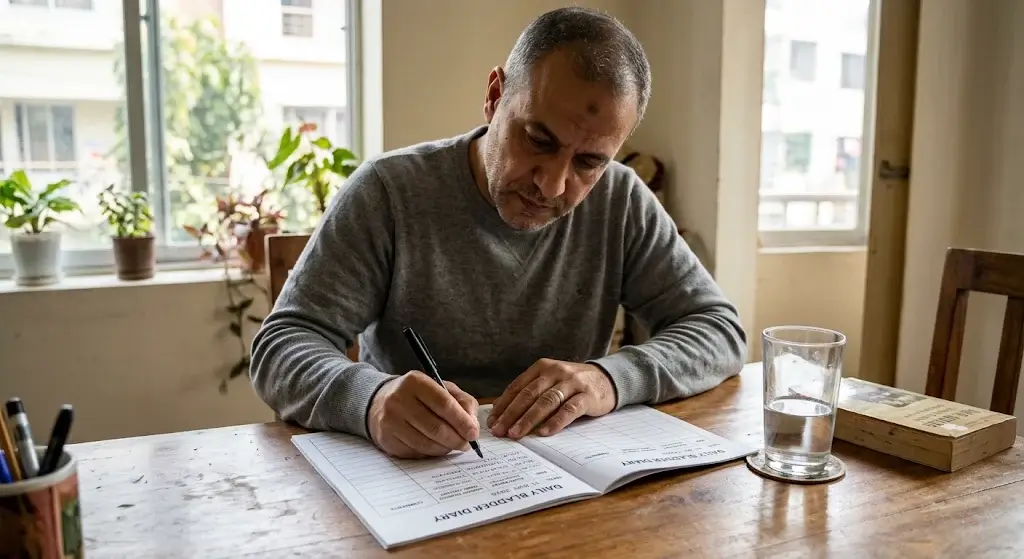
- Bladder Diary: Log every drink (time and amount), every void, and every episode of urgency or leakage.
- Exercise: Perform basic floor Kegels (3 sets of 10 reps) and 5 minutes of evening diaphragmatic breathing daily.
Days 4–7: Interval Expansion & Strengthening
- Nutrition: Maintain the strict elimination diet. Hydrate with room-temperature water front-loaded in the morning and early afternoon.
- Bladder Retraining: When you feel a sudden urge to urinate, stop, sit down, squeeze your pelvic floor 3–5 times quickly (the “freeze and squeeze” technique) to suppress the detrusor spasm, wait for the urge to pass, and then walk calmly to the bathroom.
- Exercise: Progress to Glute Bridges (3 sets of 12 reps) alongside daily pelvic floor holds.
Who Should Be Careful
While dietary modifications and pelvic floor strengthening exercises are safe for most individuals, certain populations must exercise extra caution and seek professional medical guidance before starting a new regimen:
- Individuals with Acute Urinary Tract Infections (UTIs): Sudden spikes in urgency, burning pain, cloudy urine, or fever indicate an active bacterial infection requiring prescription antibiotics—not just dietary adjustments.
- Men with Severe Urinary Retention: If you are entirely unable to pass urine, feel a hard, painful lump in your lower abdomen, or experience back pain, seek emergency medical evaluation immediately. Complete urethral blockage from severe BPH can lead to kidney damage.
- Post-Prostate Surgery Patients: Men recovering from a radical prostatectomy or TURP (TURP?) must follow their urologist’s specific pelvic physical therapy timeline before attempting intense core or pelvic floor exercises.
- Individuals taking Daily Diuretics: If you take prescribed fluid pills for high blood pressure or heart conditions, never alter your fluid intake without explicit instructions from your prescribing physician.
Frequently Asked Questions
What drinks irritate an overactive bladder and enlarged prostate the most?
Coffee, dark teas, energy drinks, alcohol, carbonated sodas, and acidic citrus juices are the worst culprits. They act as direct diuretics while chemically inflaming the sensitive lining of the bladder and exacerbating prostate congestion.
How quickly will cutting out trigger foods improve bladder symptoms?
Many people notice a measurable reduction in bladder urgency and nighttime trips within 3 to 7 days of eliminating major irritants like caffeine, alcohol, and artificial sweeteners. Complete detrusor muscle calming typically occurs over 3 to 4 weeks of consistent dietary changes.
Can targeted pelvic floor exercises really help men with an enlarged prostate?
Yes. While pelvic floor exercises do not shrink the physical size of the prostate gland, they significantly strengthen the external urethral sphincter and pelvic floor musculature. This enhanced muscular control helps suppress involuntary bladder spasms and reduces urgency and post-void dribbling.
Does drinking less water help reduce urinary urgency and frequency?
No, cutting back on water often backfires. Restricting fluid intake makes your urine highly concentrated, dark, and acidic. Concentrated urine strongly irritates the bladder wall, triggering more severe detrusor muscle spasms and increasing the risk of urinary tract infections.
Are natural sweeteners safer for the bladder than artificial sweeteners?
Yes. Pure maple syrup, small amounts of raw honey, or natural leaf stevia generally do not cause the neuro-chemical hyper-excitability of the detrusor muscle associated with synthetic artificial sweeteners like aspartame, sucralose, or saccharin.
Conclusion
Living with overactive bladder and an enlarged prostate can feel overwhelming, but you have substantial control over your symptoms. By systematically removing the core foods to avoid with overactive bladder and enlarged prostate—such as caffeine, alcohol, acidic foods, artificial sweeteners, and spicy dishes—you eliminate the chemical sparks that trigger agonizing bladder spasms and prostate inflammation.
Combine these smart dietary choices with daily pelvic floor strengthening, deep core stability, and targeted bladder retraining to build a strong physical foundation. Be patient with your body: consistent, daily habits yield life-changing relief over time. Take control of your plate, stay consistent with your movement, and enjoy getting back to a restful, uninterrupted night’s sleep.