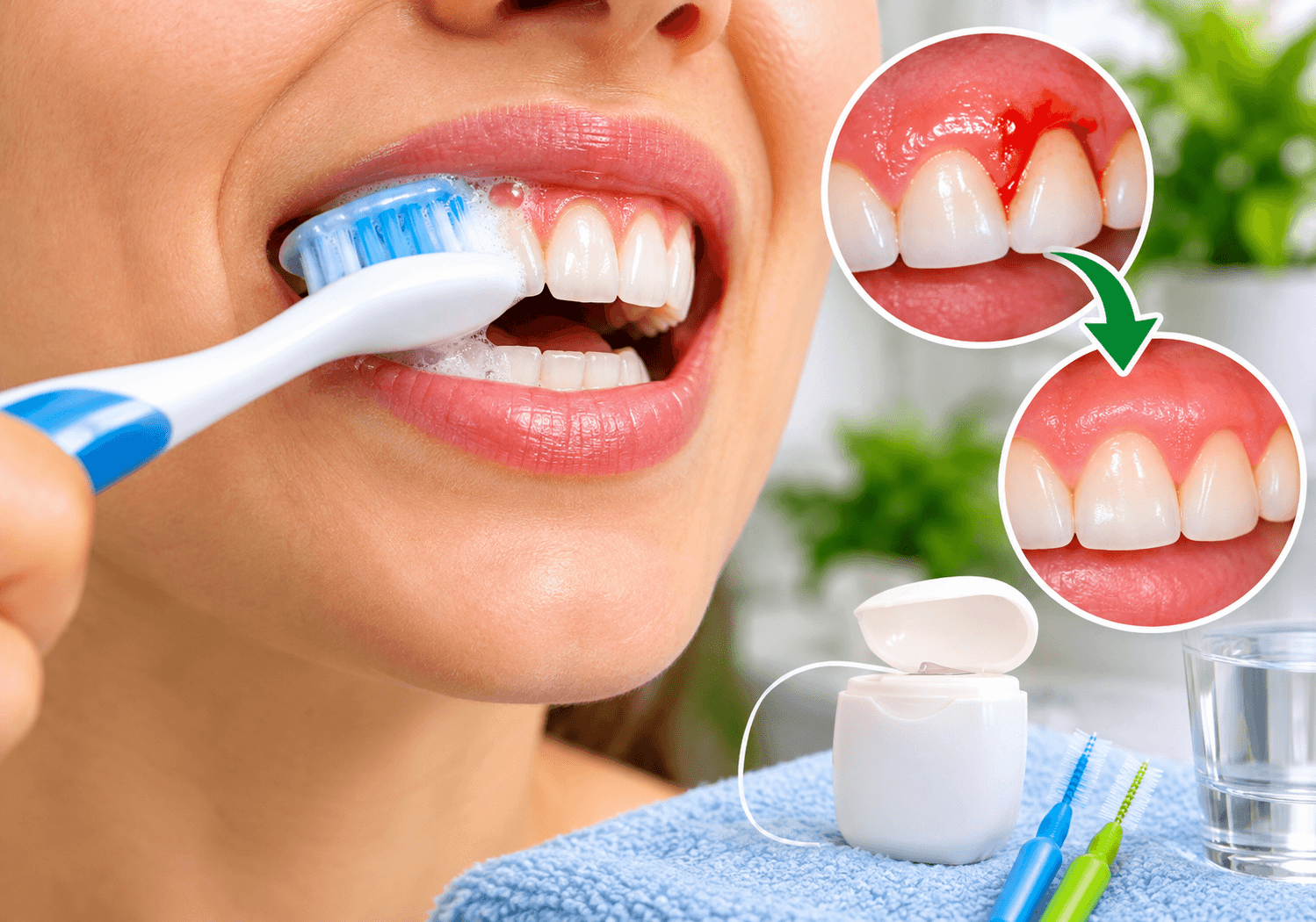
Seeing pink in the sink after you brush is easy to shrug off when you are busy training, working, and juggling a full week. But bleeding gums are a warning light, and knowing how to stop gums from bleeding starts with understanding what that light is telling you.
In most cases the cause is plaque sitting along the gumline, which irritates the tissue and leads to a mild form of gum disease called gingivitis. The good news is that gingivitis is the stage where small, consistent habits make the biggest difference.
This guide is written from a habit-coaching angle, not a dental one. Think of it as a training plan for your gums: a simple routine, sensible progressions, a way to track results, and clear rules for when to hand the case to a professional. Every health claim links to a source, and anything I could not verify is marked .
Quick Answer: To stop gums from bleeding, clean along the gumline gently twice a day with fluoride toothpaste, clean between your teeth once daily, and book a professional cleaning to remove hardened tartar. If bleeding has not improved in two weeks, see a dentist, because other health issues can also cause it.
How to Stop Gums From Bleeding: What Causes It
Plaque and gingivitis: the most common cause
Gingivitis is a common, mild form of gum disease that causes irritation, redness, swelling, and bleeding of the gum tissue around the base of your teeth, according to the Mayo Clinic. Healthy gums are firm and pale pink and fit tightly around the teeth. Puffy, dark red, tender gums that bleed easily when you brush or floss are a classic sign that something is off.
The most common cause is plaque, the film that builds up on teeth when they are not cleaned well. The Mayo Clinic says poor care of the teeth and gums lets plaque form, which swells the surrounding gum tissue.
Plaque that stays put can harden. The NIDCR explains that plaque not removed every day can harden into tartar, and only a professional cleaning by a dentist or dental hygienist can remove tartar. That is why brushing alone cannot always fix a problem that has been building for months.
One more surprise: gum trouble is often painless. Cleveland Clinic experts note that gum disease rarely causes pain, even when it is severe. So “it doesn’t hurt” is not proof your gums are fine.
What happens if gingivitis is ignored
The Mayo Clinic warns that gingivitis without proper treatment can progress to periodontitis, a more serious form of gum disease. The NIDCR describes gum disease as an infection of the tissues that hold your teeth in place.
The takeaway: bleeding is cheap to fix early and expensive to ignore. Treat it like the first sore spot in a new training block, not like something to push through.
Risk factors that have nothing to do with brushing
Cleaning habits are not the whole story. The NIDCR calls smoking the most significant risk factor for gum disease and says it can make treatment less successful. It also lists hormonal changes in girls and women, certain illnesses such as diabetes and their medications, and genetics.
The CDC likewise reports associations between gum disease and both smoking and diabetes, and says gum diseases are largely preventable and treatable with good oral hygiene, self-care, and regular dental care.
When bleeding gums are not just a plaque problem
The Cleveland Clinic says most bleeding gums come from oral health issues, but they can also signal other conditions. It notes that bleeding from causes such as hormone changes, blood-clotting disorders, or leukemia cannot be prevented with better brushing, and that bleeding gums can point to a vitamin C or vitamin K deficiency.
The NIH Office of Dietary Supplements explains that as vitamin C deficiency progresses, collagen synthesis is impaired and connective tissue weakens, which can cause bleeding gums and loosening of teeth. It also says deficiency is rare in developed countries.
One more flag: if you have flossed regularly for years and the bleeding is new, the Cleveland Clinic advises getting evaluated, because unexplained bleeding can be a sign of a medical issue unrelated to your mouth.
Bleeding gums at a glance
| Possible cause | What you may notice | Sensible first step |
| Plaque and gingivitis | Red or puffy gums that bleed when you brush or floss, bad breath | Daily gumline and between-teeth cleaning, plus a dental check-up |
| Hardened tartar | Bleeding that continues despite good home care | Professional cleaning |
| Smoking or diabetes | Higher risk of gum disease and harder treatment | Talk with your dentist and doctor about a plan |
| Low vitamin C or K (uncommon) | Bleeding gums with other symptoms | See a doctor for testing before taking supplements |
| Hormones, clotting disorders, other illness | Bleeding that does not match your hygiene habits | See a healthcare provider |
Sources for each row are cited in the sections above.
How to Stop Gums From Bleeding: Your Daily Routine
Coaches say consistency beats intensity, and gums follow the same rule. Gentle, thorough, daily cleaning beats an occasional hard scrub. Here is the routine, step by step.
Step 1: Brush twice a day with fluoride toothpaste
The NIDCR lists brushing twice a day with a fluoride toothpaste, routine dental check-ups with professional cleaning, and quitting smoking among its helpful tips for preventing gum disease. The Mayo Clinic suggests brushing after every meal or snack if you can. Technique matters as much as frequency, so use these cues:
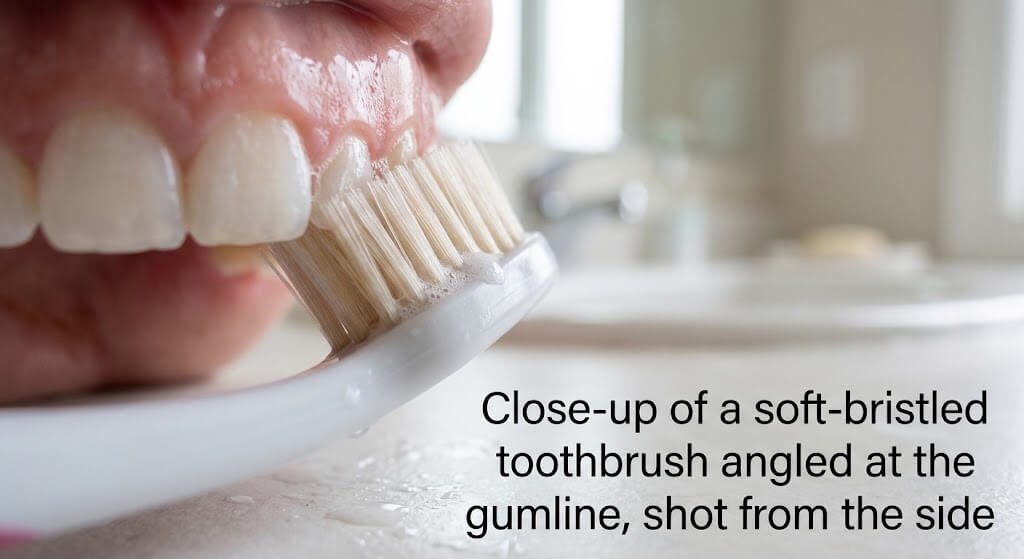
- Choose a soft-bristled brush .
- Angle the bristles toward the gumline at about 45 degrees .
- Use short, gentle strokes, as if polishing something fragile rather than scrubbing a pan.
- Cover every surface, including the inner side of the lower front teeth, and plan on about two minutes in total .
What it should feel like: clean and slightly tingly, never sore. If the bristles splay or flatten while you brush, you are pressing too hard.
Step 2: Consider a powered brush
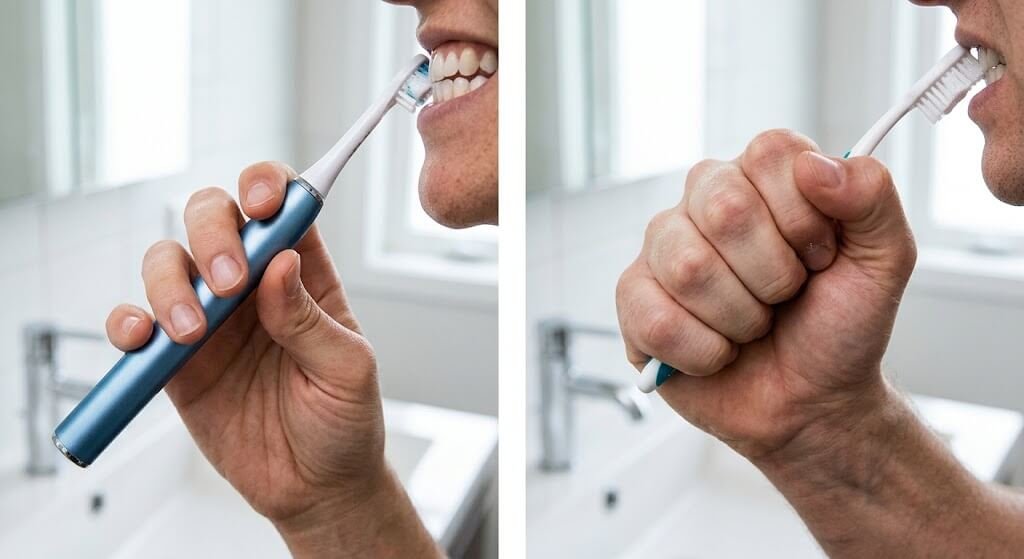
A Cochrane review of powered versus manual toothbrushing found that powered brushes reduce plaque and gingivitis more than manual brushes in the short and long term, though the authors say the clinical importance of this is unclear. Rotation-oscillation brushes, which have a small round head that spins and pulses, had the largest body of evidence.
That makes a powered brush a reasonable upgrade if you struggle with technique. It is not a requirement, and a gently used manual brush still does the job.
Step 3: Clean between your teeth once a day
Bristles cannot reach the tight spaces where plaque hides. A Cochrane review of 35 studies with 3,929 adults found that floss plus toothbrushing may reduce gingivitis in the short and medium term, although it is unclear whether floss reduces plaque. The same review found that an interdental brush plus a toothbrush may reduce gingivitis and plaque in the short term, and that interdental brushes may beat floss for gingivitis at one and three months.
It also found that oral irrigators (water flossers) may reduce gingivitis in the short term. The certainty of the evidence is generally low, so pick the tool you will actually use every single day.
How to floss without hurting your gums:
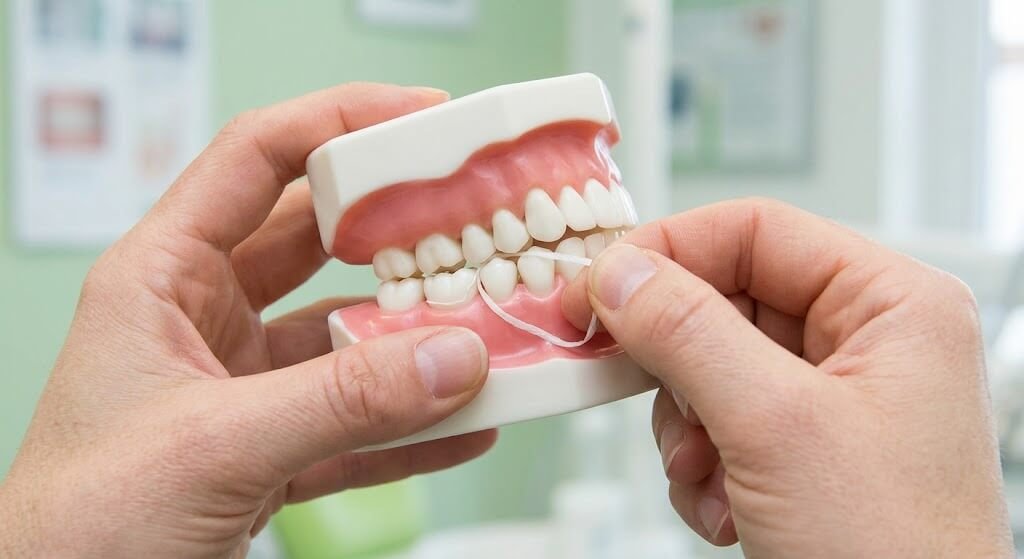
- Use a clean section of floss about 18 inches (45 cm) long .
- Curve it into a C against one tooth and slide it gently just under the gumline.
- Move it up and down the side of the tooth, then repeat on the neighboring tooth.
- Never snap the floss down into the gum.
For interdental brushes, the right size slides in without force. Ask your dental hygienist to size them for you rather than guessing.
Coach’s Tip: Attach the habit to something you already do. Keep floss or interdental brushes next to your toothbrush, and put a travel set in your gym bag. After cleaning, glance at the sink or floss and note roughly how many spots bled, the way you would log a set. Trends beat guesses.
Common Mistake: Skipping the bleeding spots, or scrubbing harder to get rid of the blood. Gums that bleed feel like a reason to avoid an area, but plaque left there keeps the irritation going. Go gentler, not absent.
Step 4: Give it time, then reassess
The Cleveland Clinic says that if bleeding gums have not improved within two weeks, you should schedule a dental appointment. Gums that have been inflamed for a while may bleed a little during the first few days of cleaning between teeth, but the trend should head down . If it gets worse, do not wait out the two weeks.
Professional Care: What a Dentist or Hygienist Does
Home care handles plaque. It cannot remove tartar, and it cannot tell you what is happening below the gumline. That is where a professional visit earns its place.
According to the NIDCR, a dentist or hygienist examines your gums for inflammation and uses a small probe to measure the pockets around your teeth. In a healthy mouth these pockets are usually 1 to 3 millimeters (about 0.04 to 0.12 inches) deep, and deeper pockets can be a sign of periodontal disease. The dentist will also ask about your medical history, since smoking and diabetes can contribute.
The NIDCR adds that the main goal of treatment is to control the infection, and that any treatment depends on good daily care at home. Your dentist may also refer you to a periodontist, a specialist in diagnosing and treating gum disease.
The Mayo Clinic advises scheduling a dental appointment as soon as you notice symptoms of gingivitis. Treat the visit as part of the program, not a last resort.

Nutrition and Lifestyle Habits That May Support Gum Health
Food does not replace cleaning, but a few lifestyle factors are worth a look, especially if bleeding keeps returning.
Vitamin C: enough, not extra
The NIH Office of Dietary Supplements says people who get very little vitamin C, below about 10 mg per day, for many weeks can develop scurvy, which causes swollen, bleeding gums among other symptoms. It also says deficiency is rare in the United States and Canada, and lists citrus fruits, red and green peppers, kiwifruit, broccoli, strawberries, baked potatoes, and tomatoes as good sources.
If your eating pattern regularly includes some of these foods, a deficiency is less likely to be behind your bleeding. If you are unsure, our guide on vitamin deficiency explains how to think about it, and our overview of the nutrients your body needs covers the basics. The same ODS fact sheet notes that vitamin C supplements can interact with some medicines, so talk with your doctor or pharmacist before adding one.
Vitamin K and other nutrient questions
The Cleveland Clinic page above also lists vitamin K deficiency as a possible cause of bleeding gums. Do not self-diagnose and start megadoses. Ask your doctor about testing first, especially if you take any prescription medicine.
Smoking and blood sugar
Smoking is the most significant risk factor the NIDCR lists for gum disease, and quitting is one of its recommended steps. If you have diabetes, the CDC notes an association with gum disease, so tell both your dentist and your doctor and ask how to coordinate care.
Your 14-Day Plan to Stop Bleeding Gums
Here is the plan in coach terms: baseline, progression, and a reassessment date. Pick the level that matches where you are today.
| Level | What you do every day | Best for |
| Easier (starter) | Brush gently twice a day. Clean between teeth once a day with whichever tool feels easiest. | Sore or very sensitive gums, or getting back into the habit |
| Standard | Same as starter, plus brush after your largest meals when practical, and log bleeding spots. | Most people with mild bleeding |
| Harder (progression) | Standard, plus a powered brush and an interdental brush or water flosser used with good technique. | Bleeding that is stubborn, or people who want a more thorough routine |
Day 1: Note how many spots bleed and how the gums look. Day 7: Compare. If nothing has improved, review technique and tools. Day 14: If bleeding is not clearly better, book a dental visit. That date matches the two-week guidance from the Cleveland Clinic page above.
A simple daily layout: morning brush after breakfast, a quick between-teeth clean when you pack your gym bag, and a full brush plus between-teeth cleaning before bed. Keep it boring and repeatable.

Safety Notes: When to See a Professional
Check with your dentist or doctor first if you are pregnant, have diabetes, take blood-thinning or other prescription medicine, have a bleeding or clotting disorder, or are being treated for cancer, because these can change both the cause and the best plan.
- Bleeding that has not improved within two weeks needs a dental visit, per the Cleveland Clinic.
- New bleeding after years of regular flossing should be evaluated, as the Cleveland Clinic advises.
- Gum bleeding along with unusual bruising or other bleeding, such as frequent nosebleeds, deserves a medical check .
- Do not start high-dose vitamin supplements to treat bleeding gums on your own.
Related Tips From the Gym Floor
Treat your gum routine like a training habit. Put it on the same checklist as your workouts, track it for two weeks, and adjust one variable at a time. Changing everything at once makes it impossible to see what worked.
Replace a worn toothbrush or brush head about every three months, or sooner if the bristles flare . Frayed bristles do a poorer job and tempt you to press harder.
You will also see remedies online such as oil pulling or herbal pastes. None of them were supported by the sources allowed for this guide, so I left them out. Spend that effort on the basics above.
Frequently Asked Questions
How long does it take to stop gums from bleeding?
There is no fixed timeline, but the Cleveland Clinic says to see a dentist if bleeding has not stopped within two weeks. Gentle daily brushing and cleaning between teeth is the first step, and improvement usually shows up before that deadline when plaque is the cause . Persistent bleeding may mean tartar or another cause.
Should I stop flossing if my gums bleed?
No. A Cochrane review found that floss plus toothbrushing may reduce gingivitis, so skipping it gives up a tool that may help. Floss gently in a C shape around each tooth. If bleeding is new after years of regular flossing, or does not ease within two weeks, see a dentist.
Why do my gums bleed when I brush?
Most often it is plaque-related gingivitis, which leaves gums irritated, swollen, and quick to bleed, according to the Mayo Clinic. Hormone changes, clotting disorders, and some vitamin deficiencies can also play a role, per the Cleveland Clinic, so bleeding that keeps returning deserves a dental or medical check.
Can a vitamin deficiency cause bleeding gums?
Yes, though it is uncommon. The NIH says severe vitamin C deficiency impairs collagen and can cause bleeding gums, and the Cleveland Clinic lists vitamin K deficiency too. In most cases the cause is oral health, not nutrition, so see a dentist first and ask a doctor about testing before taking supplements.
Is an electric toothbrush better for bleeding gums?
A Cochrane review found powered toothbrushes reduce plaque and gingivitis more than manual brushes in the short and long term, though the clinical importance is unclear. Rotation-oscillation heads had the most evidence. A gently used manual brush can still work, so choose the one you will use consistently.
When should I worry about bleeding gums?
See a dentist if bleeding lasts more than two weeks, comes with swelling or soreness, or is new after years of regular flossing, as the Cleveland Clinic advises. Seek medical advice sooner if you are pregnant, take blood thinners, have diabetes, or notice unusual bruising or bleeding elsewhere .
Conclusion: How to Stop Gums From Bleeding Starts With Boring Consistency
Learning how to stop gums from bleeding comes down to three moves: clean along the gumline gently twice a day, clean between your teeth once a day, and have tartar removed by a professional. Most bleeding comes from plaque-related gingivitis, the early and often reversible stage of gum disease.
Run the 14-day plan, log what you see, and treat day 14 as a firm checkpoint. If bleeding persists, keeps coming back, or arrives with other symptoms, a dentist or doctor can find causes that no toothbrush can fix. Check with your doctor or dentist before using supplements, especially if you are pregnant, have a medical condition, or take medicine.