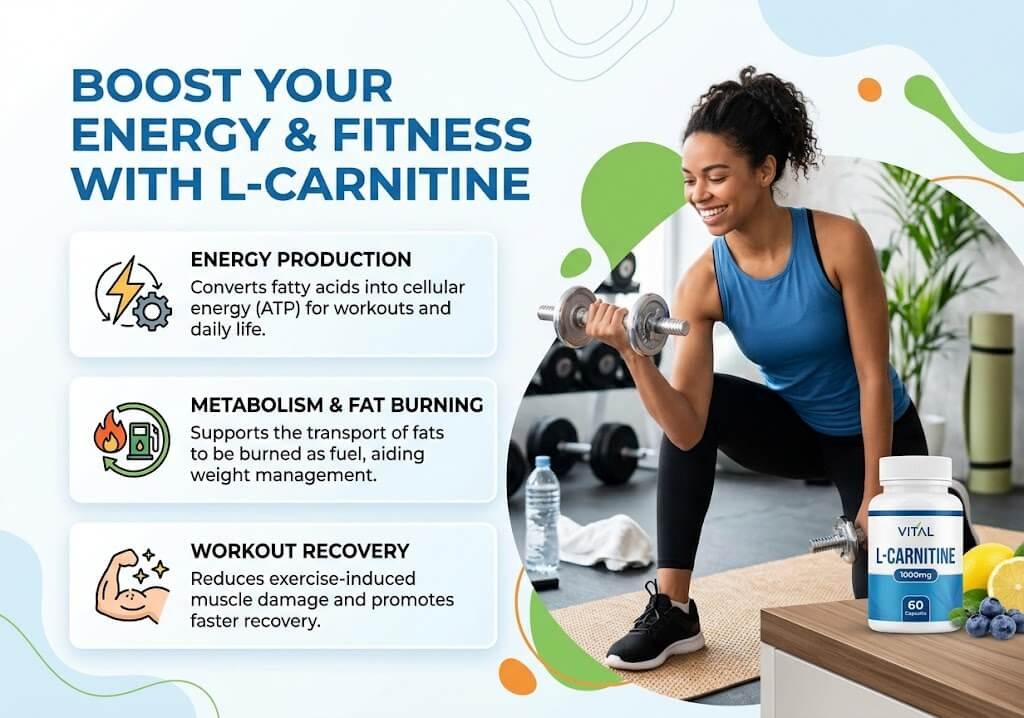
L-carnitine for fat metabolism and energy is one of the most talked-about supplements in gyms and online fitness spaces. The idea is appealing: your body needs carnitine to move fat into cells so it can be burned for fuel, so more carnitine should mean more fat burned. The reality is more modest. Carnitine plays a real role in fat metabolism, but research on supplements shows small, inconsistent effects on body weight and mixed results for exercise. This guide explains how carnitine works, what the studies found, how to think about dosing, and what to ask your doctor before you try it.
Quick Answer: L-carnitine helps transport fatty acids into the cell’s energy-producing structures, but supplements have not reliably increased fat burning or energy in healthy people. Some studies show a small weight loss effect in overweight adults, and some show benefits for high-intensity exercise at specific doses. Results are mixed, so talk with your doctor first, especially if you have kidney, thyroid, or seizure conditions.
What L-Carnitine Does in Your Body
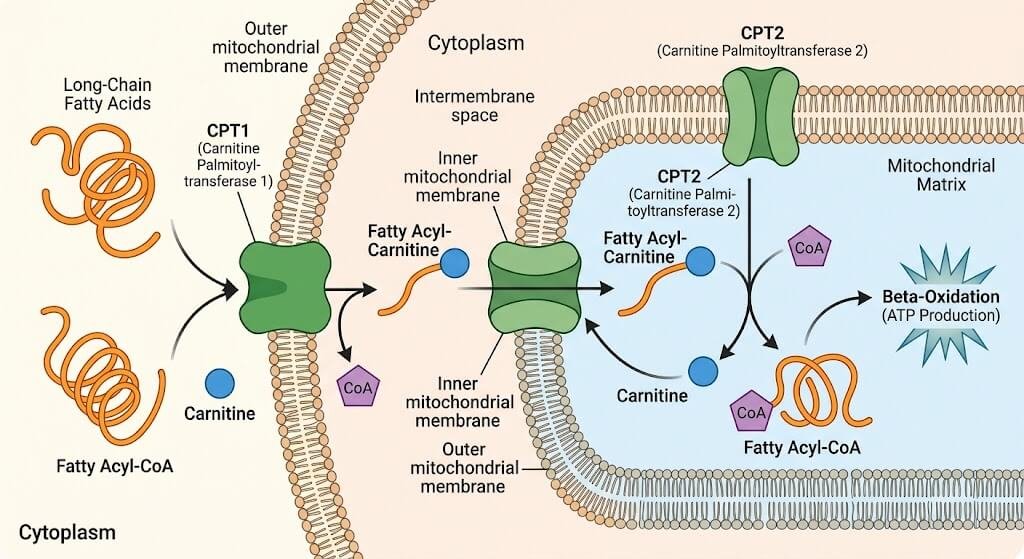
Carnitine is a compound made from amino acids, mainly lysine and methionine, in the liver and kidneys. Its main job is to help move long-chain fatty acids into the mitochondria, the small structures inside your cells where fat is broken down to make energy. The NIH Office of Dietary Supplements’ health professional fact sheet on carnitine explains that carnitine is concentrated in tissues that oxidize fatty acids as a dietary fuel.
Think of carnitine as a shuttle bus. Fat molecules need a ride to get inside the mitochondria, and carnitine helps load them on board. Without enough carnitine, fat oxidation can slow down. In healthy people, though, the body usually makes enough carnitine on its own, so the question is whether extra supplemental carnitine adds anything useful.
The same fact sheet notes that the body needs about 15 mg per day from a combination of food and internal production, and that the body’s own synthesis is sufficient for healthy people. Researchers have not set a formal daily reference intake for carnitine because deficiency is rare in people who are otherwise healthy.
Coach’s Tip: Carnitine is not a fuel itself. It is a helper compound. That is why a bigger dose does not automatically mean more energy or more fat burned.
Why the “Fat Burner” Idea Gets Complicated
L-carnitine is often marketed as a fat burner, and that label comes from the logic above. But three problems make the claim less straightforward.
First, your body already has a working carnitine system. The NIH fact sheet explains that healthy people produce enough carnitine internally, and that dietary carnitine is absorbed well from food. Adding more does not always change the outcome.
Second, supplement absorption is limited. According to the NIH health professional fact sheet, dietary L-carnitine has a bioavailability of about 63 to 75 percent, while absorption of supplemental L-carnitine is about 14 to 18 percent. Much of what you swallow may not reach the bloodstream in large amounts.
Third, fat burning during exercise depends on many factors besides carnitine, including training intensity, how much you eat, how fit you are, and how much sleep you get. A single compound rarely overrides all of that.
Common Mistake: Expecting a fat-burning effect because the label says “fat burner.” Labels reflect marketing, not a guaranteed outcome, and the NIH consumer fact sheet notes that research on carnitine supplements has produced mixed results.
What the Weight Loss Research Says
Several meta-analyses have looked at L-carnitine and body weight. A 2016 systematic review and meta-analysis in Obesity Reviews of randomized controlled trials found that people who took carnitine lost about 1.33 kg (2.9 lb) more than control groups on average, and that their BMI decreased by a small amount. The same analysis found that the weight-loss effect shrank over time, which is an important warning sign for anyone expecting long-term results.
A more recent systematic review and dose-response meta-analysis reported that L-carnitine supplementation reduced body weight by about 1.13 kg (2.5 lb) and fat mass by about 1.16 kg (2.6 lb). However, it did not change body fat percentage or waist circumference, and the weight effect appeared only in overweight and obese adults. The researchers also noted that the effect was stronger when carnitine was combined with other lifestyle changes.Taken together, these findings suggest that carnitine may produce a small weight change in some adults, especially those who are overweight. The effect is modest, it may fade over time, and it does not appear to change overall body fat percentage in the same way. It is also clearly not a replacement for a calorie deficit, strength training, or better sleep.
Common Mistake: Confusing a small change in scale weight with fat loss. Body fat percentage and waist size tell you more about what is really changing, and the studies above did not show consistent changes in those measures.
What the Exercise Research Says
Carnitine has also been studied for exercise performance, since fat is a major fuel during moderate, steady exercise. A systematic review of 11 studies on acute and chronic oral L-carnitine supplementation and exercise looked at moderate-intensity and high-intensity exercise separately. The authors found that high-intensity performance improved in some studies with 3 to 4 g taken 60 to 90 minutes before testing, or with 2 to 2.72 g per day for 9 to 24 weeks.
The same review found no improvements in moderate-intensity exercise performance with either acute or chronic supplementation. That pattern matters. Carnitine did not appear to help people who were working at a steady, comfortable pace, while some high-intensity studies did show benefit. The NIH consumer fact sheet makes a similar point, noting that studies on carnitine and athletic performance have had mixed results and that more research is needed.
For you, this means carnitine is not a guaranteed workout enhancer, and any potential benefit appears to depend on intensity, dose, and timing. Those are research doses, not personal recommendations, and they should only be considered with medical guidance.
Coach’s Tip: Before you buy a supplement for workouts, track your sessions for two weeks without it. If you cannot measure progress in your training, adding a supplement will not give you a clear answer either.

Carnitine and Energy: What “Energy” Really Means
When people say they want more energy, they usually mean feeling less tired during the day and having more power in workouts. Carnitine does not work like caffeine. It does not directly stimulate your nervous system or raise alertness.
Its possible link to energy comes through fat metabolism and exercise capacity. If carnitine helps some people use fat more efficiently during demanding efforts, they might notice better endurance or recovery. But that effect is limited and depends on the person, the dose, and the type of exercise.
If you feel persistently tired while dieting or training, the causes are usually more practical: not enough food, too large a calorie deficit, poor sleep, low iron, or overtraining. A supplement is unlikely to fix those root problems. The fatigue section of your routine often matters more than the pill. Talk with a doctor if fatigue is severe, sudden, or lasts more than a few weeks.
Food Sources and Food-First Thinking
Carnitine is naturally found in many foods, especially animal products. The NIH health professional fact sheet notes that carnitine is naturally present in many foods, particularly those of animal origin. Red meat, poultry, fish, and dairy are the most common sources.
Because dietary carnitine is absorbed much better than supplemental carnitine, a diet with regular animal foods already supplies carnitine in a form your body handles efficiently. That is one reason many coaches start with food before considering a supplement.
Food sources and portions are generally
Common Mistake: Assuming that a vegetarian or vegan diet automatically causes a problem. Your body makes carnitine internally, and most healthy plant-based eaters do not have a deficiency. Talk with your doctor if you have concerns.
Who Should Be Careful
Some people need extra caution before using L-carnitine. The NIH consumer fact sheet advises telling your doctor or pharmacist about any supplements and medications you take, because medicines can interfere with how your body absorbs, uses, or breaks down nutrients like carnitine. The NIH fact sheet history also notes that interaction information was updated to cover valproic acid and other anticonvulsants, so anyone taking seizure medication should be especially careful
Other groups who should speak with a doctor first include people with kidney disease, thyroid conditions, diabetes, liver disease, or heart conditions, people who are pregnant or breastfeeding, and older adults with multiple medications. People with a history of disordered eating should work with a healthcare professional rather than using supplements to manage weight or energy [VERIFY: add current guidance on kidney disease and pregnancy from an allowed source].
Strength training and walking are safe for most adults, but if you have joint pain, a recent injury, or heart symptoms during exertion, check with a doctor or physical therapist before starting any new program.
Strength Training That Supports Body Composition
Because carnitine has modest effects at best, the most reliable way to improve body composition is still strength training, daily movement, adequate protein, and sleep. The CDC’s adult physical activity guidelines recommend at least 150 minutes of moderate-intensity aerobic activity per week, plus muscle-strengthening activity on at least two days that works all major muscle groups.
Here is a simple full-body routine to pair with your nutrition and walking plan. Train two or three non-consecutive days per week, and use a weight where your last two reps feel hard but your form stays clean.
| Exercise | Sets | Reps | Rest | Tempo |
| Goblet squat | 3 | 8–10 | 90 sec | 2-0-1 |
| Dumbbell Romanian deadlift | 3 | 8–10 | 90 sec | 3-0-1 |
| Push-up | 3 | 6–12 | 60 sec | 2-0-1 |
| Single-arm dumbbell row | 3 | 10–12 per side | 60 sec | 2-0-1 |
| Plank | 2–3 | 20–40 sec | 45 sec | Steady |
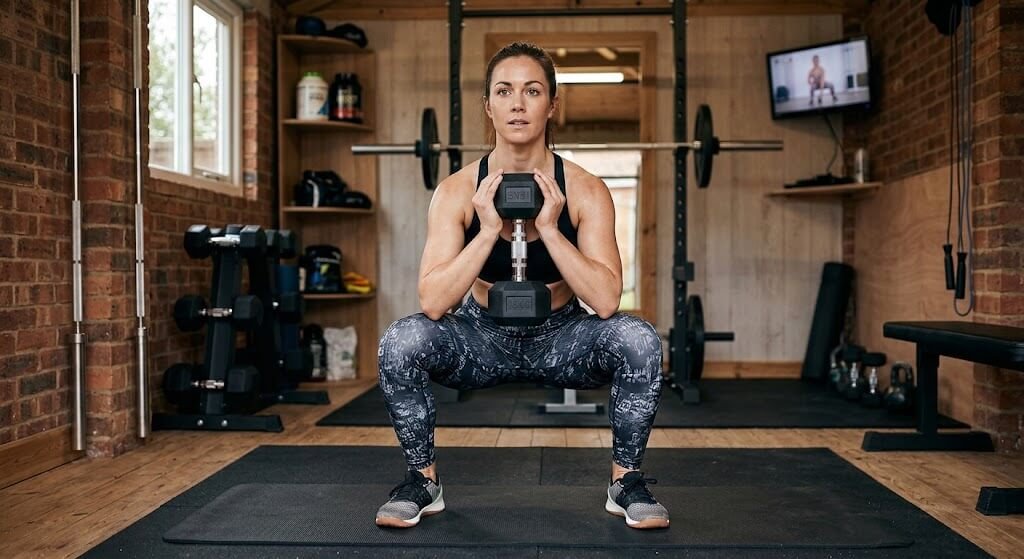
Goblet squat: Hold one dumbbell at your chest, with the weight close to your body. Sit your hips down and back until your thighs are close to parallel with the floor, keeping your heels flat and chest up. Stand by driving through your feet. Easier version: squat to a bench or chair. Harder version: use a heavier dumbbell, such as a 25 lb (11 kg) weight, or pause for two seconds at the bottom.
Dumbbell Romanian deadlift: Hold dumbbells in front of your thighs with a soft knee bend. Push your hips back and lower the weights along your legs until you feel a stretch in your hamstrings, then drive your hips forward to stand. You should feel the stretch in the back of your legs, not your lower back. Easier version: use a 10 lb (4.5 kg) pair and a shorter range of motion. Harder version: hold heavier dumbbells or add a three-second lowering phase.
Push-up: Keep your body in a straight line from head to heels and lower your chest toward the floor. Press back up without letting your hips sag. Easier version: place your hands on a sturdy bench or counter. Harder version: elevate your feet on a low, stable box.
Single-arm dumbbell row: Brace one hand and knee on a bench. Pull a dumbbell toward your hip while keeping your elbow close to your side and your back flat. Easier version: use a 10 lb (4.5 kg) dumbbell or a resistance band. Harder version: add a one-second pause at the top of each rep.
Plank: Rest on your forearms and toes, with your body in a straight line from head to heels. Squeeze your glutes and keep your neck neutral. Easier version: drop to your knees. Harder version: lift one foot slightly off the floor for each short hold.
Coach’s Tip: Keep a simple training log in your phone with the weight, reps, and how hard each set felt. Adding a few reps or a little weight every week is a clearer signal of progress than the number on the scale.
Common Mistake: Doing the same workout at the same weight for months and expecting better body composition. Your muscles need gradually harder work to keep adapting.
Walking and Daily Movement
Walking is one of the easiest ways to add energy use without adding much recovery stress. A brisk 1-mile (1.6 km) walk takes about 15 to 20 minutes for many people, but you can split it into short bouts across the day. Aim for a pace where you can talk in full sentences but not sing.
If you are new to walking, start with 10 minutes after dinner. Add 5 minutes each week until you reach 30 minutes most days. Walking pairs well with strength training and does not add the same fatigue as heavy interval work.
Easier version: Walk for 10 minutes after one meal per day. Harder version: Work up to a 30-minute brisk walk most days, and add a few short hills or faster intervals once a week.
Buying and Choosing a Supplement Wisely
If you and your doctor decide a supplement makes sense, use a clear checklist before you buy anything.
- Know the form. The NIH fact sheet explains that the two main forms in supplements are L-carnitine and acetyl-L-carnitine. They may behave differently, and most research on exercise and weight has focused on L-carnitine forms, so read the label carefully.
- Check the amount per serving. Supplement amounts range widely. The NIH health professional fact sheet notes that products can contain from about 3 mg to 5,000 mg of carnitine.
- Avoid proprietary blends. If the label hides the amount of carnitine, you cannot judge the dose.
- Look for third-party testing. Certifications from independent groups, such as USP or NSF, can help confirm label accuracy [VERIFY: confirm current certification details before publishing].
- Be wary of stimulant-heavy “fat burner” formulas. Many products combine carnitine with caffeine or other stimulants, which can disrupt sleep and raise heart rate.
- Keep a log. Track weight, waist measurements, training performance, sleep, and side effects for at least four weeks so you can judge whether the supplement helps.
Common Mistake: Buying a multi-ingredient “fat burner” with a carnitine label, then credit carnitine for results that may come from caffeine, diet changes, or training.
A Sample Week for Dieters Who Use Carnitine
| Day | Focus | Notes |
| Monday | Full-body strength | Goblet squat, Romanian deadlift, push-up, row, plank |
| Tuesday | 30-minute brisk walk | Keep a conversational pace |
| Wednesday | Protein-focused meals | Palm-sized protein at each meal |
| Thursday | Strength session | Add a rep or a small weight jump |
| Friday | Light walk plus one short interval | Keep intervals to 1–2 per week |
| Saturday | Active recreation | Hike, bike, or swim for 30–45 minutes |
| Sunday | Rest and planning | Prep meals and set a consistent bedtime |
If you do try a supplement, keep your routine steady for several weeks before judging the result, and change only one thing at a time.
Common Mistakes That Waste Time and Money
Expecting fast fat loss. Carnitine research does not support dramatic changes. Give any habit change at least four weeks.
Skipping strength training. Strength work helps protect muscle while you lose weight, which supports a healthier body composition.
Ignoring food quality. Carnitine supplements cannot make up for poor sleep, very low calorie intake, or an unbalanced diet.
Overlooking interactions. Medications and supplements can interact in ways that matter. Share your full list with your doctor or pharmacist.
Taking more because it is “natural.” Natural does not mean risk-free at any dose.
Frequently Asked Questions
Does L-carnitine burn fat?
L-carnitine helps move fatty acids into the mitochondria, where they can be used for energy. Research on supplements has shown only small, inconsistent effects on weight and body composition, so it should not be seen as a reliable fat burner.
Does L-carnitine give you more energy?
It does not work like a stimulant. Some studies suggest possible benefits for high-intensity exercise at certain doses, but results are mixed. Sleep, food intake, and training load usually matter more for daily energy.
Does L-carnitine help you lose weight?
Some meta-analyses report a small weight reduction in overweight and obese adults, with changes of roughly 1 to 1.5 kg (about 2 to 3 lb) on average. The effect may shrink over time and is not a substitute for a calorie deficit and exercise.
When should I take L-carnitine before a workout?
Research on exercise performance has used doses taken 60 to 90 minutes before testing. Those are research doses, not personal recommendations. Talk with your doctor before using any supplement before exercise.
Is L-carnitine safe?
Many adults tolerate it, but it can interact with some medications, including seizure medicines. People with kidney, liver, thyroid, or heart conditions, and anyone who is pregnant or breastfeeding, should check with a doctor first.
Is L-carnitine better than acetyl-L-carnitine?
The two forms have different research profiles. Most exercise and weight studies have focused on L-carnitine, while acetyl-L-carnitine has been studied for other conditions. Read labels carefully and ask a pharmacist about your specific needs.
Conclusion
L-carnitine for fat metabolism and energy is a real biological topic with a smaller practical payoff than the marketing suggests. Carnitine helps move fat into the mitochondria, but healthy bodies already make enough of it, and supplements show modest, inconsistent effects on weight and exercise. If you are curious, start with the basics: a moderate calorie deficit, strength training, daily walking, protein at each meal, and good sleep. If you still want to try a supplement, talk with your doctor first, choose a clearly labeled product, and track your results honestly.