
Seeing your once-athletic dog hesitate before jumping into the truck, lag behind on daily runs, or struggle to get out of bed in the morning breaks your heart. As a certified strength and conditioning coach who works with high-performance human athletes, I look at canine mobility through the exact same biomechanical lens: keeping joint structures healthy, managing systemic inflammation, and supporting long-term tissue resilience. When your dog shows signs of stiffness or joint pain, you face a critical decision: should you rely on natural dog joint supplements vs prescription pain relief?
Choosing between natural joint supplements for dogs and prescription pain medication for dogs depends heavily on your dog’s current pain level, age, overall health, and underlying conditions like canine osteoarthritis. While prescription medications deliver rapid, high-potency pain relief during acute flare-ups, natural supplements provide foundational structural support that preserves cartilage health over time. This evidence-based guide breaks down how both options work, their safety profiles, key cost differences, and how to safely combine them to keep your four-legged companion active, strong, and comfortable for years to come.
Quick Answer Box
Natural dog joint supplements vs prescription pain relief: Natural supplements (like Glucosamine, Chondroitin, and Omega-3s) build cartilage and reduce long-term inflammation slowly over 4–8 weeks with minimal side effects. Prescription pain relief (like Carprofen or Galliprant) blocks pain quickly within hours for acute canine osteoarthritis but carries potential liver, kidney, or GI risks requiring veterinary monitoring.
Understanding Canine Joint Degeneration and Pain
To choose the right management strategy, you first need to understand what is actually happening inside your dog’s joints. Canine joints operate much like human joints—bones meet at a joint capsule lined with articular cartilage and lubricated by synovial fluid.When a dog develops canine osteoarthritis or suffers a micro-trauma from high-impact activity, the protective cartilage wears down. Bone begins to rub against bone, triggering a cascade of joint inflammation, swelling, and chronic discomfort.
Common Signs of Joint Pain in Dogs
Dogs are wired to mask physical distress. Watch closely for subtle changes in their movement:
- Stiffness when standing up after rest, especially in the morning.
- Reluctance to climb stairs, jump onto furniture, or get into vehicles.
- Licking or chewing obsessively at specific joints (wrists, hips, or knees).
- Loss of muscle mass (atrophy) around the hindquarters.
- Sudden irritability or behavioral changes during normal handling.

Natural Dog Joint Supplements: How They Work and Key Ingredients
Natural joint supplements for dogs act as biological building blocks and gentle anti-inflammatory agents. Rather than shutting down pain signals instantly, they feed the cartilage matrix, improve synovial fluid viscosity, and slow down cartilage breakdown.
Key Active Ingredients
- Glucosamine Hydrochloride & Sulfate: An amino sugar that serves as a fundamental building block for glycosaminoglycans, which form structural joint tissue. Research published in the Journal of the American Veterinary Medical Association (JAVMA) highlights that glucosamine paired with chondroitin supports joint comfort and mobility in dogs with osteoarthritis.
- Chondroitin Sulfate: Works synergistically with glucosamine by drawing fluid into joint cartilage, improving elasticity, and neutralizing destructive enzymes that break tissue down.
- Omega-3 Fatty Acids (EPA & DHA): Derived from wild fish oil or marine phytoplankton, these essential fatty acids inhibit pro-inflammatory pathways. A study in the Journal of Veterinary Internal Medicine demonstrated that dogs fed diets enriched with Omega-3 fatty acids showed significant improvements in weight-bearing capacity and walking ability.
- MSM (Methylsulfonylmethane): An organic sulfur compound that reduces joint inflammation, supports collagen formation, and enhances cell membrane permeability to flush out metabolic waste.
- Green-Lipped Mussel (Perna canaliculus): Rich in unique Omega-3s (ETA), glucosamine, and minerals, making it a potent natural agent for reducing joint stiffness.
Pros of Natural Supplements
- High Safety Profile: Suitable for continuous, long-term administration throughout your dog’s life.
- Structural Support: Helps repair and maintain the underlying cartilage matrix rather than merely masking pain.
- Minimal Side Effects: Well-tolerated by most dogs, with occasional mild digestive upset being the main issue.
- Preventative Utility: Excellent for proactive management in young, high-impact working dogs or breeds prone to hip dysplasia.
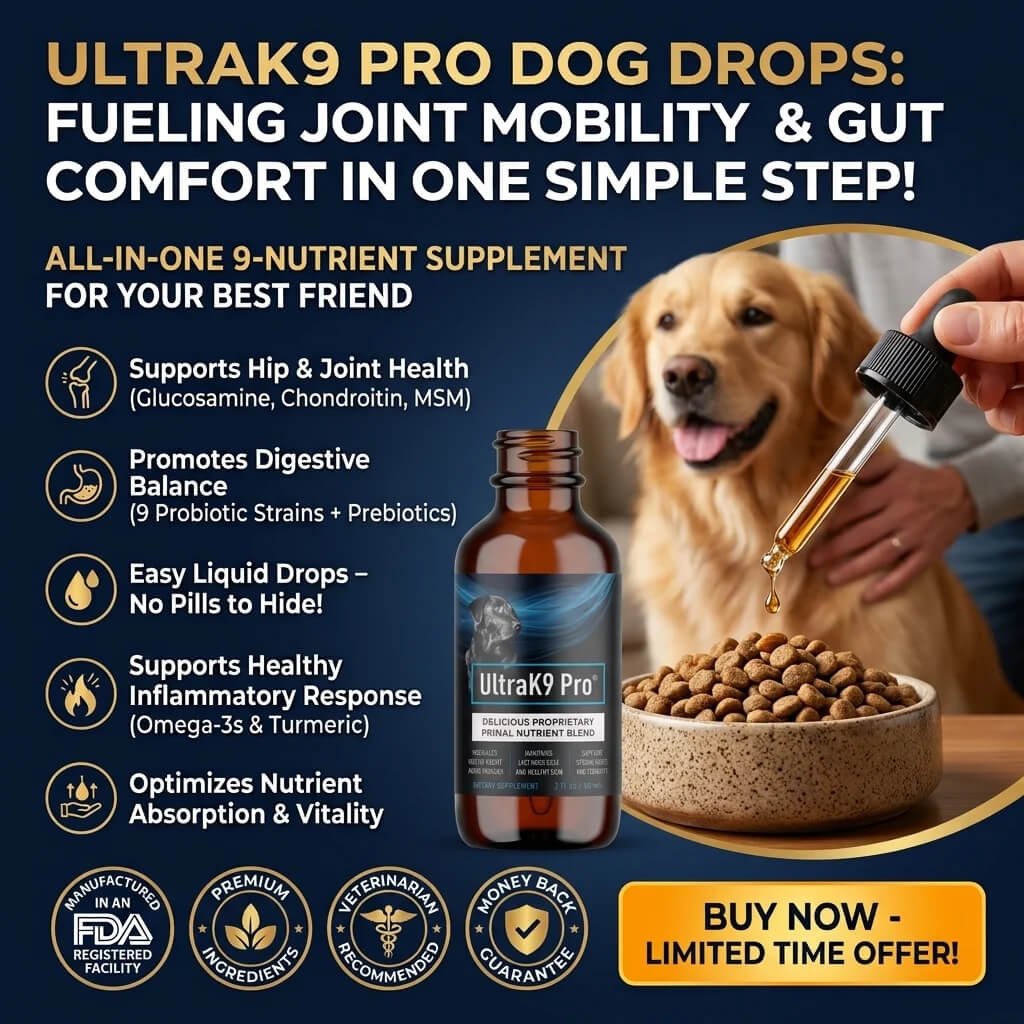
Cons of Natural Supplements
- Slow Onset of Action: Requires 4 to 8 weeks of daily use to build up therapeutic levels in joint tissue.
- Insufficient for Severe Pain: Cannot manage acute flare-ups, bone-on-bone contact, or advanced end-stage arthritis on its own.
- Variable Quality: Unregulated over-the-counter supplements can vary significantly in purity and actual potency.
Prescription Pain Relief for Dogs: How It Works and Common Medications
When joint inflammation causes sharp or debilitating pain, prescription pain medication for dogs becomes essential. Veterinarians prescribe targeted pharmaceutical agents that directly disrupt neurological or biochemical pain pathways.
Primary Classes of Prescription Canine Medications
- Non-Steroidal Anti-Inflammatory Drugs (NSAIDs): The primary front-line defense against canine joint pain. NSAIDs inhibit the cyclooxygenase (COX) enzymes, reducing the production of inflammatory prostaglandins. Common examples include Carprofen (Rimadyl), Meloxicam (Metacam), and Deracoxib (Deramaxx).
- Piprant Class (Galliprant / Grapiprant): A newer class of targeted non-NSAIDS. Galliprant specifically blocks the EP4 receptor—the primary receptor responsible for osteoarthritis pain—while sparing other protective prostaglandin pathways.
- Adjunctive Analgesics (Gabapentin, Amantadine): Often prescribed alongside NSAIDs to manage chronic neuropathic pain or wind-up pain when joint structures are severely compromised.

Pros of Prescription Medications
- Rapid Relief: Decreases pain and acute swelling within hours of the first dose.
- High Potency: Effectively handles severe, end-stage osteoarthritis flare-ups and post-surgical joint pain.
- Veterinary Oversight: Administered under professional supervision with precise, weight-matched clinical dosages.
Cons of Prescription Medications
- Potential Adverse Effects: Systemic NSAID use carries risks of gastrointestinal ulceration, liver enzyme elevation, and renal dysfunction.
- Required Monitoring: Demands routine baseline bloodwork (liver and kidney panels) every 6 to 12 months.
- Does Not Rebuild Tissue: Provides symptom relief without repairing or supporting long-term cartilage integrity.
Direct Comparison: Natural Dog Joint Supplements vs Prescription Pain Relief
Comparing natural dog joint supplements vs prescription pain relief side-by-side clarifies how each strategy functions across different clinical priorities:
| Feature / Metric | Natural Dog Joint Supplements | Prescription Pain Relief (NSAIDs/Piprants) |
| Primary Goal | Protect cartilage, support joint fluid, lower long-term inflammation | Block pain pathways, eliminate acute inflammation rapidly |
| Time to Results | 4 to 8 weeks of consistent daily use | 1 to 4 hours after initial administration |
| Active Ingredients | Glucosamine, Chondroitin, MSM, Omega-3s, Green-Lipped Mussel | Carprofen, Meloxicam, Grapiprant (Galliprant), Gabapentin |
| Side Effect Risk | Very low (rare mild gastrointestinal upset) | Moderate to high (GI ulcers, liver/kidney strain) |
| Veterinary Bloodwork Required? | No | Yes (Baseline and regular 6-12 month screenings) |
| Cartilage Protection | Yes—provides molecular building blocks | No—manages pain symptoms without altering cartilage decay |
| Best Used For | Prevention, mild stiffness, early-stage arthritis, long-term support | Acute flare-ups, moderate-to-severe arthritis, post-injury recovery |
| Monthly Cost Range | $25 – $65 | $45 – $140+(plus routine monitoring bloodwork) |
When to Use Which Strategy: A Clinical Decision Framework
Determining whether your dog needs a natural supplement, a prescription medication, or a combination of both comes down to their stage of life and mobility status.
Scenario 1: Young, Active, or Working Dogs (Prevention Phase)
- Status: No visual lameness, but belongs to a high-risk breed (e.g., German Shepherds, Labradors) or participates in agility, hunting, or intense hiking.
- Recommended Approach: Rely on high-quality natural dog joint supplements. Starting glucosamine and EPA/DHA early helps maintain dense cartilage matrices and protects joints against premature wear.
Status: Takes a moment to stand up after sleeping; slightly slower on daily walks, but still eager to move.
- Recommended Approach: Begin daily joint supplementation combined with weight management and low-impact exercise. Monitor progress over 6 weeks. If mobility improves significantly, prescription drugs may not be needed yet.
Scenario 3: Acute Flare-ups or Severe Lameness (Advanced Osteoarthritis)
- Status: Yelping when moving, refusing to walk, visibly limping, or completely unable to navigate steps.
- Recommended Approach: Immediate veterinary evaluation. Prescription pain relief is necessary to break the acute pain cycle and restore basic function.
Scenario 4: Integrative Dual-Therapy (The Gold Standard)
- Status: Moderate-to-severe joint degeneration requiring multi-modal management.
- Recommended Approach: Combine both strategies. Use prescription medication to manage immediate pain while simultaneously introducing natural joint supplements. Over time, as joint tissue health stabilizes, your veterinarian may be able to lower the prescription NSAID dose to the minimum effective level, minimizing drug-related risks.
Complementary Strategies: Exercise, Weight Management, and Environment
Supplements and medications form only part of a comprehensive mobility program. Physical conditioning and environmental adjustments play an equally critical role in joint care.

1. Weight Management (The Single Most Effective Joint Intervention)
Carrying excess body weight puts immense mechanical strain on inflamed joints. Furthermore, adipose (fat) tissue secretes systemic inflammatory cytokines that accelerate joint degeneration. Studies indexed in PubMed show that maintaining a lean body mass significantly delays the onset and severity of chronic joint disease in dogs.
2. Controlled Low-Impact Physical Conditioning
Just like human rehab, movement is medicine for arthritic joints. High-impact games of fetch and hard jumping on concrete must be replaced with controlled exercises:
- Controlled Leash Walking: 15–20 minutes of steady walking on soft grass or dirt trails.
- Hydrotherapy & Swimming: Buoyancy relieves joint stress while building cardiovascular endurance and supporting muscular strength.
- Targeted Strength Exercises: Passive range-of-motion (PROM) stretches and gentle hill walking strengthen the quadriceps and hamstrings, improving joint stability.
3. Home Modifications
- Orthopedic Bedding: High-density memory foam supports aching joints and pressure points during sleep.
- Non-Slip Flooring: Place rubber-backed runners over slick hardwood or tile to prevent sudden slips that stress joint capsules.
- Pet Ramps: Install gentle inclines to help dogs climb into cars or onto furniture without high-impact jumping.
FAQ: Natural Dog Joint Supplements vs Prescription Pain Relief
Are natural dog joint supplements better than prescription drugs?
Neither is universally “better”—they perform fundamentally different roles. Natural joint supplements excel at long-term structural support, cartilage maintenance, and prevention with minimal risk. Prescription pain medications are far more powerful for quickly shutting down severe, acute pain and swelling during arthritis flare-ups.
What are the side effects of prescription dog pain meds?
Canine NSAIDs can cause side effects ranging from mild stomach upset, vomiting, and diarrhea to severe complications like gastrointestinal ulcers, elevated liver enzymes, and renal stress. This is why veterinarians require routine baseline and follow-up blood screening during long-term treatment.
Can you combine natural joint supplements with prescription meds for dogs?
Yes, and veterinarians frequently recommend this multi-modal approach. Natural supplements like glucosamine and fish oil work alongside prescription NSAIDs or Galliprant without negative drug interactions, helping support overall joint structures while pharmaceuticals manage acute pain.
How long do dog joint supplements take to work?
Unlike prescription pain relievers that act within hours, natural joint supplements must build up within the dog’s tissue over time. Most dogs show noticeable improvements in ease of movement, stiffness, and energy levels after 4 to 8 weeks of daily administration.
What is the safest pain reliever for dogs with joint pain?
For long-term, low-risk management, high-quality natural supplements containing Glucosamine, Chondroitin, and Omega-3 fatty acids carry the highest safety profile. For acute, severe pain requiring prescription intervention, targeted drugs like Galliprant (a non-NSAID EP4 receptor antagonist) offer reduced gastrointestinal and kidney risks compared to traditional broad-spectrum NSAIDs.
When should I start giving my dog joint supplements?
You can start natural joint supplements as early as 1 to 2 years of age for high-risk large breeds (like Golden Retrievers, German Shepherds, and Mastiffs) or highly active working dogs. For other breeds, starting supplementation at the first subtle sign of morning stiffness or around age 6 to 7 helps preserve joint health before severe degeneration sets in.
Conclusion
Navigating natural dog joint supplements vs prescription pain relief isn’t about choosing one over the other—it’s about applying the right tool at the right time. Natural supplements provide safe, vital, long-term building blocks that protect cartilage tissue and keep mild stiffness at bay. Prescription pain medications offer powerful, indispensable relief when acute pain or advanced osteoarthritis threatens your dog’s quality of life.
By combining proactive joint supplementation, prudent veterinary oversight, controlled low-impact exercise, and strict weight management, you can build a comprehensive care plan that keeps your dog moving comfortably throughout their senior years.