
Cardiovascular health forms the core of overall vitality, daily energy, and long-term wellness for men. The cardiovascular system—composed of the heart and an intricate network of blood vessels—is responsible for pumping oxygenated blood, nutrients, and hormones to every cell in the body. When blood vessels are flexible and clear, the heart works efficiently, supporting stamina, cognitive clarity, metabolic resilience, and even sexual health.
Understanding how to support cardiovascular health naturally in men involves adopting habits that strengthen circulation, maintain optimal blood pressure, keep cholesterol levels in check, and protect blood vessel function. Grounded in evidence-based preventive frameworks like the American Heart Association’s Life’s Essential 8, this guide explores actionable steps, heart-healthy nutrition, exercise strategies, stress management techniques, and key health metrics every man should know.
What Is Cardiovascular Health?
Understanding heart health and blood vessel function
Cardiovascular health refers to the structural integrity and operational efficiency of the heart muscle and the vascular network (arteries, veins, and capillaries). The heart operates as a high-performance muscular pump, contracting tens of thousands of times each day to drive blood circulation throughout the body.
How the cardiovascular system delivers oxygen and nutrients
When you inhale, oxygen enters the lungs and binds to red blood cells. The heart pumps this oxygen-rich blood through the arterial system to supply tissues, muscles, and organs. After delivering oxygen and nutrient fuel, the venous system carries metabolic waste products back to the lungs and kidneys for elimination.
[ Lungs: Oxygenates Blood ]
│
▼
[ Heart: Primary Pump ]
│
▼
[ Arteries: Deliver Oxygen & Nutrients ]
│
▼
[ Tissues & Organs: Metabolic Exchange ]
│
▼
[ Veins: Return Deoxygenated Blood ]
The difference between heart health and circulation
While related, heart health and blood circulation focus on different components of the system:
- Heart Health: Pertains specifically to the strength, rhythm, and electrical conduction of the heart muscle itself.
- Circulation: Refers to the smooth, unobstructed flow of blood through the arterial and venous pathways. Impaired circulation can occur even if the heart muscle itself is strong, often due to stiff or narrowed blood vessels.
Common cardiovascular risk factors in men
Men face distinct cardiovascular risk profiles influenced by age, genetics, and metabolic trends:
- Chronic high blood pressure (hypertension)
- Elevated low-density lipoprotein (LDL) cholesterol and triglycerides
- Elevated fasting blood glucose or insulin resistance
- Abdominal obesity and metabolic syndrome
- Nicotine exposure from smoking or vaping
- Physical inactivity and prolonged sitting
- Persistent stress and insufficient sleep
How healthy habits may reduce the risk of heart disease
According to the Centers for Disease Control and Prevention (CDC), adopting comprehensive lifestyle adjustments—such as eating a nutrient-dense diet, engaging in regular physical activity, managing body weight, and avoiding tobacco—substantially lowers the risk of developing coronary artery disease, high blood pressure, and stroke.
What Are the Best Natural Ways to Support Cardiovascular Health in Men?
The American Heart Association highlights eight foundational pillars—known as Life’s Essential 8—for maintaining optimal cardiovascular health. These pillars form a comprehensive roadmap for men looking to build long-term heart resilience naturally.
┌────────────────────────────────────────────────────────────────────────┐
│ AHA Life’s Essential 8 Framework │
├───────────────────────────────┬────────────────────────────────────────┤
│ Healthy Daily Behaviors │ Key Health Numbers │
├───────────────────────────────┼────────────────────────────────────────┤
│ 1. Eat Better (Whole Foods) │ 5. Manage Weight (Healthy BMI/Waist) │
│ 2. Be More Active │ 6. Control Cholesterol (Lipid Panel) │
│ 3. Quit Tobacco / Nicotine │ 7. Manage Blood Sugar (HbA1c) │
│ 4. Get Healthy Sleep │ 8. Manage Blood Pressure (<120/80) │
└───────────────────────────────┴────────────────────────────────────────┘
Eat a balanced, heart-healthy diet
Prioritize nutrient-rich, whole foods that supply dietary fiber, healthy fats, minerals, and antioxidants while reducing ultra-processed ingredients, excess sodium, and refined sugars.
Exercise regularly to support circulation
Engage in a balanced combination of aerobic conditioning and resistance training to strengthen the heart muscle, enhance vascular elasticity, and improve peripheral blood flow.
Maintain a healthy body weight
Excess visceral fat—particularly around the abdomen—increases systemic inflammation, elevates blood pressure, and contributes to insulin resistance.
Keep blood pressure within a healthy range
Consistently maintaining a blood pressure reading under 120/80 mmHg protects the arterial lining from micro-tears and structural stiffening.
Manage cholesterol and blood sugar
Keep LDL cholesterol and blood glucose within target ranges to prevent plaque accumulation (atherosclerosis) and endothelial damage.
Quit smoking and avoid nicotine
Eliminating tobacco and aerosolized nicotine halts the constant surge of vascular inflammation, free-radical damage, and acute arterial constriction.
Prioritize quality sleep
Aim for 7 to 9 hours of restorative sleep per night to allow the nervous system to relax and blood pressure to drop naturally during sleep.
Manage chronic stress
Employ structured stress-reduction techniques to limit prolonged surges of cortisol and adrenaline, which strain blood vessel walls over time.
Limit or avoid alcohol
Excessive alcohol intake elevates blood pressure, contributes to weight gain, and can trigger cardiac arrhythmias.
Schedule regular preventive health checkups
Routine medical evaluations help track silent risk factors—like elevated cholesterol or high blood pressure—before noticeable symptoms appear.
Which Foods Help Support Heart Health Naturally?
A heart-healthy diet focuses on whole, minimally processed ingredients that provide dietary nitrates, potassium, soluble fiber, and essential fatty acids.
┌─────────────────────────┬──────────────────────────┬────────────────────────────────────────┐
│ Food Category │ Key Nutrients │ Primary Cardiovascular Benefit │
├─────────────────────────┼──────────────────────────┼────────────────────────────────────────┤
─────────────────────────┴──────────────────────────┴────────────────────────────────────────┘
Leafy green vegetables for overall cardiovascular wellness
Spinach, kale, arugula, and Swiss chard are abundant in dietary nitrates, which the body converts into nitric oxide—a molecule that relaxes blood vessel walls and promotes smooth blood circulation.
Berries and other antioxidant-rich fruits
Blueberries, blackberries, and strawberries contain high concentrations of anthocyanins and polyphenols. These antioxidants protect endothelial cells from oxidative damage and reduce systemic inflammation.
Whole grains and dietary fiber for cholesterol management
Oats, barley, quinoa, and brown rice provide soluble fiber (such as beta-glucan), which binds to cholesterol-containing bile acids in the digestive system and promotes their elimination, helping to manage LDL cholesterol.
Fatty fish and omega-3 fatty acids
Salmon, mackerel, sardines, and trout supply long-chain omega-3 fatty acids (EPA and DHA). These essential fats help reduce blood triglycerides, support healthy heart rhythms, and maintain vascular flexibility.
Nuts and seeds for heart-healthy fats
Walnuts, almonds, chia seeds, and flaxseeds deliver healthy unsaturated fats, plant-based omega-3s (ALA), and L-arginine, an amino acid precursor involved in nitric oxide synthesis.
Beans and lentils for fiber and plant-based protein
Legumes are rich in dietary fiber, potassium, and magnesium while remaining free of saturated fat, making them an excellent protein alternative to support healthy blood pressure and cholesterol profiles.
Olive oil and other unsaturated fats
Extra virgin olive oil is a cornerstone of the Mediterranean diet pattern. Rich in monounsaturated oleic acid and antioxidant polyphenols, it helps protect LDL particles from oxidation.
Foods rich in potassium and magnesium
Avocados, sweet potatoes, bananas, and dark leafy greens supply potassium and magnesium, two essential electrolytes that help regulate fluid balance, support arterial relaxation, and maintain normal heart rhythms.
Beets and dietary nitrates for blood vessel function
Beetroot is one of the richest natural sources of inorganic nitrates. Consuming beets or beetroot juice stimulates the nitrate-nitrite-nitric oxide pathway, relaxing blood vessels and supporting healthy resting blood pressure.
Foods to limit for better heart health
To protect vascular health, limit:
- Excess sodium: High sodium intake draws fluid into the bloodstream, raising pressure on vessel walls.
- Added sugars and sugar-sweetened beverages: Excess sugar promotes insulin resistance, hepatic fat accumulation, and vascular inflammation.
- Ultra-processed meats and saturated fats: High intake of processed meats contributes to elevated cholesterol and vascular stiffness.
How Does Exercise Improve Cardiovascular Health in Men?
Regular physical activity is one of the most effective ways to strengthen the cardiovascular system, improve arterial function, and support metabolic health.
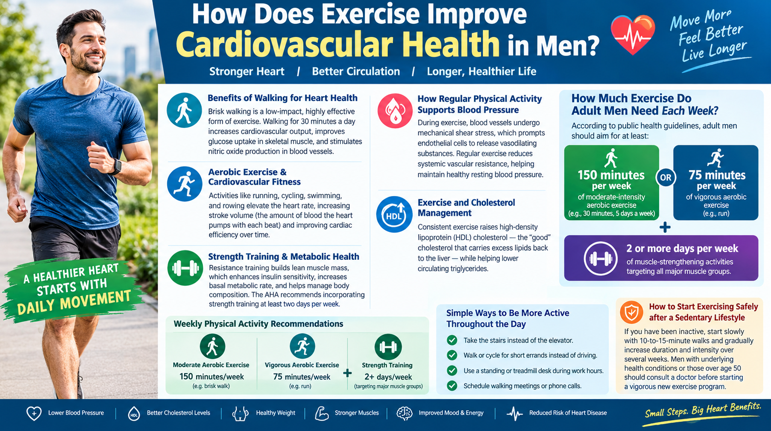
Benefits of walking for heart health
Brisk walking is a low-impact, highly effective form of exercise. Walking for 30 minutes a day increases cardiovascular output, improves glucose uptake in skeletal muscle, and stimulates nitric oxide production in blood vessels.
Aerobic exercise and cardiovascular fitness
Activities like running, cycling, swimming, and rowing elevate the heart rate, increasing stroke volume (the amount of blood the heart pumps with each beat) and improving cardiac efficiency over time.
Strength training and metabolic health
Resistance training builds lean muscle mass, which enhances insulin sensitivity, increases basal metabolic rate, and helps manage body composition. The AHA recommends incorporating strength training at least two days per week.
How regular physical activity supports blood pressure
During exercise, blood vessels undergo mechanical shear stress, which prompts endothelial cells to release vasodilating substances. Regular exercise reduces systemic vascular resistance, helping maintain healthy resting blood pressure.
Exercise and cholesterol management
Consistent exercise raises high-density lipoprotein (HDL) cholesterol—the “good” cholesterol that carries excess lipids back to the liver—while helping lower circulating triglycerides.
How much exercise do adult men need each week?
According to public health guidelines, adult men should aim for at least:
- 150 minutes of moderate-intensity aerobic exercise per week (e.g., 30 minutes, 5 days a week), OR
- 75 minutes of vigorous aerobic exercise per week, AND
- 2 or more days of muscle-strengthening activities targeting all major muscle groups.
[ Weekly Physical Activity Recommendations ]
┌──────────────────────────────────────┬──────────────────────────────┐
│ Moderate Aerobic Exercise │ Vigorous Aerobic Exercise │
│ 150 minutes/week (e.g. brisk walk) │ 75 minutes/week (e.g. run) │
└──────────────────────────────────────┴──────────────────────────────┘
+
┌─────────────────────────────────────────────────────────────────────┐
│ Strength Training: 2+ days/week (targeting major muscle groups) │
└─────────────────────────────────────────────────────────────────────┘
Simple ways to become more active throughout the day
- Take the stairs instead of the elevator.
- Walk or cycle for short errands instead of driving.
- Use a standing or treadmill desk during work hours.
- Schedule walking meetings or phone calls.
How to start exercising safely after a sedentary lifestyle
If you have been inactive, start slowly with 10-to-15-minute walks and gradually increase duration and intensity over several weeks. Men with underlying health conditions or those over age 50 should consult a doctor before starting a vigorous new exercise program.
How Can Men Improve Blood Circulation Naturally?
The relationship between blood vessel health and circulation
Blood flow depends directly on vascular elasticity and endothelial function. Stiff, narrowed, or inflamed blood vessels restrict blood delivery, forcing the heart to work harder to circulate blood throughout the body.
How physical activity supports healthy blood flow
Movement squeezes peripheral veins in the legs, helping push blood back toward the heart (the skeletal muscle pump) while stimulating arterial dilation throughout the circulatory network.
The role of nitric oxide in blood vessel relaxation
Nitric oxide (NO) is synthesized by the vascular endothelium. When released, NO signals smooth muscle cells in blood vessel walls to relax, widening the lumen (vasodilation) and allowing blood to flow freely.
Foods containing dietary nitrates and other cardiovascular nutrients
Consuming nitrate-rich vegetables (arugula, beets, spinach) and amino acids like L-citrulline (found in watermelon) provides essential building blocks that support natural nitric oxide production.
How smoking affects blood vessels
Smoking releases free radicals that rapidly degrade nitric oxide, destroy endothelial cells, and cause acute vasoconstriction, drastically reducing blood flow to vital organs and peripheral tissues.
The connection between circulation, vascular function, and erectile health
Erectile function is fundamentally a vascular process. Achieving and maintaining an erection requires rapid blood flow into the penile arteries and effective trapping of blood within the erectile tissue. Because penile arteries are small (1–2 mm in diameter), changes in erection firmness or duration can serve as an early indicator of reduced vascular health elsewhere in the body.
When poor circulation may indicate an underlying medical problem
Persistent leg cramping while walking (claudication), cold extremities, numbness, or slow-healing skin wounds should be evaluated by a physician, as they may indicate peripheral artery disease (PAD) or peripheral neuropathy.
How to Manage Blood Pressure and Cholesterol Naturally
[ Preventive Strategy ]
│
┌──────────────────────────────────┼──────────────────────────────────┐
▼ ▼ ▼
[ Dietary Adjustments ] [ Physical Activity ] [ Weight Management ]
Dietary habits that may help lower high blood pressure
The Dietary Approaches to Stop Hypertension (DASH) eating plan emphasizes fruits, vegetables, whole grains, lean proteins, and low-fat dairy while minimizing sodium and saturated fats. Clinical research consistently shows that following the DASH pattern supports healthy blood pressure levels.
Reducing sodium while maintaining a balanced diet
The CDC recommends limiting daily sodium intake to under 2,300 mg (and ideally 1,500 mg for adults with elevated blood pressure). You can reduce sodium by cooking with fresh herbs, spices, citrus, and garlic instead of pre-packaged seasonings or table salt.
Dietary fiber and cholesterol management
Soluble fiber acts like a sponge in the digestive system, binding to cholesterol-rich bile acids and removing them from the body before they can be reabsorbed into the bloodstream. Aim for 30 to 38 grams of total dietary fiber daily from oats, beans, chia seeds, and vegetables.
Physical activity and healthy cholesterol levels
Regular aerobic exercise enhances the enzyme pathways responsible for clearing LDL particles from the bloodstream while boosting the size and protective capacity of HDL cholesterol particles.
Maintaining a healthy weight and blood sugar
Losing even 5% to 10% of excess body weight can lower systolic blood pressure, improve insulin sensitivity, and reduce circulating blood glucose, relieving structural stress on the heart.
Understanding blood pressure readings and cholesterol tests
- Blood Pressure Categories:
- Normal: Less than 120/80 mmHg
- Elevated: Systolic 120–129 mmHg and diastolic <80 mmHg
- Hypertension Stage 1: Systolic 130–139 mmHg or diastolic 80–89 mmHg
- Key Lipid Measures:
- Total Cholesterol: Broad measure of circulating lipids.
- LDL Cholesterol: Particles that carry cholesterol to tissues; lower levels are preferred to reduce plaque risk.
- HDL Cholesterol: Protective particles that transport excess cholesterol back to the liver.
- Triglycerides: Blood fats linked to metabolic health and dietary intake.
When lifestyle changes alone are not enough
If blood pressure or LDL cholesterol remains elevated despite consistent lifestyle adjustments, medical treatment may be necessary. Lifestyle habits should be seen as a foundation that works alongside, rather than replaces, prescribed medical care when recommended by a physician.
Can Supplements Support Cardiovascular Health in Men?
While whole foods, exercise, and sleep are the primary ways to support heart health, certain dietary supplements have been researched for their potential benefits.
Omega-3 supplements and cardiovascular health
Fish oil supplements providing concentrated EPA and DHA can help reduce elevated blood triglycerides. However, omega-3 supplements do not replace a balanced diet rich in whole fish and should be discussed with a doctor, especially at higher doses.
Magnesium supplements and heart function
Magnesium plays a crucial role in maintaining normal heart rhythms, regulating muscle contraction, and supporting vascular tone. Men with inadequate dietary magnesium intake may benefit from supplementation under medical supervision.
Coenzyme Q10 (CoQ10) and heart health research
CoQ10 is an antioxidant involved in cellular energy production within cardiac tissue. Research suggests CoQ10 may support cellular bioenergetics, particularly in individuals taking statin medications, which can lower natural CoQ10 levels.
L-arginine and L-citrulline for nitric oxide production
These amino acids serve as biochemical precursors to nitric oxide:
- L-citrulline: Absorbed efficiently by the digestive tract and converted by the kidneys into L-arginine, making it an effective option for raising systemic arginine levels over time.
- L-arginine: Directly used by endothelial cells to produce nitric oxide, though oral bioavailability is lower than L-citrulline due to first-pass metabolism.
Beetroot supplements and blood pressure research
Concentrated beetroot powders and extracts provide concentrated dietary nitrates that support vasodilation and short-term blood pressure regulation, making them a popular supplement for circulatory support.
Vitamin D and cardiovascular health: what is known?
Vitamin D deficiency is linked to impaired endothelial function and higher cardiovascular risk. Correcting a deficiency through sun exposure, fortified foods, or targeted supplementation supports overall metabolic and vascular health.
Who may benefit from a supplement, and who should use caution?
- May benefit: Men with documented nutrient deficiencies (e.g., Vitamin D, magnesium) or specific dietary restrictions (e.g., vegans needing long-chain omega-3s).
- Use caution: Men taking blood pressure medications, blood thinners, or antiplatelet drugs. High-dose supplements can interact with these medications, increasing the risk of adverse effects.
Why supplements should not replace proven heart disease treatments
Dietary supplements are not regulated as drugs, nor are they proven to prevent, treat, or reverse established cardiovascular disease. They should be used as a complementary addition to a healthy lifestyle and medical care, never as a substitute for prescribed treatments.
How Does Sleep and Stress Affect Men’s Heart Health?
Cardiovascular wellness involves more than just diet and exercise; recovery, autonomic nervous system balance, and sleep architecture are equally essential.
[ Chronic Stress / Poor Sleep ]
│
▼
[ Elevated Cortisol & Sympathetic Drive ]
│
▼
[ Sustained Vasoconstriction ]
│
▼
[ Elevated Blood Pressure & Resting HR ]
│
▼
[ Increased Cardiovascular Strain ]
The connection between poor sleep and cardiovascular risk
During deep sleep, blood pressure naturally drops by 10% to 20% (a process called nocturnal dipping), giving the heart and blood vessels a crucial period of rest. Chronic sleep deprivation deprives the cardiovascular system of this recovery period, leading to higher average 24-hour blood pressure and increased vascular inflammation.
How many hours of sleep do adult men need?
The American Heart Association recommends that adults consistently get 7 to 9 hours of quality sleep per night as part of its Life’s Essential 8 framework.
Stress, the nervous system, and blood pressure
When you experience chronic stress, the sympathetic nervous system triggers a persistent “fight-or-flight” response, raising levels of cortisol and adrenaline. This chronic activation causes sustained vasoconstriction, elevates resting heart rate, and contributes to long-term hypertension.
Relaxation techniques, breathing exercises, and mindfulness
Engaging in daily stress-management practices helps activate the parasympathetic nervous system (“rest-and-digest”), encouraging heart rate variability and supporting arterial relaxation:
- Box Breathing: Inhale for 4 seconds, hold for 4 seconds, exhale for 4 seconds, hold for 4 seconds.
- Progressive Muscle Relaxation: Tense and release muscle groups sequentially from head to toe.
- Mindfulness Meditation: Spend 10 to 15 minutes daily focusing on breath awareness to calm sympathetic drive.
Recognizing symptoms of sleep apnea
Obstructive Sleep Apnea (OSA) is a common, underdiagnosed condition in men characterized by repeated pauses in breathing during sleep. Symptoms include loud snoring, gasping for air, waking with a dry mouth, and excessive daytime fatigue. Untreated OSA significantly increases the risk of high blood pressure, atrial fibrillation, and heart disease and requires medical evaluation.
Building a consistent sleep and stress-management routine
- Maintain a regular sleep schedule, going to bed and waking up at the same time every day.
- Create a dark, quiet, and cool bedroom environment (60–67°F or 15–19°C).
- Turn off screens at least 60 minutes before bedtime to support natural melatonin production.
- Avoid heavy meals, caffeine, and alcohol close to bedtime.
What Are the Early Signs of Poor Cardiovascular Health in Men?
High blood pressure and high cholesterol may have no obvious symptoms
Hypertension and hyperlipidemia are often called “silent killers” because they typically develop without noticeable warning signs. A man can feel completely healthy while elevated pressure and circulating lipids gradually damage his arterial walls over many years.
Unusual shortness of breath or reduced exercise tolerance
If routine activities—like climbing a flight of stairs or carrying groceries—suddenly cause unexpected breathlessness or fatigue, it may indicate reduced cardiac output or underlying circulatory changes.
Chest discomfort and unusual fatigue
Chest pressure, tightness, squeezing, or persistent, unexplained fatigue during exertion are key warning signs that require medical evaluation.
Leg pain while walking and possible circulation problems
Experiencing dull, cramping pain in the calves, thighs, or buttocks during walking that subsides with rest (claudication) is a classic sign of reduced blood flow in the legs, which may indicate peripheral artery disease.
Erectile dysfunction and cardiovascular risk
Because penile blood vessels are small and sensitive to vascular changes, persistent difficulty achieving or maintaining erections can be an early indicator of endothelial dysfunction or systemic arterial disease.
Why routine screening matters even when you feel healthy
Regular preventive screenings—including blood pressure checks, lipid panels, and fasting blood sugar tests—allow healthcare providers to identify and address risk factors early, long before significant cardiovascular events occur.
What Is a Simple Daily Heart-Healthy Routine for Men?
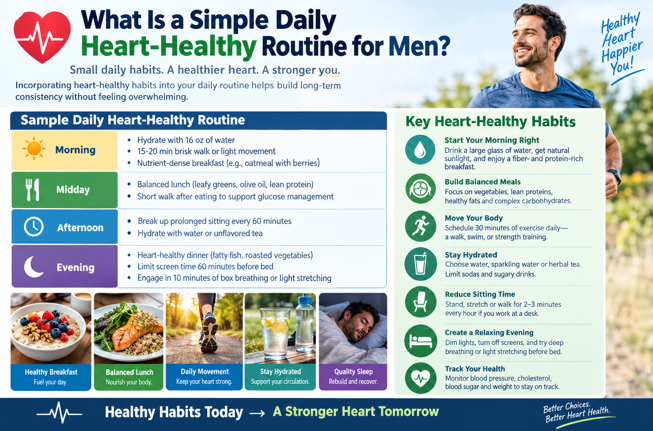
Incorporating heart-healthy habits into your daily routine helps build long-term consistency without feeling overwhelming.
┌────────────────────────────────────────────────────────────────────────┐
│ Sample Daily Heart-Healthy Routine │
├───────────┬────────────────────────────────────────────────────────────┤
├───────────┼────────────────────────────────────────────────────────────┤
│ Midday │ • Balanced lunch (leafy greens, olive oil, lean protein) │
│ │ • Short walk after eating to support glucose management │
├───────────┼────────────────────────────────────────────────────────────┤
│ Afternoon │ • Break up prolonged sitting every 60 minutes │
│ │ • Hydrate with water or unflavored tea │
├───────────┼────────────────────────────────────────────────────────────┤
│ Evening │ • Heart-healthy dinner (fatty fish, roasted vegetables) │
│ │ • Engage in 10 minutes of box breathing or light stretching│
└───────────┴────────────────────────────────────────────────────────────┘
Heart-healthy morning habits
- Start your day with a large glass of water to rehydrate your vascular system.
- Get 10 to 15 minutes of natural morning sunlight to set your circadian rhythm for better night sleep.
- Eat a breakfast built around fiber and protein, such as oatmeal with walnuts and berries or scrambled eggs with spinach.
Building balanced meals throughout the day
Construct meals around whole vegetables, lean proteins (fish, poultry, beans), healthy fats (olive oil, avocado), and complex carbohydrates (quinoa, sweet potatoes).
Adding walking and exercise to your schedule
Schedule your 30-minute workout session like an essential appointment—whether it’s a morning brisk walk, a lunchtime swim, or an evening strength-training session.
Staying hydrated and limiting sugary drinks
Replace sodas, sweetened teas, and energy drinks with water, sparkling water, or unsweetened herbal teas to avoid unnecessary sugar spikes.
Reducing prolonged sitting
If you work a desk job, set a timer to stand up, stretch, or walk for 2 to 3 minutes every hour to stimulate blood flow in your legs and maintain endothelial health.
Creating a relaxing evening routine
Unwind in the evening by dimming household lights, turning off electronic screens, and practicing 5 to 10 minutes of deep breathing or light stretching before bed.
Tracking blood pressure, cholesterol, and other key health measures
Keep a personal log of home blood pressure readings, annual lipid panel results, fasting blood sugar, and body weight to monitor your progress over time.
When Should Men See a Doctor About Cardiovascular Health?
While natural lifestyle choices form the foundation of cardiovascular wellness, regular medical care ensures safe, effective, and individualized health management.
- Family history of heart disease or premature cardiovascular events: If a first-degree relative (father, brother) experienced a heart attack or stroke before age 55, early and comprehensive medical screening is essential.
- Persistently high blood pressure or cholesterol: If home blood pressure readings consistently exceed 130/80 mmHg or blood tests show elevated LDL cholesterol, consult a healthcare provider for personalized guidance.
- Diabetes, obesity, or multiple cardiovascular risk factors: Managing overlapping metabolic risk factors requires a coordinated plan developed with a physician.
- Questions about supplements or interactions with medicines: Always consult a doctor or pharmacist before starting new dietary supplements, particularly if you take prescription medications.
- Why prescribed medications should not be stopped without medical advice: Never stop taking prescribed blood pressure or cholesterol-lowering medications without first discussing it with your doctor.
- Heart attack warning signs that require emergency care: Call 911 immediately if you or someone else experiences:
- Chest pain, pressure, fullness, or squeezing in the center of the chest.
- Pain radiating to the jaw, neck, back, stomach, or one or both arms.
- Sudden shortness of breath, cold sweats, dizziness, or lightheadedness.
Nitric Boost: Exploring Blood Flow Support and Everyday Vitality.
Frequently Asked Questions About Natural Cardiovascular Health
How can men improve heart health naturally?
Men can support cardiovascular health naturally by following a balanced diet rich in vegetables, fruits, whole grains, and healthy fats, getting at least 150 minutes of moderate aerobic exercise weekly, prioritizing 7–9 hours of sleep, avoiding tobacco, and managing stress.
What is the best diet for men’s cardiovascular health?
Dietary patterns like the Mediterranean diet and the DASH (Dietary Approaches to Stop Hypertension) diet are widely recognized as effective choices. Both emphasize whole foods, fiber, healthy fats, and lean proteins while minimizing sodium, added sugars, and processed foods.
Which foods are best for a healthy heart and blood vessels?
Leafy greens (spinach, arugula), beets, berries, fatty fish (salmon, sardines), walnuts, oats, beans, and extra virgin olive oil provide key nutrients—such as nitrates, omega-3s, soluble fiber, and antioxidants—that support blood vessel health and heart function.
Can walking improve cardiovascular health?
Yes. Brisk walking for 30 minutes a day supports circulation, helps lower resting blood pressure, enhances insulin sensitivity, and improves overall cardiovascular endurance.
How can men improve blood circulation naturally?
Engaging in regular physical activity, eating foods rich in dietary nitrates (beets, leafy greens), staying hydrated, avoiding smoking, and taking regular breaks from prolonged sitting all help promote healthy circulation.
What vitamins are good for heart health?
Vitamins C and E act as antioxidants that protect endothelial cells, while Vitamin D supports vascular function. However, obtaining nutrients from whole foods is generally more effective than relying solely on vitamin supplements.
Can poor sleep increase cardiovascular risk?
Yes. Chronic sleep deprivation deprives the heart of its natural nighttime rest period (nocturnal dipping), contributing to higher average blood pressure, elevated stress hormones, and increased cardiovascular risk.
Can lifestyle changes lower blood pressure and cholesterol?
Yes. Adopting a low-sodium, high-fiber diet, exercising regularly, losing excess body weight, and managing stress can significantly lower blood pressure and improve cholesterol levels. However, some individuals may still require medical treatment based on their overall risk profile.
Are natural heart health supplements effective?
Certain supplements—such as fish oil for triglycerides or L-citrulline for nitric oxide support—have evidence backing specific uses. However, supplements cannot replace a healthy lifestyle or proven medical treatments for heart disease.
How often should men have their heart health checked?
Adult men should have their blood pressure checked at least once a year (or more frequently if elevated) and undergo a lipid panel and fasting blood sugar assessment at least every 3 to 5 years starting in early adulthood, or as recommended by their physician.
Building Long-Term Cardiovascular Health Naturally
Supporting men’s cardiovascular health naturally is an ongoing commitment built on consistent daily choices. By focusing on whole-food nutrition, regular physical activity, quality sleep, stress management, and avoiding nicotine, men can strengthen their circulatory system, maintain healthy blood pressure and cholesterol levels, and support overall vitality.
Grounded in evidence-based frameworks like the American Heart Association’s Life’s Essential 8, these lifestyle habits provide a strong foundation for long-term health. While natural strategies play a crucial role in maintaining heart health, they should work alongside—rather than replace—regular preventive screenings and guidance from a trusted healthcare provider.