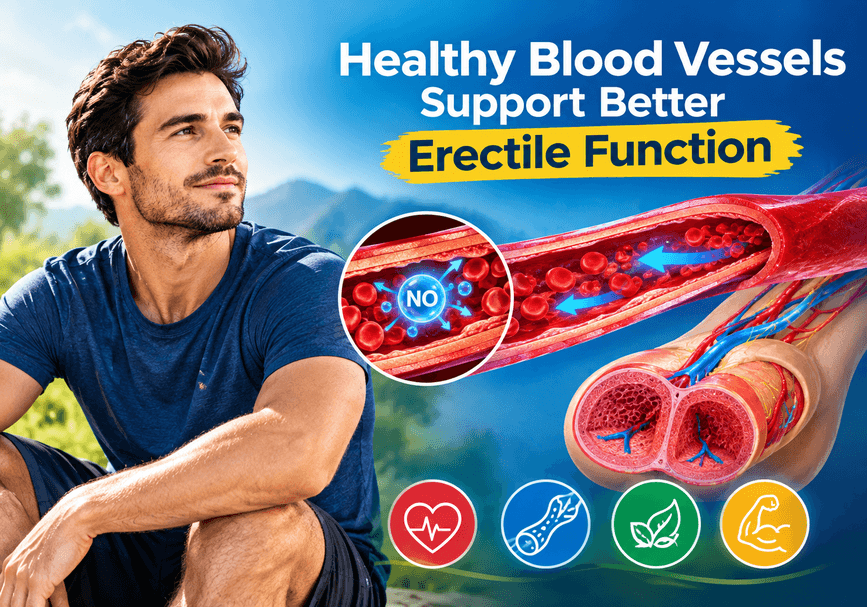
When discussing male sexual health, conversations often center on hormones, stress, or relationship dynamics. However, the foundational physical mechanism behind an erection is purely vascular. How does blood vessel health affect erectile function? Simply put, achieving and maintaining a firm erection relies on a complex, highly coordinated system of rapid blood flow, arterial relaxation, and vascular resistance.
Healthy blood circulation allows arterial blood to surge into the penile tissues while veins temporarily constrict to lock that pressure in place. When blood vessels are flexible, clear, and responsive, this physiological process occurs smoothly. However, if the vascular system is compromised by narrowed arteries, reduced elasticity, or damaged lining (endothelial dysfunction), blood circulation throughout the entire body—including the pelvis—can slow down.
Understanding how vascular health and erectile dysfunction (ED) interact provides vital insight not only into sexual well-being, but also into broader cardiovascular health. Key physiological players like nitric oxide, endothelial function, and systemic blood pressure dictate how well blood vessels respond under demand. Exploring these connections reveals why keeping your blood vessels healthy is one of the most effective ways to support long-term erectile function.
How Do Blood Vessels Help Produce an Erection?
An erection is essentially a hemodynamic event—a process governed entirely by fluid dynamics and pressure within the circulatory system.
[ Sexual Stimulation ]
│
▼
[ Nerve Signals Release Nitric Oxide (NO) ]
│
▼
[ Smooth Muscle & Blood Vessels Relax ]
│
▼
[ Penile Arteries Dilate & Blood Surges In ]
│
▼
[ Corpora Cavernosa Expand & Compress Veins ]
│
▼
[ Firm Erection Maintained ]
The role of blood flow in achieving and maintaining an erection
Erectile function begins with sensory or mental stimulation, which prompts the brain to send signals through the nervous system to the pelvic region. These nerve impulses trigger a cascade of chemical reactions that cause the smooth muscles in the penile blood vessels to relax, allowing a dramatic increase in blood flow.
How arteries deliver blood to penile tissue
Under resting conditions, the helicine arteries supplying the penis remain moderately constricted, limiting blood inflow. Upon stimulation, these specialized arterial branches dilate significantly. This sudden opening of the arterial pathway permits a surge of oxygen-rich blood into the erectile chambers at higher pressure.
How the corpora cavernosa fill with blood
The structure of the penis contains two parallel cylindrical chambers known as the corpora cavernosa. These chambers consist of a spongy network of smooth muscle and vascular spaces (lacunae). As the penile arteries expand, blood pours into these spaces, causing the tissue to swell and expand against a surrounding tough fibrous sheath called the tunica albuginea.
How veins help maintain an erection
As the cavernous spaces expand, they compress the small subtunical venules against the rigid tunica albuginea. This mechanism, known as the veno-occlusive mechanism, temporarily traps blood inside the penis. By restricting venous outflow while maintaining arterial inflow, the body generates the internal hydraulic pressure necessary to keep the erection firm.
What happens when penile blood flow is reduced?
If arterial inflow is restricted, or if the venous trap fails to compress properly, erection quality drops. Reduced penile blood flow means the cavernous spaces cannot fill completely, resulting in an erection that is difficult to achieve, less firm than usual, or short-lived.
What Is the Link Between Vascular Health and Erectile Dysfunction?
Because erections rely on robust circulation, anything that impairs blood vessel health can directly contribute to erectile dysfunction. In fact, vascular causes account for a significant portion of physical ED cases in men.
How narrowed arteries can restrict blood flow to the penis
The arteries supplying the penis (such as the cavernosal arteries) are relatively small in diameter—roughly 1 to 2 millimeters. If systemic vascular disease causes arterial narrowing, these small vessels are among the first to experience compromised volume, making it harder for sufficient blood to reach the erectile tissue.
Endothelial dysfunction and erectile problems
The endothelium is the thin inner lining of all blood vessels. It actively regulates vascular tone by releasing substances that prompt vessels to dilate or constrict. Endothelial dysfunction occurs when this lining loses its ability to dilate properly, impairing the natural increase in blood flow required for an erection.
How atherosclerosis affects penile circulation
Atherosclerosis—the buildup of fatty deposits, cholesterol, and calcium (plaque) along arterial walls—stiffens and narrows blood vessels throughout the body. When plaque accumulates in the internal pudendal or penile arteries, it physically obstructs circulation, causing a systemic restriction in penile blood flow.
Why healthy blood vessels matter for erection firmness
Firmness depends on achieving high intra-cavernous pressure. Flexible, unobstructed blood vessels can expand quickly to accommodate high blood volume. If arteries are stiff or narrowed, the volume and pressure inside the corpora cavernosa cannot reach peak levels, leading to reduced firmness.
Can vascular erectile dysfunction develop gradually?
Yes. Vascular ED rarely happens overnight. It often develops slowly over months or years as subtle changes in endothelial health, arterial stiffness, and systemic circulation accumulate, initially manifesting as subtle changes in erection duration or firmness.
What Is Nitric Oxide’s Role in Blood Flow and Erectile Function?
Nitric oxide (NO) is a crucial signaling molecule in the human cardiovascular system. Without adequate nitric oxide production, normal erections are virtually impossible.
How nitric oxide relaxes blood vessel walls
Nitric oxide acts as a natural vasodilator. When released, it diffuses into the surrounding vascular smooth muscle cells and triggers the synthesis of cyclic guanosine monophosphate (cGMP). cGMP signals the smooth muscle to relax, allowing the vessel walls to expand and blood to flow freely.
Nitric oxide production and penile vasodilation
During sexual arousal, non-adrenergic, non-cholinergic (NANC) nerve endings and endothelial cells in the penis synthesize and release nitric oxide. This localized surge of NO causes the cavernosal smooth muscle to relax, initiating penile vasodilation.
The relationship between endothelial function and nitric oxide
A healthy endothelium continuously produces baseline levels of nitric oxide to maintain proper vascular elasticity and prevent vessel inflammation. When the endothelium becomes damaged by conditions like high blood pressure or smoking, its capacity to synthesize nitric oxide drops significantly.
Can low nitric oxide contribute to erection difficulties?
Yes. When nitric oxide production or availability is compromised, penile smooth muscle cannot relax completely. Consequently, arteries cannot widen enough to let in the volume of blood needed to build internal pressure, resulting in erection difficulties.
L-arginine, L-citrulline, and nitric oxide production
The amino acids L-arginine and L-citrulline serve as biochemical precursors to nitric oxide in the body:
- L-arginine is directly converted into nitric oxide by the enzyme nitric oxide synthase (NOS).
- L-citrulline is absorbed in the digestive tract and converted by the kidneys into L-arginine, effectively raising systemic arginine levels over time.
What does scientific research say about nitric oxide supplements?
While dietary precursors support the body’s natural NO synthesis pathways, clinical studies show mixed results regarding oral supplements alone. Supplemental L-arginine or L-citrulline may offer mild improvements in mild-to-moderate vascular ED, but they do not address the complex structural underlying causes of advanced arterial disease.
What Causes Poor Blood Vessel Health in Men?
Vascular damage rarely has a single root cause; instead, it is usually driven by a combination of metabolic, cardiovascular, and lifestyle factors.
┌──────────────────────────────┐
│ Systemic Vascular Stressors │
└──────────────┬───────────────┘
│
┌───────────────────┬───────┴───────┬───────────────────┐
▼ ▼ ▼ ▼
[ Hypertension ] [ Atherosclerosis ] [ Diabetes ] [ Smoking/Vaping ]
│ │ │ │
└───────────────────┼───────────────┴───────────────────┘
│
▼
[ Endothelial Dysfunction ]
│
▼
[ Impaired Penile Vasodilation ]
│
▼
[ Reduced Penile Blood Flow (ED) ]
High blood pressure and erectile dysfunction
Chronic high blood pressure (hypertension) forces blood against arterial walls with excess force over time. This continuous stress causes arteries to thicken, lose elasticity, and narrow, impairing their ability to dilate during sexual arousal.
High cholesterol and narrowed arteries
Elevated levels of low-density lipoprotein (LDL) cholesterol contribute to plaque formation along arterial walls. As these deposits harden, they restrict blood circulation in men and impair endothelial responsiveness.
Diabetes, blood vessel damage, and ED
Persistently elevated blood sugar levels damage both small blood vessels (microvascular) and large arteries (macrovascular), as well as autonomic nerves. Diabetes impairs endothelial nitric oxide synthesis, making erectile dysfunction particularly common and often more severe in diabetic men.
Smoking, vaping, and vascular function
Toxins in tobacco smoke and aerosolized nicotine accelerate atherosclerosis, cause acute vasoconstriction (narrowing of blood vessels), and generate free radicals that degrade nitric oxide, drastically reducing penile blood flow.
Obesity, insulin resistance, and metabolic syndrome
Carrying excess body fat—especially visceral abdominal fat—is strongly linked to chronic low-grade inflammation, insulin resistance, and altered lipid profiles, all of which compromise endothelial health and diminish nitric oxide production.
Physical inactivity and poor circulation
A sedentary lifestyle reduces the mechanical shear stress on endothelial cell walls that normally stimulates nitric oxide release. Over time, lack of physical movement leads to decreased arterial compliance and diminished cardiovascular capacity.
Aging and changes in vascular function
As men age, arterial walls naturally lose some of their elastin fibers and gain collagen, making blood vessels stiffer. While aging increases vascular risk, significant erectile decline is typically driven by underlying age-related vascular disease rather than biological age alone.
Chronic inflammation and oxidative stress
Oxidative stress occurs when harmful reactive oxygen species outnumber protective antioxidants. This imbalance inactivates nitric oxide, damages cellular membranes in the endothelium, and promotes vascular inflammation.
Heart disease and peripheral artery disease
Systemic cardiovascular conditions like coronary artery disease and peripheral artery disease (PAD) are clear indicators that vascular impairment is widespread throughout the arterial network, directly affecting pelvic blood supply.
What Are the Signs That Poor Circulation May Be Affecting Erections?
Vascular-related erection problems often present with specific clinical patterns. Recognizing these signs helps distinguish circulatory issues from psychological or hormonal causes.
- Difficulty getting an erection: Needing significantly more physical stimulation or time to achieve an erection due to slow arterial blood fill.
- Difficulty maintaining an erection: Losing firmness mid-intercourse as a result of impaired arterial inflow or early venous leakage.
- Erections that are less firm than before: Achieving an erection that lacks the rigidity necessary for comfortable penetration, reflecting lower internal pressure.
- Changes in morning erections: A notable decrease in the frequency or firmness of involuntary nocturnal or early morning erections, which rely heavily on healthy vascular and neural pathways during sleep.
- Reduced exercise tolerance or other cardiovascular symptoms: Experiencing early fatigue, shortness of breath, or leg cramping during physical exertion alongside changes in erectile quality.
- When erectile problems may indicate an underlying health condition: When erection changes occur alongside elevated blood pressure, high cholesterol, or elevated fasting blood glucose.
Can Erectile Dysfunction Be an Early Sign of Heart Disease?
One of the most critical concepts in modern men’s health is the recognized link between erectile health and systemic cardiovascular risk.
Why erectile dysfunction and cardiovascular disease share risk factors
Both conditions stem from the same underlying pathological mechanisms: endothelial dysfunction, atherosclerosis, arterial stiffness, and chronic inflammation. Risk factors such as smoking, hypertension, high cholesterol, and diabetes damage arteries in the heart and penis alike.
The association between ED and coronary artery disease
According to the “artery size hypothesis,” because the arteries supplying the penis (1–2 mm) are smaller than the coronary arteries supplying the heart (3–4 mm), symptoms of vascular disease often manifest in the penis first. Reduced penile blood flow can predate clinical cardiac events by several years.
Artery Size Comparison & Disease Timeline:
─────────────────────────────────────────────────────────────────
Penile Arteries │ 1.0 – 2.0 mm │ Plaque affects flow FIRST ➔ [ ED Symptoms ]
Coronary Arteries │ 3.0 – 4.0 mm │ Plaque affects flow LATER ➔ [ Angina/CAD ]
Carotid Arteries │ 5.0 – 7.0 mm │ Plaque affects flow LATEST ➔ [ Stroke Risk ]
─────────────────────────────────────────────────────────────────
What research says about ED as a cardiovascular risk marker
Major cardiovascular guidelines acknowledge that new-onset, non-psychogenic erectile dysfunction in a man without known heart disease should be treated as an independent marker of potential cardiovascular risk.
When men with ED should discuss heart health with a doctor
Men experiencing persistent erection difficulties should view their symptoms as a valuable opportunity for a comprehensive health evaluation, including blood pressure screening, lipid panel assessment, and metabolic evaluation.
How Can Men Support Healthy Blood Vessels and Erectile Function?
Adopting evidence-based lifestyle habits can support endothelial function, improve systemic blood circulation, and protect long-term erectile health.
Follow a heart-healthy diet
Emphasize whole foods rich in antioxidants, fiber, and healthy fats—such as the Mediterranean diet pattern (rich in vegetables, legumes, olive oil, fish, and nuts)—which has been shown to improve endothelial function and reduce cardiovascular risk.
Exercise regularly to support circulation
Engage in a mix of moderate-to-vigorous aerobic exercise (like brisk walking, running, cycling, or swimming) and resistance training. Exercise boosts shear stress on blood vessel walls, upregulating natural nitric oxide production and enhancing arterial flexibility.
Stop smoking and avoid tobacco products
Quitting smoking and vaping eliminates toxins that damage endothelial cells. Within weeks to months of quitting, vascular tone and nitric oxide availability begin to recover.
Manage blood pressure, cholesterol, and blood sugar
Work with a primary care provider to keep blood pressure, LDL cholesterol, and blood glucose levels within target ranges through lifestyle adjustments and medication when indicated.
Maintain a healthy weight
Reducing excess visceral fat lowers systemic inflammation and improves insulin sensitivity, helping to restore normal vascular responsiveness and hormonal balance.
Get sufficient sleep and manage stress
Prioritize 7–9 hours of quality sleep per night and adopt active stress-management techniques. Chronic stress elevates cortisol and adrenaline, causing vasoconstriction and impairing erectile capacity.
Limit alcohol and address other lifestyle risks
Excessive alcohol intake acts as a nervous system depressant and can impair acute vascular responsiveness. Moderate your intake to support overall vascular health.
Follow medical advice for underlying vascular conditions
If you have diagnosed hypertension, high cholesterol, or diabetes, adhering closely to your prescribed treatment regimen helps prevent further damage to microvascular and macrovascular structures.
Which Foods Support Blood Vessel Health and Blood Flow?
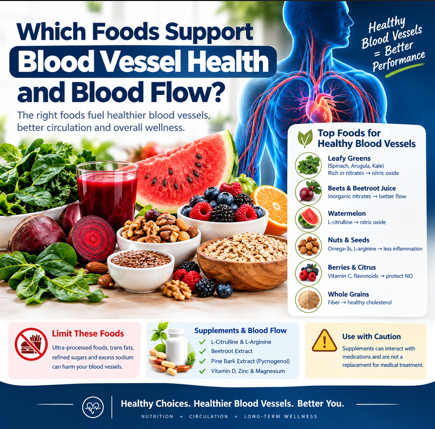
Diet plays a fundamental role in supplying the building blocks and antioxidants necessary for healthy blood vessel function.
| Food Category | Key Nutrients | Primary Vascular Benefit |
| Leafy Green Vegetables (Spinach, Arugula, Kale) | Dietary Nitrates | Converted into nitric oxide via the nitrate-nitrite-NO pathway, promoting vasodilation. |
| Beets & Beetroot Juice | Inorganic Nitrates | Boosts plasma nitrate levels, supporting lower blood pressure and improved blood flow. |
| Watermelon | L-Citrulline | Provides a direct amino acid precursor that the body converts into L-arginine and nitric oxide. |
| Nuts & Seeds (Walnuts, Flaxseed) | Omega-3 Fatty Acids, L-Arginine | Supports endothelial integrity and helps reduce arterial inflammation. |
| Antioxidant-Rich Fruits (Berries, Citrus) | Vitamin C, Flavonoids, Polyphenols | Protects nitric oxide from premature breakdown caused by oxidative stress. |
| Whole Grains (Oats, Quinoa, Barley) | Soluble Fiber | Helps regulate cholesterol levels, keeping arterial walls clear of plaque buildup. |
Foods and dietary patterns to limit for vascular health
To protect vascular health, limit ultra-processed foods high in trans fats, refined sugars, and excessive sodium. High sodium intake exacerbates hypertension, while excess sugar promotes advanced glycation end-products (AGEs) that stiffen blood vessel walls.
Do Supplements Improve Blood Flow and Erectile Function?
While dietary supplements are widely marketed for male sexual performance, it is essential to evaluate the evidence objectively.
L-citrulline and L-arginine supplements
Oral L-citrulline generally exhibits better oral bioavailability than L-arginine, as it bypasses immediate hepatic metabolism. Small clinical trials suggest L-citrulline may offer modest improvements in erection hardness for men with mild vascular ED, though results vary.
Beetroot supplements and dietary nitrate
Beetroot powders and concentrated extracts provide concentrated dietary nitrates that support the oral-gut-circulatory pathway for nitric oxide production. They can aid general circulatory health, though they are not a stand-alone fix for organic ED.
Pine bark extract and vascular health research
Pycnogenol (French maritime pine bark extract) contains potent antioxidants (proanthocyanidins). Some preliminary research indicates that combining pine bark extract with L-arginine may support endothelial nitric oxide synthase activity.
Vitamin and mineral supplements: what the evidence shows
- Vitamin D: Deficiency is associated with endothelial dysfunction; correcting a deficiency supports overall vascular health.
- Zinc & Magnesium: Essential for biochemical pathways, though supplementation beyond recommended daily levels shows limited impact on erectile function unless a deficiency exists.
Potential side effects and interactions
Supplements that promote vasodilation can interact dangerously with prescription medications. For instance, combining nitrate-boosting supplements or amino acids with prescription nitrates or blood pressure medications can cause unsafe drops in blood pressure.
Why supplements are not a proven substitute for ED treatment
Over-the-counter dietary supplements are not rigorously regulated in the same manner as prescription pharmaceuticals, nor are they proven to reverse structural vascular disease. They should never replace a clinical evaluation or established medical therapies.
What Medical Treatments Help Vascular Erectile Dysfunction?
When vascular health impairs erectile function, modern medicine offers several safe, well-researched evaluation and treatment options.
How doctors evaluate erectile dysfunction
According to the National Institute of Diabetes and Digestive and Kidney Diseases (NIDDK), a physician evaluates ED through a detailed medical and sexual history, physical examination, and selective blood tests (checking blood glucose, lipid panels, and hormone levels) to identify underlying vascular or metabolic conditions.
Blood pressure, cholesterol, and diabetes management
Optimizing the management of cardiovascular risk factors is a critical first step. Improving glycemic control, lowering elevated lipids, and regulating blood pressure help prevent further vascular decline.
PDE5 inhibitors, including sildenafil and tadalafil
Phosphodiesterase type 5 (PDE5) inhibitors—such as sildenafil, tadalafil, vardenafil, and avanafil—are first-line oral medications for ED:
- Mechanism: They work by inhibiting the PDE5 enzyme, which normally degrades cGMP in penile smooth muscle tissue.
- Effect: By preserving cGMP, these medications enhance the natural vasodilation triggered by nitric oxide during sexual arousal, facilitating increased penile blood flow.
Lifestyle changes and cardiac risk reduction
Clinical guidelines emphasize that pharmacological treatments work best when paired with cardiovascular risk reduction, such as exercise, dietary improvements, and smoking cessation.
When specialist assessment may be appropriate
A referral to a urologist, cardiologist, or endocrinologist may be recommended if first-line therapies are ineffective, if complex cardiovascular disease is present, or if specialized diagnostic testing (like penile duplex Doppler ultrasound) is needed.
Why men should not use ED medication without checking contraindications
PDE5 inhibitors are contraindicated in men taking nitrate medications (e.g., nitroglycerin for chest pain) or guanylate cyclase stimulators, as the combination can cause severe, life-threatening hypotension (low blood pressure). Always consult a healthcare provider before starting ED treatments.
When Should You See a Doctor About Erectile Dysfunction?
Seeking medical guidance early ensures both safe treatment of sexual symptoms and timely screening for underlying health conditions.
- Persistent or worsening erection problems: Experiencing difficulty obtaining or keeping erections for several weeks or months.
- ED accompanied by diabetes or cardiovascular risk factors: Having a history of high blood pressure, high cholesterol, smoking, or diabetes alongside erection changes.
- Symptoms that may suggest an underlying vascular condition: Experiencing shortness of breath, chest pressure, fatigue during mild exertion, or leg pain when walking.
- Warning signs that require urgent medical attention: Sudden, severe chest pain, pain radiating to the jaw or arm, acute shortness of breath, or an erection lasting longer than 4 hours (priapism), which requires immediate emergency care.
Discover Nitric Boost, explore its ingredients, understand its advertised benefits, and learn what to know before buying.
Frequently Asked Questions About Blood Vessel Health and Erectile Function
Can poor blood circulation cause erectile dysfunction?
Yes. Adequate penile blood flow is required to fill the cavernous spaces and build internal pressure. Poor blood circulation caused by narrowed, stiffened, or damaged arteries is a leading cause of physical erectile dysfunction.
Can clogged arteries affect erections?
Yes. Plaque buildup (atherosclerosis) narrows blood vessels. Because the arteries supplying penile tissue are very small, clogged arteries often restrict penile blood flow before larger coronary or carotid arteries produce obvious symptoms.
Can improving blood flow help with erectile function?
Improving vascular health through regular exercise, a balanced diet, smoking cessation, and proper management of blood pressure and cholesterol can enhance endothelial function and support better erectile quality.
Does nitric oxide help men get stronger erections?
Nitric oxide is the primary chemical messenger that signals smooth muscle inside penile blood vessels to relax. This relaxation permits blood vessels to widen, allowing the rapid blood inflow necessary for a firm erection.
Can high blood pressure cause erectile dysfunction?
Yes. Chronic high blood pressure damages the endothelium and stiffens arterial walls, reducing their ability to dilate. Additionally, certain older classes of antihypertensive medications can contribute to ED.
Can erectile dysfunction be reversed naturally?
If erectile dysfunction is driven by early-stage endothelial dysfunction or unhelpful lifestyle habits, adopting heart-healthy diet patterns, exercising regularly, losing excess weight, and stopping smoking can significantly improve erectile quality naturally. Advanced structural arterial disease may require medical intervention.
What is the best exercise for blood flow to the penis?
Moderate-to-vigorous aerobic exercise—such as brisk walking, running, swimming, or cycling—3 to 4 times a week helps stimulate endothelial nitric oxide production, improve overall circulation, and enhance vascular elasticity.
Can erectile dysfunction be a sign of heart problems?
Yes. Because vascular disease affects smaller penile arteries before larger heart arteries, ED can serve as an early warning sign of underlying coronary artery disease or systemic cardiovascular risk.
Which foods help support healthy blood circulation in men?
Foods rich in dietary nitrates (spinach, arugula, beets), L-citrulline (watermelon), antioxidants (berries, citrus fruits), and healthy fats (walnuts, olive oil) support nitric oxide production and help protect arterial health.
How can you tell whether ED is caused by poor blood flow?
A healthcare provider can evaluate ED causes through medical history, physical exams, blood work, and diagnostic tools like penile duplex ultrasound, which measures actual blood flow velocity in penile arteries.
Protecting Blood Vessel Health to Support Erectile Function
Achieving and maintaining an erection relies directly on a healthy cardiovascular system. Healthy blood circulation, responsive endothelial cells, and robust nitric oxide production work in harmony to allow penile arteries to widen and fill with blood under pressure.
When conditions like high blood pressure, elevated cholesterol, diabetes, or smoking impair vascular health, penile blood flow is often among the first systems affected. Because penile arteries are smaller than those supplying the heart, erectile dysfunction can frequently serve as an early indicator of broader cardiovascular risk.
Protecting your blood vessel health—through a heart-healthy diet, regular aerobic exercise, stress management, and medical screening—supports both long-term cardiovascular vitality and optimal erectile function. If you experience persistent changes in erection quality, schedule an evaluation with a medical professional to protect both your sexual health and your heart.