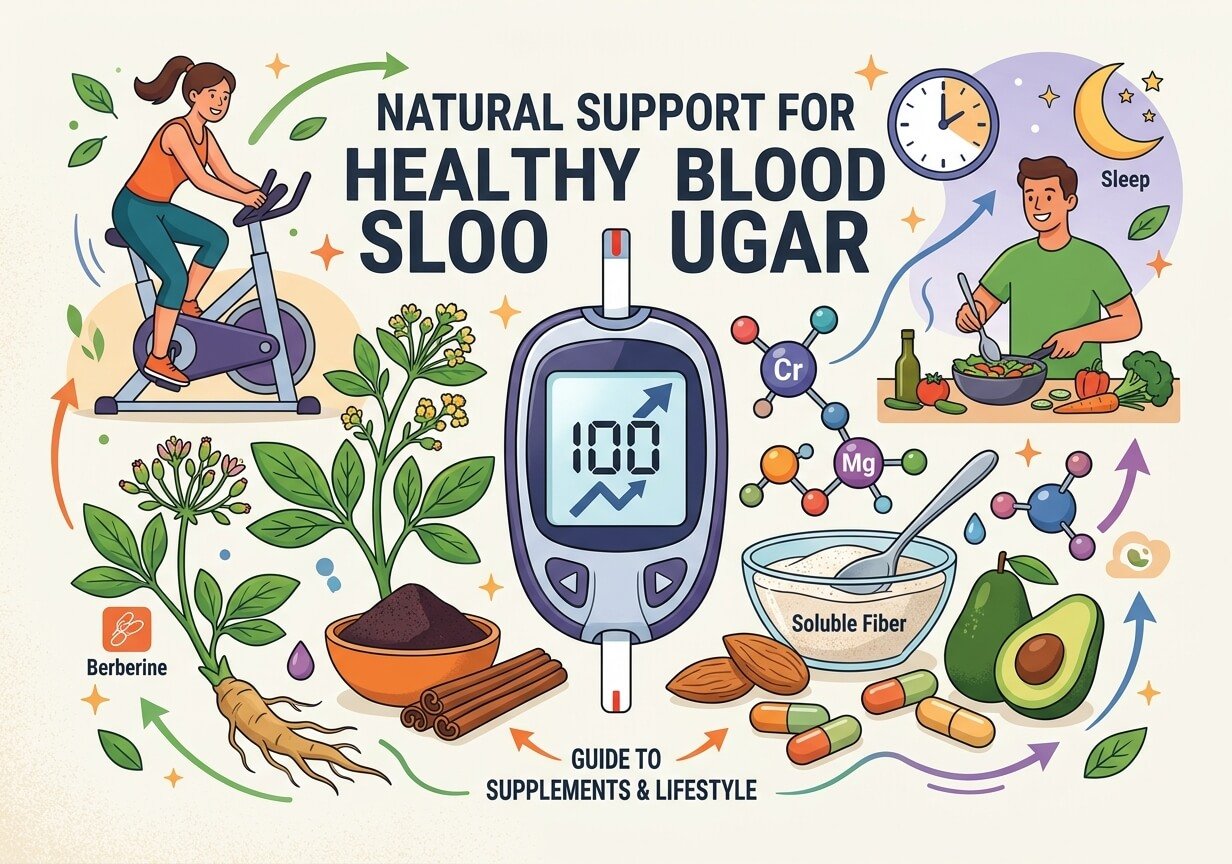
Maintaining healthy blood sugar levels is a cornerstone of overall metabolic health, sustained daily energy, and long-term vitality. As public interest in proactive wellness grows, many adults explore dietary products, vitamins, and herbs to assist with blood sugar support supplements and glucose management.
Can supplements help maintain healthy blood sugar levels naturally? While certain vitamins, minerals, and botanicals have shown promising results in clinical research, navigating the landscape of natural blood sugar supplements requires an understanding of what the science actually demonstrates, alongside essential safety considerations. According to the National Center for Complementary and Integrative Health (NCCIH), while some natural products may modestly influence glucose metabolism, dietary supplements are not a proven substitute for medical treatment or lifestyle modification.
Introduction: Understanding Natural Blood Sugar Support
Blood sugar (blood glucose) refers to the concentration of sugar dissolved in the circulating blood, primarily derived from the carbohydrates in food. Maintaining healthy blood sugar levels is essential because glucose serves as the primary energy source for the body’s cells, especially the brain and nervous tissue.
The hormone insulin, produced by the pancreas, plays a central role in this process. When you eat, carbohydrates are broken down into glucose, entering the bloodstream and signaling the pancreas to release insulin. Insulin acts like a key, unlocking cellular receptors so glucose can enter cells to be used for energy or stored for future use. When cells become less responsive to insulin—a state known as insulin resistance—glucose accumulates in the bloodstream, prompting the pancreas to produce even more insulin.
People frequently search for natural blood support supplements and blood sugar balance strategies to help optimize this metabolic machinery. However, it is vital to distinguish between supporting normal glucose metabolism and treating medical conditions like prediabetes or type 2 diabetes. Supplements are designed to complement—not replace—evidence-based nutrition, physical activity, and clinical care.
What Supplements Support Healthy Blood Sugar Levels Naturally?
Researchers have studied numerous vitamins, minerals, and herbs for their potential role in blood glucose management. Below is an evaluation of the best-studied options, examining their proposed mechanisms, scientific evidence, limitations, and safety profiles.
3.1 Magnesium for Blood Sugar Balance
Magnesium is an essential mineral involved in more than 300 enzymatic reactions, including cellular energy transfer and glucose metabolism.
- Role in Glucose Metabolism: Magnesium acts as a critical cofactor for enzymes that process carbohydrates. Adequate magnesium status is necessary for optimal insulin receptor function.
- Deficiency and Metabolic Health: Research indicates that individuals with insulin resistance or type 2 diabetes frequently exhibit low intracellular or serum magnesium levels. Correcting a deficiency can support normal glucose metabolism.
- Clinical Findings: Clinical studies and meta-analyses suggest that magnesium supplements for insulin resistance may improve fasting blood glucose and HbA1c in deficient populations, though results in individuals with normal magnesium levels are less pronounced.
- Safety Precautions: High doses of certain magnesium forms (such as magnesium oxide) can cause osmotic diarrhea or gastrointestinal upset. Individuals with impaired kidney function must exercise extreme caution, as the kidneys regulate magnesium balance, and excess accumulation can be dangerous.
3.2 Berberine for Blood Glucose Management
Berberine is a bioactive alkaloid extracted from plants of the Berberis genus (such as goldenseal and barberry). It has gained significant attention in metabolic research.
- Mechanism of Action: Berberine primarily activates an enzyme called AMP-activated protein kinase (AMPK), which plays a master regulatory role in cellular energy and glucose uptake.
- Research Findings: Clinical trials in adults with type 2 diabetes have reported that berberine can support reductions in fasting blood glucose, post-meal glucose, and HbA1c levels, with some comparative studies noting efficacy comparable to certain conventional glucose-lowering agents.
- Side Effects and Interactions: Common side effects include mild gastrointestinal discomfort, cramping, or diarrhea. Berberine can interact with liver enzymes (cytochrome P450), potentially altering the metabolism of medications such as statins, blood pressure drugs, and oral diabetes medications.
- Important Caveat: Despite promising data, berberine should never be considered a replacement for prescribed diabetes medication without direct supervision from a healthcare provider.
3.3 Chromium for Healthy Glucose Metabolism
Chromium is an essential trace mineral required in small amounts for normal carbohydrate and lipid metabolism.
- Chromium Picolinate: Most clinical research utilizes chromium picolinate, a form designed to enhance mineral absorption.
- Insulin Sensitivity: Chromium is a component of “glucose tolerance factor” (GTF), which potentiates the action of insulin at cellular receptors.
- Clinical Trial Inconsistencies: While some older studies suggested improvements in glycemic control, more recent systematic reviews and trials report mixed results regarding fasting blood glucose and HbA1c reductions in people without a confirmed deficiency.
- Adverse Effects: Chromium is generally safe at typical supplemental doses (200–1000 mcg daily), but very high doses can cause skin irritation, headaches, or rare kidney and liver complications.
3.4 Cinnamon Supplements for Blood Support
Cinnamon is a popular culinary spice that has been extensively evaluated for its metabolic properties.
- Mechanism: Cinnamon contains bioactive polyphenols that may mimic insulin action, improve receptor sensitivity, and slow gastric emptying, blunting post-meal glucose spikes.
- Ceylon vs. Cassia Cinnamon: Common grocery store cinnamon (Cassia) contains high levels of coumarin, a compound that can cause liver toxicity in large, sustained doses. Ceylon cinnamon (“true cinnamon”) contains much lower coumarin levels and is preferred for supplementation.
- Human Studies: Clinical trials examining cinnamon supplements on fasting glucose and HbA1c have yielded mixed results, with some showing modest benefits and others showing no significant effect.
- Not a Diabetes Treatment: Cinnamon remains a flavorful culinary addition and a mild supportive agent, but it is not a proven standalone treatment for diabetes.
3.5 Alpha-Lipoic Acid for Metabolic and Nerve Health
Alpha-lipoic acid (ALA) is an organosulfur compound that functions as a potent antioxidant within both water- and fat-soluble cellular compartments.
- Antioxidant and Metabolic Properties: ALA helps neutralize free radicals, reduce oxidative stress associated with high blood sugar, and improve glucose uptake in skeletal muscle.
- Diabetic Neuropathy vs. Blood Sugar: While ALA is widely recognized in European clinical practice for managing symptoms of diabetic peripheral nerve pain (burning, numbness, tingling), its ability to lower general blood glucose levels in everyday settings is modest.
- Considerations: High doses can occasionally cause gastrointestinal upset or skin rashes, and ALA may interact with thyroid medications or blood glucose-lowering drugs.
3.6 Vitamin D and Blood Sugar Regulation
Vitamin D functions as a prohormone influencing numerous physiological pathways, including pancreatic beta-cell function and insulin sensitivity.
- Metabolic Connection: Epidemiological studies consistently link low vitamin D status with an increased risk of prediabetes and insulin resistance.
- Supplementation Findings: Research indicates that correcting a vitamin D deficiency can support metabolic health, but routine high-dose supplementation in individuals with normal vitamin D levels typically does not yield significant blood sugar improvements.
- Guidance: Serum 25-hydroxyvitamin D testing under clinical guidance helps determine whether supplementation is genuinely necessary.
3.7 Soluble Fiber Supplements for Post-Meal Blood Sugar
Soluble fiber—such as psyllium husk, glucomannan, or inulin—forms a viscous gel when mixed with water in the digestive tract.
- Impact on Digestion: This viscous matrix slows down stomach emptying and delays the absorption of carbohydrates into the bloodstream, effectively moderating post-meal blood sugar spikes.
- Distinction from Minerals: Unlike vitamins or metabolic alkaloids, soluble fiber works through physical mechanisms in the gut, also supporting cholesterol management and digestive regularity.
- Usage Tips: When taking soluble fiber supplements, it is essential to start with small amounts, increase gradually, and drink adequate fluids to prevent bloating, gas, or intestinal blockage.
3.8 Other Herbal Supplements Studied for Blood Sugar
Various traditional herbs are marketed for glucose support, though scientific evidence varies considerably:
- Fenugreek: Contains high amounts of soluble fiber and unique amino acids that may slow carbohydrate digestion and improve insulin action.
- Bitter Melon: Contains compounds like charantin and polypeptide-p that exhibit insulin-like properties in laboratory settings, though human clinical trial data remain limited and mixed.
- Ginseng: American and Asian ginseng varieties have been studied for their potential to support post-prandial glucose metabolism and insulin sensitivity.
- Gymnema Sylvestre: Known in traditional Ayurveda as the “sugar destroyer,” it may temporarily reduce the perceived sweetness of foods and support pancreatic function.
- Probiotics: Emerging research suggests gut microbiome modulation can influence systemic inflammation and metabolic health, though specific strains for blood sugar control are still under investigation.
Note: The NCCIH emphasizes that many herbal products lack large-scale, long-term human safety and efficacy trials, and traditional use does not establish clinical validation.
How Do Blood Support Supplements Work?
Understanding the underlying physiological mechanisms helps clarify what these products can—and cannot—accomplish.
4.1 Supporting Insulin Sensitivity
Certain nutrients and botanicals (such as magnesium, berberine, and chromium) interact with cellular signaling pathways to enhance the efficiency of insulin receptors, helping cells take up circulating glucose more effectively.
4.2 Supporting Normal Glucose Metabolism
Micronutrients like magnesium and chromium act as essential cofactors that allow metabolic enzymes to process carbohydrates smoothly without overworking the pancreas.
4.3 Influencing Post-Meal Blood Sugar Responses
Soluble fiber supplements physically alter the digestive environment, slowing carbohydrate breakdown and blunting sharp post-meal glucose surges.
4.4 Correcting Nutrient Deficiencies
When a person’s diet lacks essential minerals or vitamins (such as magnesium or vitamin D), targeted supplementation restores baseline physiological function, indirectly supporting healthy glucose metabolism. However, taking high-dose supplements in the absence of a deficiency provides no added metabolic advantage.
What Does Scientific Research Say About Natural Blood Support Supplements?
5.1 Human Clinical Trials and Systematic Reviews
To evaluate medical claims, researchers rely on randomized controlled trials (RCTs) and systematic reviews. In vitro (lab) experiments and animal models often show dramatic reductions in blood sugar, but these findings do not automatically translate to human clinical success due to differences in metabolism, dosage, and pharmacokinetics.
5.2 Which Supplements Have the Most Promising Evidence?
Among natural options, berberine and magnesium (in deficient individuals) boast the most robust clinical data indicating measurable impacts on glucose metrics. Soluble fiber has solid, consistent evidence for moderating post-meal glycemic responses. Conversely, chromium and cinnamon exhibit mixed, often modest results across larger human trials.
5.3 Why Research Results Can Be Inconsistent
Discrepancies in scientific literature arise from several factors:
- Differences in participant health status (healthy adults vs. those with prediabetes or type 2 diabetes).
- Variation in supplement quality, active constituent standardization, and dosages.
- Short study durations that fail to evaluate long-term safety and efficacy.
5.4 Can Supplements Prevent Prediabetes or Type 2 Diabetes?
Current clinical evidence does not support the claim that any dietary supplement can prevent or reverse prediabetes or type 2 diabetes. While a supplement may cause a minor numerical shift in a lab measurement, lifestyle modification remains the proven standard for disease prevention.
Best Blood Sugar Supplements Compared
| Supplement | Main Research Area | Evidence to Discuss |
| Magnesium | Glucose metabolism and insulin sensitivity | Possible benefits, particularly when intake is inadequate; results vary |
| Berberine | Blood glucose and insulin resistance | Promising findings, but important evidence limitations and interactions |
| Chromium | Glucose metabolism | Mixed clinical results |
| Cinnamon | Fasting glucose and other metabolic markers | Inconsistent findings |
| Vitamin D | Metabolic health and deficiency | Benefits depend partly on vitamin D status and the outcome studied |
| Psyllium Fiber | Post-meal glucose response | May support glucose management as part of a fiber-rich diet |
| Alpha-Lipoic Acid | Diabetic nerve symptoms and metabolic markers | Evidence differs by outcome; not established as a general blood sugar treatment |
Who May Consider Blood Support Supplements?
7.1 Adults With Prediabetes
Individuals identified with prediabetes should first prioritize medical assessment, dietary improvements, and regular physical activity. Supplements should only be considered as a minor, secondary adjunct under professional guidance.
7.2 People With Confirmed Nutrient Deficiencies
If blood tests or dietary analysis reveal an inadequate intake of magnesium or vitamin D, targeted supplementation can correct the shortfall and support overall metabolic health.
7.3 Adults Managing Type 2 Diabetes
Patients diagnosed with type 2 diabetes must review any supplement use with their endocrinologist or primary care physician, particularly if they take glucose-lowering drugs (such as metformin or insulin), to prevent unpredictable fluctuations.
7.4 People With Other Medical Conditions
Individuals with kidney disease, liver impairment, or pregnant and breastfeeding women face heightened risks from botanical supplements and must avoid unguided use.
Are Natural Blood Support Supplements Safe?
8.1 Common Side Effects
Most botanical and mineral supplements can cause mild gastrointestinal distress, nausea, cramping, or changes in bowel habits, especially when introduced at high doses.
8.2 Interactions With Diabetes Medications
Combining blood-sugar-lowering supplements (like berberine or high-dose cinnamon) with prescription medications (like sulfonylureas or insulin) creates a significant risk of hypoglycemia (dangerously low blood sugar).
8.3 Quality, Purity, and Supplement Labels
The dietary supplement industry is not strictly regulated prior to market release. Products can suffer from inaccurate labeling, contamination, or adulteration. Independent third-party testing (such as USP, NSF, or ConsumerLab) helps verify product purity.
8.4 Who Should Avoid Certain Supplements?
Pregnant or nursing women, individuals with chronic kidney or liver disease, and anyone taking complex prescription regimens should exercise strict caution and consult a clinician before taking concentrated herbal extracts.
8.5 Why Supplements Should Not Replace Diabetes Treatment
Products advertised as natural cures or rapid replacements for prescribed medications are dangerous and misleading. Evidence-based medical management remains essential for preventing severe diabetes complications.
Natural Ways to Support Healthy Blood Sugar Alongside Supplements
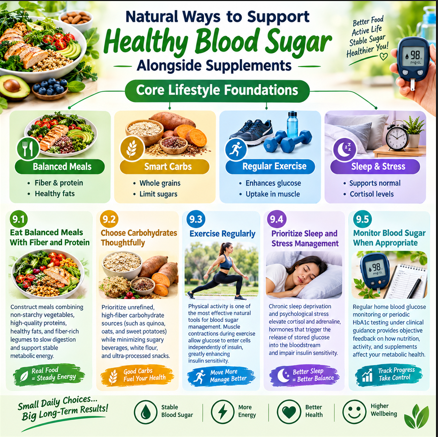
┌──────────────────────────────┐
│ Core Lifestyle Foundations │
└──────────────┬───────────────┘
│
┌───────────────────┬───────┴───────┬───────────────────┐
▼ ▼ ▼ ▼
[ Balanced Meals ] [ Smart Carbs ] [ Regular Exercise ] [ Sleep & Stress ]
• Fiber & protein • Whole grains • Enhances glucose • Supports normal
• Healthy fats • Limit sugars uptake in muscle cortisol levels
9.1 Eat Balanced Meals With Fiber and Protein
Construct meals combining non-starchy vegetables, high-quality proteins, healthy fats, and fiber-rich legumes to slow digestion and support stable metabolic energy.
9.2 Choose Carbohydrates Thoughtfully
Prioritize unrefined, high-fiber carbohydrate sources (such as quinoa, oats, and sweet potatoes) while minimizing sugary beverages, white flour, and ultra-processed snacks.
9.3 Exercise Regularly
Physical activity is one of the most effective natural tools for blood sugar management. Muscle contractions during exercise allow glucose to enter cells independently of insulin, greatly enhancing insulin sensitivity.
9.4 Prioritize Sleep and Stress Management
Chronic sleep deprivation and psychological stress elevate cortisol and adrenaline, hormones that trigger the release of stored glucose into the bloodstream and impair insulin sensitivity.
9.5 Monitor Blood Sugar When Appropriate
Regular home blood glucose monitoring or periodic HbA1c testing under clinical guidance provides objective feedback on how nutrition, activity, and supplements affect your metabolic health.
How to Choose a Quality Blood Support Supplement
10.1 Read the Supplement Facts Label
Carefully inspect the label to identify active ingredients, standardized extract percentages, and exact per-serving dosages.
10.2 Avoid Proprietary Blends With Unclear Amounts
Avoid products utilizing “proprietary blends,” which lump ingredients together without disclosing individual doses, making it impossible to evaluate safety or efficacy.
10.3 Look for Credible Quality Verification
Choose brands that display third-party certification seals (such as NSF International, U.S. Pharmacopeia [USP], or Informed-Choice) verifying that the product contains what is listed on the label without harmful contaminants.
10.4 Be Skeptical of Guaranteed Results
Avoid marketing language featuring exaggerated promises such as “reverses diabetes overnight” or “cures insulin resistance.”
10.5 Compare Price, Serving Size, and Value
Calculate the cost per serving rather than looking solely at the total bottle price, ensuring fair value for standardized, quality-tested ingredients.
Discover Gluco6 — Explore the Formula, Read the Reviews, Make an Informed Choice
Frequently Asked Questions About Blood Support Supplements
Which supplements support healthy blood sugar levels naturally?
The best-studied options include magnesium, berberine, chromium, cinnamon, alpha-lipoic acid, vitamin D, and soluble fiber. However, effectiveness varies widely among individuals, and no supplement is a universal solution.
What is the best natural supplement for blood sugar control?
There is no single “best” supplement for everyone. Suitability depends on an individual’s unique health status, baseline nutrient levels, and existing medical regimen.
Does magnesium help maintain healthy blood sugar levels?
Yes, adequate magnesium intake supports normal carbohydrate metabolism and insulin receptor function. Supplementation is most beneficial for individuals with a confirmed deficiency.
Is berberine better than metformin for blood sugar?
No. While some clinical studies show berberine has impressive metabolic effects, it is not an FDA-approved, standardized pharmaceutical equivalent to prescription metformin and should not replace it without direct medical oversight.
Can cinnamon supplements lower blood sugar?
Some human studies indicate modest improvements in fasting glucose from cinnamon, while other trials show no significant effect. It is a supportive dietary adjunct rather than a proven clinical treatment.
Do chromium supplements help with insulin resistance?
Clinical research on chromium and insulin resistance is mixed. Routine supplementation is not universally recommended unless a deficiency is suspected.
Can supplements reverse prediabetes naturally?
No supplement has been proven to reverse prediabetes. Lifestyle changes—including weight management, a nutrient-dense diet, and regular exercise—remain the gold standard.
What supplements should people with diabetes avoid?
Individuals with diabetes should avoid high-dose herbal extracts with unproven safety profiles, products with undisclosed ingredients, or supplements that lack third-party testing, unless cleared by their physician.
Can I take blood sugar supplements with diabetes medication?
Combining certain supplements with glucose-lowering drugs can lead to dangerous interactions or hypoglycemia. Always consult a doctor or pharmacist beforehand.
How long do blood support supplements take to work?
There is no universal timeline. Any observed shifts in lab markers can take weeks or months, and changes in readings should not be assumed to guarantee long-term clinical benefit without professional evaluation.
Conclusion: Choosing a Safe, Evidence-Based Approach
Navigating natural blood sugar support involves balancing optimism with scientific reality. While specific supplements—such as berberine, magnesium, and soluble fiber—have shown potential in selected clinical studies, the overall evidence differs considerably by ingredient.
Adequate nutrition, consistent physical activity, healthy sleep, and appropriate medical oversight remain the indispensable foundation of healthy glucose management. Prioritizing product quality, understanding personal medical history, and consulting healthcare professionals ensure that any supplement use remains safe and effective. The ultimate goal is to support healthy blood glucose levels safely, never replacing proven prevention or treatment strategies with unverified products.