What Is Poor Blood Circulation in Men?
Blood circulation is the continuous loop through which your heart pumps oxygen- and nutrient-rich blood via blood vessels to every organ, muscle, and tissue in your body. When blood vessel health is compromised, blood flow becomes restricted or impaired—a condition broadly referred to as poor blood circulation.
Reduced blood flow can affect any part of the body, but men frequently notice symptoms first in their extremities, such as the legs, feet, and hands, or through vascular changes affecting sexual health. Recognizing the difference between underlying circulatory problems is crucial to receiving appropriate care.
How Does the Circulatory System Work?
The cardiovascular system relies on a two-way pathway:
- Arterial Blood Flow: Arteries carry oxygenated blood away from the heart to the rest of the body under high pressure.
- Venous Circulation: Veins transport oxygen-depleted blood back toward the heart, relying on tiny one-way valves and surrounding muscle contractions to prevent backflow.
What Happens When Blood Flow Is Reduced?
When arteries narrow or veins weaken, tissues downstream do not receive adequate oxygen or nutrients. Over time, impaired circulation can cause cellular stress, tissue damage, slow healing, and increased strain on the heart.
Poor Blood Circulation vs. Poor Venous Circulation
It is common to confuse generalized circulation issues with specific vascular conditions. Generalized poor circulation refers to any systemic impairment of blood transport, whereas poor venous circulation specifically refers to failure of the veins to return blood efficiently to the heart, often leading to fluid accumulation and swelling in the lower legs.
Arterial Circulation Problems vs. Vein Problems
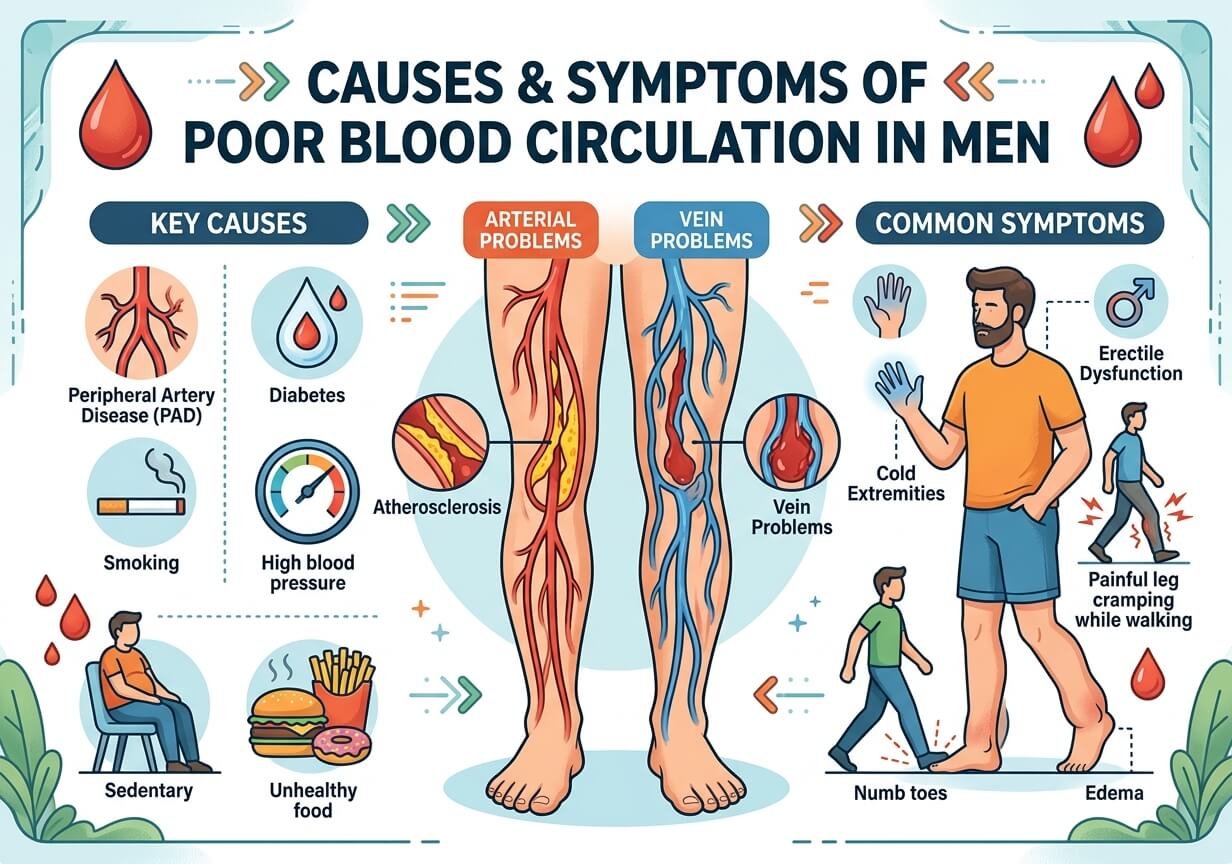
- Arterial Problems: Primarily involve structural blockages or narrowing within arteries (e.g., atherosclerosis), preventing oxygenated blood from reaching tissues. Symptoms often worsen during physical exertion.
- Vein Problems: Involve damaged venous valves or obstructed veins, causing blood to pool in the lower extremities. Symptoms often worsen after prolonged standing or sitting.
What Causes Poor Blood Circulation in Men?
Poor vascular health in men rarely stems from a single isolated cause. In most cases, reduced blood flow is driven by structural changes in the blood vessels, underlying chronic metabolic conditions, or behavioral risk factors.
+———————————————————————————–+
| COMMON CAUSES OF REDUCED BLOOD FLOW |
+————————————+———————————————-+
| ARTERIAL / STRUCTURAL | METABOLIC & LIFESTYLE |
| • Peripheral Artery Disease (PAD) | • Diabetes & Chronic High Blood Sugar |
| • Atherosclerosis (Plaque Buildup) | • Physical Inactivity & Sedentary Habits |
| • High Blood Pressure (Hypertension)| • Smoking, Tobacco, & Nicotine Use |
| • High LDL Cholesterol | • Obesity & Metabolic Syndrome |
Peripheral Artery Disease (PAD) and Plaque Buildup
Peripheral artery disease (PAD) is one of the leading medical causes of restricted arterial blood flow in men. PAD occurs when fatty plaque deposits build up inside the arteries—a process known as atherosclerosis.
As plaque accumulates, it causes narrowed arteries that restrict blood supply to the lower limbs. Men with blocked arteries in the legs often experience calf pain or cramping while walking, reduced blood flow to the feet, and increased risk of tissue damage.
High Blood Pressure and Blood Vessel Damage
Hypertension (high blood pressure) puts constant mechanical stress on arterial walls. Over time, this high pressure damages the delicate endothelial lining of blood vessels, making them stiffer, narrower, and more susceptible to plaque accumulation. Hypertension significantly impairs blood flow and accelerates overall cardiovascular risk.
High Cholesterol and Clogged Arteries
Elevated levels of Low-Density Lipoprotein (LDL) cholesterol contribute directly to arterial plaque formation. As LDL particles penetrate damaged blood vessel linings, they trigger inflammation and physical blockages. This cholesterol buildup reduces the diameter of arteries, impeding healthy blood circulation throughout the body.
Diabetes and High Blood Sugar
Prolonged high blood sugar levels damage both microvascular (small) and macrovascular (large) blood vessels. In men with diabetes, vascular damage often coincides with peripheral neuropathy (nerve damage). Diabetic circulation problems compromise healing capacity, raising the risk of diabetic foot symptoms, persistent ulcers, and severe lower-limb complications.
Smoking, Tobacco, and Nicotine Use
Nicotine is a potent vasoconstrictor—it causes blood vessels to narrow immediately upon inhalation. Furthermore, chemicals in tobacco smoke damage vessel walls, promote systemic inflammation, and significantly accelerate atherosclerosis. Smoking is one of the single greatest preventable risk factors for peripheral artery disease in men.
Physical Inactivity and a Sedentary Lifestyle
Lack of exercise reduces the natural elasticity of blood vessels and diminishes the production of nitric oxide—a chemical compound essential for vasodilation (the widening of blood vessels). Sitting for extended periods reduces venous return from the legs, leading to temporary blood pooling and sluggish circulation.
Obesity and Metabolic Syndrome
Excess body mass increases the body’s total circulatory demand while contributing to metabolic syndrome—a cluster of conditions including high blood pressure, high blood sugar, excess abdominal fat, and abnormal cholesterol levels. This metabolic burden accelerates vascular damage and impairs systemic blood flow.
Aging and Family History
Vascular elasticity naturally decreases with age, making poor circulation more frequent in men over 40 and men over 50. Additionally, a family history of cardiovascular disease, stroke, or PAD increases a man’s genetic predisposition to arterial stiffening and plaque accumulation.
Chronic Venous Insufficiency and Varicose Veins
When the one-way valves inside leg veins fail or weaken, blood flow reverses and pools in the lower extremities. Known as chronic venous insufficiency, this condition leads to increased venous pressure, varicose veins, swollen ankles, and localized skin discoloration.
Blood Clots and Deep Vein Thrombosis (DVT)
A blood clot that forms in a deep vein—most commonly in the leg—is known as Deep Vein Thrombosis (DVT). A DVT obstructs blood flow back to the heart, causing sudden one-sided leg swelling, sharp pain, warmth, and redness. DVT is a medical urgency, as part of the clot can detach and travel to the lungs (pulmonary embolism).
Other Medical Conditions and Possible Contributing Factors
- Chronic Kidney Disease (CKD): Contributes to vascular calcification and fluid overload.
- Blood Disorders: Conditions that increase blood viscosity or hypercoagulability.
- Vasculitis: Inflammation of blood vessel walls that narrows or occludes arterial pathways.
- Medication Side Effects: Certain prescription drugs (e.g., non-selective beta-blockers) can decrease peripheral perfusion.
- Nerve Entrapment or Neuropathy: Can cause sensory changes (numbness, tingling) that mimic reduced blood supply.
What Are the Signs and Symptoms of Poor Blood Circulation in Men?
Circulatory disorders can develop gradually. Some men experience subtle early warning signs, while others notice symptoms only after significant arterial narrowing or venous pooling has occurred.
+———————————————————————————–+
| COMMON CIRCULATORY SYMPTOMS |
| SYMPTOM | TYPICAL CHARACTERISTICS / MANIFESTATION |
| Cold Extremities | Feet or hands feel persistently cold to the touch. |
| Sensory Disturbances | Numbness, tingling, or “pins and needles” in toes/feet. |
| Intermittent Claudication| Leg muscle cramping or heaviness during walking/exercise|
| Peripheral Edema | Swelling in ankles, feet, or lower legs (fluid buildup)|
| Dermatological Changes | Pale, shiny, or bluish skin; loss of leg hair. |
| Slow Wound Healing | Minor cuts or foot sores that take weeks to heal. |
| Vascular ED | Inability to maintain erections due to poor blood flow.|
Cold Hands and Feet
Persistent cold feet or cold hands occur when reduced blood flow prevents warm arterial blood from reaching the body’s outer extremities. While occasional cold toes can occur in cool environments, persistently cold feet in warm settings may indicate arterial insufficiency.
Numbness, Tingling, or Pins and Needles
When blood flow to peripheral nerves is restricted, nerve fibers experience oxygen deprivation. This manifests as numbness in the feet, tingling sensations, or a persistent “pins and needles” feeling in the toes and hands.
Leg Pain, Muscle Cramps, or Heaviness While Walking
Known medically as intermittent claudication, muscle pain or aching in the calves, thighs, or buttocks that develops during physical activity and resolves with a few minutes of rest is a classic sign of peripheral artery disease.
Swelling in the Feet, Ankles, or Lower Legs
Fluid buildup (edema) in the lower extremities typically signals venous insufficiency or impaired lymphatic drainage. Blood pooling in the legs forces liquid into surrounding tissue, causing swollen ankles and tight skin.
Skin Discoloration, Hair Loss, and Slow-Healing Wounds
Restricted arterial blood supply alters the appearance of lower legs and feet:
- Skin may appear shiny, pale, reddish-purple, or bluish (cyanosis).
- Hair growth on the lower legs and toes may slow down or stop entirely.
- Minor cuts, scrapes, or blisters may turn into slow-healing foot sores or ulcers due to lack of nutrient supply.
Erectile Dysfunction and Blood Flow Problems
Penile erection depends on rapid, unimpeded arterial blood influx into erectile tissue, alongside adequate nitric oxide release. Vascular erectile dysfunction can serve as an early clinical indicator of systemic arterial disease.
Note: While reduced penile arterial blood flow is a recognized cause of erectile dysfunction, ED can also stem from hormonal imbalances, neurological conditions, psychological factors, or medication side effects. Persistent ED warrants a comprehensive medical evaluation.
Can Poor Circulation Cause Fatigue or Muscle Weakness?
Reduced systemic blood circulation can lead to localized muscle weakness and rapid fatigue during physical activity because working muscles do not receive adequate oxygen. However, generalized systemic fatigue is frequently linked to other underlying issues, such as thyroid dysfunction, anemia, or sleep disorders, and should be evaluated by a physician.
Poor Blood Circulation in Men’s Legs and Feet: Why It Matters
Because the legs and feet are furthest from the heart, they bear the highest circulatory workload against gravity. Understanding specific symptoms in the lower extremities helps pinpoint the underlying cause.
Why Are My Feet Always Cold?
Persistently cold feet are often tied to arterial narrowing or vasospasm. When arteries supplying the lower legs narrow, arterial perfusion drops, lowering skin temperature in the toes and feet.
Why Do My Legs Hurt When I Walk?
Leg pain triggered by walking is typically caused by claudication. During exertion, leg muscles require increased oxygenated blood. Narrowed arteries cannot meet this demand, producing metabolic byproducts that trigger muscle pain and cramping until exertion stops.
Why Are My Toes Turning Blue or Purple?
A bluish or purple discoloration (cyanosis) indicates that the blood reaching your toes is low in oxygen, or that small capillary blood flow is severely sluggish. Blue toes require prompt vascular evaluation.
Why Do Foot Wounds Take So Long to Heal?
Tissue repair requires oxygen, white blood cells, and nutrients carried by blood. Reduced blood flow impairs the body’s self-repair mechanisms, allowing small abrasions to develop into chronic, non-healing foot ulcers.
Is Poor Circulation in One Leg Different From Both Legs?
- Asymmetrical Symptoms (One Leg): Sudden pain, swelling, or coldness in a single leg strongly points toward localized events like Deep Vein Thrombosis (DVT), acute arterial occlusion, or localized injury.
- Symmetrical Symptoms (Both Legs): Gradual symptoms affecting both legs equally often reflect systemic conditions like generalized peripheral artery disease, bilateral venous insufficiency, or diabetic neuropathy.
Is Poor Blood Circulation More Common in Men Over 40?
Age is an established risk factor for vascular disease, but age alone does not guarantee poor blood flow.
VASCULAR AGE-RELATED RISK TRAJECTORY
Age 20-39: [ Low Baseline Risk ] Driven by lifestyle & genetics
Age 40-49: [ Moderate Risk ] Early plaque accumulation begins
Age 50-59: [ Elevated Risk ] ———> Subclinical PAD / Hypertension manifests
Age 60+: [ High Risk ] ———> Clinical vascular events increase
- Circulation Changes in Men Over 40: Arterial walls gradually lose elasticity. Men over 40 who smoke, have high cholesterol, or live a sedentary lifestyle begin showing early arterial plaque accumulation.
- Vascular Health Concerns in Men Over 50: Rates of hypertension, metabolic syndrome, and type 2 diabetes rise in men over 50, accelerating the incidence of peripheral artery disease.
- Poor Circulation in Older Men: While age increases risk, healthy cardiovascular habits can maintain effective vascular health well into older age. Vascular decline is influenced heavily by lifetime disease management and habits, not just the calendar.
What Happens If Poor Circulation Is Left Untreated?
Ignoring persistent circulatory symptoms can lead to severe structural and systemic complications:
- Increased Risk of Foot Ulcers and Infections: Minor injuries on oxygen-deprived skin can break down into deep, non-healing leg ulcers. These wounds are vulnerable to severe bacterial infections and tissue death (gangrene).
- Peripheral Artery Disease Progression: Unmanaged PAD causes progressive arterial blockages, potentially progressing to Critical Limb Ischemia (CLI), which carries a risk of amputation.
- Cardiovascular Events (Heart Attack and Stroke): Atherosclerosis is rarely localized. Men with diagnosed PAD in their legs face a significantly elevated risk of widespread arterial disease, increasing their chance of experiencing a heart attack or stroke.
- Reduced Mobility and Quality of Life: Persistent claudication and leg weakness limit physical activity, leading to loss of mobility, joint stiffness, and secondary health decline.
How Is Poor Blood Circulation Diagnosed in Men?
Accurate diagnosis requires clinical evaluation by a healthcare provider or vascular specialist.
+———————————————————————————–+
| COMMON VASCULAR DIAGNOSTIC TESTS |
| TEST NAME | CLINICAL PURPOSE |
| Ankle-Brachial Index (ABI) | Compares ankle & arm blood pressures to screen PAD |
| Doppler Ultrasound | Visualizes blood flow velocity & detects clot/plaque |
| Angiography (CT / MR) | Creates detailed 3D maps of arterial blockages |
| Blood Panel | Evaluates HbA1c, lipid panel, and kidney function |
+—————————-+——————————————————+
Medical History and Physical Examination
A doctor begins by reviewing your medical history, symptoms, lifestyle habits, and family history. During the physical exam, they will check peripheral pulses (in the feet, ankles, and behind the knees), inspect skin temperature and texture, and check for slow-healing wounds.
Ankle-Brachial Index (ABI) Test for PAD
The Ankle-Brachial Index is a non-invasive vascular screening test. It measures systolic blood pressure at the ankle and compares it to blood pressure measured in the arm. An ABI ratio below 0.90 suggests the presence of peripheral artery disease.
Doppler Ultrasound and Vascular Imaging
- Doppler Ultrasound: Uses sound waves to evaluate blood flow velocity and highlight structural obstructions or deep vein blood clots.
- CT or MR Angiography: Imaging studies that provide detailed visual maps of blood vessels to pinpoint exact areas of plaque buildup or stenosis.
Blood Tests for Cholesterol and Blood Sugar
Comprehensive lab panels check HbA1c (for diabetes screening), lipid panels (total cholesterol, LDL, HDL, triglycerides), and renal function markers to assess systemic cardiovascular risk.
When Should Men See a Vascular Specialist?
Men should consult a vascular physician if they experience reproducible leg pain while walking, persistent numbness or coldness in the extremities, non-healing foot sores, or abnormal ABI test results.
How Can Men Improve Poor Blood Circulation?
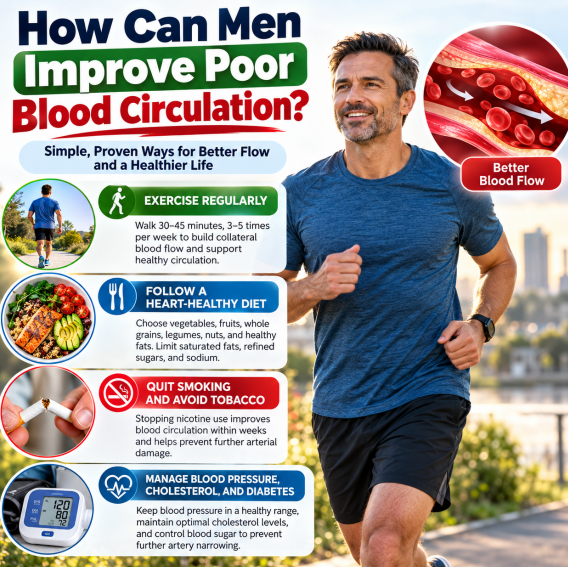
Treatment strategies depend on whether circulation problems stem from arterial narrowing, venous failure, or metabolic conditions.
+———————————————————————————–+
| LIFESTYLE ACTIONS FOR BETTER FLOW |
| CATEGORY | ACTIONABLE STEP |
| Exercise | Walk 30–45 minutes, 3–5 times per week to build collateral flow|
| Nutrition | Adopt a Mediterranean-style, low-sodium, plant-rich diet |
| Tobacco Cessation | Quit all nicotine products to eliminate acute vasoconstriction|
| Movement Breaks | Stand and move for 3–5 minutes every hour during desk work |
+——————–+————————————————————–+
Exercise Regularly to Support Healthy Blood Flow
Regular aerobic activity, particularly structured walking programs, stimulates the growth of small secondary blood vessels (collateral circulation). Supervised exercise therapy is a primary, evidence-based treatment for claudication in men with PAD.
Follow a Heart-Healthy Diet
Emphasize vegetables, fruits, whole grains, legumes, nuts, and healthy unsaturated fats (such as olive oil and avocado). Limit saturated fats, trans fats, refined sugars, and sodium to manage plaque buildup and maintain blood vessel elasticity.
Quit Smoking and Avoid Tobacco Products
Smoking cessation yields immediate vascular benefits. Within weeks of stopping nicotine use, peripheral blood circulation improves, and the rapid progression of arterial damage slows significantly.
Manage Blood Pressure, Cholesterol, and Diabetes
Consistent disease management through lifestyle adjustments and prescribed medications helps prevent further arterial narrowing:
- Keep blood pressure within target clinical ranges.
- Optimize LDL cholesterol levels.
- Maintain stable blood glucose levels to prevent microvascular injury.
Maintain a Healthy Weight and Stay Physically Active
Achieving and maintaining a healthy body weight reduces metabolic burden, lowers systemic inflammation, and alleviates mechanical pressure on pelvic and leg veins.
Avoid Prolonged Sitting and Take Movement Breaks
If you work at a desk or travel frequently, take regular movement breaks. Walking for a few minutes every hour activates calf muscle pumps, encouraging venous blood return to the heart.
Follow Your Doctor’s Recommended Treatment Plan
When lifestyle modifications alone are insufficient, medical treatments may include:
- Medications: Antiplatelet agents (e.g., aspirin or clopidogrel), statins, blood pressure lowering drugs, or targeted therapies for claudication.
- Vascular Procedures: Minimally invasive angioplasty, stenting, or surgical bypass procedures to reopen severely blocked arteries.
Do Natural Remedies and Supplements Help With Poor Circulation?
Many products claim to naturally improve blood flow. It is important to distinguish between dietary support for general vascular wellness and medical treatments for diagnosed circulatory diseases.
+———————————————————————————–+
| DIETARY COMPONENTS & VASCULAR BIOLOGY |
+————————–+——————————————————–+
| INGREDIENT / NUTRIENT | PROPOSED BIOLOGICAL MECHANISM |
| Dietary Nitrates (Beets) | Converts to Nitric Oxide (NO) -> Vasodilation |
| L-Citrulline / L-Arginine| Amino acid precursors for Endothelial NO Synthesis |
| Antioxidants (Vitamins C/E)| Reduces oxidative damage to vascular endothelium |
+————————–+——————————————————–+
Foods That Support Healthy Blood Vessels
Whole foods rich in polyphenols, antioxidants, and dietary nitrates support healthy endothelial function and encourage normal blood vessel dilation.
Beetroot, Leafy Greens, and Dietary Nitrates
Beetroot and dark leafy green vegetables (such as spinach and arugula) contain high levels of inorganic nitrates. The body converts these nitrates into nitric oxide, a signaling molecule that relaxes blood vessels and improves localized blood flow.
L-Citrulline, L-Arginine, and Nitric Oxide Production
L-citrulline and L-arginine are amino acids involved in the body’s nitric oxide synthesis pathway. While available as dietary supplements, consuming them via protein-rich foods or targeted supplementation supports natural vasodilation, though results vary by individual.
Antioxidants, Vitamins, and Mineral Supplements
Vitamins C and E, along with minerals like magnesium, help protect vascular cells from oxidative stress. However, routine high-dose vitamin supplementation has not been proven to reverse existing arterial blockages.
Can Circulation Supplements Treat Peripheral Artery Disease?
Clinical Reality: Over-the-counter circulation supplements cannot clear established arterial plaque, dissolve blood clots, or serve as a substitute for medical evaluation. Furthermore, dietary supplements can interact with prescription blood thinners, blood pressure drugs, and diabetes medications. Always discuss dietary supplements with your healthcare provider before use.
When Is Poor Blood Circulation a Medical Emergency?
Certain symptoms indicate acute, life-threatening vascular events that require immediate emergency medical care.
| RED-FLAG EMERGENCY VASCULAR SYMPTOMS |
| |
| [!] Sudden, severe limb pain with cold, pale, or blue skin (Acute Ischemia) |
| [!] One-sided leg swelling with tenderness and warmth (Possible DVT) |
| [!] Sudden chest pain, shortness of breath, or coughing up blood (Pulmonary Embolism)|
| [!] Sudden face drooping, arm weakness, or speech difficulty (Stroke / FAST) |
| [!] Non-healing foot wound showing signs of spreading infection or dark tissue |
| |
| IF ANY OF THESE OCCUR, CALL 911 IMMEDIATELY |
+———————————————————————————–+
Sudden Severe Pain or a Cold, Pale Limb
A sudden onset of severe leg or arm pain accompanied by coldness, pale or bluish skin, loss of pulse, or numbness suggests an acute arterial occlusion (a sudden, complete blockage of arterial blood flow). Call emergency services immediately.
One-Sided Leg Swelling and Possible Blood Clots
Sudden swelling restricted to one leg, accompanied by calf tenderness, warmth, or skin redness, indicates a potential Deep Vein Thrombosis (DVT). If accompanied by shortness of breath or chest pain, seek emergency care for a suspected pulmonary embolism.
Non-Healing Foot Sores or Signs of Infection
Foot ulcers that turn dark/black, produce pus, emit a foul odor, or exhibit spreading skin redness around the wound require urgent medical attention to prevent serious infection and tissue loss.
Chest Pain, Sudden Weakness, or Stroke Symptoms
Because vascular disease is systemic, symptoms such as pressure in the chest, sudden weakness or numbness on one side of the body, difficulty speaking, or facial drooping require immediate emergency intervention (Call 911).
How Can Men Prevent Future Circulation Problems?
Long-term protection of your circulatory system relies on consistent cardiovascular health management:
- Schedule Regular Health Checkups: Visit your primary care physician annually to screen for asymptomatic hypertension, high cholesterol, and early metabolic changes.
- Monitor Key Health Numbers: Keep regular track of your blood pressure, lipid panel, and fasting blood glucose or HbA1c.
- Build Consistent Lifestyle Habits: Aim for at least 150 minutes of moderate aerobic exercise weekly and consume a balanced, nutrient-dense diet.
- Avoid Tobacco in All Forms: Quitting smoking is the single most effective step you can take to preserve your vascular health.
- Recognize Early Warning Signs: Pay attention to early signs like leg discomfort during exercise or cold feet, and address them with a physician early.

Nitric Boost: Supporting Circulation, Vascular Wellness & Daily Vitality.
Frequently Asked Questions About Poor Blood Circulation in Men
1. What is the most common cause of poor blood circulation in men?
The most common cause of impaired arterial blood flow in men is atherosclerosis (plaque buildup inside blood vessels), which frequently leads to Peripheral Artery Disease (PAD).
2. What are the first signs of poor circulation in men?
Early signs often include persistently cold feet or hands, slight numbness in the toes, shiny skin on the lower legs, and mild calf tightness or cramping while walking.
3. Why do men have cold feet even in warm weather?
Cold feet in warm environments occur when narrowed or constricted arteries reduce the volume of warm blood reaching the feet. This can be caused by PAD, nicotine use, or nerve changes.
4. Can high blood pressure cause poor circulation?
Yes. High blood pressure damages arterial walls, causing them to stiffen and narrow over time. This accelerates plaque buildup and decreases effective blood flow.
5. Does diabetes affect blood circulation in the legs?
Yes. Chronic high blood sugar damages vessel linings and peripheral nerves, impairing lower-leg blood flow and increasing the risk of diabetic foot complications and slow-healing ulcers.
6. Can poor circulation cause erectile dysfunction?
Yes. Achieving an erection requires adequate arterial blood flow to the penis. Vascular issues like atherosclerosis can restrict this blood flow, making erectile dysfunction an early warning sign of systemic cardiovascular disease.
7. How can I improve blood circulation in my legs naturally?
Engaging in regular walking, eating a heart-healthy diet rich in dietary nitrates, avoiding prolonged sitting, maintaining a healthy weight, and staying hydrated all support healthy blood flow.
8. What are the best exercises for poor circulation?
Aerobic exercises that engage the leg muscles—such as walking, cycling, swimming, and calf raises—are best for encouraging arterial flow and supporting venous blood return.
9. Which foods support healthy blood circulation?
Foods rich in nitrates (beetroot, spinach, arugula), flavonoids (berries, dark cocoa), omega-3 fatty acids (fatty fish, walnuts), and citrus fruits support endothelial health and blood flow.
10. Do vitamins or supplements improve blood flow?
Supplements like beetroot powder, L-citrulline, or antioxidants may support general nitric oxide production, but they cannot clear blocked arteries or treat diagnosed vascular conditions like PAD.
11. Is poor circulation normal in men over 50?
While vascular risk factors become more common with age, poor circulation is a sign of underlying vascular health issues rather than an inevitable part of aging.
12. How do doctors test for poor circulation?
Doctors use physical exams (checking peripheral pulses), the Ankle-Brachial Index (ABI) test, Doppler ultrasounds, blood work, and imaging studies (like CT angiography) to assess blood flow.
13. Can poor circulation be reversed?
While structural arterial damage and established plaque cannot be completely erased, blood flow can be significantly improved, and disease progression stopped, through lifestyle changes, medications, and medical procedures.
14. When should I worry about cold feet or numb toes?
You should seek medical evaluation if coldness or numbness is persistent, asymmetrical (affecting one foot significantly more), accompanied by leg pain during walking, or joined by skin color changes and sores.
15. What is the difference between poor circulation and nerve damage?
Poor circulation is a vascular problem involving reduced blood flow through blood vessels. Nerve damage (neuropathy) is a nervous system problem involving injured nerve fibers. While both can cause numbness or tingling, poor circulation often causes physical changes like cold skin and weak pulses.
16. Does sitting for long periods affect blood flow?
Yes. Prolonged sitting deactivates the calf muscle pump, causing blood to pool in the lower legs and slowing venous return. Taking regular movement breaks helps maintain healthy circulation.
17. Can poor circulation cause leg cramps at night?
Nighttime leg cramps can occasionally be related to poor circulation, but they are also frequently caused by muscle fatigue, dehydration, electrolyte imbalances, or nerve compression.
18. What is the difference between PAD and venous insufficiency?
PAD affects arteries and limits oxygenated blood flow to the limbs (causing coldness, pale skin, and pain with walking). Venous insufficiency affects veins and limits blood return from the limbs (causing blood pooling, swelling, heaviness, and varicose veins).