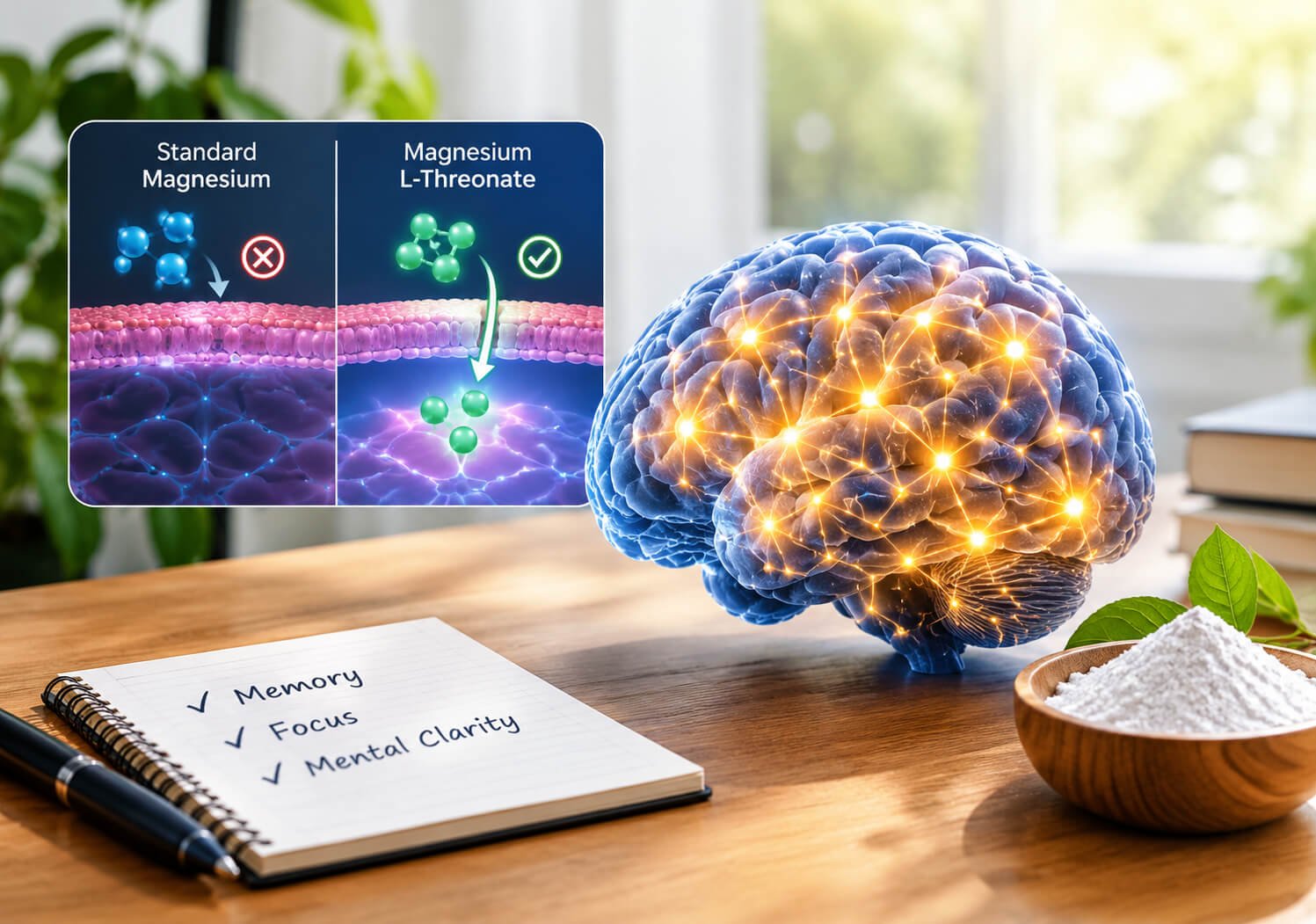
As a strength and conditioning coach, I frequently hear clients over 40 mention two overlapping concerns: physical fatigue and mental brain fog. While we often focus heavily on protein intake and sleep hygiene, specific micronutrients play a massive, overlooked role in how we feel and perform. Among these, the magnesium l threonate benefits for memory and overall cognitive function stand out in clinical research. Unlike standard magnesium supplements that primarily target muscle cramps or digestion, this specific form is uniquely designed to cross the blood-brain barrier effectively.
If you are a senior, an adult over 40, or a fitness enthusiast looking to protect your mental sharpness alongside your physical strength, understanding this supplement is crucial. This guide breaks down the science, practical dosing, and how to integrate it into your daily health routine safely and effectively.
Quick Answer
Does magnesium L-threonate improve memory? Yes, research suggests it may support cognitive function. The magnesium l threonate benefits for memory stem from its unique ability to cross the blood-brain barrier, potentially increasing synaptic density and supporting neuroplasticity. A typical clinical dosage is 2,000 mg of Magtein (yielding 144 mg of elemental magnesium) taken daily, often split between morning and evening doses for optimal absorption and sleep support.
How Magnesium L-Threonate Benefits for Memory Actually Work
To understand why this specific form of magnesium is different, we have to look at how the brain processes minerals. Not all magnesium is created equal. Magnesium oxide, for example, is poorly absorbed and mostly acts as a laxative. Magnesium glycinate is excellent for general relaxation and muscle recovery but does not specifically target brain tissue at high concentrations.
Magnesium L-threonate (often patented under the name Magtein) was developed by researchers at the Massachusetts Institute of Technology (MIT) specifically to elevate magnesium levels in the brain. Here is a breakdown of the primary mechanisms behind the magnesium l threonate benefits for memory:
1. Crossing the Blood-Brain Barrier
The blood-brain barrier is a highly selective semipermeable border that prevents most circulating toxins and large molecules from entering the central nervous system. Unfortunately, it also blocks many standard forms of magnesium. The L-threonate molecule acts as a highly effective carrier, shuttling magnesium ions directly into the cerebrospinal fluid. According to research indexed by the National Institutes of Health (NIH), this specific compound significantly increases brain magnesium levels compared to other forms.
2. Increasing Synaptic Density
Think of your brain’s synapses like bridges between neurons. The more bridges you have, and the stronger they are, the faster and more reliably information travels. Age-related cognitive decline is often linked to a loss of these synaptic connections. Studies suggest that elevating brain magnesium can promote synaptogenesis, the formation of new synapses. This directly supports the magnesium l threonate benefits for memory, particularly in the hippocampus, the brain’s primary memory center.
3. Supporting Brain-Derived Neurotrophic Factor (BDNF)
BDNF is a protein that acts like fertilizer for your brain cells. It encourages the growth of new neurons and protects existing ones from damage. Higher levels of brain magnesium have been linked to increased BDNF expression. This neuroplasticity is essential for learning new skills, whether that is memorizing a new workout routine or learning a new language.
4. Regulating NMDA Receptors
NMDA receptors are critical for memory formation and learning. However, if they become overactive, they can lead to neuronal damage (a process called excitotoxicity). Magnesium acts as a natural gatekeeper for these receptors, blocking them when they are not needed and preventing overstimulation. This calming effect helps maintain clear thinking and reduces mental fatigue.

Magnesium Forms Comparison: Why L-Threonate Stands Out
When evaluating the magnesium l threonate benefits for memory, it helps to see how it stacks up against other popular supplements. This table is designed to help you choose the right tool for your specific health goals.
| Magnesium Form | Primary Benefit | Brain Bioavailability | Typical Elemental Mg per 1,000 mg | Best For |
| Magnesium L-Threonate | Cognitive function, memory, neuroplasticity | High | ~72 mg | Adults over 40, brain fog, memory support |
| Magnesium Glycinate | Sleep quality, muscle relaxation, anxiety | Moderate | ~140 mg | General relaxation, post-workout recovery |
| Magnesium Citrate | Digestive regularity, general supplementation | Low to Moderate | ~160 mg | Occasional constipation, budget-friendly Mg |
| Magnesium Oxide | Heartburn relief, severe deficiency correction | Very Low | ~600 mg | Short-term digestive issues, not for daily brain health |
Note: Elemental magnesium is the actual amount of usable magnesium in the compound. Magtein, the patented form of magnesium L-threonate, typically provides 144 mg of elemental magnesium per 2,000 mg serving.
How to Apply It: A Practical Daily Routine
Knowing the science is only half the battle. As a coach, I believe supplements should fit seamlessly into your existing lifestyle. Here is a practical, step-by-step guide to integrating this supplement for maximum effect.
Step 1: Determine Your Dosage
Clinical trials investigating the magnesium l threonate benefits for memory typically use a dosage of 2,000 mg of Magnesium L-Threonate (Magtein) per day. This provides 144 mg of elemental magnesium. Always check the label of your chosen brand to ensure it specifies the amount of Magtein or elemental magnesium, not just the total capsule weight.

Step 2: Timing Your Doses
Splitting your dose is the most effective strategy.
- Morning Dose (1,000 mg): Take this with breakfast. It helps establish a baseline level of brain magnesium to support focus and executive function throughout the day.
- Evening Dose (1,000 mg): Take this 30 to 60 minutes before bed. Magnesium naturally supports the parasympathetic nervous system, which can improve sleep quality. Better sleep directly correlates with better memory consolidation.
Step 3: Pair with Cognitive-Motor Fitness
Supplements work best when paired with healthy habits. You can enhance the magnesium l threonate benefits for memory by combining supplementation with dual-task exercises. For example, try a 1.5-mile (2.4 km) brisk walk while mentally counting backward from 100 by sevens, or perform light resistance training using 10 lb (4.5 kg) dumbbells while reciting a list of words. This forces the brain and body to communicate efficiently, leveraging the improved synaptic density the supplement supports.
Coach’s Tip: Consistency is everything with neuro-nutrients. Unlike a caffeine pill that works in 30 minutes, magnesium L-threonate builds up in your brain tissue over time. Commit to a daily routine for at least 6 to 8 weeks before evaluating its effectiveness on your mental clarity.
Common Mistake: Taking magnesium L-threonate on a completely empty stomach if you have a sensitive digestive system. While it is generally gentler than citrate, taking it with a small amount of food (like a handful of almonds or a piece of toast) can prevent any mild gastrointestinal discomfort.
Regression and Progression for Supplementation
- Easier Version (Regression): If you are new to magnesium or have a sensitive stomach, start with just 1,000 mg (one capsule or half the serving) taken exclusively at night for the first two weeks. This allows your body to adjust while still providing sleep-related cognitive benefits.
- Harder Version (Progression): For those seeking maximum cognitive support, pair the full 2,000 mg daily dose with a structured brain-training routine (like learning a new physical skill, such as pickleball or yoga) and ensure your diet includes other brain-supportive nutrients, like Omega-3 fatty acids.

Safety Notes and Who Should Be Careful
While exploring the magnesium l threonate benefits for memory, safety must come first. Magnesium is generally recognized as safe (GRAS) by the FDA, but there are important considerations.
- Kidney Function: The kidneys are responsible for filtering excess magnesium from the blood. If you have chronic kidney disease or impaired renal function, your body may not clear magnesium efficiently, leading to a dangerous buildup called hypermagnesemia.
- Medication Interactions: Magnesium can interact with certain medications, particularly bisphosphonates (used for osteoporosis), certain antibiotics (like tetracyclines), and some blood pressure medications. It can reduce the absorption of these drugs.
- Side Effects: At the recommended clinical dose of 2,000 mg, side effects are rare but can include mild headaches, drowsiness, or loose stools. If you experience persistent digestive issues, you may be better suited for magnesium glycinate.
Medical Disclaimer: Always consult with your primary care physician or a registered dietitian before starting any new supplement regimen, especially if you are over 65, have pre-existing health conditions, or take prescription medications.
Related Tips: Maximizing Brain Health in Your Fitness Journey
Supplements are just one piece of the puzzle. To truly protect your cognitive health, you must build a lifestyle that supports it. Here is how to connect your physical training with your mental sharpness.
Prioritize Sleep Architecture
Memory consolidation happens primarily during deep, slow-wave sleep and REM sleep. If you are not sleeping well, no supplement can fully compensate. Focus on sleep hygiene: keep your bedroom cool (around 65°F or 18°C), avoid screens 60 minutes before bed, and maintain a consistent sleep schedule. Understanding how sleep affects metabolism and weight management also highlights how crucial rest is for overall hormonal and cognitive balance.
Manage Chronic Stress
Elevated cortisol levels over long periods can literally shrink the hippocampus, impairing memory. Incorporating stress-reduction techniques is vital. Practices like deep breathing, meditation, or even using specific adaptogens for stress eating and cortisol management can help keep your nervous system in a calm, restorative state, allowing your brain to thrive.
Fuel Your Brain with Proper Nutrition
Your brain consumes about 20% of your body’s daily energy. Ensuring you have adequate intake of which nutrients support normal energy metabolism is foundational. B-vitamins, in particular, are critical. If you are feeling constantly fatigued, reviewing which vitamins support metabolism when you’re deficient can help you identify gaps that might be contributing to brain fog.
Engage in Regular Resistance Training
Lifting weights is not just for building muscle; it is a powerful neuroprotective tool. Resistance training increases blood flow to the brain and stimulates the release of growth factors. For adults looking to maintain vitality, learning how to increase metabolism naturally after 40 often includes strength training, which simultaneously protects cognitive function and physical independence.

Frequently Asked Questions (FAQ)
1. Does magnesium L-threonate really improve memory? Research suggests it can support cognitive function. The magnesium l threonate benefits for memory are linked to its ability to cross the blood-brain barrier, increase synaptic density, and support neuroplasticity, particularly in age-related cognitive decline. However, it is a support tool, not a cure for dementia.
2. How long does it take for magnesium L-threonate to work for memory? Unlike stimulants, magnesium L-threonate builds up gradually in brain tissue. Most clinical studies and user reports indicate that it takes about 6 to 8 weeks of consistent daily use to notice significant improvements in mental clarity, focus, and memory recall.
3. What is the best dosage of magnesium L-threonate for brain health? The standard clinically studied dosage is 2,000 mg of Magnesium L-Threonate (often branded as Magtein) per day. This yields approximately 144 mg of elemental magnesium. It is usually best to split this into two 1,000 mg doses, taken morning and night.
4. Can magnesium L-threonate reverse age-related memory loss? No supplement can completely “reverse” established age-related memory loss or neurodegenerative diseases like Alzheimer’s. However, research indicates it may help slow cognitive decline, support existing memory function, and improve overall brain health when combined with a healthy lifestyle.
5. Is magnesium L-threonate better than other forms of magnesium for the brain? Yes, for cognitive purposes. While magnesium glycinate is excellent for general relaxation and magnesium citrate aids digestion, magnesium L-threonate is the only form clinically shown to significantly elevate magnesium levels specifically within the brain and cerebrospinal fluid.
6. What are the side effects of magnesium L-threonate? At the recommended dose, side effects are minimal. Some users report mild headaches, drowsiness, or an upset stomach during the first few days. Taking it with food can mitigate digestive issues. Those with kidney disease should avoid it without medical supervision.
Conclusion
Protecting your cognitive health is just as important as maintaining your physical strength, especially as we age. The magnesium l threonate benefits for memory offer a scientifically backed, practical way to support brain function, enhance synaptic density, and promote neuroplasticity. By choosing a high-quality, patented form like Magtein, dosing it correctly at 2,000 mg per day, and pairing it with good sleep, stress management, and regular physical activity, you can build a resilient foundation for long-term mental clarity.
Remember, supplements are meant to supplement a healthy lifestyle, not replace it. Start slowly, monitor how your body responds, and always prioritize whole-food nutrition and consistent movement.