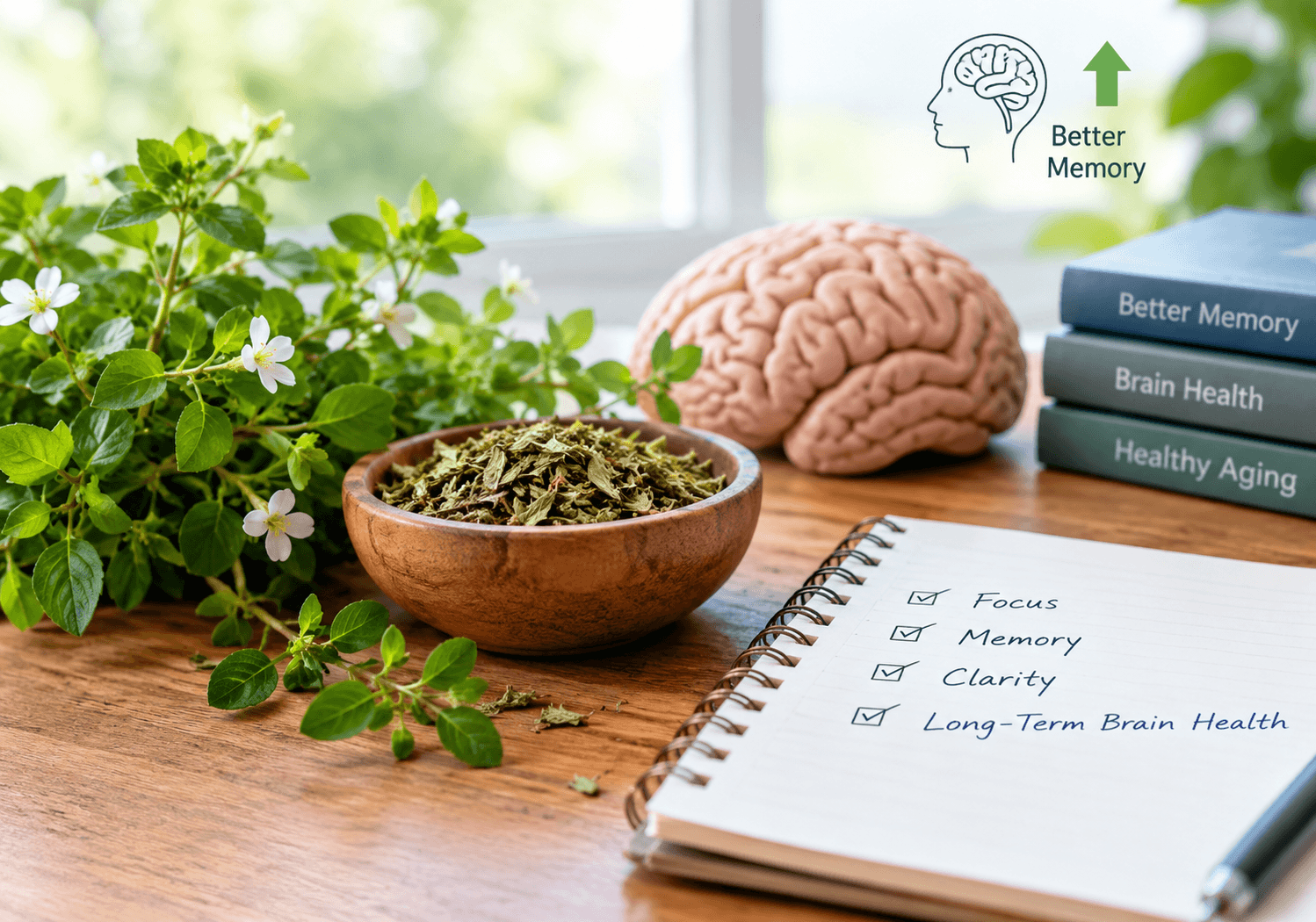
If you have ever stood in the middle of the gym wondering where you left your water bottle or forgot which set of squats you were on, you know that memory matters. Mental fitness is just as important as physical fitness. Many of my clients, especially seniors and those over 40, ask about natural ways to sharpen their minds. One of the most popular suggestions is an herb called Bacopa monnieri. But a common question always follows: how long does bacopa take to work for memory?
Unlike a cup of coffee that hits you in 15 minutes, Bacopa is a “slow-burn” supplement. It is an adaptogen used for centuries in Ayurvedic medicine. It does not just mask tiredness; it actually helps repair and grow the parts of your brain responsible for learning. In this guide, I will break down the timeline for results, the science behind how it works, and how you can use it to stay sharp on and off the court.
Quick Answer: Research suggests that while some minor mood benefits may appear in a few days, it takes 8 to 12 weeks of daily use to see significant improvements in memory and cognitive function. For the best results, consistency is key, as the herb works by physically supporting the growth of nerve cell branches in the brain.
What is Bacopa Monnieri?
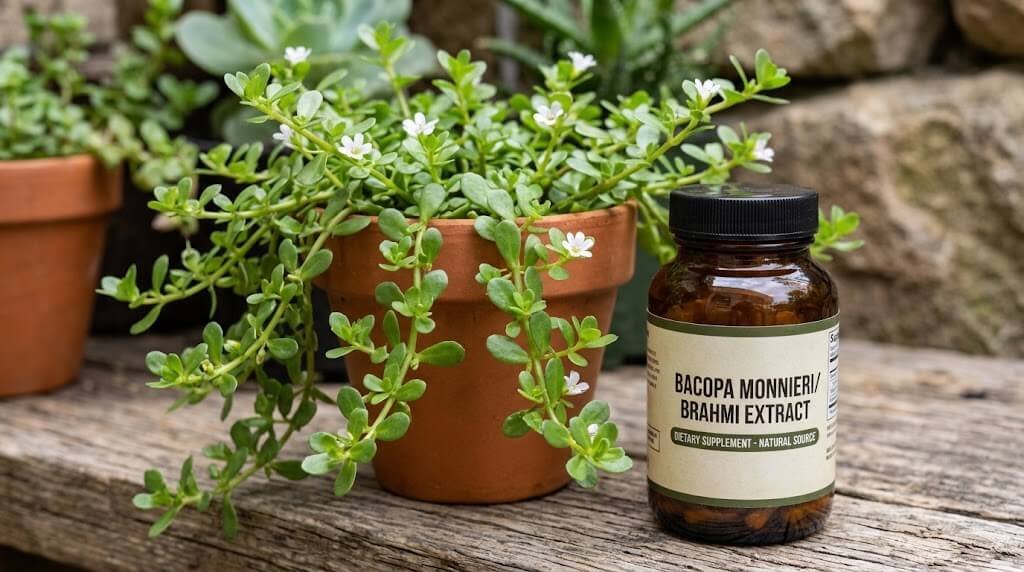
Bacopa monnieri, also known as “Brahmi” or “water hyssop,” is a creeping perennial herb. It grows in wet, marshy areas. In the world of supplements, we call it a “nootropic.” This is just a fancy word for something that improves brain function.
As a coach, I view Bacopa as “resistance training for the brain.” Just like you won’t grow a 15-inch (38 cm) bicep after one workout, you won’t develop a steel-trap memory after one dose of Bacopa. It works through compounds called bacosides. These bacosides help repair damaged neurons and improve the way your brain cells communicate.
How Long Does Bacopa Take to Work for Memory? The Research Timeline
When we look at clinical trials, we see a very specific pattern. If you are looking for an immediate “zap” of focus, Bacopa might disappoint you. However, if you are patient, the rewards are science-backed.
The First 1–4 Weeks: The Loading Phase
During the first month, you might not notice a massive change in your memory. Some users report a slight reduction in anxiety or a feeling of being more “level-headed.” This is because Bacopa is an adaptogen for stress eating and cortisol management. It begins by modulating your stress response.
Physiologically, the bacosides are starting to support “synaptic communication.” This is how your brain cells talk to each other. You are essentially prepping the soil for better memory later on.
Weeks 4–8: Early Improvements
By the second month, many people start to notice they are “on the ball” more often. You might find it easier to remember a new person’s name at the pickleball court or recall a list of groceries without looking at your phone. According to a study published in the Journal of Alternative and Complementary Medicine, seniors taking 300 mg daily showed significant improvement in “delayed word recall” after several weeks.
Weeks 12 and Beyond: The Peak Effect
This is the “gold standard” for Bacopa. Most major studies on Bacopa monnieri last at least 12 weeks. This is the point where the cognitive gains become statistically significant.
In a study by the National Institutes of Health (NIH), researchers found that 12 weeks of Bacopa supplementation significantly improved visual information processing and the speed of learning. This is likely due to “dendritic branching”—literally growing new branches on your nerve cells so they can catch and hold more information.
The Science: Why Does It Take So Long?
You might wonder why Bacopa takes 12 weeks while something like caffeine takes 12 minutes. The answer lies in how the brain changes. Caffeine blocks receptors to make you feel less tired. Bacopa, on the other hand, promotes “neuroplasticity.”
1. Bacosides and Nerve Signals
Bacosides are the active ingredients. They help the brain repair damaged neurons. They also promote the activity of antioxidant enzymes in the brain. This protects your gray matter from oxidative stress, which is very common as we age.
2. Boosting BDNF
Research suggests Bacopa may increase levels of Brain-Derived Neurotrophic Factor (BDNF). Think of BDNF as “Miracle-Gro” for your brain. It helps new neurons survive and grow. Growing new brain connections is a biological process that simply takes time.
3. Improving Acetylcholine
Bacopa helps prevent the breakdown of acetylcholine. This is a neurotransmitter vital for focus and memory. Many people who feel “brain fog” have low levels of this chemical. By keeping levels high, Bacopa helps you stay sharp during long tasks, like a 2-mile (3.2 km) hike or a complex gym circuit.
Why Memory Matters for Fitness
As a strength coach, I don’t just care about your muscles. I care about your movement patterns. Memory is a huge part of physical success.
- Motor Learning: When you learn a new exercise, like a kettlebell swing, your brain has to remember the sequence: hinge, snap, breathe. Bacopa helps with “procedural memory,” which is how we learn physical skills.
- Consistency: It is hard to stay on a plan if you are mentally exhausted. By lowering cortisol, Bacopa helps you stay disciplined. This is why many people use it alongside vitamins for energy while dieting. A sharp brain can react faster to a slip or a trip, preventing falls.
| Benefit Area | Early Signs (1-4 Weeks) | Long-Term Gains (12+ Weeks) |
| Memory Recall | Subtle; less “tip of the tongue” moments. | Faster word and name recall. |
| Learning Speed | No significant change. | Ability to learn new skills faster. |
| Anxiety/Stress | Noticeable calming effect. | Improved resilience to daily stressors. |
| Focus/Attention | Minor improvements in “staying on task.” | Better performance on complex mental tasks. |

How to Take Bacopa for Best Results
If you want to make sure your 12-week investment pays off, you need to take it correctly. Here is the “Coach’s Protocol” for Bacopa.
1. Find the Right Dose
Most clinical studies use a dose of 300 mg to 450 mg of Bacopa extract per day. Look for a label that specifies the percentage of bacosides. Usually, an extract with 50% bacosides is the industry standard.
2. Take It With Food
Bacopa is fat-soluble. This means your body absorbs it much better when you eat it with a meal containing some fat (like avocado, eggs, or nuts). Taking it on an empty stomach is the most common mistake I see; it often leads to nausea or an upset stomach.
3. Be Consistent
If you miss a dose, don’t double up the next day. Just get back on track. Because Bacopa relies on building up levels in your system, skipping days will reset the “clock” on your 8–12 week timeline.
4. Combine with Lifestyle
No supplement can out-train a bad lifestyle. To maximize the memory gains, ensure you are getting enough sleep. We know that sleep affects metabolism and weight management, but it is also when your brain “cleans” itself and “saves” memories from the day.
Coach’s Tip: I tell my athletes to take Bacopa with their largest meal of the day. This reduces the “herbal” aftertaste and ensures the fats in the meal help with absorption. Set a daily alarm on your phone so you never miss a dose.

Common Mistakes When Using Bacopa
I have seen many people try Bacopa and give up before it “kicks in.” Avoid these pitfalls:
- Mistake 1: Expecting a “Limitless” Pill. Bacopa is subtle. You won’t feel like a superhero. You will simply notice that you are forgetting things less often.
- Mistake 2: Quitting at Week 3. Most people stop because they don’t “feel” anything in the first month. Stick to the 12-week rule.
- Mistake 3: Low-Quality Extract. Some cheap versions are just ground-up leaves, not a concentrated extract. Check for “standardized to 50% bacosides.”
- Mistake 4: Not drinking enough water. While Bacopa doesn’t dehydrate you, a hydrated brain always performs better. Aim for at least 0.5 ounces of water per pound of body weight (about 33 ml per kg).
Pairing Bacopa with Physical “Memory Drills”
As a coach, I like to pair supplements with “brain-body” exercises. While you wait for the Bacopa to work its magic over those 12 weeks, try these drills to sharpen your mind.
Level 1: The Walking Alphabet (Regression)
While walking at a steady pace (aim for 2-3 mph / 3.2-4.8 km/h), try to name an animal for every letter of the alphabet (A is for Ape, B is for Bear…).
- Why it works: This is “dual-tasking.” It forces the brain to manage a physical movement and a memory task at the same time.
Level 2: The Circuit Recall (Standard)
Set up four stations in your home or gym (e.g., squats, push-ups, planks, lunges).
- Drill: Have a partner call out a random order. You have to remember the order and perform 10 reps of each.
- Progression: Increase the number of exercises to six or eight.
Level 3: The Reactive Drill (Harder)
Use a reaction ball (a lumpy ball that bounces unpredictably).
- Drill: Throw it against a wall. Before you catch it, you must state a fact you learned today.
- Why it works: This pairs high-speed hand-eye coordination with “working memory.”

Safety and Side Effects
Bacopa is generally considered safe for most healthy adults. However, because it can affect how the body handles certain chemicals, there are a few things to watch for.
Digestive Issues
The most common side effect is increased bowel movements or stomach cramps. This usually happens if you take it on an empty stomach. If you have a sensitive stomach, consider taking dietary fiber for appetite and weight management, as it can sometimes help settle the gut.
Heart Rate
Bacopa may slightly slow down your heart rate (bradycardia). If you already have a very low resting heart rate or take medication for heart conditions, talk to your doctor first.
Thyroid Interaction
Some animal studies suggest Bacopa might increase thyroid hormone levels. If you have hyperthyroidism, use caution.
Interactions
Bacopa can interact with medications like amitriptyline (an antidepressant) or medications for Alzheimer’s disease. Always run your supplement list by your healthcare provider, especially if you are a senior on multiple prescriptions.
Who Should Take Bacopa?
In my experience, three groups of people benefit most from the 12-week Bacopa journey:
- Bacopa is one of the most researched herbs for supporting memory in this age group.
- Athletes in Strategy Sports: If you play Pickleball, Tennis, or do Brazilian Jiu-Jitsu, you have to remember patterns under stress. Bacopa helps keep the mind calm so you can “download” those patterns.
- Students and Professionals: If you are studying for a certification or have a high-stress job, the adaptogenic properties of Bacopa can help prevent “brain burnout.” It may even help you control appetite naturally by reducing the stress that leads to “stress snacking.”
Comparing Bacopa to Other “Brain Boosters”
How does Bacopa stack up against other things you might be taking for your metabolism or focus?
- Bacopa vs. Caffeine: Caffeine is for arousal (waking up). Bacopa is for architecture (building brain tissue).
- Bacopa vs. Berberine: While berberine supports metabolic health, it doesn’t have the same direct effect on nerve growth that Bacopa does. However, they can be taken together as part of a general health stack.
- Bacopa vs. L-Tyrosine: L-Tyrosine is great for energy during a calorie deficit, but it works on dopamine. Bacopa is better for long-term memory storage.
Frequently Asked Questions (FAQ)
Can I take Bacopa every day?
Yes, Bacopa is designed for daily use. In fact, it works best when it builds up in your system. Most clinical trials involve participants taking it once or twice a day for 12 consecutive weeks without skipping.
Is it better to take Bacopa in the morning or at night?
This depends on your reaction. Some people find Bacopa slightly sedating because it lowers cortisol, so they take it with dinner. Others find it gives them a “clear” focus and take it with breakfast. Trial and error will help you decide, but always take it with food.
Can I take Bacopa with coffee?
Yes, there is no known negative interaction between caffeine and Bacopa. Some people find that Bacopa “smooths out” the caffeine jitters. Just make sure you are still eating a meal with your dose for proper absorption.
Does Bacopa work for “brain fog”?
Research suggests Bacopa may help with “information processing speed.” If your brain fog is caused by stress or a feeling of being overwhelmed, Bacopa’s adaptogenic properties may help clear the mental clutter over a period of 4–8 weeks.
Should I cycle Bacopa (take breaks)?
Most experts suggest taking it for a full 12-week cycle to see the benefits. After that, some people take a 2-4 week break, though many long-term studies show it is safe to continue as long as you are not experiencing side effects.
Does Bacopa help with weight loss?
Bacopa is not a weight-loss supplement. However, by lowering cortisol and stress, it may help you avoid stress-eating. If weight loss is your goal, you are better off looking at how protein intake affects hunger or using metabolism-specific supports.
Conclusion
So, how long does bacopa take to work for memory? The short answer is: be prepared to wait 8 to 12 weeks for the real magic to happen. Think of it as a training program for your brain. You wouldn’t expect a six-pack after three days of crunches, and you shouldn’t expect a perfect memory after three days of Bacopa.
By supporting your nerve cell growth and lowering oxidative stress, Bacopa offers a natural way to protect your cognitive health as you age. Whether you are trying to remember your gym routine or just stay sharp for your family, consistency and patience are your best tools. Pair your supplement with good sleep, plenty of water, and regular physical exercise to give your brain the best environment to grow.