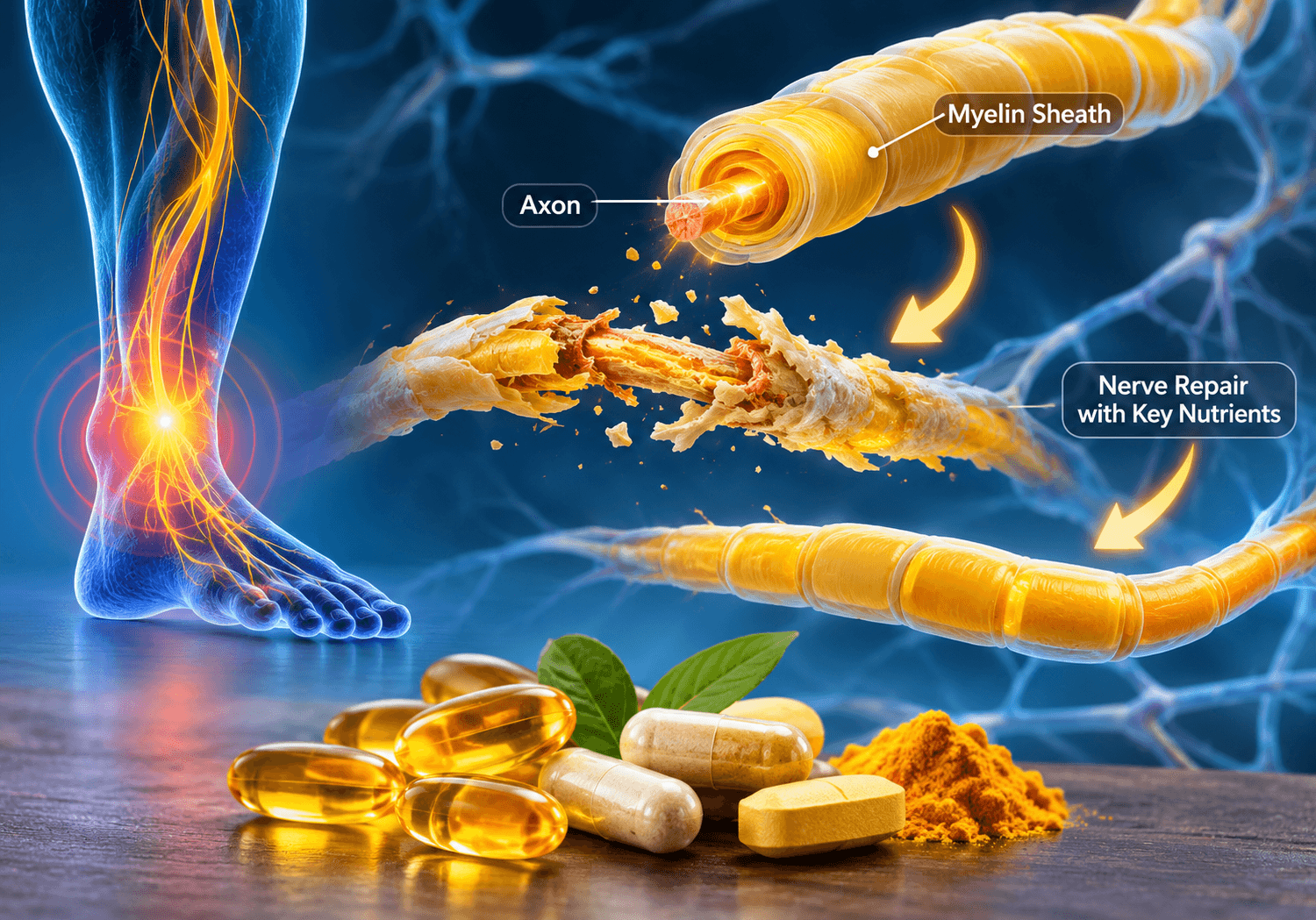
When athletes or fitness clients walk into my gym complaining of burning feet, numb toes, or a stubborn “pins-and-needles” sensation shooting down their legs, their training stalls. Whether triggered by spinal disc compression, chronic metabolic stress, or intense sports trauma, peripheral nerve irritation drains your strength and ruins movement mechanics. When clients ask me what supplements help repair nerve damage, I always look at cellular bioenergetics, blood flow, and targeted micronutrients that support axonal regrowth.
Nerves heal at a painfully slow pace, but targeted nutritional compounds can supply the raw materials needed to speed up recovery. Before trying any new supplement routine, consult your doctor or physical therapist to identify the exact cause of your nerve symptoms.
Quick Answer
Clinical studies suggest that alpha-lipoic acid (ALA), methylcobalamin (vitamin B12), benfotiamine (vitamin B1), acetyl-L-carnitine (ALCAR), and omega-3 fatty acids are the most effective supplements for supporting nerve repair. These compounds reduce oxidative stress, restore mitochondrial energy production, and help rebuild the protective myelin sheath surrounding damaged peripheral nerves.
Understanding Nerve Regeneration: Can Damaged Nerves Actually Heal?
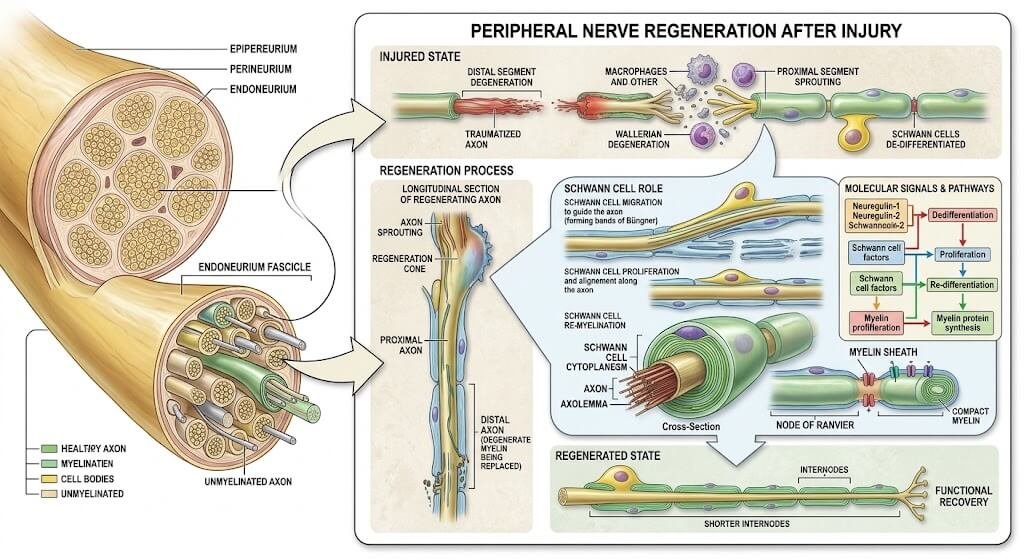
Your nervous system is divided into two primary networks: the central nervous system (your brain and spinal cord) and the peripheral nervous system (the nerves branching out to your arms, hands, legs, and feet). Central nerves do not regenerate easily after injury. In contrast, peripheral nerves have a built-in biological capacity to heal, regenerate axons, and reconnect with muscle fibers and sensory receptors.
Peripheral nerve fibers act like insulated electrical cables. The inner wire is the axon, which carries electrical impulses between your tissues and your brain. The protective coating wrapping around that wire is the myelin sheath, created by specialized cells called Schwann cells. When an injury occurs—whether from mechanical compression or metabolic wear and tear—that insulating sheath degrades, and the inner axon can degenerate.
When conditions are right, peripheral axons can regrow at an average rate of about 1 millimeter per day, or roughly 1 inch [2.5 cm] per month, according to the National Institute of Neurological Disorders and Stroke. That means rebuilding an injured nerve running down your leg takes patience, consistent movement, and optimal cellular fuel.
Without sufficient microvascular circulation and specific cellular antioxidants, regenerating axons stall out. Damaged nerve tissue suffers from severe oxidative stress and mitochondrial fatigue. By supplying the exact cofactors that Schwann cells use to lay down new myelin, you give your peripheral nervous system the best chance to recover.
What Supplements Help Repair Nerve Damage? The Top Evidence-Based Compounds
Nutritional compounds cannot replace physical therapy or correct a crushed spinal nerve root on their own. However, peer-reviewed clinical trials demonstrate that specific vitamins, fatty acids, and antioxidants play direct roles in rebuilding nerve structures.
Below are the most thoroughly researched supplements shown to support peripheral nerve repair, ease neuropathic discomfort, and support long-term recovery.
1. Alpha-Lipoic Acid (ALA): The Master Mitochondrial Antioxidant
Alpha-lipoic acid is a fat- and water-soluble antioxidant that works inside every cell in your body. Because it dissolves in both water and fat, it easily crosses biological barriers to protect nerve tissue. Nerve damage produces massive amounts of reactive oxygen species (free radicals) that destroy blood vessels feeding your peripheral nerves.
Clinical research published in The Cochrane Database of Systematic Reviews shows that oral alpha-lipoic acid supplementation significantly reduces neuropathic symptoms like burning, numbness, and paresthesia. ALA works by neutralizing free radicals, increasing microvascular blood flow to peripheral nerves, and boosting cellular glutathione levels.
- Standard Studied Dosage: 600 mg to 1,200 mg daily, taken on an empty stomach for optimal absorption.
- Coach’s Practical Note: If standard ALA upsets your stomach, try the R-alpha-lipoic acid (R-ALA) form. It is the biologically active isomer, allowing you to use smaller doses (around 300 mg) with fewer digestive side effects.
2. Vitamin B12 (Methylcobalamin): Rebuilding the Myelin Sheath
When evaluating what supplements help repair nerve damage, vitamin B12 always sits at the top of the list. Vitamin B12 is essential for producing the phospholipids and sphingomyelins that form your myelin sheath. A deficiency in B12 leads directly to subacute combined degeneration, numbness in the extremities, and poor balance.
The form of B12 matters. Most cheap multivitamin formulas use cyanocobalamin, a synthetic form that your liver must convert before your tissues can use it. Studies in Experimental Neurology show that methylcobalamin—the active, methylated form—stimulates protein synthesis in nerve cells and accelerates axonal regeneration far better than standard forms.
If you struggle with low cellular energy and nutrient uptake, correcting underlying vitamin deficiencies is an essential first step. B12 works in close synergy with folate and B6 to lower homocysteine, a vascular toxin linked to nerve microvessel damage.
- Standard Studied Dosage: 1,000 mcg to 2,000 mcg daily of sublingual methylcobalamin.
3. Benfotiamine (Lipid-Soluble Vitamin B1): Halting Advanced Glycation
Vitamin B1 (thiamine) is critical for converting carbohydrates into adenosine triphosphate (ATP) inside your nerve cells. Standard thiamine hydrochloride is water-soluble and has poor bioavailability. Benfotiamine is a fat-soluble derivative of vitamin B1 that easily penetrates fatty nerve cell membranes.
Research in Diabetes Care indicates that benfotiamine blocks harmful biochemical pathways triggered by high blood sugar and oxidative stress, known as advanced glycation end-products (AGEs). AGEs damage the fragile microvessels that feed oxygen to peripheral nerves. By stopping this breakdown, benfotiamine shields nerve tissue from progressive metabolic injury.
Pairing benfotiamine with healthy daily habits that support improving systemic insulin sensitivity helps protect your peripheral nerves from future glucose-driven stress.
- Standard Studied Dosage: 150 mg to 300 mg twice daily with meals.
4. Acetyl-L-Carnitine (ALCAR): Fueling Axonal Transport and Energy
Acetyl-L-carnitine is an amino acid derivative that shuttles fatty acids directly into your mitochondria, producing cellular ATP. Damaged nerve cells face an energy crisis; they need substantial energy to fuel axonal transport, the process that moves structural proteins from the cell body down the entire length of the nerve fiber.
A randomized controlled trial in Diabetes Care demonstrated that long-term ALCAR supplementation improved nerve fiber regeneration, increased epidermal nerve fiber density, and reduced chronic neuropathic pain. ALCAR also supports nerve growth factor (NGF), an essential neurotrophin that stimulates new axonal branching.
- Standard Studied Dosage: 1,500 mg to 3,000 mg daily, divided into two doses (e.g., morning and early afternoon).
5. Omega-3 Fatty Acids (EPA and DHA): Reducing Neuroinflammation
Your nervous system is composed largely of fats, with DHA (docosahexaenoic acid) serving as a primary structural component of neuronal cell membranes. When peripheral nerves are crushed, stretched, or inflamed, pro-inflammatory cytokines flood the area, breaking down the myelin sheath and sensitizing pain receptors.
Animal and clinical trials published in The Journal of Neuroscience reveal that omega-3 polyunsaturated fatty acids protect peripheral axons from degeneration, limit post-injury nerve cell death, and improve nerve conduction velocity. EPA and DHA break down into specialized pro-resolving mediators (SPMs) that switch off destructive neuroinflammation.
- Standard Studied Dosage: 2,000 mg to 3,000 mg of combined EPA and DHA daily, consumed with a meal containing dietary fats.
6. Curcumin: Calming Inflammatory Signaling
Curcumin, the primary bioactive polyphenol found in turmeric root, is one of the most potent natural anti-inflammatory compounds available. In nerve injuries, activated Schwann cells and macrophages produce tumor necrosis factor-alpha (TNF-alpha) and interleukin-1 beta, which trigger persistent neuropathic pain and block tissue regeneration.
In preclinical research published in Phytomedicine, curcumin improved motor functional recovery and promoted sciatic nerve myelination after injury. It downregulates nuclear factor kappa B (NF-kB), the master genetic switch for chronic inflammation.
- Standard Studied Dosage: 500 mg to 1,000 mg daily of a high-absorption curcumin extract (formulated with piperine or phytosome technology).
7. Magnesium Glycinate: Calming Hyperexcitable Nerve Fibers
When nerves are damaged or stripped of myelin, their voltage-gated ion channels fire uncontrollably. This hyperexcitability creates burning sensations, muscle twitches, and painful nighttime cramps. Magnesium regulates calcium influx across nerve cell membranes, acting as a natural brake on hyperactive nerve firing.
Using magnesium glycinate supplies both elemental magnesium and the calming neurotransmitter glycine. Magnesium also supports healthy microvascular dilation, ensuring steady blood delivery to injured tissues. Selecting targeted nutrients that support cellular energy gives your nervous system the metabolic stability it needs to repair daily wear and tear.
- Standard Studied Dosage: 200 mg to 400 mg of elemental magnesium daily, taken 1 to 2 hours before bed.
Evidence Comparison: Top Supplements for Nerve Repair
The table below outlines the primary supplements, their core biological mechanisms, typical clinical dosages, and their relative strength of evidence for supporting peripheral nerve recovery.
| Supplement | Primary Biological Mechanism | Studied Daily Dosage | Key Clinical Benefit | Evidence Rating |
| Alpha-Lipoic Acid (ALA) | Mitochondrial antioxidant; boosts endoneurial blood flow | 600–1,200 mg | Lowers neuropathic burning, prickling, and pain | Strong |
| Methylcobalamin (B12) | Rebuilds myelin; promotes axonal protein synthesis | 1,000–2,000 mcg | Restores sensory conduction; rebuilds myelin sheath | Strong |
| Benfotiamine (Fat-soluble B1) | Blocks advanced glycation end-products (AGEs) | 300–600 mg | Shields nerve microvessels from metabolic damage | Moderate-to-Strong |
| Acetyl-L-Carnitine (ALCAR) | Transports fatty acids for mitochondrial ATP; supports NGF | 1,500–3,000 mg | Stimulates axonal sprouting; reduces numbness | Moderate-to-Strong |
| Omega-3s (EPA / DHA) | Structural membrane lipid; resolves neuroinflammation | 2,000–3,000 mg | Shields axons from cell death; speeds conduction | Moderate |
| Curcumin Phytosome | Downregulates NF-kB and pro-inflammatory cytokines | 500–1,000 mg | Reduces inflammation-induced neuropathic pain | Moderate |
| Magnesium Glycinate | Regulates NMDA receptors and nerve membrane potential | 200–400 mg | Eases nerve hyperexcitability, spasms, and cramping | Moderate |
How to Apply These Supplements to a Practical Daily Protocol
Knowing what supplements help repair nerve damage is only half the battle; how you take them determines whether your body can absorb and use them. Taking all your pills at once can irritate your stomach and cause nutrients to compete for absorption.
Building a steady daily routine prevents nutrient spikes and crashes, keeping a consistent flow of antioxidants and myelin-building precursors circulating in your blood.
text

Sample Daily Schedule
- Morning (Fasting / 30 Minutes Before Breakfast):
- Alpha-Lipoic Acid: 600 mg
- Acetyl-L-Carnitine: 1,000 mg
- Take with 12 oz [355 ml] of plain water. Food significantly blunts ALA absorption.
- Midday (With Lunch):
- Benfotiamine: 150 mg to 300 mg
- Methylcobalamin (B12): 1,000 mcg (dissolve under the tongue)
- Curcumin Phytosome: 500 mg
- Dietary fats in lunch improve the absorption of benfotiamine and curcumin.
- Evening (With Dinner or 1 Hour Before Bed):
- Omega-3 Fish Oil: 2,000 mg (supplying roughly 1,200 mg EPA and 800 mg DHA)
- Magnesium Glycinate: 300 mg elemental magnesium
- Magnesium calms the nervous system for deeper sleep, while sleep influences cellular recovery and tissue repair.
Coach’s Tip: Track Sensory Mapping Weekly
Do not guess whether your supplements are working. Take a clean toothpick or the tip of a pencil once every seven days. Lightly brush across the affected area (like the top of your foot or outer calf) toward unaffected skin. Draw a small, simple line in your training journal mapping where the numbness changes to normal feeling. Because nerves regenerate about 1 inch [2.5 cm] per month, seeing your sensory boundary shift gives you objective proof of progress.
Common Mistake: High-Dose Vitamin B6 Toxicity
Many people assume that taking extra B-complex vitamins will speed up recovery. However, consuming excessive amounts of vitamin B6 (pyridoxine) can cause severe sensory neuropathy. While small amounts of active B6 (pyridoxal-5-phosphate) support nerve metabolism, daily doses over 100 mg can destroy sensory neurons. Check your supplement labels, and avoid taking high-dose B6 long-term.
Exercise and Movement Strategies to Accelerate Nerve Repair
Supplements provide the raw biochemical building blocks, but physical movement delivers them where they need to go. Peripheral nerves depend on steady blood flow to survive. Prolonged inactivity starves regenerating axons of oxygen and causes scar tissue to bind the nerve to surrounding muscles and fascia.
Research in The Journal of Applied Physiology shows that targeted physical exercise significantly enhances peripheral axon outgrowth and improves Schwann cell proliferation. Movement mobilizes nerves, preventing them from catching on nearby tissues.

1. Nerve Flossing (Neurodynamic Glides)
When a nerve is irritated, surrounding muscles tighten up, pinning the nerve in place. Nerve flossing gently pulls one end of the nerve pathway while slacking the other, smoothly sliding the nerve through its anatomical tunnel without straining it.
Exercise: Seated Sciatic Nerve Glide
- Target: Sciatic nerve, tibial nerve, and lower back roots.
- Step-by-Step Form:
- Sit tall on a sturdy bench or chair with your knees bent at 90 degrees and hands resting on your thighs.
- Simultaneously extend your affected leg straight out while looking up toward the ceiling with your neck (this tensions the lower end and slacks the upper end). Point your toes away from you (plantarflexion).
- Lower your foot back to the floor while tucking your chin toward your chest (this slacks the lower end and tensions the upper end).
- Perform the movement smoothly without pausing or holding at the end range.
- Volume: 2 to 3 sets of 10 to 12 slow repetitions per side, 2 times daily.
- Regression (Easier): Perform the same movement lying on your back, gently straightening your knee toward the ceiling while keeping your head resting flat on a pillow.
- Progression (Harder): As your symptoms resolve, flex your ankle backward toward your shin (dorsiflexion) as you straighten your leg and look up, creating slightly more tension along the nerve pathway.
2. Low-Impact Aerobic Conditioning
Elevating your heart rate pumps oxygen-rich blood through the microvessels that feed your peripheral nerves. Low-impact cardio stimulates vascular endothelial growth factor (VEGF), helping build new capillaries to nourish damaged nerve pathways.
- Protocol: Walk, cycle on a stationary bike, or use an elliptical for 20 to 30 minutes daily at a conversational pace (Zone 2 cardio). Aim for a target distance of 1 to 2 miles [1.6 to 3.2 km] if walking, adjusting downward if numbness or tingling spikes.
- Coach’s Form Cue: Land softly with your midfoot, keep your chest upright, and avoid aggressive heel striking, which sends shockwaves up irritated nerves in your legs.

3. Strength and Microvascular Loading
Strengthening the muscles surrounding irritated nerves improves stability and prevents repetitive movement trauma. For lower-leg nerve issues, controlled calf and ankle movements pump venous blood out of your feet, reducing localized fluid buildup that can compress small sensory nerves.
| Exercise | Primary Muscle | Sets | Reps | Rest | Tempo (Down / Pause / Up) |
| Banded Ankle Plantarflexion | Gastrocnemius, Soleus | 3 | 15–20 | 45 sec | 2-1-2 |
| Seated Ankle Alphabets | Tibialis Anterior, Peroneals | 2 | 2 full cycles | 30 sec | Controlled, continuous |
| Glute Bridges (Isometric) | Gluteus Maximus, Deep Core | 3 | 5 holds (10s each) | 60 sec | Static hold |
| Slant Board Calf Stretch | Deep Achilles & Plantar Fascia | 2 | 30 sec holds | 30 sec | Passive, relaxed |
Safety Notes and Who Should Be Careful
While the supplements discussed here have strong safety profiles in clinical trials, bioactive compounds can still interact with prescription medications or cause problems for certain medical conditions:
- Hypoglycemia Risk with Alpha-Lipoic Acid: ALA improves insulin-stimulated glucose clearance. If you take diabetes medications like metformin or insulin, adding high-dose ALA can drive blood sugar levels too low. Work with your physician to monitor your glucose closely.
- Blood Thinners and High-Dose Omega-3s or Curcumin: Both high-dose fish oils (above 3,000 mg daily) and concentrated curcumin extracts exert mild antiplatelet effects. If you take blood-thinning medications such as warfarin, apixaban, or daily aspirin, consult your doctor before starting them.
- Thyroid Medication Interactions: Acetyl-L-carnitine can inhibit the entry of thyroid hormones (triiodothyronine and thyroxine) into body cells. If you take levothyroxine or have hypothyroid issues, use ALCAR only under medical supervision.
- Red-Flag Symptoms Requiring Emergency Care: Supplements cannot fix structural nerve emergencies. Seek immediate medical attention if you experience sudden loss of bowel or bladder control, rapid weakness like foot drop (inability to lift your foot while walking), or sudden numbness in your groin or saddle area. These signs suggest severe spinal cord or cauda equina compression that requires immediate medical care.
Frequently Asked Questions
Can vitamins reverse peripheral nerve damage completely?
Vitamins can help reverse peripheral nerve damage if the underlying cause was a nutrient deficiency or mild metabolic strain. If the axon is still alive, targeted compounds like methylcobalamin and alpha-lipoic acid support healthy axonal regrowth. However, completely severed nerves or severe chronic degeneration often leave residual deficits.
How long does it take for nerves to heal with supplements?
Peripheral nerves regenerate slowly, averaging about 1 millimeter per day, or roughly 1 inch [2.5 cm] per month. Most clinical trials evaluating supplements like alpha-lipoic acid, benfotiamine, and acetyl-L-carnitine show noticeable improvements in sensory symptoms only after 12 to 24 weeks of consistent, daily use.
What is the single best vitamin for nerve regeneration?
Vitamin B12 in its active methylcobalamin form is widely considered the most critical single vitamin for nerve regeneration. It directly fuels the synthesis of myelin, the protective insulating sheath around peripheral nerve axons. It also prevents the accumulation of homocysteine, a compound that damages delicate nerve blood vessels.
Does exercise speed up nerve healing alongside supplements?
Yes, clinical studies indicate that low-impact aerobic exercise and targeted nerve-flossing drills speed up nerve healing. Physical activity increases microvascular blood flow, stimulates nerve growth factor (NGF), and prevents stiff scar tissue from trapping regenerating nerves. Combine daily movement with targeted nutrition for the best results.
Can magnesium help with nerve pain and tingling?
Magnesium helps calm nerve pain, burning, and tingling by regulating NMDA receptors and controlling calcium influx into nerve cells. When nerves are inflamed or demyelinated, they become hyperexcitable and fire erratically. Magnesium glycinate stabilizes these electrical thresholds, helping ease persistent twitching, spasms, and nighttime neuropathic discomfort.
Why is benfotiamine preferred over standard vitamin B1 for nerves?
Benfotiamine is fat-soluble, allowing it to pass through lipid-rich nerve cell membranes much better than standard water-soluble thiamine hydrochloride. This lipid solubility produces significantly higher cellular concentrations of active thiamine, helping block destructive biochemical pathways caused by chronic metabolic stress and high blood sugar.
Final Coach’s Verdict on What Supplements Help Repair Nerve Damage
Dealing with peripheral nerve damage is a slow, frustrating process, but your body has a remarkable capacity to heal when given the right tools. When looking at what supplements help repair nerve damage, the strongest scientific evidence points to combining alpha-lipoic acid (to fight oxidative stress), methylcobalamin (to rebuild myelin), benfotiamine (to shield microvessels), and omega-3 fatty acids (to cool neuroinflammation).
Supplements work best as part of a complete recovery plan, not as a quick fix. Pair your daily supplement routine with steady blood sugar control, quality sleep, and daily low-impact movement like nerve-flossing drills and light walking. Keep an eye on your symptoms, stay consistent, and give your nervous system the time it needs to rebuild.