
Waking up with a foot that feels like it is “asleep” is common. But when that pins-and-needles sensation or numbness becomes a daily reality, it is more than just an annoyance. It is a signal from your body. As a strength and conditioning coach, I often hear clients complain about foot fatigue, strange tingling, or a loss of sensation during long walks or workouts. While proper footwear and mobility work are essential, the root cause often lies in your nutrition. Finding the right vitamins for tingling and numbness in feet can be a game-changer for your nerve health, mobility, and overall quality of life.
Nerves require a steady supply of specific micronutrients to build their protective coating, transmit signals efficiently, and repair daily wear and tear. When you are deficient in these key nutrients, nerve function slows down, leading to those frustrating symptoms. This guide breaks down the exact science behind nerve health, the top evidence-based vitamins and supplements to consider, and how to pair them with practical movement strategies for the best results.
Quick Answer
The most effective vitamins for tingling and numbness in feet include Vitamin B12 (specifically methylcobalamin), Vitamin B1 (benfotiamine), and Alpha-Lipoic Acid (ALA). Magnesium and Vitamin B6 also support nerve signaling, but B6 must be dosed carefully to avoid toxicity. Always pair supplementation with a balanced diet and consult a healthcare provider to rule out underlying conditions like diabetes.
Understanding the Science of Foot Tingling
Before we dive into the supplement aisle, it helps to understand what is happening inside your body. Tingling and numbness in the feet are classic symptoms of peripheral neuropathy. This is a condition where the peripheral nerves—the vast network of nerves outside your brain and spinal cord—become damaged or dysfunctional.
Think of your nerves like electrical wires. The inner wire is the axon, which carries the electrical signal. Surrounding that axon is a fatty, protective layer called the myelin sheath. This sheath acts like the rubber insulation on a charging cable, ensuring the signal travels quickly and does not short-circuit. When you lack specific vitamins, the body struggles to maintain this myelin sheath. The result is “leaky” nerve signals, which your brain interprets as tingling, burning, or numbness.
According to the Mayo Clinic, peripheral neuropathy can be caused by diabetes, autoimmune diseases, infections, and, crucially, nutritional deficiencies. The National Institute of Neurological Disorders and Stroke (NINDS) notes that B vitamin deficiencies are among the most common reversible causes of nerve damage. By addressing these gaps, you give your body the raw materials it needs to rebuild that protective insulation and restore normal nerve conduction.

Top 7 Vitamins and Supplements for Tingling and Numbness in Feet
Not all supplements are created equal. When targeting nerve health, the specific form of the vitamin matters just as much as the dosage. Here are the top seven evidence-backed nutrients to support your feet.
1. Vitamin B12 (Methylcobalamin)
Vitamin B12 is arguably the most critical nutrient for nerve health. It is directly involved in the synthesis of myelin. Without adequate B12, the myelin sheath degrades, leading to slowed nerve conduction and the hallmark symptoms of numbness and tingling in the extremities.
- How it helps: Promotes nerve regeneration and maintains the protective myelin sheath.
- Best form to look for: Methylcobalamin. This is the active, naturally occurring form of B12 that your body can use immediately, unlike cyanocobalamin, which requires conversion.
- Dietary sources: A 3-ounce (85-gram) serving of cooked trout provides about 5.4 mcg of B12. Clams, beef liver, and fortified nutritional yeast are also excellent sources.
- Coach’s Tip: If you are over 50, follow a plant-based diet, or take acid-reflux medications, your ability to absorb B12 from food drops significantly. Sublingual (under-the-tongue) methylcobalamin drops or lozenges bypass the digestive system for better absorption.
2. Vitamin B1 (Benfotiamine)
Thiamine, or Vitamin B1, is essential for converting carbohydrates into cellular energy. Nerves are highly metabolically active and require massive amounts of energy to function. A deficiency starves the nerves, leading to damage.
- How it helps: Reduces advanced glycation end products (AGEs), which are harmful compounds that damage nerves, especially in cases of diabetic neuropathy.
- Best form to look for: Benfotiamine. This is a fat-soluble synthetic derivative of thiamine. Research shows it is up to five times more bioavailable than standard water-soluble thiamine, allowing it to penetrate nerve cell membranes effectively.
- Dietary sources: Pork chops, sunflower seeds, and black beans.
- Coach’s Tip: Pair benfotiamine with your largest carbohydrate-containing meal of the day to maximize its protective effects against blood sugar spikes.
3. Alpha-Lipoic Acid (ALA)
Alpha-lipoic acid is a powerful antioxidant that is both water- and fat-soluble, meaning it can protect nerve cells in all environments. It is one of the most extensively studied supplements for peripheral neuropathy.
- How it helps: ALA reduces oxidative stress and inflammation in nerve tissues. It also improves blood flow to the nerves, ensuring they receive the oxygen and nutrients they need to heal.
- Best form to look for: R-ALA (R-alpha-lipoic acid) is the natural, more bioavailable form, though standard ALA is still effective and more budget-friendly.
- Dietary sources: Spinach, broccoli, and organ meats, though it is difficult to get therapeutic doses from food alone.
- Coach’s Tip: Studies, including those cited by the National Center for Complementary and Integrative Health (NCCIH), suggest that intravenous or high-dose oral ALA (600 mg per day) can significantly reduce neuropathic pain and numbness over a 3- to 5-week period.
4. Magnesium (Glycinate or Citrate)
Magnesium is a master mineral involved in over 300 enzymatic reactions, including nerve transmission and muscle relaxation. Low magnesium levels can cause nerves to become hyperexcitable, leading to tingling, muscle cramps, and spasms in the feet and calves.
- How it helps: Regulates neurotransmitter release and blocks excessive calcium from entering nerve cells, which prevents overstimulation and nerve pain.
- Best form to look for: Magnesium glycinate (for calming nerves and sleep) or magnesium citrate (if you also need mild digestive support). Avoid magnesium oxide, as it has very poor absorption rates.
- Dietary sources: A 1-ounce (28-gram) serving of almonds contains 80 mg of magnesium. Pumpkin seeds, spinach, and black beans are also top-tier sources.
- Coach’s Tip: Take 200–400 mg of magnesium glycinate about 45 minutes before bed. It not only supports nerve calmness but also improves sleep quality, which is when your body does most of its tissue repair.

5. Vitamin B6 (Pyridoxine) – Use with Caution
Vitamin B6 is involved in the creation of neurotransmitters, the chemical messengers that nerves use to communicate. However, this vitamin is a double-edged sword.
- How it helps: Supports the synthesis of serotonin and dopamine, and aids in maintaining healthy nerve function.
- Best form to look for: Pyridoxal-5-phosphate (P-5-P), the active form of B6.
- Dietary sources: Chickpeas, tuna, salmon, and potatoes.
- Common Mistake: Do not megadose Vitamin B6. While deficiency causes nerve damage, toxicity from too much B6 (usually over 100 mg per day for extended periods) actually causes severe sensory neuropathy and numbness. Stick to the recommended dietary allowance (RDA) of 1.3–1.7 mg per day unless explicitly directed by a doctor.
6. Folate (Vitamin B9)
Folate works in tandem with Vitamin B12. It is crucial for DNA synthesis and the repair of nerve cells.
- How it helps: Lowers homocysteine levels in the blood. Elevated homocysteine is an inflammatory amino acid that is highly toxic to the endothelial lining of blood vessels, restricting blood flow to peripheral nerves.
- Best form to look for: L-methylfolate (or 5-MTHF). Many people have a genetic variation (MTHFR mutation) that makes it difficult to process synthetic folic acid. L-methylfolate bypasses this issue.
- Dietary sources: Dark leafy greens like spinach and kale, asparagus, and lentils. One cup of cooked lentils provides about 358 mcg of folate.
7. Vitamin E
Vitamin E is a potent fat-soluble antioxidant that protects the fatty myelin sheath from oxidative damage caused by free radicals.
- How it helps: Preserves nerve cell membrane integrity and improves circulation to the extremities.
- Best form to look for: Mixed tocopherols (containing alpha, beta, gamma, and delta tocopherols) rather than just isolated alpha-tocopherol, to mimic the full spectrum found in nature.
- Dietary sources: Sunflower seeds, hazelnuts, and avocado.
- Coach’s Tip: Because Vitamin E is fat-soluble, always take it with a meal containing healthy fats (like avocado or olive oil) to ensure your body can actually absorb it.

How to Build a Nerve-Support Routine
As a coach, I always tell my clients: supplements are meant to supplement a solid foundation, not replace it. You cannot out-supplement a poor diet or a completely sedentary lifestyle. To get the best results from these vitamins for tingling and numbness in feet, you need a structured routine that combines targeted nutrition with strategic movement.
Step 1: Optimize Your Daily Intake
- Morning: Take your B-complex vitamins (B1, B6, B9, B12) with breakfast. B vitamins can be mildly energizing, so taking them early prevents them from interfering with your sleep.
- Evening: Take your Magnesium Glycinate and Alpha-Lipoic Acid with dinner or before bed. This supports overnight nerve repair and muscle relaxation.
Step 2: Pair Nutrition with Nerve-Gliding and Foot Strengthening
Nutrients need a delivery system. By improving blood flow to your lower extremities through exercise, you ensure those vitamins actually reach the damaged nerves in your feet. Here is a simple, 10-minute daily routine to pair with your nutrition plan.
1. Towel Scrunches (Foot Intrinsic Strength)
- How to do it: Sit on a chair with a small hand towel spread flat on the floor. Place your bare foot on the towel. Use your toes to scrunch the towel toward you, then push it back out.
- Sets/Reps: 3 sets of 15 scrunches per foot.
- Rest: 30 seconds between sets.
- Why it works: Strengthens the small muscles in the feet, improving local circulation and proprioception (your brain’s awareness of where your foot is in space).
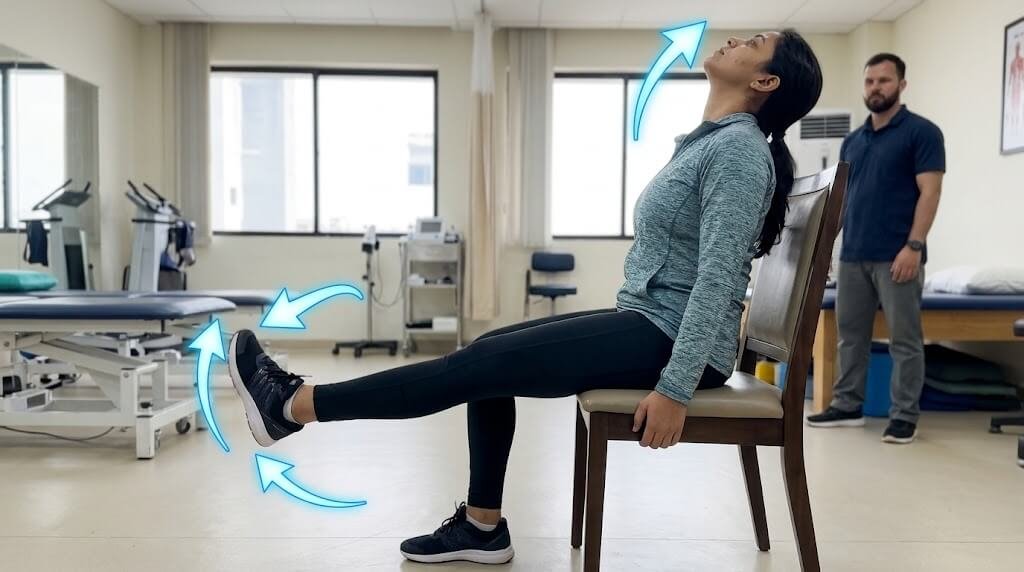
2. Seated Nerve Glides (Sciatic and Tibial Nerve)
- How to do it: Sit on the edge of a chair. Straighten one leg out in front of you, heel on the ground. Slowly point your toes away from you, then flex your foot back toward your shin while gently tilting your head back. Reverse the motion.
- Sets/Reps: 2 sets of 10 slow, controlled repetitions per leg.
- Tempo: 3 seconds extending, 1-second hold, 3 seconds returning.
- Why it works: Gently mobilizes the nerve pathway, preventing adhesions and encouraging the flow of nutrient-rich cerebrospinal fluid and blood to the nerve.
3. Calf Raises (Circulation Booster)
- How to do it: Stand behind a chair for balance. Rise up onto your toes, hold for a second, and lower slowly.
- Sets/Reps: 3 sets of 12–15 repetitions.
- Progression: Hold a 10 lb (4.5 kg) dumbbell in each hand to increase the demand.
- Regression: Perform the movement seated, lifting just the heels off the floor.
- Why it works: The calf muscle is often called the “second heart” of the body. Contracting it pumps venous blood and lymphatic fluid back up the leg, reducing swelling and delivering fresh, oxygenated blood to the feet.
Common Mistakes and Safety Notes
When addressing nerve health, good intentions can sometimes lead to poor outcomes. Avoid these common pitfalls.
- Common Mistake: Megadosing Vitamin B6. As mentioned earlier, more is not always better. Chronic intake of high-dose B6 (above 100 mg/day) is a well-documented cause of sensory neuropathy. Always check the label of your B-complex supplement to ensure the B6 content is within safe limits (under 25 mg is generally a safe buffer).
- Common Mistake: Ignoring the Root Cause. Vitamins can repair nutritional deficits, but they will not cure nerve damage caused by uncontrolled blood sugar, heavy alcohol consumption, or autoimmune conditions. You must address the primary driver of the neuropathy.
- Coach’s Tip: Give it time. Nerve tissue heals incredibly slowly—often at a rate of about 1 millimeter per day (or roughly 1 inch per month). Do not expect a supplement to erase years of tingling in a week. Commit to a consistent protocol for at least 8 to 12 weeks before evaluating its effectiveness.
When to See a Doctor (Red Flags)
While nutritional support is powerful, you should not self-diagnose. Consult a physician or physical therapist immediately if you experience:
- Sudden onset of numbness or weakness, especially on one side of the body.
- Numbness that spreads rapidly up your legs.
- Loss of bowel or bladder control.
- Foot numbness accompanied by an open sore or wound that will not heal (common in diabetic patients).
Frequently Asked Questions (FAQ)
What vitamin is best for tingling in feet? Vitamin B12 (specifically in the methylcobalamin form) is widely considered the best vitamin for tingling in feet. It is directly responsible for maintaining the myelin sheath, the protective coating around your nerves that ensures proper signal transmission and prevents numbness.
Can vitamin B12 deficiency cause numb feet? Yes. A lack of vitamin B12 leads to the deterioration of the myelin sheath, a condition known as subacute combined degeneration. This directly causes peripheral neuropathy, resulting in tingling, numbness, and a “pins and needles” sensation, typically starting in the feet and hands.
How long does it take for B12 to help nerve pain? Nerve healing is a slow process. While some people report mild improvements in energy within a few weeks, noticeable reductions in nerve pain and numbness typically take 8 to 12 weeks of consistent, adequate B12 supplementation, as nerves regenerate at a rate of about 1 inch per month.
Does magnesium help with foot tingling? Yes, magnesium can help. It regulates neurotransmitter function and prevents nerve cells from becoming overexcitable. A deficiency in magnesium often manifests as muscle cramps, spasms, and tingling in the extremities. Magnesium glycinate is the most recommended form for nerve and muscle relaxation.
Can too much vitamin B6 cause numbness? Absolutely. While B6 is essential for nerve health, taking high doses (typically over 100 mg per day for extended periods) is toxic to the nerves. This condition, called sensory neuropathy, causes the very numbness and tingling you are trying to cure. Always stick to the recommended daily allowance.
What foods help repair nerve damage? Foods rich in B vitamins and antioxidants are best. Focus on fatty fish (salmon, trout) for B12 and omega-3s, dark leafy greens (spinach, kale) for folate and magnesium, and nuts and seeds (almonds, sunflower seeds) for vitamin E and benfotiamine precursors.
Conclusion
Dealing with chronic foot tingling and numbness can be deeply frustrating, but it is often a manageable condition when you address the root nutritional causes. By prioritizing the right vitamins for tingling and numbness in feet—such as methylcobalamin (B12), benfotiamine (B1), alpha-lipoic acid, and magnesium—you provide your nervous system with the exact building blocks it needs to repair the myelin sheath and restore healthy communication.
Remember to pair these targeted nutrients with a nutrient-dense diet and daily foot mobility exercises to maximize blood flow. Always start with conservative doses, monitor how your body responds, and work alongside a healthcare professional to ensure your approach is safe and effective for your specific health profile. Your nerves have supported you every step of the way; it is time to give them the support they deserve.