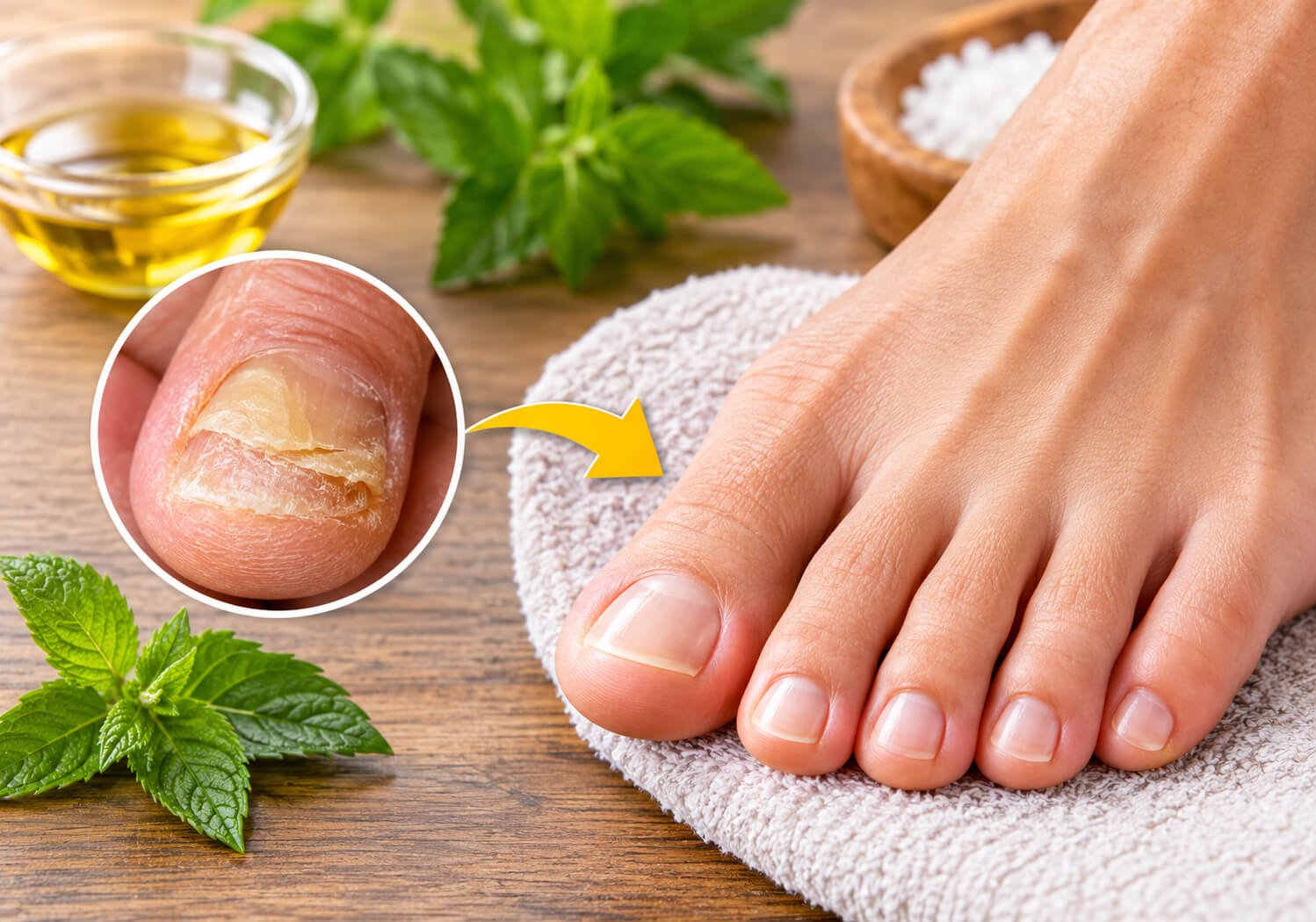
Toenails that split, peel, or snap at the corner can make socks catch and shoes feel worse. If you want to know how to strengthen weak and brittle toenails naturally, the first step is finding out why they are weak. Most cases trace back to a few fixable things: too much water and harsh products, repeated bumping inside shoes, and sometimes a fungal infection that passes for plain brittleness.
This guide covers what the research says, a daily care routine you can start tonight, and where supplements fit. It also includes training habits for runners, hikers, walkers, and lifters, plus clear signs that mean it is time to see a doctor. Patience matters, because toenails grow about 1.5 millimeters (0.06 inch) a month, and full regrowth takes 12 to 18 months. Check with your doctor or a podiatrist first if you have diabetes, poor circulation, or another medical condition, and before you start any supplement.
Quick Answer: To strengthen weak and brittle toenails naturally, protect them from repeated trauma and too much water, moisturize them daily, trim straight across, and skip harsh polish removers. Check for fungus, thyroid problems, or low iron or zinc if nails stay brittle. Biotin may help some people, but evidence is limited, so talk with a doctor first.
Why Toenails Become Weak and Brittle
Brittle nails split, flake, crumble, or turn soft and lose their spring. A review in Dermatology and Therapy describes two main patterns. Onychoschizia is when the tip peels in thin horizontal layers, and onychorrhexis shows up as shallow lengthwise ridges or splits.
The same review says nail brittleness affects up to 20% of people, especially women over 50. It also notes that fingernail fragility is more common than toenail fragility. That matters because most brittle-nail research focuses on hands, so treat hand-based advice as a reasonable starting point for your feet, not a guarantee.
Age and slow growth
MedlinePlus says brittle nails are often a normal result of aging. A Cleveland Clinic dermatologist explains that nails grow slower as we get older, so they spend more time exposed to dry air, water, and sanitizers. Toenails are the slowest growers of all.
Because of that slow toenail growth rate, damage from last spring may still be growing out today. Judge your progress by the new nail near the cuticle, not by the old tip.
Water, soap, and harsh products
Long contact with moisture or nail polish can make nails peel and turn brittle, according to MedlinePlus. Cleveland Clinic adds that nails lose water faster than skin does. That discussion centers on fingernails, but long showers, sweaty shoes, and wet-then-dry cycles hit toenails too.
A review of natural nail treatments says brittleness is usually secondary to outside insults, such as wet-dry exposure and formaldehyde-based nail hardeners. Mayo Clinic experts also note that regular use of acetone-based remover can wear nails down over time. Some researchers have suggested low water content in the nail plate as a cause, but other studies found no difference, so that theory is still debated.
Repeated trauma from shoes and training
MedlinePlus lists injury as a cause of nail problems and notes that crushing the nail base or nail bed may cause permanent deformity. The Dermatology and Therapy review also lists trauma among the causes of secondary nail brittleness. For active people, the usual pattern is repeated bumping, such as toes sliding into the front of the shoe on downhill runs, hikes, tennis stops, soccer cuts, or dance work.
Think of it like a rep with sloppy form. One bump means nothing, but thousands of small impacts add up. A thin, split, or ridged nail after long workouts can point to this cause, especially when the shoe feels snug.
Fungal infection that looks like brittleness
The CDC says fungal nail infections may affect up to 14% of people and are more common in toenails than fingernails. They can leave nails discolored, thick, fragile, or cracked, and the nail may separate from the nail bed. Small cracks in the nail or nearby skin let fungi in, and these infections typically do not go away on their own.
That is why guessing is risky. Cleveland Clinic notes that nails that crack and also thicken or turn yellow may have a fungal infection. Experts recommend confirming the diagnosis before using over-the-counter antifungals, so see a provider before you spend months on creams and oils.
Nutrient gaps, health conditions, and medicines
MedlinePlus says low zinc and iron, as well as thyroid problems, can cause brittle nails. Its nail abnormalities page also lists kidney disease, liver disease, malnutrition, and vitamin deficiency among conditions that can affect nails. Cleveland Clinic adds psoriasis, which can change nail color and texture.
Psoriasis can involve the nail matrix, the tissue that makes new nail, which leads to pits and a crumbly, thin nail plate, per the review. MedlinePlus also notes that certain antibiotics can lift the nail from its bed and that chemotherapy can affect nail growth. If you are in cancer treatment, ask your oncologist for nail-care advice.
Quick cause guide
| Likely cause | What you may notice | Natural step that fits | Get it checked if |
| Age and slow growth | Gradual thinning, peeling tips | Daily moisturizer, short nails | Sudden change in one nail |
| Water and harsh products | Peeling layers, dry feel | Shorter soaks, acetone-free remover | Redness, swelling, soreness |
| Repeated trauma | Ridges, split edge, lifting after long workouts | Roomier toe box, secure lacing | Throbbing pain or the nail lifts |
| Fungal infection | Thick, yellow or discolored, crumbly | Keep feet dry, avoid guessing | Always, before treating |
| Nutrient or health issue | Brittle on many nails | Food first, ask about blood tests | Other symptoms, or no change |
How to Strengthen Weak and Brittle Toenails Naturally: Your Daily Routine
The realistic goal is to protect the new nail as it grows in. The evidence for natural options is modest and often based on small studies, so think of this routine as low-risk habits rather than a guaranteed fix. The steps below follow advice from MedlinePlus, Mayo Clinic, and the review of natural nail treatments.
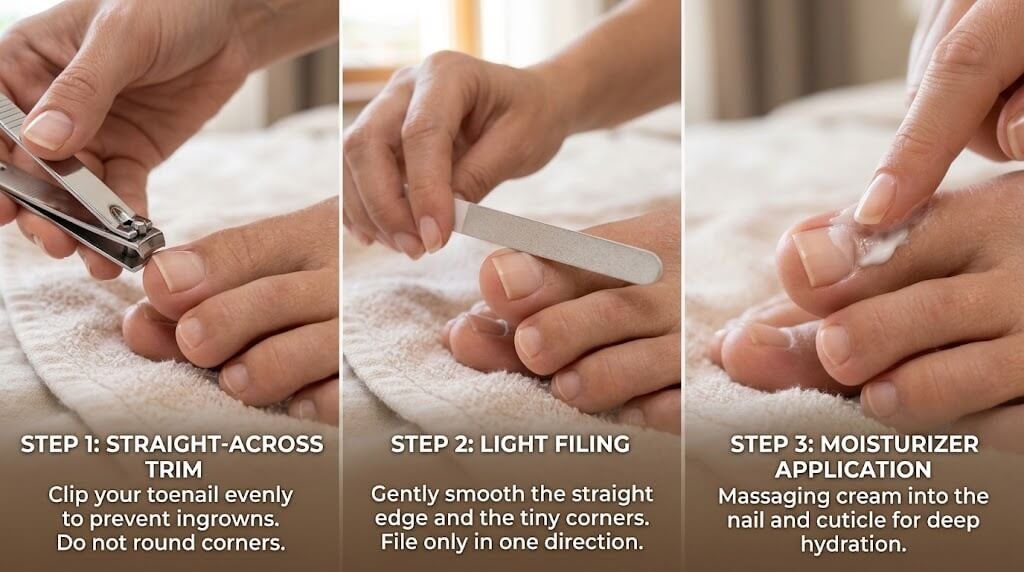
- Trim and file with care. Trim after a shower, when nails are softer. MedlinePlus advises keeping nails short to help prevent brittleness. Cut straight across, leave a free edge of about 1/16 inch (1.5 mm), then smooth the edge in one direction with a fine file or glass file. Sawing back and forth can shred the layers.
- Moisturize twice a day. The natural-treatment review reports that moisturizers with occlusives such as petrolatum or lanolin, plus humectants such as glycerin, improve nail strength. Urea and alpha-hydroxy acids, such as lactic acid, increase the water-binding ability of the nail plate. Massage a small amount into the nail, cuticle, and skin around it for 30 to 60 seconds after your shower and again at bedtime. MedlinePlus likewise suggests an emollient cream after washing or bathing.
- Limit wet time and dry fully. Mayo Clinic notes that nails left in water for long periods are more prone to splitting. Keep showers and foot soaks short, ideally 10 minutes or less as a coaching guideline. Dry between your toes and around each nail, and change damp socks soon after workouts.
- Swap your remover and give nails polish breaks. The review recommends acetate-based removers over acetone-based ones. Take a few weeks off polish now and then. Be careful with nail hardeners: Mayo Clinic says some products designed to harden nails may help, while the review links formaldehyde-based hardeners to brittleness. Check the label and ask a dermatologist if you are unsure.
- Leave cuticles and sharp tools alone. The review advises leaving cuticles uncut and avoiding sharp manicure tools. MedlinePlus suggests bringing your own tools to a nail salon and not letting the technician work on your cuticles. Never dig under the nail corners.
- Protect against trauma. Fit, lacing, and socks matter more than any cream. The training section below walks through each one.
- Take a monthly photo. Use the same light and angle on the first of each month, so you can judge new growth instead of relying on memory.
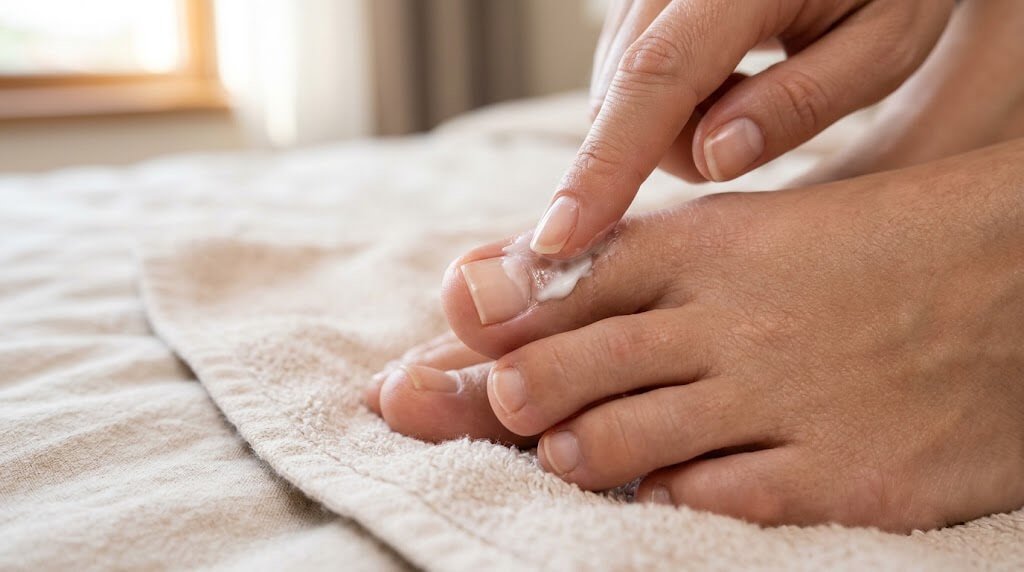
Coach’s Tip: Tie moisturizing to something you already do, like brushing your teeth or putting on pajamas. A habit you actually keep beats a perfect routine you skip. Put the tube next to your bed so the bedtime step is hard to forget.
Common Mistake: Peeling off loose layers and then treating the nail as if it were fungus without a diagnosis. Picking widens the splits, and guessing can delay the right treatment. If the nail is also thick or yellow, get it checked first.
Easier to harder: pick your level
| Level | Time | What to do |
| Starter (easier) | About 2 minutes a day | Moisturize once after your shower. Trim once a month. Switch to an acetone-free remover. |
| Standard | About 5 minutes a day | Moisturize twice daily. File weekly. Dry feet and nails fully. Change damp socks after workouts. |
| Advanced (harder) | About 8 minutes a day | Standard routine plus a urea or lactic acid foot cream, a monthly photo log, a shoe-fit check every few months, and a doctor visit if nothing changes. |
How to Strengthen Weak and Brittle Toenails Naturally With Food and Supplements
You cannot out-supplement a bad shoe or a hidden infection. Still, nutrition is worth a look, especially if many of your nails are brittle. Here is what the evidence says, and where it runs thin.

Biotin: small studies, mixed results
Biotin is the supplement most often linked to nails. In a small retrospective study in Cutis, 22 of 35 people who took daily biotin (63%) showed clinical improvement, and 13 (37%) reported no change. The authors called it a positive response in some patients, but it was small and looked back at past cases.
The National Institutes of Health says there is little scientific evidence that biotin improves hair, skin, or nails. In a few small studies, some people with thin, brittle nails who took high doses had harder nails. The Dermatology and Therapy review also reports that oral biotin, trace elements, and amino acids such as cysteine have been useful in some cases of idiopathic brittleness. That research is mostly about fingernails, so results for toenails are less certain.
One safety point is easy to miss. The NIH notes that biotin above recommended amounts may cause false results in some lab tests, including tests that measure thyroid hormone. Tell your doctor before any blood work if you take it.
Zinc, iron, and the risk of guessing
MedlinePlus links low zinc and iron to brittle nails. In people with a confirmed zinc deficiency, the natural-treatment review says 20 to 30 mg of zinc per day appears to improve nail strength. The same review warns that careless use of natural remedies may lead to poisoning and other health problems.
That is the reason to test first. A blood test can show whether iron, zinc, or thyroid hormone is part of the picture. If you do consider a supplement, learn how to evaluate supplement ingredients before you buy, and run the choice past your doctor or pharmacist.
| Supplement | What research suggests | Caution |
| Biotin | Small studies show benefit for some people with brittle nails; others see no change | Can skew lab tests, including thyroid tests |
| Zinc | May improve nail strength when you are deficient | Only if low; too much can cause harm |
| Iron | Low iron is linked to brittle nails | Needs a blood test and medical guidance |
| Multi-ingredient formulas | One study of a mixed amino acid, vitamin, and mineral product reported stronger fingernails | Evidence is limited; check doses and interactions |
Food first
MedlinePlus lists malnutrition and vitamin deficiency among conditions that can affect nails. If you eat very little or follow a very restrictive diet, ask a doctor or dietitian whether a gap could be involved. A short read on nutrient deficiency basics can help you prepare questions for that visit.
It also helps to look at your overall protein intake, since steady meals with a mix of foods are the base of any healthy routine. Do not expect a food change to show up in your nails fast. New toenail growth takes months to appear.
Training Habits That Protect Your Toenails
If you run, hike, play tennis or soccer, or dance, your toes take hits that desk workers never face. These habits keep that impact in check. They are coaching practices rather than medical treatments, so adjust them to your own feet.
- Check shoe fit. Try on shoes late in the day or after a workout, when feet are at their largest. Aim for about a thumb’s width (roughly 0.5 inch, or 1.3 cm) between your longest toe and the front of the shoe. Remember that your second toe may be the longest.
- Lock the heel. Use heel-lock lacing, also called the runner’s loop, so your foot does not slide forward on downhill stretches. Snug but not tight across the top of the foot.
- Pick better socks. Choose snug, seamless, moisture-wicking socks. Skip thick cotton socks that bunch and eat up toe box space.
- Trim before big efforts. Trim your nails a day or two before a long run or hike. Long nails catch the front of the shoe, while nails cut too short are tender.
- Build load gradually. Add distance and hills in small steps. After a run longer than 10 miles (16 km), look at your toes. A new dark spot or tender nail means it is time to review your shoes.
- Use closed-toe shoes in the weight room. Moving a 45 lb (20 kg) plate in sandals is an easy way to crush a toe. Save the sandals for shared showers and locker rooms.
- Dry and moisturize after workouts. Take off damp socks, dry your feet, and use your moisturizer.


Fungi live in the environment and enter through small cracks in the nail or skin, according to the CDC. That is one more reason to avoid walking barefoot in shared showers and to keep your feet dry.
Safety Notes: When to See a Doctor
Brittle toenails are usually a nuisance, not an emergency, but a few signs deserve prompt attention. MedlinePlus says to contact your provider for blue, clubbed, or distorted nails, horizontal ridges, pits, white lines, painful nails, or ingrown nails. It also warns that subungual melanoma, a potentially deadly cancer, often appears as a dark streak down the length of the nail.
See a provider if a dark streak or spot appears with no injury, if it spreads onto the skin around the nail, or if the nail is thick, yellow, painful, swollen, or lifting. The CDC notes that people with conditions such as diabetes are more likely to get fungal nail infections, and that these infections can come back after treatment. If you have diabetes or poor circulation, have a professional handle your foot care.
Also check in with your doctor before starting any supplement. Skip the routine above only if a clinician has told you something different for your situation.
Related Tips for Active People
- At the salon: Bring your own tools and ask the technician to leave your cuticles alone, as MedlinePlus suggests.
- Between polish colors: Give nails a break of a few weeks so you can see their real condition.
- In winter: Dry indoor air and heavy socks can leave feet dry, so moisturize after each shower.
- For stubborn cases: Ask a dermatologist or podiatrist about nail lacquers and prescription options. They can also test for fungus and other causes.
A simple four-week plan
| Week | Focus | What to do |
| 1 | Baseline | Take photos, measure shoe fit with the thumb test, start moisturizing at bedtime |
| 2 | Products | Switch to an acetone-free remover, add a morning moisturizer, trim and file gently |
| 3 | Training | Use heel-lock lacing, swap out bunching socks, dry feet after workouts |
| 4 | Review | Compare photos, note any new growth, and book a doctor visit if you see red-flag signs or no change |
Frequently Asked Questions
Why are my toenails so brittle and splitting?
Common causes include aging, long or repeated contact with water, harsh polish removers, and repeated bumping inside shoes. Fungal infections, low iron or zinc, thyroid problems, and skin conditions like psoriasis can also play a part. If nails are also thick or yellow, or nothing helps after a few months, ask a doctor.
Does biotin strengthen toenails?
Maybe for some people, but the proof is thin. Small studies, mostly on fingernails, found some people with brittle nails improved on high-dose biotin, while others saw no change. Biotin can also throw off certain blood tests, including thyroid tests. Ask your doctor before starting it, especially before lab work.
How long does it take to grow stronger toenails?
Slowly. Toenails grow about 1.5 millimeters (0.06 inch) per month, and full regrowth can take 12 to 18 months. You may see fewer splits in new growth after a few months of steady care, but the damaged part only improves as it grows out.
What vitamin deficiency causes brittle toenails?
Low iron and low zinc are both linked to brittle nails, and general malnutrition or vitamin deficiency can affect nails too. Thyroid problems can look similar. Because symptoms overlap, a doctor can check blood levels, and that is safer than guessing with supplements.
Can running or hiking make toenails brittle?
It can contribute. Repeated bumping against the front of the shoe is a form of nail trauma, and trauma is a recognized cause of nail damage. Poor fit, long downhill stretches, and damp socks can add to the problem. A roomier toe box and secure lacing often help, though a fungal infection should be ruled out.
When should I see a doctor about brittle toenails?
See a doctor if nails are thick, yellow, painful, swollen, or lifting, or if you have diabetes. Get a dark streak, blue nails, or changes with no injury checked promptly. Also go if nails stay brittle after several months of gentle care, because an underlying cause may need treatment.
Conclusion
Learning how to strengthen weak and brittle toenails naturally comes down to three moves: protect the nail, hydrate it, and rule out a hidden cause. Keep nails short, moisturize twice a day, limit long soaks, choose an acetone-free remover, and make sure your shoes give your toes room. Treat supplements as a question for your doctor, not a shortcut.
Be patient, because a full toenail takes 12 to 18 months to grow out. Take a monthly photo, judge the new growth, and see a doctor if you notice red-flag signs or no progress. Start with the Starter routine tonight, and move up a level once it feels automatic.