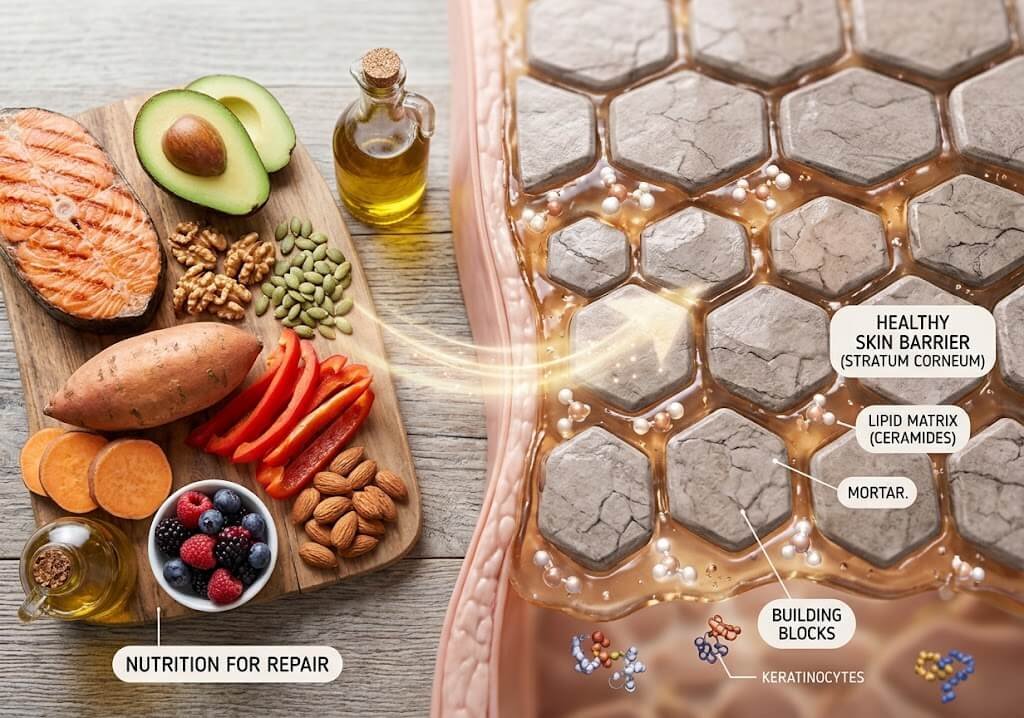
Your skin barrier isn’t just something you slather cream on. It’s a living, lipid-rich shield that your body builds from the nutrients you eat. When that barrier is compromised—by over-exfoliation, harsh weather, aging, or chronic inflammation—topical products alone often fall short. What you put on your plate determines whether your skin can rebuild its ceramide layers, maintain hydration, and fend off irritation.
Repairing your skin barrier from the inside out with diet means giving your cells the raw materials they need: essential fatty acids, fat-soluble and water-soluble vitamins, minerals, and quality protein. It’s not a single superfood. It’s a consistent eating pattern that reduces systemic inflammation and supplies the building blocks for a healthy stratum corneum.
This guide breaks down exactly which nutrients matter, which foods deliver them, what to cut back on, and a practical daily eating plan you can start tonight.
Quick Answer: To repair your skin barrier from the inside out with diet, prioritize omega-3 and omega-6 fatty acids (fatty fish, walnuts, flaxseed), vitamins A, C, and E (colorful produce, nuts), zinc and selenium (lean meats, legumes, seeds), and adequate protein for collagen synthesis. Pair these with gut-supporting fiber and fermented foods while limiting refined sugar, alcohol, and highly processed items. Consistent intake over 4–8 weeks supports measurable improvement in skin hydration and barrier function.
What the Skin Barrier Actually Is
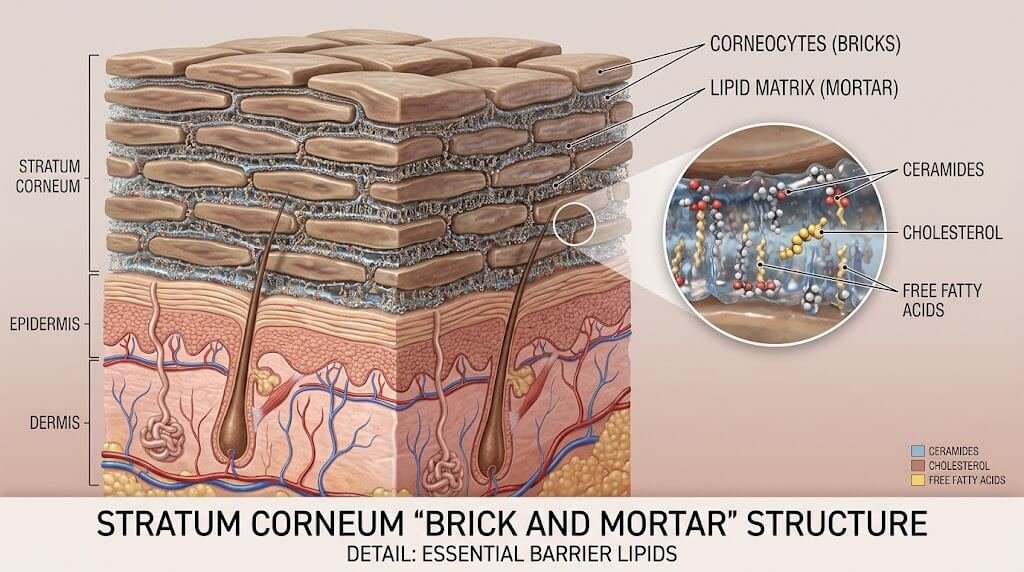
Your outermost skin layer, the stratum corneum, works like a brick wall. The “bricks” are dead keratinocytes (skin cells). The “mortar” is a complex lipid matrix made of ceramides, cholesterol, and free fatty acids in roughly a 3:1:1 ratio. This matrix locks in water and blocks irritants, allergens, and microbes from penetrating deeper layers (the epidermis and dermis).
When the lipid matrix is depleted or the ratio shifts, transepidermal water loss (TEWL) spikes. Your skin feels tight, rough, and reactive. You may see flaking, redness, stinging from products that used to be fine, or a persistent “not-quite-moisturized” feeling no matter how much lotion you apply.
The key insight: your body synthesizes ceramides, cholesterol, and fatty acids from dietary precursors. You can’t out-cream a nutritional deficit.
What Breaks the Skin Barrier (So You Can Stop Doing It)
Before you fix the diet, identify the insults keeping your barrier in a repair loop:
- Over-exfoliation (daily AHAs/BHAs, physical scrubs)
- Harsh cleansers with high-pH surfactants
- Environmental stressors: cold, dry air, UV radiation, pollution
- Chronic inflammation from a high-sugar, high-processed-fat diet
- Gut dysbiosis: an imbalanced microbiome can increase systemic inflammatory signaling that worsens skin reactivity
- Aging: natural decline in sebum and ceramide production
- Alcohol and smoking: both impair skin cell turnover and collagen integrity
If any of these are ongoing, no amount of dietary repair will fully close the gap. Address the triggers first, then let nutrition do the rebuilding.
The Key Nutrients for Skin Barrier Repair
1. Essential Fatty Acids (Omega-3 and Omega-6)
Your skin can’t make omega-3 (EPA, DHA) or omega-6 (linoleic acid) fatty acids from scratch. You must get them from food. These fatty acids are direct components of the lipid matrix in the stratum corneum.
- Omega-3 (EPA/DHA): Incorporated into cell membranes, they support the anti-inflammatory environment your skin needs to heal. Research published in the Journal of the American Academy of Dermatology links adequate omega-3 intake to reduced TEWL and improved skin hydration.
- Omega-6 (linoleic acid): A critical component of ceramide synthesis. Low linoleic acid in skin lipids is associated with atopic (eczema-prone) skin.
Best food sources:
- Fatty fish (salmon, mackerel, sardines, herring) – 2–3 servings per week
- Walnuts, flaxseeds, chia seeds
- Extra-virgin olive oil, avocado
- Egg yolks (contain small amounts of DHA)
Practical target: Aim for at least 250–500 mg of combined EPA + DHA daily from food, plus a handful of walnuts or a tablespoon of ground flaxseed. If you don’t eat fish, a high-quality algae-based omega-3 supplement is a reasonable alternative.
2. Vitamin A (Retinol / Beta-Carotene)
Vitamin A is essential for epidermal cell turnover and the production of new skin cells. It also supports the integrity of mucous membranes and sebaceous gland function. A deficiency can lead to dry, rough, xerotic skin.
- Preformed vitamin A (retinol): Found in liver, eggs, dairy, fortified foods.
- Provitamin A (beta-carotene): Found in sweet potatoes, carrots, spinach, kale.
The National Institutes of Health Office of Dietary Supplements notes that adequate vitamin A intake supports normal skin and mucous membrane function.
Practical target: 1–2 servings of orange/green vegetables daily (sweet potato, spinach, pumpkin) plus 1–2 eggs per week for preformed retinol.
3. Vitamin C (Ascorbic Acid)
Vitamin C is a cofactor for collagen synthesis in the dermis. It also acts as a potent antioxidant, neutralizing free radicals generated by UV exposure and pollution that degrade barrier lipids.
- Without adequate vitamin C, fibroblasts can’t produce stable collagen, and the structural support beneath the stratum corneum weakens.
- Vitamin C also helps regenerate vitamin E in the skin, extending its antioxidant effect.
The NIH Office of Dietary Supplements recommends 75–90 mg/day for adults, with upper tolerable limits around 2,000 mg.
Best food sources: Bell peppers (red, yellow), strawberries, kiwi, citrus fruits, broccoli, tomatoes.
Practical target: One large bell pepper or a cup of strawberries covers your daily need. Pair with a small amount of fat (olive oil, avocado) to support absorption of fat-soluble vitamins in the same meal.
4. Vitamin E (Tocopherol and Tocotrienols)
Vitamin E is a lipid-soluble antioxidant that protects cell membrane fats—including the ceramides and fatty acids in your skin barrier—from oxidative damage.
- It works synergistically with vitamin C: vitamin C regenerates oxidized vitamin E, creating a recycling loop.
- Adequate vitamin E intake is linked to reduced oxidative stress markers in skin.
Best food sources: Sunflower seeds, almonds, hazelnuts, spinach, avocado, extra-virgin olive oil.
Practical target: A small handful of sunflower seeds (about 1 oz / 28 g) or 1 tablespoon of olive oil daily.
5. Zinc
Zinc is a cofactor for over 300 enzymes, including those involved in wound healing, cell division, and protein synthesis. It also has anti-inflammatory and antimicrobial properties that support skin repair.
- Low zinc status is associated with delayed wound healing and increased skin inflammation.
- Zinc helps regulate the immune response in the skin, which matters if your barrier is compromised and you’re dealing with low-grade irritation.
Best food sources: Oysters, beef, pumpkin seeds, chickpeas, lentils, turkey, dark chocolate (small amount).
Practical target: 8–11 mg/day (RDA for adults). A quarter cup of pumpkin seeds or a 3-oz (85 g) serving of cooked beef covers this.
6. Selenium
Selenium is a component of glutathione peroxidase, a key antioxidant enzyme that protects skin cells from oxidative damage. It also supports thyroid function, which indirectly affects skin texture and hydration.
Best food sources: Brazil nuts (1–2 per day provides the full RDA), tuna, sardines, eggs, sunflower seeds.
7. Protein and Amino Acids
Collagen is made of amino acids, especially glycine, proline, and hydroxyproline. Your body can synthesize these from dietary protein, but it needs adequate total protein intake to do so efficiently.
- Collagen provides the structural “scaffold” in the dermis that supports the epidermis above.
- Inadequate protein intake slows cell turnover and impairs the skin’s ability to regenerate.
Best food sources: Lean poultry, fish, eggs, Greek yogurt, legumes, tofu, tempeh.
Practical target: 0.6–0.9 g of protein per pound of body weight (0.8–1.0 g/kg) spread across meals. For a 150-lb (68 kg) person, that’s roughly 90–135 g of protein daily.
Coach’s Tip: You don’t need to hit a perfect macro split. Think of it as “one palm of protein, one thumb of healthy fat, and a fist of colorful vegetables” at each main meal. Consistency over 4–6 weeks matters far more than any single “perfect” day.
8. Gut-Skin Connection: Fiber and Fermented Foods
Emerging research on the gut-skin axis suggests that a healthy gut microbiome helps modulate systemic inflammation, which in turn affects skin barrier function. A gut rich in diverse, fiber-fermenting bacteria produces short-chain fatty acids (SCFAs) that have anti-inflammatory effects.
- Soluble fiber (oats, beans, psyllium, apples) feeds beneficial gut bacteria.
- Fermented foods (yogurt, kefir, sauerkraut, kimchi, miso) introduce live cultures that support microbial diversity.
This doesn’t mean a single bowl of yogurt will fix your skin. It means a diet that consistently supports gut health creates a less inflammatory internal environment, giving your skin a better chance to repair.
Foods to Prioritize (Your Weekly Shopping List)
| Food Group | Specific Choices | Frequency |
| Fatty fish | Salmon, sardines, mackerel, herring | 2–3×/week |
| Colorful vegetables | Sweet potato, spinach, kale, bell peppers, broccoli, carrots | Daily (2+ servings) |
| Fruits (vitamin C) | Strawberries, kiwi, oranges, papaya, blueberries | 1–2 servings/day |
| Nuts & seeds | Walnuts, sunflower seeds, pumpkin seeds, almonds, chia | 1 handful/day |
| Healthy oils | Extra-virgin olive oil, avocado oil | 1–2 Tbsp/day (cooking/dressing) |
| Lean protein | Chicken, turkey, eggs, Greek yogurt, tofu, legumes | Every meal |
| Fermented foods | Plain yogurt, kefir, sauerkraut, kimchi, miso | 1 serving/day |
| Whole grains / fiber | Oats, quinoa, brown rice, beans, lentils | 1–2 servings/day |
Foods and Habits That Work Against Your Barrier
These don’t “destroy” your skin in one sitting, but chronic overconsumption keeps your body in a pro-inflammatory, oxidative state that slows repair:
- Refined sugar and high-glycemic foods: Spike insulin and promote advanced glycation end-products (AGEs), which cross-link and stiffen collagen.
- Excess alcohol: Dehydrates skin, impairs liver detoxification, and increases inflammatory cytokines.
- Highly processed foods (fast food, packaged snacks with trans fats, excess omega-6 seed oils without balancing omega-3): Shift the fatty acid ratio toward pro-inflammatory arachidonic acid pathways.
- Chronic sleep deprivation: Disrupts cortisol rhythms, increasing inflammation and slowing cell repair.
- Smoking / vaping: Generates free radicals, degrades collagen, and impairs blood flow to the skin.
You don’t need to eliminate all of these forever. But if your barrier is actively damaged, cutting back for 4–6 weeks while you focus on repair foods gives your skin a real head start.
A Sample Daily Eating Plan (Practical, Not Restrictive)
Breakfast (7:30 AM):
- 2 eggs scrambled in 1 tsp olive oil
- ½ cup sautéed spinach with a pinch of turmeric
- 1 small kiwi + ¼ cup blueberries
- 1 slice whole-grain toast with 1 tsp almond butter
Lunch (12:30 PM):
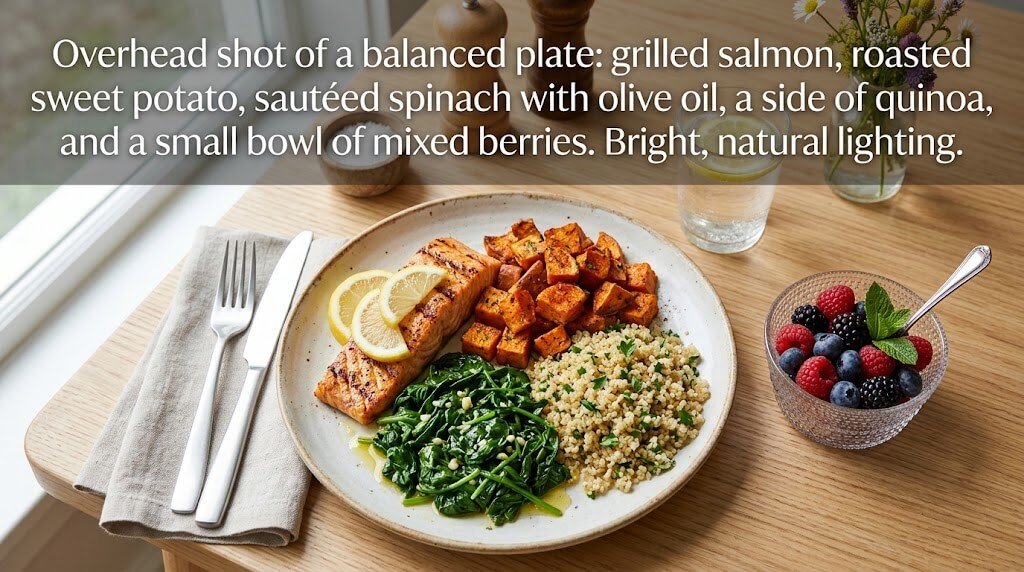
- 4 oz (115 g) grilled salmon (or canned sardines for a quick option)
- ½ cup cooked quinoa
- Large mixed salad: cherry tomatoes, shredded carrots, cucumber, 2 Tbsp extra-virgin olive oil + lemon dressing
- 2 Tbsp sauerkraut on the side
Snack (4 PM):
- 1 small handful of walnuts (~4 halves)
- 1 small orange
Dinner (7 PM):
- 5 oz (140 g) turkey or chicken breast (or ½ cup cooked chickpeas for plant-based)
- 1 medium roasted sweet potato
- 1 cup steamed broccoli with 1 tsp olive oil and a sprinkle of pumpkin seeds
- ½ cup plain Greek yogurt with a drizzle of honey
Hydration: 6–8 glasses of water throughout the day. Limit alcohol to 0–1 drink, ideally not nightly.
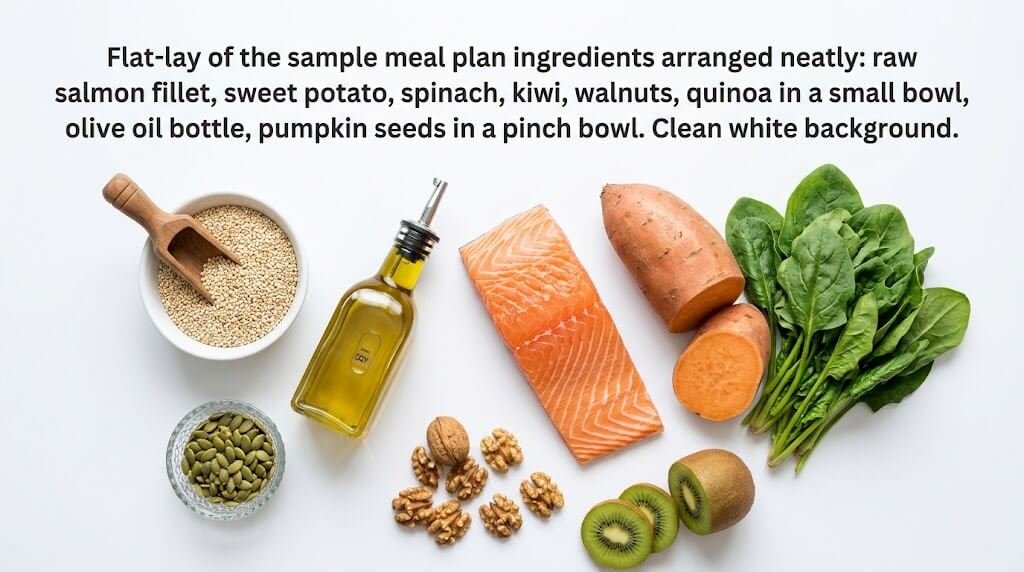
This plan hits the key nutrients: omega-3 (salmon), omega-6 (olive oil, walnuts), vitamin A (sweet potato, spinach), vitamin C (kiwi, orange, tomatoes, broccoli), vitamin E (olive oil, walnuts, pumpkin seeds), zinc (turkey, pumpkin seeds), selenium (walnuts, eggs), and protein at every meal.
How Long Does It Take to See Results?
Skin cell turnover takes about 28 days for a 20-year-old and can stretch to 40–60+ days for someone in their 40s or 50s. That means:
- Weeks 1–2: You may notice skin feels less tight and reactive. Inflammation markers begin to shift.
- Weeks 3–4: New cells generated with better lipid content reach the surface. Hydration improves. Flaking reduces.
- Weeks 6–8: Barrier function (measured as reduced TEWL in clinical settings) shows measurable improvement. Skin looks calmer, more even-toned.
You won’t see overnight changes. But you also don’t need to wait 3 months. Consistent dietary support for 4–6 weeks is a realistic window to notice your skin “behaves” better.
Common Mistake: Changing your diet for two weeks, seeing no dramatic glow-up, and quitting. Skin barrier repair is a slow, cellular process. The nutrients are building new lipid layers cell by cell. Give it the full 4–6 weeks before judging results.
Common Mistakes That Undermine Dietary Skin Repair
- Relying on a single “skin food.” No one food fixes the barrier. You need the full spectrum: fats, vitamins, minerals, protein, fiber.
- Ignoring the topical triggers. Eating perfectly but exfoliating with a 10% glycolic acid serum every night will keep the barrier stripped.
- Not drinking enough water. Hydration supports the water content of the stratum corneum. Aim for 6–8 glasses (roughly 1.5–2 L) daily.
- Skipping protein. A low-protein diet starves collagen synthesis regardless of how many berries you eat.
- Over-supplementing without a deficiency. Whole foods provide the co-factors (phytochemicals, fiber) that enhance nutrient absorption. If you’re eating a varied diet, you likely don’t need a 12-vitamin mega-pill.
- Neglecting sleep. Even a perfect diet can’t fully offset the inflammatory cascade of chronic 5-hour nights. Aim for 7–9 hours.
When to See a Doctor
If your skin barrier damage is severe—persistent oozing, cracking, painful eczema flares, or signs of infection (pus, spreading redness, fever)—diet alone won’t be enough. Conditions like atopic dermatitis, contact dermatitis, psoriasis, or rosacea often require a dermatologist’s guidance alongside nutritional support.
If you have a known food allergy, a malabsorption condition (celiac, Crohn’s), or you’re on medications that affect nutrient absorption (e.g., metformin and B12, PPIs and magnesium), talk to your doctor or a registered dietitian before making significant dietary changes.
Can diet really fix a damaged skin barrier, or do I just need better moisturizer?
Both matter, but they work at different levels. Topical moisturizers (especially those with ceramides) address the surface immediately. Diet supplies the raw materials your body uses to synthesize new ceramides, fatty acids, and collagen from within. For a truly compromised barrier, you need both: a gentle topical routine plus a nutrient-dense diet for 4–8 weeks.
How much omega-3 do I actually need for skin benefits?
Aim for 250–500 mg of combined EPA and DHA daily from food (about 2–3 servings of fatty fish per week) or a supplement if you don’t eat fish. You also need omega-6 (linoleic acid) for ceramide structure, so balance matters—don’t go all-omega-3 with zero omega-6.
Do I need to take collagen peptides or supplements?
Whole-food protein (eggs, fish, poultry, legumes) provides all the amino acids your body needs to build collagen. Hydrolyzed collagen peptides may offer a small convenience, but the evidence that they outperform regular protein for skin is still emerging. Focus on total protein intake first.
Will cutting sugar really make a difference for my skin?
Chronic high sugar intake promotes glycation (AGEs), which stiffens collagen and increases inflammatory signaling. You don’t need zero sugar, but reducing daily added sugars (sodas, pastries, candy) for 4–6 weeks may help reduce low-grade inflammation and support clearer, less reactive skin.
Can I repair my skin barrier if I’m vegetarian or vegan?
Yes. You’ll need to be intentional about omega-3 (algae-based DHA/EPA supplement, flaxseed, chia, walnuts), vitamin B12 (fortified foods or supplement), and zinc (legumes, seeds, fortified foods). A registered dietitian can help you build a plan that covers all the key nutrients without animal products.
How does gut health actually connect to my skin?
A diverse gut microbiome produces short-chain fatty acids and modulates immune signaling. When the gut is imbalanced (dysbiosis), pro-inflammatory signals can reach the skin, worsening redness and barrier reactivity. Eating fiber-rich foods and fermented foods supports microbial diversity, which may help calm skin over time. The research is still maturing, but the connection is well-supported in preliminary studies.
Final Thoughts
Repairing your skin barrier from the inside out with diet isn’t about one magic food or an expensive supplement stack. It’s about consistently feeding your cells the fatty acids, vitamins, minerals, and protein they need to build a strong, hydrated, resilient lipid matrix—while reducing the inflammatory inputs (sugar, alcohol, processed fats, poor sleep) that keep breaking it down.
Start with the sample meal plan above. Swap in foods you actually enjoy. Give it 4 to 6 weeks. Pair it with a gentle, non-stripping skincare routine and adequate sleep. Your skin will thank you with less tightness, fewer flare-ups, and a calmer, more even appearance.
You don’t need to overhaul everything at once. Add one fatty fish meal this week. Add a handful of walnuts. Swap one sugary snack for a kiwi and a small orange. Small, consistent shifts compound into a healthier barrier.