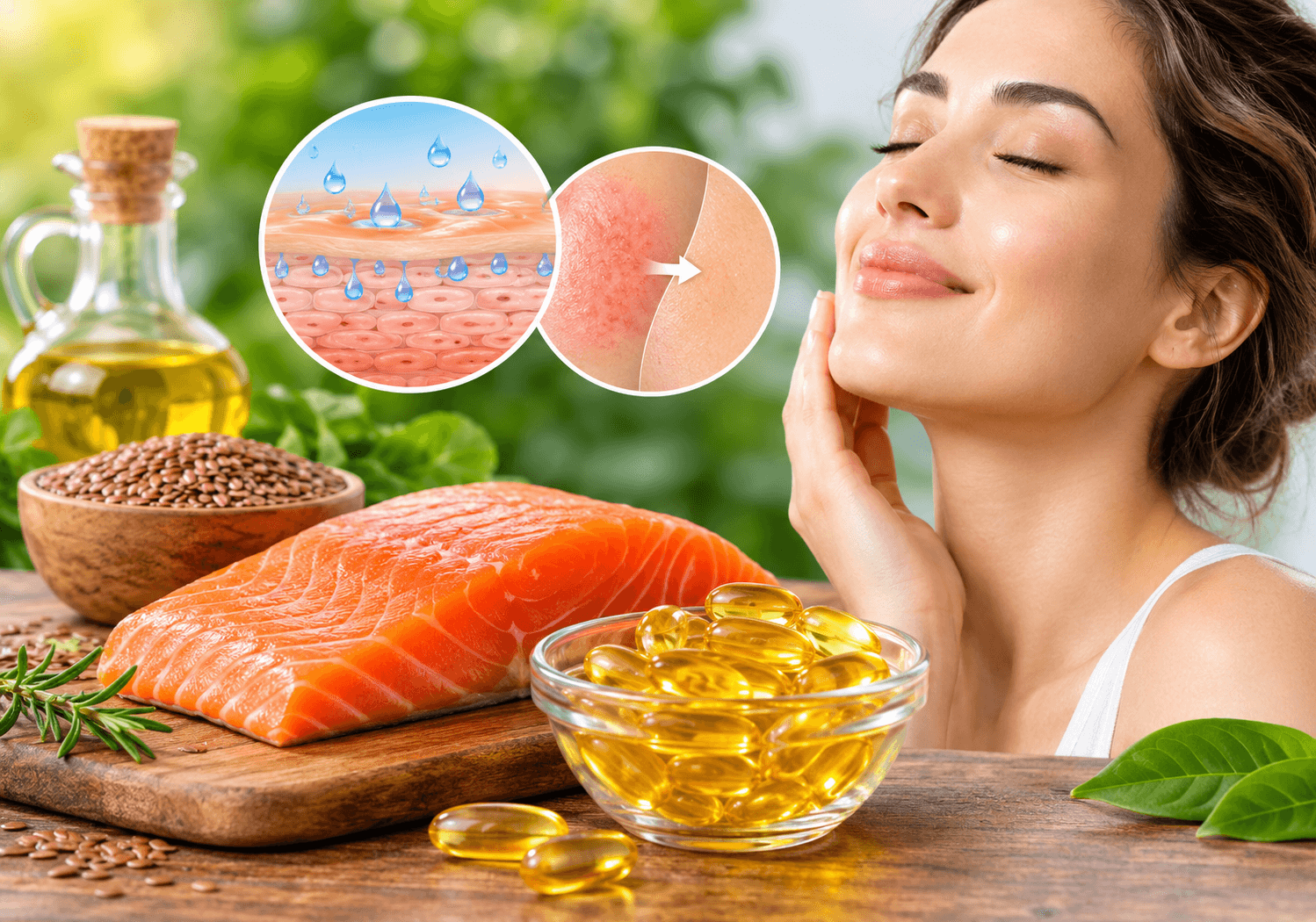
When working with clients on overall physical transformation, performance, and longevity, I always emphasize that true health starts from the cellular level outward. While topical moisturizers, serums, and retinoids occupy a massive space in the skincare industry, external cosmetics can only do so much if your internal cellular architecture is compromised. That is where omega 3 fatty acids for skin hydration and inflammation enter the conversation as a foundational nutritional pillar.
As a strength coach and wellness educator, I evaluate nutrition not just through the lens of macronutrients and muscle protein synthesis, but through how every systemic tissue—including our body’s largest organ, the skin—functions under physical and environmental stress. In this comprehensive guide, we will examine the biochemical mechanisms, scientific literature, and practical protocols governing how essential fats influence moisture retention, barrier integrity, and inflammatory cascades.
Quick Answer Box
Omega 3 fatty acids for skin hydration and inflammation work by integrating directly into epidermal cell membranes, improving lipid barrier function, reducing trans-epidermal water loss, and suppressing pro-inflammatory eicosanoids. Consuming adequate EPA and DHA through fatty fish or quality supplements helps maintain supple, hydrated skin while calming chronic inflammatory skin conditions.
Understanding Skin Structure and the Role of Lipids
To appreciate how essential fats impact our complexion, we must first look at the microscopic architecture of human skin. The outermost layer of the skin, known as the stratum corneum, functions as our primary protective shield against environmental pathogens, toxins, and moisture depletion. Think of this layer like a brick-and-mortar wall: the corneocytes represent the bricks, while a specialized mixture of intercellular lipids—primarily ceramides, cholesterol, and free fatty acids—acts as the mortar.
Cell membranes throughout the epidermis are composed of phospholipid bilayers that require fluidity and structural integrity to function optimally. When our diet lacks adequate polyunsaturated fats, these membranes can become rigid and less efficient at retaining intracellular water. Research highlighted by the National Institutes of Health Office of Dietary Supplements demonstrates that essential fatty acids cannot be synthesized endogenously by the human body; they must be acquired through dietary consumption.
Furthermore, integrating long-chain polyunsaturated fats into these lipid matrices influences cellular signaling pathways. When skin cells maintain optimal fluidity, nutrient exchange improves, waste removal becomes more efficient, and the structural resilience of the tissue increases. This biochemical foundation is why nutritional intake is just as vital to skin health as any topical cream.
How Omega 3 Fatty Acids Enhance Skin Hydration
Skin dryness, flaking, and rough texture are frequently signs of compromised moisture barriers and excessive trans-epidermal water loss (TEWL). Trans-epidermal water loss refers to the passive evaporation of water from inside the body through the skin to the surrounding atmosphere. When the lipid mortar surrounding our skin cells degrades due to aging, harsh weather, or nutritional deficiencies, TEWL accelerates, leaving the skin dehydrated regardless of how much water you drink.
Omega-3 fatty acids—specifically eicosapentaenoic acid (EPA) and docosahexaenoic acid (DHA)—play a direct role in mitigating this moisture loss. By embedding themselves into the plasma membranes of dermal and epidermal cells, EPA and DHA enhance structural flexibility and support the natural production of intercellular lipids. Clinical investigations published via PubMed Central indicate that regular supplementation with marine-derived omega-3s significantly decreases TEWL values over a period of 12 weeks, leading to noticeably softer, more resilient skin texture.
- Moisture Retention: Lipids fortify the extracellular matrix, locking hydration deep within the epidermal layers.
- Sebum Regulation: Essential fats help balance sebum production, preventing both excessive dryness and clogged pores.
- Elasticity Support: Improved cellular hydration translates directly to enhanced skin bounce and elasticity under physical stress.

The Anti-Inflammatory Power of EPA and DHA
Inflammation is at the root of nearly every chronic dermatological concern, from adult acne and rosacea to eczema and psoriasis. When the body encounters physical trauma, UV radiation, or dietary triggers, it initiates an immune response mediated by signaling molecules called eicosanoids and cytokines.
Dietary fats play a profound regulatory role here. The typical modern diet is heavily skewed toward omega-6 fatty acids—found abundantly in processed seed and vegetable oils—which serve as precursors to pro-inflammatory eicosanoids like prostaglandin E2 and leukotriene B4. In contrast, omega-3 fatty acids act as direct metabolic antagonists to these inflammatory pathways.
When EPA and DHA are present in high concentrations within cell membranes, they compete with omega-6 arachidonic acid for enzymatic conversion. Instead of producing inflammatory compounds, EPA and DHA give rise to specialized pro-resolving mediators, including resolvins and protectins. According to insights from Harvard Health Publishing, shifting this fatty acid balance dampens systemic inflammation, which directly translates to reduced redness, swelling, and irritation in sensitive skin tissues.
Dietary Sources vs. Supplements: Which Should You Choose?
Achieving optimal tissue levels of essential fats requires an intentional nutritional strategy. You can obtain omega-3 fatty acids through two primary avenues: whole food dietary sources and targeted supplementation. Both have distinct advantages depending on your lifestyle, dietary preferences, and caloric goals.
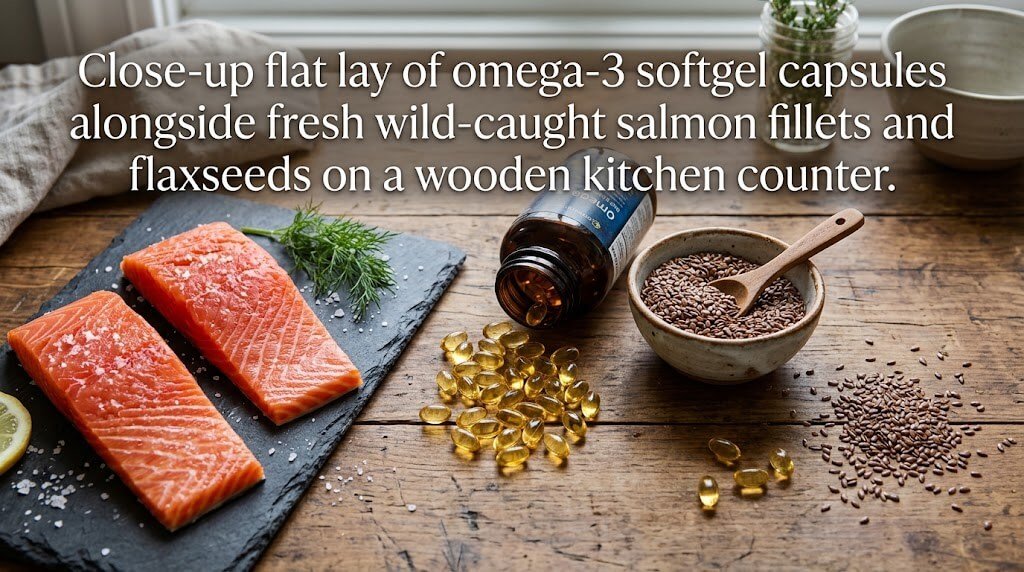
Fatty fish represent the gold standard for marine omega-3 intake because they deliver EPA and DHA in their most bioavailable forms. Wild-caught salmon, sardines, mackerel, anchovies, and herring should ideally appear on your plate two to three times per week. For plant-based eaters, sources such as chia seeds, flaxseeds, walnuts, and hemp hearts provide alpha-linolenic acid (ALA). However, the human body converts ALA into active EPA and DHA at a notoriously low efficiency rate—often estimated below 5% to 10%.
Coach’s Tip: If you rely primarily on plant-based ALA sources, consider pairing them with high-quality algal oil supplements. Algal oil is derived from marine microalgae—the original source where fish obtain their EPA and DHA—providing a direct, plant-based route to active omega-3s without the need for inefficient biochemical conversion.
When whole fish intake is inconsistent, high-purity fish oil, krill oil, or triglyceride-form concentrates bridge the nutritional gap. Always examine third-party testing certifications (such as IFOS or USP) to verify purity, heavy metal filtration, and absence of oxidation.
Dosage, Timing, and Practical Implementation
Precision matters when incorporating any supplement or dietary adjustment into your wellness routine. Randomly taking capsules without understanding dosage parameters yields inconsistent results. Clinical guidelines and sports nutrition experts generally recommend a combined daily intake of 1,000 to 2,000 milligrams of combined EPA and DHA for general health and inflammatory modulation.
For individuals specifically targeting skin barrier support and moisture retention, studies often utilize doses ranging from 1,500 to 3,000 milligrams daily, divided across meals. Because omega-3 fatty acids are fat-soluble compounds, timing your intake matters significantly.
- Pair with Dietary Fats: Consume your omega-3 supplement alongside a meal containing healthy dietary fats—such as avocado, olive oil, eggs, or nuts—to maximize lymphatic absorption.
- Split the Dose: Taking half your daily allotment with breakfast and the remaining half with dinner prevents mild fish oil reflux or “fish burps” while maintaining steady blood concentrations.
- Consistency is Key: Cellular lipid turnover takes time. Expect consistent daily protocols to manifest noticeable improvements in skin hydration and reduced inflammation within 8 to 12 weeks.
Potential Side Effects, Safety, and Who Should Be Careful
While omega-3 fatty acids are exceptionally safe for the vast majority of the population, responsible supplementation requires an awareness of physiological thresholds and potential interactions. Exceeding 3,000 milligrams of combined EPA and DHA daily without medical supervision can occasionally cause minor side effects, including loose stools, mild gastrointestinal upset, or an increased tendency for bruising due to mild platelet aggregation inhibition.
Furthermore, individuals taking anticoagulant medications (blood thinners such as warfarin or aspirin) must consult a qualified healthcare professional before starting high-dose omega-3 regimens, as cumulative blood-thinning effects can occur.

As we explore broader nutritional strategies for metabolic wellness, incorporating targeted nutrients can also complement cellular health. For those managing systemic energy pathways alongside dermatological care, understanding how supporting essential nutrients functions within a balanced routine is valuable. Similarly, adopting natural wellness strategies ensures your body operates at peak efficiency from the inside out.
Comprehensive Comparison Table: Omega-3 Sources & Types
| Source / Type | Primary Active Compound | Bioavailability | Best For | Considerations |
| Wild Salmon / Sardines | EPA & DHA | High | Whole-food enthusiasts, daily nutrition | Cost, refrigeration, potential mercury in large pelagic fish |
| Triglyceride Fish Oil | EPA & DHA | High | General skin hydration & inflammation | Must check for third-party purity and oxidation |
| Krill Oil | EPA & DHA (Phospholipid bound) | Very High | Rapid cellular absorption, antioxidant support | More expensive per serving; shellfish allergy warning |
| Algal Oil | EPA & DHA | High | Vegetarians, vegans, plant-based diets | Pure microalgae source free from ocean contaminants |
| Flaxseeds / Chia Seeds | ALA | Low (Requires conversion) | Plant-based fiber and baseline fat intake | Inefficient conversion to active EPA and DHA in humans |
Frequently Asked Questions
How long does it take for omega-3 to improve skin hydration?
Clinical trials demonstrate that measurable reductions in trans-epidermal water loss and improvements in skin elasticity typically require 8 to 12 weeks of consistent daily supplementation with adequate doses of EPA and DHA. Cellular membrane turnover takes time to reflect dietary changes.
Can omega-3 fatty acids help clear acne and breakouts?
Yes. Because acne is fundamentally driven by localized inflammation and sebum dysregulation, the anti-inflammatory properties of EPA and DHA help calm red, angry lesions and regulate sebum viscosity, reducing the likelihood of clogged pores and cystic flare-ups.
Is plant-based ALA as effective as fish oil for skin health?
While plant-based ALA (found in flax and chia) provides general cardiovascular and metabolic benefits, its conversion rate into active EPA and DHA in the human body is very low. For targeted skin hydration and inflammation reduction, direct marine or algal EPA/DHA sources are significantly more effective.
What is the ideal daily dosage of omega-3 for skin benefits?
Research generally points toward a combined daily intake of 1,500 to 3,000 milligrams of EPA and DHA. Starting with a moderate dose of 1,000 milligrams and scaling up while monitoring digestive comfort is a prudent approach for most adults.
Are there any side effects of taking omega-3 supplements?
High doses can occasionally cause mild gastrointestinal discomfort, loose stools, or fishy aftertaste. Individuals taking prescription blood thinners should consult their doctor before starting high-dose omega-3 supplementation due to potential interactions with blood clotting.
Conclusion
Optimizing your skin’s health requires looking far beyond topical cosmetics and expensive moisturizers. By understanding and leveraging omega 3 fatty acids for skin hydration and inflammation, you nourish your body at the cellular level, reinforcing the lipid barrier, locking in vital moisture, and suppressing chronic inflammatory pathways. Whether through wild-caught marine sources, high-purity fish oils, or sustainable algal extracts, committing to a consistent essential fatty acid protocol builds a resilient foundation for lifelong wellness and vibrant skin.