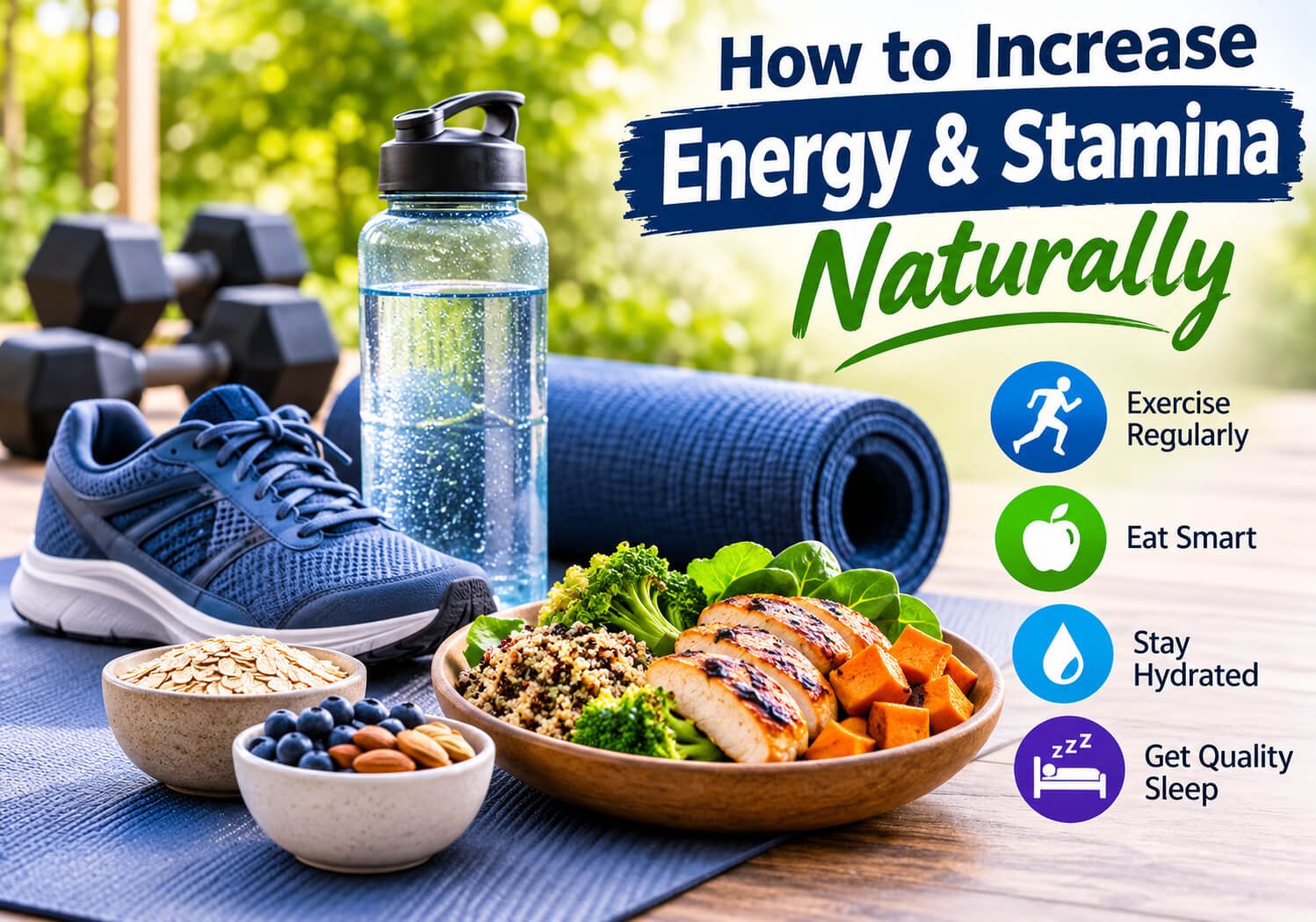
Feeling constantly drained during your workouts or daily tasks is frustrating, but learning how to increase energy and stamina naturally is entirely within your control. You do not need expensive pre-workout powders or endless cups of coffee to feel powerful and alert. True, lasting vitality comes from a strategic combination of targeted physical training, smart nutrition, and dedicated recovery. As a strength and conditioning coach, I have guided countless clients through plateaus of fatigue. The solution always boils down to optimizing how your body produces and uses energy at a cellular level. This guide provides a practical, evidence-based roadmap to help you build enduring strength and vitality from the ground up.
Quick Answer
To increase energy and stamina naturally, combine progressive cardiovascular and strength training with nutrient-dense whole foods. Prioritize complex carbohydrates, adequate hydration, and 7–9 hours of quality sleep nightly. Consistency over 4 to 6 weeks will visibly improve your aerobic capacity, mitochondrial efficiency, and daily energy levels without relying on stimulants.
Who This Stamina-Building Approach Is For
This comprehensive guide is designed for gym beginners, busy professionals, and active adults who feel held back by midday fatigue or workout exhaustion. It is especially useful for individuals who want to improve cardiovascular endurance without over-relying on caffeine or synthetic supplements. Whether you are preparing for a 5K, trying to keep up with your kids, or simply want to finish your workday without hitting a wall, these natural strategies will build a resilient, energetic foundation.
The Science of Natural Energy and Stamina
Understanding how your body generates energy is the first step to improving it. Stamina is not just about “trying harder.” It is a physiological adaptation. When you train correctly, your body increases the number and efficiency of mitochondria, the powerhouses of your cells. This process enhances your aerobic capacity, often measured as VO2 max, allowing your heart and lungs to deliver oxygen more effectively to working muscles.
Research from the American College of Sports Medicine (ACSM) confirms that regular aerobic and resistance training stimulates mitochondrial biogenesis, directly improving physical endurance and reducing perceived fatigue. Furthermore, managing stress and optimizing nutrient intake ensures your body can produce adenosine triphosphate (ATP), the primary energy currency of your cells, without depleting your adrenal system. Learning how to increase energy and stamina naturally means working with your biology, not against it.
Equipment Needed for Stamina Workouts
You do not need a massive gym to build endurance. This program relies on accessible, versatile tools:
- A pair of adjustable dumbbells (10–30 lb / 4.5–13.5 kg range)
- A set of resistance bands (light to medium tension)
- A reliable interval timer (or a smartphone app)
- A sturdy mat for floor exercises (approx. 72 x 24 inches / 183 x 61 cm)
- A large water bottle (32 oz / 1 liter) to maintain hydration
Warm-Up Routine
Never skip your warm-up. A proper warm-up increases blood flow, raises core body temperature, and primes your nervous system for work. Spend 5 to 8 minutes on the following dynamic movements before your main workout:
- Arm Circles: 30 seconds forward, 30 seconds backward.
- Torso Twists: 1 minute, keeping hips stable and rotating the upper body.
- Bodyweight Squats: 2 sets of 10 reps, focusing on depth and control.
- High Knees or Marching in Place: 1 minute to elevate the heart rate.
- Inchworms: 5 reps to stretch the hamstrings and activate the core.

The Stamina-Building Workout
This routine blends strength and cardiovascular demand to maximize mitochondrial adaptation. Perform this workout 3 times per week, with at least one rest or active recovery day between sessions.
| Exercise | Sets | Reps / Duration | Rest | Tempo |
| Dumbbell Goblet Squat | 3 | 12–15 reps | 60 sec | 3-1-1 (3s down, 1s pause, 1s up) |
| Resistance Band Rows | 3 | 15 reps | 60 sec | 2-1-2 |
| Dumbbell Reverse Lunges | 3 | 10 reps per leg | 60 sec | 2-0-1 |
| Push-Up to Plank Hold | 3 | 8–10 reps + 20s hold | 60 sec | Controlled |
| Jumping Jacks or Step-Outs | 3 | 45 seconds | 45 sec | Brisk, continuous |
How to Do Each Exercise
Proper form prevents injury and ensures the right muscles are doing the work. Here is your coach’s breakdown for each movement.
1. Dumbbell Goblet Squat
This compound movement builds lower body strength and elevates your heart rate, making it a cornerstone for endurance.
- Form Cues: Hold one dumbbell vertically against your chest with both hands. Keep your chest proud and core braced. Push your hips back and bend your knees, lowering until your thighs are parallel to the floor. Drive through your mid-foot to stand.
- What it should feel like: A deep stretch in your glutes and quads, with your core working hard to keep you upright.
- Regression: Perform a bodyweight box squat to a chair or bench.
- Progression: Add a 1-second pause at the bottom of the squat or increase the dumbbell weight by 5 lb (2.2 kg).
Coach’s Tip: Breathe in as you lower down and exhale forcefully as you push through your heels to stand. This breathing pattern stabilizes your spine and maintains oxygen flow.
2. Resistance Band Rows
A strong back is essential for posture and efficient breathing during cardiovascular activities.
- Form Cues: Anchor the band at chest height. Hold the ends with palms facing each other. Step back to create tension. Pull your elbows straight back, squeezing your shoulder blades together.
- What it should feel like: A strong contraction between your shoulder blades, not in your lower back or neck.
- Regression: Use a lighter resistance band or shorten your stance to reduce tension.
- Progression: Use a heavier band or add a 2-second isometric hold at the peak of the contraction.
3. Dumbbell Reverse Lunges
Lunges build unilateral leg strength and challenge your balance, which translates to better stamina in running or walking.
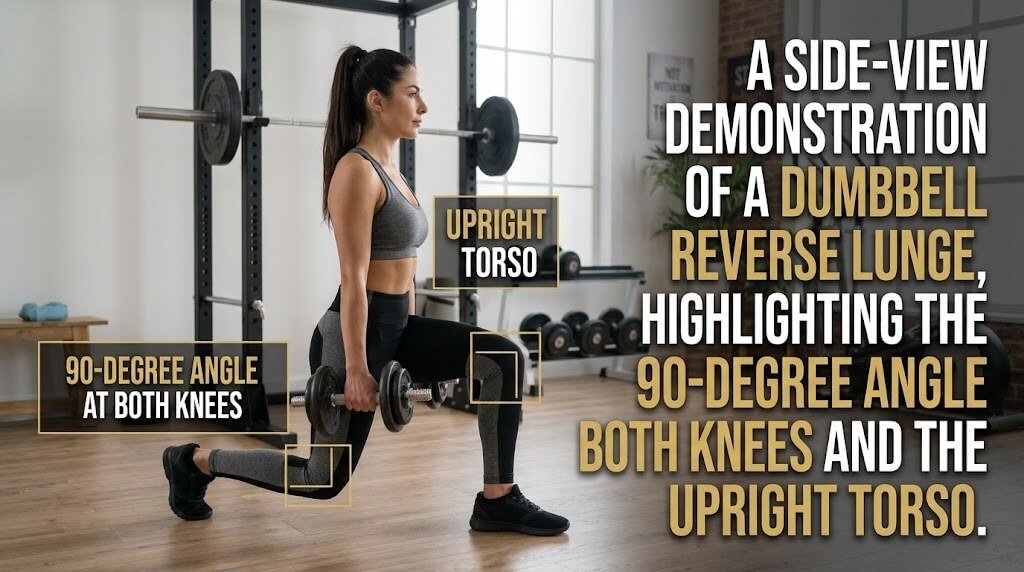
- Form Cues: Hold a dumbbell in each hand at your sides. Step backward with your right foot, lowering your hips until both knees are bent at 90-degree angles. Your front knee should stay directly above your ankle. Push off the back foot to return to standing.
- What it should feel like: Intense work in the front leg’s quad and glute, with a stretch in the back leg’s hip flexor.
- Regression: Perform stationary split squats holding onto a wall for balance, without weights.
- Progression: Turn this into a walking lunge across a 10-yard (9-meter) space, or increase dumbbell weight to 15 lb (6.8 kg) per hand.
4. Push-Up to Plank Hold
This exercise builds upper body pushing strength and core stability, which is vital for maintaining form when fatigue sets in.
- Form Cues: Start in a high plank position with hands slightly wider than shoulder-width. Lower your chest to the floor, keeping elbows at a 45-degree angle to your body. Push back up, then hold the top plank position for 20 seconds.
- What it should feel like: Tension across your chest, shoulders, and a tight, braced abdomen.
- Regression: Perform the push-up from your knees or with your hands elevated on a sturdy bench or wall.
- Progression: Add a dumbbell row at the top of each push-up (renegade row) for an advanced stamina challenge.
Common Mistake: Letting the hips sag during the plank hold. This strains the lower back. Fix: Squeeze your glutes and pull your belly button toward your spine to maintain a rigid, straight line from head to heels.
5. Jumping Jacks or Step-Outs
This is your dedicated cardiovascular finisher to push your aerobic capacity.
- Form Cues: For jumping jacks, jump your feet out wide while raising your arms overhead, then jump back to the center. Keep a soft bend in your knees to absorb impact.
- What it should feel like: Elevated breathing and a warm, pumping sensation in your legs and shoulders.
- Regression: Step one foot out to the side at a time while raising your arms, eliminating the jump entirely.
- Progression: Increase the speed or transition to high knees for the 45-second interval.

Weekly Schedule and Progression Plan
Consistency is the ultimate natural stamina booster. Follow this 4-week progression to safely build your endurance without burning out.
- Week 1: Focus entirely on form. Use lighter weights. Complete all 3 sets of each exercise. Rest 90 seconds between sets if 60 seconds feels too rushed.
- Week 2: Increase the weight of your dumbbells by 2.5 to 5 lb (1.1 to 2.2 kg) on squats and lunges. Reduce rest periods strictly to 60 seconds.
- Week 3: Add a 4th set to the Goblet Squats and Resistance Band Rows. This increased volume directly challenges your muscular endurance.
- Week 4: Deload week. Reduce the weight by 20% and focus on perfect tempo and deep, controlled breathing. This allows your central nervous system to recover and adapt, making you stronger for Week 5.
On non-workout days, engage in active recovery. This means 20 to 30 minutes of low-intensity movement, such as a brisk 1.5-mile (2.4 km) walk, light cycling, or gentle yoga. Active recovery promotes blood flow, which helps clear metabolic waste products from your muscles, reducing soreness and speeding up stamina gains.
Nutrition: How to Increase Energy and Stamina Naturally
You cannot out-train a poor diet. The foods you eat provide the raw materials for ATP production. To sustain high energy levels, your nutrition must support mitochondrial health and stable blood sugar.
Prioritize Complex Carbohydrates
Carbohydrates are your body’s preferred and most efficient fuel source for moderate to high-intensity exercise. Unlike simple sugars that cause rapid spikes and crashes, complex carbohydrates provide a slow, steady release of glucose. Focus on oats, quinoa, sweet potatoes, brown rice, and legumes. The Harvard T.H. Chan School of Public Health emphasizes that whole grains and fibrous carbs are essential for sustained physical energy and digestive health.
Optimize Protein Intake
Protein is not just for building muscle; it plays a critical role in repairing the micro-tears in muscle fibers caused by endurance training. Adequate protein also helps stabilize blood sugar levels between meals, preventing energy slumps. Learn more about how protein intake and metabolism work together to sustain your daily energy. Aim for 0.7 to 1 gram of protein per pound of body weight (1.5 to 2.2 g per kg) daily, sourced from lean meats, fish, eggs, tofu, or Greek yogurt.
Hydration and Electrolyte Balance
Even mild dehydration of 2% of your body weight can significantly impair physical performance, cognitive function, and perceived energy levels. Water is essential for transporting nutrients and regulating body temperature. Drink at least 80 to 100 ounces (2.3 to 3 liters) of water daily, and add an extra 16 to 24 ounces (0.5 to 0.7 liters) for every hour of intense exercise. If you sweat heavily, replenish electrolytes like sodium, potassium, and magnesium through foods like bananas, spinach, and nuts, or a low-sugar electrolyte mix.
Target Key Micronutrients
Certain vitamins and minerals are direct cofactors in the body’s energy-producing pathways.
- B Vitamins: Essential for converting food into ATP.
- Iron: Carries oxygen in the blood to your working muscles. Low iron is a leading cause of unexplained fatigue, especially in women.
- Magnesium: Supports muscle relaxation and nerve function. If you suspect a deficiency, consult a healthcare provider. You can also explore which vitamins support metabolism when dietary intake falls short.

Recovery and Sleep: The Hidden Stamina Boosters
Training breaks your body down; recovery builds it back stronger. If you are constantly tired, the missing link is often poor recovery, not a lack of effort.
The Power of Sleep Hygiene
Sleep is when your body releases human growth hormone (HGH), repairs tissue, and consolidates the neurological adaptations from your workouts. Chronic sleep deprivation elevates cortisol, a stress hormone that actively breaks down muscle tissue and promotes fat storage, sabotaging your stamina. The Centers for Disease Control and Prevention (CDC) recommends 7 to 9 hours of quality sleep per night for adults. Understand more about how sleep affects metabolism and overall daily energy.
To improve sleep hygiene:
- Keep your bedroom cool (around 65°F or 18°C) and completely dark.
- Stop consuming caffeine at least 8 hours before bedtime.
- Establish a consistent sleep and wake time, even on weekends.
- Avoid screens for 1 hour before bed to allow natural melatonin production.
Managing Stress for Better Energy
Chronic psychological stress keeps your nervous system in a “fight or flight” state, which is incredibly draining over time. Incorporate 5 to 10 minutes of daily deep breathing, meditation, or light stretching. Lowering your baseline stress levels preserves your physical energy reserves for your workouts and daily life. Learning to boost metabolic flexibility also helps your body switch efficiently between burning carbs and fats, reducing energy crashes during stressful periods.
Common Mistakes and Fixes
Even with the best intentions, people often sabotage their own stamina gains. Here is what to avoid:
- Mistake 1: Doing Too Much, Too Soon.
Fix: Follow the 10% rule. Do not increase your workout volume, distance, or weight by more than 10% per week. Gradual progression prevents overtraining and injury. - Mistake 2: Relying on Sugar and Caffeine for Quick Fixes.
Fix: While a pre-workout coffee is fine, depending on sugary snacks or multiple energy drinks creates a cycle of spikes and crashes. Focus on whole-food meals and the best vitamins for energy to support your body’s natural pathways. - Mistake 3: Ignoring Rest Days.
Fix: Schedule at least 1 to 2 full rest or active recovery days per week. Your stamina improves during rest, not during the workout itself. - Mistake 4: Poor Breathing During Exercise.
Fix: Do not hold your breath. Practice rhythmic breathing (e.g., inhaling for 2 steps, exhaling for 2 steps during cardio) to maximize oxygen delivery.
FAQ
How long does it take to build stamina naturally?
Most people notice a subjective improvement in daily energy within 2 to 3 weeks of consistent training and better sleep. Measurable improvements in cardiovascular endurance (like running farther without stopping) typically take 4 to 8 weeks of progressive overload.
What are the best natural foods to increase energy and stamina?
Focus on complex carbohydrates like oats and sweet potatoes, lean proteins like chicken and fish, and iron-rich foods like spinach and lentils. These provide sustained glucose release and the micronutrients required for ATP production.
Can I build stamina without running?
Absolutely. Stamina is about cardiovascular efficiency, not just running. Cycling, swimming, rowing, brisk walking, and circuit-style strength training (like the workout provided above) are highly effective, low-impact alternatives for building endurance.
Does drinking more water really help with fatigue?
Yes. Even mild dehydration thickens your blood, making your heart work harder to pump oxygen to your muscles. This directly increases perceived effort and fatigue. Staying consistently hydrated is one of the fastest ways to improve natural energy levels.
How do I know if my fatigue is normal or a medical issue?
Normal workout fatigue improves with rest and nutrition. If you experience persistent, unexplained exhaustion, dizziness, or shortness of breath that does not improve with lifestyle changes, consult a doctor to rule out conditions like anemia, thyroid issues, or sleep apnea.
Is it safe to take natural energy supplements?
Whole foods should always be your primary source of nutrients. If you consider supplements, choose evidence-based options like B-complex vitamins or magnesium, and always discuss them with a healthcare provider to ensure they do not interact with medications.
Conclusion
Learning how to increase energy and stamina naturally is a holistic endeavor. It requires moving your body with purpose through progressive strength and cardiovascular training, fueling your cells with nutrient-dense whole foods, and respecting your body’s need for deep, restorative sleep. There are no magic pills, but the compound effect of these daily habits is profound. Start with the foundational workout provided, prioritize your hydration and sleep, and be patient with the process. Your body is incredibly adaptable. Give it the right tools, and it will reward you with boundless, natural vitality.