
Sperm motility is one of the top three factors a fertility lab looks at in a semen analysis, and it’s the one most men can actually influence through daily habits. If your recent results flagged low progressive motility, or you’re simply trying to optimize your reproductive health before starting a family, the good news is that your lifestyle choices matter more than most men realize.
I coach men across a range of fitness levels, and reproductive health questions come up more often than you’d think. The truth is, the same training, nutrition, and recovery principles that build a strong body also support healthy sperm production. You don’t need a special “fertility program.” You need a solid, consistent routine that reduces oxidative stress, keeps hormones balanced, and protects testicular temperature.
This guide breaks down what the research says, what actually moves the needle, and how to build a practical weekly plan.
Quick Answer: Men can improve sperm motility naturally by exercising regularly (150+ minutes of moderate cardio plus two strength sessions per week), eating a zinc- and antioxidant-rich diet, sleeping 7–9 hours, managing stress, avoiding smoking and excess alcohol, and keeping testicular temperature low. Most changes show measurable improvement in 72–90 days, which is roughly one full sperm production cycle.
What Is Sperm Motility and Why It Matters
Sperm motility refers to how well and how fast sperm move. A semen analysis breaks this down into three categories:
- Progressive motility – sperm moving forward in a straight or large circular pattern
- Non-progressive motility – sperm moving but not making forward progress
- Immotile sperm – sperm that don’t move at all
The WHO 2021 Laboratory Manual for the Examination and Processing of Human Semen sets the lower reference limit for total motility at 40–42% and progressive motility at 30–32%. Below those thresholds, natural conception becomes harder, and a fertility specialist may recommend additional testing.
Motility isn’t just about speed. Sperm need to travel roughly 6–7 inches (15–18 cm) through the female reproductive tract to reach the egg. That journey takes hours, and only the most capable swimmers make it. Low motility is the single most common male factor in infertility, affecting an estimated 30–50% of couples struggling to conceive, according to the CDC’s reproductive health data.
The key takeaway: Sperm are produced over about 74 days in the testes and epididymis. That means any lifestyle change you start today will show up in your next semen analysis roughly 3 months from now. Patience is part of the process.
What the Research Says Affects Sperm Quality
Before jumping into “what to do,” it helps to understand the three main threats to sperm motility:
Oxidative Stress
Sperm cell membranes are rich in polyunsaturated fatty acids, making them highly vulnerable to free radical damage. A 2019 meta-analysis published in Human Reproduction Update found that men with elevated markers of oxidative stress showed significantly lower progressive motility and higher DNA fragmentation. Antioxidant nutrients—zinc, selenium, vitamin C, vitamin E, and coenzyme Q10—help neutralize those free radicals. You can learn more about how the body handles oxidative load in our guide to which nutrients support normal energy metabolism.
Hormonal Imbalance
Testosterone and its downstream hormones (dihydrotestosterone, inhibin B) drive spermatogenesis. Chronic stress raises cortisol, which can suppress the hypothalamic-pituitary-gonadal axis and lower testosterone. Poor sleep does the same. A 2018 study in The Journal of Clinical Endocrinology & Metabolism linked just one week of sleep restriction (5 hours per night) to a measurable drop in testosterone in healthy young men.
Temperature and Environmental Factors
The testes sit outside the abdominal cavity because sperm production requires a temperature about 2–3°F (1–2°C) below core body temperature. Prolonged sitting, tight underwear, laptop use on the lap, and hot tubs can raise scrotal temperature and impair motility. Endocrine-disrupting chemicals in plastics (BPA, phthalates) and pesticides have also been linked in observational studies to reduced sperm concentration and motility.
Understanding these three levers—oxidative stress, hormones, and temperature—gives you a framework for every recommendation that follows.
10 Natural Ways Men Can Improve Sperm Motility
Here’s the practical list. Each section includes specific, actionable detail.
1. Move More and Sit Less
Sedentary behavior is one of the easiest things to fix and one of the most overlooked. Prolonged sitting compresses the pelvic region, raises testicular temperature, and reduces blood flow to the reproductive organs. A 2020 study in Fertility and Sterility found that men who sat more than 6 hours per day had lower sperm concentration and motility compared to those who sat less than 3 hours.
What to do:
- Stand or walk for 5 minutes every 45 minutes during desk work
- Take a 10-minute walk after lunch
- Aim for 7,000–10,000 steps per day (about 3.5–5 miles or 5.6–8 km)
- Swap one seated errand for a walk or bike ride
Cardio for sperm health: The ACSM’s guidelines for cardiac rehabilitation and general fitness recommend at least 150 minutes of moderate-intensity aerobic activity per week. For sperm-specific benefits, a mix of brisk walking, cycling (upright position, not aggressive road-cycling posture), swimming, or rowing works well. Two 30-minute sessions plus one 45-minute session per week is a solid target.
Coach’s Tip: If you cycle regularly, use a padded, nose-bridge saddle that reduces perineal pressure. Keep road-cycling sessions under 90 minutes and alternate with other cardio to avoid sustained pressure on the pelvic floor.
2. Lift Weights (The Right Way)
Strength training supports healthy testosterone levels and body composition, both of which matter for sperm production. A 2021 review in the Journal of Strength and Conditioning Research noted that moderate resistance training (3–5 sessions per week, 60–90 minutes) is associated with maintained or improved testosterone in healthy men.
The key is moderation. Excessive volume (5+ hours of training per week with no deload) can spike cortisol and actually suppress the hormonal axis. You don’t need to be a bodybuilder. You need to be consistently strong.
A simple full-body template (3x/week, ~60 min):
| Exercise | Sets | Reps | Rest |
| Barbell back squat | 3 | 6–8 | 90 sec |
| Romanian deadlift | 3 | 8–10 | 90 sec |
| Bench press (barbell or dumbbell) | 3 | 8–10 | 75 sec |
| Bent-over row | 3 | 10–12 | 60 sec |
| Overhead press | 2 | 10–12 | 60 sec |
| Plank | 3 | 30–45 sec | 45 sec |
Progress by adding 5 lb (2.3 kg) to the bar or 1–2 reps per week. Keep sessions under 75 minutes. This is enough stimulus for hormonal support without overtraining.
Regression (beginner): Replace barbell squats with goblet squats using a 30–40 lb (14–18 kg) dumbbell. Use a Smith machine or machine press for the upper body.
Progression (advanced): Add front squats, weighted pull-ups, and a 5×5 linear progression on the big lifts.

3. Eat for Testicular Health
You can’t out-train a poor diet when it comes to sperm quality. The nutrients that matter most for motility:
- Zinc (15–30 mg/day): Critical for testosterone production and sperm membrane integrity. Sources: oysters, beef, pumpkin seeds, lentils.
- Selenium (55–100 mcg/day): Antioxidant that protects sperm DNA. Sources: Brazil nuts (1–2 per day), tuna, eggs.
- Vitamin C (75–90 mg/day minimum; up to 500 mg): Reduces oxidative damage in seminal fluid. Sources: citrus, bell peppers, strawberries.
- Vitamin E (15 mg/day): Lipid-soluble antioxidant for cell membranes. Sources: almonds, sunflower seeds, spinach.
- Folic acid / B vitamins: Support DNA synthesis in developing sperm. Sources: leafy greens, legumes, fortified grains.
- Omega-3 fatty acids (1–2 g/day EPA+DHA): Anti-inflammatory and support cell membrane fluidity. Sources: salmon, sardines, mackerel, walnuts.
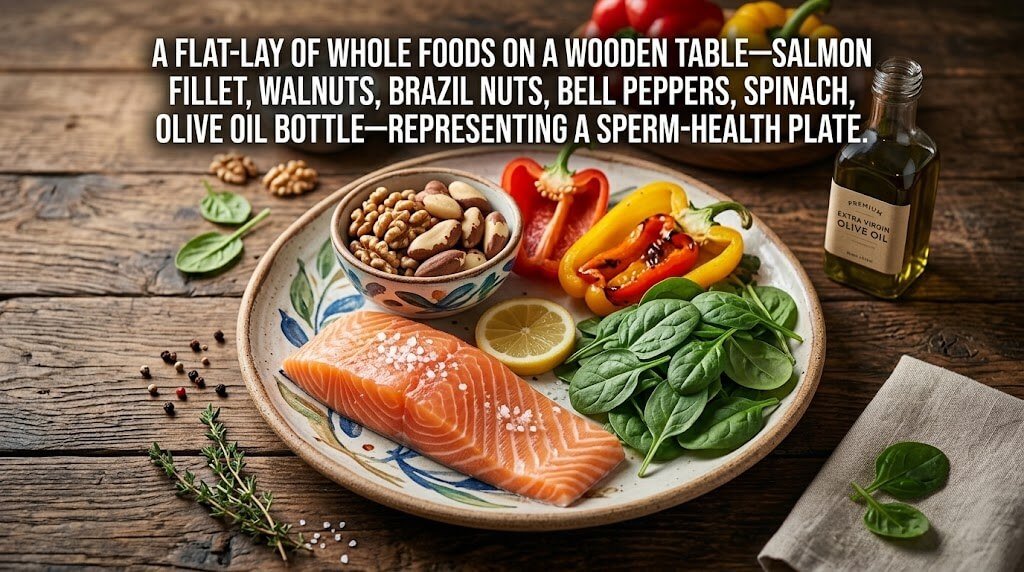
Practical plate: Aim for a Mediterranean-style pattern—vegetables, lean protein, whole grains, olive oil, and fatty fish 2–3 times per week. Limit ultra-processed foods, refined sugar, and trans fats, which increase systemic inflammation.
4. Prioritize Sleep
This is non-negotiable. The majority of testosterone is released during deep (slow-wave) sleep. A 2015 study in Science showed that men who slept only 5 hours per night for a week had testosterone levels comparable to those of men 10–15 years older.
Targets:
- 7–9 hours per night, consistent schedule
- Room at 65–68°F (18–20°C)
- No screens 30–60 minutes before bed
- Limit caffeine after 2 PM
- Avoid alcohol within 3 hours of bedtime
Poor sleep also raises cortisol, which competes with testosterone for the same precursors. You can read more about the hormonal cascade in our article on how sleep affects metabolism and weight management through the hormonal connection.
5. Manage Stress
Chronic psychological stress elevates cortisol for days or weeks. Elevated cortisol suppresses gonadotropin-releasing hormone (GnRH), which in turn reduces luteinizing hormone (LH) and follicle-stimulating hormone (FSH)—the two hormones that drive testosterone and sperm production.
What works:
- 10 minutes of diaphragmatic breathing (4 sec in, 6 sec out) twice daily
- Weekly nature walks or time outdoors (20+ minutes)
- Limiting work-related rumination after hours
- Mindfulness or meditation apps (even 5 minutes helps)
- Social connection: regular time with friends or a partner
You don’t need to “unwind” in a fancy spa. A 20-minute walk outside with no phone is a legitimate stress-reduction tool.
6. Cut Back on Alcohol and Avoid Smoking
The evidence here is clear. A 2019 meta-analysis in Human Reproduction found a dose-dependent relationship between alcohol intake and reduced sperm concentration, motility, and morphology. Heavy drinking (more than 14 standard drinks per week) was associated with the largest declines.
Practical targets:
- Alcohol: Keep it under 7 standard drinks per week (roughly 1–2 drinks on a few days, not 5 in one night). Ideally, have 3–4 alcohol-free days per week.
- Smoking / vaping: Quit. Nicotine constricts blood vessels, reduces testicular blood flow, and introduces oxidative chemicals directly into seminal fluid. Even e-cigarettes contain particulates that may impair sperm DNA.
- Recreational drugs: Cannabis, anabolic steroids, and other substances have documented negative effects on spermatogenesis. Anabolic steroids in particular can shut down endogenous testosterone production for months after stopping.
7. Keep Testicles Cool
This one gets a lot of attention, and for good reason. Spermatogenesis is temperature-sensitive.
Do:
- Wear loose-fitting cotton or moisture-wicking underwear (boxers over tight briefs, especially in hot climates)
- Avoid placing a hot laptop directly on your lap; use a lap desk
- Limit hot tub and sauna sessions to under 15 minutes, 1–2 times per week max
- If you work in a hot environment (kitchen, foundry), take cool-down breaks
Don’t:
- Sleep with heavy blankets over your lower body if the room is warm
- Wear compression shorts for extended periods outside of training
The temperature difference is small—2–3°F—but it’s enough to matter over weeks of exposure.
8. Maintain a Healthy Body Weight
Both underweight and overweight status can impair fertility.
Excess body fat increases aromatase activity, converting testosterone to estrogen, which disrupts the hormonal balance needed for spermatogenesis. A 2020 study in Reproductive Biomedicine Online found that men with a BMI over 30 had significantly lower progressive motility compared to those with a BMI of 18.5–24.9.
Conversely, very low body fat (under 8%) can suppress the HPG axis and reduce sperm output.
Target: Aim for a BMI in the 20–27 range, or a body fat percentage of 12–22% for most adult men. Focus on gradual change—0.5–1 lb (0.2–0.5 kg) per week if you need to lose, or a small caloric surplus if you’re underweight. You can explore how body composition factors into overall metabolic health in our guide on what affects metabolism and body weight.
9. Take Targeted Nutrients (If Your Diet Falls Short)
If you’re not consistently hitting the food targets above, a focused supplement stack can help. These are the most studied for male reproductive health:
| Nutrient | Dose | Timing | Note |
| Zinc (picolinate or bisglycinate) | 15–30 mg | With food | Don’t exceed 40 mg/day long-term |
| Selenium | 100–200 mcg | With food | 1–2 Brazil nuts can cover this |
| Vitamin C | 250–500 mg | Split AM/PM | Water-soluble; excess is excreted |
| Vitamin E (mixed tocopherols) | 200–400 IU | With a fat-containing meal | Fat-soluble; pair with food |
| Coenzyme Q10 (ubiquinol form) | 100–200 mg | With a meal | Antioxidant; supports mitochondrial function in sperm |
| L-carnitine (or acetyl-L-carnitine) | 1,000–2,000 mg | AM | Supports energy metabolism in sperm tails |
| Folic acid (or methylfolate) | 400–800 mcg | With food | Supports DNA synthesis |
Important: These are food-derived nutrients, not performance drugs. They support normal physiological function. If you’re considering a supplement, check with your doctor first, especially if you take medications. You can learn more about how to evaluate supplement ingredients in our guide to evaluating ingredients in weight-management supplements.
Common Mistake: Buying a “male fertility mega-powder” with 30+ ingredients at sub-therapeutic doses. It’s better to pick 3–5 well-dosed, single-ingredient supplements you actually need based on your diet, rather than a proprietary blend where you can’t verify amounts.
10. Do Pelvic Floor Work
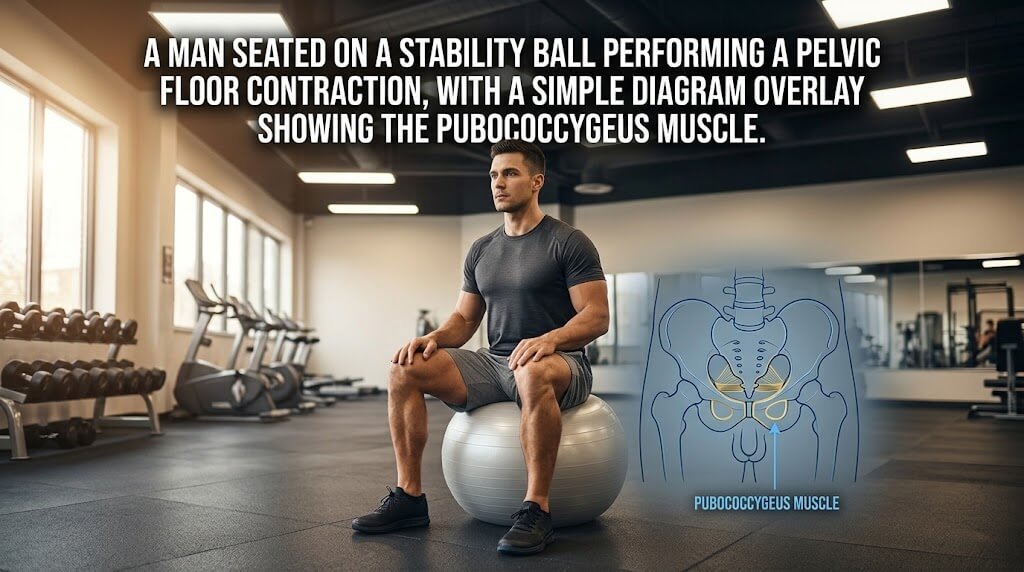
The pelvic floor muscles (the pubococcygeus and surrounding group) support the reproductive organs, aid in blood flow, and contribute to the force of ejaculation. Weak pelvic floor muscles are linked to reduced seminal volume and, in some studies, lower motility scores.
How to do a basic Kegel routine (3x/week, 5 min):
- Identify the muscles: Try to stop your urine mid-stream. That’s the pelvic floor. (Don’t do this regularly—just once to locate the muscle.)
- Squeeze the pelvic floor as if gently pulling up and in. Hold 5 seconds.
- Relax fully for 5 seconds.
- Repeat 10 times = 1 set.
- Do 3 sets per session.
Progression: Increase hold time to 10 seconds. Add quick “flicks” (squeeze and release in 1 second) for 10 reps after the holds.
Regression: If 5-second holds are hard, start with 3-second holds and 5 reps.
This is a small, low-impact habit that takes 5 minutes and has zero equipment cost.
A Sample Weekly Routine for Sperm Health
Here’s how the pieces fit together in a realistic week. This isn’t a “fertility program.” It’s a healthy, active lifestyle that happens to support reproductive function.
| Day | Focus | Details |
| Monday | Strength (full body) | 60-min template above; finish with 5-min Kegel set |
| Tuesday | Moderate cardio | 30-min brisk walk, swim, or upright cycling |
| Wednesday | Strength (full body) | Same template, progress weights |
| Thursday | Active recovery | 20-min walk + 10-min stretching / foam rolling |
| Friday | Strength (full body) | Same template; add 5-min pelvic floor work |
| Saturday | Longer cardio | 45-min hike, bike ride, or sport (soccer, basketball, swimming) |
| Sunday | Rest / light movement | 15-min walk, breathing exercises, prepare meals for the week |
Nutrition overlay: Mediterranean-style meals, 2–3 fatty fish servings, daily vegetables, 1–2 Brazil nuts, pumpkin seeds as a snack. Hydrate with 64–96 oz (1.9–2.8 L) water per day.
Sleep overlay: In bed by 10:30–11 PM, lights out by 11, 7–9 hours target.
Stress overlay: 10 min breathing on Mon/Wed/Fri evenings. One phone-free dinner per week.
This is sustainable. You don’t need to overhaul everything on day one. Pick two or three items, lock them in for 30 days, then add another.
What to Avoid (and Why)
A quick “do not do” list to protect your progress:
- Anabolic steroids or SARMs: These suppress natural testosterone and can reduce sperm count to near zero for months after discontinuation.
- Excessive cycling (>2 hrs/day in a forward lean): Sustained perineal pressure raises temperature and reduces blood flow.
- Tight compression garments worn 24/7: Fine for a workout; not for all-day wear.
- Chronic sleep deprivation (<6 hrs for >2 weeks): Directly lowers testosterone.
- Plastic food containers in the microwave: BPA and phthalates leach into food at high heat. Use glass or BPA-free containers.
- Prolonged hot tub / sauna use: Limit to 15 min, 1–2x/week.
When to See a Doctor
Most men can make the lifestyle changes above and see improvement in 3 months. However, see a urologist or fertility specialist if:
- A semen analysis shows total motility below 40% or progressive motility below 32%
- You’ve been trying to conceive for 12+ months (6+ months if your partner is over 35)
- You have a history of testicular injury, varicocele, undescended testis, or mumps orchitis
- You’re on medications that may affect hormones (finasteride, certain blood pressure meds, opioids)
- You’ve used anabolic steroids in the past 6–12 months
A fertility specialist can order a varicocele ultrasound, hormone panel (testosterone, FSH, LH, estradiol, prolactin), and a repeat semen analysis to rule out structural or medical causes that lifestyle changes alone won’t fix.
This article is for general information and is not a substitute for advice from a doctor or physical therapist.
FAQ
How long does it take to improve sperm motility naturally?
Sperm take approximately 72–74 days to fully develop in the testes. Most men who make consistent lifestyle changes (exercise, diet, sleep, reduced alcohol) will see measurable improvement in a repeat semen analysis after 90 days. Some markers, like oxidative stress levels, may shift within 2–4 weeks.
What exercises specifically increase sperm motility?
There’s no single “sperm exercise.” Moderate cardiovascular exercise (brisk walking, swimming, upright cycling) improves blood flow and reduces oxidative stress. Strength training supports healthy testosterone. Pelvic floor (Kegel) exercises support the muscles involved in ejaculation. Avoid excessive, overtraining volumes that spike cortisol.
Can weight lifting affect sperm count?
Moderate resistance training (3–5x/week, 60–90 min) is associated with maintained or improved testosterone and does not harm sperm. Excessive training (5+ hours/week with no rest) or use of anabolic steroids can suppress the hormonal axis and reduce sperm output.
Does sitting too long reduce sperm motility?
Prolonged sitting (>6 hrs/day) raises testicular temperature and reduces pelvic blood flow. A 2020 study linked high sedentary time to lower sperm concentration and motility. Standing breaks every 45 minutes and 7,000+ daily steps can offset much of this risk.
What is a normal sperm motility percentage?
Per the WHO 2021 reference values, total motility should be at least 40–42%, and progressive motility at least 30–32%. Below these thresholds, a fertility specialist may recommend further evaluation. Individual labs may use slightly different reference ranges.
Do supplements actually help sperm quality?
Targeted, well-dosed nutrients (zinc, selenium, vitamin C, coenzyme Q10, L-carnitine) have shown modest benefits in clinical trials, particularly in men with documented deficiencies or elevated oxidative stress. They are supportive, not a replacement for diet, sleep, and exercise. Always consult a doctor before starting new supplements.
Conclusion
Improving sperm motility naturally isn’t about a single magic food, one specific exercise, or a $60-a-month supplement stack. It’s about stacking small, consistent habits: move your body most days, lift weights without overdoing it, eat colorful whole foods, sleep like it matters (because it does), keep stress in check, protect testicular temperature, and give it a full 90 days before judging results.
The same principles that make you a stronger, more resilient athlete make you a healthier reproductive system. You don’t need to change your whole life overnight. Pick two or three items from this guide, build them into your week, and layer in the rest over the next month. Your next semen analysis will thank you.
And if the numbers still aren’t where you want them after 3–4 months of consistent effort, that’s not a failure. It’s a signal to see a urologist or fertility specialist and rule out structural or hormonal causes that need medical attention.