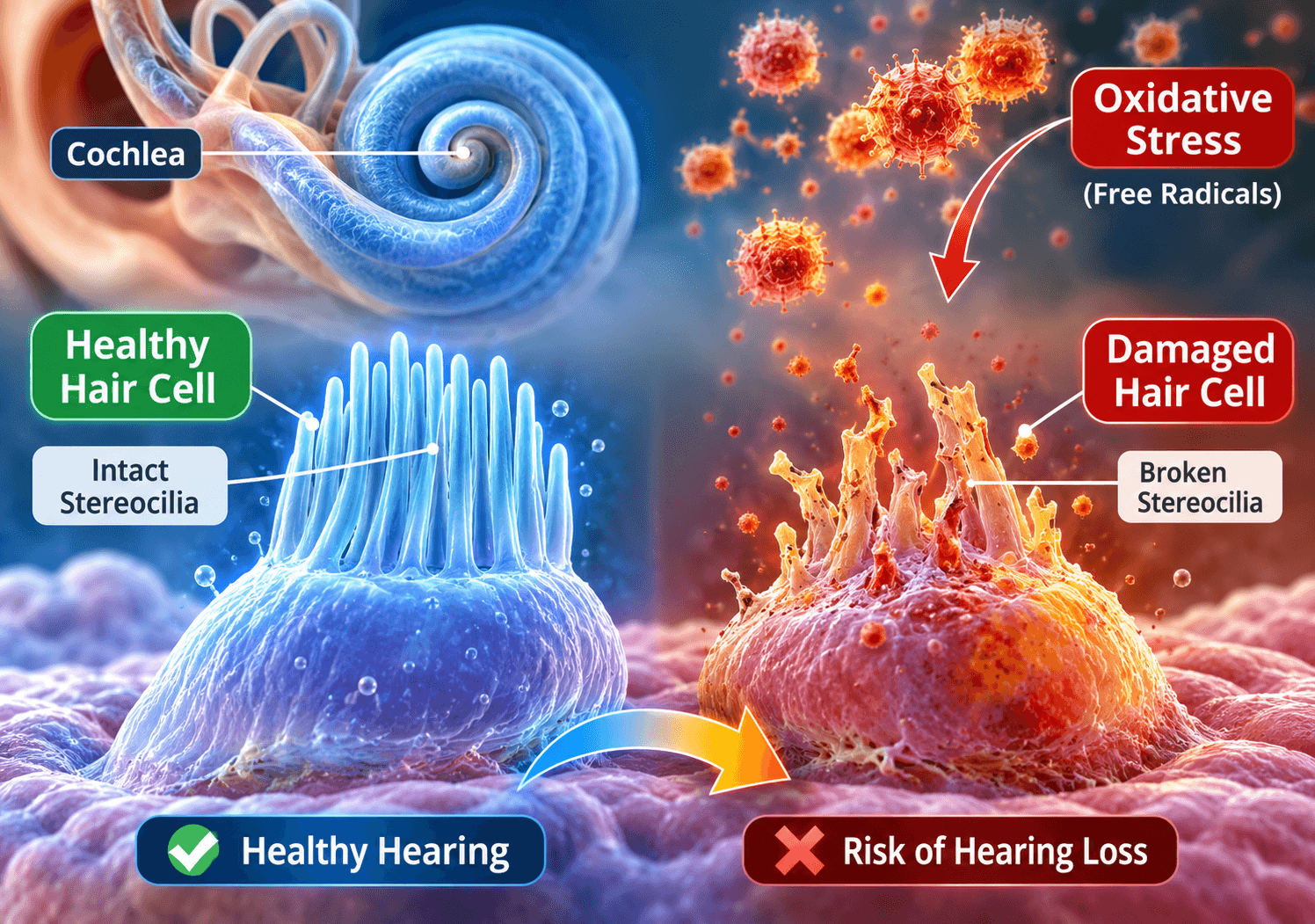
Your hearing relies on tiny, fragile structures deep inside your ear. When these structures break down, hearing loss follows. A major, often overlooked driver of this breakdown is oxidative stress. Understanding how oxidative stress damages inner ear hair cells is the first step toward protecting your long-term auditory health. Whether you are a fitness enthusiast lifting heavy weights, a professional working in loud industrial environments, or simply someone who wants to age well, your cellular health directly impacts your hearing.
Many people assume hearing loss is just an inevitable part of getting older. While age plays a role, the underlying mechanism is largely preventable cellular damage. This guide breaks down the science of free radicals, cochlear damage, and the practical, evidence-based steps you can take to defend your ears and preserve your hearing for decades to come.
Quick Answer
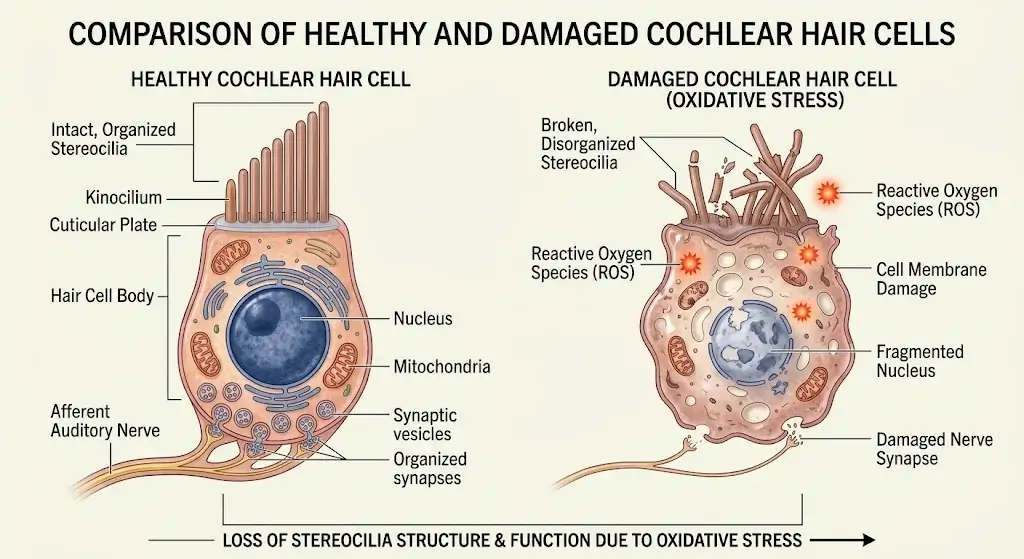
Oxidative stress damages inner ear hair cells when an excess of reactive oxygen species (ROS) overwhelms the ear’s natural antioxidant defenses. This imbalance triggers lipid peroxidation and mitochondrial dysfunction, leading to apoptosis (programmed cell death) of the delicate stereocilia in the cochlea. Once these hair cells die, they do not regenerate in humans, resulting in permanent hearing loss or tinnitus.
Detailed Explanation: What the Research Says
To protect your hearing, you must first understand the anatomy of the ear and the biological processes that threaten it. The science is clear: cellular metabolism and environmental stressors directly dictate the lifespan of your auditory cells.
What Are Inner Ear Hair Cells?
Deep inside your inner ear lies the cochlea, a snail-shaped, fluid-filled organ responsible for translating mechanical sound waves into electrical signals for your brain. Lining the cochlea are thousands of microscopic sensory structures called hair cells. Despite the name, they are not actual hairs like those on your head. They are highly specialized sensory cells topped with tiny, finger-like projections called stereocilia.
The cochlea contains two types of hair cells, each with a distinct job:
- Outer Hair Cells: These act as biological amplifiers. They change shape to boost faint sounds and sharpen the frequency resolution of the ear, allowing you to distinguish a single voice in a crowded room.
- Inner Hair Cells: These are the primary sensory receptors. When sound waves enter the ear, they cause the fluid in the cochlea to ripple. This ripple bends the stereocilia on the inner hair cells, opening tiny ion channels. This process, called mechanotransduction, generates the electrical signal your brain interprets as sound.
Because this mechanotransduction process requires massive amounts of energy, inner ear hair cells are packed with mitochondria and consume exceptionally high levels of oxygen. This high metabolic rate makes them uniquely vulnerable to cellular damage and free radical attacks.
What Is Oxidative Stress?
Oxidative stress occurs when there is a persistent imbalance between the production of reactive oxygen species (ROS), commonly known as free radicals, and the body’s ability to neutralize them with antioxidants. Free radicals are unstable molecules missing an electron. To stabilize themselves, they aggressively steal electrons from healthy cells, proteins, or DNA.
In small, controlled amounts, ROS play a normal, necessary role in cellular signaling and immune defense. However, when free radical production spikes due to environmental or metabolic stressors, it overwhelms the body’s natural defense systems, such as the enzymes superoxide dismutase and glutathione. This state of oxidative stress leads to widespread, cumulative cellular damage.
The Mechanism: How Oxidative Stress Damages Inner Ear Hair Cells
The destruction of auditory hair cells by oxidative stress is not random; it happens through a specific, well-documented biological cascade:
- ROS Accumulation: Triggers like loud noise, aging, or certain medications cause a rapid, massive spike in ROS production within the cochlea.
- Calcium Dyshomeostasis: The excess free radicals damage the ion channels on the hair cells. This causes the channels to stay open, flooding the cell with calcium. High intracellular calcium is highly toxic to the cell.
- Lipid Peroxidation: Free radicals attack the lipid (fat) membranes of the hair cells. This weakens the cell walls, making them leaky, dysfunctional, and unable to maintain their electrical charge.
- Mitochondrial Dysfunction: The mitochondria inside the hair cells become damaged by the calcium flood and ROS. This reduces their ability to produce energy and paradoxically generates even more free radicals, creating a vicious, self-sustaining cycle of damage.
- Apoptosis (Cell Death): The accumulated, irreversible damage activates programmed cell death pathways. The hair cell essentially self-destructs to prevent further damage to surrounding tissue.
Because mammalian inner ear hair cells lack the ability to regenerate, this apoptotic cell death results in permanent, irreversible hearing loss or chronic tinnitus. Extensive research confirms that reactive oxygen species are a primary, direct driver of both noise-induced and age-related hearing loss.
Table: Common Triggers of Oxidative Stress in the Ear
| Trigger | How It Increases Oxidative Stress | Impact on Hair Cells |
| Loud Noise Exposure | Intense sound waves overwork mitochondria, causing a massive, immediate spike in ROS productionpmc.ncbi.nlm.nih.gov. | Rapid lipid peroxidation and acute hair cell death (Noise-Induced Hearing Loss). |
| Aging (Presbycusis) | Natural, cumulative decline in endogenous antioxidant enzymes and mitochondrial efficiency over timepmc.ncbi.nlm.nih.gov. | Gradual mitochondrial dysfunction and slow, progressive hair cell degeneration. |
| Ototoxic Medications | Drugs like aminoglycoside antibiotics or certain chemotherapy agents directly generate free radicals in the cochleapmc.ncbi.nlm.nih.gov. | Rapid, severe apoptosis of hair cells, often starting with high-frequency hearing loss. |
| Cardiovascular Disease | Poor blood flow reduces oxygen delivery while increasing systemic inflammation and ROS. | Compromised cellular repair and accelerated age-related hearing decline. |
| Poor Diet & Metabolism | Diets high in processed foods and low in antioxidants reduce systemic cellular defenses. | Compromised ability to neutralize daily ROS, leaving hair cells vulnerable. |
How to Apply It: Practical Steps to Protect Your Hearing
As a coach, I tell my clients that you cannot control every variable in your environment, but you can absolutely control your cellular defense system. Protecting your inner ear hair cells requires a multi-layered approach combining environmental protection, targeted nutrition, and smart lifestyle habits.
1. Environmental Protection: Control the Noise
The most direct way to prevent ROS spikes in the cochlea is to limit acoustic trauma. You must be proactive about noise exposure.
- Know the Limits: Exposure to noise at 85 decibels (dB) is considered safe for up to 8 hours. For every 3 dB increase, the safe exposure time is cut in half. At 100 dB (common in loud gyms, concerts, or when using power tools), safe exposure drops to just 15 minutes.
- Use Proper Gear: Wear high-fidelity earplugs at concerts, while mowing the lawn, or during loud workouts. For context, dropping a 45 lb (20 kg) weight plate on a hard gym floor can generate sudden noise spikes exceeding 120 dB. This is enough to cause immediate mechanical and oxidative damage to stereocilia.
- Follow the 60/60 Rule: When using headphones or earbuds, listen at no more than 60% volume for no longer than 60 minutes at a time. Give your ears a metabolic break to clear out any accumulated free radicals.
2. Targeted Nutrition: Fuel Your Cellular Defenses
Your body needs specific raw materials to produce endogenous antioxidants like glutathione. Incorporating these nutrients into your daily routine can help neutralize free radicals before they damage your cochlea. Focus on obtaining nutrients that support normal cellular energy and defense through a varied, whole-food diet.
- Magnesium: Clinical studies show magnesium helps protect against noise-induced hearing loss by improving blood flow to the inner ear and directly reducing ROS production. Aim for 300–400 mg daily from foods like spinach, almonds, pumpkin seeds, and black beans.
- Vitamin C and Vitamin E: These work synergistically. Vitamin E is lipid-soluble, meaning it directly embeds in and protects the fatty membranes of hair cells from lipid peroxidation. Vitamin C is water-soluble and helps regenerate used Vitamin E so it can keep working.
- N-Acetylcysteine (NAC): NAC is a powerful precursor to glutathione, the body’s master antioxidant. Research indicates NAC can significantly reduce hair cell damage and preserve hearing thresholds when taken before or after loud noise exposure.
- Astaxanthin and CoQ10: These potent, lipid-soluble antioxidants cross cellular membranes easily, offering robust protection to the mitochondria within the hair cells. You can explore how powerful antioxidants like astaxanthin support cellular health and combat oxidative damage in targeted supplementation guides.
3. Lifestyle Habits: Boost Metabolic Resilience
Your overall metabolic health dictates how well your cells handle stress. A sluggish metabolism produces more waste and fewer defenses.
- Prioritize Sleep: During deep sleep, the brain and auditory system clear out metabolic waste and repair cellular damage. Poor sleep chronically elevates systemic inflammation, worsening oxidative stress throughout the body, including the ears.
- Manage Chronic Stress: High cortisol levels impair the body’s natural antioxidant responses and disrupt metabolic balance. Utilizing evidence-based strategies for managing chronic stress and cortisol levels can indirectly protect your auditory system from metabolic wear and tear.
- Exercise Smartly: Regular, moderate exercise helps boost metabolic flexibility, improving how your mitochondria handle energy production without excessive free radical spillage. However, avoid chronic, extreme overtraining without adequate recovery, as this can temporarily spike systemic oxidative stress and hinder cellular repair.
Sample Daily Routine for Auditory Health
You do not need a complicated regimen to protect your hearing. Integrate these simple habits into your existing routine:
- Morning: Eat a breakfast rich in antioxidants (e.g., spinach omelet with almonds). If you work in a loud environment, take a daily magnesium supplement (consult your doctor first).
- Midday: If you are heading to the gym or a loud worksite, place high-fidelity earplugs in your pocket. Hydrate well, as proper hydration supports the fluid balance in the cochlea (endolymph).
- Evening: Follow the 60/60 rule with headphones. Wind down with a screen-free routine to promote deep, restorative sleep, allowing your body to clear daily metabolic waste.
- Weekly: Ensure your diet includes essential vitamins that support metabolic health, such as leafy greens, berries, and fatty fish, to maintain a strong foundation for cellular resilience.
Safety Notes
While optimizing your nutrition and lifestyle supports cellular health, it is not a cure for existing hearing damage. If you experience sudden hearing loss, persistent ringing in the ears (tinnitus), or a feeling of fullness in your ear after loud noise exposure, seek immediate evaluation from an audiologist or an ear, nose, and throat (ENT) specialist.
Sudden sensorineural hearing loss is a medical emergency. It requires prompt treatment, often with corticosteroids, ideally within 72 hours, to reduce inflammation and salvage remaining hair cells. Delaying treatment significantly reduces the chance of recovery.
Furthermore, if you are considering high-dose antioxidant supplementation, especially if you take prescription medications or have underlying health conditions, consult your healthcare provider first. Some antioxidants can interact with medications or, in extreme excess, act as pro-oxidants, causing the very damage they are meant to prevent.
Related Tips
Coach’s Tip: Think of your ear protection like your lifting belt or knee sleeves. You do not wait until your back hurts to wear a belt; you wear it proactively during heavy sets to prevent injury. Keep a pair of high-fidelity earplugs in your gym bag, car, and wallet. Protecting your ears from a 100 dB environment for 15 minutes is a non-negotiable habit for long-term health.
Common Mistake: Ignoring early tinnitus. Many people dismiss a faint ringing in their ears after a loud concert or workout as “normal” or “just temporary.” This ringing is a direct, biological warning sign that oxidative stress and metabolic exhaustion have occurred in the cochlea. Pushing through this warning without rest, quiet, and antioxidant support accelerates permanent hair cell degeneration. Listen to the ring, and give your ears a 24-hour break from loud noise.

To further support your body’s defense systems, ensure you are consuming vitamins that support metabolism when deficient, as a strong metabolic foundation improves overall cellular resilience against environmental stressors. Additionally, incorporating omega-3 fatty acids to help reduce inflammation can create a less hospitable environment for oxidative damage throughout the body, including the delicate auditory system.
FAQ
How do free radicals damage hearing?
Free radicals, or reactive oxygen species (ROS), steal electrons from the delicate lipid cell membranes of inner ear hair cells. This process, called lipid peroxidation, damages the cell structure, disrupts ion channels, and triggers apoptosis (programmed cell death), leading directly to permanent hearing loss.
Can antioxidants prevent inner ear hair cell death?
Yes, research suggests that antioxidants can neutralize free radicals and significantly reduce hair cell damage. Nutrients like magnesium, NAC, vitamin E, and astaxanthin help support the ear’s natural defense systems, especially when the body is exposed to loud noise or the natural aging process.
What causes oxidative stress in the cochlea?
The primary causes are loud noise exposure, aging, poor diet, and certain ototoxic medications (like specific antibiotics or chemotherapy drugs). These factors force the mitochondria in hair cells to overwork, producing excess ROS that overwhelm local defenses.
Does loud noise increase oxidative stress in ears?
Absolutely. Intense noise drastically overworks the energy demands of the cochlea. This metabolic strain causes a rapid, massive spike in reactive oxygen species, directly leading to oxidative damage, calcium flooding, and noise-induced hearing loss.
How to protect inner ear hair cells from damage?
Protect your ears by limiting exposure to sounds over 85 dB, wearing high-fidelity earplugs in loud environments, eating a diet rich in antioxidants, and maintaining good metabolic health through quality sleep, stress management, and moderate exercise.
Can oxidative stress cause permanent hearing loss?
Yes. Once inner ear hair cells in humans are destroyed by oxidative stress and apoptosis, they do not regenerate. This makes the resulting hearing loss or tinnitus permanent, highlighting the critical need for proactive, daily prevention.
Conclusion
Understanding how oxidative stress damages inner ear hair cells empowers you to take control of your auditory health. The delicate stereocilia in your cochlea work tirelessly to translate sound, but their high energy demands make them uniquely vulnerable to free radical attacks. By combining smart environmental protection, targeted antioxidant nutrition, and healthy lifestyle habits, you can strengthen your cellular defenses. Protect your hearing proactively, because once these cells are gone, they do not come back.