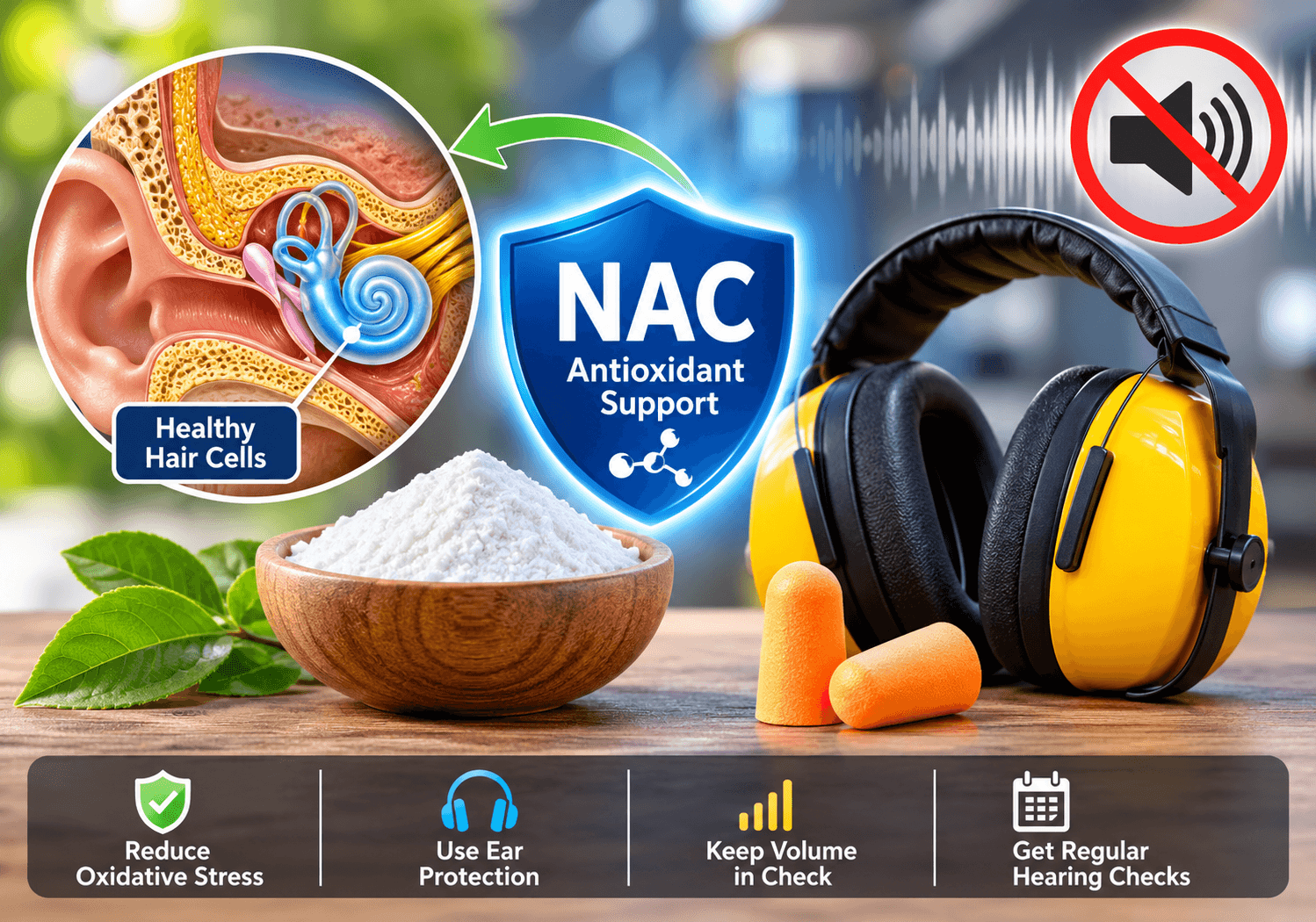
Loud concerts, factory floors, power tools, and earbuds cranked to max volume all push your ears past safe limits. Every year, millions of people develop some degree of permanent hearing damage from repeated noise exposure. If you’ve been searching for a way to add a layer of protection beyond earplugs, you’ve probably come across NAC (N-Acetylcysteine) and wondered: Can NAC prevent noise-induced hearing loss? The short answer is that the science points in a promising direction, but it’s not a magic shield. Here’s what the research says, how NAC works at the cellular level, and what you can realistically do to protect your hearing.
QUICK ANSWER
Animal studies suggest NAC may reduce oxidative stress in the cochlea after loud noise exposure, potentially limiting hair-cell damage. However, no large human trial has confirmed that NAC fully prevents noise-induced hearing loss. Think of NAC as one small piece of a hearing-protection strategy—not a replacement for earplugs, volume limits, or safe listening habits.
What Is NAC and How Does It Work in the Body?
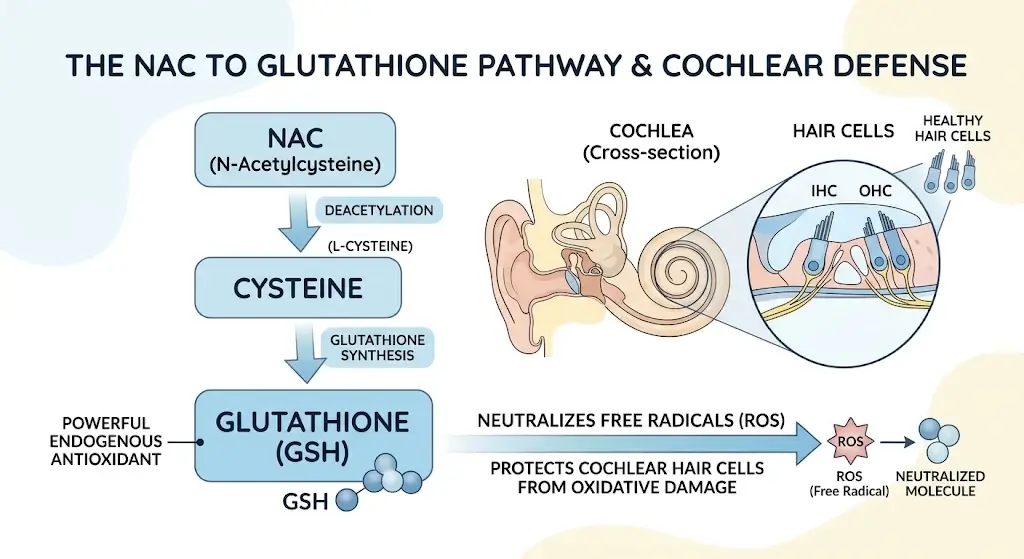
N-Acetylcysteine is a supplemental form of the amino acid cysteine. Your body already makes cysteine, but taking NAC as a supplement gives your cells a ready-made building block they need to produce glutathione, one of the most important antioxidant molecules in human tissue.
Here’s the simple chain:
- You take NAC (usually 600 mg to 1,200 mg in capsule or powder form).
- Your liver and other tissues convert it into cysteine.
- Cysteine combines with glutamine and glycine to form glutathione.
- Glutathione neutralizes free radicals (reactive oxygen species) that build up during cellular stress.
The cochlea—the spiral-shaped structure in your inner ear that converts sound vibrations into electrical signals—is packed with tiny hair cells and supporting cells that are extremely sensitive to oxidative damage. When loud noise floods the cochlea, those cells produce a surge of free radicals. If the antioxidant defenses can’t keep up, the hair cells get damaged or die. Once they die, they don’t regenerate in humans.
NAC’s role, in theory, is to top up the glutathione supply so those cells have a better chance of surviving the oxidative hit.
What Causes Noise-Induced Hearing Loss?
Before we get deeper into NAC, it helps to understand exactly how loud noise damages your ears.
The mechanism, step by step:
- Sound waves travel through your ear canal, vibrate the eardrum, and set the tiny bones of the middle ear in motion.
- Those bones push on the fluid-filled cochlea, causing the hair cells on the basilar membrane to bend.
- Bending hair cells open ion channels, generating the electrical signal your brain reads as sound.
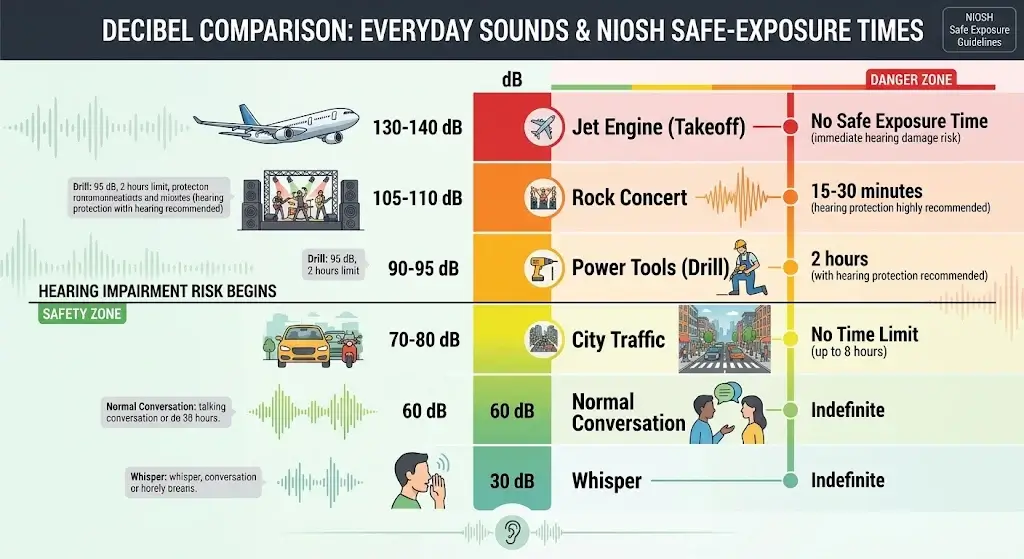
- At high sound pressure levels (roughly above 85 dB for prolonged exposure), the metabolic demand on those hair cells spikes. They burn through oxygen and produce large amounts of reactive oxygen species.
- The resulting oxidative stress damages cell membranes, proteins, and DNA inside the hair cells and the surrounding supporting cells.
- In severe or repeated cases, the hair cells die. The damage is permanent.
The National Institute for Occupational Safety and Health (NIOSH) recommends that workers be exposed to no more than 85 decibels (dB) averaged over an 8-hour workday. For every 3 dB increase above that, the safe exposure time is cut in half. A rock concert at 110 dB, for example, can cause damage in as little as 15 minutes.
The World Health Organization estimates that more than 1.1 billion young people are at risk of permanent hearing loss from unsafe listening practices, and roughly 43% of the world’s population is exposed to noise levels high enough to cause hearing damage.
Can NAC Prevent Noise-Induced Hearing Loss? What the Research Says
This is the core question, and the honest answer is: the evidence is encouraging but not conclusive in humans.
The Oxidative Stress Connection
Noise-induced hearing loss is not just “mechanical” damage to hair cells. A major driver is the oxidative stress cascade I described above. Because NAC boosts glutathione, it sits at the center of the body’s primary defense against that cascade. In laboratory settings, NAC has been shown to:
- Increase glutathione concentrations in cell cultures.
- Reduce lipid peroxidation (a marker of cell-membrane damage) in animal tissues.
- Lower levels of inflammatory cytokines that worsen tissue injury after a stressor.
These findings are well established in the broader antioxidant literature and are reviewed in journals indexed in PubMed. They make a strong biological case for why NAC could help the cochlea.
Animal Studies: What We Know
Several studies in guinea pigs and rats—the standard models for hearing research because their cochlear anatomy closely mirrors ours—have tested NAC before, during, or after noise exposure. The general pattern across these studies:
- Pre-treatment (giving NAC in the hours before noise) showed the most consistent reduction in threshold shifts (the measurable loss of hearing sensitivity) compared to control animals.
- Post-treatment (giving NAC after the noise) showed smaller but still notable protective effects in some protocols.
- The protective effect was most pronounced in the high-frequency range (8,000–20,000 Hz), which is exactly the range most vulnerable to noise trauma.
- Histological (tissue-level) analysis in some studies showed fewer dead or damaged hair cells in NAC-treated animals.
These animal results are published in peer-reviewed otology and pharmacology journals and are indexed in NCBI / PubMed Central. However, animal studies don’t always translate directly to humans. Dosing, noise protocols, and the timeline of treatment differ, and the species’ recovery capacity for hair cells varies.
Human Research: Still Limited
As of the most recent literature available, there is no large, randomized, double-blind human trial that has definitively proven NAC prevents noise-induced hearing loss in people. Some small pilot studies and observational data exist, but they are not yet sufficient to make a firm clinical recommendation.
This is an important distinction. The biological mechanism is sound, the animal data is encouraging, but the human evidence gap means we should frame NAC as a potential supportive measure, not a proven prevention tool.
Coach’s Tip: If you work in a loud environment—construction, manufacturing, music, military, or even a gym where you blast music—do not rely on a supplement as your primary defense. Wear properly fitted earplugs (rated 25–33 NRR for industrial settings) or noise-canceling earmuffs. NAC, if you choose to take it, is a secondary layer, not a replacement.
NAC Dosing and Timing for Hearing Support
If you decide to add NAC to your hearing-protection routine, here’s what the existing animal literature and general NAC supplement guidance suggest. Always check with a doctor or audiologist before starting any new supplement, especially if you take blood thinners, have a bleeding disorder, or are pregnant.
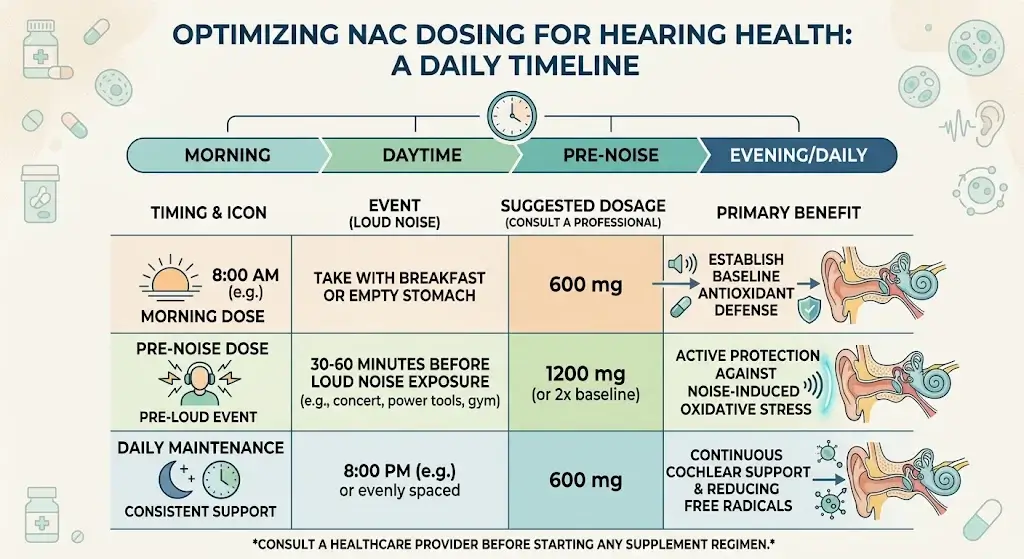
| Factor | Guideline | Notes |
| Typical dose | 600 mg – 1,200 mg per day | Split into 1–2 doses if over 600 mg |
| Timing for noise exposure | 1–2 hours before expected loud noise | Aligns with peak glutathione synthesis window in animal models |
| Daily maintenance | 600 mg once daily with food | For people with regular moderate noise exposure (open-plan office, gym with music) |
| Form | Capsule, tablet, or powder | Powder dissolves in water; some people find it easier on the stomach |
| Duration studied | 7–14 days in animal protocols | Long-term human safety data for daily NAC use is still accumulating |
| What to avoid | Combining with aspirin, NSAIDs, or blood thinners without medical guidance | NAC may have mild antiplatelet effects |
[PHOTO: A clean table graphic or infographic showing the NAC dosing timeline—morning dose, pre-noise dose, and daily maintenance]
How to Apply This: A Practical Hearing Protection Plan
NAC alone won’t save your hearing. The most effective strategy is a layered approach. Here’s a practical plan you can start using today, whether you’re a factory worker, a musician, a gym-goer who listens to podcasts on earbuds, or a parent whose kids are in loud classrooms.
Layer 1: Reduce the Noise at the Source
At work: Follow OSHA’s noise standard, which requires hearing protection when 8-hour time-weighted average exposure reaches 85 dB and mandates audiometric testing at 90 dB.
At the gym or home: Keep earbud volume below 60% of max. Use over-ear headphones with active noise cancellation so you don’t feel the need to crank the volume in a noisy room.
At events: Step back from speakers. Use earplugs rated 15–22 NRR for concerts (you still want to hear the music, just at a safer level).
Layer 2: Wear the Right Protection
- Foam earplugs (e.g., 3M, E-A-R): Cheap, disposable, good for irregular noise.
- Custom-molded earplugs: Made by an audiologist; best for musicians who need flat attenuation across frequencies.
- Earmuffs: Best for very loud industrial settings (100+ dB). Look for a Noise Reduction Rating (NRR) of 25 or higher.
Layer 3: Add an Antioxidant Support Layer (NAC)
- If you have regular, unavoidable noise exposure, discuss with your doctor whether a daily 600 mg NAC supplement is appropriate for you.
- If you know you’ll be in a very loud environment (a concert, a shooting range, a construction site), taking a dose 1–2 hours beforehand may add a small extra margin of antioxidant support, based on the animal data.
- Pair NAC with a balanced diet rich in fruits, vegetables, and omega-3 fatty acids, which also support cellular antioxidant defenses. You can read more about how specific nutrients support normal cellular metabolism on our nutrients for energy metabolism guide.
Layer 4: Get Regular Hearing Checks
- If you work in a noisy environment, get a baseline audiogram and repeat it annually, as OSHA and NIOSH recommend.
- Even if you don’t work in a loud setting, a baseline hearing test in your 30s or 40s gives you a reference point so you can catch early changes.
- See an audiologist if you notice ringing in your ears (tinnitus), muffled sounds, or difficulty following conversations in noisy rooms.
Layer 5: Protect Your Ears from Other Threats
- Avoid inserting cotton swabs or objects into the ear canal.
- Treat ear infections promptly.
- Be cautious with ototoxic medications (certain antibiotics, high-dose aspirin, some chemotherapy drugs) and discuss alternatives with your doctor if you’re concerned.
[PHOTO: A person at a construction site wearing properly fitted earmuffs, with a small inset showing an audiogram printout]

Safety Notes and Who Should Be Cautious
NAC is generally well tolerated at standard supplemental doses, but it’s not risk-free for everyone.
- Bleeding risk: NAC may have mild antiplatelet effects. If you take warfarin, clopidogrel, aspirin, or other blood thinners, talk to your doctor before adding NAC.
- Asthma: In rare cases, inhaled NAC (used as a mucus-thinning treatment for respiratory conditions) can trigger bronchospasm. Oral NAC is less likely to cause this, but if you have reactive airway disease, mention it to your provider.
- GI upset: Some people report mild nausea, heartburn, or loose stools, especially on an empty stomach. Taking NAC with a meal usually helps.
- Pregnancy and breastfeeding: There is not enough safety data for NAC supplementation during pregnancy. Avoid unless a doctor specifically recommends it.
- Kidney or liver conditions: Because NAC is processed by the liver and its metabolites by the kidneys, people with significant organ impairment should get medical clearance first.
If you’re evaluating any new supplement—NAC or otherwise—it’s worth reviewing the ingredient label, third-party testing (look for USP, NSF, or ConsumerLab verification), and potential interactions. Our guide on how to evaluate supplement ingredients walks through a practical checklist you can apply to any product.
Common Mistake: Buying a cheap, unbranded NAC product that doesn’t list the exact milligram dose or third-party test results. You may be getting significantly less (or more) NAC than the label claims. Stick to reputable brands that publish batch-specific certificates of analysis.
Related Tips for Protecting Your Hearing Beyond NAC
A few additional, evidence-based habits that complement any supplement strategy:
- The 60/60 rule for earbuds: Keep volume at or below 60% of maximum, and limit continuous listening to 60 minutes before taking a 10-minute break. This is a widely cited guideline from audiology professionals.
- Use a decibel meter app (or a small hardware meter) to check the actual sound level in your environment. Many free apps give a rough estimate; a $20 hardware meter is more accurate.
- Take “quiet days.” If your job is loud, spend your lunch break or commute in a quiet space. The cochlea needs time to recover its antioxidant balance between exposures.
- Limit alcohol and smoking. Both are linked to increased oxidative stress and reduced blood flow to the inner ear, which can worsen noise-related damage.
- Stay hydrated. The fluids in the cochlea (perilymph and endolymph) need to maintain proper osmotic balance. Chronic dehydration may make the inner ear more vulnerable.
- Manage stress. Chronic stress elevates cortisol, which has been associated in some research with increased vulnerability of auditory neurons. Regular physical activity, adequate sleep, and stress-management practices all help. Our article on how sleep affects metabolism and weight management touches on the broader hormonal and recovery picture, and the same principles apply to auditory health.
Does NAC protect against loud noise damage to ears?
Animal studies suggest NAC can reduce oxidative stress in the cochlea after loud noise exposure, potentially limiting hair-cell damage. However, no large human trial has confirmed full protection. NAC should be viewed as a supportive measure alongside earplugs and volume limits, not a standalone defense.
How much NAC should I take for hearing protection?
Most animal studies used doses that, when scaled to human body weight, fall in the 600 mg to 1,200 mg per day range. If you choose to supplement, 600 mg once daily with food is a common starting point. Consult a doctor before starting, especially if you take other medications.
Can NAC reverse hearing loss from loud music?
No. Once cochlear hair cells die, they do not regenerate in humans. NAC’s potential benefit is protective—reducing the oxidative damage that leads to cell death—not restorative. If you already have measurable hearing loss, see an audiologist about management options such as hearing aids.
What does NAC do for the inner ear specifically?
NAC boosts glutathione production, which helps neutralize the free radicals generated in cochlear hair cells during loud noise exposure. By reducing oxidative stress, NAC may help those cells survive a noise event. The effect is most studied in the high-frequency region of the cochlea.
Is NAC safe to take daily for hearing?
For most healthy adults, 600 mg per day is generally well tolerated. However, long-term daily use data specific to hearing outcomes is limited. If you have bleeding disorders, take anticoagulants, or are pregnant, get medical clearance first.
Should I take NAC before a concert or loud event?
If you’ve discussed it with your doctor, taking a 600 mg dose 1–2 hours before a known loud event is reasonable based on the timing used in animal studies. But the single most effective step is still wearing well-fitted earplugs rated for the expected sound level.
Conclusion: NAC Is One Small Piece, Not the Whole Picture
So, can NAC prevent noise-induced hearing loss? The biological mechanism is solid, the animal data is genuinely encouraging, and the safety profile at standard doses is good. But the human evidence is not yet strong enough to call NAC a proven prevention strategy for noise-induced hearing loss.
What you can do with confidence:
- Wear the right ear protection for your environment.
- Keep personal listening volumes in check.
- Get regular audiometric testing if you have occupational or recreational noise exposure.
- Eat a diet rich in antioxidants and stay well hydrated.
- Talk to a doctor or audiologist about whether a daily NAC supplement makes sense for your specific situation.
Your hearing is something you use every day and cannot replace. Protect it with the tools that have the strongest evidence—volume limits, earplugs, and regular checkups—and treat NAC as a reasonable, low-risk supplement to discuss with your healthcare provider if you want an extra layer of antioxidant support.