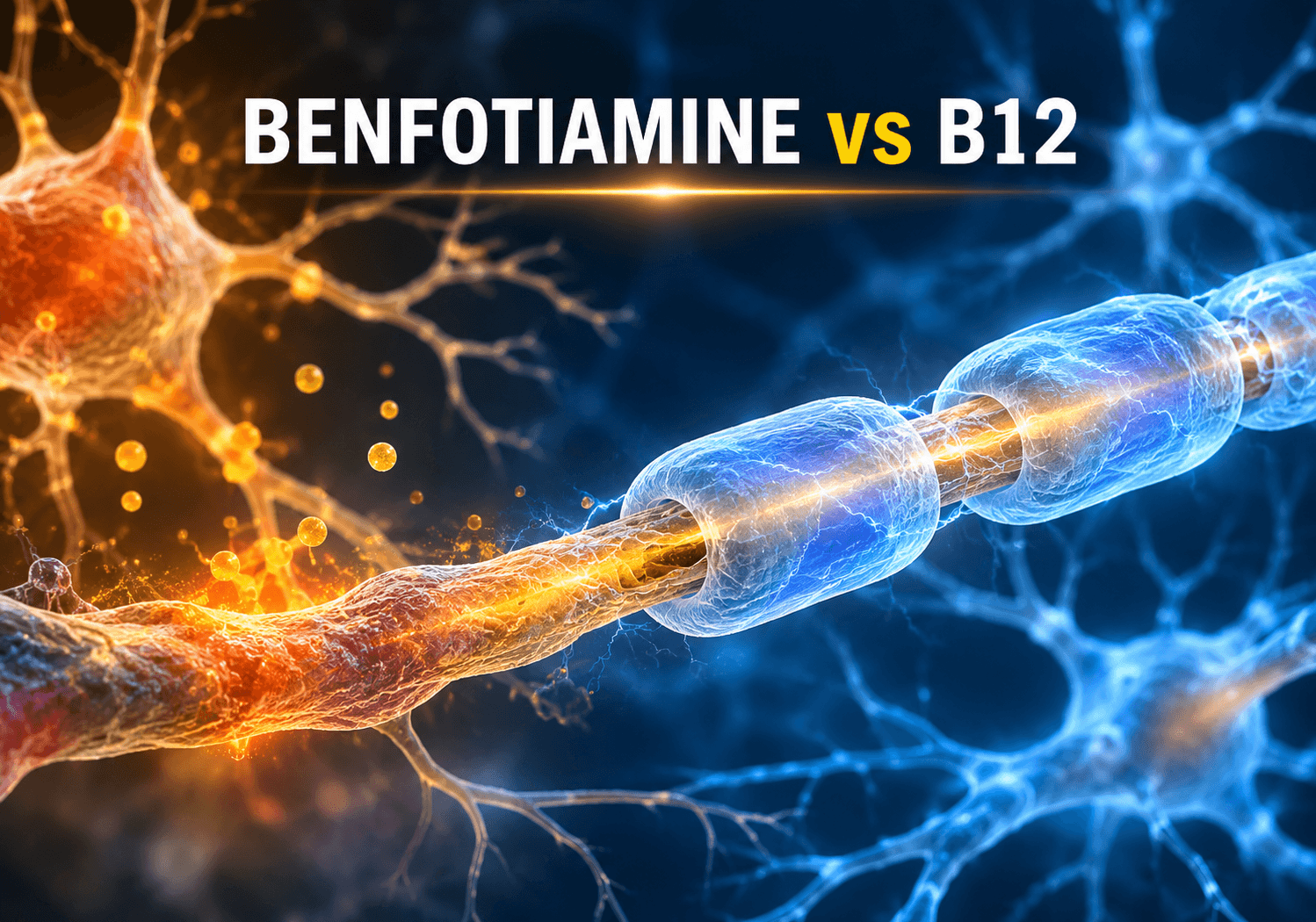
The fundamental distinction between benfotiamine and standard water-soluble vitamins lies in their chemical structure and cellular permeability. Standard thiamine (Vitamin B1) is water-soluble, meaning it has limited ability to cross lipid-rich cell membranes in high concentrations. Benfotiamine is a synthetic S-acyl derivative of thiamine where the thiazole ring is opened, creating a lipid-soluble (fat-soluble) molecule.
This fat-soluble structure allows benfotiamine to diffuse directly through plasma membranes of nerve cells, skeletal muscle tissue, and vascular endothelia. According to research published in the National Institutes of Health PubMed Central database, benfotiamine administration achieves blood and tissue thiamine levels up to five times higher than water-soluble thiamine hydrochloride.
Methylcobalamin’s Active Coenzyme Matrix
Methylcobalamin, on the other hand, is one of the two active coenzyme forms of Vitamin B12 utilized by the human body (alongside adenosylcobalamin). Standard supplemental B12 (cyanocobalamin) requires the liver to strip away a cyanide molecule and attach a methyl or adenosyl group before the body can utilize it.
Methylcobalamin is already bioidentical to the B12 circulating in human cerebrospinal fluid and blood plasma. Because it requires no metabolic conversion, it readily enters neural tissues to participate directly in biochemical methylation reactions and nucleic acid synthesis.
Mechanism of Action in Peripheral Neuropathy
How Benfotiamine Combats Glycemic Neuropathy
In conditions like diabetes and prediabetes, chronic high blood glucose floods cellular pathways with excess sugar molecules. This excess glucose is shunted into harmful intracellular pathways, producing toxic metabolic byproducts known as Advanced Glycation End-products (AGEs) and activating protein kinase C. These destructive compounds damage the small blood vessels (vasa nervorum) that feed peripheral nerves, starving them of oxygen and nutrients.
Benfotiamine halts this destruction by activating an enzyme called transketolase. Transketolase reroutes the toxic glucose byproducts away from destructive pathways and into harmless metabolic routes. By blocking AGE formation, benfotiamine protects endothelial cells and preserves nerve conduction velocity in diabetic subjects, as documented by clinical trials highlighted in Harvard Health Publishing.
How Methylcobalamin Repairs Myelin and Axons
Methylcobalamin operates through a completely different biochemical pathway centered on neural repair and protection. As a potent methyl donor, methylcobalamin is essential for the synthesis of methionine from homocysteine. This reaction produces S-adenosylmethionine (SAMe), which is required for the creation and maintenance of the myelin sheath—the protective insulating layer surrounding nerve fibers.
When myelin degrades due to B12 deficiency, aging, or metabolic stress, electrical impulses fire erratically or fail entirely, leading to numbness, tingling, and weakness. Methylcobalamin enhances nerve regeneration, stimulates the synthesis of structural proteins in growth cones, and protects neurons from glutamate-induced neurotoxicity. Research reviewed by the Mayo Clinic confirms that active B12 coenzymes play a critical role in reversing functional deficits associated with peripheral neuropathies.
Primary Target Symptoms: Which Pain Profile Matches Which Vitamin?
Matching your supplement choice to your specific presentation of nerve pain is essential for achieving meaningful relief. Not all neuropathies share the same root cause.
Symptoms Best Suited for Benfotiamine
- Burning Feet Syndrome: A hot, prickling sensation in the soles of the feet, particularly severe at night.
- Sharp, Shooting Stabs: Sudden lightning-like pains radiating through the calves, toes, or fingers.
- Diabetic Paresthesia: Chronic tingling and numbness linked to elevated HbA1c levels or metabolic syndrome.
- Vascular Extremity Pain: Aching legs worsened by microvascular constriction and poor localized blood flow.
Symptoms Best Suited for Methylcobalamin
- Loss of Proprioception: Difficulty feeling the floor beneath your feet, leading to balance issues or stumbling in the dark.
- Glove-and-Stocking Numbness: A steady, dull loss of sensation creeping up from the fingers and toes toward the core.
- Motor Weakness: Difficulty gripping objects or lifting the forefeet (foot drop) due to impaired nerve signaling.
- Macrocytic Anemia Indicators: Accompanying symptoms such as brain fog, chronic fatigue, smooth tongue, or memory lapses.
Dosing Protocols, Pharmacokinetics, and Administration
Getting the dosage right is critical when utilizing nutritional supplements for neurological recovery. Unlike quick-acting pain relievers, these compounds work systematically over weeks and months to repair cellular machinery.
Benfotiamine Dosing and Usage
Clinical trials evaluating benfotiamine for diabetic neuropathy typically employ dosages ranging from 300mg to 600mg daily, divided into two or three doses.
- Starting Dose: 150mg taken twice daily with meals to assess gastrointestinal tolerance.
- Therapeutic Dose: 300mg twice daily (600mg total) for individuals dealing with persistent, severe burning pain.
- Coach’s Tip: Always take fat-soluble benfotiamine with a meal containing healthy dietary fats (such as avocado, olive oil, or eggs) to maximize intestinal absorption and bioavailability.
Methylcobalamin Dosing and Usage
Because oral absorption of Vitamin B12 relies heavily on gastric intrinsic factor—which declines with age and digestive issues—higher oral doses or sublingual administration are often necessary.
- Standard Maintenance: 1,000mcg (1mg) daily taken sublingually (dissolved under the tongue).
- High-Potency Neuropathy Protocol: 2,000mcg to 5,000mcg daily for severe B12 deficiency or advanced axonal numbness.
- Common Mistake: Swallowing sublingual tablets whole with water. Sublingual delivery allows direct mucosal absorption into the bloodstream, bypassing harsh gastric acid that can degrade active cobalamins.
When to Choose Benfotiamine
Choose benfotiamine if your nerve pain is primarily driven by glycemic stress, insulin resistance, or diabetes. If your blood glucose levels fluctuate wildly or if you have been diagnosed with peripheral neuropathy secondary to metabolic syndrome, benfotiamine directly targets the glycation pathways responsible for your symptoms.
Furthermore, if you experience classic small-fiber neuropathy symptoms—such as intense burning in the feet and hypersensitivity to touch—benfotiamine’s ability to cross cell membranes and activate transketolase makes it the superior primary intervention.
When to Choose Methylcobalamin
Choose methylcobalamin if blood tests reveal a Vitamin B12 deficiency, if you follow a strict vegan or vegetarian diet (as plant foods lack natural B12), or if you take acid-suppressing medications like proton pump inhibitors (PPIs) that impair B12 absorption.
Additionally, if your nerve symptoms involve large-fiber loss—such as loss of balance, vibration sense, poor coordination, and deep muscle weakness—methylcobalamin is essential for rebuilding damaged myelin sheaths and restoring nerve conduction velocity.
Combining Both: Can You Take Benfotiamine and Methylcobalamin Together?
Many clinicians and strength coaches advocate for a combination protocol. Because nerve damage in chronic neuropathy is rarely caused by a single isolated mechanism, addressing both glycemic metabolic stress (via benfotiamine) and myelin sheath degradation (via methylcobalamin) yields superior clinical outcomes.
Synergistic Neuropathy Support Protocol
- Morning Routine: 300mg benfotiamine taken with breakfast containing healthy fats, alongside a multivitamin.
- Midday Routine: 1,000mcg to 2,000mcg sublingual methylcobalamin dissolved under the tongue.
- Evening Routine: 300mg benfotiamine taken with dinner.
- Duration: Commit to a minimum 12-week trial period, as nerve tissue regenerates very slowly (approximately 1mm per month).
Cost Comparison and Value Analysis
When building a long-term supplement regimen, budget is an important consideration. Neuropathy supplements are typically required for months or years to maintain nerve health and prevent symptom relapse.
| Supplement Type | Average Cost per Month (30–60 day supply) | Value & Economic Factors |
| Benfotiamine (150–300mg caps) | $\$20\text{–}45$ per bottle | Moderate cost; specialized synthesis makes it pricier than standard B1, but highly effective for targeted pain. |
| Methylcobalamin (1,000–5,000mcg sublingual) | $\$12\text{–}30$ per bottle | Highly economical; active coenzyme forms are widely available and cost-effective in bulk quantities. |
| Combined Neuropathy Formulas | $\$35\text{–}70$ per bottle | Convenient all-in-one blends combining B1, B6, B12, and alpha-lipoic acid, though often at fixed, non-adjustable doses. |
Practical Exercise & Movement Modifications for Nerve Pain
When dealing with peripheral neuropathy, staying active is crucial for maintaining metabolic health, but traditional high-impact exercises can exacerbate foot pain and increase fall risks. As a coach, I always modify training loads to protect compromised neural tissues while maintaining cardiovascular and muscular conditioning.
Regression: Seated Resistance Band Training
If standing or walking triggers sharp shooting pains in your feet, shift your workouts to a seated position. Using resistance bands anchored to a sturdy chair allows you to maintain muscle mass and joint mobility without pounding your lower extremities.
- Sets & Reps: 3 sets of 12–15 repetitions per exercise.
- Tempo: Controlled 3-second eccentric (negative) phase, 1-second isometric hold at peak contraction.
- Rest: 60 seconds between sets.
Progression: Low-Impact Stationary Cycling
Once your neuropathic symptoms begin to subside and balance improves, stationary cycling offers an exceptional low-impact cardiovascular stimulus. It increases lower-limb blood circulation (delivering oxygen and nutrients to damaged nerves) without the ground-reaction forces of running.
- Duration: 20 to 30 minutes at a moderate conversational pace (RPE 4 out of 10).
- Resistance: Light to moderate resistance to keep cadence steady between 70–85 RPM.

Frequently Asked Questions
Which vitamin B is best for nerve pain?
Neither vitamin is universally “best” on its own; it depends entirely on the root cause of your neuropathy. Benfotiamine is superior for diabetic and glycemic-induced nerve pain, while methylcobalamin is best for B12 deficiencies, pernicious anemia, and myelin sheath repair. Many patients achieve the best results by combining both nutrients under medical supervision.
Can you take benfotiamine and methylcobalamin together?
Yes, taking benfotiamine and methylcobalamin together is safe and commonly recommended for comprehensive nerve support. They work through entirely different mechanisms—benfotiamine blocks toxic glucose metabolites in blood vessels, while methylcobalamin repairs nerve fibers and myelin. Always consult your physician before combining high-dose supplements with prescription medications.
How long does benfotiamine take to work for neuropathy?
Benfotiamine typically requires 4 to 12 weeks of consistent daily supplementation to produce noticeable reductions in burning pain and numbness. Because peripheral nerves regenerate extremely slowly—often growing at a rate of only 1mm per day—patience and strict adherence to your dosing schedule are essential for success.
Is methylcobalamin better than regular cyanocobalamin for nerve damage?
Yes, methylcobalamin is considered superior to cyanocobalamin for neurological conditions. Cyanocobalamin contains a cyanide molecule that the body must detoxify and remove, whereas methylcobalamin is a bioidentical active coenzyme that immediately enters neural pathways to support myelin synthesis without requiring liver conversion.
What causes peripheral neuropathy tingling?
Peripheral neuropathy tingling occurs when delicate sensory nerve endings are damaged by metabolic disorders, vitamin deficiencies, autoimmune diseases, physical trauma, or toxic exposures. This damage disrupts normal electrical signal transmission between your extremities and your central nervous system, creating false sensations like pins and needles, burning, or numbness.
Are there natural dietary sources of benfotiamine?
Benfotiamine is a synthetic derivative and does not occur naturally in whole foods in significant quantities. While standard thiamine (Vitamin B1) is found abundantly in pork, sunflower seeds, beans, lentils, and whole grains, therapeutic doses required to treat neuropathy can only be achieved reliably through concentrated supplementation.
Conclusion
Managing peripheral neuropathy requires a targeted, evidence-based approach that addresses the underlying physiological causes of nerve degeneration. Evaluating benfotiamine vs methylcobalamin for nerve pain demonstrates that these two compounds are complementary powerhouses rather than mutually exclusive choices. Benfotiamine defends your vascular and neural tissues against toxic glucose metabolites and oxidative stress, while methylcobalamin restores myelin insulation and supports axonal regeneration. By identifying the root cause of your discomfort, optimizing your daily dosages, and pairing your supplement protocol with intelligent low-impact movement, you can reclaim your mobility, reduce daily pain, and support long-term neurological health.