
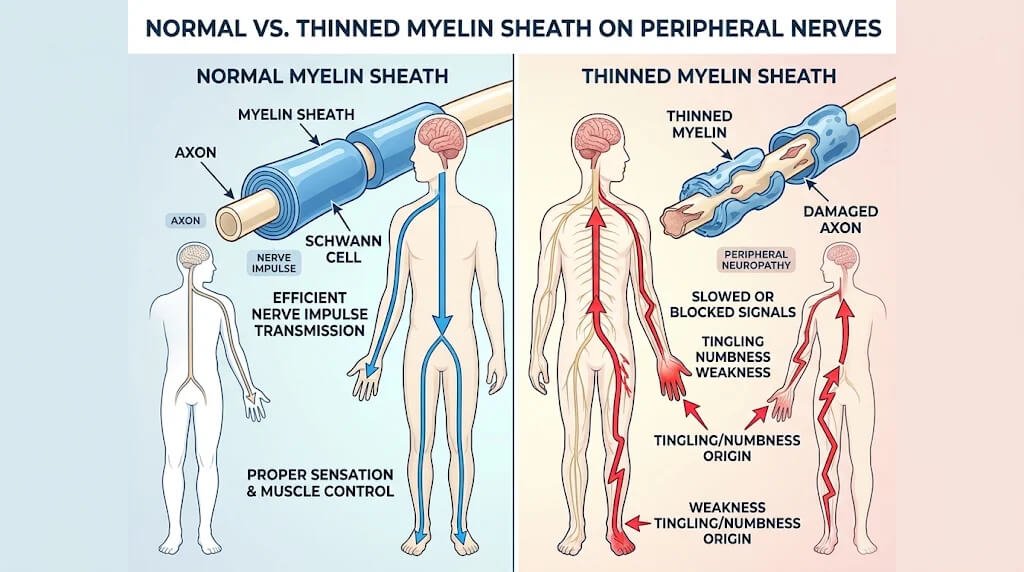
You walk into the gym, grip a pair of dumbbells, and feel a strange pins-and-needles sensation crawl up your fingers. Or maybe it hits you at 2 a.m. when you slide into bed and your toes go numb for twenty minutes. If that keeps happening, you might be wondering whether vitamin B12 deficiency tingling hands and feet is connected. The short answer: yes, it can be. Low levels of cobalamin (the chemical name for B12) affect the myelin sheath that wraps around your nerves, and when that insulation thins, you get paresthesia—those buzzing, tingling, or “electric” feelings in your extremities.
As a strength and conditioning coach, I see athletes and everyday lifters who push through tingling because they assume it’s just “tight muscles” or poor circulation. Ignoring it is a mistake. Nerve symptoms from a B12 shortfall are treatable, but the window for full recovery narrows the longer you wait. This article walks through what’s happening in your nervous system, who is at risk, how to get a proper diagnosis, and practical steps to bring your levels back into range.
Quick Answer:
Vitamin B12 deficiency tingling hands and feet happens when low cobalamin levels damage the myelin sheath around peripheral nerves, causing paresthesia (pins-and-needles, burning, or numbness) in the fingers and toes. Symptoms are reversible if caught early. Blood tests (serum B12, methylmalonic acid, homocysteine) confirm the diagnosis, and treatment with B12 supplements or injections typically resolves tingling within weeks to months.
What Is Vitamin B12 and Why Your Nerves Need It
Vitamin B12, also called cobalamin, is a water-soluble vitamin your body uses for two jobs that matter a lot to your nervous system:
- Myelin production. B12 helps build and maintain the myelin sheath, the fatty coating that insulates nerve fibers. Think of it like the rubber coating on an electrical wire. Without it, nerve signals leak, slow down, or misfire.
- Red blood cell formation. B12 works with folate to make healthy red blood cells. When B12 is low, your body produces fewer, larger red blood cells (macrocytic anemia), which means less oxygen reaches every tissue—including the small nerves in your hands and feet.
Your body stores B12 in the liver, so you can go several months without eating B12-rich food before symptoms show up. That silent period is exactly why tingling often surprises people.
The NIH Office of Dietary Supplements notes that the recommended daily allowance for adults is 2.4 micrograms per day, with higher needs during pregnancy and lactation .
How B12 Deficiency Causes Tingling in Hands and Feet
Here is the chain of events, simplified:
- B12 levels drop. Your liver stores run low because of poor absorption, low dietary intake, or a medication that blocks uptake.
- Myelin thins. Nerves in the peripheral nervous system—especially the long ones running from your spine to your fingertips and toes—lose insulation.
- Nerve conduction slows or misfires. The damaged nerve sends abnormal signals to your brain, which you interpret as tingling, buzzing, burning, or numbness.
- Symptoms start in the extremities. The longest nerve fibers (median nerve in the hand, sciatic and peroneal nerves in the foot) are hit first. That is why vitamin B12 deficiency tingling hands and feet is the classic early presentation of peripheral neuropathy linked to B12.
A 2019 review in Neurology confirmed that subclinical B12 deficiency (levels in the “low-normal” range of 200–400 pg/mL) can produce neurological symptoms even before anemia appears . In other words, you can have tingling hands and feet and a perfectly normal hemoglobin count.
Coach’s Tip: If you notice tingling that is symmetric (both hands or both feet at the same time), starts in the fingertips or toes, and gets worse at night or after long stretches of sitting, that pattern is a red flag for a nutritional or metabolic nerve issue. Don’t just stretch it out. Get bloodwork.
Who Is at Higher Risk for B12 Deficiency and Nerve Symptoms
Not everyone is equally likely to run low. The Cleveland Clinic and Mayo Clinic both flag these risk groups :
- Vegans and strict vegetarians. B12 is found naturally in animal products. Plant-based eaters who don’t supplement are at the highest dietary risk.
- People with pernicious anemia. An autoimmune condition where the stomach stops producing intrinsic factor, the protein your gut needs to absorb B12.
- Gastric bypass or bariatric surgery patients. Removing part of the stomach or small intestine cuts off the main absorption site.
- Long-term metformin users. Metformin, a common diabetes medication, can reduce B12 absorption over time. The FDA has required a warning label on metformin since 2010 .
- Older adults (50+). Stomach acid production declines with age, making B12 absorption less efficient.
- People with chronic GI conditions. Crohn’s disease, celiac disease, and atrophic gastritis all impair absorption.
- Heavy alcohol users. Alcohol damages the stomach lining and interferes with nutrient uptake.
If you fall into one or more of these categories and you’re feeling that familiar tingle in your fingers or toes, B12 is worth checking before you blame your desk chair or your running shoes.
What B12 Deficiency Tingling Hands and Feet Feels Like (Symptom Progression)
Tingling doesn’t hit all at once. It tends to follow a pattern as B12 levels continue to fall. The table below breaks down what you might notice at each stage.
| Stage | Typical B12 Range (pg/mL) | What You Feel | Other Possible Signs |
| Early | 200–300 (low-normal) | Mild tingling or “pins and needles” in fingertips and toes, usually symmetric, worse at night | Fatigue, mild brain fog, pale skin |
| Moderate | 150–200 | Tingling spreads up the hands and down the shins; burning or “electric shock” sensations; mild numbness when gripping objects | Unsteady gait, shortness of breath, pale or yellowish skin, smooth/glossy tongue |
| Advanced | <150 | Persistent numbness, loss of fine motor control (dropping things, trouble buttoning shirts), balance problems | Macrocytic anemia, memory issues, mood changes, in severe cases spinal cord changes (subacute combined degeneration) |
A key point from Harvard Health: neurological symptoms can appear at B12 levels that a standard lab report still calls “normal” (the typical reference range is 200–900 pg/mL). If your level is 210 and you have tingling, ask your doctor to also check methylmalonic acid (MMA) and homocysteine levels. Both rise when functional B12 is low, even if the serum B12 number looks borderline .
How to Get Diagnosed: Tests and What They Show
You don’t have to guess. A primary-care physician, hematologist, or neurologist can run a straightforward panel:
- Serum vitamin B12 level. The first-line test. Below 200 pg/mL is generally considered deficient; 200–300 is the gray zone where functional deficiency is possible.
- Methylmalonic acid (MMA) blood test. MMA rises specifically when B12 is functionally low. A normal B12 with elevated MMA points to a B12 problem.
- Homocysteine level. Elevated in both B12 and folate deficiency. Used alongside MMA to narrow the cause.
- Complete blood count (CBC) with differential. Checks for macrocytic anemia (high mean corpuscular volume, or MCV).
- Intrinsic factor antibodies / anti-parietal cell antibodies. Screen for pernicious anemia if B12 is low and no other cause is obvious.
- Nerve conduction study (NCS) / electromyography (EMG). If tingling has been present for months or is worsening, a neurologist may order this to measure how fast electrical signals travel in your peripheral nerves.
- MRI of the spine (in advanced cases). To rule out or confirm subacute combined degeneration of the dorsal columns.
Common Mistake: Waiting six months or a year because “it’s probably nothing.” Peripheral neuropathy from B12 deficiency is one of the few nerve problems that is fully reversible if you treat it before permanent axonal damage sets in. The longer the myelin stays compromised, the harder it is to rebuild. If tingling has been present for more than a few weeks, get tested.
Treatment Options for B12 Deficiency Tingling Hands and Feet
Treatment depends on how low your level is, why it’s low, and whether anemia is present. Here is what a typical treatment path looks like:
Oral and Sublingual Supplements
- Dose: 1,000–2,000 micrograms (mcg) of cyanocobalamin or methylcobalamin daily for mild deficiency or as maintenance.
- Form: Sublingual (under the tongue) tablets or lozenges bypass the stomach and can be useful if absorption is the issue.
- Timeline: You may notice energy improving within a week or two. Tingling often starts to ease within 4–8 weeks, though full nerve recovery can take 3–6 months.
B12 Injections (Intramuscular)
- When used: Severe deficiency (B12 < 200 pg/mL), confirmed pernicious anemia, post-bariatric surgery, or when oral absorption is unreliable.
- Typical protocol: A loading phase of 1,000 mcg intramuscularly every other day or weekly for 2–4 weeks, then a maintenance injection monthly or every 2–3 months for life (especially in pernicious anemia).
- Forms: Cyanocobalamin or hydroxocobalamin.
- Timeline: Tingling and numbness often improve within 2–6 weeks of starting injections, according to case series published in The Journal of Neurology, Neurosurgery & Psychiatry .
Dietary Rebuilding
Supplements and injections fix the immediate deficit, but your daily food still matters. B12-rich sources include:
| Food | Approx. B12 per Serving |
| Clams (3 oz / 85 g) | ~84 mcg |
| Beef liver (3 oz / 85 g) | ~71 mcg |
| Salmon (3 oz / 85 g) | ~4.8 mcg |
| Tuna (3 oz / 85 g) | ~2.5 mcg |
| Eggs (1 large) | ~0.6 mcg |
| Fortified plant milk (1 cup / 240 mL) | ~1.0–1.5 mcg |
| Fortified nutritional yeast (2 tbsp / 16 g) | ~2–8 mcg (varies by brand) |
If you follow a plant-based diet, a daily B12 supplement of at least 25–100 mcg (or 2,000 mcg once a week) is essential. The NIH recommends that vegans pay particular attention to B12 intake because no reliable plant source exists in meaningful amounts.
Can You Reverse Nerve Damage From B12 Deficiency?
This is the question everyone asks, and the honest answer is: it depends on how early you catch it.
- Early-stage myelin damage (weeks to a few months): Research consistently shows that restoring B12 levels allows the myelin sheath to rebuild. Tingling, numbness, and balance issues can resolve completely. A 2021 case series in Practical Neurology documented full neurological recovery in patients treated within 3 months of symptom onset.
- Moderate-stage damage (months to ~1–2 years): Recovery is likely but slower. Some residual tingling or mild numbness may linger, especially in the toes. Physical therapy and gentle nerve-gliding exercises can support recovery.
- Advanced / chronic damage (years): If the deficiency went untreated for a long time, some nerve fibers may have undergone axonal loss. In these cases, improvement is possible but full reversal is less certain. A neurologist will guide long-term monitoring.
The takeaway: the sooner you address a B12 shortfall, the better your odds of the tingling going away completely.

Practical Steps to Support B12 Levels and Nerve Health
You don’t need a complicated protocol. Here is a straightforward, coach-style checklist you can start this week:
- Get tested. Ask your doctor for a serum B12, MMA, homocysteine, and CBC with MCV. Don’t wait for anemia to develop.
- Start supplementation if indicated. If your doctor confirms low or borderline levels, take the prescribed dose (oral, sublingual, or injection). Set a phone reminder so you don’t miss a day.
- Eat B12-rich foods 3–4 times per week. If you eat animal products, aim for a serving of fish, eggs, or lean meat most days. If you’re vegan, use a fortified food or a dedicated B12 supplement.
- Review your medications. If you take metformin, PPIs (omeprazole, lansoprazole), or H2 blockers (famotidine), mention your B12 results to your prescribing doctor. They may adjust your dose or add a supplement.
- Move your body gently. Light walking, swimming, or cycling for 20–30 minutes most days supports circulation to the extremities and keeps the small nerves in your hands and feet “active.” You don’t need to run marathons. A brisk 2-mile (3.2 km) walk after dinner is plenty.
- Protect your hands and feet. Wear supportive shoes with good arch support. Avoid tight gloves or rings that compress the median or ulnar nerve. If you type for hours, take a 2-minute break every 30 minutes to shake out your hands.
- Track your symptoms. Keep a simple note: date, which fingers/toes, intensity (1–10), what made it better or worse. Bring this log to follow-up appointments. It helps your doctor see whether treatment is working.
- Follow up at 4–6 weeks. Recheck B12 and MMA to confirm your levels are rising. If tingling hasn’t improved by 8–12 weeks, go back and ask whether a different cause (diabetic neuropathy, thyroid issue, cervical spine problem) is contributing.
Coach’s Tip: If you’re a vegan lifter or a post-bypass patient, don’t rely on “I feel fine” as your gauge. B12 stores can be quietly depleting for 12–18 months before you notice anything. Get a B12 panel once a year as part of your routine bloodwork. It costs little and catches the problem while it’s still easy to fix.

Safety Notes and When to See a Doctor
Tingling in your hands and feet is usually not an emergency, but there are scenarios where you should seek prompt medical attention:
- Sudden, one-sided weakness or numbness (face, arm, or leg on one side) → call emergency services. This pattern suggests a stroke, not a vitamin issue.
- Rapidly progressive weakness in your legs, difficulty walking, or loss of bowel/bladder control → see a doctor within 24–48 hours. This can signal spinal cord involvement (subacute combined degeneration).
- Tingling that worsens despite 8–12 weeks of B12 treatment → your doctor needs to look for other causes (diabetes, autoimmune neuropathy, cervical or lumbar disc issues).
- You are pregnant or postpartum and notice new tingling → contact your OB or primary-care provider before starting any new supplement dose.
This article is for general information and is not a substitute for advice from a doctor or physical therapist. If you are experiencing persistent tingling, numbness, or weakness, please schedule an appointment with your primary-care physician or a neurologist for proper evaluation.
Related Tips for Overall Nerve and Energy Health
B12 doesn’t work in isolation. A few other habits that support nerve function and overall energy:
- Keep folate (B9) in check. B12 and folate work together in the methylation cycle. A high-folate diet (leafy greens, legumes, fortified grains) complements B12. However, very high folate supplementation can mask a B12 deficiency, so don’t mega-dose folic acid without checking your B12 first.
- Manage blood sugar. Even pre-diabetic glucose levels can cause mild peripheral neuropathy that mimics or compounds B12-related tingling. A balanced plate with lean protein, fiber, and healthy fats helps. You can learn more about how to support metabolism naturally through food choices that keep glucose steady.
- Prioritize sleep. Poor sleep impairs nerve repair and increases inflammation. Aim for 7–9 hours. If you struggle with sleep quality, our guide on how sleep affects metabolism and weight management covers the hormonal side of things.
- Don’t skip other micronutrients. Magnesium, potassium, and vitamin D all play roles in nerve conduction and muscle function. A broad, whole-food diet covers most bases. If you’re on a calorie-restricted plan, a multivitamin with B-complex support can fill small gaps.
- Stay active but don’t overdo it. High-impact training on already-irritated nerves (like pounding pavement on numb feet) can worsen symptoms. Swap a hard run for a bike ride or pool session until the tingling settles. Our article on increasing energy and stamina naturally has low-impact options that keep your cardiovascular system happy without stressing the extremities.
- Watch your alcohol intake. Chronic alcohol use depletes B12, B1, and folate and directly irritates peripheral nerves. If you drink, keep it moderate (up to 1 drink/day for women, 2 for men, per CDC guidelines) and make sure you’re getting enough B vitamins on the days you do drink.
Understanding the role of B12 in energy production can also help you make smarter choices about vitamins for energy while dieting, especially if you’re in a caloric deficit and your nutrient margins get tighter.
FAQ
Does vitamin B12 deficiency cause tingling in hands and feet?
Yes. Low B12 damages the myelin sheath around peripheral nerves, leading to paresthesia—tingling, pins-and-needles, or burning—typically starting in the fingertips and toes. Symptoms are usually symmetric and may worsen at night.
How long does B12 deficiency tingling last after treatment starts?
Most people notice improvement in tingling within 2–8 weeks of starting B12 supplementation or injections. Full nerve recovery can take 3–6 months. In cases where the deficiency was present for over a year, some residual numbness may persist, though function usually improves.
Can B12 deficiency tingling be reversed completely?
In early to moderate cases, yes. Research shows that restoring B12 levels allows myelin to rebuild, and tingling, numbness, and balance issues can resolve fully. The key is treating the deficiency before permanent axonal nerve loss occurs, which is more likely after prolonged, untreated deficiency.
Can you have B12 deficiency without anemia?
Absolutely. Neurological symptoms like tingling and numbness can appear at B12 levels that are still within the “normal” lab range (200–300 pg/mL). This is called subclinical deficiency. Checking methylmalonic acid and homocysteine levels helps catch it before anemia develops.
What foods fix B12 deficiency tingling the fastest?
Food alone won’t “fix” an established deficiency quickly—supplements or injections work faster. However, once levels are restored, eating B12-rich foods (clams, liver, salmon, eggs, fortified plant milks) 3–4 times per week helps maintain healthy levels and supports ongoing nerve repair.
Does a B12 injection help tingling hands and feet faster than pills?
Injections deliver B12 directly into the bloodstream, bypassing the gut, so levels rise faster. For severe deficiency or absorption problems, injections typically bring relief within 1–2 weeks. Oral or sublingual supplements at 1,000–2,000 mcg daily can be equally effective for mild deficiency but may take a few extra weeks.
Conclusion
Vitamin B12 deficiency tingling hands and feet is a real, treatable, and more common problem than many people realize. The myelin sheath that insulates your peripheral nerves depends on adequate cobalamin, and when levels drop—whether from a plant-based diet, a medication like metformin, a surgical procedure, or an autoimmune condition—those long nerve fibers in your hands and feet are the first to send warning signals.
The good news is straightforward: a simple blood panel can confirm the diagnosis, and treatment with B12 supplements or injections reliably restores levels. For most people who catch it in the early or moderate stage, the tingling fades within a few months and doesn’t come back. The worst thing you can do is shrug it off and hope it goes away on its own.
If you’ve been feeling that familiar buzz in your fingertips or the pins-and-needles in your toes for more than a couple of weeks, make the appointment. Ask for a B12, MMA, homocysteine, and CBC panel. Bring your symptom log. And in the meantime, keep moving gently, eat a balanced diet, and give your nervous system the time it needs to repair. Your hands and feet will thank you.