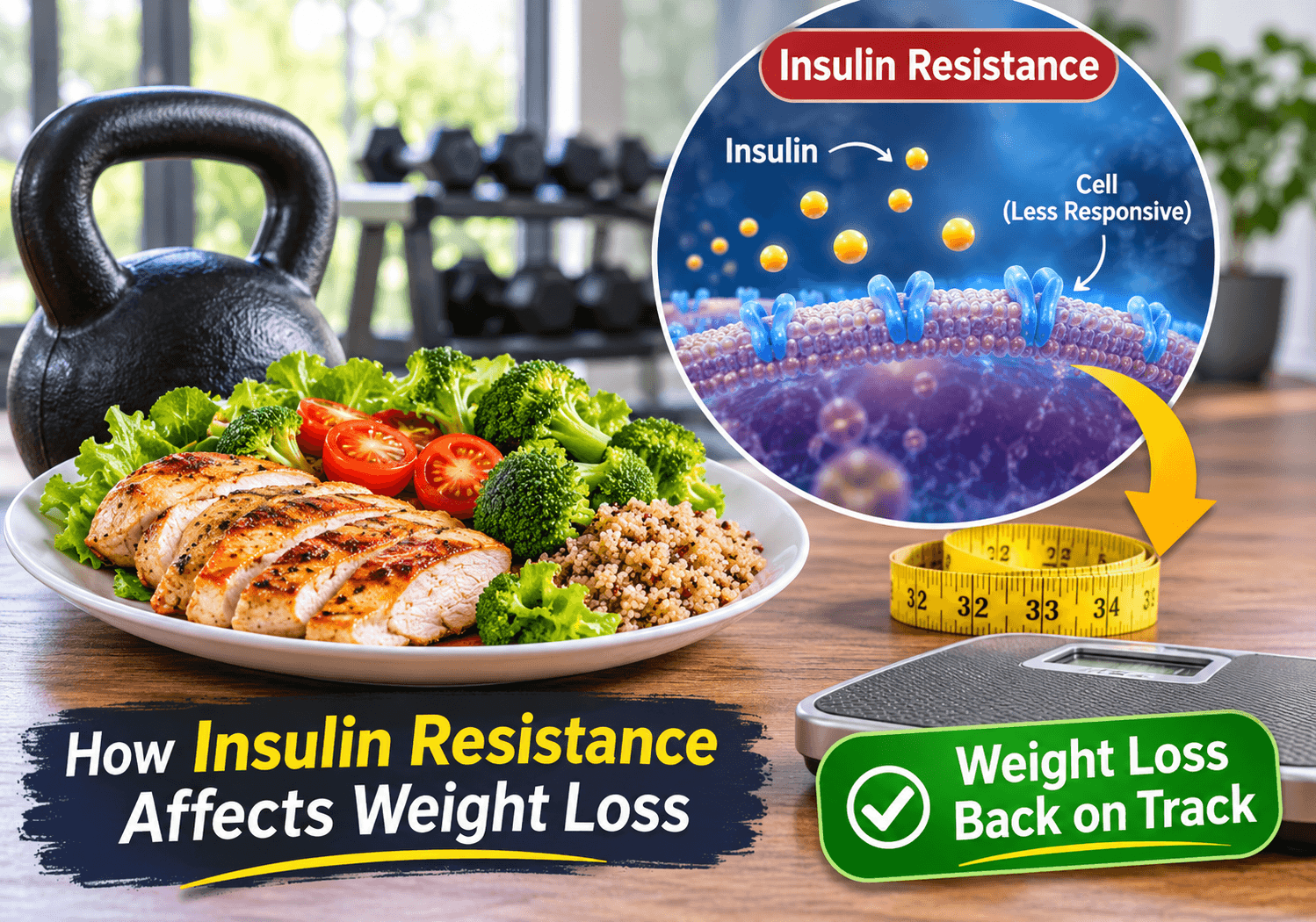
You are eating in a calorie deficit, tracking your macros, and hitting the gym, but the scale refuses to budge. This frustrating plateau is a hallmark sign of a metabolic roadblock. Understanding how insulin resistance affects weight loss is the missing puzzle piece for many clients who feel like their bodies are working against them.
Insulin is a powerful storage hormone. When your cells stop responding to it properly, your pancreas pumps out even more to compensate. This state of hyperinsulinemia essentially locks your fat cells, making it incredibly difficult for your body to access stored energy. As a strength and conditioning coach, I see this daily. The good news is that insulin resistance is not a life sentence. With targeted exercise, strategic nutrition, and lifestyle adjustments, you can restore your metabolic flexibility and get your weight loss journey back on track.
Quick Answer: How insulin resistance affects weight loss is primarily through elevated insulin levels that block fat breakdown (lipolysis) and promote fat storage. When cells resist insulin, the pancreas overproduces it, creating a hormonal environment that favors storing belly fat and triggering intense sugar cravings. Reversing this requires a combination of resistance training, Zone 2 cardio, adequate protein, and quality sleep to restore cellular sensitivity.
The Biological Mechanism: What the Research Says
To fix a problem, you must first understand how it works. Insulin is produced by the beta cells in your pancreas. Its primary job is to shuttle glucose (sugar) from your bloodstream into your cells, where it is used for energy. Think of insulin as a key and your cell receptors as locks.
In a healthy metabolic state, you eat a meal, blood sugar rises, insulin is released, the “key” turns the “lock,” and glucose enters the cell. Your blood sugar stabilizes, and you feel energized.
However, chronic overconsumption of refined carbohydrates, sedentary behavior, and poor sleep can cause these locks to become rusty. This is insulin resistance. Because the cells do not respond to the initial insulin signal, the pancreas secretes massive amounts of additional insulin to force the glucose inside .
This chronic high-insulin state directly sabotages weight loss in three specific ways:
- Blocks Fat Burning: Insulin is a highly anabolic (storage) hormone. When insulin levels are chronically elevated, it actively inhibits hormone-sensitive lipase, the enzyme responsible for breaking down stored body fat . You cannot burn fat in a high-insulin environment.
- Promotes Visceral Fat Storage: Excess glucose that cannot enter muscle cells is converted into triglycerides in the liver and stored as visceral fat (deep belly fat), which is highly inflammatory and further worsens insulin resistance .
- Triggers Hunger and Cravings: Because glucose is not efficiently entering your cells, your brain perceives a state of cellular starvation. This drives intense cravings for quick-energy foods, making a calorie deficit feel miserable and unsustainable.
Research from the National Institutes of Health (NIH) confirms that regular physical activity is one of the most potent interventions to reverse this process, independent of weight loss itself.
Insulin Sensitivity vs. Insulin Resistance: A Comparison
| Feature | Insulin Sensitive (Healthy) | Insulin Resistant (Metabolic Dysfunction) |
| Fasting Insulin Levels | Low and stable (typically < 8 µIU/mL) | Chronically elevated (> 10-15 µIU/mL) |
| Cellular Response | Cells readily absorb glucose for energy | Cells “ignore” insulin; glucose stays in blood |
| Fat Storage | Balanced; body can access stored fat for fuel | High; body is locked in fat-storage mode |
| Energy Levels | Steady throughout the day | Frequent crashes, especially after carb-heavy meals |
| Hunger Cues | Normal, manageable appetite | Intense cravings, especially for sugar and refined carbs |
How to Apply It: Practical Steps to Improve Insulin Sensitivity
You do not need to overhaul your entire life overnight. As a coach, I prescribe a phased, sustainable approach focusing on movement, nutrition, and recovery.
1. Strategic Exercise Protocols
Exercise is the most powerful “drug” for insulin resistance. Muscle contractions stimulate a pathway that moves glucose into cells without needing insulin. This is mediated by the translocation of GLUT4 transporters to the cell surface .
A. Resistance Training (The Foundation)
Building skeletal muscle increases your body’s primary storage depot for glucose. More muscle means more places for glucose to go, reducing the burden on your pancreas.
The Goblet Squat Protocol
- Target: Quadriceps, glutes, core, and metabolic demand.
- Sets & Reps: 3 to 4 sets of 8 to 12 repetitions.
- Tempo: 3-1-2 (3 seconds lowering, 1 second pause at the bottom, 2 seconds driving up).
- Rest: 60 to 90 seconds between sets.
- Weight Guidance: Beginners should start with a 15 lb (6.8 kg) kettlebell or dumbbell. Intermediate lifters can progress to 35 lb (15.8 kg) or more.
- Form Cues: Hold the weight vertically against your chest. Keep your chest proud and core braced. Push your hips back as if sitting in a chair, keeping your knees tracking over your toes. Drive through your mid-foot to stand. The movement should feel challenging in the thighs and glutes, not the lower back.
Coach’s Tip: Focus on the eccentric (lowering) phase of the lift. Research suggests that eccentric muscle contractions are highly effective at improving insulin sensitivity because they cause micro-tears in the muscle that require glucose for repair and recovery.
- Regression: Box Squat to a bench or chair (18 inches / 45 cm high) without weight. This teaches proper hip hinge mechanics and builds confidence.
- Progression: Barbell Back Squat or Bulgarian Split Squats, increasing the load to 70-80% of your one-rep max for 5 sets of 5 repetitions.
B. Zone 2 Cardio (The Metabolic Engine)
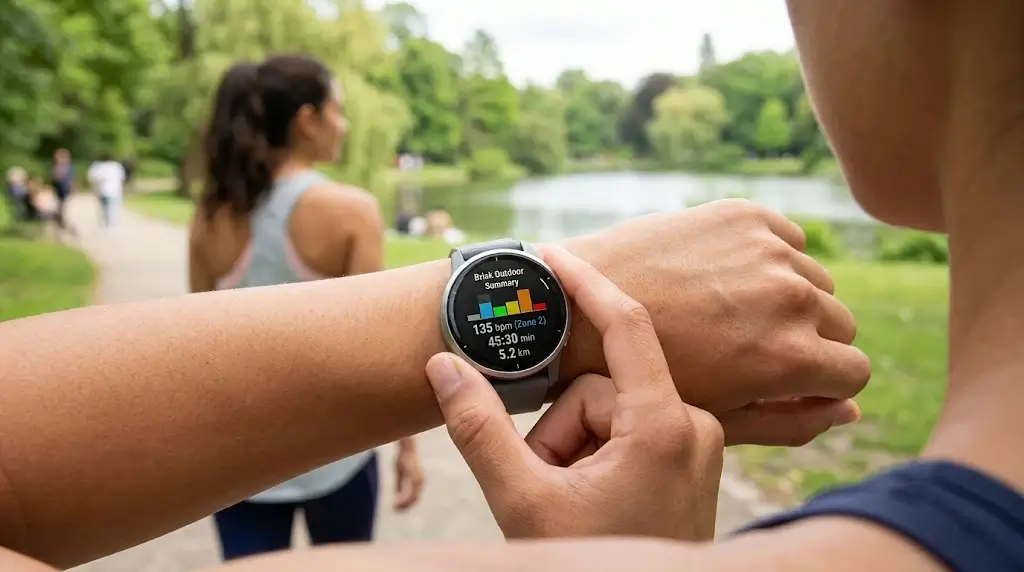
Zone 2 cardio is performed at an intensity where you can maintain a conversation but cannot sing. This typically corresponds to 60-70% of your maximum heart rate.
- Protocol: 3 to 4 sessions per week, lasting 30 to 45 minutes each.
- Activity: Brisk walking, cycling, or elliptical.
- Distance Goal: Aim to cover 2 to 3 miles (3.2 to 4.8 km) per session at a steady, conversational pace.
- Why it works: Zone 2 training increases mitochondrial density and improves your muscles’ ability to oxidize (burn) fat, directly combating the metabolic inflexibility caused by insulin resistance .
C. Post-Meal Movement (The Micro-Habit)
A simple 10-minute walk after your largest meal can significantly blunt the postprandial (after-meal) blood sugar spike. This is a highly effective, zero-equipment strategy to manage daily glucose loads.
2. Nutritional Adjustments
You cannot out-train a diet that constantly spikes your insulin. The goal is not necessarily extreme restriction, but rather blood sugar stabilization.
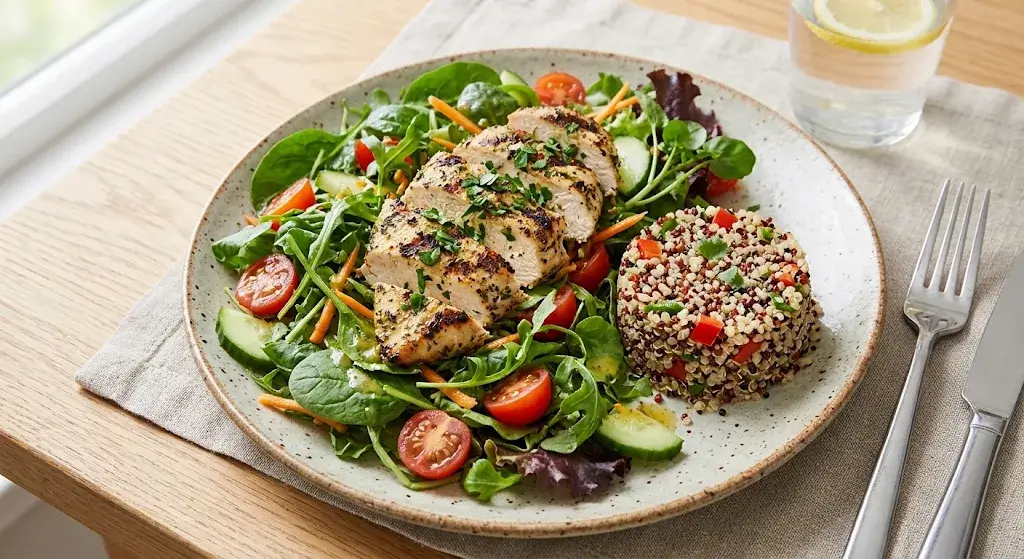
- Prioritize Protein: Aim for 0.8 to 1 gram of protein per pound (1.8 to 2.2 grams per kg) of your target body weight. Protein has a minimal impact on insulin compared to carbohydrates and promotes satiety. Learn more about how protein intake metabolism weight loss are interconnected for optimal body composition.
- Embrace Soluble Fiber: Fiber slows gastric emptying and carbohydrate absorption. Aim for 30+ grams of total fiber daily, with a focus on soluble sources like oats, chia seeds, and legumes. Discover does soluble fiber help control appetite for weight loss to optimize your meal planning.
- Meal Sequencing: Eat your vegetables and protein first, and save carbohydrates for the end of the meal. This simple change in food order has been shown in clinical trials to reduce post-meal glucose spikes by up to 30%.
A person performing a goblet squat with a kettlebel
3. Sleep and Stress Management
Cortisol, the primary stress hormone, directly antagonizes insulin. When you are chronically stressed or sleep-deprived, your liver dumps glucose into your bloodstream to prepare for a “fight or flight” response, even if you are just sitting at a desk.
Poor sleep also reduces insulin sensitivity by up to 30% in healthy adults after just four nights of restricted sleep, according to research from the University of Chicago. Prioritize 7 to 9 hours of quality sleep per night. Explore how does sleep affect metabolism and weight management for actionable sleep hygiene protocols.
Common Mistake: Many clients attempt to fix insulin resistance by adopting extreme, ultra-low-calorie diets. This is a critical error. Severe caloric restriction increases cortisol, slows down your resting metabolic rate, and can lead to muscle loss. Since muscle is your primary glucose sink, losing muscle worsens insulin resistance long-term. Focus on nutrient density and sustainable deficits, not starvation.
Safety Notes and Who Should Be Careful
While lifestyle interventions are highly effective, safety must come first.
- Medication Interactions: If you are currently taking prescription medications for diabetes (such as metformin or insulin), adding intense exercise or dietary changes can cause your blood sugar to drop too low (hypoglycemia). Always consult your prescribing physician before making major changes. They may need to proactively lower your medication dosage.
- Joint or Mobility Issues: If you have knee or lower back pain, the goblet squat progression may need modification. Start with seated leg presses or water aerobics to build baseline strength without joint compression.
- Pregnancy and Postpartum: Hormonal shifts during and after pregnancy drastically alter insulin sensitivity (e.g., gestational diabetes). Any weight loss or exercise program during this time must be explicitly cleared by an obstetrician.
Related Tips: Supplements and Lifestyle Tweaks
While whole foods and exercise are the foundation, certain evidence-based supplements can provide a supportive edge when trying to reverse metabolic dysfunction.
- Berberine: Often called “natural metformin,” berberine activates the AMPK pathway, improving cellular glucose uptake. Read our detailed breakdown on can supplements improve insulin sensitivity to see if it is right for you.
- Magnesium: Up to 50% of people with insulin resistance are deficient in magnesium, a mineral critical for insulin receptor function. Magnesium glycinate (200-400 mg before bed) is highly bioavailable and supports both metabolic health and sleep.
- Inositol: Myo-inositol has shown strong clinical evidence for improving insulin sensitivity, particularly in women with polycystic ovary syndrome (PCOS), a condition heavily driven by metabolic dysfunction.
If you find yourself constantly battling the urge to snack despite eating adequate meals, your hormones may be sending mixed signals. Review our guide on what helps control hunger during weight loss to align your appetite with your goals. Furthermore, avoiding crash diets is essential; learn how to boost metabolic flexibility without crash dieting to ensure long-term success.

FAQ: Common Questions About Insulin Resistance and Weight Loss
1. Can you lose weight with insulin resistance? Yes, but it requires a different strategy than standard calorie counting. You must focus on lowering insulin levels through resistance training, adequate protein, and low-glycemic carbohydrates. Once insulin levels drop, your body can access stored fat, making weight loss possible and sustainable.
2. How long does it take to reverse insulin resistance? The timeline varies based on severity, but research shows that measurable improvements in insulin sensitivity can occur within 2 to 4 weeks of consistent exercise and dietary changes. Significant reversal, reflected in improved HbA1c and fasting insulin labs, typically takes 3 to 6 months of dedicated effort.
3. What is the best exercise for insulin resistance? A combination of resistance training and Zone 2 cardio is most effective. Resistance training builds muscle, which acts as a “sink” for blood glucose. Zone 2 cardio improves mitochondrial efficiency, teaching your body to burn fat for fuel. Aim for 3 days of lifting and 3 days of steady-state cardio per week.
4. Does walking help insulin resistance? Absolutely. A brisk 10 to 15-minute walk immediately after a meal is one of the simplest and most effective ways to blunt post-meal blood sugar spikes. This habit requires no equipment and directly improves glucose clearance from the bloodstream.
5. Why am I not losing weight despite eating less? If you are eating very little but not losing weight, chronic stress and elevated cortisol may be driving insulin resistance. Additionally, severe calorie restriction can cause muscle loss. Since muscle burns glucose, losing it makes your body less efficient at processing carbohydrates, stalling your progress.
6. Should I try intermittent fasting for insulin resistance? Intermittent fasting can be a useful tool to lower baseline insulin levels by extending the time your body spends in a fasted state. However, it is not a magic bullet. If your eating window consists of highly processed, high-sugar foods, fasting will not overcome the metabolic damage. Pair it with nutrient-dense whole foods.
Conclusion
Understanding how insulin resistance affects weight loss changes the entire paradigm of your fitness journey. It explains why willpower alone is not enough and why your body might be holding onto stubborn fat despite your best efforts. The solution is not to eat less and move more in a punishing cycle. Instead, the solution is to work with your biology.
By prioritizing resistance training to build glucose-absorbing muscle, engaging in Zone 2 cardio to build metabolic flexibility, and stabilizing your blood sugar through protein and fiber, you can systematically restore your insulin sensitivity. Be patient, stay consistent, and trust the process. Your metabolism is adaptable, and with the right evidence-based tools, you can reclaim your health and achieve your body composition goals.