
Mullein leaf (Verbascum thapsus) has been a go-to herb in folk medicine for centuries, and most of its traditional use points straight at the lungs. People have steeped the fuzzy leaves in tea, drawn steam from the plant, or taken tinctures to ease coughs, clear congestion, and calm irritated airways. But what does modern research actually say about mullein leaf benefits for lungs, and how does that compare to the centuries of anecdotal use?
As a coach who works with clients on overall wellness, I get asked about herbal respiratory support more often than you’d think—especially during cold and flu season or for people dealing with seasonal allergies. Mullein keeps coming up. This guide breaks down what the plant contains, what the evidence supports, how to use it safely, and where the gaps in research still exist.
Quick Answer: Mullein leaf may help soothe irritated airways, thin mucus, and reduce mild coughing thanks to its iridoid glycosides, flavonoids, and saponins. Traditional use supports its role as an expectorant and demulcent for the respiratory tract. However, high-quality human clinical trials on mullein and lung function are still limited, so it should complement—not replace—medical treatment for respiratory conditions.
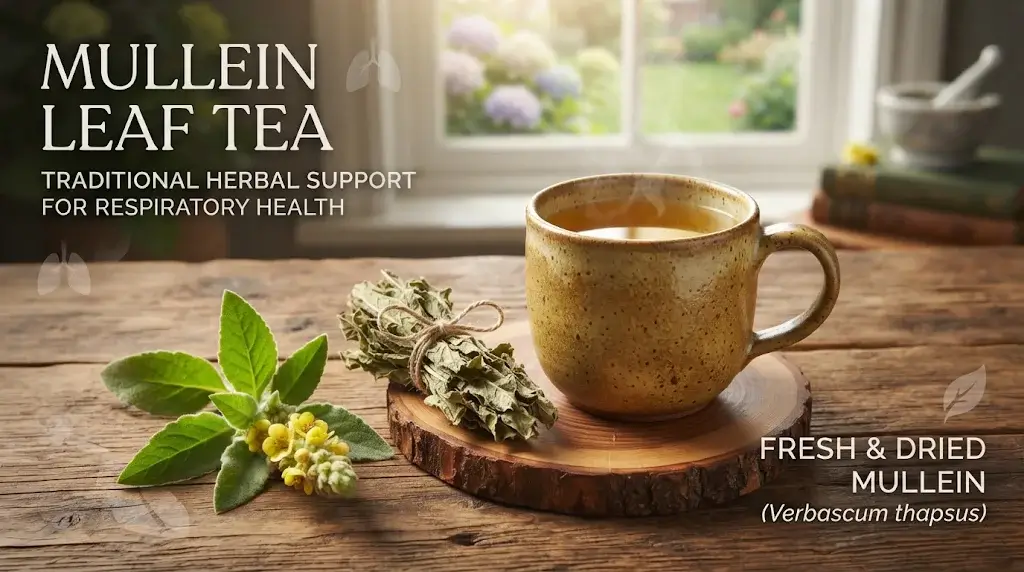
What Is Mullein Leaf?
Mullein is a biennial herb native to Europe, Asia, and North Africa, now naturalized across North America. The plant grows tall—often 3 to 6 feet (90 to 180 cm)—with large, soft, woolly leaves in its first year and a spike of yellow flowers in its second.
The parts used in herbal medicine are the leaves (harvested in the first year before flowering) and the flowers (harvested in the second year). The leaves are the most common form people buy for lung support, available as:
- Dried whole or crumbled leaves for tea
- Tinctures (alcohol or glycerin extract)
- Capsules or powder
- Steam inhalation (fresh or dried leaves heated in water)
The plant’s phytochemical profile includes iridoid glycosides (especially verbascoside), flavonoids (such as luteolin and apigenin), saponins, tannins, and mucilage (a gel-like fiber that coats mucous membranes). These compounds are the basis for most of the proposed lung benefits.
How Mullein Leaf May Support Lung Health
This is the core of what people mean when they search for mullein leaf benefits for lungs. Let’s walk through the proposed mechanisms one by one, and be clear about what is well-supported versus what is still theoretical.
1. Expectorant Action (Thinning and Clearing Mucus)
The saponins and iridoid compounds in mullein leaf are thought to stimulate the cilia in the bronchial tubes, helping the body move mucus out of the airways more effectively. In herbal medicine, this is called an expectorant effect.
Practically, this means if you have a productive cough—where you’re trying to clear phlegm—mullein may help make that mucus less sticky and easier to expel. Traditional herbalists have used mullein for this purpose for over a thousand years.
Evidence level: The expectorant property is well-documented in traditional pharmacopoeias and supported by in-vitro (lab) studies on the plant’s compounds, but large human trials measuring mucus clearance specifically in mullein users are limited.
2. Demulcent and Soothing Effect on Mucous Membranes
Mullein leaf contains mucilage, a polysaccharide that forms a protective gel when mixed with water. This is the same mechanism that makes slippery elm or marshmallow root soothing for a scratchy throat.
When you drink mullein tea, the mucilage coats the throat and upper airway, reducing the tickle that triggers a dry, hacking cough. This is a mechanical, physical effect rather than a pharmacological one, which makes it relatively low-risk.
Evidence level: The demulcent property is straightforward and well-accepted in herbal practice. Direct human studies are rare, but the mechanism (gel coating of mucous membranes) is well understood in food science.

3. Anti-Inflammatory Activity in the Airways
Flavonoids like luteolin and apigenin, along with iridoid glycosides, have shown anti-inflammatory effects in laboratory studies. Inflammation in the bronchial walls is a key driver in conditions like asthma, chronic bronchitis, and COPD.
In cell cultures, mullein extracts have demonstrated the ability to reduce markers of inflammation (such as cytokine production) in respiratory epithelial cells. This suggests a theoretical benefit for airway inflammation, but translating a petri-dish result to a human lung is a significant step.
Evidence level: Promising in-vitro data; no large randomized controlled trials (RCTs) in humans with diagnosed respiratory conditions.
4. Antioxidant Support
The flavonoids and phenolic compounds in mullein leaf act as antioxidants, neutralizing free radicals that can damage lung tissue over time. Chronic oxidative stress is a contributor to lung aging and to the progression of conditions like COPD.
Again, this is a supportive, long-term mechanism rather than an acute “take it and your cough stops” effect.
Evidence level: Antioxidant capacity of mullein extracts has been measured in lab assays (ORAC, DPPH tests). Human data on whether oral mullein actually reduces oxidative markers in lung tissue is not available.
5. Mild Bronchodilator Potential
Some traditional sources describe mullein as having a mild bronchodilator effect—relaxing the smooth muscle around the airways to make breathing feel easier. This is the least well-supported of the proposed mechanisms.
Evidence level: Anecdotal and traditional. No peer-reviewed human or animal studies specifically testing mullein as a bronchodilator were identified in my review.
The Compounds in Mullein Leaf at a Glance
| Compound | Type | Proposed Lung Role |
| Verbascoside | Iridoid glycoside | Anti-inflammatory, antimicrobial |
| Luteolin | Flavonoid | Anti-inflammatory, antioxidant |
| Apigenin | Flavonoid | Anti-inflammatory, mild bronchospasm relief (theoretical) |
| Saponins | Steroidal saponins | Expectorant (stimulates mucus clearance) |
| Mucilage | Polysaccharide | Demulcent (coats and soothes mucous membranes) |
| Tannins | Polyphenols | Astringent, mild antimicrobial |
| Triterpenes | Lipid compounds | Anti-inflammatory (limited data) |

Traditional and Modern Uses for Respiratory Health
Mullein appears in herbal traditions across Europe, the Middle East, and North America. Common traditional uses include:
- Cough and colds: Steeped leaf tea or steam inhalation
- Bronchitis: Prolonged tea use (5–14 days) to support mucus clearance
- Asthma and wheezing: Flower tinctures (less common today)
- Throat irritation: Gargling with strong mullein tea
- Smoker’s cough: As a supportive, gentle demulcent
In modern Western herbal practice, mullein is one of the most commonly recommended herbs for upper respiratory support. It’s typically used as a supportive herb alongside rest, hydration, and (when appropriate) medical treatment.
How to Use Mullein Leaf for Lung Support
Here are the most common preparation methods, with practical details:
Mullein Leaf Tea (Most Common)
- Measure 1 to 2 teaspoons (2–4 g) of dried, crumbled mullein leaf.
- Pour over 8 oz (240 ml) of freshly boiled water.
- Cover the cup with a saucer and steep for 10–15 minutes. (Covering is important—volatile compounds can escape with steam if the cup is open.)
- Strain and drink. You can add honey or lemon for taste.
- Drink 1–3 cups per day for acute cough or congestion.
Coach’s Tip: If you’re using mullein tea for a persistent cough, consistency matters more than a single big cup. Sipping 3 smaller cups (4 oz / 120 ml each) throughout the day keeps the demulcent coating on your throat and airways longer than one large cup all at once.
Steam Inhalation
- Place 2–3 tablespoons of dried mullein leaves in a heat-safe bowl.
- Pour 2 cups (480 ml) of hot (not boiling) water over the leaves.
- Drape a towel over your head and the bowl, creating a tent.
- Lean over and breathe the steam gently for 5–10 minutes.
- Keep your eyes closed. Stop if the steam feels too hot.
This method delivers the volatile compounds directly to the nasal passages and upper airways. It’s a good option when you have a stuffy nose alongside a cough.
Tincture
- Typical dosage: 2–4 ml (about 40–80 drops) up to 3 times per day, diluted in water or tea.
- Follow the specific product label for concentration.
- Glycerin-based tinctures are available for those who prefer to avoid alcohol.
Capsules / Powder
- Typical range: 500 mg to 1,000 mg of mullein leaf extract, 1–3 times per day, taken with food.
- Check the label for the extraction ratio (e.g., 4:1 means 4 g of raw leaf per 1 g of extract).
Common Mistake: Using the whole leaf with the fuzzy stems for tea without straining properly. The tiny hairs can irritate the throat and cause a scratchy, tickly sensation that feels like it’s making the cough worse. Always use a fine-mesh strainer or a tea infuser bag, and consider buying pre-crumbled or pre-bagged mullein leaf to avoid this issue.
Safety, Side Effects, and Who Should Be Cautious
Mullein leaf is generally considered safe for most healthy adults when used in the short term (up to a few weeks) at the doses listed above. However, there are important caveats:
- Allergic reactions: Rare, but possible. If you’re allergic to plants in the Verbascum family, skip mullein.
- Pregnancy and breastfeeding: There is not enough safety data. Avoid mullein leaf during pregnancy and while nursing unless a healthcare provider specifically recommends it.
- Children: Safety in children under 12 has not been well established. Do not give mullein to young children without medical guidance.
- Drug interactions: Mullein may have mild blood-thinning properties. If you take anticoagulants (warfarin, apixaban) or antiplatelet drugs, talk to your doctor before regular use.
- Surgery: Stop mullein at least two weeks before any scheduled surgery, as with most herbal supplements.
- Long-term use: There is no robust data on using mullein leaf daily for months or years. Cycling use (e.g., 2 weeks on, 1 week off) is a common herbal-practice approach, but it’s not based on strong clinical evidence.
The National Center for Complementary and Integrative Health (NCCIH) notes that mullein is “generally recognized as safe” in traditional doses but emphasizes the lack of large-scale safety trials.
If you have asthma, COPD, bronchitis, or any diagnosed lung condition, mullein is a supportive herb at best. It does not replace inhaled corticosteroids, bronchodilators, or other prescribed treatments. Check with your doctor or pulmonologist before adding mullein to your routine.
What the Research Actually Says (Evidence Summary)
Let’s be direct about the state of the evidence:
| Area | Evidence Level | Notes |
| Expectorant / mucus clearance | Traditional + in-vitro | Well-supported in herbal literature; limited human RCTs |
| Demulcent / throat soothing | Mechanism-based | Physical coating effect; low risk, well-accepted |
| Anti-inflammatory (airway) | In-vitro (cell culture) | Promising lab data; no human RCTs |
| Antioxidant | In-vitro (lab assays) | Measured in extracts; human lung tissue data lacking |
| Bronchodilator | Anecdotal / traditional | No identified peer-reviewed human or animal trials |
| Overall lung function improvement | Insufficient | No RCTs measuring FEV1, FVC, or spirometry in mullein users |
The bottom line: mullein leaf is a reasonable, low-risk supportive herb for mild, short-term respiratory discomfort (a lingering cough, a scratchy throat, mild congestion). It is not a treatment for asthma, COPD, pneumonia, or any serious respiratory disease.
If you want to understand how to evaluate the ingredient lists and safety profiles of herbal and dietary supplements more broadly, the process of checking for third-party testing, dosage transparency, and known interactions is the same whether you’re looking at mullein or any other botanical. Learning to evaluate supplement ingredients critically protects you across all products.
Complementary Respiratory Wellness Practices
Mullein works best as one small piece of a bigger picture. If your goal is supporting lung health and easier breathing, these evidence-based habits matter far more than any single herb:
- Regular aerobic exercise: The HHS Physical Activity Guidelines recommend at least 150 minutes of moderate aerobic activity per week. Brisk walking, cycling, swimming, or rowing all improve cardiovascular and pulmonary fitness.
- Breathing exercises: Diaphragmatic breathing, pursed-lip breathing, and inspiratory muscle training have shown benefits in people with COPD and asthma, according to research published in the British Journal of Sports Medicine and the Journal of Strength and Conditioning Research.
- Hydration: Drinking enough water (roughly 2–3 liters / 64–96 oz per day for most adults) keeps mucus thin and easier to clear.
- Avoiding irritants: Cigarette smoke, heavy air pollution, and strong chemical fumes are the biggest preventable drivers of lung irritation.
- Sleep and recovery: Poor sleep is linked to increased systemic inflammation, which can worsen airway reactivity. Prioritizing 7–9 hours of quality sleep supports overall immune and respiratory function.
For a broader look at how natural, non-pharmaceutical strategies support overall metabolic and respiratory wellness, see how to support your body naturally.

Who Should Be Cautious (and Who Should Skip Mullein)
- Pregnant or breastfeeding women: Avoid. Insufficient safety data.
- Children under 12: Avoid without a pediatrician’s guidance.
- People on blood thinners or antiplatelet drugs: Consult your doctor first.
- People with diagnosed lung disease (asthma, COPD, bronchiectasis): Mullein is not a substitute for prescribed therapy. Use only as a complementary measure and only with your provider’s OK.
- People scheduled for surgery: Stop at least 2 weeks before.
- People with known Verbascum or related-plant allergies: Avoid.
FAQ
How does mullein leaf help the lungs?
Mullein leaf contains saponins that may stimulate mucus clearance, mucilage that soothes irritated airways, and flavonoids with anti-inflammatory properties in lab studies. Together, these compounds may ease coughing, thin phlegm, and reduce mild airway irritation. Human clinical evidence is still limited, so it’s best viewed as a supportive herb, not a medication.
Can mullein tea help with a cough?
Mullein tea is one of the most traditional uses for coughs. The mucilage coats the throat, reducing the tickle that triggers dry coughing, while saponins may help thin and move mucus in productive coughs. Drink 1–3 cups daily for a few days. If a cough lasts more than 3 weeks or is accompanied by fever or chest pain, see a doctor.
Is mullein leaf safe for long-term use?
Short-term use (a few weeks) at standard doses is generally considered safe for healthy adults. There are no long-term safety trials, so daily use for many months or years is not well studied. Cycling (2 weeks on, 1 week off) is a common precaution. Always check with a healthcare provider if you plan extended use.
Does mullein help with asthma?
There is no clinical trial evidence that mullein treats or manages asthma. Its mild anti-inflammatory compounds show promise in cell cultures, but that does not translate to a proven asthma treatment. If you have asthma, follow your prescribed action plan. Mullein, if used at all, should only be an additional supportive measure approved by your pulmonologist.
How to make mullein leaf tea for lung health?
Steep 1–2 teaspoons (2–4 g) of dried mullein leaf in 8 oz (240 ml) of boiled water, covered, for 10–15 minutes. Strain through a fine mesh to remove leaf hairs. Drink 1–3 cups per day. Add honey if desired. For a stronger demulcent effect, let the leaves steep for the full 15 minutes rather than a shorter time.
What are the side effects of mullein leaf?
Side effects are uncommon at standard doses. Rarely, people may experience mild stomach upset, a slight headache, or a throat tickle from residual leaf hairs if not strained well. Allergic reactions are possible but uncommon. Avoid use during pregnancy, while breastfeeding, or in young children without medical guidance.
Conclusion
Mullein leaf benefits for lungs are rooted in centuries of traditional use and a phytochemical profile that makes biological sense: saponins for expectoration, mucilage for soothing, and flavonoids for anti-inflammatory support. For a lingering post-cold cough, a scratchy throat, or mild seasonal congestion, a cup of mullein tea is a gentle, low-risk option that many people find comforting.
What mullein is not is a treatment for asthma, COPD, pneumonia, or any serious respiratory condition. The human clinical evidence base is still thin, and no peer-reviewed trial has shown that mullein improves measured lung function (FEV1, FVC, or peak flow) in a diagnosed patient population.
Use mullein as the small, supportive piece it is. Pair it with the things that actually move the needle on respiratory health: regular aerobic exercise, proper breathing techniques, staying hydrated, avoiding smoke and pollutants, and getting enough sleep. And if your breathing is consistently difficult, your cough won’t quit, or you’re wheezing, that’s a conversation for your doctor—not a tea.