
Zinc and magnesium for testosterone production in men is a question I get in the gym almost weekly. A guy walks up after his last set, wipes his forehead, and asks, “Coach, will these two minerals actually bump my testosterone?” The honest answer is yes—but with important context. Neither mineral is a magic pill, and the effect is most noticeable when your body is actually running low.
As a strength and conditioning coach, I’ve watched athletes and everyday lifters chase every supplement on the market. The ones who see the most consistent results are the ones who nail the basics: sleep, training, protein, and making sure their micronutrient status is solid. Zinc and magnesium sit right at the center of that “basics” list, and understanding how they connect to your hormonal axis can save you money and frustration.
This guide breaks down what the peer-reviewed research actually says about zinc, magnesium, and testosterone in men. You’ll learn the dosing that makes sense, which forms to look for, what foods cover your needs, and where the hype stops and the evidence begins.
Quick Answer: Zinc and magnesium support testosterone production in men primarily by ensuring adequate micronutrient levels for normal Leydig cell function. Research shows that correcting a zinc deficiency can raise serum testosterone in men who were low, but supplementing above adequate levels does not meaningfully boost testosterone in men who are already replete. Aim for 11 mg of zinc and 400–420 mg of magnesium daily through food first, with a supplement only if your intake is consistently short.

How Zinc Connects to Testosterone in Men
Zinc is a trace mineral your body uses in over 300 enzymatic reactions, and several of those reactions happen inside the testes. Here’s the practical chain:
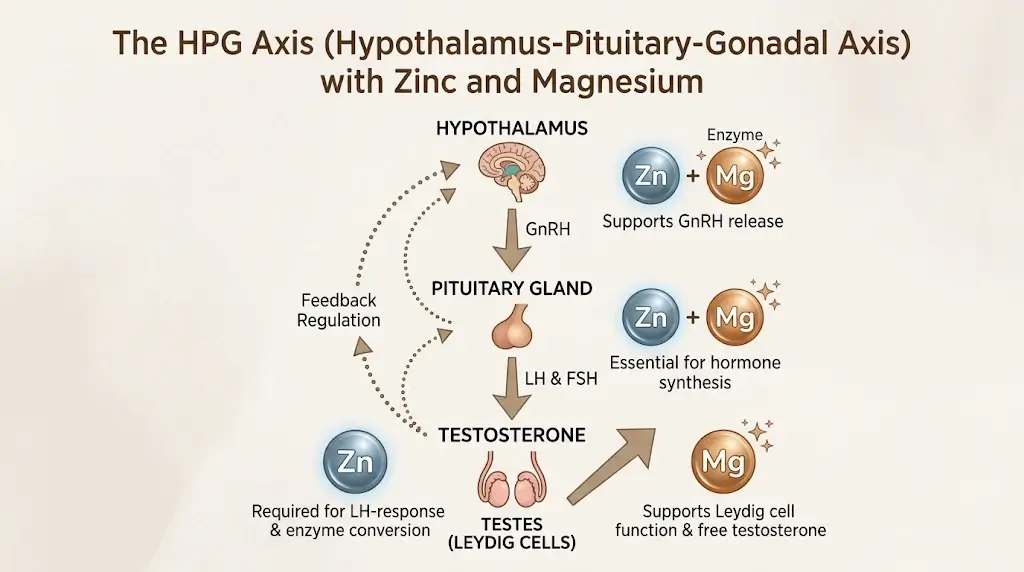
- Your hypothalamus releases gonadotropin-releasing hormone (GnRH).
- Your pituitary gland responds by releasing luteinizing hormone (LH) and follicle-stimulating hormone (FSH).
- LH travels to the Leydig cells in your testes, which then produce testosterone.
Zinc is required at multiple steps in that pathway. It helps stabilize the structure of LH so it can bind properly to receptors on Leydig cells, and it participates in the enzymatic conversion of cholesterol into testosterone inside those cells. When zinc levels drop, the machinery slows down.
A well-cited study published in the American Journal of Clinical Nutrition found that elderly men who were zinc-deficient showed a measurable increase in serum testosterone after 10 weeks of zinc supplementation, while men who were not deficient saw no significant change. That distinction matters: the mineral helps you get back to your baseline, not above it.
The NIH Office of Dietary Supplements sets the recommended dietary allowance (RDA) for zinc at 11 mg per day for adult men aged 19 and older NIH ODS Zinc Fact Sheet. The tolerable upper intake level is 40 mg per day from supplements, because long-term excess zinc can interfere with copper absorption and immune function.
Which Forms of Zinc Are Worth Your Time?
Not all zinc supplements are created equal. Bioavailability matters.
| Form | Typical dose on label | Notes |
| Zinc picolinate | 15–30 mg | One of the most bioavailable forms; gentle on the stomach |
| Zinc citrate | 15–30 mg | Good absorption; widely available |
| Zinc gluconate | 15–30 mg | Common in over-the-counter cold remedies; solid option |
| Zinc sulfate | 22–50 mg | Inexpensive but can cause nausea at higher doses |
| Zinc oxide | 50 mg+ | Lower bioavailability; found in some multivitamins |
If I’m recommending a zinc supplement to a client who trains hard and sweats a lot, I steer them toward zinc picolinate or zinc citrate at 15–30 mg, taken with a meal to reduce stomach upset.
How Magnesium Supports the Hormonal Axis
Magnesium is not a “testosterone mineral” in the way marketing labels suggest, but it plays a supporting role that’s easy to overlook. Here’s what it does:
- Binds to testosterone and sex hormone-binding globulin (SHBG). Magnesium helps keep a portion of your testosterone in its free, biologically active form rather than locked up in SHBG.
- Supports the hypothalamic-pituitary-gonadal (HPG) axis. Magnesium is a cofactor in enzymatic steps that regulate GnRH and LH release.
- Reduces cortisol interference. Chronic stress elevates cortisol, which can suppress LH signaling. Magnesium has a calming effect on the nervous system and may help blunt that cortisol spike, indirectly protecting testosterone production.
- Aids sleep quality. Poor sleep is one of the most well-documented suppressors of testosterone in men. Magnesium supports the GABAergic pathways that promote deeper, more restful sleep, which in turn supports your hormonal recovery.
The RDA for magnesium for adult men is 400–420 mg per day, depending on age NIH ODS Magnesium Fact Sheet. The tolerable upper limit for supplemental magnesium (excluding food) is 350 mg per day.
Best Forms of Magnesium for Hormonal Support
| Form | Typical dose | Why it matters |
| Magnesium glycinate (bisglycinate) | 200–400 mg elemental Mg | Highly bioavailable; calming; great for sleep |
| Magnesium citrate | 200–400 mg elemental Mg | Well-absorbed; widely available; mild laxative effect at higher doses |
| Magnesium malate | 200–400 mg elemental Mg | Often used for energy and muscle function |
| Magnesium oxide | 400 mg+ | Low bioavailability; mostly a laxative; not ideal for hormonal support |
For a client who trains in the afternoon and struggles to wind down at night, I recommend magnesium glycinate at 200–400 mg, taken 60–90 minutes before bed. It supports sleep quality, which is where the real hormonal benefit shows up.

Zinc and Magnesium Together: Do They Synergize?
There is no single large-scale trial that isolates the combined effect of zinc and magnesium on testosterone in men. However, the two minerals work in complementary pathways, and that’s why they’re often paired in “ZMA” (zinc-magnesium-aspartate) formulations popular in bodybuilding circles.
Here’s the practical breakdown:
- Zinc acts more directly on the testes and the LH signaling pathway.
- Magnesium acts more on the upstream hormonal axis, sleep quality, and the free-to-bound testosterone ratio.
When you’re deficient in one, the other’s benefits are blunted. For example, if your magnesium is low and your sleep is poor, your cortisol stays elevated, and even adequate zinc can’t fully protect your LH-driven testosterone output. Correcting both gaps simultaneously gives you a more complete hormonal support picture.
Coach’s Tip: If you’re going to take both, don’t take them at the exact same time with a big meal. Zinc absorbs best on an empty or lightly fed stomach, while magnesium glycinate works well in the evening. A simple protocol: zinc with your lunch, magnesium 60 minutes before bed. This keeps absorption clean and lets the magnesium do its sleep-supportive work.
What the Research Actually Shows (and What It Doesn’t)
I want to be straightforward here because the supplement industry has a way of stretching a single study into a headline that promises the moon.
What the evidence supports:
- Correcting a zinc deficiency can raise serum testosterone in men who were below normal. The Prasad et al. study and subsequent meta-analyses in PubMed confirm this effect is real but specific to deficient individuals .
- Magnesium supplementation in deficient individuals improves free testosterone levels and reduces SHBG binding, per small clinical trials indexed in PubMed .
- Both minerals are essential cofactors in the enzymatic pathways that produce and regulate testosterone. Without adequate levels, the system runs sub-optimally.
What the evidence does NOT support:
- Taking zinc or magnesium above the RDA will not push testosterone above your genetic ceiling in a man who is already replete.
- There is no robust evidence that ZMA or combined zinc-magnesium supplements outperform taking each mineral separately at adequate doses.
- Neither mineral replaces the effects of resistance training, adequate sleep (7–9 hours), and a balanced diet on testosterone.
The Endocrine Society’s patient education materials emphasize that most men with “low testosterone” symptoms are first evaluated for sleep disorders, obesity, chronic stress, and nutritional gaps before any supplement conversation happens The Endocrine Society – Testosterone.

Dosing, Timing, and a Practical Protocol
Here’s the protocol I walk clients through. It’s not complicated, and it doesn’t require five different bottles on your shelf.
Daily Targets
| Nutrient | RDA (adult men) | Supplement dose if needed | Upper limit (supplement) |
| Zinc | 11 mg | 15–30 mg (zinc picolinate or citrate) | 40 mg |
| Magnesium | 400–420 mg | 200–400 mg elemental Mg (glycinate or citrate) | 350 mg (supplement only) |
When to Take Them
- Zinc: With or just after lunch. Avoid taking it on a completely empty stomach if you’re prone to nausea. Don’t take it within 2 hours of a high-calcium meal or a calcium supplement, as calcium can reduce zinc absorption.
- Magnesium: 60–90 minutes before bed. Magnesium glycinate is particularly well-suited for this window because of its calming properties.
Food-First Approach
Before you reach for a bottle, check whether your plate already covers the base:
Zinc-rich foods (per typical serving):
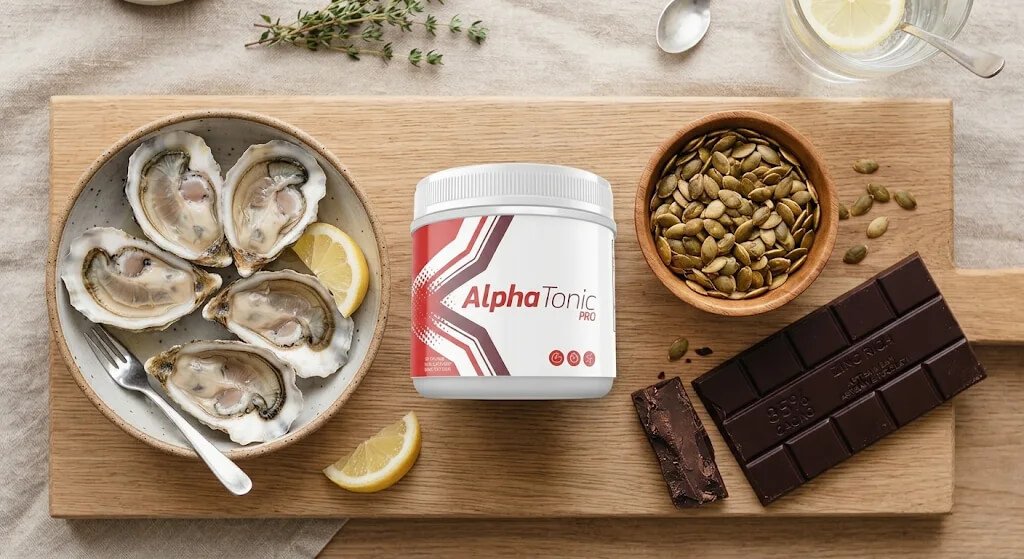
- Oysters (3 oz / 85 g): ~70 mg zinc
- Beef liver (3 oz / 85 g): ~5 mg
- Red meat, cooked (4 oz / 113 g): ~5–7 mg
- Pumpkin seeds (1 oz / 28 g): ~2.2 mg
- Chickpeas (1 cup cooked / 164 g): ~2.5 mg
- Dark chocolate (1 oz / 28 g): ~1 mg
Magnesium-rich foods (per typical serving):
- Spinach, cooked (1 cup / 180 g): ~157 mg
- Almonds (1 oz / 28 g): ~76 mg
- Cashews (1 oz / 28 g): ~74 mg
- Black beans (1 cup cooked / 172 g): ~120 mg
- Whole-grain bread (2 slices / 60 g): ~40 mg
- Avocado (1 medium / 150 g): ~58 mg
If you eat a varied diet with lean protein, vegetables, nuts, and whole grains, you’re likely hitting close to the RDA for both minerals. A supplement fills the gap, not the whole plate.
Common Mistake: I see guys take 50 mg of zinc sulfate on an empty stomach every morning and wonder why they feel nauseous and their copper levels drift. Start at 15–30 mg of a well-absorbed form, take it with food, and don’t exceed 40 mg from supplements. More is not better with zinc.
Who Should Be Extra Careful
Zinc and magnesium are generally safe at RDA-level doses, but a few groups need to talk to a doctor before supplementing:
- Men on medications: Zinc can interfere with certain antibiotics (tetracyclines, quinolones) and diuretics. Magnesium can interact with bisphosphonates, some antibiotics, and thyroid medications. Check with your pharmacist.
- Men with kidney disease: Impaired kidneys can’t excrete excess minerals efficiently, so even “safe” doses can accumulate. A nephrologist should guide dosing.
- Men with hemochromatosis or copper-deficiency anemia: Excess zinc can worsen copper deficiency, and excess mineral load can complicate iron metabolism.
- Men with a history of testicular issues or diagnosed low testosterone: If your testosterone is clinically low, a supplement won’t fix the underlying cause. Get a proper workup from an endocrinologist.
If you fall into any of these categories, run your supplement plan past your primary care doctor or an endocrinologist before starting.
How This Fits Into a Bigger Testosterone-Support Strategy
Zinc and magnesium are two pieces of a much larger puzzle. If your goal is to support healthy testosterone levels naturally, here’s the full picture I coach:
- Resistance training. Compound lifts—squats, deadlifts, bench press, overhead press—stimulate acute testosterone and growth hormone responses. Train 3–5 days per week with progressive overload.
- Sleep. Seven to nine hours of quality sleep per night. This is where magnesium earns its keep.
- Protein and caloric balance. Aim for roughly 0.7–1 g of protein per pound of body weight (1.6–2.2 g/kg). Severe caloric restriction suppresses testosterone.
- Stress management. Chronic cortisol elevation blunts the HPG axis. Walks, breathing work, time off the grind—these matter.
- Micronutrient adequacy. Zinc, magnesium, vitamin D, and B vitamins all play roles. If your diet is consistently narrow, a targeted supplement helps.
- Limit alcohol and avoid endocrine disruptors. Chronic heavy drinking and exposure to certain plastics can interfere with hormone production.
For more on how lifestyle factors stack up, check out this guide on what causes low libido in men after 40 and this breakdown of how stress and poor sleep affect male hormonal health.
Easier and Harder Versions of the Protocol
Not every man starts at the same place. Here’s how I adjust the protocol.
Easier version (you eat well, just want insurance):
- Focus on food: one serving of red meat or oysters per week, a handful of pumpkin seeds daily, leafy greens at lunch, a small serving of nuts as a snack.
- Take a basic multivitamin that includes 15 mg zinc and 200 mg magnesium as a safety net.
- Prioritize 8 hours of sleep.
Harder version (you train hard, sweat a lot, and your diet is inconsistent):
- Add zinc picolinate 30 mg with lunch on training days.
- Add magnesium glycinate 400 mg, 60 minutes before bed, every night.
- Track your food for two weeks to confirm you’re hitting the RDA through diet on at least 4 of 7 days.
- Pair the mineral protocol with a structured resistance program (e.g., 4 days/week: upper/lower split, 4 sets of 6–10 reps on compound lifts, 2–3 min rest between sets).
- Get a basic blood panel (testosterone, LH, FSH, SHBG, zinc, magnesium) every 12 months to track where you actually stand.
Safety Notes and What to Watch For
- Zinc above 40 mg/day from supplements for more than a few weeks can deplete copper, leading to anemia and neurological symptoms. If you’re taking a zinc supplement long-term, make sure your diet includes copper-rich foods (liver, shellfish, nuts, seeds) or ask your doctor about a small copper supplement (1–2 mg).
- Magnesium above 350 mg/day from supplements can cause loose stools or diarrhea. If that happens, drop the dose or switch from citrate to glycinate.
- Don’t take zinc and high-dose calcium at the same time. Space them at least 2 hours apart.
- If you experience persistent nausea, dizziness, or unusual fatigue after starting either supplement, stop and talk to your doctor.
This article is for general information and is not a substitute for advice from a doctor or physical therapist.
FAQ
Does zinc actually increase testosterone in men?
Research shows that zinc supplementation raises serum testosterone in men who are zinc-deficient, but it does not push testosterone above normal in men who are already replete. If your levels are adequate, extra zinc won’t act as a performance enhancer. Aim for the 11 mg RDA through food or a modest supplement.
What is the best form of magnesium for testosterone support?
Magnesium glycinate (bisglycinate) is the most bioavailable and calming form, making it ideal for evening use. Magnesium citrate is a solid, affordable alternative. Avoid magnesium oxide for hormonal purposes because its absorption rate is significantly lower than glycinate or citrate.
How much zinc do men need daily for hormone support?
The RDA is 11 mg per day for adult men. If you’re supplementing, 15–30 mg of zinc picolinate or citrate with a meal is a practical range. Do not exceed 40 mg per day from supplements, as long-term excess can disrupt copper balance and immune function.
Can magnesium help with low testosterone?
Magnesium may help by reducing SHBG binding (freeing up more active testosterone), supporting sleep quality, and modulating cortisol. However, it is not a treatment for clinically low testosterone. If your levels are below the normal range, see an endocrinologist for a proper evaluation.
What foods are richest in zinc and magnesium for men?
For zinc: oysters, red meat, liver, pumpkin seeds, chickpeas, and dark chocolate. For magnesium: spinach, almonds, cashews, black beans, avocados, and whole grains. A diet that includes a variety of these foods can meet both RDAs without supplementation.
Do zinc and magnesium work better together than separately?
They support different parts of the hormonal pathway, so taking both covers more ground than either alone. There’s no evidence that a combined “ZMA” product outperforms taking each mineral separately at proper doses. Take zinc with lunch and magnesium before bed for clean absorption.
The Bottom Line
Zinc and magnesium for testosterone production in men is not a shortcut, but it is a foundational piece of hormonal health that a lot of guys overlook. If your diet is solid, you’re sleeping well, and you’re training consistently, you may not need a single supplement bottle. If your intake is inconsistent, you sweat heavily, or you’re in a caloric deficit, a modest zinc and magnesium supplement is a low-risk, high-value addition.
The research is clear: these minerals help you get back to your baseline when you’re deficient. They don’t turn you into a different hormonal animal. Pair them with the things that actually move the needle—compound lifts, seven-plus hours of sleep, adequate protein, and stress management—and you’ll be in a far better place than any single supplement can get you.
For a broader look at how other nutrients fit into the picture, this resource on zinc and healthy testosterone levels in men goes deeper into the zinc-specific research, and this guide on vitamins and nutrients for male fertility and sperm health covers the full micronutrient landscape. If you’re exploring whether other supplements are worth your time, this evidence-based breakdown of do libido supplements for men actually work is worth a read.