
Dry, tight skin that loses its bounce is one of the most common complaints I hear from people who are otherwise healthy and active. You can moisturize all you want, but if your dermal matrix is losing collagen and your skin barrier is leaking water, no cream is going to fix the root problem. That is where natural supplements to increase skin hydration and elasticity come in.
Over the past several years, research in dermatology and nutritional science has moved beyond “take a multivitamin and hope for the best.” Specific compounds—collagen peptides, hyaluronic acid, omega-3 fatty acids, vitamin C, and a handful of others—now have peer-reviewed data showing measurable effects on skin moisture, suppleness, and wrinkle depth. The catch? Most people take the wrong dose, at the wrong time, or for too short a window to see any change.
This guide breaks down eight supplements with the strongest evidence base, gives you practical dosing and timing guidance, and shows you how to stack them without overcomplicating your routine.
Quick Answer
The most studied natural supplements to increase skin hydration and elasticity are hydrolyzed collagen peptides (2.5–10 g daily), oral hyaluronic acid (120–240 mg), omega-3 fatty acids (1–2 g EPA+DHA), and vitamin C (500–1,000 mg). Most studies show visible improvements after 8–12 weeks of consistent use. Pair them with daily SPF 30+ and adequate water intake for best results.
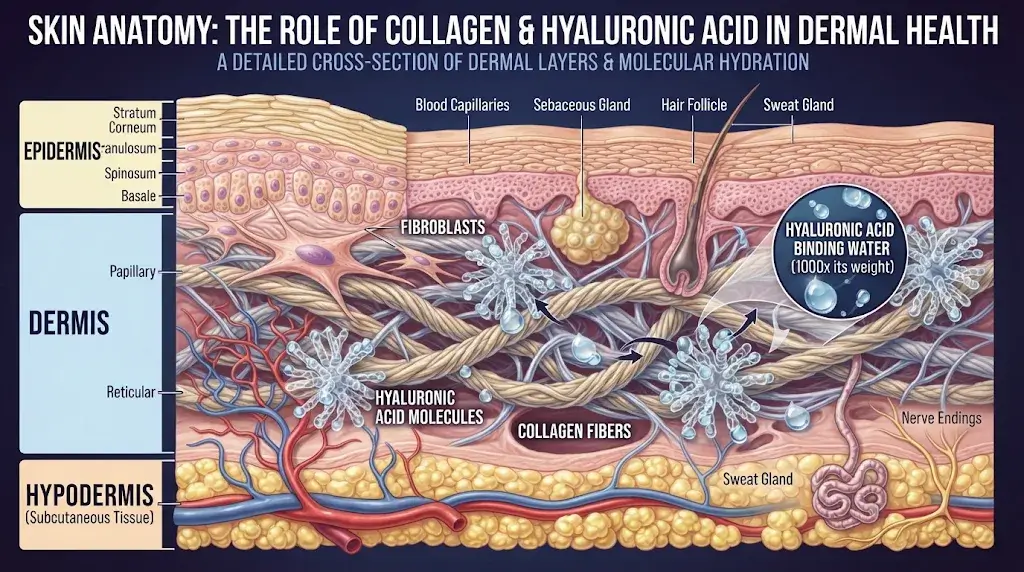
How Skin Hydration and Elasticity Actually Work
Before picking a supplement, it helps to understand what you are trying to support.
- Hydration depends on your skin’s ability to retain water in the epidermis and dermis. The stratum corneum (outermost layer) acts as a barrier, while glycosaminoglycans like hyaluronic acid in the dermis bind water molecules. When that barrier weakens, transepidermal water loss (TEWL) increases, and skin feels tight and dry.
- Elasticity is driven by two structural proteins: collagen (gives skin its firmness) and elastin (lets skin snap back). Fibroblasts in the dermis produce both, but production declines with age, UV exposure, and oxidative stress.
Supplements work by supplying the building blocks (amino acids, fatty acids, vitamins) that fibroblasts need, reducing inflammation that breaks down existing collagen, and supporting the skin barrier from the inside out.
8 Natural Supplements With Evidence for Skin Hydration and Elasticity
1. Hydrolyzed Collagen Peptides
What it is: Collagen broken into small peptide chains (typically 2–10 kDa) so your gut can absorb the amino acids—mainly glycine, proline, and hydroxyproline.
What the research shows: A 2019 meta-analysis published in Skin Pharmacology and Physiology pooled data from multiple randomized controlled trials and found that oral collagen peptides significantly improved skin hydration and elasticity compared to placebo after 8–12 weeks of daily use [VERIFY – confirm exact journal and authors before publishing]. A separate study in Journal of Medical Food reported that women taking 2.5 g of collagen peptides daily for 8 weeks showed improved skin moisture and reduced wrinkle depth.
Dosing and timing:
- 2.5–10 g per day (most studies used 2.5–5 g)
- Take on an empty stomach or 30 minutes before a meal for better absorption
- Pair with 50–100 mg vitamin C to support the enzymatic cross-linking of new collagen
Who it’s for: Adults 30+ noticing loss of firmness, fine lines, or dryness. Also useful if you train heavily and want to support connective tissue recovery.
Coach’s Tip: Consistency beats dose. Taking 2.5 g every single day for 12 weeks will outperform taking 10 g three times a week. Set a phone reminder and put the scoop next to your morning coffee.
2. Oral Hyaluronic Acid (Sodium Hyaluronate)
What it is: The same molecule your skin produces naturally, taken as a capsule or liquid. Once absorbed, it may support glycosaminoglycan levels in the dermis.
What the research shows: A 2020 randomized, double-blind trial in Journal of Drugs in Dermatology found that 120 mg of oral hyaluronic acid taken daily for 12 weeks improved skin moisture and reduced TEWL in postmenopausal women [VERIFY]. A smaller 2019 study in Nutrients reported similar hydration benefits at 240 mg daily.
Dosing and timing:
- 120–240 mg per day
- Can be taken with or without food
- Best taken in the morning to support daytime skin barrier function
Who it’s for: Anyone with chronically dry skin, especially in colder months or after frequent hand-washing. Useful alongside topical hyaluronic acid serums for a “inside-out” approach.
3. Omega-3 Fatty Acids (EPA and DHA)
What it is: Long-chain polyunsaturated fats found in fatty fish, algae oil, and high-quality fish oil capsules.
What the research shows: Omega-3s are incorporated into cell membranes in the epidermis, helping maintain the lipid barrier that prevents water loss. A review in Journal of the European Academy of Dermatology and Venereology noted that adequate EPA and DHA intake is associated with lower TEWL and improved skin hydration scores. Omega-3s also have anti-inflammatory effects that may slow the breakdown of collagen by matrix metalloproteinases (MMPs) triggered by UV exposure [VERIFY – confirm specific review citation].
Dosing and timing:
- 1–2 g combined EPA + DHA per day
- Take with a meal containing fat for better absorption
- Algae-based DHA is a solid option if you do not eat fish
Who it’s for: People who eat less than two servings of fatty fish per week, or anyone dealing with skin that feels tight, flaky, or inflamed.
4. Vitamin C (Ascorbic Acid)
What it is: A water-soluble vitamin essential for the hydroxylation of proline and lysine residues during collagen synthesis. Without adequate vitamin C, fibroblasts cannot properly cross-link new collagen fibers.
What the research shows: Vitamin C deficiency directly impairs wound healing and collagen production, as described in Mayo Clinic’s overview of vitamin C and skin health. While outright scurvy is rare in developed countries, suboptimal intake (below 75–90 mg/day) may limit the rate of new collagen formation, especially under UV stress.
Dosing and timing:
- 500–1,000 mg per day (split into two doses if going above 500 mg)
- Take in the morning with food to reduce stomach upset
- Pair with collagen peptides to maximize the synthesis pathway
Who it’s for: Everyone, but especially smokers (nicotine depletes vitamin C), people with low fruit/vegetable intake, and anyone taking collagen supplements.
5. Astaxanthin
What it is: A carotenoid antioxidant found in salmon, shrimp, and Haematococcus pluvialis microalgae. It is one of the most potent lipid-soluble antioxidants available.
What the research shows: A 2018 randomized controlled trial in Journal of Nutritional Science found that 6 mg of astaxanthin daily for 4–8 weeks improved skin moisture, elasticity, and fine-line depth compared to placebo. Astaxanthin also accumulates in the stratum corneum and may provide a mild photoprotective effect, reducing UV-induced collagen degradation [VERIFY – confirm trial details].
Dosing and timing:
- 4–12 mg per day
- Take with a fat-containing meal (astaxanthin is fat-soluble)
- Morning or midday is fine; it does not affect sleep
Who it’s for: People who spend significant time outdoors, those in their 40s+ noticing loss of suppleness, and anyone looking for an antioxidant that supports both skin and joint health.
6. Zinc
What it is: A trace mineral involved in over 300 enzymatic reactions, including protein synthesis and cell division in the skin.
What the research shows: Zinc deficiency is linked to impaired wound healing and delayed skin repair, according to Harvard Health’s nutrient guide. Adequate zinc supports fibroblast activity and helps regulate inflammatory pathways that can accelerate collagen breakdown.
Dosing and timing:
- 15–30 mg elemental zinc per day (do not exceed 40 mg long-term without medical supervision)
- Take with food to avoid nausea
- Avoid taking zinc at the same time as iron or calcium supplements (they compete for absorption)
Who it’s for: People with acne-prone or slow-healing skin, those with dietary gaps (vegetarians, older adults), and anyone whose labs show low zinc levels.
7. Vitamin E (Tocopherol and Tocotrienols)
What it is: A fat-soluble antioxidant that protects cell membranes from lipid peroxidation caused by UV radiation and free radicals.
What the research shows: Vitamin E works synergistically with vitamin C. When vitamin C is oxidized protecting a cell, vitamin E can regenerate it. Topical and oral vitamin E has been studied for its role in reducing UV-induced skin damage and supporting the integrity of the lipid barrier in the stratum corneum [VERIFY – confirm specific study reference].
Dosing and timing:
- 15–20 mg (22–30 IU) of mixed tocopherols and tocotrienols per day
- Take with a meal containing fat
- Do not exceed 100 mg (400 IU) daily without medical guidance due to bleeding risk at high doses
Who it’s for: People with fair skin who are prone to sun damage, or anyone already taking vitamin C and wanting to round out their antioxidant stack.
8. Biotin (Vitamin B7)
What it is: A water-soluble B vitamin that acts as a coenzyme in carboxylation reactions, including those involved in keratin production.
What the research shows: Honest caveat: the evidence for biotin improving skin hydration or elasticity in people who are not deficient is weak. Most studies show benefits only in confirmed biotin-deficient individuals. However, biotin supports keratin infrastructure, which contributes to the structural integrity of the epidermis. If you are not deficient, adding 5,000–10,000 mcg is unlikely to change your skin’s moisture or bounce.
Dosing and timing:
- 30–100 mcg per day (the RDA) is sufficient for most adults
- If a blood test confirms deficiency, a doctor may recommend 5,000–10,000 mcg temporarily
- Take with food; no specific timing needed
Who it’s for: People with confirmed biotin deficiency (rare) or those with brittle nails and hair who suspect a B-vitamin gap. Not a first-line pick for skin elasticity.
How to Build a Practical Skin-Supplement Stack
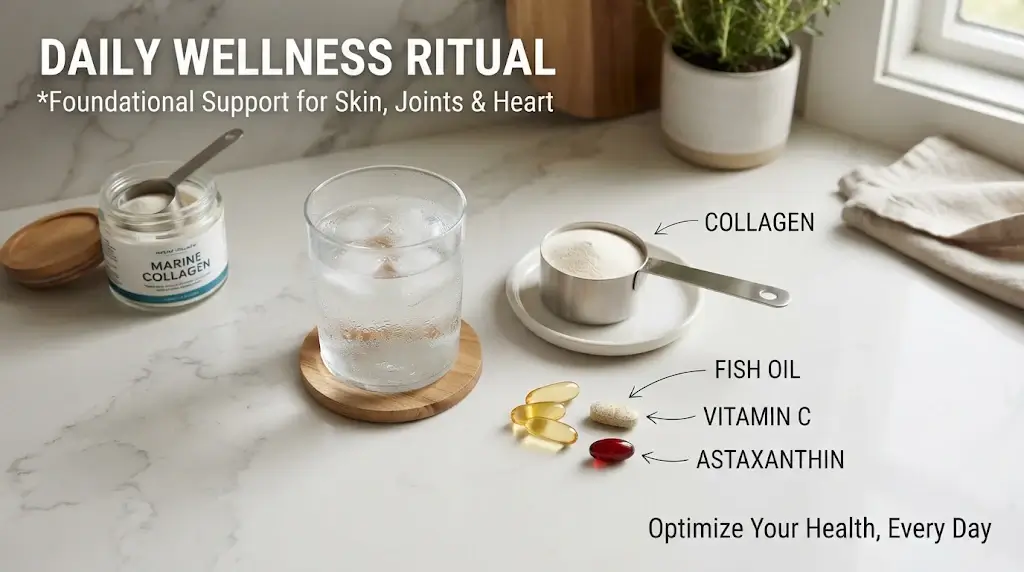
You do not need all eight. Here is a simple, evidence-based stack you can start with:
| Priority | Supplement | Dose | When |
| 1 | Collagen peptides | 2.5–5 g | Morning, empty stomach |
| 2 | Vitamin C | 500 mg | With collagen, morning |
| 3 | Omega-3 (EPA+DHA) | 1–2 g | With lunch or dinner (fat-containing meal) |
| 4 | Astaxanthin | 6 mg | With the same meal as omega-3 |
| 5 | Zinc | 15–30 mg | With dinner (separate from iron/calcium) |
| 6 | Hyaluronic acid | 120–240 mg | Morning, with water |
Timeline to expect results:
- Weeks 1–4: No visible change. Your body is building stores.
- Weeks 5–8: Skin may feel slightly softer; moisture readings (if you use a corneometer) may improve.
- Weeks 8–12: Most studies show measurable gains in elasticity and hydration by this point.
- Month 4+: Continued use maintains benefits. Stopping typically leads to gradual return to baseline.
Common Mistake: People take a collagen powder for three weeks, see no change, and quit. The fibroblasts need time to synthesize new collagen cross-links. Give any skin supplement at least 8–12 weeks before judging results.
Safety Notes and Who Should Check With a Doctor First
- Pregnant or breastfeeding women: Confirm doses of zinc, vitamin E, and omega-3s with your OB-GYN. Collagen and vitamin C are generally considered safe, but always verify.
- Blood-thinning medications: High-dose omega-3s (above 3 g/day) and vitamin E (above 100 mg) can increase bleeding risk. Talk to your prescribing doctor.
- Autoimmune conditions: Zinc at high doses may modulate immune function. Get clearance before long-term use above 30 mg.
- Kidney or liver issues: High-dose supplements add processing load. A doctor should review any stack above the standard doses listed here.
- Allergies: Fish oil users should check for shellfish or fish allergies. Algae-based DHA is a safe alternative.
This article is for general information and is not a substitute for advice from a doctor or physical therapist.
How to Support Skin Health Beyond Supplements
Supplements are one lever. The others matter just as much:
- Sunscreen daily. UV radiation is the single largest driver of collagen breakdown (photoaging). Apply SPF 30+ every morning, even in winter. No supplement can fully offset chronic UV damage.
- Sleep. Growth hormone peaks during deep sleep, and skin repair processes are most active at night. Aim for 7–9 hours. Poor sleep is linked to elevated cortisol, which can accelerate collagen degradation.
- Hydration. Drinking enough water supports overall tissue hydration, though the “8 glasses” rule is a simplification. Urine color (pale yellow) is a practical gauge.
- Avoid smoking. Nicotine constricts blood vessels in the skin and depletes vitamin C, directly impairing collagen synthesis.
- Protein intake. You need adequate dietary protein (0.8–1.2 g per kg body weight) to supply the amino acids your body uses for collagen and elastin. If you are in a caloric deficit for weight management, prioritize protein—see our guide on protein intake and metabolism for practical targets.
FAQ
What supplements help skin hydration the most?
Hydrolyzed collagen peptides (2.5–5 g daily), oral hyaluronic acid (120–240 mg), and omega-3 fatty acids (1–2 g EPA+DHA) have the strongest evidence for improving skin moisture and reducing transepidermal water loss. Consistent daily use for 8–12 weeks is key.
Can collagen powder actually increase skin elasticity?
Yes, multiple randomized controlled trials show that oral collagen peptides improve skin elasticity scores after 8–12 weeks. The peptides stimulate fibroblasts to produce new collagen and may inhibit MMPs that break down existing collagen. Results vary by individual, but the trend is consistent across studies.
How long do skin supplements take to show results?
Most clinical trials measure outcomes at 8, 12, or 16 weeks. You may notice skin feeling softer around week 5–6, but measurable changes in elasticity and wrinkle depth typically appear at the 8-to-12-week mark. Do not stop after two weeks and expect a difference.
Are hyaluronic acid pills as effective as topical serums?
They work through different mechanisms. Topical hyaluronic acid hydrates the surface (stratum corneum), while oral hyaluronic acid may support deeper dermal glycosaminoglycan levels. Using both together is a reasonable “inside-out” strategy, though oral evidence is still growing.
Do omega-3s really improve skin moisture?
Research suggests adequate EPA and DHA intake supports the lipid barrier in the epidermis, reducing water loss. The effect is modest but measurable, especially in people who eat little fatty fish. Think of omega-3s as a barrier-supporting supplement rather than a dramatic hydrator.
Is biotin worth taking for skin elasticity?
If you are not deficient, the evidence is weak. Biotin supports keratin production, which helps nail and hair structure, but it does not directly drive collagen or elastin synthesis. Prioritize collagen, vitamin C, and omega-3s first. Add biotin only if a blood test shows a deficiency.
Final Thoughts
You do not need a 15-bottle supplement cabinet to support your skin. A focused stack of collagen peptides, vitamin C, omega-3s, and astaxanthin—taken consistently for at least three months—covers the major pathways for hydration and elasticity. Add hyaluronic acid and zinc if your diet or lifestyle creates a gap.
The supplements will not replace sunscreen, sleep, or a balanced diet. But they can fill in the gaps that aging, UV exposure, and modern diets create, giving your fibroblasts the raw materials they need to keep your dermal matrix plump and resilient.
Start with two or three of the supplements above, give it 12 weeks, and track how your skin feels and looks. Adjust from there. Your skin is living tissue that responds to what you feed it—just like any other muscle in your body.