How D-Mannose Works for Recurrent UTI in Women: A Science-Backed Breakdown
Recurrent urinary tract infections (UTIs) disrupt daily life, drain your energy, and frequently interrupt exercise routines and sleep. Understanding how D-mannose works for recurrent UTI in women gives you a clear look at a non-antibiotic option that targets the exact mechanics of bacterial attachment in the bladder.
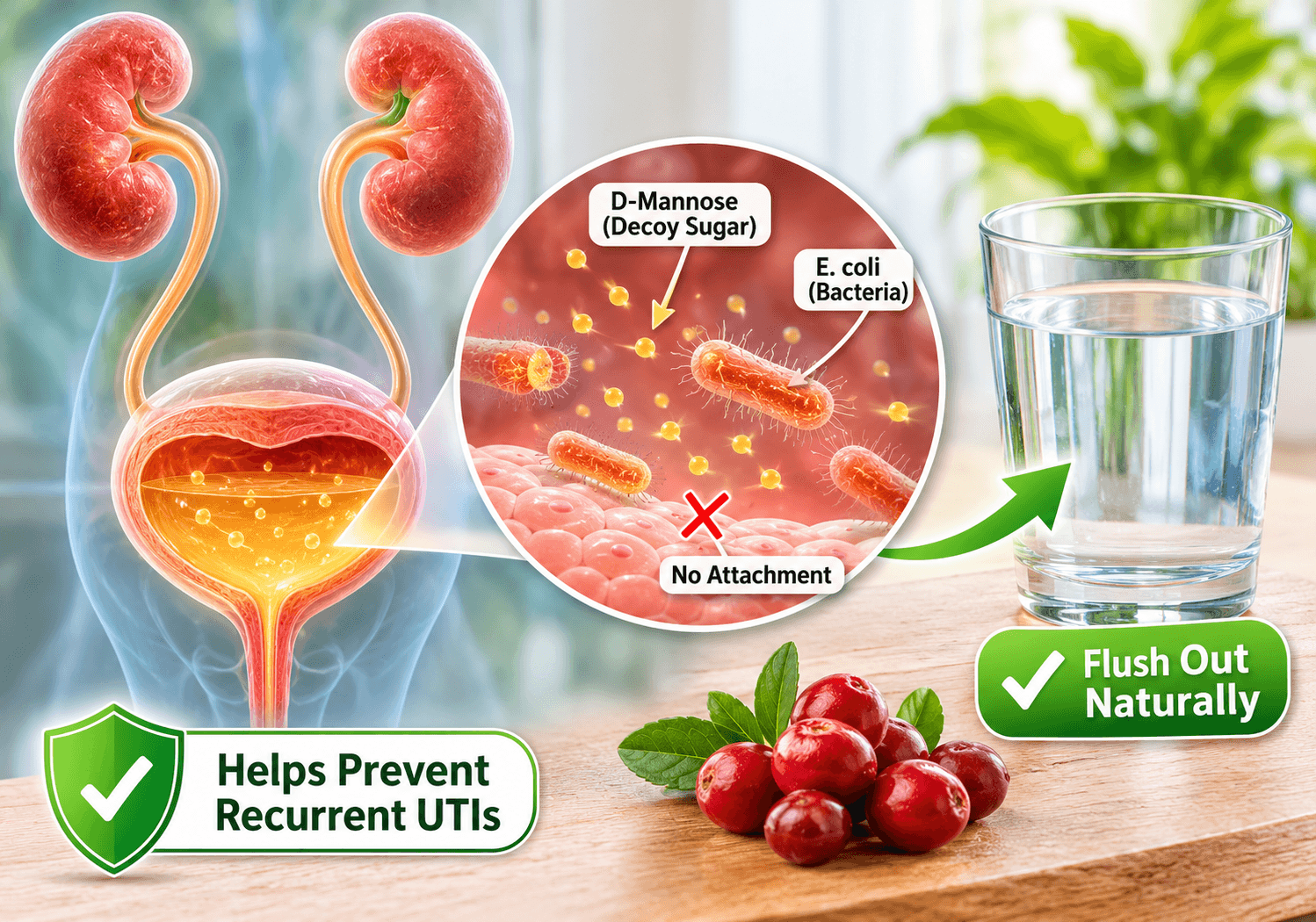
Unlike broad-spectrum antibiotics that wipe out both harmful and helpful bacteria, D-mannose is a simple sugar that acts like a molecular decoy. When you consume it, your body filters it rapidly through your kidneys into your urine, where it binds to bacteria so you flush them out naturally.
Before starting any new supplement—especially if you are pregnant, breastfeeding, managing diabetes, or experiencing active infection symptoms like fever, back pain, or blood in your urine—always consult a qualified doctor or healthcare provider first.
Quick Answer: D-mannose works for recurrent UTIs in women by acting as a floating decoy in your urine. After ingestion, kidneys filter this simple sugar directly into the bladder, where it binds to hair-like projections (FimH adhesins) on Escherichia coli bacteria. Coated in D-mannose, the bacteria cannot grip the bladder wall and flush out during urination.
What Is D-Mannose and Why Does It Target the Urinary Tract?
D-mannose is a naturally occurring monosaccharide that is structurally related to glucose. You consume small amounts of it daily when eating fruits like cranberries, apples, oranges, and peaches, as well as vegetables like green beans and broccoli.
While glucose serves as your body’s primary fuel source for muscle contractions and brain function, D-mannose behaves very differently once swallowed. Your digestive tract absorbs D-mannose quickly in the upper gastrointestinal system, yet your cells metabolize very little of it for energy.
Instead of storing D-mannose in your liver or muscles as glycogen, your bloodstream transports the intact sugar molecules directly to your kidneys. Research published in the World Journal of Urology (PMC) demonstrates that the kidneys rapidly filter D-mannose out of the blood and excrete it unchanged into the urine, creating high concentrations inside the bladder within 30 to 60 minutes.

Why Women Experience Recurrent UTIs More Frequently
Clinical guidelines from the National Institute of Diabetes and Digestive and Kidney Diseases (NIDDK) define recurrent UTIs as experiencing two or more infections within six months, or three or more within one year. Women face a significantly higher lifetime risk than men due to basic anatomical differences.
A woman’s urethra is roughly 1.5 inches (3.8 cm) long, compared to about 8 inches (20 cm) in men. This shorter pathway sits close to the vaginal and rectal openings, making it far easier for bacteria from the digestive tract to migrate upward into the bladder.
Hormonal shifts also influence urinary tract vulnerability. Lower estrogen levels during perimenopause and menopause thin the urethral tissue and reduce protective Lactobacillus bacteria, which normally keep vaginal pH acidic and hostile to invading pathogens.
The Exact Mechanism: How D-Mannose Works for Recurrent UTI in Women
To understand how D-mannose works for recurrent UTI in women, you have to look at the microscopic surface of your bladder lining and the bacteria trying to colonize it. According to clinical reviews indexed on PubMed Central (NCBI), uropathogenic Escherichia coli (E. coli) causes roughly 80% to 90% of uncomplicated UTIs in women.
Step 1: How E. coli Grips Your Bladder Wall
Your bladder is lined with specialized cells called uroepithelial cells. The outer membranes of these cells are naturally coated with tiny, sugar-based protein receptors containing mannose.
E. coli bacteria are covered in microscopic, hair-like appendages called Type 1 pili or fimbriae. At the very tip of each hair sits a specialized protein hook known as the FimH adhesin.
When E. coli enters the bladder, those FimH hooks lock onto the mannose receptors on your bladder wall like Velcro. Once anchored, the bacteria resist the forceful shear stress of urine flow, multiply rapidly, and trigger the painful inflammation, burning, and urgency of a UTI.
Step 2: The “Molecular Decoy” Effect
When you take a D-mannose supplement, your urine becomes saturated with free-floating D-mannose molecules. Because free D-mannose shares the exact chemical shape of the receptors on your bladder cells, the FimH hooks on E. coli bind to the floating sugar instead.
Think of it like covering the hook side of Velcro with lint before pressing it against the loop side. Once the bacterial hooks are occupied by free D-mannose molecules, the bacteria lose their ability to latch onto your bladder lining.
Step 3: Mechanical Flushing Through Urination
D-mannose does not poison, rupture, or kill bacteria the way a pharmaceutical antibiotic does. Instead, it disarms their anchoring mechanism so they remain suspended in the liquid urine pool.
The next time you empty your bladder, the normal stream of urine washes the D-mannose-coated E. coli safely out of your urethra. Because the bacteria are never killed inside your body, they do not experience selective pressure to mutate into drug-resistant superbugs.

What Clinical Research Says About D-Mannose for UTI Prevention
Scientific interest in non-antibiotic UTI prevention has grown rapidly due to rising global rates of antibiotic resistance. Multiple human clinical trials have evaluated whether daily D-mannose reduces infection recurrence in women.
Landmark Randomized Controlled Trial Findings
One of the most widely cited human studies, published in the World Journal of Urology (PubMed), tracked 308 women with a history of recurrent UTIs over six months. Researchers divided the participants into three groups after treating their initial acute infection:
- Group 1: Received 2 grams of D-mannose powder dissolved in 200 mL of water daily.
- Group 2: Received 50 mg of the standard antibiotic nitrofurantoin daily.
- Group 3: Received no preventive treatment.
At the end of the six-month trial, 60.8% of the women in the untreated control group experienced a recurrent UTI. In contrast, only 14.6% of women taking D-mannose and 20.4% of women taking nitrofurantoin had a recurrence.
Equally important, the D-mannose group reported a significantly lower rate of side effects (7.8%) compared to the antibiotic group (28.2%). The authors concluded that D-mannose performed comparably to daily low-dose antibiotics for preventing recurrent episodes without causing systemic gastrointestinal or vaginal side effects.
Broader Systematic Reviews and Nuance
A comprehensive systematic review and meta-analysis published in the American Journal of Obstetrics and Gynecology (PubMed) analyzed multiple clinical studies comparing D-mannose against placebo and standard antibiotics. The reviewers found that D-mannose significantly lowered the relative risk of recurrent UTIs compared to placebo and showed similar preventive efficacy to prophylactic antibiotics.
However, responsible evidence-based guidance requires noting recent mixed data as well. A 2024 randomized trial published in JAMA Internal Medicine examined daily D-mannose in primary care settings among women with recurrent UTIs and found no statistically significant reduction in medically attended UTIs compared to a fructose placebo over six months.
Why do results vary across studies? Researchers point to three practical factors:
- Bacterial species: D-mannose only blocks bacteria with mannose-sensitive FimH receptors (primarily E. coli). Infections caused by Enterococcus, Proteus, or Staphylococcus saprophyticus do not rely on FimH adhesion.
- Supplement formulation: Over-the-counter supplements vary widely in purity, dosage accuracy, and dissolution rates.
- Hydration and voiding habits: D-mannose relies on consistent fluid intake and regular urination to physically flush bound bacteria from the bladder.
Coach’s Tip: Think of D-mannose like wearing proper lifting shoes—it sets up ideal mechanics, but you still have to execute the movement. Taking D-mannose without drinking enough water leaves the coated bacteria sitting in your bladder instead of flushing them out. Pair every dose with a full 8 to 12 oz (240 to 350 mL) glass of water.
D-Mannose vs. Antibiotics vs. Cranberry: Side-by-Side Comparison
Women looking to break the cycle of frequent UTIs often compare D-mannose against standard low-dose antibiotics and traditional cranberry supplements. Each option interacts with your body through a distinct pathway.
| Feature | D-Mannose | Prophylactic Antibiotics (e.g., Nitrofurantoin) | Cranberry Supplements (PACs) |
| Primary Mechanism | Binds to E. coli FimH hooks as a floating sugar decoy | Kills or stops bacterial reproduction system-wide | Proanthocyanidins hinder bacterial attachment |
| Target Bacteria | Primarily E. coli (mannose-sensitive Type 1 pili) | Broad spectrum (kills both E. coli and non-E. coli strains) | Primarily E. coli (P-fimbriae and Type 1 pili) |
| Gut & Vaginal Microbiome Impact | Minimal to none; does not kill beneficial Lactobacillus | High; frequently disrupts gut flora and triggers yeast infections | Minimal; acts mainly via anti-adhesion compounds |
| Antibiotic Resistance Risk | None; bacteria are flushed out intact rather than killed | Moderate to high with long-term daily use | None |
| Common Side Effects | Mild bloating or loose stools at high doses (over 3–4 grams) | Nausea, diarrhea, vaginal candidiasis, rare lung/liver toxicity | Mild stomach upset or increased oxalate load in kidney stone formers |
| Best Clinical Role | Daily or post-intercourse prevention of E. coli UTIs | Severe, frequent UTIs unresponsive to non-antibiotic measures | Mild adjunct support alongside hydration and hygiene |
While evaluating supplement options, checking label transparency is just as important as understanding how to evaluate ingredients in weight management supplements so you avoid unnecessary fillers or under-dosed proprietary blends.
How to Use D-Mannose Safely: Dosage, Timing, and Forms
Because D-mannose is sold as a dietary supplement rather than an FDA-approved prescription drug, there is no single universal medical dosage. However, clinical studies and urology protocols point to clear, practical dosing patterns depending on your prevention strategy.
1. Daily Maintenance Protocol
In the clinical trials that demonstrated strong preventive benefits, participants typically took 2 grams (2,000 mg) of D-mannose once per day.
- Powder format: Dissolve one level scoop (typically 2 grams) in 6 to 8 ounces (180 to 240 mL) of plain water. Stir well until completely clear—pure D-mannose has a mildly sweet, clean taste.
- Capsule format: Most capsules contain 500 mg of D-mannose, meaning you will need four capsules daily to reach the researched 2-gram threshold.
- Timing tip: Taking your daily dose in the evening before bed allows D-mannose to concentrate in your bladder overnight when urine sits longest, provided you empty your bladder immediately upon waking.
2. Targeted Post-Intercourse Protocol
Sexual activity is one of the most common triggers for recurrent UTIs in women because mechanical friction can push bacteria from the perineal area up into the short urethra.
Many clinicians suggest a targeted post-coital prophylaxis approach rather than continuous daily dosing for women whose UTIs strictly follow intimacy:
- Urinate within 15 to 30 minutes after intercourse to clear mechanical bacteria entry.
- Take 1 to 2 grams of D-mannose with a full glass of water right after voiding.
- Take a second 1 to 2 gram dose 8 to 12 hours later the next morning, again followed by steady water intake.

3. Powder vs. Capsules: Which Form Works Better?
Both forms deliver the exact same molecule to your kidneys, so choosing between them comes down to convenience, cost, and digestive comfort.
- D-Mannose Powder: More economical per gram, free of capsule binders or gelatin, and forces you to drink water with every dose. It dissolves easily in cold or room-temperature water, unsweetened iced tea, or a post-workout hydration drink.
- D-Mannose Capsules: Easier to carry in a gym bag, purse, or travel kit without measuring scoops. Check the Supplement Facts panel carefully—many brands list “1,000 mg per serving” based on a two-capsule serving size, requiring four capsules to equal 2 grams.
Common Mistake: Relying on D-mannose alone to treat an active, worsening bladder infection. While D-mannose helps block bacterial attachment, it is not a replacement for prescription antibiotics when an active infection has already taken hold. If burning, pelvic pain, or urinary frequency worsens after 24 to 48 hours—or if you develop a fever, chills, nausea, or lower back/flank pain—seek immediate medical care to prevent a kidney infection.
Does D-Mannose Affect Blood Sugar, Weight, or Gut Health?
Because D-mannose is classified chemically as a sugar, active women—especially those tracking macros, managing insulin sensitivity, or following low-carb routines—often wonder how it impacts metabolism.
Blood Sugar and Insulin Response
Even though D-mannose is a monosaccharide, human cells lack large amounts of the specific enzymes needed to convert it rapidly into glucose or fat. According to biochemical research indexed by the National Center for Biotechnology Information (NCBI), roughly 90% of ingested D-mannose is excreted intact in the urine without entering standard glycolytic energy pathways.
As a result, D-mannose has a negligible impact on blood glucose and insulin levels in healthy individuals compared to table sugar or dextrose. Still, women with Type 1 or Type 2 diabetes should monitor their blood glucose closely when introducing D-mannose and consult their endocrinologist first.
Caloric Load and Body Weight
A standard 2-gram dose of D-mannose contains roughly 8 calories, and because most of those molecules leave your body unchanged through your kidneys, the net absorbed energy is virtually zero. It will not stall fat loss, spike cravings, or disrupt daily energy balance.
If you are already focusing on how dietary fiber helps with appetite and weight management or refining your nutrition, adding pure D-mannose will not interfere with your caloric targets—just avoid gummy formulas loaded with added cane sugar or corn syrup.

Digestive Tolerance and the Microbiome
Because D-mannose is absorbed rapidly in the upper small intestine, very little reaches the colon under normal dosing (1 to 3 grams per day). Unlike broad-spectrum antibiotics, it does not wipe out beneficial gut bacteria or trigger opportunistic vaginal yeast infections.
However, taking single doses above 4 to 5 grams at once can exceed your small intestine’s absorption capacity. Unabsorbed D-mannose draws water into the digestive tract via osmosis, which can cause temporary bloating, gas, or loose stools. Splitting larger daily intakes into two 1-gram doses morning and evening prevents digestive discomfort.
5 Habits That Maximize How D-Mannose Works in Your Body
Supplements work best when paired with smart daily routines that support your body’s natural urinary defenses. If you train regularly, sweat heavily, or sit for long stretches at work, build these five habits around your D-mannose routine:
- Hit Your Daily Hydration Baseline: Aim for pale-yellow urine throughout the day. If you exercise intensely and lose fluids through sweat, replace lost water promptly so urine does not become overly concentrated and stagnant in your bladder.
- Avoid “Holding It” After Workouts: Sitting in tight, damp athletic leggings after cardio or strength training traps warmth and moisture near the urethra. Change out of sweaty workout clothes promptly and urinate right after training sessions.
- Wipe Front to Back Every Time: Simple mechanical hygiene keeps rectal E. coli strains away from the urethral opening.
- Consider Pairings With Vaginal Probiotics: Specific probiotic strains like Lactobacillus rhamnosus GR-1 and Lactobacillus reuteri RC-14 help restore healthy vaginal acidity, creating a second line of defense alongside D-mannose. (Just as probiotics support appetite and weight management through gut balance, targeted Lactobacillus strains support urogenital flora.)
- Discuss Local Vaginal Estrogen If Postmenopausal: For women in perimenopause or menopause, clinical guidelines from the American Urological Association (AUA) strongly support low-dose vaginal estrogen therapy to rebuild protective urethral tissue, which can be safely combined with D-mannose.
Safety Notes and Who Should Be Careful
D-mannose has a strong safety profile for most healthy adults, yet certain groups should exercise caution and speak with a physician before use:
- Pregnant or Breastfeeding Women: Human clinical trials on D-mannose during pregnancy and lactation are limited. Always clear any supplement with your OB-GYN or midwife before taking it while pregnant or nursing.
- Women With Diabetes: Although D-mannose minimally affects blood glucose compared to sucrose, individual metabolic responses vary. Check your blood sugar levels more frequently during your first week of use.
- Individuals With Kidney Disease: Because D-mannose relies entirely on renal filtration for clearance, anyone with impaired kidney function or chronic kidney disease should consult a nephrologist first.
- Severe or Spreading Symptoms: Never use D-mannose to self-treat upper urinary tract infections. Fever, shaking chills, flank or lower back pain, nausea, or visible blood in the urine require prompt medical evaluation and targeted antibiotics.
Frequently Asked Questions (FAQ)
How fast does D-mannose start working in the bladder?
Once swallowed, your upper digestive tract absorbs D-mannose rapidly, and your kidneys begin filtering it into your urine within 30 to 60 minutes. Peak urinary concentrations typically occur within one to two hours, making hydration and regular urination essential right after taking your dose.
Can you take D-mannose every day for recurrent UTIs?
Yes, clinical trials have safely evaluated daily D-mannose supplementation at 2 grams per day for up to six months in women with recurrent UTIs. Because it is excreted unchanged in urine and does not kill beneficial gut bacteria, daily use is generally well tolerated, though you should periodically review your prevention plan with your doctor.
Does D-mannose work for all types of UTIs?
No. D-mannose specifically binds to Type 1 pili (FimH adhesins) found primarily on Escherichia coli (E. coli), which causes roughly 80% to 90% of uncomplicated UTIs. It will not block bacteria that lack mannose-sensitive hooks, such as Enterococcus, Proteus, or Klebsiella species.
Is D-mannose better than cranberry juice for preventing UTIs?
Pure D-mannose delivers a far higher, more standardized concentration of anti-adhesion sugar than cranberry juice. Most commercial cranberry juices contain very low levels of active proanthocyanidins alongside high amounts of added sugar, which can irritate the bladder and add unnecessary calories without reliably preventing bacterial attachment.
What are the most common side effects of D-mannose?
Most women experience zero side effects at standard preventive doses of 1 to 2 grams daily. Taking high doses (above 3 to 4 grams at one time) can occasionally cause mild bloating, abdominal gas, or loose stools because unabsorbed sugar draws extra water into the intestines.
Should you take D-mannose before or after sex to prevent UTIs?
Taking D-mannose immediately after sex—right after emptying your bladder—is the most common targeted protocol. A standard approach is 1 to 2 grams with a full glass of water right after intimacy, followed by a second 1 to 2 gram dose 8 to 12 hours later.
Conclusion
Understanding how D-mannose works for recurrent UTI in women clarifies why so many active women and clinicians view it as a practical, non-antibiotic preventive tool. Rather than destroying bacteria and disrupting your gut or vaginal microbiome, D-mannose floods your urine with floating sugar decoys that occupy E. coli FimH hooks so your body flushes the bacteria out naturally.
For best results, choose a pure powder or capsule free of added sugars, pair every 2-gram dose with a full glass of water, and maintain smart post-workout and post-intimacy voiding habits. Always partner with your healthcare provider to confirm the underlying cause of recurrent infections and ensure your prevention routine fits your overall health profile.