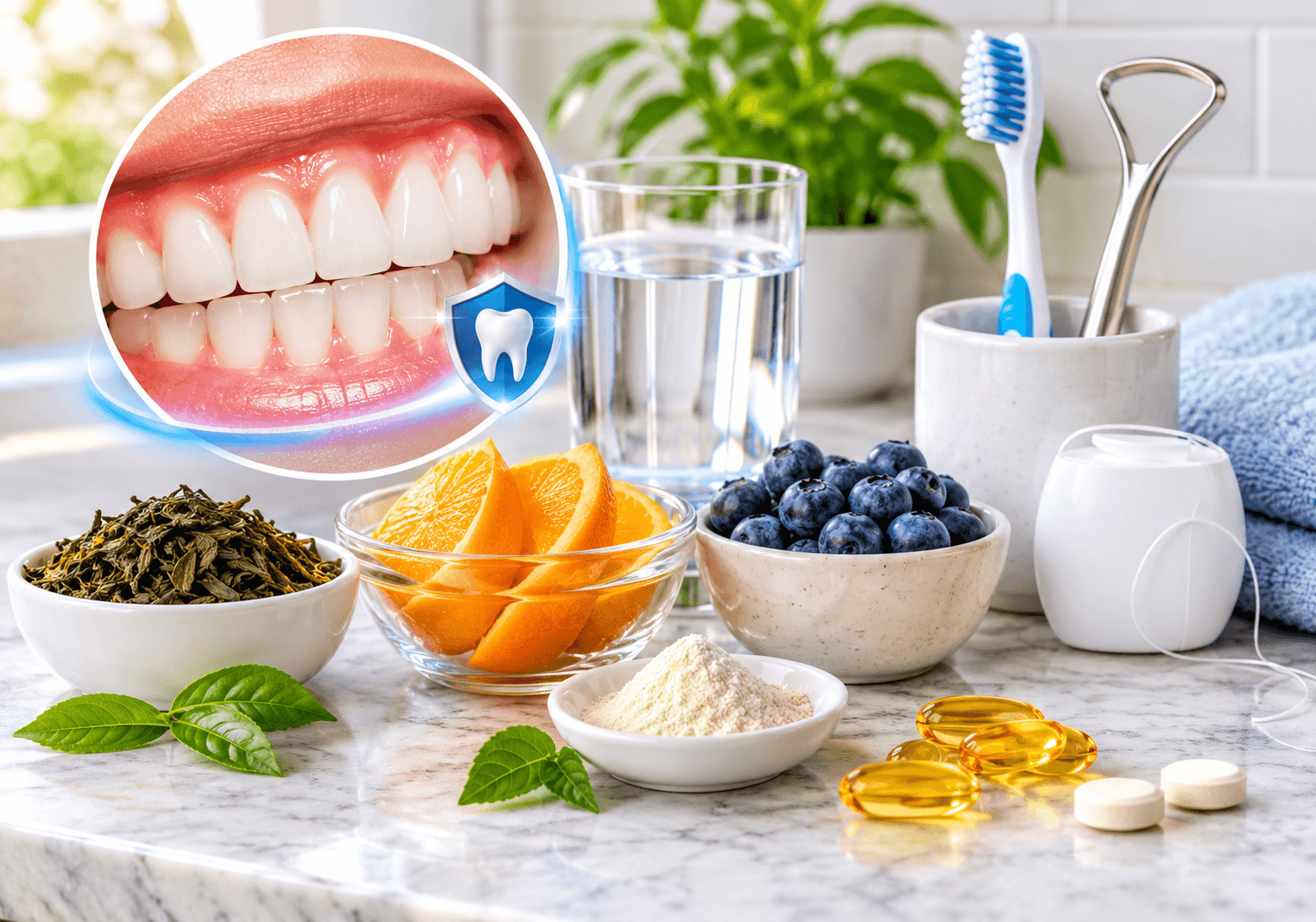
Brushing twice a day and flossing before bed form the foundation of oral hygiene, yet many people still wake up with stale breath or notice pink in the sink after spitting. When mechanical cleaning alone falls short, the underlying issue often comes down to an imbalanced oral microbiome, nutrient gaps, or localized tissue inflammation. Choosing the best daily supplements for fresh breath and healthy gums can give your body the raw materials it needs to maintain strong periodontal tissue and keep odor-causing bacteria in check.
Just like training a muscle requires both mechanical stimulus and proper nutrition, maintaining a healthy mouth requires both physical plaque removal and internal cellular support. Your gums have one of the highest tissue turnover rates in the human body, meaning they demand a steady supply of specific vitamins, antioxidants, and beneficial microbes. Before adding any new supplement to your daily routine, check with your dentist or doctor to ensure it fits your personal health profile and won’t interact with existing medications.
Quick Answer: The best daily supplements for fresh breath and healthy gums combine targeted oral probiotics (Streptococcus salivarius K12 and Lactobacillus reuteri) with tissue-repairing nutrients like Vitamin C, CoQ10, Vitamin D3, and Omega-3 fatty acids. Oral probiotics crowd out odor-producing bacteria, while vitamins and antioxidants reduce gum bleeding, support collagen production, and calm periodontal inflammation.
Top Daily Supplements for Oral Health: Quick Comparison
| Supplement / Ingredient | Primary Mechanism | Best For | Typical Daily Dose | Price Range |
| Oral Probiotics (S. salivarius K12/M18) | Crowds out sulfur-producing bacteria in the mouth | Chronic bad breath & tongue coating | 1–3 billion CFU (lozenge) | $20 – $35 / month |
| Vitamin C (Ascorbic Acid / Ester-C) | Drives collagen synthesis & strengthens capillaries | Bleeding, swollen, or tender gums | 250 mg – 1,000 mg | $10 – $20 / month |
| Coenzyme Q10 (Ubiquinol) | Fuels cellular energy & reduces oxidative gum stress | Receding or inflamed gum tissue | 100 mg – 200 mg | $25 – $45 / month |
| Lactobacillus reuteri Lozenges | Modulates immune response & lowers plaque acidity | Gingivitis & periodontal pockets | 200 million – 1 billion CFU | $25 – $40 / month |
| Vitamin D3 + K2 | Regulates immune defense & calcium absorption | Deep gum support & tooth stability | 2,000 – 4,000 IU D3 / 90 mcg K2 | $15 – $25 / month |
| Omega-3 Fatty Acids (EPA/DHA) | Produces resolvins that actively calm gum inflammation | Chronic gingival redness & swelling | 1,000 mg – 2,000 mg combined | $20 – $35 / month |
| Zinc (Gluconate or Citrate Lozenges) | Neutralizes volatile sulfur compounds (VSCs) | Immediate breath odor neutralization | 15 mg – 30 mg | $10 – $18 / month |
| Green Tea Extract (EGCG) | Inhibits bacterial adhesion & lowers oxidative damage | Antioxidant protection & plaque control | 250 mg – 500 mg | $15 – $25 / month |
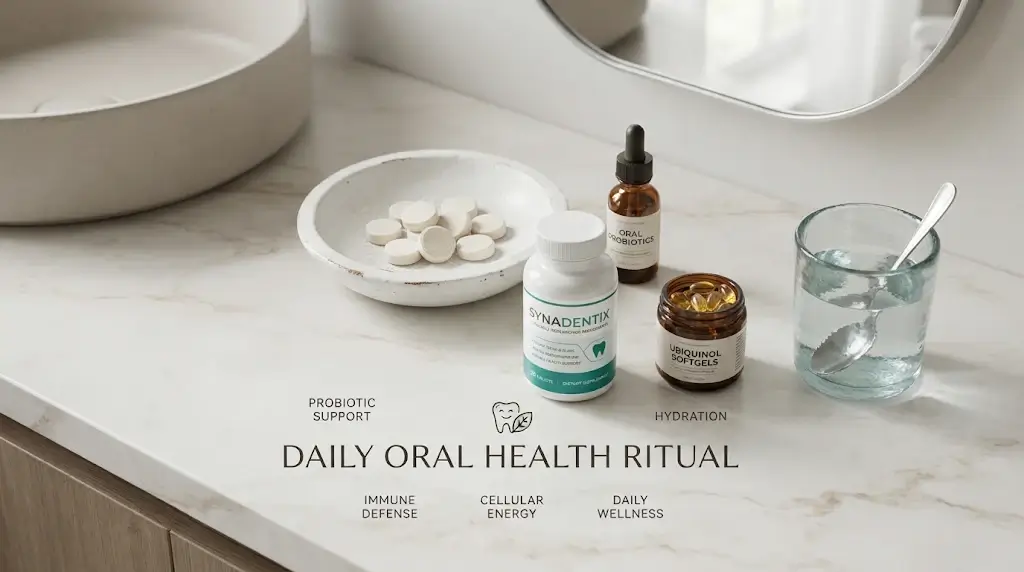
Why Traditional Brushing Isn’t Always Enough
Standard toothpastes and alcohol-based mouthwashes work on a scorched-earth principle: they wipe out bacteria indiscriminately. While killing pathogens sounds helpful, wiping out beneficial microbes leaves the surface of your tongue, cheeks, and gumline defenseless against fast-growing anaerobic bacteria. These opportunistic microbes break down proteins from food debris and dead cells, releasing volatile sulfur compounds (VSCs) that smell like rotten eggs.
Furthermore, no toothbrush can reach deep inside the gingival sulcus—the tiny space between your tooth and gum tissue—or repair weakened blood vessels from the inside out. If your diet lacks key micronutrients, your gum tissue cannot synthesize new collagen fast enough to withstand the daily friction of chewing and brushing. Pairing thorough mechanical hygiene with targeted nutritional support addresses both the surface bacteria and the structural integrity of your gums.
Coach’s Tip: Think of your oral care routine like a strength training program. Brushing and flossing are the workouts that clear out waste and stimulate the tissue, while daily supplements are the post-workout nutrition that rebuilds the fibers stronger than before.
The 8 Best Daily Supplements for Fresh Breath and Healthy Gums
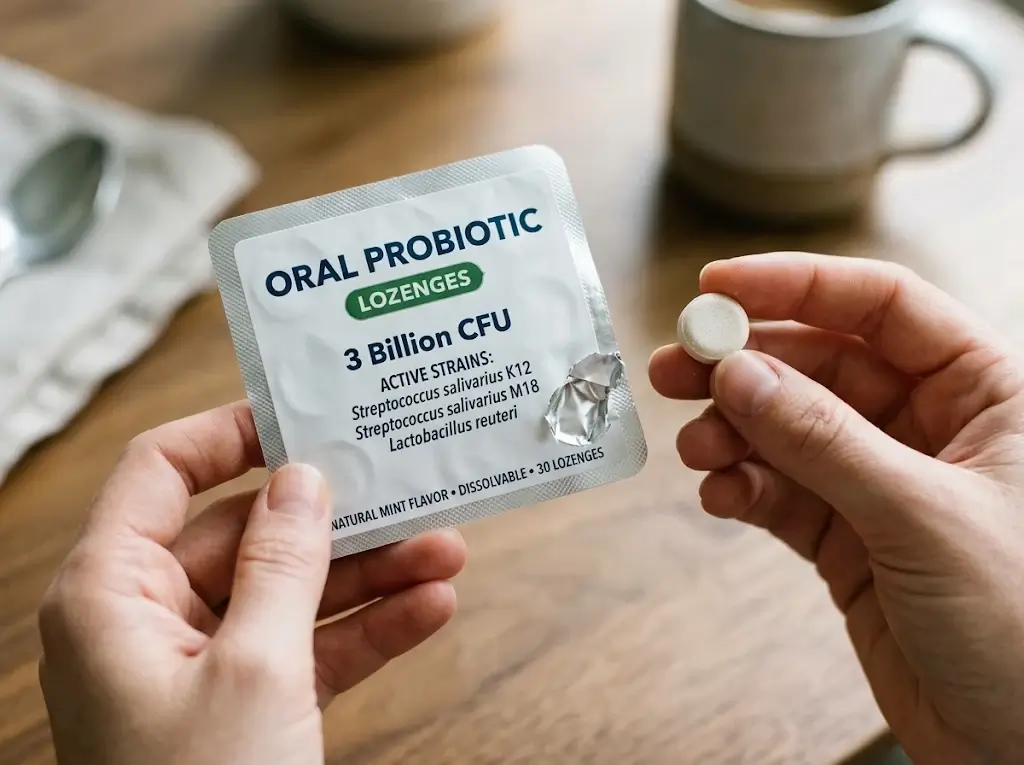
1. Oral Probiotics (Streptococcus salivarius K12 and M18)
Who it’s for: Anyone struggling with persistent morning breath, white tongue coating, or recurring throat and mouth odor despite regular brushing.
Key Features: Unlike gut probiotics that you swallow in a capsule, oral probiotics come in slow-dissolving lozenges or chewable tablets designed to colonize the oral cavity. Streptococcus salivarius K12 produces natural antimicrobial peptides called bacteriocins that directly inhibit odor-causing bacteria, as demonstrated in clinical research indexed by the National Center for Biotechnology Information (NCBI). Meanwhile, the M18 strain produces enzymes that help break down dental plaque and neutralize mouth acidity.
Pros:
- Directly targets the root bacterial cause of halitosis rather than masking odors with mint.
- Colonizes the tongue and throat surfaces within days of consistent use.
- Safe for long-term daily maintenance without drying out oral tissues.
Cons:
- Requires avoiding food or drink for 30 minutes after the lozenge dissolves.
- Must be stored properly (often in cool, dry conditions) to keep bacterial strains alive.
2. Vitamin C (Ascorbic Acid or Buffered Ascorbate)
Who it’s for: People who notice bleeding when flossing, tender or spongy gums, or slow healing after dental cleanings.
Key Features: Vitamin C is an essential cofactor for the enzymes that cross-link collagen fibers, giving gum tissue its firmness and elasticity. According to the National Institutes of Health (NIH) Office of Dietary Supplements, inadequate Vitamin C intake leads to fragile capillaries, gingival inflammation, and bleeding gums. Because the human body cannot store water-soluble Vitamin C, daily intake is vital for continuous periodontal repair.
Pros:
- Inexpensive, widely available, and backed by decades of clinical nutrition data.
- Strengthens blood vessel walls in the gums to reduce bleeding during brushing.
- Acts as a potent antioxidant against free radicals generated by oral bacteria.
Cons:
- Chewable Vitamin C tablets are highly acidic and can erode tooth enamel over time; always choose swallowable capsules or buffered forms.
- High doses above 2,000 mg daily may cause digestive upset.
3. Coenzyme Q10 (Ubiquinol Form)
Who it’s for: Adults over 35, individuals experiencing gum recession, or anyone taking statin medications that deplete natural CoQ10 levels.
Key Features: CoQ10 is a fat-soluble antioxidant concentrated in the mitochondria of high-energy cells, including gingival tissue. Research published via PubMed Central (PMC) indicates that people with periodontal inflammation frequently exhibit significantly lower CoQ10 concentrations in their gum tissue. Supplementing with Ubiquinol—the active, reduced form of CoQ10—restores cellular energy production and accelerates tissue recovery.
Pros:
- Supports cellular energy (ATP) needed for rapid gum tissue regeneration.
- Reduces localized oxidative stress and gum pocket depth when paired with professional cleanings.
- Offers secondary benefits for cardiovascular energy and exercise recovery.
Cons:
- Higher monthly cost compared to basic vitamins, especially for bioavailable Ubiquinol.
- Must be taken with a meal containing dietary fat for proper absorption.
4. Lactobacillus reuteri Oral Lozenges
Who it’s for: Individuals dealing with chronic gingivitis, red or swollen gum margins, and rapid tartar buildup.
Key Features: Lactobacillus reuteri (specifically strains DSM 17938 and ATCC PTA 5289) works by modulating the local immune response inside the mouth. Clinical trials summarized by the National Library of Medicine show that daily use of L. reuteri lozenges significantly reduces gingival bleeding and pro-inflammatory cytokines in gum fluid. Rather than simply killing bacteria, it calms the overactive inflammatory cascade that causes gums to swell and pull away from teeth.
Pros:
- Clinically shown to reduce gum bleeding indices within two to four weeks.
- Helps balance both oral and upper gastrointestinal flora.
- Easy, pleasant-tasting lozenge delivery system.
Cons:
- Specific patented strains can be pricier than generic probiotic blends.
- Works best when taken twice daily after brushing, requiring consistent habit tracking.
5. Vitamin D3 Paired with Vitamin K2
Who it’s for: People with limited sun exposure, individuals concerned about bone loss around teeth, and older adults focused on long-term dental stability.
Key Features: Vitamin D3 acts as an immune system regulator, triggering the production of natural antimicrobial peptides like cathelicidin that defend gum tissue against bacterial invasion. Findings reported by the Harvard T.H. Chan School of Public Health highlight Vitamin D’s critical role in calcium absorption and bone mineralization. Pairing D3 with Vitamin K2 (MK-7) ensures that absorbed calcium is directed into the jawbone and teeth rather than soft tissues.
Pros:
- Supports the underlying alveolar bone that anchors teeth firmly in place.
- Lowers systemic inflammatory markers linked to periodontal breakdown.
- Compact, once-daily softgel delivery.
Cons:
- Fat-soluble vitamins can accumulate in the body, so testing blood levels before taking high doses is wise.
- Takes 6 to 12 weeks of consistent daily use to optimize blood serum levels.
6. Omega-3 Fatty Acids (High-EPA/DHA Fish Oil or Algae Oil)
Who it’s for: Anyone experiencing chronic, low-grade gum redness, puffiness, or systemic inflammation.
Key Features: The omega-3 fatty acids EPA (eicosapentaenoic acid) and DHA (docosahexaenoic acid) serve as precursors to specialized pro-resolving mediators called resolvins. According to research hosted on PubMed, dietary omega-3 supplementation helps reduce periodontal pocket depth and bleeding on probing by actively switching off chronic inflammatory pathways.
Pros:
- Addresses inflammation throughout the entire body, including joints and blood vessels.
- Available in both purified marine fish oil and vegan microalgae formats.
- Complements local oral treatments by improving systemic immune balance.
Cons:
- Low-quality fish oil supplements can cause fishy burps if not molecularly distilled or taken with meals.
- Large softgels can be difficult for some people to swallow.
7. Zinc Lozenges (Zinc Gluconate or Zinc Citrate)
Who it’s for: People looking for immediate, reliable neutralization of sulfur-based breath odors after meals or before close conversations.
Key Features: Zinc ions possess a strong chemical affinity for sulfur. When dissolved slowly in the mouth, zinc binds directly to volatile sulfur compounds (hydrogen sulfide and methyl mercaptan), turning them into odorless, non-volatile salts. A review in the Journal of Clinical and Diagnostic Research via PMC confirms that zinc-containing oral products significantly reduce VSC concentrations in morning breath.
Pros:
- Works within minutes to chemically neutralize bad breath rather than covering it up.
- Supports immune cell function and wound healing in oral mucosal tissues.
- Very affordable and easy to carry in a gym bag or desk drawer.
Cons:
- Taking zinc on an empty stomach frequently causes temporary nausea.
- Long-term intake exceeding 40 mg daily can interfere with copper absorption.
8. Green Tea Extract (Standardized for EGCG)
Who it’s for: Coffee drinkers, individuals prone to plaque accumulation, and those seeking plant-based antioxidant support for their gums.
Key Features: Green tea leaves contain potent polyphenols called catechins, most notably epigallocatechin gallate (EGCG). Studies indexed by NCBI demonstrate that green tea polyphenols inhibit the growth of Porphyromonas gingivalis—a primary pathogen behind gum disease—while reducing oxidative damage to periodontal cells.
Pros:
- Helps limit bacterial attachment to tooth enamel and gum margins.
- Provides gentle antioxidant support without the teeth-staining tannins of brewed black tea.
- Available in decaffeinated extracts for evening or stimulant-sensitive users.
Cons:
- Concentrated extracts should always be taken with food to protect liver health.
- Caffeinated versions should be avoided late in the afternoon to protect sleep quality.
Common Mistake: Chewing acidic vitamin gummies or sour chewable tablets and letting the residue sit on your teeth. Sugar and citric acid feed plaque bacteria and soften tooth enamel. Always swallow capsules with water, or choose sugar-free, xylitol-sweetened lozenges for dissolvable oral probiotics.
How to Choose the Right Supplement Stack
Walking down the supplement aisle—or scrolling online—can feel overwhelming when dozens of bottles promise fresh breath and stronger gums. Use this practical checklist to filter out weak formulas and pick supplements that actually deliver results:
- Check Strain Specificity on Probiotics: Never buy an oral probiotic that simply lists “Proprietary Probiotic Blend.” Look for exact strain designations on the label, such as Streptococcus salivarius K12, S. salivarius M18, or Lactobacillus reuteri DSM 17938.
- Verify Delivery Format: Oral probiotics and zinc work best locally in the mouth, so choose slow-dissolving lozenges. Structural nutrients like Vitamin C, D3/K2, CoQ10, and Omega-3s work systemically through your bloodstream, so choose swallowable capsules or softgels.
- Look for Third-Party Testing: Because dietary supplements are regulated differently than prescription drugs, choose brands verified by independent labs like USP, NSF International, or ConsumerLab to guarantee purity and accurate dosing.
- Avoid Sugar and Harsh Fillers: Ensure lozenges are sweetened with tooth-friendly polyols like xylitol or erythritol rather than sucrose, dextrose, or fructose, which feed odor-causing bacteria.
- Match the Formula to Your Primary Symptom: If bad breath is your main concern, start with an oral probiotic lozenge and zinc. If bleeding or receding gums are your priority, focus on Vitamin C, CoQ10, and Omega-3s first.
Daily Oral Supplement Routine: Morning to Night
Timing matters when taking supplements for oral health. Taking an oral probiotic right before drinking hot coffee will kill the live bacteria, while taking fat-soluble vitamins on an empty stomach wastes half the dose. Follow this simple daily schedule to maximize absorption and bacterial colonization:
| Time of Day | Action & Supplement | Why This Timing Works |
| Morning (After Brushing) | Dissolve 1 Oral Probiotic Lozenge (S. salivarius K12/M18) slowly on your tongue. Wait 30 minutes before eating or drinking. | Morning brushing clears away overnight biofilm, giving beneficial bacteria a clean surface to colonize. |
| Breakfast (With Food & Healthy Fats) | Take Vitamin D3 + K2, CoQ10 (Ubiquinol), and Omega-3 Fish Oil with water. | Dietary fats from eggs, yogurt, avocado, or nuts dramatically boost absorption of fat-soluble nutrients. |
| Lunch (With Food) | Take Vitamin C (500 mg) and Green Tea Extract (if using). | Taking Vitamin C and green tea extract with a meal prevents stomach irritation and keeps blood antioxidant levels steady. |
| Afternoon / Post-Meal | Dissolve 1 Zinc Lozenge (15 mg) after lunch or snacks if needed. | Zinc neutralizes sulfur compounds released as bacteria break down lunchtime proteins. |
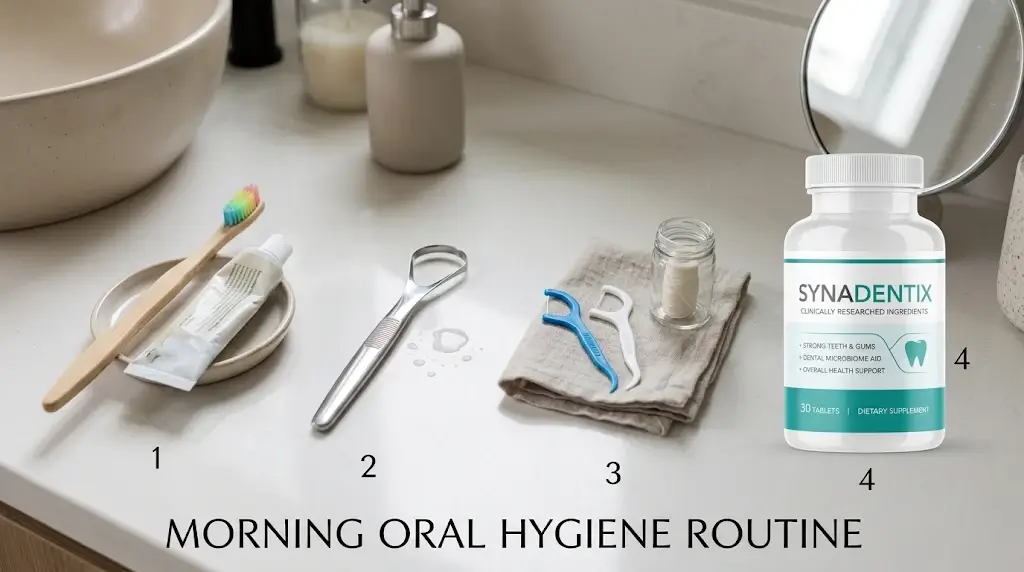
| Night (Right Before Bed) | Brush, floss, scrape tongue, then dissolve 1 L. reuteri Lozenge before sleeping. | Saliva flow drops during sleep; applying probiotics right before bed lets beneficial strains multiply undisturbed overnight. |
Essential Daily Habits That Amplify Your Supplements
Supplements act as force multipliers, not magic pills. Even the highest-potency CoQ10 or probiotic lozenge cannot overcome hardened tartar buildup or chronic dehydration. Pair your daily supplement stack with these four mechanical and lifestyle habits:
- Scrape Your Tongue Every Morning: Roughly 80% to 90% of oral bad breath originates from bacteria and debris trapped on the back of the tongue, according to clinical data from the Cleveland Clinic. Gently pull a stainless-steel or copper tongue scraper from back to front three to five times before brushing.
- Stay Hydrated to Maintain Saliva Flow: Saliva is your mouth’s natural defense system, washing away food particles and buffering acids. Aim to drink water consistently throughout the day—roughly half your body weight in ounces (for example, 80 oz or 2.4 liters for a 160 lb [72.5 kg] adult)—to prevent dry mouth.
- Switch to Alcohol-Free Mouthwash: Traditional antiseptic mouthwashes containing 20% or more alcohol dry out mucosal tissues and wipe out the beneficial bacteria you are paying to replenish with oral probiotics. If you use a rinse, choose an alcohol-free formula or warm saltwater.
- Keep Up With Professional Dental Cleanings: Once plaque mineralizes into calculus (tartar), no supplement, brush, or floss can remove it at home. Schedule professional cleanings every six months—or every three to four months if recommended by your hygienist—so your gums have a clean baseline to heal against.
Frequently Asked Questions
What vitamins help heal receding or bleeding gums?
Vitamin C, Vitamin D3, and Coenzyme Q10 provide the strongest nutritional support for bleeding or stressed gums. Vitamin C rebuilds collagen fibers and strengthens fragile blood vessels, Vitamin D3 regulates local immune defense, and CoQ10 fuels cellular repair. While supplements cannot regrow lost gum tissue, they help halt further inflammation and bleeding.
Do oral probiotics really cure bad breath?
Oral probiotics containing Streptococcus salivarius K12 or Lactobacillus reuteri significantly reduce bad breath caused by bacterial imbalance. Instead of masking odors like mints, these beneficial strains crowd out sulfur-producing bacteria on the tongue and throat. Most people notice fresher morning breath within one to two weeks of daily lozenge use.
How long does it take for gum and breath supplements to work?
Fast-acting ingredients like zinc lozenges neutralize sulfur odors within minutes, while oral probiotics typically improve morning breath in 7 to 14 days. Structural tissue nutrients such as Vitamin C, CoQ10, Vitamin D3, and Omega-3 fatty acids require 4 to 8 weeks of consistent daily intake to visibly reduce gum bleeding and redness.
Can Vitamin C deficiency cause bleeding gums and bad breath?
Yes. Severe or even moderate Vitamin C deficiency weakens collagen cross-linking in periodontal ligaments and capillaries, causing gums to swell, bleed easily, and trap bacteria. Accumulated blood and inflammatory fluid break down in the mouth, creating a metallic odor and halitosis. Restoring daily Vitamin C intake quickly reverses deficiency-related gum bleeding.
Are zinc supplements safe to take every day for fresh breath?
Low-dose zinc lozenges (15 mg to 30 mg daily) are safe for most adults when taken with food and kept under the tolerable upper limit of 40 mg per day established by the NIH. Exceeding 40 mg daily over several months can block copper absorption and weaken immune function, so check your multivitamin label before adding extra zinc.
Should I swallow oral probiotics or let them dissolve?
Always let oral probiotics dissolve slowly in your mouth rather than swallowing them whole. Oral strains like S. salivarius K12 are specifically selected to bind to the tissues of your tongue, cheeks, and gums. Swallowing them sends the bacteria straight into stomach acid, preventing them from colonizing your oral cavity.
Conclusion
Building lasting fresh breath and resilient gums comes down to supporting your mouth from both the outside and the inside. By pairing consistent brushing, flossing, and tongue scraping with the best daily supplements for fresh breath and healthy gums—such as Streptococcus salivarius K12 lozenges, Vitamin C, CoQ10, Vitamin D3, and Omega-3s—you create an environment where beneficial microbes thrive and gum tissue stays firm. Start with one or two targeted additions that match your biggest concern, stay consistent for at least 30 days, and track how your gums look and feel each morning.