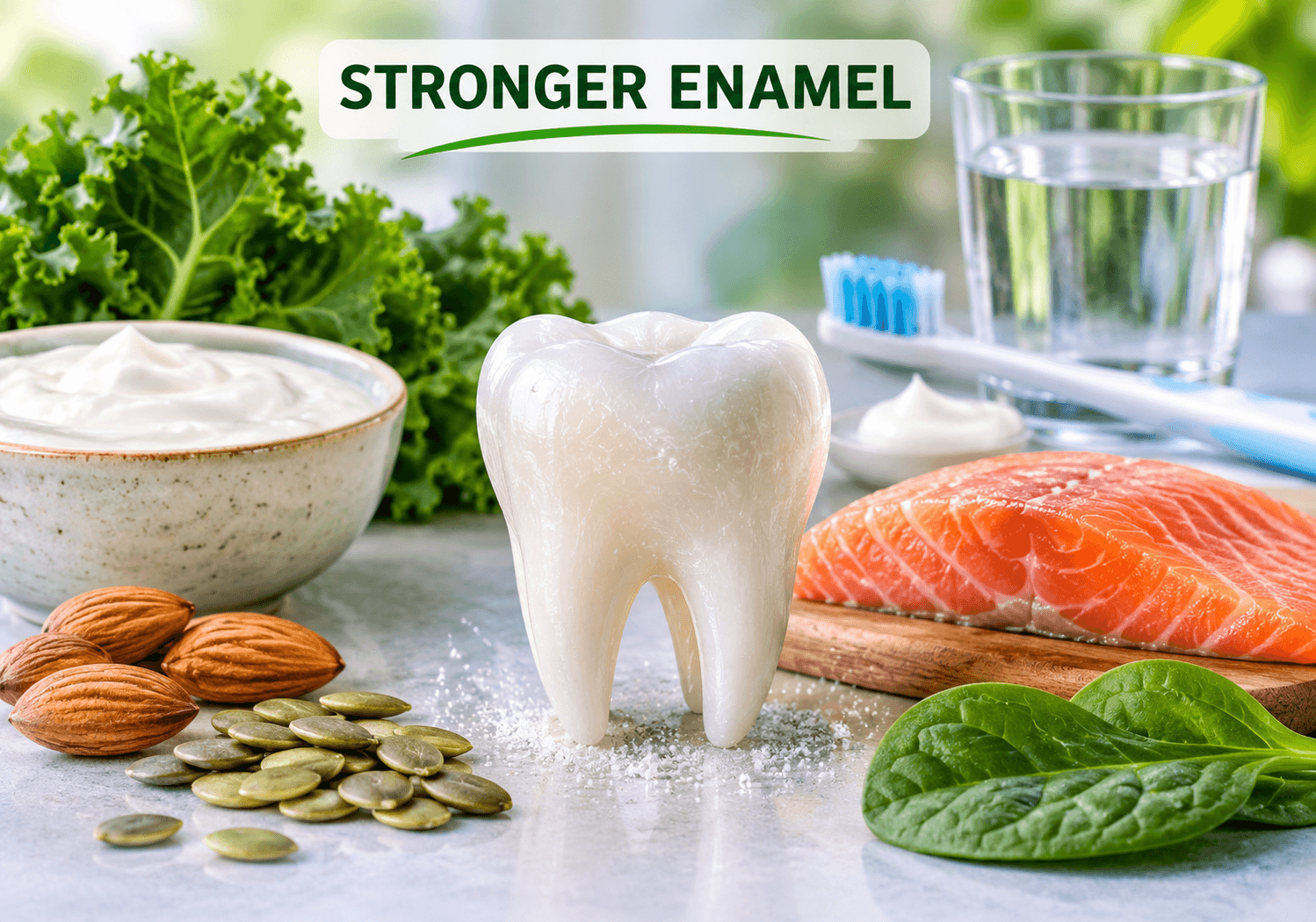
How to Strengthen Tooth Enamel with Supplements: A Coach’s Practical Guide
If you train hard, drink pre-workout or sports beverages, or clench your jaw during heavy lifts, your teeth take a beating right alongside your joints and muscles. Learning how to strengthen tooth enamel with supplements starts with understanding a basic rule of biology: once enamel is completely gone, your body cannot grow brand-new enamel cells to replace it. However, early acid-softened enamel can take back minerals, and targeted nutrients help support healthy saliva, mineral balance, and tissue health from the inside out. Check with a dentist or doctor before starting new supplements, especially if you have tooth pain, medical conditions, or take prescription medications.
Quick Answer: To understand how to strengthen tooth enamel with supplements, focus on nutrients that support mineral balance and saliva—mainly vitamin D, calcium, phosphorus, and magnesium, plus selected oral probiotics where evidence supports oral pH balance. Supplements cannot regrow destroyed enamel, so pair them with fluoride or hydroxyapatite care, lower acid intake, and see a dentist.
What the Research Says About Strengthening Tooth Enamel
Tooth enamel is the hardest mineral tissue in the human body, made mostly of calcium phosphate arranged as hydroxyapatite crystals. According to the National Institute of Dental and Craniofacial Research, daily cycles of demineralization (acid pulling minerals out) and remineralization (saliva putting minerals back in) happen constantly in your mouth. When acid attacks happen too often—from sugary or acidic drinks, reflux, or dry mouth—mineral loss outpaces repair.
Research on systemic supplements for tooth enamel is nuanced and often indirect. A review in PubMed Central notes that vitamin D plays an important role in calcium homeostasis and mineralized tissues, while clinical outcomes on enamel remineralization from oral supplements alone remain more limited than topical mineral exposure. That distinction matters: swallowing a capsule feeds your bloodstream and saliva glands, whereas topical fluoride or nano-hydroxyapatite acts directly on the tooth surface.
Saliva is the unsung hero of enamel protection because it carries calcium and phosphate ions, buffers acids, and clears food debris. Guidance from the Centers for Disease Control and Prevention highlights how saliva helps neutralize acids and protect teeth against decay and erosion. If you train in a dry gym, breathe through your mouth during intervals, or take medications that cause dry mouth, lower saliva flow can make acid erosion more likely.
Oral probiotics have also drawn interest for supporting a healthier balance of mouth bacteria and reducing acid-producing strains. Evidence indexed by the National Institutes of Health shows growing research into probiotics for oral health, though strain selection, dose, and long-term enamel outcomes still need more study. Think of oral probiotics as a helpful support habit rather than a magic shield against daily sour drinks or hard brushing.
Key Nutrients and Supplements That Support Enamel
When clients ask me how to strengthen tooth enamel with supplements, I explain that no single pill acts like a coat of armor on a molar. Instead, several vitamins and minerals work together to support mineral transport, jaw bone health, and normal oral tissues. You can also explore how targeted formulas are evaluated in our guide on how to evaluate ingredients in weight management supplements.
| Supplement / Nutrient | Primary Role in Enamel & Oral Support | Typical Dietary / Supplement Context | Practical Coaching Notes |
| Vitamin D (D3) | Supports intestinal calcium absorption and mineral balance | Sunlight, fatty fish, fortified milk, D3 capsules/drops | Helpful if blood levels are low; check levels with a doctor |
| Calcium | Core mineral building block of hydroxyapatite and jawbone | Dairy, fortified plant milks, leafy greens, calcium citrate/carbonate | Best paired with adequate vitamin D and food intake |
| Phosphorus | Partners with calcium in hydroxyapatite crystal structure | Protein foods, dairy, legumes, grains | Usually plentiful in mixed diets; deficiency is uncommon |
| Magnesium | Supports enzyme activity and bone/mineral metabolism | Nuts, seeds, beans, whole grains, magnesium glycinate/citrate | High doses can cause loose stools; start low |
| Vitamin K2 | Involved in directing calcium toward bone and hard tissues | Fermented foods, natto, certain cheeses, K2 supplements | Often paired with D3; check if taking blood thinners |
| Oral Probiotics | Aim to support balanced oral microbiota and acid control | Lozenges, chewables, or capsules with specific oral strains | Choose oral-specific strains rather than random gut blends |
Vitamin D and Calcium: The Mineral Foundation
Calcium gives enamel and the underlying jawbone their structural density, while vitamin D helps your gut absorb that calcium efficiently. According to the Mayo Clinic, vitamin D is essential for calcium absorption and bone health, and low vitamin D can contribute to weaker mineralized tissues over time. In my coaching notes, lifters who train indoors year-round often overlook vitamin D until routine bloodwork flags low levels.
Taking mega-doses of calcium without need will not pack extra minerals into healthy enamel. Once enamel reaches mineral saturation in saliva, extra swallowed calcium just passes through or goes elsewhere. Aim first to meet daily needs through food, and use supplements to fill real gaps rather than chase shortcuts.
Phosphorus, Magnesium, and Vitamin K2
Enamel crystals rely on both calcium and phosphate, while magnesium helps regulate mineral transport and enzyme function. Information from the Harvard T.H. Chan School of Public Health outlines how calcium, phosphorus, magnesium, and vitamin D work together in bone and mineral metabolism. Most people eating enough protein and whole foods get plenty of phosphorus, whereas magnesium intake sometimes falls short.
Vitamin K2 often shows up alongside vitamin D3 in bone and dental formulas. While early research links vitamin K2 to healthy mineral metabolism, clinical evidence directly proving enamel strengthening in humans is still developing. If you take anticoagulant medication, talk with your prescribing doctor before adding vitamin K2.
Oral Probiotics and Salivary Support
Certain probiotic strains—such as specific Lactobacillus or Streptococcus strains studied in dental research—are formulated as lozenges or chewables so they contact the mouth. Research indexed via PubMed suggests some oral probiotics may modestly lower levels of certain cavity-associated bacteria or support gum health in the short term. Still, they will not offset frequent sipping on acidic sports drinks or aggressive scrubbing.
Coach’s Tip: Read supplement labels like you read a training log—look for clear ingredient amounts, third-party testing seals, and realistic claims. If a bottle promises to “regrow lost tooth enamel in 30 days,” keep walking.
How Training Habits, Diet, and Jaw Tension Affect Enamel
As a coach, I look at what happens around your workouts because athletic habits can quietly wear down enamel. Sipping low-pH sports drinks or flavored pre-workouts over a 60- to 90-minute session bathes teeth in acid repeatedly. Instead of grazing on acidic sips for an hour, drink plain water during training and save flavored or acidic drinks for a single sitting if you use them at all.
Heavy lifting and high-intensity conditioning also trigger jaw clenching and bracing. When you grind or clench under load—or while stressed and sleeping poorly—the masseter muscle and temporalis muscle generate strong bite forces. Over time, excessive clenching can contribute to micro-cracks, wear facets, and tooth sensitivity, especially if your enamel is already thinned.
Dry mouth is another common gym trap. Breathing hard through your mouth on a 3-mile (4.8 km) run or conditioning circuit dries out oral tissues and reduces saliva’s buffering power. Keeping a water bottle handy and pacing nasal breathing when intensity allows helps protect both performance and oral comfort. You can also check how recovery habits like sleep affect overall health in our article on how sleep affects metabolism and weight management.
Practical Steps to Protect and Remineralize Enamel Alongside Supplements
Supplements work best as background support while daily mechanical and dietary habits do the heavy lifting on the tooth surface. If you want to know how to strengthen tooth enamel with supplements in real life, pair smart nutrition with a simple, repeatable routine. You can see how smart nutrient choices support broader daily routines in our guide on which nutrients support normal energy metabolism.
- Get a baseline checkup and discuss labs if needed: Have a dentist check for enamel wear, sensitivity, or grinding signs, and ask your doctor if checking vitamin D or reviewing diet makes sense.
- Pair nutrients with balanced meals: Take calcium, vitamin D, and fat-soluble vitamins with meals that contain some healthy fat so absorption stays steady and stomach upset stays low.
- Upgrade topical remineralization: Brush twice daily for two minutes with a soft-bristled brush (head around 1 inch / 2.5 cm long) using fluoride or hydroxyapatite toothpaste as recommended by your dentist.
- Control acid timing and rinse smartly: Limit frequent sour or sugary drinks, rinse with plain water after acidic foods or workouts, and wait about 30 minutes before brushing after acid exposure so softened enamel is not scrubbed away.
- Manage clenching and hydration: Stay hydrated during sessions, watch for jaw tension during heavy sets, and ask a dentist about a custom nightguard if you wake up with a sore jaw or worn teeth.
Common Mistake: Brushing hard immediately after drinking lemon water, citrus juice, or a sour sports drink. Acid temporarily softens the outer enamel surface, and stiff bristles or heavy pressure can scrub away weakened mineral right on contact.
Sample Daily Coaching Routine for Enamel & Recovery Support
You do not need a complicated ten-pill stack to support your teeth and training recovery. Here is a practical daily template showing how nutrition, hydration, and oral care can fit around a typical afternoon workout. Adjust supplement timing only after checking with your healthcare provider.
| Time of Day | Oral & Enamel Habit | Nutrition & Supplement Pairing | Coach’s Focus |
| Morning | Gentle brushing with soft bristles; tongue/hydration check | Breakfast with protein, healthy fats, and vitamin D/calcium-rich foods | Start the day hydrated before coffee or tea |
| Pre / During Workout | Sip plain water; avoid slow-sipping acidic drinks | Light meal or snack 60-90 min prior if needed | Keep jaw relaxed; avoid clenching teeth during warm-up sets |
| Post-Workout | Rinse mouth with plain water; avoid immediate hard brushing | Balanced meal with protein, minerals, and fluids | Rehydrate and support normal recovery |
| Evening / Bedtime | Gentle brush and floss; wear nightguard if prescribed | Optional oral probiotic lozenge or evening mineral per clinician advice | Protect enamel during sleep and reduce clenching stress |
Who Should Be Extra Careful With Enamel Supplements?
Certain groups need closer medical and dental guidance before starting minerals, fat-soluble vitamins, or oral probiotics. People with a history of kidney stones, kidney disease, or high blood calcium levels should be cautious with calcium and vitamin D supplements. Those taking prescription medications—including blood thinners, thyroid medications, or certain antibiotics—should check for absorption interactions or timing rules.
Pregnant or nursing individuals, children, and older adults also have specific nutrient needs and upper limits. Even natural-sounding products can cause side effects like constipation, bloating, or loose stools if doses are too high. If you are looking at broader ingredient quality standards, see our breakdown on how to support metabolism naturally and which vitamins support metabolism when deficient.
Frequently Asked Questions
How to strengthen tooth enamel with supplements naturally?
Focus on getting enough vitamin D, calcium, phosphorus, and magnesium through whole foods first, using supplements only to cover gaps after consulting a doctor. Pair any supplement with topical remineralization like fluoride or hydroxyapatite toothpaste, limit frequent acidic drinks, drink plenty of water, and see a dentist regularly.
Can supplements rebuild lost tooth enamel?
No supplement can rebuild enamel that has been completely lost because mature enamel lacks living cells to regenerate it. However, supporting mineral balance, healthy saliva, and topical remineralization can help harden early acid-softened enamel spots and protect remaining tooth structure from further erosion.
What vitamins strengthen tooth enamel the most?
Vitamin D is the standout vitamin most closely tied to tooth and bone mineral health because it supports calcium absorption and mineral balance. Vitamin K2 may play a supporting role in calcium metabolism, though direct clinical evidence on enamel hardening from supplements remains limited.
Does vitamin D help remineralize tooth enamel?
Vitamin D helps maintain healthy calcium levels in the body and supports mineralized tissues, which can indirectly support a healthy oral environment. Because remineralization happens right at the tooth surface in saliva, vitamin D works best alongside topical mineral care and good oral hygiene.
Are oral probiotics good for tooth enamel?
Oral probiotics may help support a healthier balance of mouth bacteria and modestly reduce certain acid-producing microbes in short-term studies. Research on direct enamel strengthening is still emerging, so treat them as a supportive add-on rather than a replacement for brushing, flossing, and limiting sugar or acid.
Which minerals support tooth enamel health?
Calcium and phosphorus form the core hydroxyapatite mineral crystals in tooth enamel, while magnesium supports enzyme activity and overall mineral metabolism. Getting these minerals from balanced meals and using topical fluoride or hydroxyapatite helps protect enamel surfaces effectively.
Conclusion
Figuring out how to strengthen tooth enamel with supplements comes down to keeping expectations grounded in science and daily habits. Nutrients like vitamin D, calcium, phosphorus, magnesium, and selected oral probiotics can support mineral balance, oral tissues, and saliva when paired with smart nutrition—but they cannot regrow missing enamel on their own. Protect your teeth the same way you protect your joints in training: control daily wear, stay hydrated, use proven surface care, and work with your dentist and doctor. If you are exploring other supplement topics, you can also read about how to evaluate ingredients in weight management supplements and what affects metabolism and body weight.