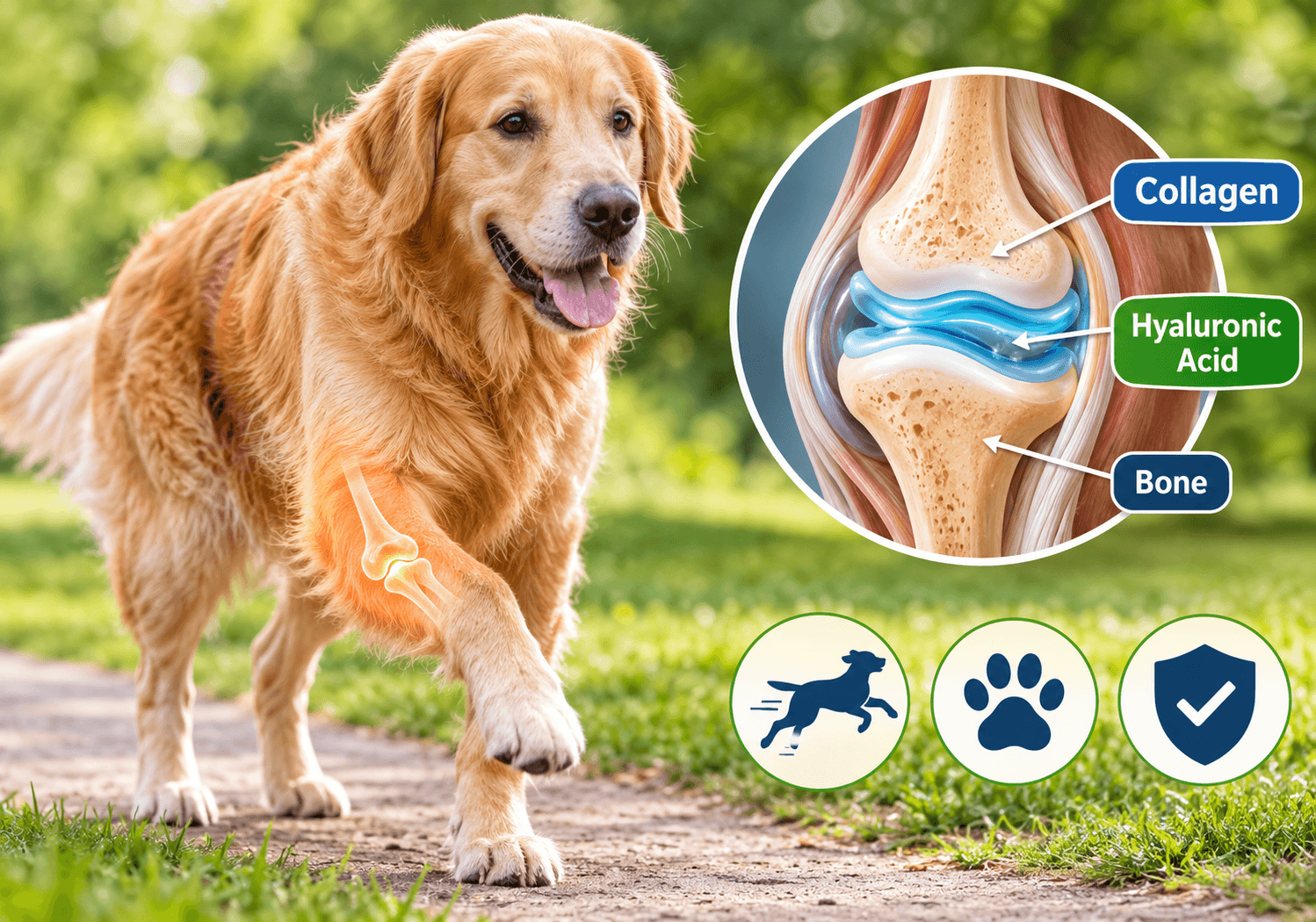
Your dog limps after a short walk, hesitates at the stairs, or groans when you lift him into the car. You head to the pet aisle, and a wall of joint supplements greets you—glucosamine, chondroitin, turmeric, and increasingly, collagen and hyaluronic acid. But do these two ingredients actually do something for your dog’s joints, or are they just a marketing trend borrowed from the human wellness world?
As a strength and conditioning coach who works with athletes on joint maintenance and recovery, I’ve seen how synovial fluid, cartilage integrity, and connective tissue health determine whether someone (or some dog) can keep moving. The same principles apply to our four-legged companions. Below, I break down what collagen and hyaluronic acid are, what the veterinary research says about using them in dogs, how to dose them safely, and when you should talk to your vet before adding anything to your dog’s routine.
Quick Answer: Collagen (usually hydrolyzed) provides the amino acids your dog’s body needs to build and repair cartilage and connective tissue. Hyaluronic acid (HA) is a natural component of synovial fluid that helps lubricate joints. Research in veterinary medicine supports HA for reducing joint inflammation in dogs with osteoarthritis, while evidence for oral collagen in dogs is more limited but promising. Both are generally safe at proper doses. Always consult your veterinarian before starting any supplement, especially if your dog is on medication or has a diagnosed joint condition.
What Collagen and Hyaluronic Acid Actually Do in a Joint
Before you can judge whether a supplement helps, it helps to understand what’s happening inside a healthy joint.
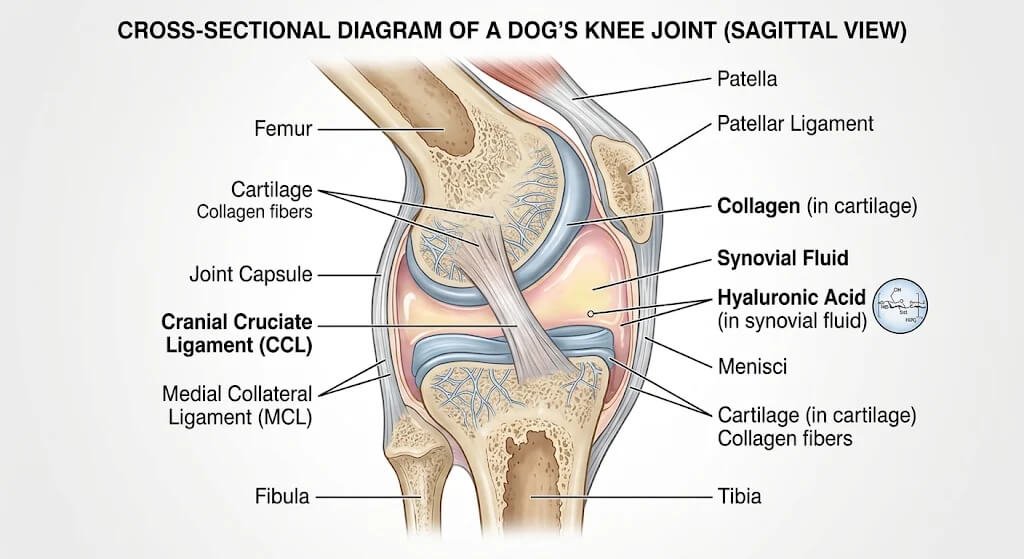
Collagen is the primary structural protein in cartilage, tendons, ligaments, and the bone matrix. In a dog’s joint, type II collagen forms the bulk of articular cartilage—the smooth, shock-absorbing cap on the end of each bone. When cartilage breaks down (as it does in osteoarthritis), the joint surface becomes rough, friction increases, and pain follows.
Hyaluronic acid (HA) is a glycosaminoglycan found in high concentrations in synovial fluid, the viscous liquid that fills the joint capsule. HA gives synovial fluid its lubricating and shock-absorbing properties. It also plays a role in signaling to cells in the joint lining (the synovial membrane), influencing whether the environment is inflammatory or reparative.
Think of it this way: collagen is the “building material” for the joint’s structural components, while HA is the “lubricant and signaling molecule” that keeps the joint sliding smoothly and calms inflammation.
How They Work for Dog Joints: The Science
Hyaluronic Acid in Veterinary Medicine
HA has a longer track record in veterinary medicine than oral collagen. In dogs with diagnosed osteoarthritis, veterinarians have used HA in two main ways:
- Intra-articular injection: A concentrated HA solution is injected directly into the affected joint. This is sometimes called viscosupplementation. Studies published in peer-reviewed veterinary journals have reported reduced lameness scores and improved gait in dogs with hip or elbow osteoarthritis after a series of HA injections, compared to placebo.
- Oral supplementation: Lower-concentration HA is given by mouth, typically in a powder or liquid form mixed into food. The theory is that oral HA may support the body’s own production of synovial fluid and reduce inflammatory signaling in the joint. The evidence here is thinner than for injections, but several small studies in dogs have shown modest improvements in joint comfort and mobility.
The mechanism is straightforward: by replenishing or supporting the HA content of synovial fluid, the joint lubricates better, friction drops, and the inflammatory cascade that worsens cartilage breakdown is dampened.
Collagen for Dogs: Where the Evidence Stands
Oral collagen supplementation in dogs is a newer area of research. Most of the well-known collagen studies (showing improvements in skin elasticity, tendon healing, and joint comfort) have been conducted in humans. For dogs, the research is still emerging.
What we do know from the literature:
- Hydrolyzed collagen (broken into small peptide chains) is well-absorbed in the gastrointestinal tract of dogs, similar to humans. The resulting amino acids—particularly glycine, proline, and hydroxyproline—are the raw materials the body uses to synthesize new collagen in cartilage and connective tissue.
- A small number of studies in dogs with osteoarthritis have examined whether daily hydrolyzed collagen supplementation (typically 5–10 g per day for a medium-to-large dog) reduces pain and improves mobility over 8–12 weeks. Results have been modest but positive in some trials.
- Collagen peptides may also have a mild anti-inflammatory effect by modulating cytokine activity in joint tissue, though this is more established in human research.
The honest takeaway: HA has stronger and more direct veterinary evidence. Oral collagen is biologically plausible and shows promise, but the dog-specific research base is still small. Neither ingredient is a cure for advanced osteoarthritis, but both may contribute to a broader joint-support strategy.
Does the Research Support Using Them Together?
Many commercial dog joint supplements now pair collagen peptides with HA (and often add glucosamine, chondroitin, and omega-3s). The logic is complementary:
- Collagen supplies the amino acids for structural repair.
- HA supports the fluid environment and reduces inflammation.
- Glucosamine and chondroitin (if included) provide additional building blocks for cartilage.
There is no known negative interaction between oral collagen and HA in dogs. In fact, some formulators argue the combination is more logical than either alone. However, I want to be clear: I’m not aware of a large, multi-center randomized trial in dogs that specifically tested the collagen + HA combination against each ingredient alone. The “synergy” claim is reasonable but not yet proven in the way, say, the benefit of HA injections is.
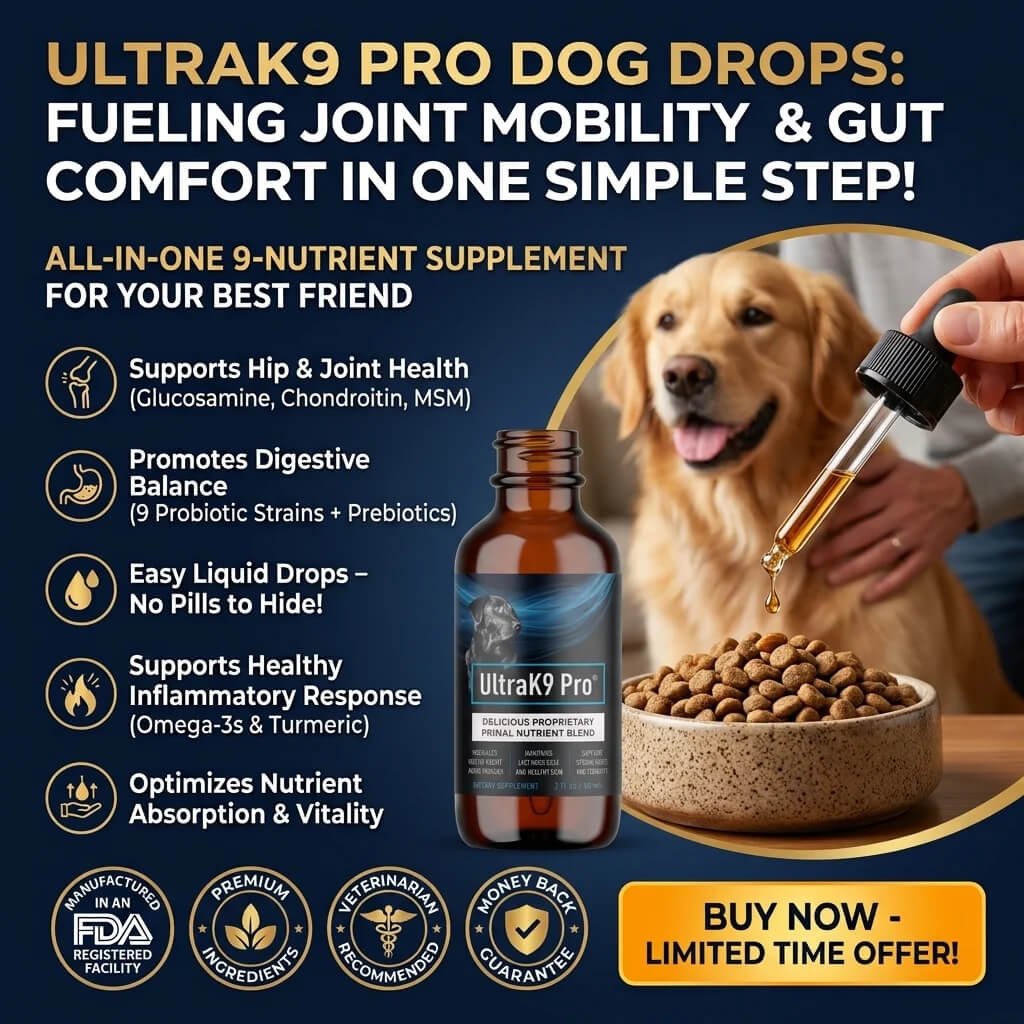
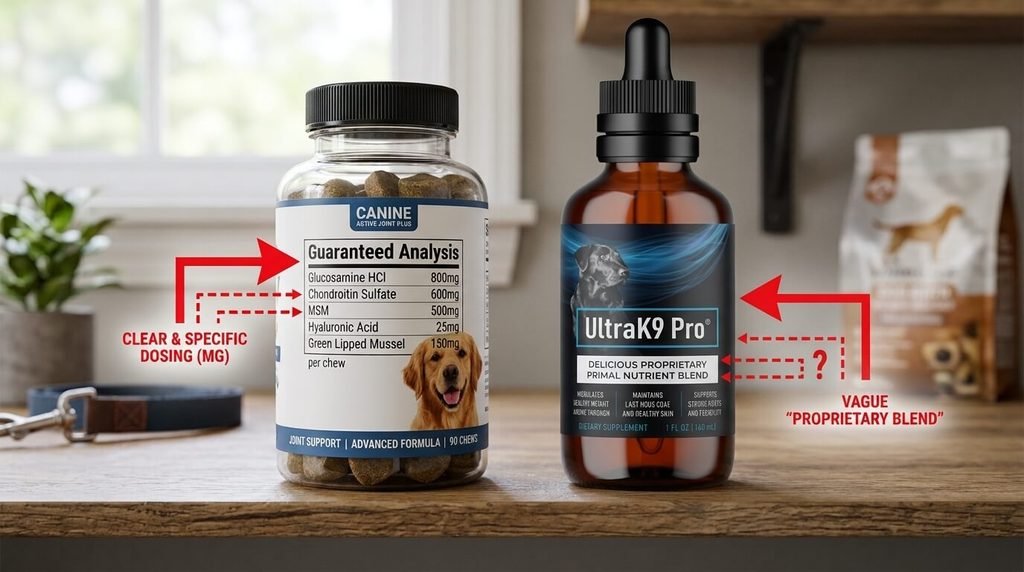
If you’re considering a combined product, look for one that lists the exact milligram amounts of each ingredient on the label, not just “proprietary blend.”
How to Choose a Quality Dog Joint Supplement
Not all collagen and HA products are created equal. Here’s a practical checklist I use when I help clients (or their dogs) evaluate a supplement:
Buyer’s Checklist
| Factor | What to Look For |
| Collagen type | Hydrolyzed (peptide) collagen, ideally type II or a blend of types I and II. Avoid “beef collagen” that isn’t hydrolyzed—your dog can’t absorb intact collagen fibers. |
| HA source and form | Sodium hyaluronate is the standard. Look for a stated mg amount per serving. Non-GMO, animal-derived or fermented plant-derived are both acceptable. |
| Dosage clarity | The label should state mg of collagen and mg of HA per serving, and how many servings per day. “Proprietary blend” language is a red flag. |
| Third-party testing | Look for a seal from a recognized lab (e.g., NSF, Informed Choice for Pets, or a veterinary nutrition lab). This confirms the product contains what the label says and is free of heavy metals or contaminants. |
| No unnecessary fillers | Avoid products loaded with artificial colors, excessive sugar, or fillers that make up 80% of the formula. |
| Appropriate for your dog’s size | Dosing should scale with body weight. A 10-lb (4.5 kg) Chihuahua needs a different dose than a 110-lb (50 kg) Great Dane. |
| Veterinary endorsement | Not a requirement, but a product reviewed or recommended by a board-certified veterinary nutritionist adds a layer of credibility. |
Dosing and How to Give Them
General dosing guidance found in veterinary nutrition references and product labels (always confirm with your vet):
- Hydrolyzed collagen: 5–10 g per day for a medium dog (30–60 lb / 14–27 kg). For a large breed (70+ lb / 32+ kg), some products recommend up to 15 g. For a small dog under 20 lb (9 kg), start at 2–3 g.
- Hyaluronic acid (oral): 50–200 mg per day, depending on the product and your dog’s weight. Intra-articular HA injections are a veterinary procedure and are not something you do at home.
How to Administer
- Powder form: Mix the measured dose into a small amount of wet food or a food topper (a little peanut butter, plain pumpkin, or broth) so your dog eats it in one sitting. This ensures the full dose is consumed.
- Liquid form: Drizzle over food or use a syringe (without the needle) to deliver it along the inside of the cheek.
- Chewable tablets: Offer as a treat. Make sure your dog chews rather than swallows whole, especially for smaller dogs.
Timing: There’s no strong evidence that the time of day matters for oral collagen or HA in dogs. Consistency matters more than timing. Give the supplement at the same time each day (e.g., with the morning meal) so you don’t miss a dose.
Coach’s Tip: If your dog is a picky eater, start with a tiny amount mixed into a high-value food (a piece of chicken, a spoonful of plain yogurt) and gradually increase to the full dose over 3–4 days. This avoids a “what’s that new stuff?” refusal. Pair the supplement with a short, calm walk afterward so your dog associates the routine with a positive activity.
How Long Before You See Results?
This is the question every pet owner asks, and the honest answer is: it’s not overnight.
- HA (oral): Some dogs show a slight improvement in stiffness after 2–3 weeks, but the full effect on synovial fluid composition and inflammatory markers typically takes 6–8 weeks of daily use.
- Collagen: Because the body needs time to incorporate new amino acids into cartilage and connective tissue, most veterinary nutritionists recommend giving oral collagen for at least 8–12 weeks before evaluating whether it’s helping.
- Combined product: Expect to assess results at the 8-week mark. Keep a simple log: note your dog’s willingness to walk, stair navigation, post-sleep stiffness, and any vocalization (whining, groaning) during movement.
If you see no improvement after 8–12 weeks, or if symptoms worsen, go back to your vet. The joint issue may need a different intervention (weight management, physical therapy, NSAIDs, or in severe cases, surgery).
Can You Combine Collagen and HA With Other Joint Supplements?
Yes, in most cases. A common “stack” for a dog with early-to-moderate joint stiffness includes:
- Hydrolyzed collagen (5–15 g)
- HA (50–200 mg)
- Glucosamine sulfate (20–30 mg per lb / 44–66 mg per kg of body weight per day)
- Chondroitin sulfate (10–15 mg per lb / 22–33 mg per kg per day)
- Omega-3 fatty acids (EPA + DHA at 20–30 mg per lb / 44–67 mg per kg per day)
Omega-3s, in particular, have a solid evidence base for reducing joint inflammation in dogs, and they complement the structural support that collagen and HA provide. For more on how omega-3s work at the tissue level, see our guide on omega-3 fatty acids and inflammation.
Caution: If your dog is already taking a prescription NSAID (carprofen, meloxicam, etc.), talk to your vet before adding any supplement. Some combinations can increase the risk of gastrointestinal irritation.
Safety and Potential Side Effects
For most healthy dogs, oral collagen and HA are well tolerated. However, a few things to watch for:
- Gastrointestinal upset: Mild soft stool or a slightly gassy first few days can occur, especially if you introduce the supplement too quickly. Start at half dose and ramp up.
- Allergic reaction: Rare, but if your dog develops hives, facial swelling, vomiting, or diarrhea within 30 minutes of the first dose, stop the supplement and contact your vet.
- Blood-thinning considerations: HA has mild anti-inflammatory properties. If your dog is on a blood thinner (e.g., clopidogrel) or has a bleeding disorder, get vet clearance first.
- Kidney or liver disease: Dogs with compromised organ function may metabolize amino acids differently. Your vet can adjust dosing or recommend against supplementation.
Common Mistake: Giving a large-breed dog the same “one scoop” dose as a small-breed dog. A 120-lb (54 kg) German Shepherd and a 15-lb (6.8 kg) Shih Tzu have very different metabolic needs. Always dose by body weight, not by a single-scoop rule. Check the product’s feeding chart, and when in doubt, call the manufacturer or your vet.
When to See a Vet (Red Flags)
Supplements are a support tool, not a replacement for veterinary care. Take your dog to the vet promptly if you notice:
- Sudden, severe limping or refusal to bear weight on a limb
- Visible swelling, heat, or deformity around a joint
- Joint pain that doesn’t improve after 2 weeks of consistent supplement use
- Loss of appetite, lethargy, or weight loss alongside joint stiffness
- A history of a known joint condition (hip dysplasia, elbow dysplasia, cranial cruciate ligament rupture) that is progressing
Your vet may recommend diagnostic imaging (X-rays, ultrasound, or MRI), bloodwork, or a referral to a veterinary orthopedist or rehabilitation specialist. In some cases, the right intervention is weight loss, a controlled exercise program, or surgery—things no supplement can replace.
Practical Tips for Supporting Your Dog’s Joint Health Beyond Supplements
Supplements are one piece of the puzzle. The highest-impact things you can do for your dog’s joints are often non-pharmacological:
- Maintain a healthy weight. Every extra pound adds roughly 4–5 pounds of force on the knee joint with each step. Even a 10% reduction in body weight can noticeably reduce joint load.
- Controlled, low-impact exercise. Short, frequent leash walks (10–15 minutes, 2–3 times per day) on soft surfaces (grass, packed dirt) are better than one long, hard-surface walk. Swimming or hydrotherapy, if available, is excellent because it builds muscle without joint impact.
- Strengthen the muscles around the joint. A dog with strong hindquarter and core muscles puts less stress on the hip and knee. Your vet or a certified canine rehabilitation therapist can design a simple exercise routine (sit-to-stands, controlled rear-end lifts, balance-board work) tailored to your dog.
- Joint-friendly flooring at home. Add non-slip rugs or rubber mats to hardwood and tile floors. Slipping is a common cause of acute joint injury, especially in older or arthritic dogs.
- Ramps and steps. If your dog jumps in and out of the car or onto the couch, add a ramp or a set of low steps. This eliminates the high-impact landing that stresses the hip and knee.
- Consistent supplement routine. As mentioned, consistency over 8–12 weeks is where the benefit shows. Set a phone reminder if you need one.
For general guidance on how collagen peptides are absorbed and what timing research suggests (in the human context, which is the closest available data), our article on collagen powder timing and absorption covers the pharmacokinetics in detail. The same absorption principles apply to dogs, though specific dog studies are still limited.

Who Should Be Cautious or Skip These Supplements?
- Puppies under 12 months: Their joints are still developing. Unless a vet specifically recommends it (e.g., for a diagnosed developmental dysplasia), avoid routine joint supplementation in growing puppies.
- Dogs on prescription medications: Always check with your vet for interactions, especially NSAIDs, corticosteroids, or blood thinners.
- Dogs with a known food allergy or GI sensitivity: Introduce any new supplement slowly and monitor for digestive upset.
- Pregnant or nursing dogs: Limited safety data exists. Get vet approval before adding any supplement.
- Dogs with advanced, end-stage osteoarthritis: At this stage, the joint damage is often too severe for oral supplements to make a meaningful difference. Your vet may recommend pain management, assisted mobility devices, or a discussion about quality of life.
This article is for general information and is not a substitute for advice from a veterinarian. If your dog has a diagnosed joint condition, is in pain, or is on any medication, talk to your vet before starting collagen, hyaluronic acid, or any other supplement.
FAQ
Does collagen actually help dog joints?
Research in dogs is still limited, but the amino acids in hydrolyzed collagen (glycine, proline, hydroxyproline) are the building blocks for cartilage and connective tissue. Small studies suggest modest improvements in joint comfort over 8–12 weeks. It’s a reasonable addition to a joint-support plan but not a standalone treatment.
Can I give my dog hyaluronic acid safely?
Yes, oral HA (sodium hyaluronate) at 50–200 mg per day is generally well tolerated in dogs. Intra-articular HA injections are a separate veterinary procedure. Always confirm the dose with your vet, especially if your dog is on other medications.
How much collagen should I give my dog?
A common starting range is 5–10 g of hydrolyzed collagen per day for a medium dog (30–60 lb / 14–27 kg), scaling up to 15 g for large breeds. For small dogs under 20 lb (9 kg), start at 2–3 g. Follow your specific product’s feeding chart and your vet’s guidance.
How long does it take for dog joint supplements to work?
Most veterinary nutritionists recommend a minimum of 8 weeks of consistent daily use before assessing results. HA may show early effects in 2–3 weeks, but collagen’s structural benefits take longer to manifest. Track your dog’s mobility and stiffness in a simple log.
Can I give collagen and hyaluronic acid together to my dog?
Yes. There is no known negative interaction between oral collagen and HA in dogs. Many commercial joint supplements combine them. Look for a product that lists exact mg amounts for each ingredient rather than a “proprietary blend.”
Are there side effects of giving dogs collagen or hyaluronic acid?
Side effects are uncommon. Mild GI upset (soft stool, gas) can occur in the first few days, especially if the dose is introduced too quickly. Stop the supplement and contact your vet if you see vomiting, diarrhea, hives, or facial swelling.
The Bottom Line
Collagen and hyaluronic acid for dog joints aren’t magic, but they’re not empty marketing either. HA has a solid foundation in veterinary medicine for supporting synovial fluid and reducing joint inflammation. Oral collagen is biologically logical and shows early promise in dog-specific studies, though the evidence base is still growing. Used as part of a broader plan—healthy weight, controlled exercise, proper flooring, and veterinary oversight—they can be a sensible tool in your dog’s joint-care toolkit.
Start with a quality product that lists clear dosages, introduce it slowly, give it a fair 8-week trial, and keep your vet in the loop. And if your dog’s mobility is declining, don’t wait for the supplement to “kick in.” A veterinary exam, imaging, and a tailored rehabilitation plan will give you a much clearer picture of what your dog actually needs.
Your dog can’t tell you where it hurts. Your job is to watch, track, and advocate. The right combination of evidence-based supplements, smart exercise, and veterinary care can keep them moving comfortably for years to come.