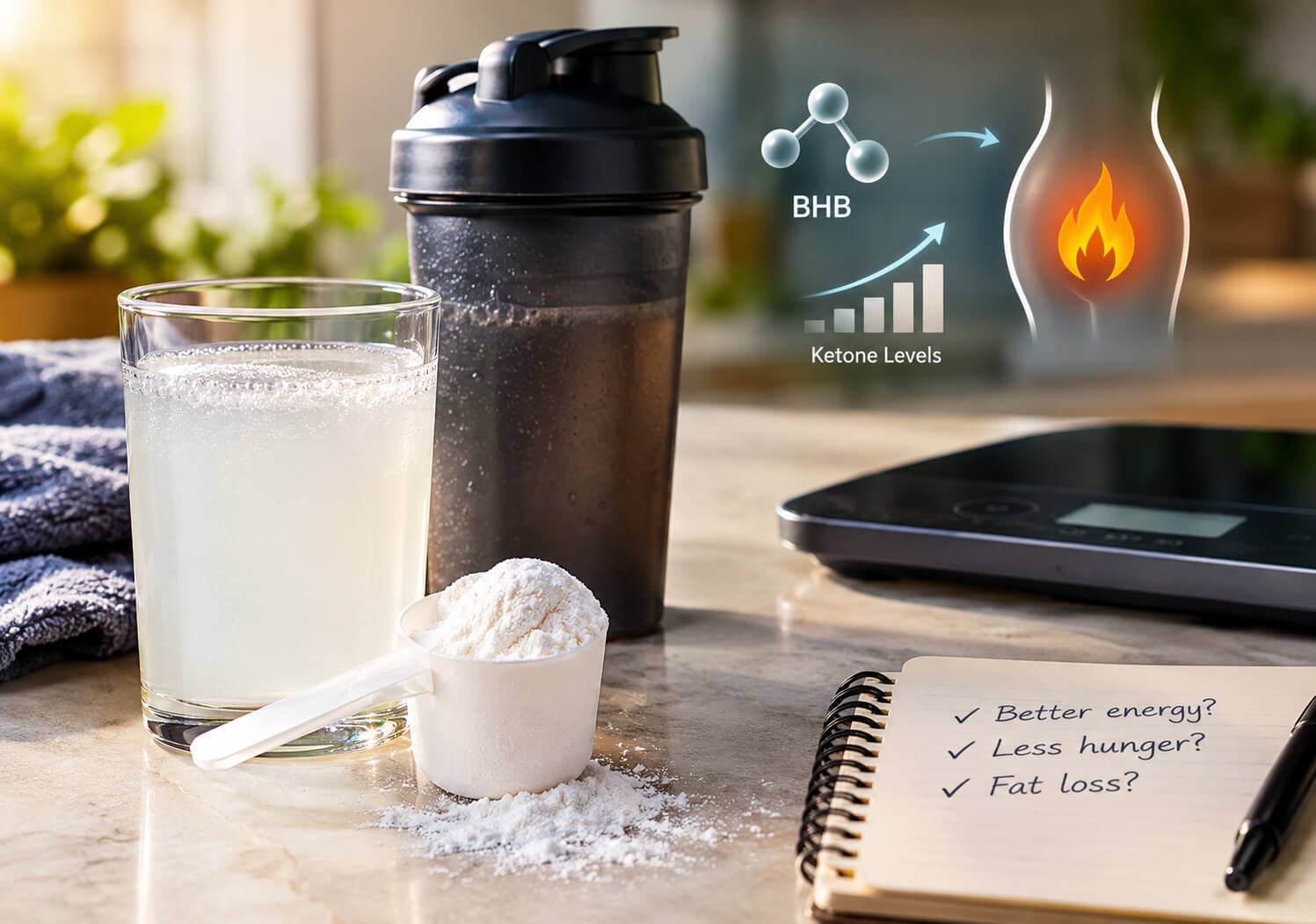
Exogenous ketone supplements promise something tempting: the fat-burning state of ketosis, in a bottle, without giving up carbs. That pitch has turned a niche sports-nutrition product into a shelf full of powders and shots at every supplement store. But a supplement that raises your blood ketones isn’t the same thing as a supplement that makes you lose fat, and the research on whether exogenous ketones help with weight loss is still thin and mixed. This guide walks through what ketone esters and ketone salts actually do in the body, what controlled trials have found so far, and how to think about them if you’re already working on a calorie deficit.
Quick Answer
Exogenous ketones raise blood ketone levels, but current evidence doesn’t show they cause meaningful fat loss on their own. Small randomized trials suggest they may modestly blunt appetite and help preserve lean mass during a calorie-restricted diet, but they’re not a substitute for a sustainable eating plan, and most weight-related effects reported so far are small or short-term.
What Exogenous Ketones Actually Are
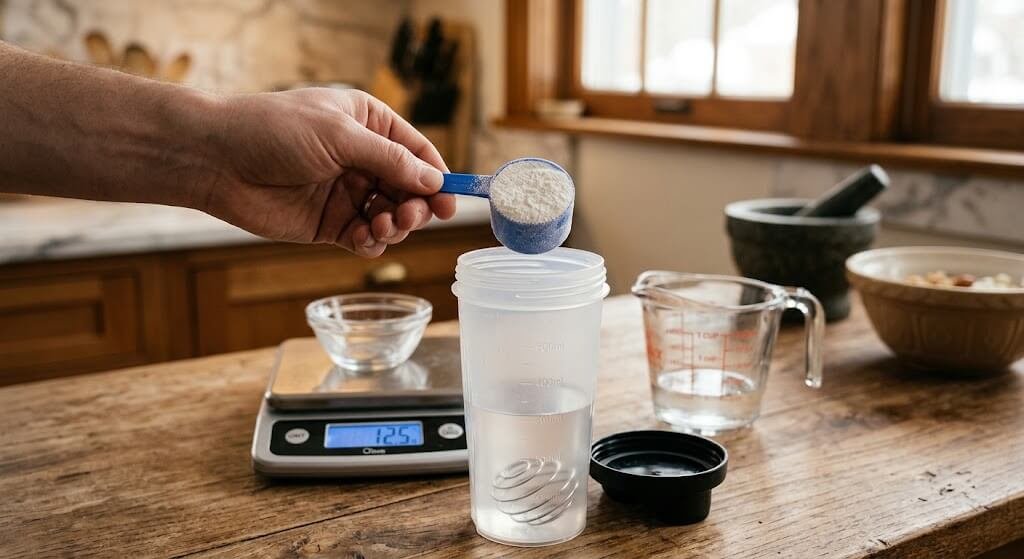
“Exogenous” just means the ketones come from outside your body, through a drink or capsule, rather than being produced internally through fasting, carb restriction, or exercise. There are two main types on the market:
- Ketone salts (KS): beta-hydroxybutyrate (BHB) bound to a mineral like sodium, potassium, calcium, or magnesium. These are the cheaper, more common option in flavored powders.
- Ketone esters (KE) and diesters: BHB or related compounds chemically bonded to an alcohol such as 1,3-butanediol. These raise blood ketones higher and faster than salts, but they tend to taste worse and cost more.
MCT oil is sometimes grouped with these products, but it isn’t a true exogenous ketone. MCT oil is a fat that your liver converts into ketones after digestion, so the ketone-raising effect is slower and depends on liver metabolism, unlike KS and KE, which deliver ready-made ketone bodies directly into the bloodstream.
Coach’s Tip: If a label just says “ketones” without naming the compound, flip it over and check the ingredient list for BHB salts or an ester like 1,3-butanediol. Some products blend a small dose of real ketones with mostly MCT oil or caffeine, which changes what you’re actually buying.
Do Exogenous Ketones Help With Weight Loss? What the Studies Show
The honest answer is: the research is still early, the trials are small, and the results so far point toward modest, indirect effects rather than a direct fat-burning mechanism.
Body composition during a calorie deficit. A controlled feeding study using advanced imaging compared a well-formulated ketogenic diet with and without added ketone salts in people with obesity following a reduced-calorie plan. The researchers were specifically interested in whether a ketogenic diet, paired with adequate protein and sodium, could improve the preservation of lean body mass during weight loss, with the exogenous ketone salts offering a potential added benefit. The design let them separate fat loss from muscle loss using DEXA scans and nitrogen balance measurements, rather than just tracking the number on the scale. nih
A more recent 8-week randomized, double-blind, placebo-controlled trial built directly on that question. Fifty-one adults were given either racemic BHB mineral salts or a maltodextrin placebo twice a day, alongside a modest calorie deficit. The researchers concluded that exogenous BHB supplementation may improve the quality of diet-induced weight loss, through within-group gains in fat mass reduction and lean mass preservation, with no negative effects on metabolic markers. That’s a meaningfully different claim than “ketones melt fat” — the supplement didn’t out-perform the placebo group on total weight lost; it may have shifted what kind of weight came off. mdpimdpi-res
Appetite and hunger hormones. One of the more plausible mechanisms for a weight-management benefit is appetite suppression, not direct fat burning. A randomized crossover trial in healthy adults found that elevated ketone levels from an exogenous ketone ester blunted the usual rise in ghrelin, the “hunger hormone,” that normally follows exercise and weight loss. That’s a real, physiologically interesting finding, but it was measured over a single session in a small sample, not over weeks of real-world dieting, so it doesn’t tell us whether the effect holds up long enough to change body weight. frontiersin
Safety and tolerability. Before anything can be recommended for routine use, it has to be tolerable. A review of gastrointestinal symptoms across several exogenous ketone drink studies found the symptoms were infrequent and mild overall, though higher doses of ketone salts produced a greater total symptom load than lower doses. A 28-day, randomized, placebo-controlled trial of a novel ketone diester found no clinically meaningful changes in vital signs or lab markers, supporting the general tolerability of daily use at the tested dose. Both studies point to the same practical takeaway: the supplements are generally tolerated, but stomach upset is the most common complaint, and it scales with dose. nihnih
What’s still missing. None of the available trials show exogenous ketones producing clinically significant total weight loss on their own, without a calorie deficit doing the heavy lifting. Most studies are short (one session to eight weeks), use small samples (13 to 51 participants), and were designed to test safety, appetite, or body composition quality — not “does this product melt fat.”
Exogenous Ketones: What the Evidence Supports vs. Doesn’t Support
| Claim | What research currently supports |
| Raises blood ketone levels | Yes — this is well established and the basic mechanism of all exogenous ketone products |
| Causes weight loss on its own, without a calorie deficit | Not supported — no trial has shown this |
| May help preserve lean mass during a calorie-restricted ketogenic diet | Some support, from one controlled feeding study and one 8-week RCT |
| May modestly blunt appetite/ghrelin after exercise | Some support, from a small single-session crossover trial |
| Generally tolerated at typical doses | Yes, with mild, dose-related GI symptoms in some users |
| Equivalent to or better than a calorie deficit for fat loss | Not supported — no data on this comparison exists |
Common Mistake
Mistake: Treating exogenous ketones as a stand-in for a calorie deficit — taking a scoop and expecting it to offset extra food or skipped workouts.
Fix: Use them, if at all, as a possible appetite or lean-mass-preservation tool layered on top of a diet you’re already following, not as the diet itself. The research that shows any weight-related benefit was conducted in people who were already in a structured calorie deficit.
How to Apply This If You’re Considering Exogenous Ketones
If you still want to try them as part of a broader plan, here’s a practical, cautious approach based on how the research studies were actually designed:
- Get the calorie deficit right first. The trials that showed any body-composition benefit paired the supplement with a structured, reduced-calorie or ketogenic eating plan — the supplement was an add-on, not the foundation.
- Prioritize protein and sodium. Studies linking exogenous ketones to lean-mass preservation used diets that were already well-formulated with adequate protein and electrolytes; the supplement wasn’t tested in isolation from good nutrition basics.
- Start with a single, labeled dose and watch for GI symptoms. Since stomach upset tends to increase with dose, start on the low end of the label’s recommendation rather than the high end.
- Track body composition, not just scale weight. If a modest lean-mass-preservation effect exists, it won’t necessarily show up as faster weight loss on a bathroom scale — body fat percentage or waist measurements are more informative.
- Reassess after 4–8 weeks. That’s roughly the window used in the controlled trials; if you’re not seeing a difference in hunger, recovery, or measurements by then, the supplement likely isn’t adding much for you individually.
![a simple food log or app screen next to a tape measure, representing tracking body composition rather than just scale weight]](https://pillsfeed.com/wp-content/uploads/2026/10/a-simple-food-log-or-app-screen-next-to-a-tape-measure-representing-tracking-body-composition-rather-than-just-scale-weight.jpg)
Safety Notes
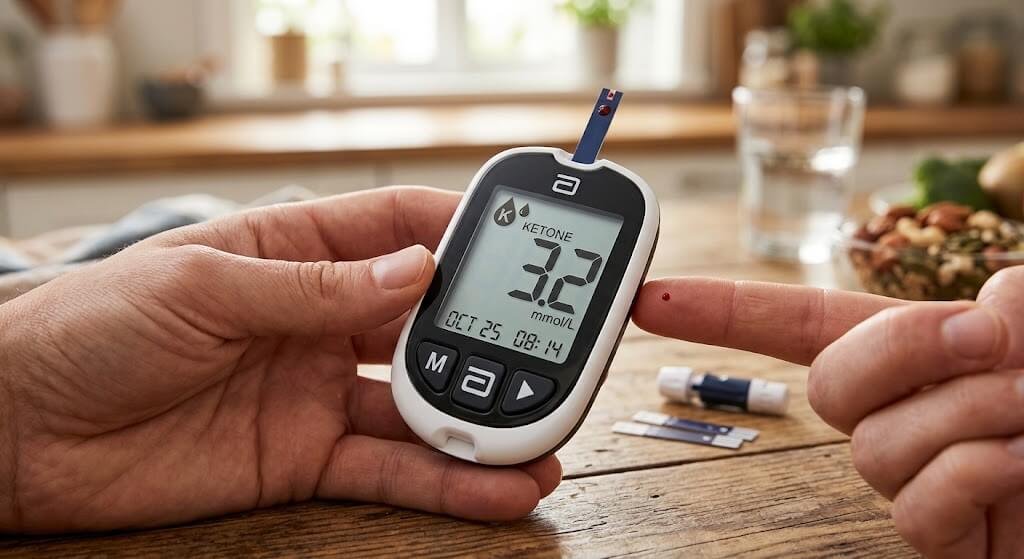
- Blood sugar: Elevated ketones can coincide with lower blood glucose in some people. Anyone on insulin or a glucose-lowering medication should talk to a doctor before adding exogenous ketones, since the combination hasn’t been well studied in that population.
- Digestive tolerance: Gastrointestinal symptoms from ketone drinks are usually mild but become more common at higher doses, so it’s worth starting low. nih
- Pregnancy, postpartum, and underlying health conditions: There isn’t meaningful human safety data in pregnant or postpartum people, so exogenous ketones aren’t something to try during that time without medical guidance.
- Not the same as diabetic ketoacidosis: Nutritional ketosis from diet or supplements is a different physiological state from diabetic ketoacidosis, which is a dangerous complication mostly seen in people with diabetes. If you have diabetes and notice unusually high ketone readings along with symptoms like nausea or confusion, contact a doctor promptly.
- Talk with a doctor or registered dietitian before starting any new supplement for weight management, especially if you take medication or have a chronic health condition.
Related Tips
- Pair any ketone supplement strategy with resistance training two or more days a week; the studies linking ketones to lean-mass preservation were done alongside structured diets, not sedentary ones.
- If appetite control is your real goal, protein at each meal and consistent sleep have far more supporting evidence than exogenous ketones and cost nothing extra.
- Check how a product’s insulin and glucose metabolism claims stack up against other supplement categories — for instance, supplements marketed for blood sugar support, like chromium picolinate, face similar gaps between marketing and controlled-trial evidence.
- If you’re also looking at supplements marketed for insulin sensitivity as part of a weight-management stack, see how the evidence for inositol’s effects on insulin sensitivity compares before combining multiple products.
FAQ
Do exogenous ketones burn fat directly?
Not in the way marketing often implies. Controlled trials suggest exogenous BHB may improve the quality of weight loss already happening from a calorie deficit, by supporting fat loss over muscle loss, rather than causing fat loss by itself. mdpi-res
Can you lose weight with ketone supplements alone, without dieting?
No published trial supports this. Every study showing a body-composition benefit paired the supplement with a calorie-restricted or ketogenic diet, so the supplement was an add-on, not a replacement for eating less.
Are exogenous ketones safe for weight loss?
Short-term trials lasting up to 28 days have found no clinically meaningful changes in safety labs or vital signs at tested doses, though mild digestive symptoms are common, especially at higher doses. nih
What’s the difference between ketone salts and ketone esters?
Ketone salts bind BHB to minerals and are cheaper but less potent; ketone esters chemically bond BHB to an alcohol and raise blood ketones higher and faster, usually at a higher price and with a stronger taste.
Do exogenous ketones suppress appetite?
One small crossover trial found that exogenous ketones blunted the post-exercise rise in ghrelin, the hormone that drives hunger, but this was measured over a single session, not weeks of regular use. frontiersin
Are exogenous ketones FDA approved?
The FDA doesn’t “approve” dietary supplements the way it approves drugs. Ketone supplements are sold under dietary supplement regulations, which means they aren’t required to prove effectiveness before hitting shelves, only that the ingredients are generally recognized as safe.
Conclusion
So, do exogenous ketones help with weight loss? Based on the controlled trials available right now, the honest answer is: maybe a little, in specific circumstances, but not as a stand-alone fat-loss tool. The strongest evidence points to a possible role in preserving lean mass and modestly blunting appetite when the supplement is layered on top of a calorie-controlled or ketogenic diet someone is already following — not as a shortcut around one. If you’re going to try exogenous ketones, treat them as a minor add-on to a solid nutrition and training plan, start with a conservative dose, and give it a few weeks while tracking body composition rather than just scale weight.