
Understanding exactly how glucomannan works in the stomach to feel full is a game-changer for anyone struggling with hunger during a calorie deficit. As a strength and conditioning coach, I see clients hit a wall when relentless cravings derail their carefully planned nutrition. You do not have to white-knuckle your way through hunger. This natural, soluble fiber is not a magic pill, but it is a powerful, evidence-based tool when used correctly. Let us break down the physiological science, the proper dosing protocols, and the critical safety rules you need to know to use this supplement effectively.
Quick Answer
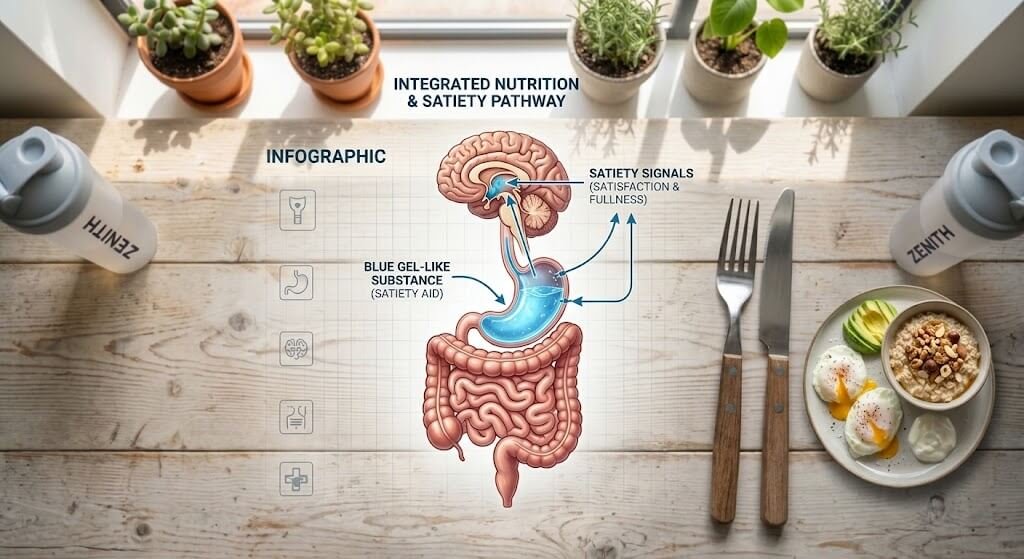
Glucomannan is a highly viscous, soluble fiber derived from the konjac root. When consumed with 1 to 2 glasses of water, it absorbs up to 50 times its weight in liquid. This forms a thick, expansive gel in your stomach that physically stretches the gastric walls, delays gastric emptying, and triggers satiety hormones, naturally reducing your appetite.
The Science: How Glucomannan Works in the Stomach to Feel Full
To truly leverage this supplement, you need to understand the mechanical and hormonal processes happening inside your digestive tract. It is not about suppressing your brain chemically; it is about sending powerful physical signals of fullness. Here is the step-by-step biological breakdown.
Water Absorption and Gel Formation
Glucomannan is classified as a viscous, soluble dietary fiber. Unlike insoluble fiber (like wheat bran) that mostly adds bulk to stool, soluble fiber dissolves in water. The konjac root, from which glucomannan is extracted, possesses one of the highest water-absorbing capacities of any known dietary fiber. Research published in the Journal of the American College of Nutrition demonstrates that glucomannan can absorb up to 50 times its own weight in water.
When you swallow glucomannan capsules or powder with a large glass of water, the fiber immediately begins to hydrate as it travels down your esophagus. By the time it reaches your stomach, it has transformed into a thick, cohesive, gel-like substance. This gel occupies significant physical volume inside your gastric cavity.
Delayed Gastric Emptying
Think of your stomach as a mixing bowl. When you eat a meal, your stomach churns the food with gastric acids to create a semi-liquid mixture called chyme. The rate at which this chyme leaves the stomach and enters the small intestine is called gastric emptying.
Because glucomannan turns the chyme into a heavy, viscous gel, the valve at the bottom of your stomach (the pyloric sphincter) opens much slower to let it pass. A study indexed in PubMed confirms that viscous fibers significantly delay gastric emptying time. This prolonged presence of food in the stomach sends continuous stretch signals via the vagus nerve directly to the hypothalamus in your brain, which is your body’s primary satiety control center. You feel physically full for a much longer duration.
Impact on Satiety Hormones
The mechanical stretching of the stomach is only half the story. The presence of this thick fiber gel also influences your gut hormones. Research indicates that viscous fibers can modulate the release of key appetite-regulating hormones. Specifically, it helps blunt the post-meal spike in ghrelin, which is widely known as the “hunger hormone.”
Simultaneously, the delayed digestion process encourages a steady release of peptide YY (PYY) and glucagon-like peptide-1 (GLP-1) from the intestines. These hormones are powerful appetite suppressants that signal to your brain that you have consumed enough energy. This dual-action mechanism—physical stomach expansion combined with favorable hormonal shifts—is the core reason why glucomannan is so effective for appetite control.
Glucomannan vs. Other Soluble Fibers
Not all fibers are created equal when it comes to appetite suppression. While many fibers offer digestive health benefits, their viscosity and water-holding capacity vary dramatically. Below is a comparison of glucomannan against other common fiber supplements.
| Fiber Type | Source | Water Absorption Capacity | Viscosity (Thickness) | Primary Benefit for Weight Management |
| Glucomannan | Konjac root | Up to 50x its weight | Very High | Maximum gastric distension and delayed emptying |
| Psyllium Husk | Plantago ovata seeds | Up to 10x its weight | Moderate | Regular bowel movements and moderate fullness |
| Methylcellulose | Synthetic plant derivative | Up to 20x its weight | Low to Moderate | Gentle relief of constipation without gas |
| Inulin | Chicory root | Low | Low | Prebiotic gut health, minimal direct satiety effect |
As the table shows, glucomannan’s extreme viscosity makes it uniquely suited for physical stomach expansion. If your primary goal is to manage hunger pangs between meals, glucomannan is the superior mechanical choice. For more on how different fibers impact your goals, you can read about how dietary fiber helps with appetite and weight management.

Practical Application: How to Use Glucomannan to Feel Full Safely
Knowing the science is useless without a proper execution plan. Taking glucomannan incorrectly can render it ineffective or, worse, cause discomfort. Follow this step-by-step protocol to integrate it into your daily routine.
Step 1: Choose the Right Form and Dosage
Glucomannan is available in powder and capsule forms. Capsules are generally safer and more convenient, as they delay the fiber’s expansion until it is already in the stomach. The clinically studied and European Food Safety Authority (EFSA) approved dosage for weight management is 1 gram, taken three times daily, for a total of 3 grams per day.
Step 2: Master the Timing
Timing is critical. You must take glucomannan 15 to 30 minutes before your main meals. This gives the fiber adequate time to travel to the stomach, absorb the water you drink with it, and form the satiety-inducing gel before you start eating. If you take it during or after a meal, it will mix with the food and lose its capacity to create that pre-meal feeling of fullness.
Step 3: The Non-Negotiable Water Rule
This is the most important rule of using this supplement. You must consume glucomannan with a minimum of 8 ounces (240 ml) of water, though 16 ounces (480 ml) is highly recommended. The fiber needs this water to expand safely. Without adequate fluid, the fiber can clump in the esophagus or stomach, leading to severe discomfort or blockage.
Step 4: Build a Sample Daily Routine
Here is how a practical, 150 lb (68 kg) individual might structure their day using this protocol:
- 7:30 AM: Wake up and drink 16 oz (480 ml) of plain water.
- 7:45 AM: Take 1 gram of glucomannan capsules with another 8 oz (240 ml) of water.
- 8:15 AM: Eat a high-protein breakfast (e.g., 3 eggs and spinach).
- 12:30 PM: Take 1 gram of glucomannan with 8–16 oz (240–480 ml) of water.
- 1:00 PM: Eat lunch, focusing on lean protein and vegetables.
- 5:30 PM: Take 1 gram of glucomannan with 8–16 oz (240–480 ml) of water.
- 6:00 PM: Eat dinner.
This structured approach ensures you are leveraging the appetite-suppressing effects of soluble fiber consistently throughout the day.

Safety Notes and Common Mistakes
While glucomannan is generally recognized as safe when used correctly, it is a potent physical agent in your digestive tract. Ignoring safety protocols can lead to adverse effects.
Common Mistake: Taking Glucomannan with Insufficient Water
The most frequent error I see is clients swallowing glucomannan capsules with a mere sip of water or taking the powder dry. Because the fiber expands so rapidly, doing this can cause it to swell in the esophagus. This presents a serious choking hazard and can lead to esophageal or intestinal blockage. The FDA has issued specific warnings about this risk. Always, without exception, follow the fiber with a full glass of water and remain upright for at least 30 minutes after ingestion.
Medication Interactions
Because glucomannan forms a thick gel and delays gastric emptying, it can physically trap oral medications and slow their absorption into the bloodstream. This can render prescription drugs less effective. If you take daily medications, especially for thyroid conditions, diabetes, or blood pressure, you must separate your glucomannan dose from your medication by at least 2 to 4 hours. Always consult your prescribing physician before adding a viscous fiber to your routine.
Who Should Be Careful
Certain populations should avoid glucomannan or use it only under strict medical supervision:
- Individuals with gastrointestinal narrowing: Anyone with a history of esophageal strictures, bowel obstructions, or severe gastroparesis should avoid this supplement.
- People with diabetes: Because glucomannan can blunt blood sugar spikes, it may increase the risk of hypoglycemia if you are already on insulin or glucose-lowering medications.
- Pregnant or breastfeeding women: There is insufficient clinical data to guarantee safety during pregnancy, so it is best to avoid it or get explicit clearance from an obstetrician.
Related Tips: Maximizing Appetite Control
Glucomannan is a tool, not a standalone solution. To get the best results, you must pair it with other evidence-based lifestyle habits.
Coach’s Tip: Pair Glucomannan with Protein for Maximum Satiety
Fiber and protein are the ultimate satiety duo. While glucomannan provides physical stomach distension, protein triggers a strong hormonal satiety response and has a high thermic effect. Aim for 20 to 30 grams of high-quality protein at every meal. Learn more about how protein helps control hunger during weight loss. When you combine the mechanical fullness of glucomannan with the hormonal fullness of protein, cravings become much easier to manage.
Support Your Natural Metabolism
Appetite control is only one side of the weight management coin. Ensuring your body is efficiently processing energy is equally important. You can support your metabolism naturally for weight management by prioritizing resistance training, maintaining adequate muscle mass, and avoiding severe, crash-diet calorie restrictions that trigger metabolic adaptation.
Do Not Ignore Sleep and Hydration
Poor sleep disrupts leptin and ghrelin levels, making you biologically hungrier the next day, regardless of fiber intake. Aim for 7 to 9 hours of quality sleep per night. Furthermore, baseline hydration is crucial. If you are chronically dehydrated, your body may misinterpret thirst signals as hunger pangs, undermining the benefits of your fiber supplement.

Frequently Asked Questions (FAQ)
How long does it take for glucomannan to make you feel full?
You should begin to feel a sensation of physical fullness within 15 to 30 minutes of ingestion, provided you have consumed it with adequate water. This is why timing your dose right before a meal is critical for reducing the total amount of food you consume during that sitting.
Can glucomannan cause choking if not taken with water?
Yes. This is a documented and serious risk. If glucomannan powder or capsules are swallowed without enough liquid, the fiber can begin to expand in the esophagus before reaching the stomach. This can cause a blockage or choking hazard. Always take it with at least 8 to 16 ounces (240 to 480 ml) of water.
Is glucomannan safe for long-term weight management?
Current research suggests that glucomannan is safe for regular, long-term use when taken at recommended dosages (up to 3 grams daily) with plenty of water. However, it should be part of a broader, sustainable lifestyle approach that includes a balanced diet and regular physical activity, not a permanent crutch.
Does glucomannan block the absorption of vitamins and minerals?
While it does not permanently “block” nutrients, its viscous nature can slightly reduce the absorption rate of certain macronutrients and micronutrients if taken at the exact same time. To prevent this, take your daily multivitamin or essential supplements at a different time of day than your glucomannan doses.
Can I take glucomannan if I am already using other weight loss supplements?
You can, but caution is advised. If you are taking other supplements that affect blood sugar, appetite, or digestion, the combined effects could be unpredictable. For example, combining it with other strong appetite suppressants might lead to inadequate calorie intake. Review your full supplement stack with a healthcare provider.
Does glucomannan work better before or after meals?
It works significantly better before meals. Taking it 15 to 30 minutes prior to eating allows the fiber to hydrate and form its gel matrix in an empty stomach. This pre-loads your stomach with volume, naturally limiting your food intake during the meal. Taking it after a meal offers minimal appetite-control benefits.
Conclusion
Managing hunger is often the hardest part of any fitness or weight management journey. Understanding exactly how glucomannan works in the stomach to feel full empowers you to use this tool strategically and safely. By absorbing massive amounts of water, delaying gastric emptying, and supporting favorable satiety hormones, this konjac-derived fiber provides a legitimate, mechanical advantage against overeating.
Remember the golden rules: take 1 gram up to three times daily, always 15 to 30 minutes before meals, and never without a large glass of water. Pair this practice with adequate protein intake, consistent resistance training, and quality sleep for the best possible results.