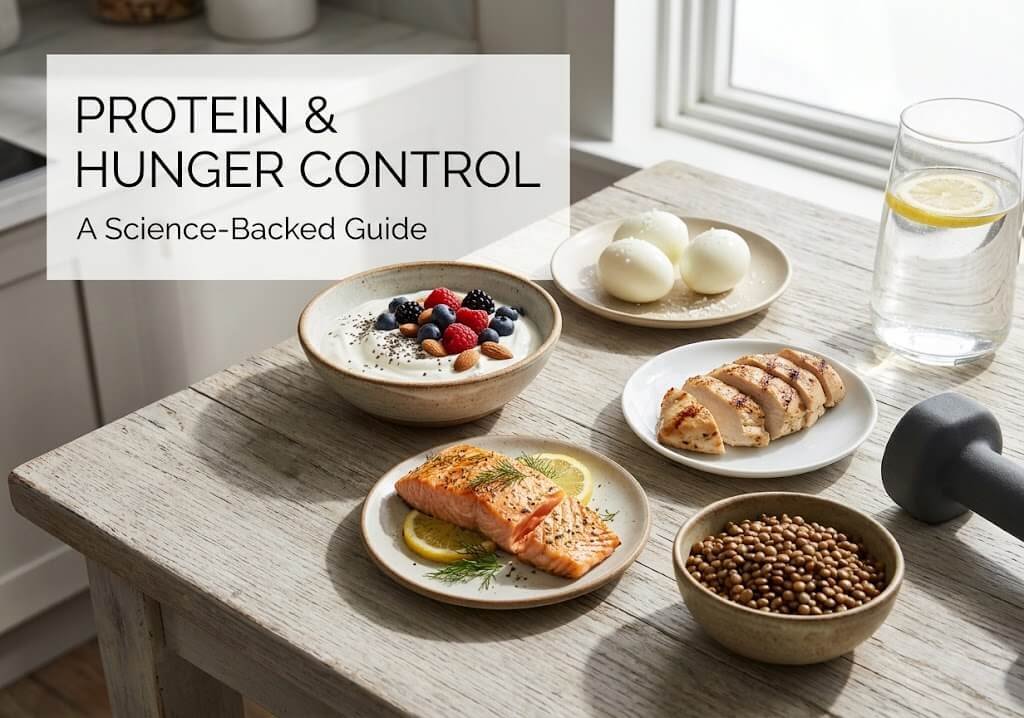
Starting a weight loss journey often feels like a constant battle against your own appetite. You reduce your calories, but by 3:00 PM, your stomach is growling, and your willpower is fading. This is where strategic nutrition changes the game. Understanding how protein helps control hunger during weight loss is the most reliable, science-backed method to break this cycle. Whether you are a gym beginner, a woman over 40 navigating metabolic shifts, or a home gym owner looking to optimize your routine, prioritizing dietary protein is your most powerful tool. It is not about starving yourself; it is about feeding your body the right building blocks to stay full, preserve muscle, and burn more calories naturally.
This guide will break down the exact biological mechanisms behind protein-induced satiety, provide actionable meal strategies, and outline a practical resistance training routine to maximize your results. We will rely on peer-reviewed research and practical coaching experience to give you a clear, step-by-step roadmap. No gimmicks, no starvation, just proven physiology and practical application.
Quick Answer: How Protein Helps Control Hunger During Weight Loss
Protein controls hunger during weight loss through three main mechanisms: it suppresses the “hunger hormone” ghrelin while boosting satiety hormones like GLP-1 and PYY; it has a high thermic effect of food (TEF), meaning your body burns 20–30% of the protein’s calories just digesting it; and it preserves lean muscle mass, which keeps your resting metabolic rate stable, preventing the intense cravings associated with metabolic slowdown.
The Science: Detailed Explanation of Protein and Satiety
To truly leverage protein, you need to understand what happens inside your body when you consume it. The feeling of fullness is not just psychological; it is a complex biochemical cascade. Research consistently shows that protein is the most satiating of the three macronutrients, outperforming both carbohydrates and fats
pmc.ncbi.nlm.nih.gov
. Here is exactly how it works.
1. Hormonal Regulation: Turning Off the Hunger Signals
Your gastrointestinal tract and brain communicate constantly through hormones. When you eat a meal, specific hormones are released to tell your brain you are full. Protein is uniquely effective at triggering this response.
- Ghrelin Reduction: Ghrelin is widely known as the “hunger hormone.” Its levels rise before a meal and fall after eating. Studies demonstrate that dietary protein significantly decreases post-meal ghrelin levels more effectively than carbohydrates or fats
pmc.ncbi.nlm.nih.gov
. This means the physical urge to eat is actively suppressed. - GLP-1 and PYY Elevation: Glucagon-like peptide-1 (GLP-1) and peptide YY (PYY) are incretin hormones secreted by enteroendocrine cells in the gut. Clinical evidence shows that high-protein diets elevate both GLP-1 and PYY levels, which directly signal the hypothalamus in the brain to diminish appetite and prolong the feeling of fullness
pmc.ncbi.nlm.nih.gov
. This is the same biological pathway targeted by modern weight-loss medications, but it is activated naturally through whole-food protein intake. - Cholecystokinin (CCK): Protein digestion stimulates the release of CCK, a hormone that slows down gastric emptying. By keeping food in your stomach longer, CCK ensures that the physical sensation of fullness lasts for hours, not just minutes.
2. The Thermic Effect of Food (TEF)
Every time you eat, your body expends energy to chew, digest, absorb, and metabolize the nutrients. This is called the Thermic Effect of Food (TEF). While TEF accounts for roughly 10% of your total daily calorie expenditure, the breakdown varies wildly by macronutrient
revolution-pts.com
.
Protein has a remarkably high thermic effect. Approximately 20% to 30% of the calories in protein are burned up during its processing and digestion
www.facebook.com
. In contrast, carbohydrates only require 5% to 10% of their calories for digestion, and fats require a mere 0% to 3%. If you consume 100 calories of pure protein, your body only nets about 70 to 80 usable calories. This metabolic “tax” not only aids in creating a calorie deficit but also generates a slight, sustained increase in core body temperature, which is linked to enhanced satiety signals
www.nature.com
.
3. Preservation of Lean Muscle Mass
When you lose weight, your body does not exclusively burn fat. Without adequate protein and resistance training, a significant portion of weight loss comes from lean muscle tissue. Losing muscle lowers your resting metabolic rate (RMR), which can trigger intense, biological hunger as your body attempts to conserve energy—a state often mistakenly called “starvation mode.”
By consuming a high-protein diet, you provide the essential amino acids required for muscle protein synthesis. Clinical trials lasting 6 to 12 months report that a high-protein diet provides superior weight-loss effects specifically because it prevents the loss of fat-free mass
pmc.ncbi.nlm.nih.gov
. Maintaining your muscle mass keeps your metabolism humming, which stabilizes your energy levels and prevents the ravenous hunger spikes that typically derail diets around week three or four.
Protein Sources and Satiety Comparison
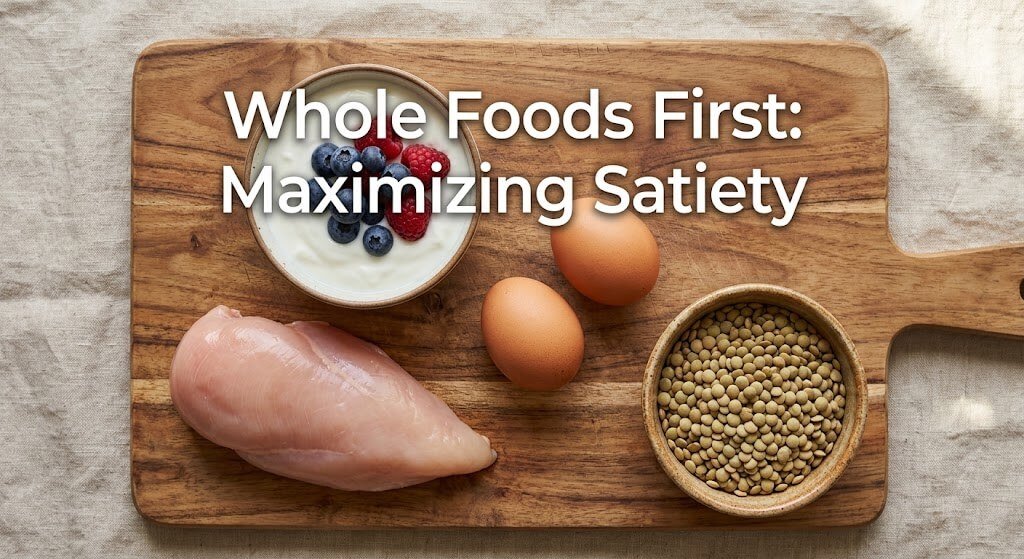
Not all protein is created equal when it comes to hunger control. Whole, minimally processed foods that require more mechanical and chemical digestion generally yield higher satiety scores. Below is a comparison of common protein sources, their approximate macronutrient breakdown, and their relative impact on fullness.
| Protein Source (per typical serving) | Serving Size | Calories | Protein (g) | Satiety Impact & Notes |
| Chicken Breast (skinless) | 4 oz (113 g) | ~185 | 35 | Very High. Lean, dense, and requires significant chewing and digestion. |
| Greek Yogurt (plain, non-fat) | 1 cup (227 g) | ~130 | 23 | High. Contains casein protein, which coagulates in the stomach, slowing digestion and providing prolonged fullness. |
| Eggs (whole) | 2 large eggs | ~140 | 12 | High. Studies show egg-based breakfasts significantly reduce mid-morning ghrelin levels compared to bagel-based breakfasts. |
| Lentils (cooked) | 1 cup (198 g) | ~230 | 18 | High. Combines plant-based protein with 15g of dietary fiber, creating a powerful dual-action satiety effect. |
| Whey Protein Isolate | 1 scoop (30 g) | ~110 | 25 | Moderate to High. Absorbs quickly, making it excellent for acute post-workout hunger suppression, but less enduring than solid food. |
| Salmon (wild-caught) | 4 oz (113 g) | ~200 | 24 | High. The addition of omega-3 fatty acids may further enhance leptin sensitivity, improving long-term appetite regulation. |
How to Apply It: Practical Steps and Sample Routine
Knowing the science is only half the battle. As a strength and conditioning coach, I see clients fail not because they lack willpower, but because they lack a structured plan. Here is exactly how to apply this knowledge to your daily life.
Step 1: Calculate Your Daily Protein Target
The Recommended Dietary Allowance (RDA) of 0.8 grams per kilogram of body weight is designed merely to prevent deficiency in sedentary adults
www.mdanderson.org
. For weight loss and hunger control, you need more. Current evidence supports approximately 1.6 grams of protein per kilogram of body weight (0.73 grams per pound) as an effective target for preserving lean mass and maximizing satiety during a calorie deficit
www.nasm.org
. For highly active individuals or those with significant weight to lose, aiming for 1.2 to 1.6 g/kg (or up to 2.2 g/kg for athletes) is optimal
pmc.ncbi.nlm.nih.gov
.
Example: A 160 lb (72.5 kg) individual should aim for roughly 115 to 130 grams of protein daily.
Step 2: Front-Load Your Protein
Do not save your protein for dinner. Research indicates that consuming a high-protein breakfast (at least 30 grams) sets a favorable hormonal tone for the entire day, reducing evening snacking and cravings
pmc.ncbi.nlm.nih.gov
. Distribute your intake evenly across 3 to 4 meals, aiming for 25–40 grams per sitting. This maximizes the muscle protein synthesis response and keeps satiety hormones elevated consistently.
Step 3: Sample 1-Day High-Protein Meal Plan
This sample plan provides approximately 130 grams of protein and is designed to keep hunger at bay through strategic food combinations.
- Breakfast (35g protein): 3 whole eggs scrambled with 1 cup of spinach and 1 oz (28 g) of feta cheese. Side of 1/2 cup of oatmeal.
- Mid-Morning Snack (20g protein): 1 cup (227 g) of plain non-fat Greek yogurt topped with 1/2 cup of mixed berries and a sprinkle of chia seeds.
- Lunch (40g protein): 5 oz (140 g) grilled chicken breast over a large mixed green salad with 1/2 avocado, cherry tomatoes, and a light vinaigrette.
- Pre/Post-Workout Snack (15g protein): 1 scoop of whey protein isolate mixed with water or unsweetened almond milk.
- Dinner (35g protein): 5 oz (140 g) baked wild-caught salmon with 1 cup of roasted asparagus and 1/2 cup of cooked quinoa.
Step 4: Integrate Resistance Training
Protein works synergistically with resistance training. Exercise creates micro-tears in muscle fibers, and protein provides the amino acids to repair them. This process not only builds metabolism-boosting muscle but also improves insulin sensitivity. In fact, supporting metabolic health through diet and exercise is foundational, and some individuals explore compounds like inositol and insulin sensitivity to further optimize how their bodies process nutrients.
Below is a foundational, full-body resistance workout designed for beginners to intermediate lifters. It focuses on compound movements that recruit maximum muscle mass, amplifying the benefits of your high-protein diet.
Foundational Full-Body Workout for Satiety and Strength
Perform this routine 3 times per week, with at least one rest day between sessions.
| Exercise | Sets | Reps | Rest | Tempo |
| Goblet Squat | 3 | 10–12 | 90 sec | 3-1-1-0 (3s down, 1s pause, 1s up) |
| Dumbbell Bench Press | 3 | 10–12 | 90 sec | 2-0-1-0 |
| Dumbbell Romanian Deadlift (RDL) | 3 | 10–12 | 90 sec | 3-1-1-0 |
| Seated Cable Row (or Dumbbell Row) | 3 | 10–12 | 90 sec | 2-1-1-0 |
| Plank | 3 | 30–45 sec | 60 sec | Isometric hold |
How to Do Each Exercise (Form Cues):
- Goblet Squat: Hold a single dumbbell (e.g., 20 lb / 9 kg) vertically against your chest. Keep your chest proud, brace your core, and sit back and down as if aiming for a low chair. Keep your knees tracking over your toes. Drive through your mid-foot to stand.
- Dumbbell Bench Press: Lie on a flat bench. Hold dumbbells (e.g., 15 lb / 7 kg each) at chest level. Press the weights up and slightly inward until your arms are extended, then lower them slowly until you feel a stretch in your chest.
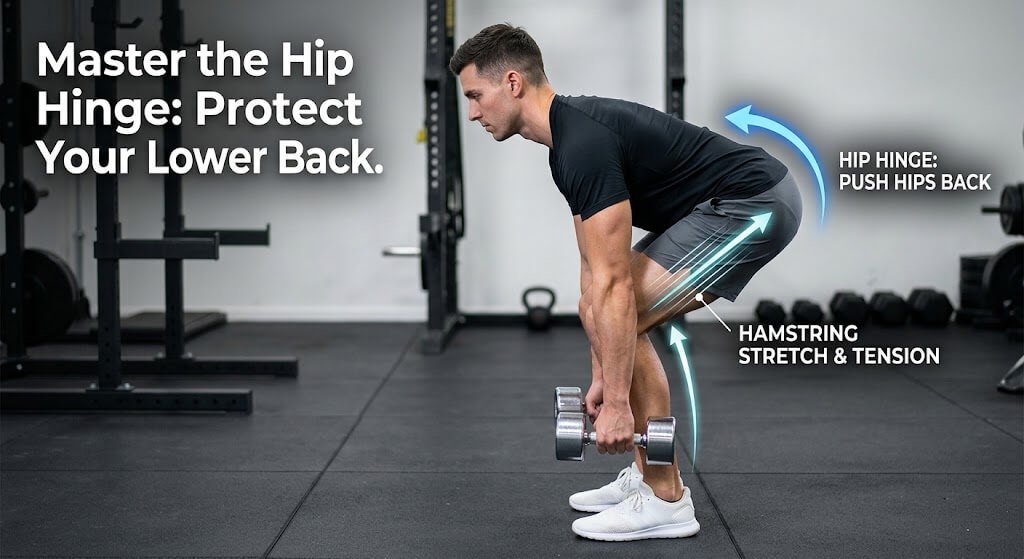
- Dumbbell RDL: Hold dumbbells (e.g., 25 lb / 11 kg each) in front of your thighs. With a slight bend in your knees, hinge at your hips, pushing your glutes backward. Keep the weights close to your legs. Stop when you feel a deep stretch in your hamstrings (usually just below the knee), then squeeze your glutes to return to standing.
- Dumbbell Row: Place one knee and hand on a flat bench for support. Hold a dumbbell (e.g., 20 lb / 9 kg) in the free hand. Pull the weight up toward your hip, squeezing your shoulder blade back. Lower with control.
Regression (Easier Version): If the Goblet Squat is too challenging, perform a Box Squat. Place a bench or sturdy box behind you. Sit all the way down, pause for one second, and stand up. This reduces the balance and mobility demand while still working the legs. For the row, use a lighter weight or a resistance band anchored to a door.
Progression (Harder Version): Once you can complete 3 sets of 12 reps with perfect form, increase the weight by 5 lb (2.2 kg). For the squat, progress to a Barbell Back Squat. For the row, progress to a Bent-Over Barbell Row or a heavy Single-Arm Cable Row.
Coach’s Tip:
Pair your protein with fiber and water. A 30-gram protein serving will keep you full, but a 30-gram protein serving plus 10 grams of fiber and 16 oz (473 ml) of water will keep you full for hours. Fiber adds physical bulk to the stomach, stretching the stomach walls and sending powerful mechanical “fullness” signals to the brain via the vagus nerve.
Common Mistake:
Relying solely on processed protein bars or sugary protein shakes to hit your daily goal. While convenient, many commercial protein bars are packed with sugar alcohols and artificial sweeteners that can cause bloating and disrupt gut health, ironically leading to increased cravings later in the day. Always prioritize whole food sources first, using supplements only to fill the gaps.
Safety Notes and Health Considerations
Before making significant changes to your diet or exercise routine, it is critical to consider your individual health profile.
- Kidney Health Myth: A persistent myth suggests that high-protein diets damage the kidneys. For healthy individuals with normal kidney function, research shows no adverse effects from high protein intake
pmc.ncbi.nlm.nih.gov
. However, if you have pre-existing chronic kidney disease (CKD), you must consult a nephrologist or registered dietitian, as your protein needs will be strictly regulated. - Hydration is Non-Negotiable: Metabolizing protein requires more water than metabolizing carbs or fats. The process of urea excretion (how your body clears protein byproducts) pulls water from your system. Aim for at least half your body weight in ounces of water daily (e.g., a 160 lb person should drink 80 oz, or about 2.3 liters).
- Medical Disclaimer: This article is for general information and is not a substitute for advice from a doctor or physical therapist. If you are pregnant, postpartum, managing a chronic condition like diabetes, or over the age of 65 with mobility concerns, please consult your healthcare provider before starting a high-protein diet or a new resistance training program.
Related Tips for Maximizing Hunger Control
While protein is the star of the show, it does not work in a vacuum. Optimizing your overall lifestyle will amplify its hunger-controlling effects.
1. The Sleep-Hunger Connection
Poor sleep sabotages your protein efforts. Sleep deprivation (less than 7 hours per night) has been shown to increase ghrelin production and decrease leptin (the satiety hormone) by up to 18%
www.ncbi.nlm.nih.gov
. No amount of chicken breast can fully override the biological hunger drive caused by chronic sleep debt. Prioritize 7–9 hours of quality sleep in a cool, dark room.
2. Strategic Use of Circulation-Supporting Habits
As you lose weight and build muscle, you also improve your overall cardiovascular wellness. Supporting healthy blood vessel function is a natural benefit of combining a high-protein diet with regular movement. Proper circulation ensures that the amino acids from your protein are efficiently delivered to working muscles for repair and growth. Some athletes also explore compounds like L-citrulline to support blood flow during intense training phases, though whole foods and hydration should always be your primary focus.
3. Managing Metabolic Health
Maintaining stable blood sugar is key to preventing energy crashes and subsequent hunger pangs. Nutrients like chromium picolinate are often studied for their role in supporting healthy glucose metabolism, which complements a high-protein, low-glycemic dietary approach. For those managing broader metabolic health, understanding the research around inositol and insulin sensitivity can provide additional, science-backed context for making smart dietary choices.
4. Joint Health and Longevity
When you carry excess weight, your joints bear a significant load. As you lose weight through a high-protein diet and strength training, you relieve pressure on your knees, hips, and ankles. Supporting your joint health during weight training is just as important as hitting your protein goals. Focus on controlled tempos, proper warm-ups, and pain-free ranges of motion to ensure you can stay active for the long haul. Furthermore, addressing holistic wellness factors, including understanding what causes poor blood circulation, ensures your entire body is primed for healthy, sustainable weight management.

Frequently Asked Questions (FAQ)
1. How much protein do I need to feel full?
Aim for 25 to 40 grams of high-quality protein per meal. Research shows this threshold is optimal for triggering the release of satiety hormones like GLP-1 and PYY, while also maximizing muscle protein synthesis. For total daily intake, target 1.6 grams per kilogram of body weight.
2. Does protein powder really stop hunger?
Yes, but with caveats. Whey protein, in particular, is rapidly absorbed and has been shown to acutely reduce hunger and prospective food consumption compared to carbohydrate drinks
biolayne.com
. However, liquid calories empty from the stomach faster than solid food. For sustained hunger control, use protein powder as a supplement alongside whole foods, not as a total meal replacement.
3. Why does a high-protein diet reduce cravings for sweets?
Protein stabilizes blood glucose levels. When you eat a high-carbohydrate, low-protein meal, your blood sugar spikes and then crashes, triggering intense cravings for quick energy (sugar). Protein slows gastric emptying and blunts this glucose spike, keeping your energy and cravings stable throughout the day.
4. Can eating too much protein cause weight gain?
Protein is highly satiating, making it difficult to overeat. However, it still contains calories (4 calories per gram). If you consistently consume more total calories than your body burns—even from protein—the excess will be stored as fat. The goal is to use protein to replace refined carbohydrates and fats, not simply add it on top of an already excessive diet.
5. Is plant-based protein as effective for hunger control as animal protein?
Yes, and sometimes more so. While animal proteins (like whey and eggs) have a slight edge in stimulating muscle protein synthesis due to their complete amino acid profile, plant proteins like lentils, chickpeas, and black beans come packaged with high amounts of dietary fiber. This fiber adds significant bulk and slows digestion, making plant-based proteins exceptionally effective for long-lasting satiety
www.mdpi.com
.
6. How long does it take for a high-protein diet to reduce hunger?
The hormonal effects are acute. You will likely notice a reduction in post-meal hunger and fewer mid-afternoon cravings within the first 3 to 5 days of consistently hitting your protein targets. The metabolic benefits of preserved muscle mass will compound over weeks and months.
Conclusion
Understanding how protein helps control hunger during weight loss transforms your approach from one of deprivation to one of strategic nourishment. By leveraging protein’s ability to suppress ghrelin, elevate GLP-1 and PYY, increase the thermic effect of food, and preserve vital lean muscle mass, you can navigate a calorie deficit without feeling miserable.
Start by calculating your target of 1.6 grams per kilogram of body weight. Front-load your intake at breakfast, prioritize whole food sources, and pair your nutrition with a consistent, progressive resistance training routine. Remember that sustainable weight loss is a marathon, not a sprint. Fuel your body properly, respect your need for recovery, and trust the physiological process. You have the tools; now it is time to put them into action.