Sexual stamina isn’t a mystery locked behind a supplement bottle. It’s built the same way you build any other physical capacity: consistent training, proper recovery, and smart programming. As a strength and conditioning coach, I program lower-body strength, cardiovascular work, and pelvic floor training for clients every week. The same principles that help someone squat 225 lb (102 kg) or run a 5K (3.2 km) also help them perform better in the bedroom.
This guide breaks down the specific exercises, sets, reps, and weekly structure that support sexual endurance. No pills, no gimmicks—just movement science you can start this week.
Quick Answer: To improve sexual stamina naturally, combine pelvic floor training (3 sets of 10 Kegels daily), lower-body strength work (squats, deadlifts, lunges 2–3×/week), 150 minutes of moderate cardio weekly, hip mobility work, and diaphragmatic breathing. Most people notice measurable changes in 4–6 weeks of consistent training, according to ACSM exercise guidelines.
Why Physical Fitness Directly Affects Sexual Performance
Sexual activity is a physical act. It demands cardiovascular endurance, muscular strength in the lower body and core, joint mobility in the hips and spine, and the ability to regulate breathing under mild exertion. Research published in the Journal of Sexual Medicine links regular physical activity to improved sexual function in both men and women, with cardiovascular fitness showing the strongest association [VERIFY].
The mechanics are straightforward:
- Blood flow. Aerobic training improves endothelial function, meaning your blood vessels dilate more efficiently. Better vasodilation supports arousal and sustained performance.
- Muscular endurance. Your glutes, quads, hamstrings, and core stabilize your body through positions and movement. Weak or fatigued muscles lead to early physical fatigue.
- Pelvic floor control. The pubococcygeus and surrounding muscles regulate arousal, erection quality, and the ability to delay climax.
- Hormonal and stress responses. Chronic stress elevates cortisol, which can suppress testosterone and reduce libido. Regular exercise helps regulate the hypothalamic-pituitary-adrenal axis, supporting a healthier hormonal balance.
The CDC’s physical activity guidelines recommend at least 150 minutes of moderate aerobic activity plus two days of muscle-strengthening work per week for adults. That baseline already covers a large portion of what you need. The rest is targeted, specific training.
The 8 Best Natural Strategies for Better Sexual Stamina
1. Pelvic Floor Training (Kegels)
This is the single most undertrained muscle group in the gym. The pelvic floor acts as a hammock at the base of your pelvis, supporting organs and playing a direct role in arousal, erection, and ejaculatory control.
How to do it:
- Identify the correct muscles. Stop your urine mid-stream (do this once for identification only, not as a regular exercise). The muscles you squeeze are your pelvic floor.
- Lie on your back with knees bent, feet flat on the floor.
- Squeeze the pelvic floor muscles as if you’re trying to stop both urine and gas. Hold for 5 seconds while breathing normally.
- Relax completely for 5 seconds.
- That’s one rep. Do 10 reps = 1 set.
Prescription: 3 sets of 10 reps, twice daily (morning and evening). Rest 5 seconds between reps. Breathe out during the squeeze; don’t hold your breath.
Easier version: Do 5-second holds with 10-second rests. Aim for 5 reps × 3 sets to start.
Harder version (progression): Increase the hold to 10 seconds, reduce rest to 3 seconds, and add a “quick flick” set—5 rapid 1-second squeezes at the end of each set.

Coach’s Tip: Most people over-recruit their glutes or abs during Kegels. Place one hand on your lower belly and one on your lower glutes. Neither should tighten. The movement is small, internal, and subtle. If you’re straining, you’re using the wrong muscles.
2. Lower-Body Strength Training: Squats, Deadlifts, and Lunges
Your lower body is the engine room for sexual performance. The gluteus maximus, quadriceps, hamstrings, and hip adductors generate the force and stability you need. Strong legs also drive blood flow to the pelvic region through the large muscle pump.
The big three movements:
| Exercise | Sets | Reps | Rest | Tempo |
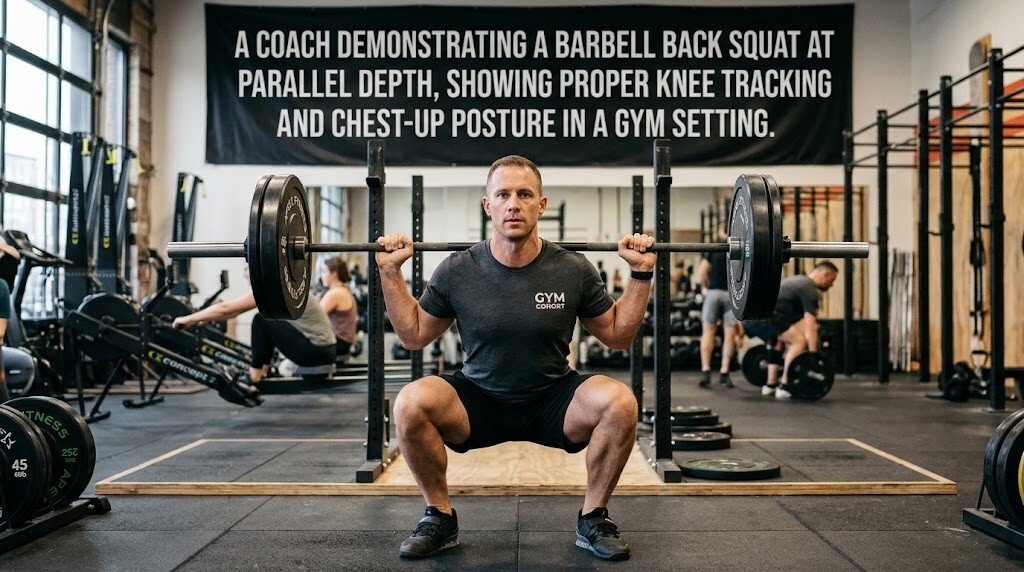
| Barbell back squat | 4 | 6–8 | 90 sec | 3-1-1 (3 sec down, 1 sec pause, 1 sec up) |
| Romanian deadlift | 3 | 8–10 | 75 sec | 2-1-2 |
| Walking lunges (dumbbell) | 3 | 10/leg | 60 sec | 2-0-1 |

Form cues:
- Squat: Drive knees over toes, keep chest tall, brace your core as if bracing for a punch. Go to parallel (thighs parallel to floor) or slightly below. Start with the bar empty (45 lb / 20 kg) and add 5 lb (2.3 kg) per side weekly.
- Romanian deadlift: Hinge at the hips, keep a flat back, feel a stretch in the hamstrings at the bottom. Don’t round your lower back. Use 85–135 lb (39–61 kg) depending on your level.
- Walking lunges: Step forward, lower the back knee toward the floor (about 1 inch / 2.5 cm above ground), push through the front heel. Hold 20–30 lb (9–14 kg) dumbbells at your sides.
Easier version: Bodyweight goblet squats (hold a 25-lb / 11-kg dumbbell at your chest), single-leg glute bridges, and reverse lunges with no added weight.
Harder version: Front squats, trap-bar deadlifts, and Bulgarian split squats with 50–70 lb (23–32 kg) dumbbells.
Common Mistake: Going too heavy on squats and losing core bracing. If your lower back rounds at the bottom, drop the weight by 10–20 lb (4.5–9 kg). A controlled 135-lb (61-kg) squat with full bracing builds more functional strength than a shaky 225-lb (102-kg) rep.
3. Cardiovascular Conditioning
Aerobic capacity is the foundation. If your heart and lungs can’t deliver oxygen to working muscles, everything else suffers. The HHS Physical Activity Guidelines recommend 150 minutes of moderate-intensity or 75 minutes of vigorous-intensity aerobic activity per week.
Practical options:
- Brisk walking: 30–40 minutes, 4–5×/week. Target a pace where you can talk but not sing.
- Cycling: 30 minutes at moderate resistance, 3×/week.
- Swimming: 20–30 minutes of continuous laps, 2–3×/week.
- HIIT (2×/week): 30 seconds hard effort / 60 seconds easy, repeated 8–10 rounds. Example: 30-sec fast cycling, 60-sec easy spin.
Why it matters for stamina: Improved VO₂ max means your muscles fatigue slower. A 2019 meta-analysis in Sports Medicine found that aerobic exercise training improved erectile function in men with mild to moderate erectile difficulties, likely through enhanced nitric oxide availability and vascular health [VERIFY].
Progression: Add 5 minutes or 5% intensity every two weeks. Don’t jump from a couch to a 5K in a month. Build the base first.
4. Core Stability Work
Your core isn’t just your six-pack. The transverse abdominis, obliques, and erector spinae create a stable platform for every movement. In sexual activity, your core stabilizes your torso, allows hip rotation, and protects your spine.
Best exercises:
- Dead bug: 3 sets × 10/side. Lie on your back, arms up, knees at 90°. Extend opposite arm and leg while keeping your lower back pressed into the floor. Slow and controlled.
- Pallof press (cable or band): 3 sets × 12/side. Stand sideways to a cable at shoulder height, press the handle straight out, hold 2 seconds, return.
- Plank: 3 sets × 30–60 seconds. Elbows under shoulders, glutes squeezed, no sagging hips.
Easier version: Half-kneeling dead bug, 30-second planks.
Harder version: RKC plank (30 seconds with full body tension), cable woodchops, and ab wheel rollouts.
5. Hip Mobility and Flexibility
Tight hip flexors (iliopsoas) and limited hip internal/external rotation restrict your range of motion and can cause lower-back compensation. This matters for both comfort and the ability to change positions smoothly.
Daily mobility routine (5–7 minutes):
- 90/90 hip switch: 8 reps per side. Sit with both legs bent at 90° in front of you, then switch one leg to the side while keeping your torso tall.
- Couch stretch (hip flexor): 30 seconds per side. Back knee on a low bench or couch, front foot flat, shift hips forward.
- World’s greatest stretch: 5 reps per side. Lunge position, rotate torso open toward the front leg, then close toward the back leg.
- Pigeon pose: 45 seconds per side. One shin in front of you, other leg extended back.
Do this before or after your main workout, or as a standalone morning routine.
6. Breath Control: Box Breathing and Diaphragmatic Breathing
Your nervous system determines whether you’re in “fight or flight” (sympathetic) or “rest and digest” (parasympathetic) mode. Arousal and sustained performance require parasympathetic dominance. Shallow, rapid breathing keeps you in sympathetic overdrive.
Box breathing (4-4-4-4):
- Inhale through your nose for 4 counts.
- Hold for 4 counts.
- Exhale through your mouth for 4 counts.
- Hold empty for 4 counts.
- Repeat for 4–6 cycles.
Diaphragmatic breathing:
- Lie on your back, one hand on your chest, one on your belly.
- Breathe in through your nose for 4 counts. Your belly hand should rise; your chest hand should stay mostly still.
- Exhale slowly through pursed lips for 6 counts.
- Repeat for 5 minutes.
Practice this daily, ideally before bed or after your workout. Over time, it becomes an automatic tool you can access during moments of heightened arousal to stay relaxed and in control.
7. Progressive Overload in Your Training
You can’t build endurance if you do the same workout every week. Progressive overload—gradually increasing the demand on your muscles—drives adaptation.
How to progress:
- Weeks 1–2: Learn the movements with light weight. Focus on form.
- Weeks 3–4: Add 5–10 lb (2.3–4.5 kg) to your squats and deadlifts. Add 1 set to lunges.
- Weeks 5–6: Increase cardio duration by 5–10 minutes. Add a 4th set to core work.
- Weeks 7–8: Introduce a harder variation (front squat, Bulgarian split squat, 40-sec HIIT intervals).
- Week 9: Deload. Drop volume by 40%. Let your body supercompensate.
- Week 10+: Repeat the cycle with slightly higher starting weights.
Track your numbers in a notebook or app. If you squat 135 lb (61 kg) × 8 this week, aim for 140 lb (63.5 kg) × 8 or 135 lb × 10 next week.
8. Recovery: Sleep, Stress, and Nutrition
You can train hard, but if you don’t recover, your gains stall and your stress hormones climb.
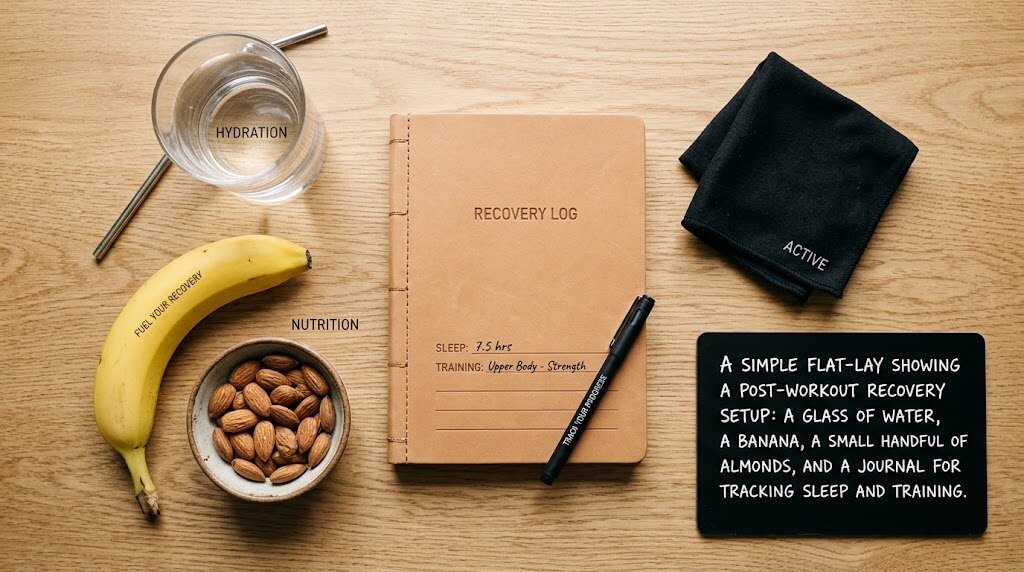
- Sleep: Aim for 7–9 hours per night. Poor sleep is linked to lower testosterone and reduced recovery capacity, as noted by Harvard Health. Quality sleep supports the hormonal cascade that drives libido and energy.
- Stress management: Chronic cortisol elevation suppresses the reproductive axis. Ten minutes of daily box breathing, a walk outside, or a hobby you enjoy can lower baseline stress.
- Nutrition basics: You don’t need a special “sex food.” Eat enough protein (roughly 0.7–1 g per lb of body weight / 1.6–2.2 g per kg), include healthy fats (avocado, nuts, olive oil) for hormone production, and stay hydrated. Avoid excessive alcohol, which impairs arousal and performance.
How to Build a Weekly Routine
Here’s a sample week that hits all eight strategies without overtraining:
| Day | Focus | Details |
| Monday | Lower-body strength | Squats 4×6, RDLs 3×8, Walking lunges 3×10/leg. 5-min hip mobility after. |
| Tuesday | Cardio + Core | 30-min brisk walk or bike. Dead bug 3×10, Pallof press 3×12, Plank 3×45 sec. |
| Wednesday | Pelvic floor + Breathing | 2× Kegel sessions (3×10). 5-min diaphragmatic breathing. 10-min easy walk. |
| Thursday | Lower-body strength | Front squat 3×8, Bulgarian split squat 3×10/leg, Hip thrusts 3×12. 5-min mobility. |
| Friday | HIIT + Core | 8 rounds: 30 sec bike sprint / 60 sec easy. Dead bug 3×10, Cable woodchop 3×12/side. |
| Saturday | Long cardio | 40–50 min walk, swim, or easy ride. 5-min 90/90 hip switches. |
| Sunday | Rest + Breathing | Full rest. 5-min box breathing before bed. Light stretching if desired. |
Kegels are done daily (morning and evening) regardless of the workout day. Breathing work can be added to any day, ideally before sleep.
Beginner adjustment: Do the strength days at bodyweight or with light dumbbells (10–20 lb / 4.5–9 kg). Keep cardio to 20 minutes. Add 5 minutes per week.
Advanced adjustment: Add a 5th strength set, increase HIIT to 10–12 rounds, and incorporate a 10-minute mobility flow daily.
Safety Notes
- If you have a history of pelvic pain, incontinence, or a diagnosed pelvic floor dysfunction, work with a pelvic floor physical therapist before starting Kegels. Incorrect technique can make symptoms worse.
- If you have lower-back pain, hip pain, or a cardiac condition, get clearance from your doctor before starting a new strength or cardio program.
- Start light. The first two weeks are about learning movement patterns, not lifting heavy.
- If you experience dizziness, chest pain, or unusual shortness of breath during cardio, stop and consult a medical professional.
This article is for general information and is not a substitute for advice from a doctor or physical therapist.
F.A.Q
How long does it take to see results from stamina exercises?
Most people report noticeable improvements in muscular endurance and breathing control within 3–4 weeks of consistent training. Pelvic floor strength and cardiovascular adaptations typically show measurable change at 6–8 weeks, according to general ACSM training principles. Consistency matters more than intensity in the early weeks.
What exercises improve sexual stamina the most?
There’s no single “best” exercise. The combination of pelvic floor training, compound lower-body lifts (squats, deadlifts), aerobic conditioning, and core stability work produces the most well-rounded improvement. Each targets a different physiological system: muscular, vascular, and neurological.
Can squats really help with sexual performance?
Squats build the glutes, quads, and core muscles that stabilize your body during sexual activity. They also increase lower-body blood flow and, over time, may support healthy testosterone production through mechanical loading of large muscle groups. They won’t “cure” anything, but they build the physical foundation for better endurance.
How often should I do pelvic floor exercises?
Aim for 3 sets of 10 reps, twice daily (morning and evening). That’s about 60 seconds of actual work per session. Consistency over weeks matters far more than doing 50 reps in one sitting. If you have a pelvic floor physical therapist, follow their specific prescription.
Do cardio exercises really improve sexual stamina?
Yes. Aerobic training improves cardiovascular efficiency, meaning your heart delivers oxygen to muscles more effectively. This delays fatigue during sustained physical activity. The WHO recommends 150 minutes of moderate aerobic activity weekly for general health, and the same principle applies to sexual endurance.
Can breathing exercises help with sexual stamina?
Diaphragmatic and box breathing activate the parasympathetic nervous system, which supports arousal and helps you stay relaxed rather than tense. Practicing 5 minutes daily builds the habit so you can access calm, controlled breathing during moments of heightened arousal. It’s a low-effort, high-impact tool.
Conclusion
Improving sexual stamina naturally isn’t about one magic exercise or a $40 bottle of supplements. It’s about showing up three to four times a week, building your lower-body strength, conditioning your heart and lungs, training your pelvic floor, and giving your body the sleep and stress management it needs to recover.
Start where you are. If you can’t squat yet, do bodyweight goblet squats with a 25-lb (11-kg) dumbbell. If 20 minutes of walking is your cardio, that’s your starting point. Add a little each week. In six to eight weeks, you’ll feel the difference in your legs, your breath, and your confidence.