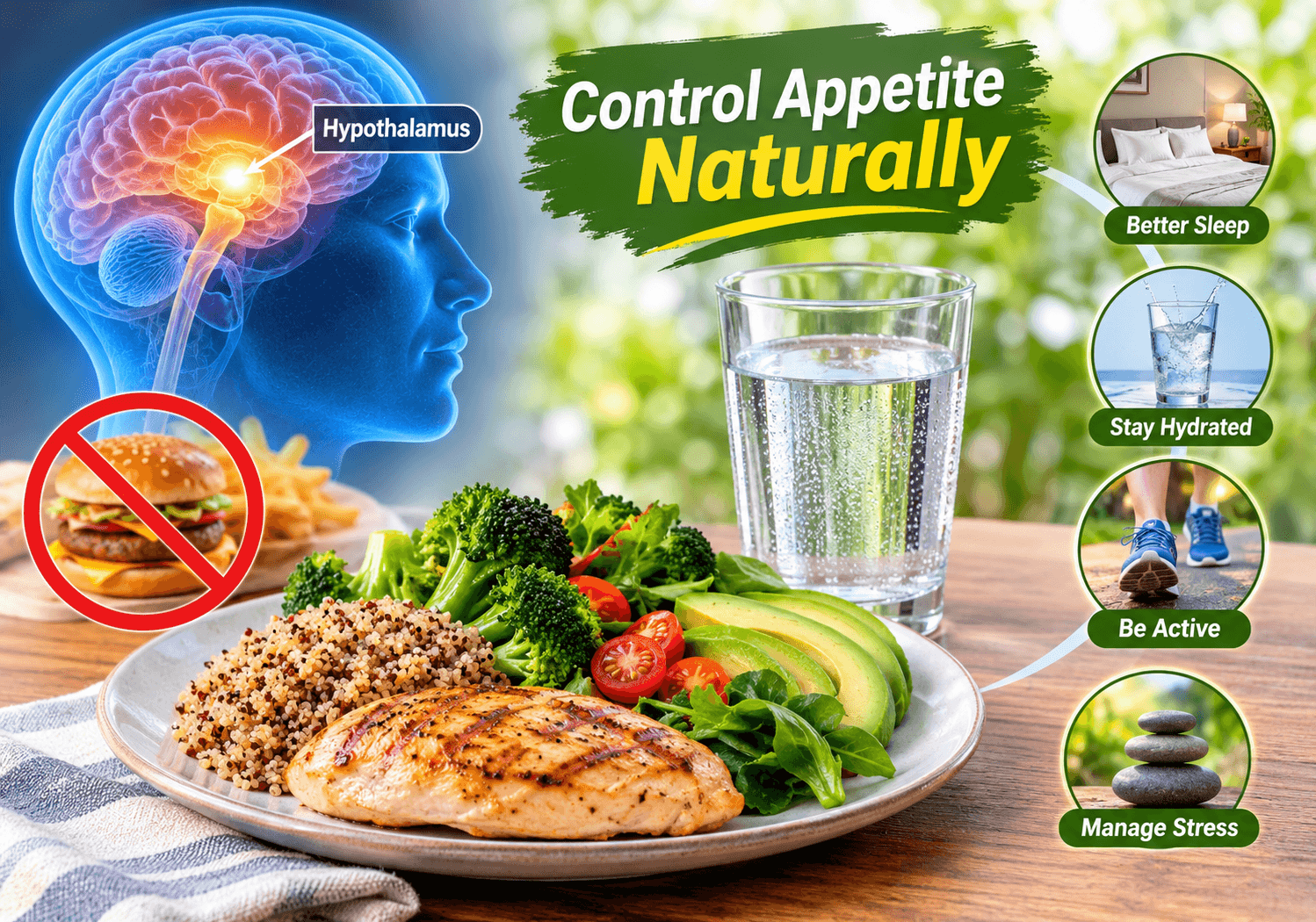
Learning how to control appetite naturally for weight loss is one of the most sustainable steps you can take toward long-term health. Relying on extreme calorie restriction or unproven stimulant pills often leads to a cycle of intense hunger, fatigue, and eventual rebound weight gain. As a strength and conditioning coach, I see clients succeed most when they work with their body’s biology, not against it. By adjusting your nutrition, hydration, sleep, and daily movement, you can signal to your brain that you are full and satisfied. This guide breaks down the exact, science-backed methods to help you reduce hunger cravings and build habits that last a lifetime.
Quick Answer
To control appetite naturally, prioritize 20–30 grams of protein per meal, consume 25–35 grams of soluble fiber daily, and drink 16–20 oz (470–590 ml) of water before eating. Combine this with 7–9 hours of quality sleep, mindful eating practices, and daily walking. These steps regulate hunger hormones like ghrelin and leptin, helping you manage food cravings without supplements.
The Science Behind How to Control Appetite Naturally for Weight Loss
Appetite is not just a lack of willpower; it is a complex biological system regulated by your brain, specifically the hypothalamus. Your body uses a network of hormones to tell you when to eat and when to stop.
The two primary hormones involved are ghrelin and leptin. Ghrelin is known as the “hunger hormone.” Its levels rise before meals and fall after eating. Leptin is the “satiety hormone,” produced by your fat cells, which signals to your brain that you have enough energy stored and do not need to eat.
When you crash diet or severely restrict calories, your body perceives a threat. Ghrelin levels spike, and leptin levels drop, making you feel ravenous. However, you can influence these hormones positively. Eating specific nutrients, staying hydrated, and managing stress can increase the release of satiety hormones like peptide YY, cholecystokinin (CCK), and GLP-1. Understanding this biology is the first step in learning how to control appetite naturally for weight loss without feeling deprived.
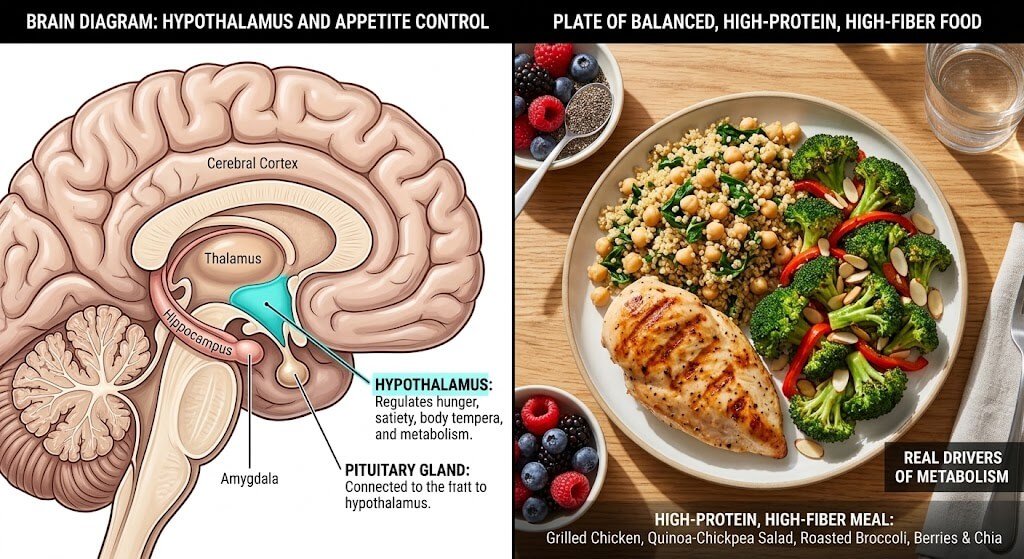
7 Evidence-Based Strategies on How to Control Appetite Naturally for Weight Loss
Here are the most effective, research-backed methods to keep hunger at bay. Each strategy includes practical steps, daily targets, and modifications for your fitness level.
1. Prioritize High-Quality Protein at Every Meal
Protein is the most satiating macronutrient. Research consistently shows that higher protein intake reduces levels of the hunger hormone ghrelin while boosting peptide YY, a hormone that promotes fullness. Furthermore, protein has a high Thermic Effect of Food (TEF), meaning your body burns 20–30% of the calories in protein just to digest it.
- Daily Target: Aim for 0.8 to 1 gram of protein per pound (1.8 to 2.2 grams per kg) of your target body weight.
- Practical Step: Include at least 25–30 grams of protein in your breakfast. This sets a stable blood sugar tone for the day and prevents mid-morning cravings.
- Easier Version: Add one scoop of whey or plant-based protein powder to your morning oatmeal or smoothie.
- Harder Version: Track your macros to ensure you are hitting your protein goal evenly across 4 to 5 meals, spacing them 3–4 hours apart to maintain steady satiety signals.
Coach’s Tip: Keep a “protein anchor” in every meal. Whether it is Greek yogurt, chicken breast, lentils, or eggs, make the protein source the largest portion on your plate before adding carbohydrates or fats.

2. Leverage Soluble Fiber for Gastric Emptying
Not all fiber is created equal when it comes to hunger. Soluble fiber dissolves in water to form a thick, gel-like substance in your digestive tract. This process slows down gastric emptying, meaning food stays in your stomach longer, physically stretching the stomach walls and sending strong “I’m full” signals to your brain. Studies confirm that dietary fiber help with appetite and weight management by delaying nutrient absorption and stabilizing blood sugar.
- Daily Target: 25–35 grams of total fiber, with a focus on soluble sources.
- Practical Step: Eat one serving of soluble fiber-rich food (like oats, chia seeds, Brussels sprouts, or avocados) with your two largest meals.
- Easier Version: Swap refined grains (white bread, white rice) for whole grains (whole wheat bread, quinoa, brown rice).
- Harder Version: Use a measured dose of a natural soluble fiber supplement, such as 1 teaspoon of psyllium husk or glucomannan, mixed in 12 oz (350 ml) of water 15 minutes before dinner.
Common Mistake: Increasing fiber intake too rapidly without drinking enough water. This can cause severe bloating, gas, and constipation. Always increase fiber gradually over 2–3 weeks and pair it with ample hydration.
3. Master Hydration Timing and Volume
The hypothalamus regulates both thirst and hunger, and the signals can easily get crossed. It is very common to interpret mild dehydration as a hunger pang or a sugar craving. Proper hydration also adds physical volume to your stomach, which triggers stretch receptors that signal fullness.
- Daily Target: Drink at least half your body weight in ounces of water daily. For a 160 lb (72 kg) person, that is 80 oz (2.3 liters).
- Practical Step: Drink 16–20 oz (470–590 ml) of plain water exactly 30 minutes before every main meal. Research shows this simple habit can reduce calorie intake at that meal by up to 13%.
- Easier Version: Keep a 32 oz (950 ml) reusable water bottle on your desk or in your car and finish it twice a day.
- Harder Version: Calculate your exact hydration needs based on activity level, adding 12–16 oz (350–470 ml) of water with electrolytes for every hour of intense exercise or heavy sweating.
4. Practice Mindful Eating and Tempo Control
It takes approximately 20 minutes for your stomach to digest food and for the satiety hormones (like CCK and GLP-1) to travel through your bloodstream to your brain. If you inhale your food in 5 minutes, you will likely overeat before your brain registers that you are full. Learning to manage food cravings without supplements often starts with slowing down.
- Daily Target: Make every meal last at least 20 minutes.
- Practical Step: Put your fork or spoon down on the table between every single bite. Chew each mouthful 20–30 times until the food is essentially liquid before swallowing.
- Easier Version: Set a timer on your phone for 20 minutes when you sit down to eat. Do not allow yourself to get up for seconds until the timer goes off.
- Harder Version: Practice “device-free dining.” Turn off the TV, put your phone in another room, and focus entirely on the texture, temperature, and flavor of your food to maximize sensory satisfaction.

5. Optimize Sleep Quality and Duration
Sleep deprivation is a silent driver of overeating. When you sleep less than 7 hours a night, your body produces more ghrelin (hunger) and less leptin (fullness). A landmark study highlighted by Harvard Health demonstrates that poor sleep directly increases cravings for high-calorie, carbohydrate-dense foods. Understanding how sleep affects metabolism and weight management is critical for appetite control.
- Daily Target: 7 to 9 hours of uninterrupted sleep per night.
- Practical Step: Establish a strict “digital sunset.” Turn off all screens (phones, TVs, computers) 60 minutes before bed to allow melatonin production to rise naturally.
- Easier Version: Go to bed and wake up at the exact same time every day, even on weekends, to regulate your circadian rhythm.
- Harder Version: Optimize your sleep environment by keeping the bedroom temperature between 60–67°F (15–19°C), using blackout curtains, and avoiding caffeine after 2:00 PM.
6. Manage Stress and Cortisol Levels
Chronic stress elevates cortisol, a hormone that not only promotes fat storage (particularly around the midsection) but also drives intense cravings for “comfort foods” high in sugar and fat. Stress eating is a physiological response, not a moral failing. If you are wondering how to stop sugar cravings naturally while losing weight, stress management must be part of your protocol.
- Daily Target: 5–10 minutes of dedicated stress-reduction practice.
- Practical Step: When a sudden craving hits, pause and perform the 4-7-8 breathing technique: inhale for 4 seconds, hold for 7 seconds, and exhale slowly for 8 seconds. Repeat this four times to activate your parasympathetic nervous system.
- Easier Version: Take a 10-minute walk outside in natural sunlight when you feel stressed or overwhelmed.
- Harder Version: Incorporate a daily mindfulness or meditation practice using a guided app, and consider discussing adaptogenic herbs (like ashwagandha) with your healthcare provider to help modulate cortisol.
7. Incorporate Strategic Resistance Training and Walking
Exercise influences appetite in two powerful ways. First, building muscle mass increases your resting metabolic rate, improving your body’s ability to utilize carbohydrates and fats efficiently. This helps you boost metabolic flexibility without crash dieting. Second, low-intensity movement like walking increases Non-Exercise Activity Thermogenesis (NEAT), which has been shown to regulate appetite hormones better than high-intensity cardio, which can sometimes spike hunger.
- Daily Target: 8,000–10,000 steps per day, plus 2–3 resistance training sessions per week.
- Practical Step: Schedule a 15-minute walk immediately after your largest meal. This aids digestion, blunts the blood sugar spike, and reduces post-meal cravings.
- Easier Version: Start with a 10-minute daily walk and two 15-minute bodyweight strength sessions (squats, wall push-ups, glute bridges) per week.
- Harder Version: Progress to lifting weights 3–4 times a week, focusing on compound movements (deadlifts, rows, overhead presses) with progressive overload, while maintaining a daily step count of 10,000+ (roughly 4–5 miles or 6.4–8 km).

Nutritional Levers: Foods That Promote Fullness
To make your meal planning easier, use this table as a reference for the most satiating foods. Combining a protein source with a soluble fiber source and a healthy fat creates the ultimate “fullness matrix.”
| Food Category | Top Examples | Why It Works | Recommended Serving |
| Lean Proteins | Chicken breast, egg whites, Greek yogurt, tofu, white fish | High TEF; strongly suppresses ghrelin and boosts GLP-1. | 4–6 oz (113–170 g) per meal |
| Soluble Fiber | Oats, chia seeds, flaxseeds, Brussels sprouts, black beans | Forms a gel in the stomach, slowing gastric emptying. | 1/2 cup cooked or 1–2 tbsp seeds |
| High-Volume Veggies | Zucchini, spinach, broccoli, cauliflower, watermelon | High water and fiber content physically stretches the stomach with minimal calories. | 1–2 cups raw or cooked |
| Healthy Fats | Avocado, almonds, olive oil, salmon | Slows digestion and triggers the release of cholecystokinin (CCK). | 1/4 avocado or 1 oz (28 g) nuts |
Common Mistakes That Spike Hunger
Even with the best intentions, certain habits can sabotage your efforts to control hunger. Avoid these common pitfalls:
- Drinking Your Calories: Liquid calories from sodas, fancy coffee drinks, and fruit juices do not trigger the same satiety signals as solid food. You can consume hundreds of calories without feeling full. Stick to water, black coffee, or unsweetened tea.
- Skipping Meals to “Save” Calories: This often leads to extreme hunger later in the day, resulting in poor food choices and overeating at dinner. Consistent, balanced meals keep blood sugar stable.
- Relying on Artificial Sweeteners Excessively: While zero-calorie sweeteners can be a useful tool, some research suggests that the intense sweet taste without accompanying calories may confuse the brain’s reward pathways, potentially increasing cravings for sweet foods later.
- Eating Too Little Fat: Very low-fat diets can leave you feeling unsatisfied. Fat is essential for hormone production and slows down digestion. Include a moderate, controlled portion of healthy fat with your meals.
Sample Daily Routine for Appetite Control
Here is how you can put these strategies into practice in a single day. This routine is designed to keep your blood sugar stable and your hunger hormones balanced.
- 7:00 AM (Wake Up): Drink 16 oz (470 ml) of water immediately upon waking to rehydrate after sleep.
- 7:30 AM (Breakfast): 3 whole eggs scrambled with 1 cup of spinach and 1/4 avocado, plus a side of 1/2 cup of oatmeal. (High protein + soluble fiber).
- 10:30 AM (Snack – Optional): 1 cup of plain Greek yogurt with a handful of berries. Only eat if genuinely hungry.
- 1:00 PM (Lunch): 5 oz (140 g) grilled chicken breast over a large mixed green salad with 1 tablespoon of olive oil dressing. Drink 16 oz (470 ml) of water 30 minutes prior.
- 3:30 PM (Movement): Take a 15-minute brisk walk (approx. 1 mile or 1.6 km) to break up the workday and manage afternoon stress.
- 6:30 PM (Dinner): 5 oz (140 g) baked salmon, 1 cup of roasted broccoli, and 1/2 cup of quinoa. Eat slowly, putting your fork down between bites.
- 9:30 PM (Wind Down): Turn off screens, read a book, and prepare for 7–8 hours of sleep.
FAQ: Natural Appetite Control
1. How to stop sugar cravings naturally while losing weight?
To stop sugar cravings, ensure you are eating enough protein and fiber at every meal to stabilize blood sugar. When a craving hits, drink a large glass of water, wait 15 minutes, and try eating a piece of whole fruit. The natural sweetness and fiber often satisfy the urge without spiking your insulin.
2. What helps control hunger during weight loss?
The most effective ways to control hunger include eating 25–30 grams of protein per meal, consuming soluble fiber, drinking water before meals, getting 7–9 hours of sleep, and managing stress. These actions directly regulate the hunger hormones ghrelin and leptin, keeping you satisfied.
3. Does soluble fiber help control appetite?
Yes. Soluble fiber absorbs water in the digestive tract to form a gel-like substance. This slows down gastric emptying, keeping food in your stomach longer and sending sustained fullness signals to your brain. Sources include oats, beans, chia seeds, and psyllium husk.
4. How does protein intake affect hunger and fullness hormones?
Protein intake directly reduces the production of ghrelin (the hunger hormone) while stimulating the release of peptide YY and GLP-1, which are powerful satiety hormones. Additionally, protein requires more energy to digest, keeping your metabolism active and reducing overall calorie intake.
5. Can you manage food cravings without supplements?
Absolutely. While some supplements can offer minor support, the foundation of appetite control is behavioral and nutritional. Prioritizing whole foods, adequate hydration, quality sleep, and stress management will naturally regulate your hunger hormones far more effectively than any pill.
6. How to boost metabolic flexibility without crash dieting?
To boost metabolic flexibility, avoid extreme calorie deficits. Instead, focus on consistent resistance training to build muscle, eat balanced meals with protein and fiber, and incorporate daily low-intensity walking. This trains your body to efficiently switch between burning carbohydrates and fats for energy.
Conclusion
Mastering how to control appetite naturally for weight loss is not about white-knuckling your way through intense hunger. It is about working strategically with your body’s biology. By prioritizing protein and soluble fiber, staying properly hydrated, practicing mindful eating, optimizing your sleep, managing stress, and moving your body daily, you create an internal environment where satiety is the default, not the exception.
Start by picking just two or three strategies from this guide to implement this week. Perhaps it is drinking a glass of water before dinner and adding a protein source to your breakfast. Small, consistent changes compound over time, leading to sustainable, healthy weight management without the misery of constant cravings.