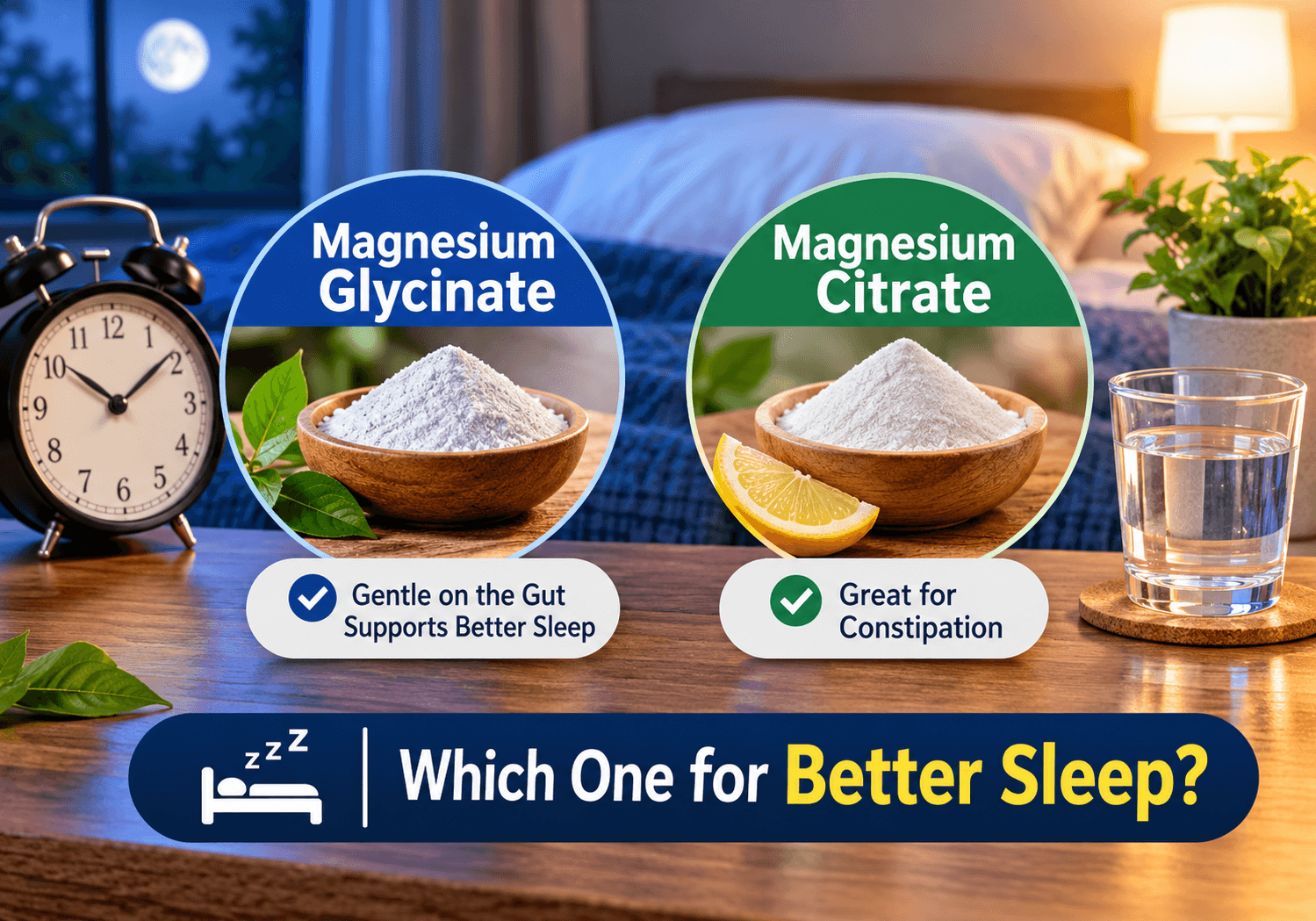
Walk into any supplement aisle and you’ll see a wall of magnesium bottles promising better sleep. Two forms dominate: magnesium glycinate and magnesium citrate. They’re both magnesium, but they don’t behave the same way in your body, and picking the wrong one can mean anything from no sleep benefit to a 2 a.m. bathroom trip. I’ve fielded this question from hundreds of clients over the years, usually after they’ve already bought something based on a viral video.
Here’s the short version: magnesium glycinate is the calmer, gentler form, best if sleep is your goal. Magnesium citrate absorbs well but pulls water into the gut, which is great for constipation and bad for staying asleep. This guide breaks down the actual evidence on magnesium glycinate vs citrate for sleep quality, including dosing, timing, side effects, and who should skip both.
Quick Answer: For sleep quality specifically, magnesium glycinate is the better pick. It’s better absorbed than oxide forms, gentle on the stomach, and its glycine component may support relaxation. Magnesium citrate absorbs well too, but it draws water into the intestines, so it works better as a constipation remedy than a sleep aid.
Magnesium Glycinate vs Citrate: Head-to-Head
Table
| Factor | Magnesium Glycinate | Magnesium Citrate |
| Bound to | Glycine, an amino acid | Citric acid |
| Elemental magnesium content | ~14% of the compound weight | ~11-16% depending on form |
| Absorption | Good, and well tolerated | Good, better absorbed than oxide |
| Effect on the gut | Very gentle, rarely causes loose stools | Osmotic laxative effect, reliably loosens stool at higher doses |
| Primary use | Sleep support, relaxation, nightly use | Constipation relief, raising magnesium intake |
| Typical elemental dose per serving | 100-250 mg | 100-300 mg |
| Cost | Higher | Lower |
| Who should avoid or check first | People on certain medications; kidney disease | Anyone prone to loose stools, IBS, or frequent night waking |
| Best for sleep? | Yes | Not really |
Both deliver the same mineral. The difference is the passenger molecule, and that molecule decides where each form earns its keep.
Why Magnesium Matters for Sleep at All
Before comparing the two, it’s worth understanding what magnesium actually does. Magnesium participates in more than 300 enzyme reactions, including ones that regulate nerve signaling, muscle contraction, and blood pressure, according to the NIH Office of Dietary Supplements.
For sleep specifically, researchers point to two mechanisms. First, magnesium acts as a natural NMDA receptor antagonist and GABA agonist, meaning it helps quiet excitatory nerve signaling and support the brain’s main calming neurotransmitter system, as the Abbasi et al. randomized trial explains. Second, magnesium appears to play a supporting role in neurotransmitter balance that governs the sleep-wake cycle. Cleveland Clinic integrative medicine physician Dr. Naoki Umeda notes that magnesium may help regulate neurotransmitters like GABA that are directly involved in sleep and relaxation, while cautioning that most studies are small and the overall evidence is thin.
Here’s the honest coaching read: magnesium is not a sedative. It won’t knock you out like a sleep medication. What it may do is nudge a mildly under-supplied nervous system toward calm, especially if your diet is short on magnesium-rich foods like leafy greens, nuts, seeds, and legumes. About 30-40% of the magnesium in food is absorbed, and many adults fall short of the recommended 310-420 mg per day according to the NIH.
What the Research Actually Says About Magnesium and Sleep
You deserve the unvarnished version before spending money.
The promising findings. In an 8-week double-blind trial, 46 older adults with primary insomnia took 500 mg of magnesium daily and showed significant improvements in sleep time, sleep efficiency, sleep onset latency, insomnia severity scores, and blood melatonin levels compared to placebo, with cortisol also dropping in the magnesium group. A 2021 meta-analysis pooling three trials in 151 older adults found sleep onset latency improved by about 17 minutes on magnesium, though total sleep time gains of about 16 minutes didn’t reach statistical significance, and the reviewers rated the evidence low to very low quality.
The form-specific data. The closest thing we have to a direct glycinate test: a 2025 randomized, placebo-controlled trial gave 155 adults with poor sleep 250 mg of elemental magnesium as magnesium bisglycinate (bisglycinate and glycinate are the same compound) for four weeks. The magnesium group’s Insomnia Severity Index scores fell significantly more than placebo, with most improvement inside the first two weeks, though the effect was modest and measured by self-report only. Interestingly, people with the lowest dietary magnesium intake seemed to benefit most, which fits the “fill the gap” model of how magnesium likely works.
The caution flags. A 2026 systematic review of twelve randomized trials of stand-alone oral magnesium for sleep concluded that current evidence does not support magnesium as a routine insomnia treatment, rating the certainty of evidence low to very low. And here’s the study that changed how I coach this: in a 7-week trial where adults over 51 took 320 mg of magnesium citrate or a sodium citrate placebo, sleep scores improved in both groups, and the improvement was strong enough that the researchers couldn’t separate a magnesium effect from a placebo effect. The placebo effect in sleep research is real and large.
Bottom line on evidence: magnesium for sleep is a “may help, low risk, modest effect” supplement, not a proven insomnia treatment. If you have chronic insomnia, the evidence-based frontline treatment is cognitive behavioral therapy, and you should talk to your doctor rather than self-treating with magnesium.
Glycinate vs Citrate: The Key Differences That Matter for Sleep
Difference 1: The Glycine Bonus
Magnesium glycinate is magnesium chelated to glycine, a calming amino acid your body also uses in its own sleep-related processes. That chelation gives glycinate two practical advantages: the glycine may add a mild relaxation effect of its own, and the chelated structure is easier on the intestinal lining, so you can take it at night without digestive drama. The 2025 bisglycinate trial I mentioned above used exactly this form at 250 mg, with side effects reported less often in the magnesium group than in the placebo group per the trial data. No head-to-head trial has ever compared glycinate directly against citrate for sleep outcomes, which is why the honest answer leans on mechanism, absorption data, and tolerability rather than a knockout study.

Difference 2: Citrate’s Osmotic Personality
Citrate is a salt of citric acid, and it pulls water into the intestines by osmosis. That’s precisely why magnesium citrate is a staple laxative: at higher doses, it reliably produces a bowel movement. The flip side for sleep is obvious. If your evening dose sends you to the bathroom at 3 a.m., your sleep quality is worse, not better, no matter how well the magnesium absorbs. Mayo Clinic’s Dr. Denise Millstine notes that while magnesium citrate has some of the most evidence behind it as a sleep aid, it also has potent laxative effects, and she suggests a gentler form like magnesium glycinate for most people who want better sleep.
Small doses of citrate are another story. If you tolerate it fine and it doesn’t disrupt your night, citrate remains one of the best-absorbed forms available. In a randomized crossover study, urinary magnesium excretion over 24 hours was significantly higher after citrate than after magnesium oxide, confirming citrate’s solid absorption.

Difference 3: Absorption and Bioavailability
Both forms absorb better than magnesium oxide, which is the cheap form to avoid. The NIH notes that forms that dissolve well in liquid, including citrate, are absorbed more completely than oxide, and small studies found citrate, aspartate, lactate, and chloride forms more bioavailable than oxide and sulfate. For glycinate, a 60-day randomized trial comparing citrate, an amino-acid chelate, and oxide found the organic forms absorbed better than oxide, with citrate showing the highest serum magnesium levels. (Note: that trial used a general amino-acid chelate; glycinate-specific head-to-head absorption data in humans is limited.)
One more bioavailability nuance most people miss: how you take magnesium matters as much as which form. A review of absorption research concluded that splitting magnesium into multiple smaller doses across the day improves uptake compared to one large dose, and that total dose and your existing magnesium status matter more than the salt type itself. Practically: don’t megadose at bedtime. Spread it or keep it modest.
Difference 4: Elemental Magnesium per Capsule
Check labels for “elemental magnesium,” not the total compound weight. Glycinate is a heavy molecule, so roughly 14% of magnesium glycinate by weight is actual magnesium. A “1,200 mg magnesium glycinate” capsule serving might deliver only about 150-200 mg of elemental magnesium. Citrate compounds run 11-16% elemental content depending on the manufacturer. This is the single most common label-reading mistake I see, and it’s why two bottles that look identical on the shelf can deliver very different doses.
Coach’s Tip: Read the Supplement Facts panel, not the front of the bottle. You’re looking for the line that says “Magnesium (as magnesium glycinate) … 200 mg.” That 200 mg is elemental magnesium. If the label only lists compound weight with no elemental amount, put it back.
Magnesium Glycinate vs Citrate Dosing for Sleep
There is no official “sleep dose” of magnesium, because no regulatory body has approved magnesium as an insomnia treatment. What we have is the dose range used in the trials above and the federal safety ceiling.
The evidence base breaks down like this:
- The bisglycinate sleep trial used 250 mg elemental magnesium daily for four weeks.
- The Abbasi insomnia trial used 500 mg elemental magnesium daily in older adults, above the federal upper limit for supplements, which is one reason its findings carry caution.
- The 2021 meta-analysis concluded RCT evidence may support oral magnesium in quantities less than 1 g given up to three times a day for insomnia symptoms, while noting the evidence quality is substandard.
- Mayo Clinic’s guidance suggests 250-500 mg of magnesium in a single bedtime dose for adults with healthy kidney function, while acknowledging it’s unlikely to add much on top of other sleep aids.
Here’s how I coach it, staying inside the safety lines:
Table
| Scenario | Form | Elemental Mg | When | Notes |
| Sleep is the main goal | Glycinate | 100-200 mg to start | 30-60 min before bed | Increase to 250 mg only if needed and tolerated |
| Poor diet + poor sleep | Glycinate or split doses | 100 mg morning + 100-200 mg evening | With or without food | Splitting may improve absorption |
| Constipation is also a problem | Citrate | 200-300 mg | Evening or per package directions | Expect looser stools; time accordingly |
| Sensitive stomach or IBS | Glycinate | 100-250 mg | Evening | Citrate will likely aggravate symptoms |
| Taking 350+ mg from all supplements | Either | Do not exceed 350 mg/day from supplements | Any | Federal tolerable upper limit per NIH |
Timing is flexible. Some people take magnesium with dinner to reduce the chance of any stomach upset affecting sleep onset; others take it 30-60 minutes before bed as part of a wind-down ritual. There’s no strong evidence that one timing beats the other, so pick the one you’ll actually keep up.
Common Mistake: Stacking doses. People take a magnesium capsule, a “sleep blend” gummy, and an electrolyte drink, and end up over 500 mg of supplemental magnesium per day without realizing it. High doses commonly cause diarrhea, nausea, and abdominal cramping, and the 350 mg per day upper limit applies to all supplements and medications combined, not food. Count your total.
Safety, Side Effects, and Who Should Be Careful
Both forms are well tolerated by most healthy adults at sensible doses, but this is a supplement, so treat it with respect.
- Do not exceed 350 mg per day of supplemental magnesium unless a doctor has directed you to. Very high doses can cause diarrhea, nausea, and in extreme cases serious problems, per the NIH.
- Kidney disease changes everything. Healthy kidneys clear excess magnesium easily, but impaired kidneys can let it accumulate to dangerous levels. If you have any kidney condition, do not take magnesium without your doctor’s explicit approval.
- Medication interactions. Magnesium can interfere with certain antibiotics, bisphosphonates, and other drugs, so separate dosing by a few hours and check with a pharmacist. This is the standard guidance reflected in the NIH consumer fact sheet.
- Digestive tolerance differs by form. Magnesium carbonate, chloride, gluconate, and oxide are the forms most commonly reported to cause diarrhea, per the NIH. Glycinate rarely causes this. Citrate does at higher doses.
- Check with your doctor or pharmacist first if you are pregnant, breastfeeding, over 65 with chronic conditions, taking blood pressure medication, or managing any medical condition. Magnesium is generally safe, but your situation deserves an individual answer, not an internet one.
And a truth-in-advertising note: because evidence for magnesium as a sleep treatment is low-certainty overall, the NCCIH says there isn’t enough rigorous scientific evidence to determine whether magnesium supplements are effective for sleep disorders. If you decide to try it, that’s a reasonable low-risk experiment. It is not a substitute for fixing the habits that actually drive sleep quality.
What Actually Moves Sleep Quality More Than Magnesium
I’d rather you spend effort here than on a third bottle of pills. Sleep hygiene habits have a stronger evidence base than any magnesium form, and they’re free.
The CDC recommends adults get 7 or more hours of sleep and points to consistent bed and wake times, a quiet dark cool bedroom, no screens 30 minutes before bed, no large meals or alcohol near bedtime, and cutting afternoon caffeine. Mayo Clinic’s sleep guidance adds the detail most people miss: if you don’t fall asleep within about 20 minutes, get out of bed and do something relaxing until you’re sleepy, rather than tossing and training your brain to associate bed with frustration. Regular physical activity also promotes better sleep, which is exactly why so many of my lifting clients sleep well on training days.
Coach’s Tip: Run the cheap experiment first. For two weeks, keep a consistent sleep and wake time, kill screens 30 minutes before bed, and take your magnesium dose at the same time each evening. Track how long it takes you to fall asleep. If sleep improves, you’ll know the routine is working, and the magnesium may be adding a little on top. If nothing changes, save your money and book a doctor’s visit, because something else is going on.

Magnesium Glycinate vs Citrate for Specific Situations
Not everyone’s sleep problem is the same, so here’s how the two forms map onto common situations.
You’re a stressed-out desk worker whose mind races at night. Glycinate is the better fit. The combination of a well-absorbed mineral and glycine’s calming character matches the problem, and you won’t be woken by digestive urgency. Start at 100-200 mg elemental and give it two weeks.
You’re constipated and sleeping poorly. Citrate starts to make sense, because it can address both, just not simultaneously. Many people take citrate earlier in the day or in the early evening for regularity and glycinate at night for sleep. That combination works, but count your total elemental magnesium across both.
You’re a woman over 40 waking up at 3 a.m. Night waking has many causes, including perimenopause-related hormonal shifts, alcohol, and blood sugar dips. Neither magnesium form is a fix for any of those. Glycinate is still the gentler choice for nightly use, but a doctor visit is worth more than a supplement here.
You’re an athlete with nighttime leg cramps. Magnesium is frequently recommended for cramps, but the evidence is mixed, and trials involving cramps and restless legs were analyzed separately from sleep trials in the 2026 review. If cramps are disrupting your sleep, look first at training load, hydration, and electrolyte intake, and mention the cramps to your doctor before assuming a supplement will fix them.
You train hard in the evening. Keep your magnesium but also front-load your training earlier when possible. Intense exercise too close to bedtime can interfere with falling asleep, which is standard guidance from the CDC and Mayo Clinic. Your magnesium dose can’t out-supplement a 9 p.m. heavy squat session.
How to Choose a Quality Product
The supplement industry is loosely regulated, so product quality varies wildly. Four things to check:
- Elemental magnesium clearly stated. As covered above, this is non-negotiable.
- Third-party testing. Look for NSF Certified for Sport, USP Verified, or Informed Choice marks. These mean an independent lab checked that the bottle contains what the label claims.
- Realistic labels. Be skeptical of products claiming proprietary blends or “sleep cocktails” with 15 ingredients. Every added ingredient is another thing that can disagree with you.
- Dosage math that fits your plan. If your target is 200 mg elemental, buy the product whose serving size gets you there in one or two capsules, not five.
One note on the “sleepy girl mocktail” trend that mixed magnesium powder into pre-bedtime drinks: the NCCIH specifically addresses this trend and points out that the research behind magnesium for sleep remains thin. If you like the ritual of a warm evening drink, a glycinate powder in warm water is a fine way to take it. Just don’t expect the drink itself to be magic.

Sample Evening Routine Using Magnesium for Sleep
Here’s the wind-down template I give clients who want to try the magnesium experiment properly. It stacks every low-risk, evidence-backed habit with the supplement:
- 7:00 p.m. Finish dinner, ideally not a heavy one. No more caffeine today (remember, caffeine’s effects can last up to 8 hours per the NIH).
- 8:30 p.m. Dim the lights. Screens off or on night mode.
- 9:00 p.m. Take magnesium glycinate, 100-200 mg elemental, with a glass of water. Do 5-10 minutes of light stretching or a hot shower, both of which help you relax before bed.
- 9:30 p.m. In bed. Reading, nothing scrolling.
- Same wake time every day, weekends included. Consistency is the highest-leverage sleep habit there is, per the CDC.
Give it 14 days before judging. The bisglycinate trial found most of its improvement happened inside the first two weeks, so two weeks is long enough to see a real effect if one is coming.
FAQ
Is magnesium glycinate or citrate better for sleep?
For sleep, glycinate is the better choice for most people. It absorbs well, is gentle on the stomach, and won’t trigger the osmotic laxative effect that citrate can cause at night. Citrate absorbs well too, but its water-pulling effect on the gut makes it better suited to constipation than sleep.
How much magnesium glycinate should I take for sleep?
Most trials that found benefits used 200-500 mg of elemental magnesium. Stay at or under 350 mg per day from all supplements combined, per the NIH upper limit. A practical starting point is 100-200 mg elemental magnesium about an hour before bed, adjusted based on how you feel.
Does magnesium citrate make you poop?
Yes, and reliably so. Magnesium citrate is an osmotic laxative that draws water into the intestines, which is why it’s a standard constipation remedy. At lower doses, some people tolerate it without issue, but at doses commonly sold for sleep, expect loose stools.
Can I take magnesium glycinate every night?
If you’re a healthy adult staying under 350 mg elemental magnesium per day from all supplements, nightly use is generally considered safe. If you have kidney disease or take interacting medications, check with your doctor first. If you find you need it every night just to sleep, that’s a reason to see a doctor, not to increase the dose.
What time of day should I take magnesium?
For sleep purposes, 30-60 minutes before bed is common and fits wind-down routines. Absorption research suggests splitting your total into smaller doses across the day may improve uptake. Whichever you pick, consistency matters more than the exact clock time.
Is 500 mg of magnesium too much?
From supplements alone, 500 mg exceeds the 350 mg per day adult upper limit set by federal health authorities. Trials have used that dose under supervision, but self-dosing at that level raises diarrhea risk and isn’t advised without medical guidance, especially with any kidney concerns.
Conclusion
On the question of magnesium glycinate vs citrate for sleep quality, the recommendation is clear: glycinate wins for sleep, citrate wins for constipation. Glycinate’s gentler digestive profile makes it the form you can actually take every night without it backfiring, and the best available trial of a glycinate form found modest but real improvements in insomnia scores. Citrate absorbs beautifully and costs less, but its laxative effect works against you when the goal is staying asleep.
Keep your expectations calibrated. The overall evidence for magnesium and sleep is low certainty, the effects are modest, and the people most likely to benefit are those whose diets fall short of magnesium in the first place. Start with 100-200 mg of elemental magnesium as glycinate an hour before bed, hold your sleep schedule steady for two weeks, and count your total supplemental magnesium so you stay under 350 mg per day. If poor sleep persists, see your doctor, because magnesium is a supporting player, not the lead.