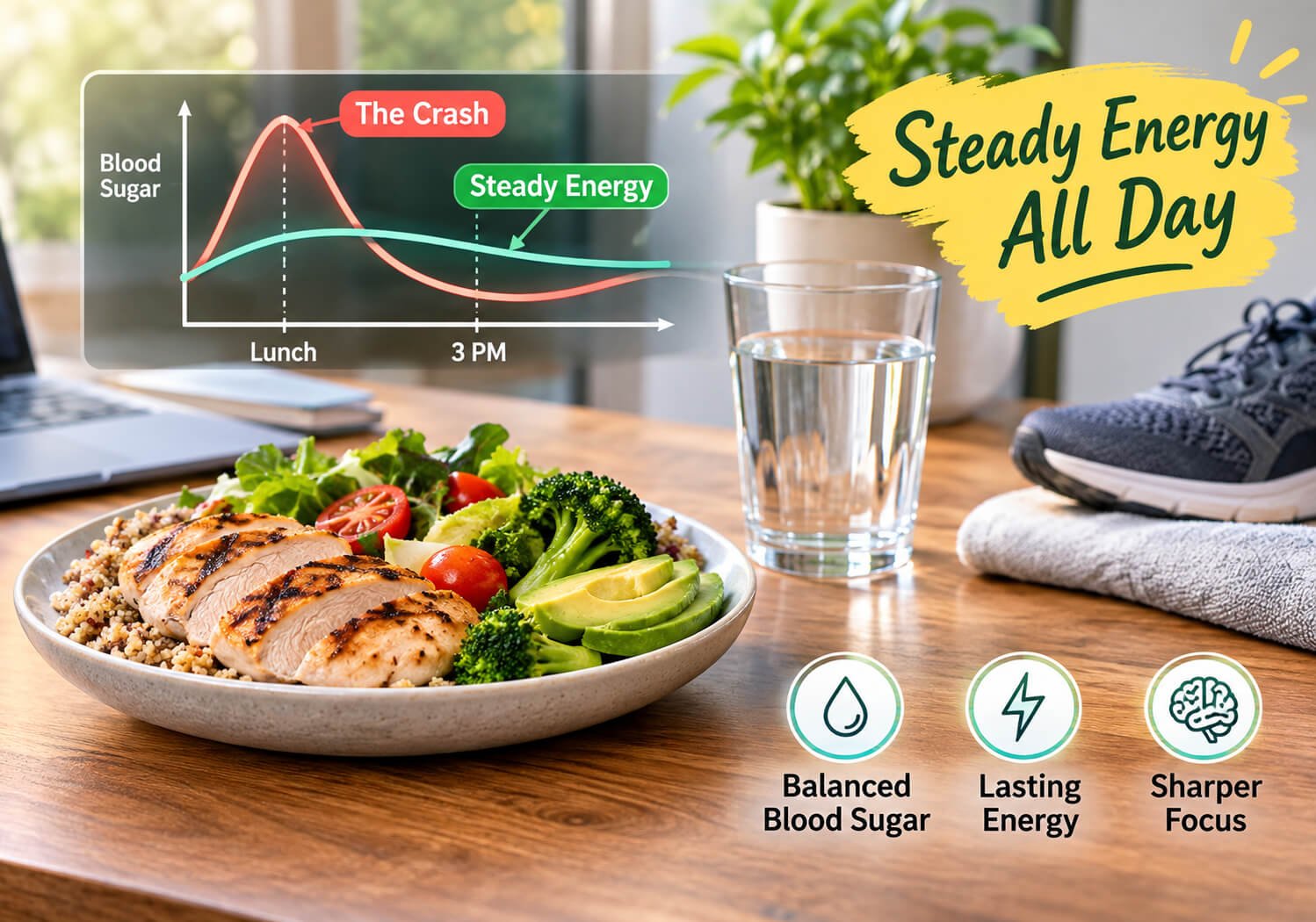
Hit 2:30 PM on a typical workday, and your brain suddenly feels like it is wading through wet cement. You had lunch just an hour or two ago, yet your eyelids feel heavy, focus evaporates, and the office vending machine starts calling your name. Searching for the best supplements to support healthy glucose metabolism and reduce afternoon energy crashes is one of the smartest moves you can make when daily nutrition and hydration alone leave you dragging.
As a strength and conditioning coach, I see this exact pattern constantly among busy desk workers, active adults, and recreational lifters. When your midday meal triggers a rapid spike in blood sugar followed by an aggressive insulin surge, your energy plummets right when you need to train or finish strong at work. Targeted, evidence-based nutrients can smooth out that metabolic rollercoaster so your body turns food into steady fuel instead of a mid-afternoon nap.
Quick Answer
The best supplements to support healthy glucose metabolism and reduce afternoon energy crashes include berberine, soluble viscous fiber (like psyllium husk), magnesium, alpha-lipoic acid (ALA), chromium picolinate, and Ceylon cinnamon. Taken strategically around meals, these compounds slow carbohydrate absorption, improve cellular insulin sensitivity, and prevent the sharp post-lunch blood sugar drop that causes 3 PM fatigue.
(Note: Before adding any blood-sugar-modulating supplement to your routine—especially if you take prescription medications, manage prediabetes or diabetes, or are pregnant—check with your doctor or a registered dietitian first.)
Why Your Energy Crashes at 3 PM: The Glucose-Insulin Rollercoaster
To fix an afternoon slump, you have to understand what happens inside your bloodstream right after you eat lunch. Every time you consume carbohydrates—whether from a bowl of white rice, a sandwich, or a sugary iced coffee—your digestive tract breaks those carbs down into glucose.
That glucose enters your bloodstream, signaling your pancreas to release insulin. Insulin acts like a key that unlocks your muscle and liver cells so they can absorb glucose and convert it into adenosine triphosphate (ATP), your body’s usable energy currency.
Problems start when a meal digests too quickly or your cells resist insulin’s signal. Your blood sugar shoots up fast, your pancreas overcompensates with a massive wave of insulin, and your blood glucose then drops rapidly below baseline—a phenomenon known as reactive hypoglycemia or a postprandial dip.
According to the CDC guidelines on managing blood sugar, large swings in blood glucose directly impact daily energy levels, mood, and concentration. When glucose drops too fast, your brain senses an energy shortage and triggers fatigue, brain fog, and intense sugar cravings.
[High-Glycemic Lunch]
│
▼
[Rapid Blood Glucose Spike] ──► [Excess Pancreatic Insulin Release]
│
▼
[3 PM Fatigue & Sugar Cravings] ◄── [Sharp Post-Meal Glucose Drop]
The Role of Skeletal Muscle and Lifestyle Habits
Supplements work best when paired with smart daily habits. Your skeletal muscles are the largest glucose sink in the human body, soaking up roughly 80% of post-meal blood sugar when they are active and insulin-sensitive.
Even a simple 10-minute brisk walk covering about 0.5 miles (0.8 km) immediately after lunch activates muscle contractions that pull glucose out of your bloodstream without needing extra insulin. Pairing that habit with the right nutrients creates a rock-solid defense against afternoon burnout.
Top 7 Best Supplements to Support Healthy Glucose Metabolism and Reduce Afternoon Energy Crashes
Not every ingredient on a supplement label deserves a spot in your gym bag or kitchen cabinet. The seven options below have solid human clinical backing for supporting healthy post-meal blood sugar, improving cellular energy production, and smoothing out afternoon fatigue.
| Supplement | Primary Mechanism | Typical Daily Dose | Best Timing | Primary Benefit for Afternoon Energy |
| Berberine | Activates AMPK; improves insulin sensitivity | 500 mg, 2–3x daily | 15–20 min before meals | Blunts post-lunch glucose spikes |
| Psyllium Husk (Soluble Fiber) | Forms viscous gel; slows gastric emptying | 5–10 grams | 10–15 min before lunch | Prevents rapid carb absorption |
| Magnesium (Glycinate/Malate) | Essential cofactor for 300+ enzymes & ATP | 200–400 mg | With meals or evening | Supports cellular energy & insulin signaling |
| Alpha-Lipoic Acid (ALA) | Enhances GLUT4 glucose uptake; antioxidant | 300–600 mg | 30 min before meals | Shuttles glucose into muscle cells |
| Chromium Picolinate | Amplifies insulin receptor signaling | 200–400 mcg | With breakfast or lunch | Reduces 3 PM sugar cravings |
| Ceylon Cinnamon | Mimics insulin; slows carb-digesting enzymes | 500–1,000 mg | With carbohydrate meals | Smooths postprandial blood sugar curve |
| Myo-Inositol | Improves intracellular insulin signal transduction | 2,000–4,000 mg | Split before meals | Supports steady metabolic flexibility |

1. Berberine: The Metabolic Switch Activator
Berberine is a bioactive alkaloid extracted from plants like barberry and goldenseal, and it stands out as one of the most heavily researched natural compounds for metabolic health. Inside your cells, berberine activates an enzyme called AMP-activated protein kinase (AMPK), often referred to as your body’s metabolic master switch.
When AMPK turns on, your muscle cells pull glucose from the bloodstream more efficiently, and your liver slows down excess sugar production. Clinical reviews indexed on PubMed Central (NCBI) show that berberine supports healthy fasting and postprandial blood glucose levels comparable to standard metabolic interventions.
- How to use it: Take 500 mg about 15 to 20 minutes before your largest carbohydrate-containing meals, such as breakfast and lunch.
- What to expect: Most people notice fewer post-meal energy dips and reduced afternoon sweet cravings within one to two weeks of consistent dosing.
- Coach’s note: Berberine has a relatively short half-life of a few hours, which is why splitting your dose before meals works far better than taking one large capsule in the morning. If you want a deeper dive into dosing strategies, check out our guide on how berberine supports metabolic health.
Coach’s Tip: Start with a single 500 mg dose before lunch for the first four to five days before adding a second dose at breakfast or dinner. Jumping straight to 1,500 mg per day can cause temporary stomach cramping or loose stools while your gut microbiome adapts.
2. Psyllium Husk (Soluble Viscous Fiber): The Digestive Speed Bump
Sometimes the smartest way to prevent a blood sugar crash isn’t changing your hormones—it’s physically slowing down how fast food leaves your stomach. Psyllium husk is a rich source of soluble, viscous fiber that absorbs water in your digestive tract and forms a thick, gel-like matrix.
This gel traps carbohydrates and digestive enzymes, slowing gastric emptying so glucose trickles into your bloodstream gradually over three to four hours instead of flooding in all at once. Research published through the National Institutes of Health (NIH) demonstrates that taking soluble viscous fiber before meals significantly lowers post-meal blood glucose and insulin spikes.
- How to use it: Stir 5 grams (about 1 rounded teaspoon) of pure psyllium husk powder into at least 8 to 12 ounces (240 to 350 ml) of cold water, drink it immediately, and follow with another glass of plain water 10 to 15 minutes before lunch.
- What to expect: You will feel noticeably fuller after lunch, experience zero sudden sugar rush, and maintain even mental focus well into the late afternoon.
- Coach’s note: Read our breakdown on how soluble fiber helps control appetite if you struggle with both midday tiredness and late-afternoon snacking.

3. Magnesium (Glycinate or Malate): The Cellular Energy Spark Plug
You can have plenty of glucose circulating in your bloodstream, yet still feel exhausted if your cells cannot convert that fuel into usable energy. Magnesium acts as a required cofactor in more than 300 enzymatic reactions, including every single step of glycolysis and mitochondrial ATP production.
Beyond energy creation, magnesium plays a direct role in insulin receptor function. Low intracellular magnesium impairs insulin’s ability to unlock muscle cells, leaving glucose stranded in the blood while your brain feels starved for fuel. Data from the NIH Office of Dietary Supplements highlights that higher magnesium intake is consistently linked to healthier glucose metabolism and better insulin sensitivity.
- How to use it: Take 200 to 400 mg of elemental magnesium daily. Magnesium malate works particularly well earlier in the day because malic acid participates directly in the Krebs energy cycle, while magnesium glycinate is gentle on the stomach and supports evening recovery.
- What to expect: Steady baseline energy, fewer muscle twitches during afternoon workouts, and improved sleep quality—which indirectly protects next-day glucose tolerance.
- Coach’s note: Skip magnesium oxide, which has poor bioavailability and mostly acts as a laxative.
4. Alpha-Lipoic Acid (ALA): The Glucose Shuttle
Alpha-lipoic acid (ALA) is a unique fatty acid produced in tiny amounts inside your mitochondria that functions as both a water- and fat-soluble antioxidant. In sports nutrition and metabolic coaching, ALA is prized as a natural glucose disposal agent.
ALA stimulates the translocation of GLUT4 proteins to the surface of skeletal muscle cells. Think of GLUT4 transporters as loading dock doors on your muscles: when they open, glucose moves rapidly out of your bloodstream and gets stored as muscle glycogen for your afternoon lift or run. Clinical findings indexed via PubMed (NCBI) indicate that oral ALA supplementation supports insulin-stimulated glucose disposal in adults.
- How to use it: Take 300 to 600 mg of R-ALA (the biologically active isomer) or standard racemic ALA about 30 minutes before a carbohydrate-rich lunch.
- What to expect: Better muscle pumps during late-afternoon training sessions and noticeably less post-meal drowsiness.
- Coach’s note: Look for “R-ALA” or stabilized Na-R-ALA on the label, as the R-form is roughly twice as bioavailable as synthetic S-ALA.
5. Chromium Picolinate: The Insulin Amplifier and Craving Tamer
Chromium is an essential trace mineral that enhances the action of insulin at the cellular level. It binds to a small intracellular peptide called chromodulin, which amplifies the signaling cascade once insulin attaches to a muscle or fat cell receptor.
When chromium status is suboptimal, your pancreas has to pump out more insulin to clear the same bowl of oatmeal or pasta—setting the stage for a sharp reactive drop two hours later. Studies reviewed by the NIH Office of Dietary Supplements on Chromium note its role in carbohydrate metabolism and reducing carbohydrate cravings in people with sluggish glucose clearance.
- How to use it: Take 200 to 400 mcg of chromium picolinate with breakfast or lunch.
- What to expect: Fewer nagging urges for chocolate, pastries, or sugary coffee drinks around 3:00 PM.
- Coach’s note: Learn more about how chromium picolinate helps reduce sugar cravings when dieting or working long desk hours.
6. Ceylon Cinnamon: The Gentle Post-Meal Buffer
Not all cinnamon in your spice rack is the same. Standard grocery-store Cassia cinnamon contains high levels of coumarin, a natural compound that can stress the liver if taken in large daily supplement doses. Ceylon cinnamon—often labeled “true cinnamon”—contains virtually zero coumarin while delivering potent polyphenols that support healthy glucose handling.
Ceylon cinnamon works through two helpful pathways: it mildly inhibits digestive enzymes (alpha-glucosidase and alpha-amylase) that break down starches into simple sugars, and it mimics insulin signaling at the cell membrane. Research available on PubMed Central shows cinnamon extracts can help moderate postprandial blood glucose excursions after starch-heavy meals.
- How to use it: Take 500 to 1,000 mg of Ceylon cinnamon extract (or stir 1 teaspoon of organic Ceylon cinnamon powder into food) alongside lunch.
- What to expect: A gentle smoothing effect on post-meal energy without any stimulant jitters.
7. Myo-Inositol: The Cellular Messenger
Often grouped with the B-vitamin family, myo-inositol is a naturally occurring sugar alcohol that serves as a critical secondary messenger inside your cells. When insulin knocks on the outside of a cell door, inositol phosphoglycans carry that message inside so glucose transporters can open up.
If cellular inositol stores run low, insulin signaling stalls even when hormone levels look normal on paper. Clinical trials published on PubMed (NCBI) show that myo-inositol supplementation supports healthy insulin sensitivity and balanced post-meal blood sugar responses.
- How to use it: Take 2,000 mg mixed in water 15 minutes before breakfast and another 2,000 mg before lunch.
- What to expect: Mildly sweet taste in water, zero stomach upset, and steady mental clarity through the afternoon.
How to Choose the Best Blood Sugar Support Supplement (Buyer’s Checklist)
Walking down a supplement aisle or browsing online can feel overwhelming when dozens of bottles promise “all-day energy” and “carb blocking.” Use this five-point coach’s checklist before spending your money:
- Avoid Proprietary Blends: If a label hides ingredient amounts behind a “Metabolic Energy Matrix (1,200 mg),” put it back. You need to see exact milligram doses—such as 500 mg of berberine or 300 mg of R-ALA—to know if the formula matches clinical research.
- Skip Hidden Stimulants: Many “afternoon energy” formulas sneak in 150 to 250 mg of caffeine, guarana, or bitter orange. Caffeine masks fatigue temporarily by blocking adenosine receptors, only to trigger a harder crash later and disrupt your deep sleep. Stick to stimulant-free formulas; explore supplements that support metabolism without stimulants for clean options.
- Check Third-Party Testing Seals: Because dietary supplements are regulated post-market in the United States, look for independent verification seals from USP, NSF International, Informed-Choice, or ConsumerLab. These seals confirm the bottle actually contains what is printed on the label without heavy metal contamination.
- Verify Bioavailable Forms: Look for chelated minerals and active isomers—such as magnesium glycinate or malate instead of oxide, chromium picolinate instead of chloride, and Ceylon cinnamon instead of Cassia.
- Match the Formula to Your Specific Trigger: If you crash after high-carb lunches, prioritize psyllium husk or berberine. If you eat clean balanced meals yet still feel mentally drained, focus on magnesium and myo-inositol.
Common Mistake: Taking blood sugar supplements on an empty stomach when you are skipping lunch or fasting. Ingredients like berberine and alpha-lipoic acid are designed to blunt post-meal glucose spikes; taking them without carbohydrates can push your blood sugar too low and make you feel shaky, dizzy, and exhausted.
How to Stack and Time Your Supplements for Steady Afternoon Energy
Buying the right bottle is only half the equation; timing determines whether you feel sharp at 3:30 PM or end up slumped over your keyboard. Rather than swallowing six different pills at once, match your intake to your daily meal rhythm.
Sample Daily Protocol for a 9-to-5 Desk Worker or Afternoon Lifter
- 7:30 AM (With Breakfast):
- Magnesium Malate: 200 mg to kickstart mitochondrial ATP production.
- Chromium Picolinate: 200 mcg to establish baseline insulin receptor sensitivity.
- 12:15 PM (15 Minutes Before Lunch):
- Psyllium Husk: 5 grams stirred in 10 ounces (300 ml) of water, OR Berberine: 500 mg with a full glass of water. (Pick one to start rather than combining both on day one.)
- 12:30 PM (Lunch):
- Eat a balanced meal containing 30 to 45 grams of lean protein, healthy fats, fibrous vegetables, and slow-digesting complex carbohydrates.
- 1:00 PM (Immediately Post-Lunch):
- Walk briskly for 10 to 15 minutes—roughly 0.5 to 0.75 miles (0.8 to 1.2 km)—to activate skeletal muscle GLUT4 glucose uptake.
- 4:30 PM (Pre-Workout / Late Afternoon):
- If you lift weights after work, add 300 mg of R-Alpha-Lipoic Acid with your pre-workout carb snack (such as a banana or rice cakes) to shuttle glucose straight into working muscles.
Stacking Synergy: What Combines Well vs. What to Separate
- Great Combination: Magnesium + Chromium Picolinate. These two nutrients work at completely different points in the insulin-to-ATP pipeline and never compete for absorption.
- Great Combination: Berberine + Ceylon Cinnamon. Both support healthy enzyme activity and AMPK signaling gently without overlapping side effects.
- Separate by 2 Hours: Psyllium Husk + Any Other Capsule. Because soluble fiber forms a thick gel in your stomach, taking psyllium at the exact same minute as berberine, magnesium, or prescription medications can trap those compounds and reduce their absorption. Take psyllium 15 minutes before eating, and take other supplements at least 1 to 2 hours apart from large fiber doses.
Lifestyle Foundations That Multiply Supplement Results
No capsule can outwork a lunch consisting of a giant white-flour burrito, sugary soda, and zero movement. In fact, supplements deliver roughly 15% to 20% of the benefit, while nutrition, movement, and sleep drive the remaining 80%.
1. Use the “Food Order” Trick at Lunch
Clinical nutrition research from Weill Cornell Medicine (PubMed) demonstrated that the exact order in which you eat food changes your post-meal glucose spike by up to 30% to 40%—even when the calories and macros are identical.
Eat your meal in this sequence:
- Fibrous vegetables first (salad, broccoli, green beans)
- Protein and healthy fats second (chicken, fish, tofu, eggs, olive oil, avocado)
- Starches and sugars last (rice, bread, potatoes, fruit)
Fiber and protein coat the upper small intestine and slow gastric emptying naturally, acting just like a built-in soluble fiber supplement. For more strategies on building meals that prevent crashes, review our guide on how to boost metabolic flexibility without crash dieting.
2. Build Insulin-Sensitive Muscle Through Resistance Training
Strength training is the closest thing we have to a permanent glucose-disposal upgrade. Lifting weights depletes muscle glycogen stores and triggers a cascade that increases GLUT4 transporter density inside muscle fibers for up to 24 to 48 hours after your session.
Aim for 3 full-body resistance workouts per week, focusing on multi-joint compound lifts like goblet squats, Romanian deadlifts, push-ups, and dumbbell rows:
- Sets and Reps: 3 sets of 8–12 repetitions per exercise
- Rest Time: 60–90 seconds between sets
- Load Guidance: Choose a dumbbell or barbell weight—for example, a 25 lb (11.3 kg) to 45 lb (20.4 kg) dumbbell for goblet squats—where the last 2 reps feel challenging while keeping crisp form.
3. Fix Your Morning Caffeine Timing
Chugging 200 mg of coffee at 7:00 AM the second your feet hit the floor interferes with your natural morning cortisol awakening response and sets up a massive adenosine rebound crash at 2:30 PM. Wait 60 to 90 minutes after waking before having your first cup of coffee, and cut off all caffeine at least 8 to 10 hours before bedtime.
If you rely heavily on coffee or energy pills to survive the workday, read why caffeine pills cause energy crashes and how to prevent it, or explore practical ways on how to improve daily energy without caffeine.
4. Prioritize 7 to 8 Hours of Quality Sleep
Just one night of restricted sleep (under 5 to 6 hours) temporarily reduces whole-body insulin sensitivity by 20% to 25% the next day, according to research published by the American Academy of Sleep Medicine / PubMed. When you are sleep-deprived, your body releases more cortisol and ghrelin, making even a healthy lunch trigger a steeper blood sugar spike and afternoon crash. Learn more about how sleep affects metabolism and weight management.
Safety, Side Effects, and Who Should Be Careful
Even natural, over-the-counter supplements carry real physiological effects. Respecting proper dosing and potential interactions keeps you safe while optimizing energy.
- Risk of Mild Hypoglycemia: Combining multiple blood-sugar-lowering supplements (such as berberine + ALA + chromium) on top of a low-carb meal can drop blood glucose slightly too low, causing shakiness, sweating, irritability, or lightheadedness. Introduce one single supplement at a time and monitor how you feel for 7 to 10 days before adding anything else.
- Prescription Medication Interactions: If you take metformin, sulfonylureas, insulin, SGLT2 inhibitors, or blood pressure medications, adding berberine or alpha-lipoic acid can amplify drug effects and cause unsafe drops in blood sugar or blood pressure. Berberine can also interact with liver enzymes (CYP3A4 and CYP2D6) that metabolize common prescriptions.
- Digestive Adjustment: Psyllium husk without enough water can cause bloating, gas, or constipation—and in rare cases esophageal blockage if swallowed dry. Always mix fiber powders thoroughly in plenty of fluid.
- Pregnancy and Breastfeeding: Berberine is not recommended during pregnancy or breastfeeding because it can cross the placenta and transfer into breast milk.
Frequently Asked Questions (FAQ)
What supplements prevent afternoon energy crashes?
Soluble viscous fiber (psyllium husk), berberine, magnesium malate or glycinate, alpha-lipoic acid, and chromium picolinate are among the most effective supplements for preventing afternoon energy crashes. They work by slowing carbohydrate digestion, improving cellular insulin sensitivity, and supporting ATP energy production so blood glucose stays steady after lunch.
How do you stabilize blood sugar after lunch?
You can stabilize post-lunch blood sugar by eating fibrous vegetables and lean protein before starches, taking 5 grams of psyllium husk in water 15 minutes prior to eating, and taking a brisk 10-minute walk right after your meal. These habits blunt rapid glucose spikes and prevent the subsequent insulin crash.
Does berberine help with afternoon fatigue?
Berberine may help reduce afternoon fatigue if your tiredness is caused by post-meal blood sugar spikes and crashes. By activating AMPK and improving how muscle cells absorb glucose after lunch, taking 500 mg of berberine 15 to 20 minutes before eating helps maintain smoother energy levels through the afternoon.
Can magnesium stop post-meal tiredness?
Magnesium does not block carbohydrate absorption directly, but it is essential for insulin signaling and converting glucose into cellular ATP energy. Correcting a mild magnesium deficiency with 200 to 400 mg of magnesium malate or glycinate daily can improve cellular energy efficiency and reduce daytime sluggishness.
Why do I crash at 3 PM every day even after eating lunch?
A daily 3 PM crash usually happens when a high-carbohydrate or low-protein lunch causes a sharp blood sugar surge followed by an over-release of insulin. Two hours later, blood glucose dips below baseline—triggering brain fog, heavy eyelids, and sugar cravings—often compounded by early-morning caffeine wearing off.
Does chromium picolinate reduce afternoon sugar cravings?
Research suggests chromium picolinate (200 to 400 mcg daily) supports insulin receptor sensitivity and may help reduce afternoon carbohydrate and sugar cravings in individuals with sluggish glucose clearance. Pairing chromium with a high-protein lunch delivers much stronger craving control than taking the mineral alone.
Conclusion
Breaking free from the daily 3 PM slump doesn’t require another double espresso or sugary energy drink. When you address the root cause—rapid post-meal blood glucose spikes followed by sharp insulin drops—you unlock smooth, reliable energy that carries you through afternoon meetings and evening workouts alike.
Start simple: pick one targeted option from the best supplements to support healthy glucose metabolism and reduce afternoon energy crashes, such as 5 grams of psyllium husk before lunch or 500 mg of berberine prior to carb-heavy meals, and pair it with a 10-minute post-lunch walk and protein-first eating habits. Track your energy levels over two weeks, dial in your sleep and strength training, and let steady cellular fuel replace the afternoon rollercoaster.