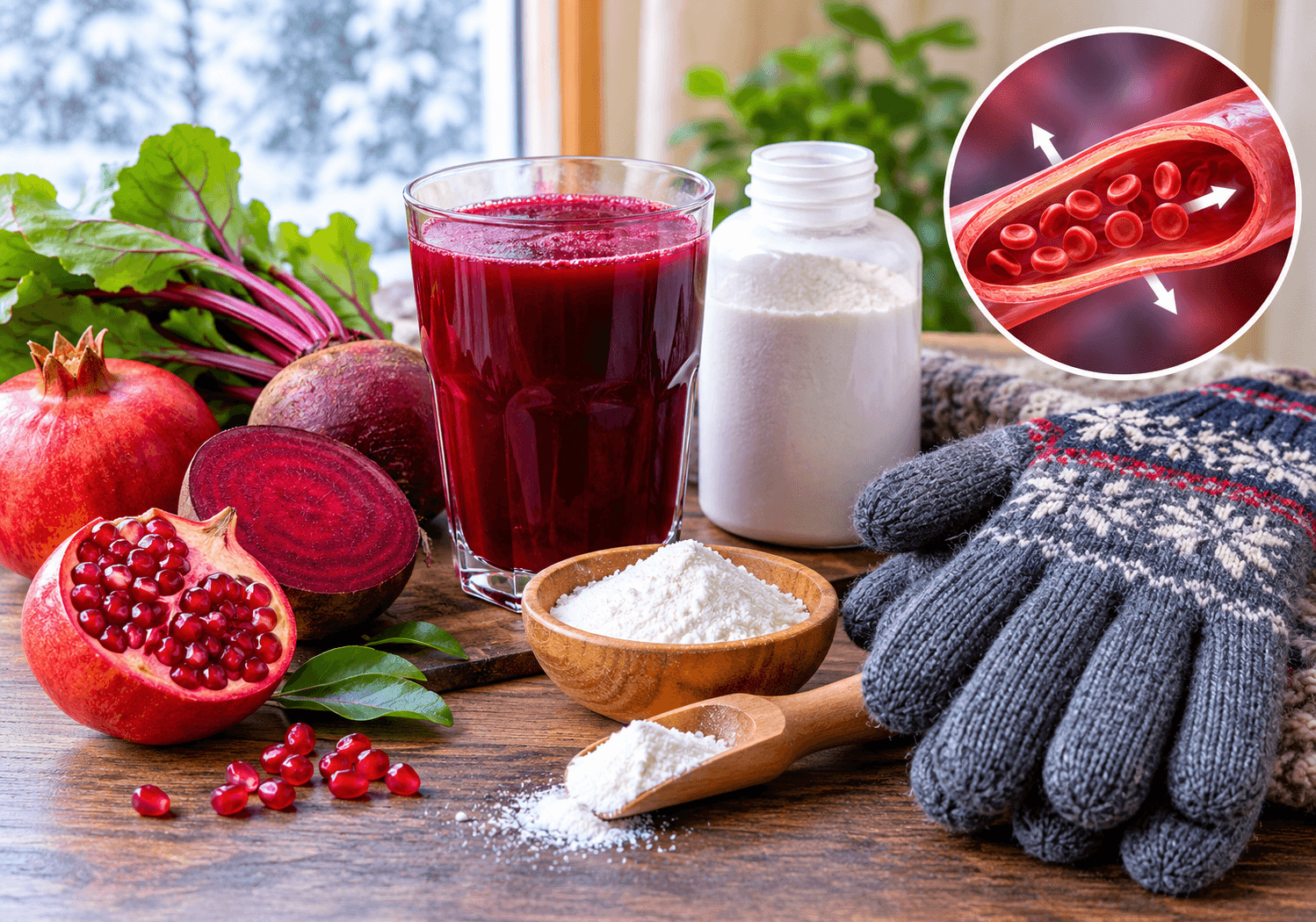
Cold hands and feet in winter are miserable. You’ve layered up, sipped hot tea, and still your fingertips and toes feel like frozen coins. Many people turn to nitric oxide boosters—L-arginine, L-citrulline, beetroot juice—hoping they’ll get blood flowing to those stubborn extremities. But do they actually work, and are they safe?
As a strength and conditioning coach, I get asked about circulation and cold sensitivity every January. The short answer: nitric oxide is a real, well-studied molecule that relaxes blood vessels, and several supplements can raise its levels. But the evidence for using those supplements specifically to warm cold hands and feet in winter is thinner than the marketing suggests. What follows is a practical, evidence-based breakdown of what works, what doesn’t, and what you should do before reaching for a supplement bottle.
Quick Answer: Nitric oxide (NO) is a natural vasodilator that relaxes blood vessel walls and improves peripheral blood flow. Supplements like L-citrulline, L-arginine, and beetroot extract can raise NO levels, and research links them to modest improvements in circulation and blood pressure. However, no high-quality study has proven they eliminate cold hands and feet in winter. Warming, movement, and addressing underlying causes remain the most effective strategies.
What Happens to Your Blood Flow in Cold Weather
Before we talk about supplements, it helps to understand the problem. When your body senses a drop in ambient temperature, your sympathetic nervous system triggers cold-induced vasoconstriction—the narrowing of small blood vessels in your skin, fingers, and toes. This is a survival mechanism: your body pulls blood away from extremities to protect your core organs.
The result is reduced peripheral blood flow, lower skin temperature, and that familiar numb, tingling, or painful sensation in your hands and feet. In most people, this is temporary and harmless. But for some, the response is exaggerated. Conditions like Raynaud’s phenomenon cause blood vessels in the fingers and toes to spasm in response to cold or stress, turning them white, then blue, then red as blood returns. Mayo Clinic describes Raynaud’s as affecting an estimated 5–10% of the population, with women more commonly affected than men.
The key player in reversing vasoconstriction is nitric oxide (NO), a gas produced by the inner lining of your blood vessels (the endothelium). NO signals the vascular smooth muscle to relax, widening the vessel and restoring blood flow. When NO production drops—due to aging, oxidative stress, poor diet, or chronic inflammation—your vessels don’t dilate as easily, and cold sensitivity can worsen.
How Nitric Oxide Works: The Science in Plain Terms
Your body makes NO through an enzyme called nitric oxide synthase (NOS). The primary fuel for this enzyme is the amino acid L-arginine. The pathway looks like this:
- L-arginine enters the endothelial cell.
- NOS converts it into NO and L-citrulline.
- NO diffuses into the adjacent smooth muscle cell.
- It activates a signaling cascade (guanylate cyclase → cGMP) that relaxes the muscle.
- The blood vessel dilates, and blood flow increases.
There’s a second, dietary route. Foods rich in dietary nitrates—beetroot, spinach, arugula—get converted by mouth bacteria into nitrites, then into NO in the bloodstream. This pathway bypasses NOS and can raise NO levels independently. Research published in the British Journal of Sports Medicine and the Journal of Physiology has shown that nitrate-rich beetroot juice can lower systolic blood pressure by 2–4 mmHg within a few hours, a small but measurable effect on vascular tone.
The practical takeaway: you can support NO production from two angles—amino acid precursors (L-arginine, L-citrulline) and dietary nitrates (beetroot, leafy greens).
Nitric Oxide Booster Options: What’s Available
Here’s a comparison of the most common NO-boosting supplements and foods:
| Option | Active Ingredient | Typical Dose | How It Raises NO | Evidence Level for Circulation |
| L-arginine | Amino acid | 2,000–6,000 mg/day | Direct NOS substrate | Moderate (blood pressure, endothelial function) |
| L-citrulline | Amino acid | 1,500–6,000 mg/day | Converts to arginine in the kidney, sustaining arginine levels | Moderate (blood pressure, exercise blood flow) |
| Beetroot / beet extract | Dietary nitrates | ~400–600 mg nitrate (≈500 ml juice) | Nitrate → nitrite → NO pathway | Moderate (blood pressure, vascular function) |
| Pomegranate extract | Polyphenols | 500–1,000 mg/day | Reduces oxidative stress, protects NO | Low–moderate (endothelial markers) |
| Pomegranate juice | Polyphenols + nitrates | 1 cup (≈250 ml) | Combined antioxidant + nitrate effect | Low–moderate |
A few notes on dosing:
- L-arginine is absorbed quickly but broken down fast by the liver (first-pass metabolism), so its effect on plasma arginine is short-lived.
- L-citrulline avoids first-pass metabolism. It’s converted to arginine in the kidneys, producing a more sustained rise in blood arginine levels. For this reason, many researchers now consider L-citrulline the more effective precursor for raising NO over time.
- Beetroot nitrate works within 2–3 hours of ingestion. The effect is temporary, lasting roughly 4–6 hours.
What the Research Actually Shows (and What It Doesn’t)
Here’s where I need to be straight with you, because the supplement industry tends to blur the lines.
What is supported:
- L-arginine and L-citrulline supplementation can modestly improve endothelial function and lower blood pressure in adults with mild hypertension or metabolic risk factors. A meta-analysis in the Journal of the American Heart Association found small but statistically significant reductions in systolic and diastolic pressure with L-arginine.
- Beetroot nitrate supplementation has shown consistent, small reductions in blood pressure and improvements in microcirculation in healthy adults and older populations.
- NO is essential for normal vascular health, and low NO levels are linked to arterial stiffness, a risk factor for cardiovascular disease.
What is NOT well-supported:
- No randomized controlled trial has specifically tested NO-boosting supplements as a treatment for cold hands and feet in winter.
- There is no evidence that L-arginine or L-citrulline reverses the acute vasoconstriction triggered by cold exposure in a meaningful, clinically significant way.
- For people with Raynaud’s phenomenon, the standard medical approach involves calcium-channel blockers (like nifedipine), not NO supplements. Cleveland Clinic recommends medical evaluation for Raynaud’s, particularly if episodes are severe, asymmetric, or accompanied by skin changes.
In other words: NO boosters may support general vascular health and modestly improve blood flow, but don’t expect them to be a magic fix for winter cold hands. They are one small tool in a much larger toolkit.
Practical Steps That Actually Help (Beyond Supplements)
As a coach, I’d rather you spend your energy on things with a strong track record. Here’s a winter circulation plan, ranked by impact:
1. Move Your Body (Highest Impact)
Even 10 minutes of brisk walking, jumping jacks, or arm circles increases heart rate and forces blood through the peripheral vasculature. The American College of Sports Medicine (ACSM) recommends at least 150 minutes of moderate aerobic activity per week for cardiovascular health. For cold extremities specifically, short bursts of movement before you step outside—20 jumping jacks, 30 seconds of high knees—can prime your circulation.
2. Layer and Protect
- Wear fingerless gloves or thin liner gloves under mittens.
- Use wool or merino socks (not cotton, which holds moisture).
- Consider heated insoles for your shoes.
- Keep your core warm. If your body is shivering, it’s prioritizing core temperature over your extremities.
3. Warm Water Soaks
A 10–15 minute soak in warm (not hot) water, around 100–104 °F (38–40 °C), can help dilate peripheral vessels. Do this in the morning before heading out, or in the evening to ease stiffness.
4. Nutrition That Supports NO
- Eat nitrate-rich vegetables: beets, arugula, spinach, celery, kale.
- Include L-arginine–rich foods: nuts (walnuts, almonds), seeds (pumpkin, sesame), legumes, chicken, and turkey.
- Get enough vitamin C, which helps protect NO from oxidative degradation.
- Stay hydrated. Dehydration reduces blood volume and makes cold sensitivity worse.
5. Limit Vasoconstrictive Triggers
- Nicotine is a potent vasoconstrictor. If you smoke or vape, quitting is the single most effective thing you can do for peripheral circulation.
- Caffeine in very high amounts can narrow vessels, though moderate intake (200–400 mg, roughly 2–3 cups of coffee) is generally fine for most adults.
- Stress activates the sympathetic nervous system and worsens vasoconstriction. Even 5 minutes of slow, diaphragmatic breathing can help.
6. Exercise Regularly
Resistance training and aerobic exercise improve endothelial function over time, making your blood vessels more responsive to NO. A simple weekly plan:
- 3 days/week: 30–40 minutes of brisk walking, cycling, or swimming.
- 2 days/week: Full-body resistance training (squats, deadlifts, rows, presses) at moderate intensity.
- Daily: 5–10 minutes of mobility work—ankle circles, wrist rotations, finger extensions.
If you’ve covered the basics above and still want to add a supplement, here’s how to approach it safely:
L-citrulline (my first suggestion over L-arginine):
- Dose: 3,000–6,000 mg per day, taken on an empty stomach.
- Onset: Effects on blood arginine levels build over 1–2 weeks of consistent use.
- Side effects: Generally mild. Some people report a slight drop in blood pressure or an upset stomach at higher doses.
Beetroot juice or extract:
- Dose: About 500 ml of juice (≈400–600 mg nitrate) or a standardized beet extract capsule providing 400–600 mg nitrate.
- Onset: Peak NO effect occurs 2–3 hours after ingestion.
- Side effects: Harmless pink/red urine (beeturia). May cause mild stomach discomfort.
L-arginine:
- Dose: 2,000–6,000 mg per day, split into 2–3 doses.
- Onset: Short-lived; effects peak within 1–2 hours.
- Side effects: Can cause bloating, diarrhea, or a drop in blood pressure. Use caution if you’re on blood pressure medication or nitrates (like nitroglycerin), as the combination can cause a dangerous drop in pressure.
Important safety notes:
- Do not combine NO-boosting supplements with prescription nitrates (nitroglycerin, isosorbide) or PDE-5 inhibitors (sildenafil, tadalafil) without medical supervision. The combined vasodilatory effect can cause a dangerous drop in blood pressure.
- If you have low blood pressure, are on antihypertensive medication, or have a heart condition, talk to your doctor before adding any NO booster.
- If your cold hands and feet are accompanied by color changes (white → blue → red), pain, sores that won’t heal, or numbness that persists, see a doctor. These can be signs of Raynaud’s, peripheral artery disease, or other circulatory issues that need proper diagnosis. Harvard Health lists persistent cold extremities, leg pain, and slow-healing wounds as warning signs to get checked.
Coach’s Tip: If you decide to try L-citrulline or beetroot, give it at least 2–3 weeks of consistent daily use before judging whether you notice a difference. One or two doses won’t change your baseline vascular tone. Pair the supplement with your morning workout so the increased blood flow coincides with elevated heart rate.
Common Mistake: Buying a “nitric oxide booster” pill that contains a proprietary blend of 10 ingredients at sub-therapeutic doses. Look for a product that lists a specific, research-backed dose of one primary ingredient (e.g., 3,000 mg L-citrulline or 500 mg beetroot nitrate). If the label says “NO Complex” without clear dosing, put it back on the shelf.
Foods That Naturally Support Nitric Oxide Production
You don’t need a supplement bottle to get NO precursors. A plate of food can do a lot of the work:
- Beets and beet greens – highest dietary nitrate source
- Arugula, spinach, celery, kale – good nitrate content
- Pumpkin seeds, walnuts, almonds – L-arginine and L-citrulline
- Pomegranate – polyphenols that protect NO from oxidative breakdown
- Citrus fruits, bell peppers – vitamin C for NO stability
- Turmeric (curcumin) – may support heme oxygenase-1, an enzyme involved in NO production
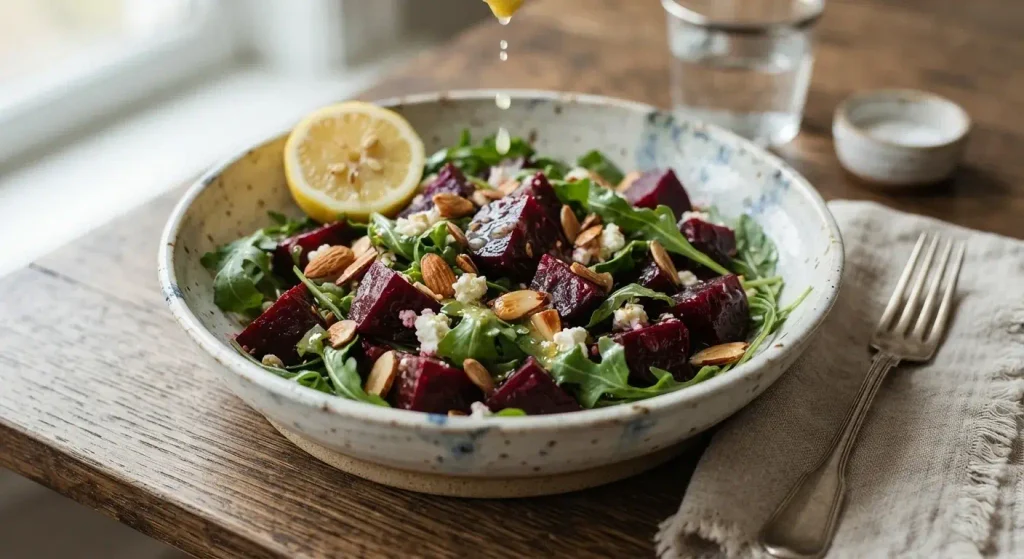
A simple winter dinner: roasted beets with arugula salad, grilled chicken, and a side of pumpkin seeds. That single meal hits multiple NO-supportive pathways.
Who Should Be Cautious
- People on blood pressure medication or nitrates: NO boosters can compound the vasodilatory effect. Get clearance from your prescribing doctor.
- Pregnant or breastfeeding women: There isn’t enough safety data on high-dose L-arginine or L-citrulline in pregnancy. Stick to food sources and talk to your OB.
- People with a history of herpes outbreaks: Some early research suggests L-arginine may promote viral replication. If this applies to you, discuss with your doctor.
- Anyone with unexplained cold extremities, color changes, or non-healing sores: Get a medical evaluation before self-treating with supplements.
This article is for general information and is not a substitute for advice from a doctor or physical therapist.
Do nitric oxide supplements actually help with cold hands?
Research shows NO precursors like L-citrulline and beetroot nitrate can modestly improve vascular function and blood pressure. However, no study has specifically proven they eliminate cold hands in winter. They may provide a small supportive benefit on top of warming, movement, and good circulation habits, but they are not a standalone fix.
What is the best nitric oxide booster for circulation?
L-citrulline (3,000–6,000 mg/day) and beetroot nitrate (400–600 mg/day) have the strongest evidence for improving endothelial function and blood flow. L-citrulline is often preferred over L-arginine because it produces a more sustained rise in blood arginine levels. Choose a product with a clearly listed, research-backed dose.
Can L-arginine help with Raynaud’s phenomenon?
There is no clinical trial evidence that L-arginine treats Raynaud’s. Standard management involves avoiding cold triggers, wearing warm gloves, and, in moderate-to-severe cases, calcium-channel blockers prescribed by a doctor. If you have Raynaud’s, talk to your healthcare provider before adding any supplement.
How long does it take for nitric oxide boosters to work?
Beetroot nitrate shows a peak effect 2–3 hours after ingestion, lasting about 4–6 hours. L-citrulline and L-arginine build their effect on blood arginine levels over 1–2 weeks of daily use. You won’t feel a dramatic change after one dose. Consistency matters.
Are nitric oxide supplements safe to take every winter?
For most healthy adults, L-citrulline and beetroot at studied doses are well tolerated. However, if you take blood pressure medication, nitrates, or PDE-5 inhibitors, or if you have a cardiovascular condition, check with your doctor first. The combination of NO boosters with certain medications can cause an unsafe drop in blood pressure.
Can nitric oxide boosters replace warming measures in winter?
No. Supplements cannot override the body’s acute cold response. Layered clothing, warm socks, hand warmers, and regular movement are far more effective at keeping your extremities warm. Think of NO boosters as a small supporting role, not the main act.
Conclusion
Nitric oxide is a real, important molecule for blood vessel health, and supplements like L-citrulline, L-arginine, and beetroot extract can nudge your NO levels upward. The evidence supports modest improvements in endothelial function and blood pressure, which is genuinely useful for long-term cardiovascular health. But if your primary goal is to stop your hands and feet from freezing in January, the most effective tools are still the unglamorous ones: move more, layer up, eat nitrate-rich vegetables, stay hydrated, and manage stress.
If you do add an NO booster to your routine, keep expectations realistic, use a well-dosed product, and give it a few weeks. And if your cold extremities come with color changes, pain, or sores that won’t heal, skip the supplement aisle and see a doctor. Your circulation deserves a proper check before you start self-prescribing.