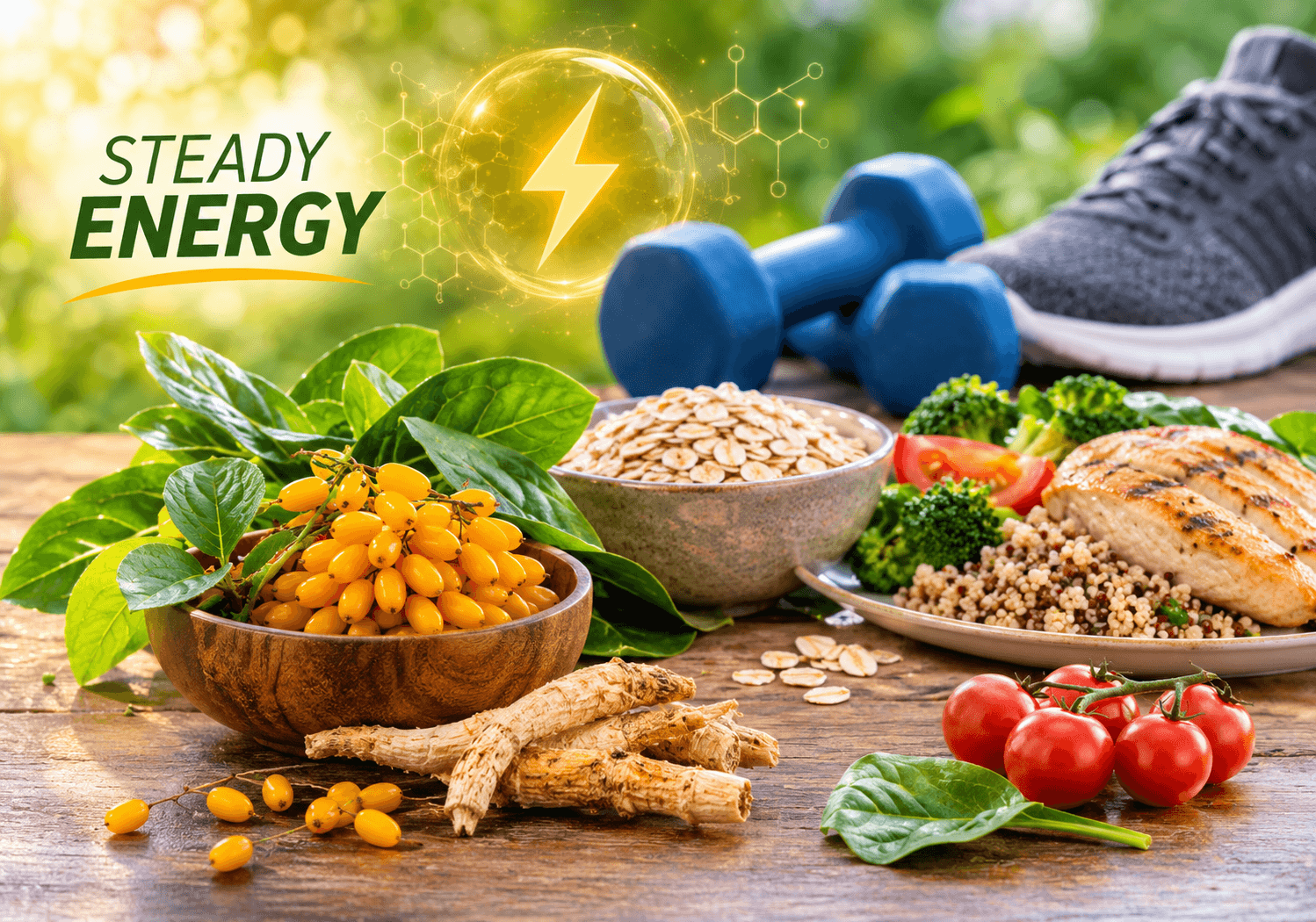
If you have ever experienced a mid-afternoon energy crash or felt sluggish and heavy after a carb-heavy meal, you are not alone. Many adults struggle with fluctuating blood sugar, which directly impacts workout performance and daily focus. As a strength coach, I often see clients seek out stimulants to fix this fatigue. However, addressing the root cause is far more effective. Understanding exactly how berberine supports glucose metabolism and steady energy levels can change the way you approach your daily nutrition and training.
Berberine is a powerful, plant-derived compound that has been used in traditional medicine for centuries. Modern science now backs its role in metabolic health. Rather than forcing energy through caffeine, berberine helps your cells use the fuel you already have more efficiently. This guide will break down the science, provide a practical movement routine, and offer clear safety guidelines so you can make an informed decision about your health.
Quick Answer
Berberine supports glucose metabolism and steady energy levels primarily by activating the AMPK enzyme, often called the body’s “metabolic master switch.” This action helps muscle cells absorb glucose more efficiently, reduces excess liver glucose production, and prevents sharp blood sugar spikes. The result is sustained, crash-free energy throughout your day and workouts.
The Science Behind How Berberine Supports Glucose Metabolism and Steady Energy Levels
To understand why berberine is so effective, we have to look at what happens inside your cells. Think of your body as a hybrid car. When you eat carbohydrates, they break down into glucose (sugar), which enters your bloodstream. Your body’s goal is to move that glucose out of the blood and into your cells, where it is converted into ATP (cellular energy). When this system works well, you feel energized. When it falters, glucose stays in the blood, leading to spikes, crashes, and long-term metabolic issues.
Berberine intervenes in this process through two primary, well-researched mechanisms.
Activating the AMPK Pathway
AMP-activated protein kinase (AMPK) is an enzyme found in almost every cell in your body. Researchers frequently refer to it as the “master switch” of metabolism. When cellular energy levels drop, AMPK turns on to restore balance. According to research published in the journal Metabolism, berberine directly activates AMPK, mimicking the effects of fasting or intense exercise [1].
When AMPK is activated, it tells your body to stop storing fat and start burning it for fuel. It also enhances mitochondrial function, which are the tiny powerhouses inside your cells responsible for producing ATP. By improving mitochondrial efficiency, berberine helps your body generate steady energy without relying on external stimulants.
Improving Insulin Sensitivity and GLUT4 Translocation
Insulin is the hormone that acts like a key, unlocking your cells so glucose can enter. In people with poor metabolic health, cells become “resistant” to insulin, meaning the key no longer works well. This leaves glucose circulating in the bloodstream.
Berberine helps solve this by increasing the expression of GLUT4 transporters. You can think of GLUT4 as garage doors on your muscle cells. When berberine is present, it signals these garage doors to open wider and stay open longer, allowing glucose to flow out of the bloodstream and into the muscle tissue to be used as glycogen (stored energy). A comprehensive review in the Journal of Clinical Endocrinology & Metabolism noted that berberine’s ability to improve insulin sensitivity is comparable to some first-line pharmaceutical interventions, making it a potent natural tool for glycemic control [2].
Berberine vs. Other Metabolic Supports
It is helpful to see how berberine compares to other common supplements used for energy and blood sugar management.
| Supplement | Primary Mechanism | Best For | Potential Drawbacks |
| Berberine | Activates AMPK, increases GLUT4 translocation | Long-term metabolic flexibility, blunting post-meal glucose spikes | Can cause mild GI distress; interacts with certain medications |
| Caffeine | Blocks adenosine receptors, stimulates CNS | Immediate, short-term alertness and workout intensity | Can cause jitters, anxiety, and severe energy crashes later |
| Chromium Picolinate | Enhances insulin receptor activity | Mild support for sugar cravings | Effects are generally subtle and less potent than berberine |
| Alpha-Lipoic Acid (ALA) | Antioxidant, improves insulin sensitivity | Nerve health and moderate glucose support | Less direct impact on AMPK activation compared to berberine |
Note: Always consult a healthcare provider before starting any new supplement regimen, especially if you take prescription medications.

How to Apply This Knowledge: A Routine for Steady Energy Levels
Knowing the science is only half the battle. As a coach, I believe supplements should support a solid foundation of nutrition and movement. To truly maximize how berberine supports glucose metabolism and steady energy levels, you need to pair it with the right habits.
Dosage and Timing Guidelines
Clinical studies typically use a dosage of 500 mg of berberine, taken two to three times per day, for a total of 1,000 to 1,500 mg daily. Because berberine has a short half-life (the time it takes for half the substance to leave your system), splitting the dose is crucial.
Coach’s Tip: Always take your berberine supplement 15 to 30 minutes before your largest carbohydrate-containing meals. This timing ensures the compound is active in your bloodstream right when the glucose from your food begins to enter, maximizing its blood-sugar-blunting effect.
Common Mistake: Taking berberine on a completely empty stomach without a meal following shortly after. This can lead to unnecessary gastrointestinal discomfort, such as cramping or diarrhea, and wastes the supplement’s glucose-regulating potential.
Pairing Berberine with Nutrition
Berberine is not a magic pill that cancels out a poor diet. It works best when you provide your body with high-quality fuel. Focus on complex carbohydrates (like oats, quinoa, or sweet potatoes) paired with lean protein and healthy fats. This combination naturally slows digestion, working synergistically with berberine to prevent rapid glucose spikes.
Exercise is one of the most powerful natural activators of AMPK. By combining resistance training with moderate cardio, you create more “garage space” (muscle glycogen storage) for glucose to enter. Here is a practical, 3-day-per-week routine designed to enhance metabolic flexibility.

1. Dumbbell Goblet Squat
Why it works: Large lower-body movements demand significant glucose uptake, training your muscles to become more insulin sensitive.
Sets/Reps: 3 sets of 10–12 reps.
Rest: 60–90 seconds between sets.
Weight Guidance: Start with a 25 lb (11 kg) dumbbell. Progress to 45 lb (20 kg) as form allows.
Form Cues: Hold the dumbbell vertically against your chest. Keep your chest up, brace your core, and sit back and down as if aiming for a low chair. Drive through your mid-foot to stand.
Regression: Bodyweight box squat to a 18-inch (45 cm) bench.
Progression: Barbell front squat.
2. Dumbbell Romanian Deadlift (RDL)
Why it works: Targets the posterior chain (hamstrings and glutes), which are massive muscle groups capable of storing large amounts of glycogen.
Sets/Reps: 3 sets of 10–12 reps.
Rest: 60–90 seconds.
Weight Guidance: 30 lb (13 kg) to 50 lb (22 kg) dumbbells in each hand.
Form Cues: Hold dumbbells in front of your thighs. Keep a slight bend in your knees. Hinge at your hips, pushing your glutes backward while keeping your back completely flat. Lower the weights until you feel a deep stretch in your hamstrings, then squeeze your glutes to return to standing.
Regression: Kettlebell RDL with a lighter weight, focusing strictly on the hip hinge.
Progression: Barbell RDL with heavier loads.

3. Zone 2 Incline Treadmill Walk
Why it works: Zone 2 cardio (where you can hold a conversation but feel slightly breathless) primarily trains your mitochondria to burn fat and glucose efficiently without producing excessive fatigue.
Duration: 20–30 minutes post-workout or on rest days.
Parameters: Set the treadmill to a speed of 3.0 to 3.5 mph (4.8 to 5.6 km/h) with an incline of 8% to 12%.
Form Cues: Stand tall, avoid holding onto the handrails, and maintain a brisk, purposeful stride.
Regression: Flat treadmill walk at 3.0 mph (4.8 km/h) for 15 minutes.
Progression: Increase the incline to 15% or add a weighted vest (10–20 lb / 4.5–9 kg).
Safety Notes: Who Should Be Careful with Berberine
While berberine is highly effective, it is a biologically active compound that demands respect. It is not suitable for everyone, and understanding the safety profile is a critical part of responsible supplementation.
First, gastrointestinal (GI) distress is the most commonly reported side effect. Some individuals experience cramping, diarrhea, or constipation, especially when starting at a high dose. Starting with 500 mg once daily and gradually increasing to the full dose over two weeks can help your digestive system adapt.
Second, berberine can interact with medications metabolized by the liver’s cytochrome P450 enzyme system. Because it can slow down how quickly your liver processes certain drugs, it may cause those medications to build up in your system.
Most importantly, if you are already taking prescription blood sugar-lowering medications like metformin, you must consult your doctor before adding berberine. Combining the two can cause hypoglycemia (dangerously low blood sugar), leading to dizziness, confusion, or fainting.
Additionally, berberine is not recommended for women who are pregnant or breastfeeding, as it may cross the placenta or pass into breast milk, potentially causing harm to the infant.
This article is for general information and is not a substitute for advice from a doctor or physical therapist.
Related Tips for Sustained Energy and Metabolic Flexibility
Supplements and exercise are powerful, but they are just pieces of the puzzle. To truly optimize your metabolic health, you must look at your entire lifestyle.
The Role of Sleep and Stress Management
Poor sleep and chronic stress are silent destroyers of glucose metabolism. When you are sleep-deprived, your body produces more cortisol and less growth hormone. This hormonal shift directly induces insulin resistance, meaning your cells will refuse to absorb glucose efficiently, regardless of how much berberine you take. Research from the National Institutes of Health highlights that even a few nights of restricted sleep can significantly impair glucose tolerance [3]. Prioritizing 7 to 9 hours of quality sleep is non-negotiable for metabolic health. Learn more about how sleep affects metabolism and the hormonal connections involved.
Combining Fiber and Protein for Blunted Glucose Spikes
The order in which you eat your food matters. Consuming dietary fiber and protein before carbohydrates creates a physical mesh in your digestive tract, slowing down the absorption of sugar. Studies show that this simple “food sequencing” trick can significantly reduce postprandial (after-meal) glucose spikes [4]. If you want to dive deeper, read about how dietary fiber can help with appetite and weight management. Furthermore, ensuring adequate protein intake and metabolism is critical, as protein requires more energy to digest and promotes lasting satiety.
Building a Holistic Approach
Relying solely on a pill is a shortcut that rarely lasts. To truly boost metabolic flexibility, you must combine targeted supplementation with consistent movement, whole foods, and stress management. When you layer these habits, you create an environment where your body naturally thrives. For those specifically curious about other angles, research also explores how berberine affects appetite and overall metabolic health.
How long does it take for berberine to improve insulin sensitivity?
Most clinical studies observe significant improvements in fasting blood glucose and insulin sensitivity after 8 to 12 weeks of consistent, daily use. It is not an overnight fix; it requires steady, long-term commitment alongside diet and exercise to see full metabolic benefits.
Can berberine give you more energy during workouts?
Indirectly, yes. Berberine does not act as a central nervous system stimulant like caffeine. Instead, by improving how efficiently your muscles uptake and utilize glucose, it helps prevent mid-workout energy crashes. You may notice better endurance and less fatigue during sustained efforts.
What is the best time to take berberine for glucose metabolism?
The optimal time is 15 to 30 minutes before your largest meals of the day, particularly those containing carbohydrates. Splitting your total daily dose (e.g., 500 mg two or three times a day) ensures the compound remains active in your system when you need it most.
Does berberine cause energy crashes like caffeine?
No. Caffeine forces energy by blocking sleep signals in the brain, which inevitably leads to a crash when it wears off. Berberine works at the cellular level to improve fuel efficiency. It supports steady, sustainable energy without the jitters or subsequent crash associated with stimulants.
Can I take berberine if I am already on metformin?
You should not combine berberine and metformin without direct supervision from your prescribing doctor. Both compounds lower blood sugar through similar pathways. Taking them together can increase the risk of hypoglycemia (dangerously low blood sugar), which can be life-threatening.
Does berberine help with weight management and cravings?
Yes, research suggests it can. By stabilizing blood sugar levels, berberine helps prevent the sharp spikes and drops that trigger intense sugar cravings. You can read more about how berberine helps with weight management in our detailed guide.
Conclusion
Managing your energy and metabolic health does not have to be a constant battle against fatigue and cravings. By understanding exactly how berberine supports glucose metabolism and steady energy levels, you can make a strategic, evidence-based choice for your supplement stack. Berberine’s ability to activate AMPK and improve insulin sensitivity makes it a powerful tool for anyone looking to optimize their cellular energy production.
However, remember that supplements are meant to supplement, not replace, the fundamentals. Pair your berberine with a nutrient-dense diet, prioritize your sleep, and commit to a consistent resistance training routine. When you combine these powerful lifestyle habits with targeted, research-backed support, you will build a foundation of metabolic health that sustains you for years to come. Always consult your healthcare provider before starting any new supplement to ensure it is safe for your individual health profile.