What vitamins help boost metabolism and energy? It’s one of the most common questions people ask when they feel run down and want a quick fix. The honest answer is more useful than a supplement ad. Several vitamins and minerals are part of how your body turns food into fuel, but extra doses rarely speed anything up unless you are low on them.
This guide covers the B vitamins, vitamin D, iron, and magnesium. You’ll see what each one does, how much adults need, which foods deliver it, and when a supplement makes sense. You’ll also get a simple weekly plan that pairs good nutrition with training you can do at home.
Quick Answer: B vitamins (thiamin, riboflavin, niacin, and B12) help your body turn food into energy. Vitamin D, iron, and magnesium also support muscles and energy. But extra doses rarely help if you already get enough. They matter most if you’re low, so food and testing come first.
What Vitamins Help Boost Metabolism and Energy? The Short List
Four B vitamins do the most work in this area: thiamin (B1), riboflavin (B2), niacin (B3), and vitamin B12. Three other nutrients often get grouped with them because low levels can leave you tired or weak. These are vitamin D, iron, and magnesium. Iron and magnesium are minerals, not vitamins, but they belong in any honest answer.
Here is the part most ads skip. Vitamins don’t supply calories. They act as helpers inside the chemical reactions that release energy from the food you eat. If the helpers are in short supply, the process slows down. If you already have plenty, adding more doesn’t make the engine run faster.
How Vitamins Connect to Metabolism and Energy
Metabolism is the name for all the chemical reactions that keep you alive, including turning food into usable energy. Think of food as fuel and your vitamins as the spark plugs. The fuel provides the energy, and the spark plugs help it fire.
That’s why the NIH Office of Dietary Supplements describes vitamin B12 as a cofactor for enzymes, meaning it helps those enzymes do their jobs. It also notes that B12 is needed for healthy red blood cell formation and for DNA synthesis. Several other B vitamins play a similar role.
Thiamin (vitamin B1)
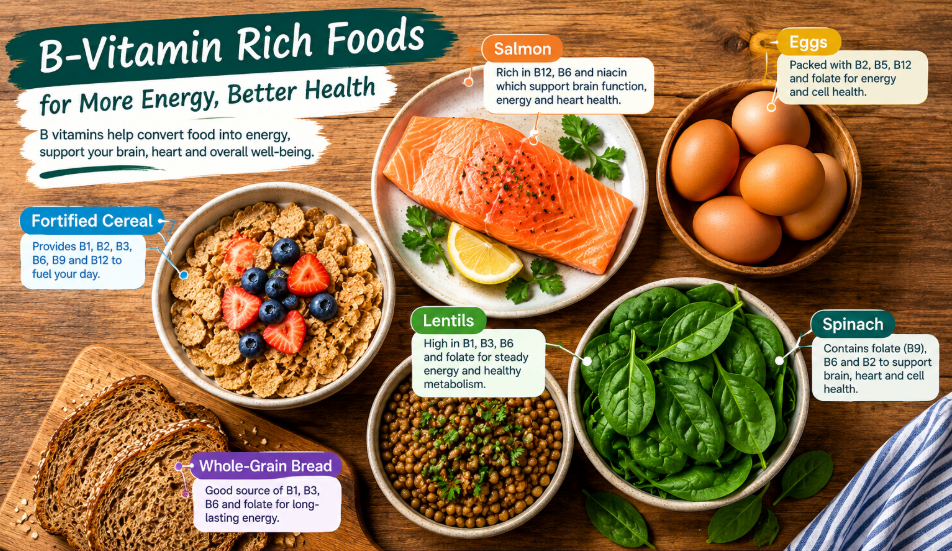
Thiamin helps turn the food you eat into the energy you need, according to the NIH thiamin consumer fact sheet. Adult men need 1.2 mg a day and adult women need 1.1 mg. Good sources include whole grains, fortified bread and cereal, pork, fish, beans, seeds, and nuts.
Deficiency is rare in the United States. When it does happen, it can cause weight and appetite loss, confusion, memory loss, muscle weakness, and heart problems. The same source lists groups at higher risk, including people with alcohol dependence, older adults, people with diabetes, and people who have had bariatric surgery.
Riboflavin (vitamin B2)
Riboflavin also helps turn food into energy, per the NIH riboflavin consumer fact sheet. Adult men need 1.3 mg a day and women need 1.1 mg. You’ll find it in eggs, lean meats, low-fat milk, mushrooms, spinach, and fortified cereals.
Most people get enough. Severe, long-term deficiency can lead to anemia, which makes you feel weak and tired. The same page notes that vegetarian athletes, vegans, and people who avoid dairy are more likely to run low. It also says your body can’t absorb more than about 27 mg at a time, so megadoses are wasted.
Niacin (vitamin B3)
Niacin helps turn food into energy too, per the NIH niacin consumer fact sheet. Adult men need 16 mg NE (niacin equivalents) a day and women need 14 mg NE. Your body can also make niacin from tryptophan, an amino acid in protein, and it needs iron, riboflavin, and vitamin B6 to do so.
Food sources include poultry, beef, pork, fish, some nuts and legumes, and fortified breads and cereals. Niacin is the B vitamin to be most careful with in supplement form, and the safety section below explains why.
Vitamin B12
Vitamin B12 is the one people mean when they say “energy shot.” The NIH health professional fact sheet says B12 deficiency can cause fatigue, along with nerve changes and a type of anemia. Adults need 2.4 mcg a day.
The same fact sheet reports that about 3.6% of U.S. adults have B12 deficiency, and about 12.5% have lower-than-ideal levels, based on national survey data from 2007 to 2018. Symptoms can take years to show up because the body stores 1 to 5 mg of B12. Groups at higher risk include older adults, people with pernicious anemia or digestive disorders, people who’ve had stomach or bowel surgery, and people on vegetarian or vegan diets.
Here’s the key finding. The same source states that B12 supplements don’t appear to improve athletic performance or endurance in people with enough B12. They help when you’re low. That’s a very different claim from “B12 boosts energy for everyone.”
Vitamin D, Iron, and Magnesium: The Energy Helpers People Forget
Many “tired and sluggish” lists leave out these three, yet low levels of each can leave you feeling weak.
Vitamin D
Your muscles need vitamin D to move, and your nerves need it to carry messages, according to the NIH vitamin D consumer fact sheet. In adults, deficiency causes bone pain and muscle weakness. Most adults 19 to 70 need 15 mcg (600 IU) a day, and adults 71 and older need 20 mcg (800 IU).
The same page says almost one in four people in the United States have blood levels that are too low or inadequate. It also says vitamin D supplements and vitamin D-rich foods do not help you lose weight. A separate NIH review reached the same conclusion: vitamin D supplements did not change body weight in the clinical trials it covered.
Iron
Iron is a key part of hemoglobin, the protein that carries oxygen in your blood. It’s also part of myoglobin, which supplies oxygen to muscle. The NIH iron fact sheet says iron-deficiency anemia can cause weakness, fatigue, trouble concentrating, and lower exercise or work performance.
Needs vary a lot. Adult men and women over 50 need 8 mg a day. Women ages 19 to 50 need 18 mg because of blood loss during periods. The same source says people who follow vegetarian diets need about 1.8 times more iron, because plant iron is absorbed less easily. Frequent blood donors and people with heavy periods are also at higher risk.
Magnesium
Magnesium helps more than 300 enzyme systems in your body, and the NIH magnesium fact sheet says it’s required for energy production. Early signs of low magnesium include loss of appetite, nausea, fatigue, and weakness. True deficiency is uncommon in healthy people, but the same page reports that 48% of Americans take in less magnesium from food and drinks than their estimated average requirement.
Adult men need 400 to 420 mg a day, and adult women need 310 to 320 mg. Pumpkin seeds, chia seeds, almonds, spinach, cashews, black beans, and whole grains are among the best sources.
At a Glance: Nutrients, Needs, and Best Foods
All needs below are for adults and come from the NIH fact sheets cited above.
| Nutrient | What it does | Adult daily need | Top food sources | Best evidence for energy |
| Thiamin (B1) | Helps turn food into energy | 1.2 mg (men), 1.1 mg (women) | Whole grains, pork, fish, beans | Matters if you’re deficient; rare in the U.S. |
| Riboflavin (B2) | Helps turn food into energy | 1.3 mg (men), 1.1 mg (women) | Eggs, milk, lean meat, mushrooms | Severe deficiency can cause anemia and fatigue |
| Niacin (B3) | Helps turn food into energy | 16 mg NE (men), 14 mg NE (women) | Poultry, beef, fish, fortified grains | Deficiency is very rare |
| Vitamin B12 | Red blood cells, nerves, DNA | 2.4 mcg | Fish, meat, eggs, dairy, fortified cereal | No performance benefit if you’re not low |
| Vitamin D | Muscles, nerves, calcium use | 15 mcg (600 IU); 20 mcg (800 IU) at 71+ | Fatty fish, fortified milk | Low levels linked to muscle weakness |
| Iron | Carries oxygen in blood and muscle | 8 mg; 18 mg (women 19-50) | Meat, seafood, beans, fortified cereal | Deficiency causes fatigue and weaker performance |
| Magnesium | Energy production, muscle and nerve function | 400-420 mg (men), 310-320 mg (women) | Seeds, nuts, spinach, beans | Fatigue is an early sign of deficiency |
Do “Metabolism-Boosting” Supplements Work?
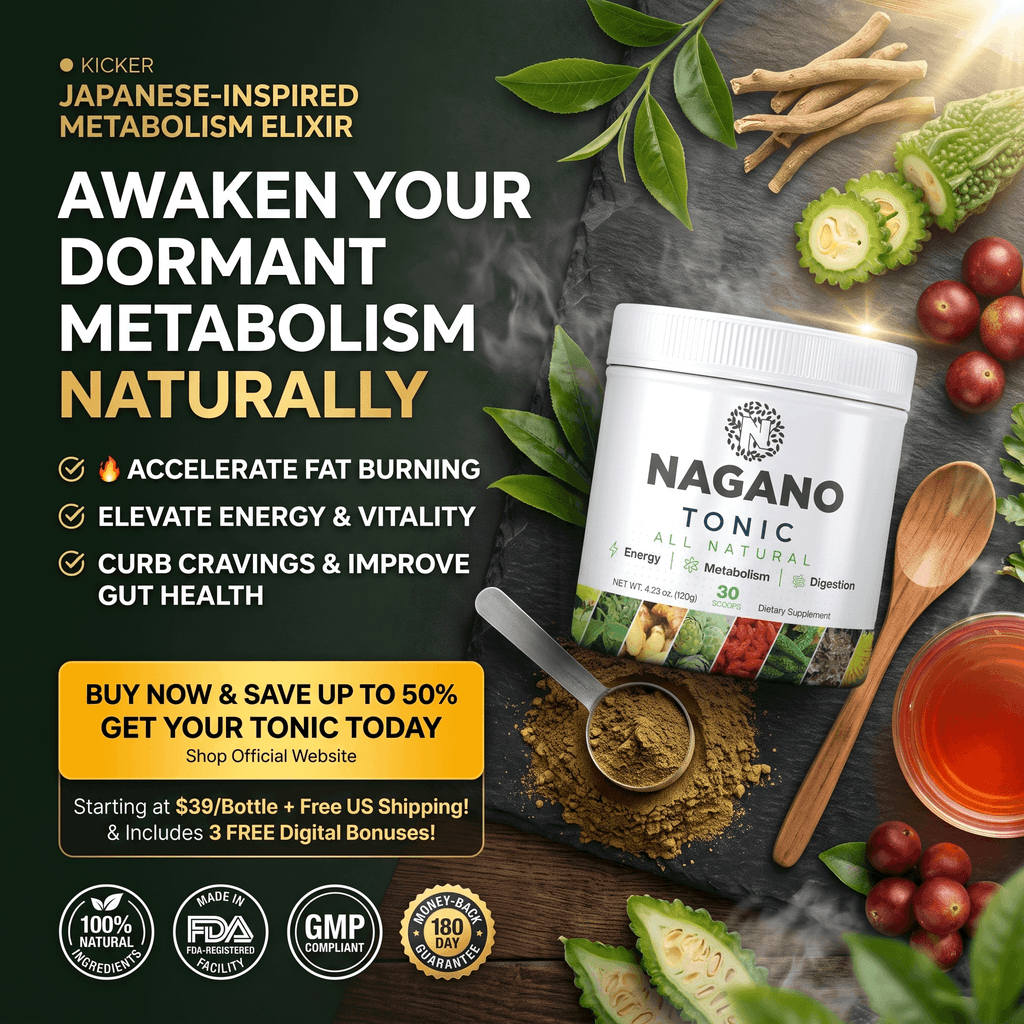
The supplement aisle is full of products promising a faster metabolism. The NIH review of weight-loss supplements notes that manufacturers market these products with claims such as raising metabolism and thermogenesis. It also quotes a U.S. Government Accountability Office finding that little is known about whether they work, and that some have been linked to physical harm. You can read it in the NIH weight-loss supplement fact sheet.
Here is what that same review says about a few popular ingredients:
- Chromium: A Cochrane review of 9 trials found chromium picolinate cut body weight by about 1.1 kg (2.4 lb) more than placebo, an effect the authors called of debatable clinical relevance. If you’re curious about the mineral’s role in blood sugar, our article on chromium picolinate and glucose metabolism goes deeper.
- Caffeine: A 100 mg dose raised energy use by about 9.2 calories per hour for three hours or more in healthy people. But regular use builds tolerance, and the effect fades.
- Bitter orange: Small studies suggest a possible rise in resting metabolic rate, but the review reports safety concerns, especially in combination products with other stimulants.
- Green tea extract: Any weight effect is small. The review also notes reports of liver damage linked to green tea extract.
The review’s bottom line is plain. Health experts agree that diet, calorie intake, and physical activity form the basis of long-term weight control. It also warns that claims like “lose weight without dieting or exercising” usually are too good to be true.
Coach’s Tip: If you want a small, safe energy lift, start with the basics. Eat a protein source at every meal, drink water through the day, walk after dinner, and sleep on a regular schedule. These cost nothing, and none of them carry the risks that stimulant “fat burners” do.
Blood sugar control is another area where people hunt for a metabolic edge. Our overview of inositol and insulin sensitivity studies covers what the research says there, and it’s a separate topic from vitamins.
What Vitamins Help Boost Metabolism and Energy Without a Supplement?
For most healthy adults, the answer is food. The NIH fact sheets all make the same point: nutritional needs should be met mainly through the diet, and supplements are for cases where food can’t cover the gap. Here’s how to build a plate that covers the nutrients above.
Step 1: Anchor each meal with a B-vitamin food
Pick one B-vitamin food per meal. Examples include eggs, fish, poultry, lean meat, beans, lentils, whole grains, or fortified cereal. Per the NIH B12 sheet, 3 oz (85 g) of cooked salmon has about 2.6 mcg of B12, and 3 oz (85 g) of canned light tuna has about 2.5 mcg. Either one covers an adult’s daily 2.4 mcg on its own.
One cup (240 mL) of 2% milk has about 1.3 mcg, and a 6-oz (170 g) container of plain nonfat yogurt has about 1.0 mcg.
Step 2: Add magnesium and iron foods
A 1-oz (28 g) handful of roasted pumpkin seeds has 156 mg of magnesium, per the NIH magnesium sheet. A half cup of boiled spinach has 78 mg, and a 1-oz (28 g) serving of almonds has 80 mg. For iron, a half cup of boiled lentils has about 3 mg, and a cup of canned white beans has about 8 mg, per the NIH iron sheet.
Pair plant iron with a vitamin C food, such as peppers, citrus, or tomatoes. The iron sheet says vitamin C improves absorption of non-heme (plant) iron, while calcium may reduce iron absorption.
Step 3: Get your vitamin D
Few foods have vitamin D naturally. Fatty fish such as salmon, trout, and mackerel are among the best natural sources, and most U.S. milk is fortified with about 3 mcg (120 IU) per cup. The NIH vitamin D page adds that your skin makes vitamin D from sunlight, but that clouds, age, and darker skin all reduce production.
Step 4: Plan for gaps
Vegan diets contain no natural B12. The NIH B12 sheet says fortified foods and supplements can greatly lower the risk of deficiency. Fortified nutritional yeast provides about 8.3 to 24 mcg per quarter cup, depending on the brand, so check the label.
A sample day
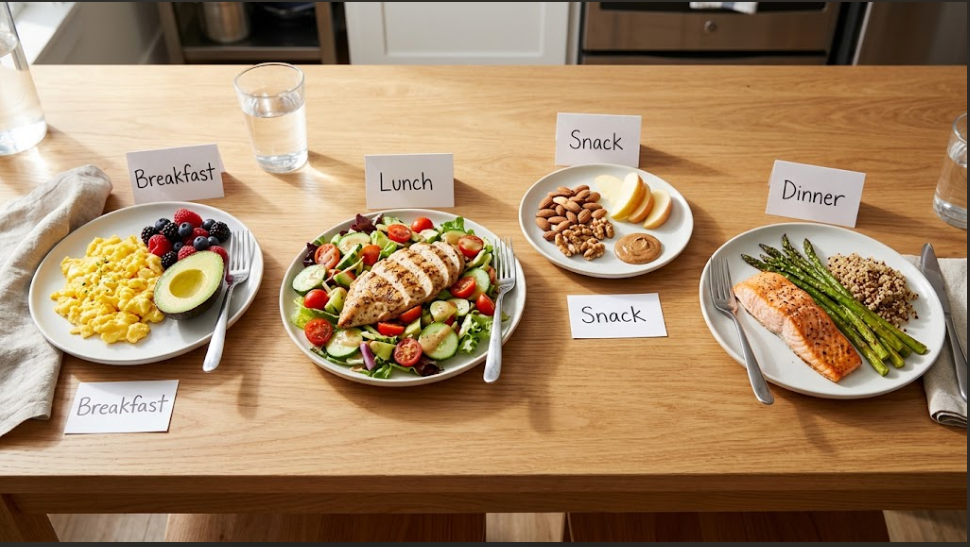
- Breakfast: Fortified cereal (check the label for B12 and iron), 1 cup (240 mL) of milk, and a banana
- Lunch: Tuna on whole-wheat bread with spinach, plus an apple
- Snack: 1 oz (28 g) of pumpkin seeds or almonds
- Dinner: 3 oz (85 g) of salmon, brown rice, and lentils with a tomato salad
This single day hits the B12 target and takes you a long way toward the magnesium range. Your needs differ, so treat it as a template, not a prescription.
A Simple Weekly Routine to Pair With Good Nutrition
Nutrients support energy, but movement gives you more of it to use. This routine is built for beginners and takes about 25 minutes. Do it three non-consecutive days a week, such as Monday, Wednesday, and Friday.
Warm-up (5 minutes): Walk briskly or march in place, then do 10 arm circles and 10 bodyweight squats.
| Exercise | Sets x reps | Rest | Starting weight |
| Goblet squat | 3 x 10 | 60 sec | 10-15 lb (4.5-7 kg) dumbbell |
| Incline push-up (hands on a bench) | 3 x 8-10 | 60 sec | Bodyweight |
| One-arm dumbbell row | 3 x 10 each side | 60 sec | 10-15 lb (4.5-7 kg) |
| Glute bridge | 3 x 12 | 45 sec | Bodyweight |
| Forearm plank | 3 x 20-30 sec | 45 sec | Bodyweight |
Tempo: Lower for about 2 seconds, pause briefly, and stand or press up for 1 second. Effort: Stop each set when you have about 2 clean reps left in the tank. Finish: Walk 1 mile (1.6 km) at an easy pace.

Form cues for the goblet squat
- Hold the dumbbell vertically against your chest, elbows pointing down.
- Stand with feet slightly wider than shoulder width, toes turned out a little.
- Sit down between your knees, keeping your chest tall.
- Drive through your whole foot to stand. You should feel it in your thighs and glutes, not your lower back.
Common Mistake: Letting the knees cave inward as you stand up. Fix it by pushing your knees out toward your pinky toes the whole way, and use a lighter dumbbell until the movement is smooth.
Easier version (regression): Use a bodyweight squat to a chair, wall push-ups, rows with water bottles (2-5 lb, or about 1-2 kg), and 2 sets of each. Walk 10 minutes instead of a mile.
Harder version (progression): When you can do all reps with clean form, add 5 lb (2.3 kg) to the squat and row, move the push-up to the floor, add a fourth set, and extend your walk to 2 miles (3.2 km).
If you feel dizzy, get chest pain, or become unusually short of breath, stop and talk to a doctor before continuing.
Safety Notes: Doses, Interactions, and Who Should Test First
More isn’t better. Each nutrient above has its own limits, and some have meaningful interactions with common medicines. Always talk with your doctor or pharmacist before starting a new supplement, especially if you take medication or have a health condition.
Upper limits for adults (from the NIH fact sheets):
- Niacin: 35 mg a day from supplements. Doses of 30 mg or more of nicotinic acid can cause facial flushing, burning, tingling, and itching. Very high doses of 1,000 mg or more a day can cause low blood pressure, high blood sugar, and liver problems.
- Iron: 45 mg a day. Doses of 45 mg or more can cause nausea and constipation, and supplements with 25 mg or more may lower zinc absorption. Iron overload is a risk for people with hemochromatosis, so don’t supplement without a blood test.
- Magnesium: 350 mg a day from supplements (this limit doesn’t count food). Higher doses often cause diarrhea, nausea, and cramping.
- Vitamin D: 100 mcg (4,000 IU) a day from all sources. Too much can cause nausea, weakness, and kidney stones.
- Vitamin B12: No upper limit has been set, because it has low potential for toxicity. But absorption drops sharply at high doses. The NIH B12 sheet reports only about 2% absorption at a 500 mcg dose.
Medicine interactions worth knowing:
- Metformin and acid-reducing drugs such as omeprazole can lower B12 levels over time.
- Iron can reduce absorption of levothyroxine. Some labels advise waiting at least 4 hours between them.
- Magnesium can block certain antibiotics (tetracyclines and quinolones) and osteoporosis drugs called bisphosphonates. Timing matters.
- Iron-containing products are a leading cause of fatal poisoning in children under 6, so keep them out of reach.
Get tested first if you: feel tired for weeks without a clear cause, are over 50, follow a vegan or vegetarian diet, have a digestive condition, have heavy periods, donate blood often, or take any of the medicines above. The NIH iron sheet says a serum ferritin below 30 mcg/L suggests iron deficiency, and the B12 sheet says most labs call a level under 200 to 250 pg/mL low. Your doctor can interpret the numbers for you.
Persistent fatigue can have many causes, including thyroid problems, sleep disorders, depression, and anemia. A pill won’t fix those, so a checkup beats guessing.
Related Tips for More Steady Energy
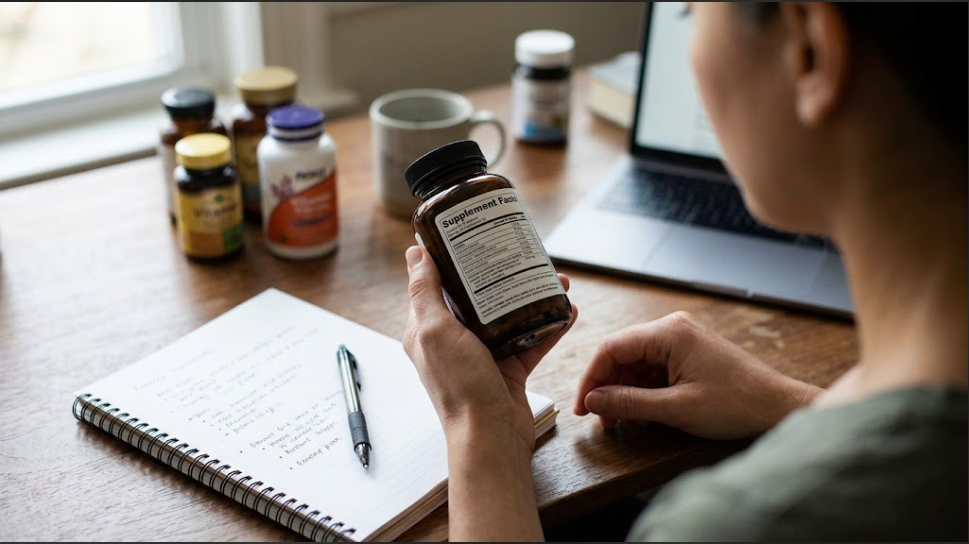
Read the label before you buy. The Supplement Facts panel lists the amount of each nutrient. Compare it to the daily values above. Many B-complex and “energy” products contain far more than you need.
Choose one product, not five. Stacking a multivitamin, B-complex, energy drink, and pre-workout can push you past safe limits for niacin, caffeine, or others. For caffeine, the NIH review says FDA and EFSA find up to 400 mg a day isn’t a safety concern for healthy adults. A cup of brewed coffee has about 85 to 100 mg.
Know what a vitamin can’t do. Vitamins won’t replace sleep, protein, or training. Amino acids like L-citrulline are popular with lifters for blood flow, but that’s a different topic from vitamins. If you’re curious, read how L-citrulline helps produce nitric oxide.
Common Mistake: Taking a “mega” B-complex because you’re tired, then skipping a doctor visit. If a real deficiency or condition is behind your fatigue, the pill can hide the problem while it gets worse.
Watch for hype. The NIH review also notes that weight-loss supplements are sometimes tainted with hidden drug ingredients. Buy from brands that use third-party testing, and be skeptical of “miracle” claims.
Frequently Asked Questions
Do B vitamins really give you energy?
B vitamins help your body turn food into energy, but they don’t act like caffeine. If you’re deficient, correcting it can ease fatigue. If your levels are normal, NIH reviews don’t show extra B vitamins improve energy or performance. Food sources cover most people’s needs.
Can vitamin B12 boost metabolism?
B12 supports red blood cells, nerves, and DNA, but evidence that it speeds up metabolism in healthy people is lacking. NIH notes B12 supplements don’t appear to improve endurance or performance without a deficiency. It helps most for older adults, vegans, and people with absorption problems.
Which vitamin deficiency causes tiredness?
Low B12 is a common culprit, and low iron (a mineral) is another. Low vitamin D, riboflavin, and magnesium can also contribute to fatigue or weakness. Because the causes overlap, ask your doctor for blood tests rather than guessing which supplement to take.
Does vitamin D help with weight loss or fatigue?
Vitamin D supports muscles and nerves, and deficiency can cause muscle weakness. But NIH states that vitamin D supplements and vitamin D-rich foods do not help you lose weight. If you’re low, correcting it may help you feel stronger. Check your level before supplementing.
Can you take too many B vitamins?
Yes, in some cases. Niacin supplements above 35 mg a day can cause flushing, and very high doses can harm the liver. Many other B vitamins are water-soluble and excess is simply excreted, but megadoses are wasteful. Stay near daily values unless your doctor advises otherwise.
Should I take a multivitamin for energy?
A multivitamin may help fill gaps if your diet is limited, but it isn’t an energy booster for people who already eat well. Look for doses near the daily values and ask your doctor about iron, which many men and older adults don’t need.
Conclusion
So, what vitamins help boost metabolism and energy? The answer is the B vitamins (thiamin, riboflavin, niacin, and B12), along with vitamin D, iron, and magnesium, because your body needs them to turn food into fuel and keep muscles working. The catch is that they help most when you’re low. Extra doses won’t speed up metabolism in people who already get enough.
Start with food, get tested if you’ve been tired for weeks, and be wary of stimulant-heavy “metabolism boosters.” Add the simple three-day routine above, and let sleep and consistency do the rest. If you decide to supplement, choose doses near the daily values and check with your doctor first.