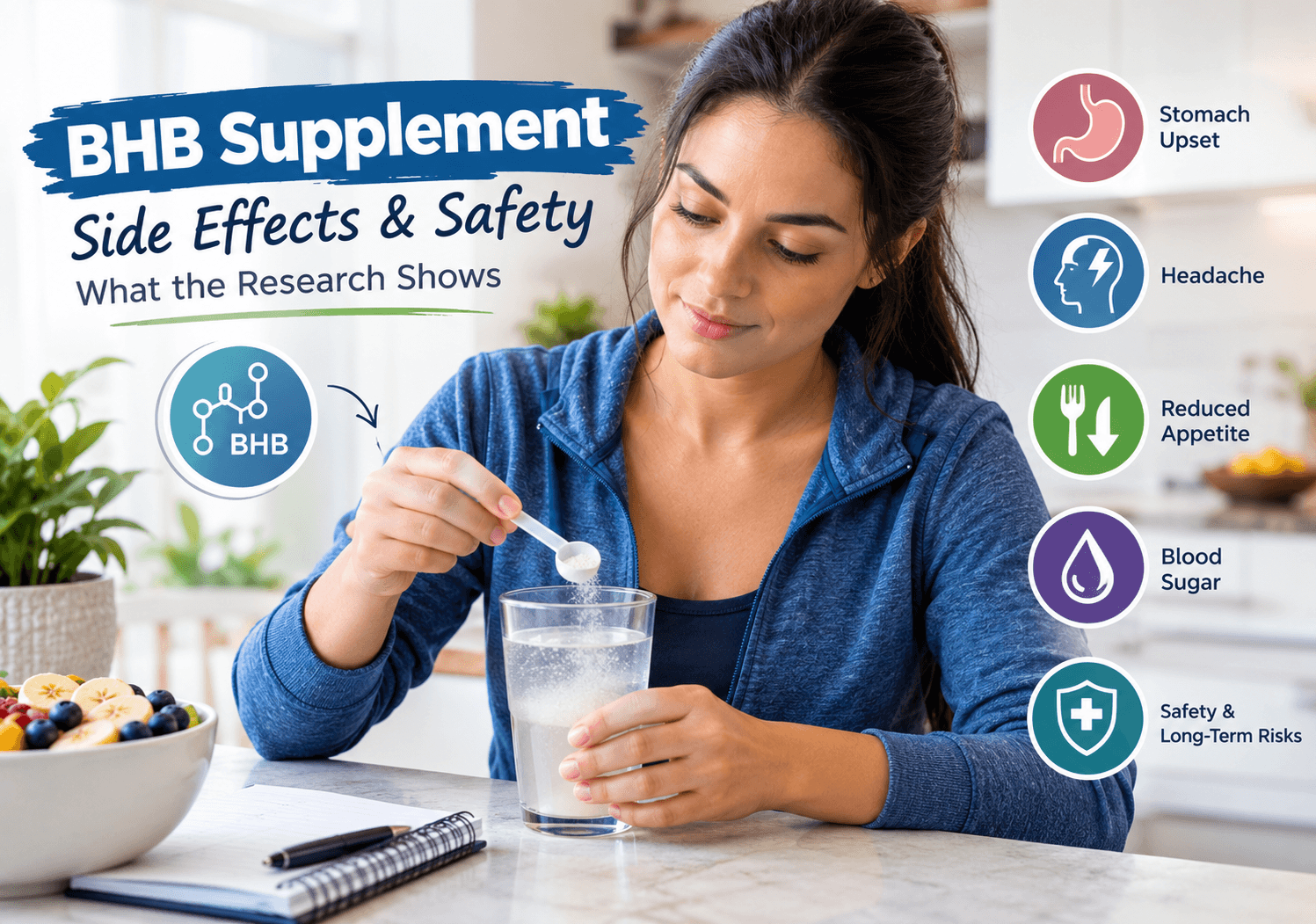
BHB supplements are sold as an easy way to raise blood ketones, but the safety picture is more detailed than most labels suggest. Side effects in studies have been mostly mild, such as stomach upset, headache, and reduced appetite. Long-term data are thin, and certain groups need extra caution. This guide covers the known side effects, the risks researchers are still studying, and who should talk with a doctor first.
Quick Answer
The most common BHB supplement side effects reported in studies are stomach discomfort, headache, and loss of appetite, and they are usually mild. Short-term studies in healthy adults and adults with type 2 diabetes found few serious problems. Long-term safety, mineral load from salt-based products, and risks for people with kidney disease, diabetes medications, or pregnancy need medical review before use.
What Is a BHB Supplement?
BHB stands for beta-hydroxybutyrate, the most abundant ketone body in the blood. Your liver produces it from fat during fasting or very low-carb eating. A BHB supplement delivers it directly, usually as a salt, an ester, or a free acid. The Storoschuk, Wood, and Stubbs review in Frontiers in Physiology describes exogenous ketones as one of the main ways to induce ketosis outside of diet changes.
Because the product delivers a compound your body already makes, many people assume it must be harmless. The research does not support that shortcut. Side effects depend on the form, dose, mineral content, and the person taking it. A healthy adult and someone with kidney disease face different risks from the same drink.
The Most Common Side Effects
The best-documented short-term side effects come from small human studies. One study, published in a Scopus-indexed academic record of a safety and tolerability study in healthy adults , evaluated oral free D-BHB in 24 healthy adults. The authors reported no acid-base or electrolyte abnormalities in participants. Secondary symptoms appeared after about 6.2% of all drink doses, and none were described as severe. The most frequent reports were gastrointestinal discomfort (2.6% of doses), headache (1%), and loss of appetite (1%).
A second safety study, in adults with type 2 diabetes, used a ketone monoester for one month. The Soto-Mota and colleagues trial in Endocrinology, Diabetes & Metabolism described adverse reactions as mild and infrequent, including nausea, headache, and stomach discomfort. These occurred after fewer than 0.5% of drinks. Electrolytes, acid-base status, and kidney function remained normal throughout the study.
What does this mean in practice? Most people who tolerate a BHB product will experience no problems, and those who do usually notice stomach symptoms first. The pattern across these studies is consistent: side effects are common enough to take seriously, but usually mild and short-lived.
Common Mistake: Taking a BHB drink on an empty stomach and then assuming the nausea is “just the ketones working.” Stomach upset is one of the most reported side effects. If you feel worse fasted, try taking the product with food, follow the label, and speak with your doctor if symptoms continue.
Digestive Symptoms: Why They Happen and What Helps
Stomach symptoms are the most common complaint, and the research supports that. Many BHB products are dense and often taste strong or salty. A large or quickly consumed dose can sit heavily in the stomach, especially for people sensitive to new supplements.
Practical steps that may reduce digestive discomfort include:
- Start with the lowest label dose and wait several days before increasing it.
- Mix the product in a full glass of water rather than drinking it straight.
- Take it with a light meal instead of on an empty stomach.
- Split the day’s dose into smaller servings if the label allows it.
- Keep a short symptom log so you can see whether timing or dose changes the outcome.
If nausea, vomiting, severe cramping, or diarrhea lasts more than a day or two, stop the product and contact a healthcare professional. These symptoms can also cause dehydration, which adds its own risk.

Headache, Appetite, and Energy Changes
Headache and reduced appetite are the other common side effects reported in human studies. The free D-BHB study noted headache in about 1% of doses and loss of appetite in about 1% of doses. Both were described as mild in the reports summarized in the study record.
Some people also report changes in energy or focus after taking ketones. Those effects are less well studied in controlled trials, so it is hard to say how common they are. If you notice new headaches or unusual fatigue, record when they happen and how long they last, then bring that information to your doctor.
Reduced appetite can be a double-edged sword. For someone who already eats too little, skipping meals because the drink feels filling is a real concern. Anyone managing weight, recovering from illness, or dealing with an eating disorder should check with a healthcare professional before using a BHB supplement for appetite changes.
Coach’s Tip: Keep a simple daily note with three columns: what you took, what you ate, and how you felt two hours later. This makes it much easier to tell whether a headache or stomach issue comes from the supplement, your meals, your sleep, or your training.
Mineral Load: The Sodium, Potassium, and Calcium Question
The form of BHB matters for safety. Many BHB products are salts, meaning the BHB is bonded to a mineral. Sodium is the most common, but potassium, calcium, and magnesium salts also exist. Each serving adds that mineral to your daily intake.
The concern is practical. A product can carry a meaningful mineral load, which matters for people who watch their sodium for blood pressure reasons or who have kidney disease. The study on adolescents, described below, did not report problems with blood pressure. That does not mean mineral load is unimportant for adults with existing conditions.
A useful rule: read the supplement facts panel and add the sodium, potassium, calcium, and magnesium numbers to your other food and medication sources. Then check that total against guidance from your doctor or dietitian. Some people may decide that a salt-based product is not the right choice, even if it is well tolerated by the general population.
Blood Sugar and Diabetes Medications
BHB supplements can affect blood glucose. A 2022 systematic review and meta-analysis by Falkenhain, Daraei, and Forbes pooled 43 trials with 586 participants. The authors found that exogenous ketones increased blood BHB and decreased blood glucose on average after ingestion. The glucose drop averaged about 0.54 mM.
For most healthy people, a small glucose change is not a concern. For people taking insulin or medications that lower blood sugar, it can matter. A dose that lowers glucose on top of diabetes medication could push levels too low. Do not change any diabetes medication based on a supplement. Ask your doctor whether glucose monitoring should change if you start a BHB product.
The type 2 diabetes study by Soto-Mota and colleagues reported improved glycemic control over one month. That is an encouraging finding, but it was a small, non-randomized study with 21 participants, so it cannot guarantee the same result for anyone else. It also does not mean the supplement is a replacement for prescribed treatment.
Ketoacidosis: The Rare but Serious Risk
Ketoacidosis is the risk that deserves the most attention. It is a dangerous condition in which ketones build up to very high levels and make the blood too acidic. Diabetic ketoacidosis is a medical emergency, and it is most often linked to type 1 diabetes or to certain diabetes medications.
Researchers take this risk seriously. A heart failure ketone ester study registered on ClinicalTrials.gov states that ketoacidosis causes pH disturbances and neurologic complications, but only at much higher levels than the ones the study expected to reach. The same protocol excluded people with type 1 diabetes and people taking SGLT2 inhibitors, because those groups carry ketoacidosis risk for other reasons. SGLT2 inhibitors are a class of diabetes and heart medications that can raise ketoacidosis risk.
The practical message is this: if you have type 1 diabetes, or you take an SGLT2 inhibitor, do not use a BHB supplement without explicit approval from your prescribing doctor. Watch for warning signs of ketoacidosis, which include nausea, vomiting, abdominal pain, fruity breath, rapid breathing, unusual confusion, or extreme weakness. These symptoms need urgent medical care.
Common Mistake: Assuming a high reading on a home ketone meter always means your supplement is working as intended. Blood ketone levels can rise for many reasons, and a very high reading with symptoms like vomiting or confusion is a medical concern, not a success.
Long-Term Safety: What We Still Don’t Know
Most human studies of BHB and other ketone supplements last days to weeks, not years. That is the biggest gap in the research. The most encouraging longer study comes from healthy adolescents.
A randomized, double-blind, placebo-controlled study in healthy adolescents examined 90 days of BHB salt supplementation. The authors reported no significant differences from placebo in fasting blood safety markers, bone density, or blood pressure. That is reassuring, but 90 days is still a short window for a supplement people might take indefinitely.
Animal research raises a different question. A chronic study in rats found that liver responses depended on the formulation. The authors reported that a salt-based product showed the most favorable profile in that model, while two other forms produced adverse liver changes. Animal results do not automatically apply to people, but they show that different BHB products may not carry the same long-term risks.
Researchers also point to acid load as a long-term concern. A narrative review in an open-access journal on ketogenic diets notes that ketone bodies are weak acids that can increase the body’s acid load. The review states that this has been linked to higher kidney stone risk in some patients. Keep in mind that this review focuses on ketogenic diets and alkalinizing salts, so it is an indirect source for supplements.
Who Should Avoid BHB Supplements or Talk to a Doctor First
Some people should not start a BHB product without medical guidance. This includes:
- People with type 1 diabetes or type 2 diabetes on insulin or glucose-lowering medication, because glucose changes and ketoacidosis risk need oversight.
- People taking SGLT2 inhibitors, because of the ketoacidosis concern described above.
- People with kidney disease or kidney stone history, because of mineral load and acid load concerns.
- People with heart failure or high blood pressure, especially if they watch their sodium closely.
- People who are pregnant or breastfeeding. There is no meaningful safety data for BHB supplements in these groups, so avoiding them is the cautious default.
- Adolescents and children. The adolescent study was supervised research. Parents and teens should consult a pediatrician or physician before any use.
- People with a history of eating disorders. Appetite changes and restrictive use can be risky.
- Anyone with liver disease. Animal data shows formulation-dependent liver effects, and human liver safety data for every product are not available.
For topics involving medical conditions, medications, or supplements, check with a doctor or physical therapist first. Bring the full product label to your appointment so your doctor can check the mineral content and dose against your health history.
What the Research Doesn’t Yet Answer
Several safety questions remain open:
- Long-term use. Most data cover days to a few months. Multi-year safety is unknown.
- Product variation. Products differ in BHB form, dose, flavor, and mineral content. A finding for one product may not apply to another.
- Real-world use. Clinical trials often use controlled doses under supervision. Home use may involve higher or more frequent dosing.
- Combining with other supplements or medications. Few studies test BHB alongside other products or prescription drugs.
- Groups not well studied. Older adults, people with multiple health conditions, and pregnant people are underrepresented in the research.
A clinical trial registration in young adults is designed to measure gastrointestinal symptoms and blood BHB concentrations for different ketone supplements. Registrations show that researchers are still studying tolerability, but they do not replace published results.
How to Lower Your Risk If You Decide to Try One
If you and your doctor decide that a BHB supplement is reasonable for you, a cautious approach can reduce your risk:
- Get medical input first. Share your medication list, diagnoses, and any kidney or heart history.
- Read the full supplement facts. Note the BHB form, the BHB amount, and the sodium, potassium, calcium, and magnesium content.
- Start low and go slow. Use the lowest label dose, and wait several days before any change.
- Take it with food and water. This may reduce stomach upset.
- Keep a symptom log. Record stomach issues, headaches, appetite changes, energy, and any glucose or ketone readings.
- Set stop rules. Stop the product and contact a doctor if you have persistent vomiting, severe pain, confusion, or rapid breathing.
- Reassess regularly. Review with your doctor whether continued use still makes sense.
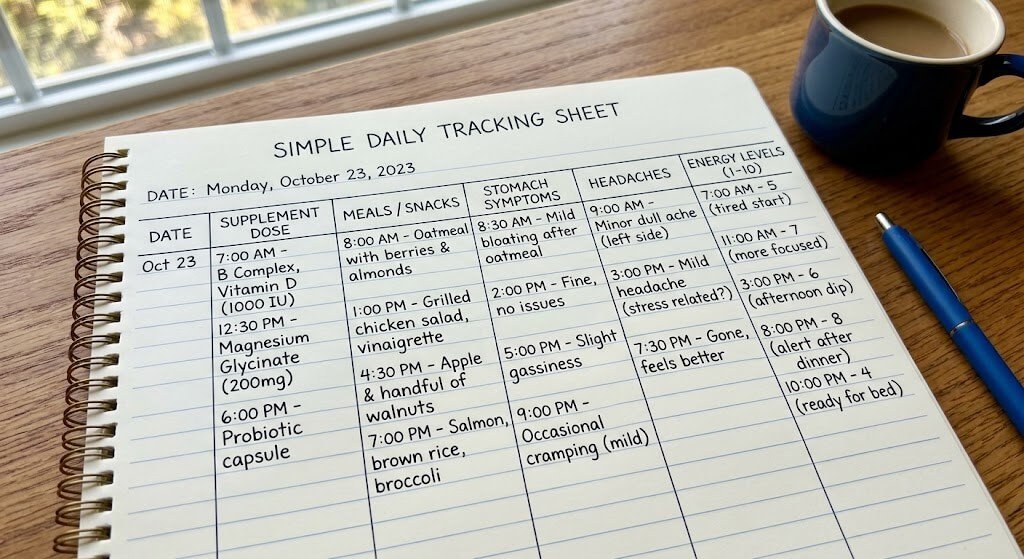
Coach’s Tip: When you review a product with your doctor, bring the actual label or a photo of it. Many questions about sodium load, dose, or ingredients are easier to answer when everyone can see the same panel.
Frequently Asked Questions

Are BHB supplements safe?
Short-term studies in healthy adults and adults with type 2 diabetes reported mostly mild side effects, such as stomach upset, headache, and appetite changes. Long-term safety data are limited. People with diabetes, kidney disease, heart conditions, or who are pregnant should consult a doctor before use.
What are the most common BHB supplement side effects?
The most common reports in research are gastrointestinal discomfort, headache, and loss of appetite. In one study of 24 healthy adults, these appeared after a small share of doses and none were described as severe. Taking the product with food and water may help some people.
Can BHB supplements cause ketoacidosis?
Ketoacidosis is a rare but serious risk, mainly discussed for people with type 1 diabetes or those taking SGLT2 inhibitors. Researchers exclude these groups from some trials for that reason. Seek emergency care for vomiting, confusion, abdominal pain, or rapid breathing.
Do BHB supplements affect blood sugar?
Yes. A meta-analysis of 43 trials found that exogenous ketones lowered blood glucose on average after ingestion. If you take diabetes medication, talk with your doctor before using a BHB product, because your dosing or glucose monitoring may need to change.
Are BHB salts or esters safer?
They differ in mineral load and tolerability. Salts add sodium, potassium, calcium, or magnesium, which matters for people watching these minerals. Esters have different tolerability profiles. Neither is automatically safer, so compare labels and discuss your options with a doctor.
Who should not take BHB supplements?
People with type 1 diabetes, those taking SGLT2 inhibitors, people with kidney or liver disease, and people who are pregnant or breastfeeding should avoid BHB supplements unless a doctor approves them. Adolescents should use them only under medical supervision.
Conclusion
BHB supplements are generally well tolerated in short-term studies, with side effects such as stomach upset, headache, and reduced appetite usually reported as mild. The bigger questions involve mineral load, interactions with diabetes medications, the rare risk of ketoacidosis, and long-term safety, which remains understudied. Anyone with a medical condition or on medication should speak with a doctor first, and anyone who is pregnant or breastfeeding should avoid them unless advised otherwise.
If you decide to try a BHB product with your doctor’s guidance, start low, take it with food, track your symptoms, and know when to stop. Safety comes from careful choices and honest monitoring, not from a label claim.